


Global Nanofibers Market Segmentation, By Product Type (Polymer Nanofibers, Carbon Nanofibers, Glass Nanofibers, Glass Nanofibers, Composite Nanofibers, and Others), Category (Carbon, Ceramic, Composite, Glass, Polymeric, and Others), Technology (Magneto Spinning, Force Spinning, Rotary Jet Spinning, and Others), Application (Water and Air Filtration, Automotive and Transportation, Textiles, Medical, Electronics, Energy Storage, and Others), End Use (Mechanical, Chemical and Environment (MCE), Medical, Life science and Pharmaceutical (MLP), Electronics, and Others) - Industry Trends and Forecast to 2033
Каков размер и темпы роста мирового рынка нановолокон
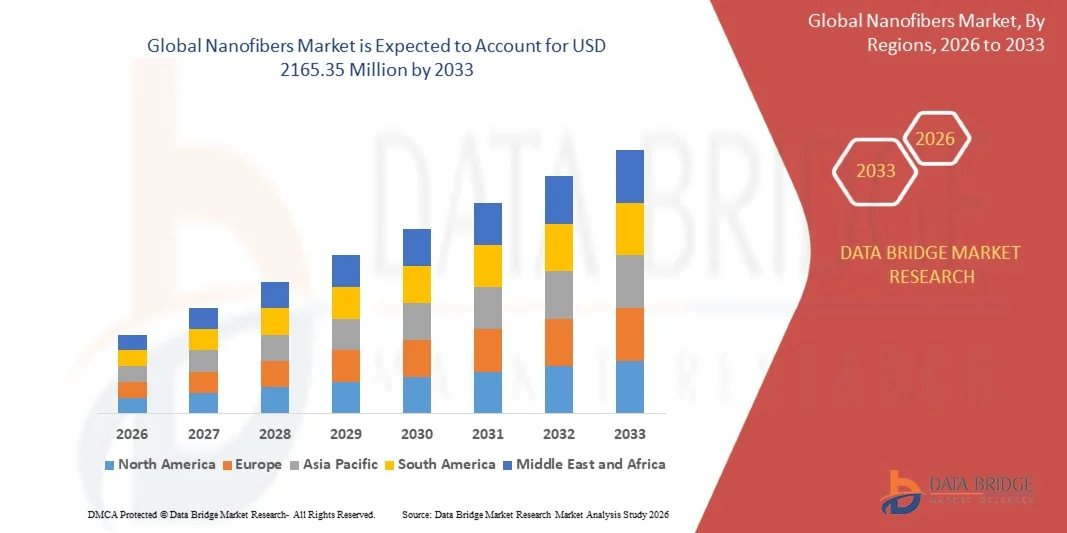
- Согласно анализу рынка Data Bridge Market Research, размер мирового рынка нановолокон был оценен как597,95 млн долларов США в 2025 годуОжидается, что он достигнет2165,35 млн долларов США к 2033 году, вCAGR 17,5%в течение прогнозируемого периода
- Такие факторы, как увеличение химического производства, растущий спрос на технологии фильтрации, растущий спрос на медицинские, науку о жизни и фармацевтические приложения, развитие использования нановолокон в текстильном секторе, являются основной причиной роста рынка.
- Факторами, которые, как ожидается, смягчат рост рынка, являются широкий спектр применения нанотехнологий и склонность населения к достижению устойчивых и экологически чистых продуктов.
Размер рынка и прогноз
Глобальная рыночная стоимость (2025):597,95 млн. долларов США
Ожидаемая рыночная стоимость (2033):$2165,35 млн.
Прогноз CAGR (2026–2033):17.5%
Каковы основные тенденции рынка нановолокон
- Ожидается, что такие факторы, как высокая первоначальная стоимость и меньшее техническое знание этих систем, будут препятствовать росту рынка нановолокон. Кроме того, ожидается, что трудности в переходе углеродных нановолокон от лабораторного масштаба к масштабу завода из-за небольших размеров и сложности также будут препятствовать росту рынка в течение прогнозируемого периода.
- Увеличение инвестиций в исследования и разработки и новые технологии производства, по оценкам, создают многочисленные возможности для рынка. С другой стороны, строгая политика регулирования нановолокон в нескольких отраслях конечного использования и низкое использование этих нановолокон по сравнению с использованием обычных масок N95, по прогнозам, представляют собой серьезную проблему для роста рынка нановолокон.
- Северная Америка доминировала на рынке Nanofibers с долей выручки 40,7% в 2025 году, что обусловлено сильным ростом передовой фильтрации, текстиля для здравоохранения, аэрокосмических композитов, материалов для хранения энергии и промышленного производства в США и Канаде.
- Ожидается, что Азиатско-Тихоокеанский регион зарегистрирует самый быстрый CAGR в 9,02% с 2026 по 2033 год, что обусловлено быстрым расширением производства электроники, автомобильного производства, инфраструктуры здравоохранения, текстильной обработки и систем очистки воды в Китае, Японии, Индии, Южной Корее и Юго-Восточной Азии.
- Сегмент Polymer Nanofibers доминировал на рынке с долей 34,8% в 2025 году, поскольку он остается широко предпочтительным для фильтрации, медицинского текстиля, раневых повязок и защитной одежды благодаря своей гибкости, легкой структуре и простоте крупномасштабного производства.
Сфера охвата и сегментация рынка Nanofibers
|
Атрибуты |
Nanofibers ключевые рыночные идеи |
|
Сегменты покрыты |
|
|
Страны, охваченные |
Северная Америка
Европа
Азиатско-Тихоокеанский регион
Ближний Восток и Африка
Южная Америка
|
|
Ключевые игроки рынка |
|
|
Рыночные возможности |
|
|
Информационные наборы данных с добавленной стоимостью |
В дополнение к информации о рыночных сценариях, таких как рыночная стоимость, темпы роста, сегментация, географическое покрытие и основные игроки, рыночные отчеты, курируемые Data Bridge Market Research, также включают углубленный экспертный анализ, анализ цен, анализ доли бренда, опрос потребителей, анализ демографии, анализ цепочки поставок, анализ цепочки создания стоимости, обзор сырья / расходных материалов, критерии выбора поставщиков, анализ PESTLE, анализ Porter и нормативную базу. |
Каковы основные тенденции на рынке нанофибр
"Увеличение перехода к легким, высокопроизводительным и устойчивым технологиям волокна"
- Рынок нановолокон демонстрирует сильное внедрение ультратонких, легких и высокоповерхностных волоконных материалов, предназначенных для поддержки фильтрации, медицинского текстиля, хранения энергии и передовых композитных приложений.
- Производители все чаще внедряют полимерные, углеродные, керамические и композитные нановолокна, которые обеспечивают повышенную механическую прочность, пористость, термическую стабильность и функциональные характеристики.
- Растущий спрос на экономичные, легкие и высокоэффективные решения для материалов стимулирует использование в лабораториях здравоохранения, системах фильтрации, промышленном производстве и исследовательских средах.
- Например, такие компании, как Toray Industries, DuPont, Donaldson Company, Asahi Kasei и Johns Manville расширяют свои портфели нановолокон с помощью передовых мембранных, изоляционных и высокоэффективных решений для фильтрации.
- Растущая потребность в фильтрации воздуха и жидкости, средствах по уходу за ранами, сепараторах аккумуляторов и легких конструкционных материалах ускоряет переход к передовым технологиям нановолокна.
- Поскольку отрасли продолжают фокусироваться на устойчивости, эффективности материалов и высокопроизводительной инженерии, нановолокна останутся жизненно важными для промышленного и биомедицинского применения следующего поколения.
Каковы основные драйверы рынка нановолокон
- Растущий спрос на высокоэффективные фильтрационные материалы, медицинский текстиль и легкие армирующие волокна является основным драйвером роста рынка.
- Например, в 2025 году ведущие компании, такие как Toray Industries, DuPont и Donaldson Company, расширили свои портфели продуктов из нановолокна для поддержки фильтрующих сред, медицинских материалов и передовых промышленных приложений.
- Растущее внедрение в секторах здравоохранения, автомобилестроения, электроники, аэрокосмической промышленности, хранения энергии и очистки воды значительно повышает спрос на рынке в США, Европе и Азиатско-Тихоокеанском регионе.
- Достижения в технологии электроспиннинга, контроле диаметра волокна, функционализации поверхности и масштабируемых производственных процессах укрепили производительность продукта, долговечность и коммерческую жизнеспособность.
- Растущее использование нановолокон в аккумуляторных сепараторах, тканевой инженерии, защитной одежде и системах очистки воздуха создает сильный спрос во всем мире.
- Ожидается, что благодаря устойчивым инвестициям в исследования и разработки материалов, инновации в области здравоохранения и промышленную фильтрационную инфраструктуру рынок Nanofibers станет свидетелем сильного долгосрочного роста.
Какой фактор влияет на рост рынка нанофибр
- Высокие затраты, связанные с передовым производственным оборудованием, электроспиннинговыми системами и специализированным сырьем, ограничивают распространение среди мелких производителей и академических учреждений.
- Например, в течение 2024-2025 годов колебания цен на полимеры, затраты на прекурсоры углерода и высокая сложность производства увеличили производственные расходы для нескольких глобальных поставщиков.
- Сложность в достижении равномерного диаметра волокна, масштабируемости, структурной согласованности и крупномасштабной коммерциализации увеличивает потребность в квалифицированных инженерах и технических знаниях.
- Ограниченная осведомленность на развивающихся рынках в отношении применения нановолокон, материальных преимуществ и передовых производственных технологий замедляет внедрение.
- Конкуренция со стороны традиционных волокон, нетканых тканей и альтернативных фильтрующих материалов создает ценовое давление и снижает дифференциацию продукции.
- Для решения этих проблем компании сосредотачиваются на оптимизированном по стоимости производстве, устойчивом сырье и расширенной разработке конкретных продуктов для расширения глобального внедрения нановолокон.
Как сегментируется рынок нанофибр
Рынок сегментирован на основеТип продукта, категория, технология, применение и конечное использование.
• По типу продукции
На основе типа продукта рынок нановолокон сегментирован на Polymer Nanofibers, Carbon Nanofibers, Glass Nanofibers, Composite Nanofibers и другие. Сегмент Polymer Nanofibers доминировал на рынке с долей 34,8% в 2025 году, поскольку он остается широко предпочтительным для фильтрации, медицинского текстиля, раневых повязок и защитной одежды благодаря своей гибкости, легкой структуре и простоте крупномасштабного производства. Эти нановолокна обеспечивают отличную пористость, высокую площадь поверхности и сильную совместимость с процессами электроспиннинга, что делает их очень подходящими для передовых применений материалов. Их рентабельность и широкая коммерческая доступность продолжают поддерживать сильное развертывание в области здравоохранения, промышленной фильтрации и исследовательских средах.
Ожидается, что сегмент Carbon Nanofibers будет расти самыми быстрыми темпами с 2026 по 2033 год, что обусловлено растущим спросом на легкие проводящие материалы в системах хранения энергии, аэрокосмических структурах, автомобильных компонентах и электронных приложениях.
• по категориям
Исходя из категории, рынок подразделяется на углеродный, керамический, композитный, стеклянный, полимерный и другие. Сегмент Polymeric доминировал на рынке с долей 31,9% в 2025 году, чему способствовал быстрый рост медицинских приложений, фильтрации воздуха, текстиля и промышленных мембран. Полимерные нановолокна широко используются в системах доставки лекарств, тканевой инженерии, фильтрационных средах и высокопроизводительных тканях благодаря их гибкости и обрабатываемости.
Сегмент Composite, по прогнозам, будет расти самыми быстрыми темпами с 2026 по 2033 год, что обусловлено растущим спросом на многофункциональные материалы, сочетающие прочность, проводимость и долговечность в автомобильной, аэрокосмической и передовых промышленных приложениях.
• Технология
На основе технологий рынок сегментирован на Magneto Spinning, Force Spinning, Rotary Jet Spinning и другие. Сегмент Force Spinning доминировал на рынке с долей 36,2% в 2025 году, что обусловлено его высокой эффективностью производства, масштабируемостью и более низкой эксплуатационной стоимостью по сравнению с обычным электроспиннингом. Он широко используется для производства нановолокон в коммерческих масштабах для фильтрации и медицинского применения.
Ожидается, что сегмент Rotary Jet Spinning будет расти самыми быстрыми темпами с 2026 по 2033 год, чему способствует увеличение использования в средах массового производства и промышленных системах производства волокна.
• Подача заявки
На основе применения рынок подразделяется на фильтрацию воды и воздуха, автомобильную и транспортную, текстильную, медицинскую, электронную, энергетическую и другие. Сегмент фильтрации воды и воздуха доминировал на рынке с долей 29,6% в 2025 году, чему способствовало широкое использование фильтров HEPA, промышленных мембран и систем очистки.
Ожидается, что сегмент хранения энергии будет расти самыми быстрыми темпами с 2026 по 2033 год, чему будет способствовать рост использования аккумуляторных сепараторов, суперконденсаторов и топливных элементов.
• Конец использования
На основе конечного использования рынок сегментирован на механический, химический и экологический (MCE), медицинский, наук о жизни и фармацевтический (MLP), электронику и другие. Сегмент «Медицина» доминировал на рынке с долей 33,4% в 2025 году, чему способствовало интенсивное использование в лечении ран, тканевой инженерии, регенеративной медицине и защитном медицинском текстиле.
Ожидается, что сегмент электроники будет расти самыми быстрыми темпами с 2026 по 2033 год, что обусловлено растущим спросом на проводящие мембраны, датчики и гибкие электронные материалы.
В каком регионе находится наибольшая доля рынка нанофибр
- Северная Америка доминировала на рынке Nanofibers с долей выручки 40,7% в 2025 году, чему способствовал сильный рост передовой фильтрации, текстиля для здравоохранения, аэрокосмических композитов, материалов для хранения энергии и промышленного производства в США и Канаде. Высокое внедрение мембран на основе нановолокна, средств по уходу за ранами, защитных тканей и сепараторов батарей продолжает стимулировать спрос в исследовательских лабораториях, медицинских учреждениях, заводах автомобильных компонентов и промышленных системах фильтрации.
- Ведущие компании Северной Америки внедряют передовые технологии электроспиннинга, высокоэффективные фильтрационные мембраны и функциональные нановолоконные композиты, укрепляя технологическое преимущество региона. Постоянные инвестиции в инновации в области здравоохранения, инфраструктуру очистки воздуха и передовые материалы R&D стимулируют долгосрочное расширение рынка.
- Сильные инновационные экосистемы, высокая концентрация инженерных талантов и устойчивые инвестиции в материальную науку и инфраструктуру здравоохранения еще больше укрепляют лидерство на региональном рынке.
Американский Nanofibers Market Insight
США являются крупнейшим донором в Северной Америке, чему способствуют сильные исследования и разработки в области медицинского текстиля, передовых систем фильтрации, аккумуляторных материалов и аэрокосмических композитов. Растущее развитие высокоэффективных воздушных фильтров, материалов для раневой повязки, сепараторов аккумуляторов EV и легких армирующих волокон усиливает спрос на рынке. Присутствие крупных игроков, таких как DuPont, Donaldson Company и Johns Manville, способствует росту рынка.
Канада Nanofibers Market Insight
Канада вносит значительный вклад в региональный рост благодаря расширению исследований в области медицинских материалов, промышленных систем фильтрации и устойчивых инноваций в текстильной промышленности. Университеты и инженерные лаборатории все чаще используют нановолокна для передовых мембранных и биомедицинских применений.
Азиатско-Тихоокеанский рынок нановолокон
Ожидается, что Азиатско-Тихоокеанский регион зарегистрирует самый быстрый CAGR в 9,02% с 2026 по 2033 год, что обусловлено быстрым расширением производства электроники, автомобильного производства, инфраструктуры здравоохранения, текстильной обработки и систем очистки воды в Китае, Японии, Индии, Южной Корее и Юго-Восточной Азии. Высокообъемное производство бытовой электроники, аккумуляторов для электромобилей, промышленных фильтров и современного текстиля увеличивает спрос на материалы на основе нановолокна. Рост в области хранения энергии, медицинских изделий, умного текстиля и систем фильтрации окружающей среды продолжает ускорять расширение рынка по всему региону.
Китайская компания Nanofibers Market Insight
Китай является крупнейшим вкладчиком в Азиатско-Тихоокеанский регион благодаря массовым инвестициям в текстильное производство, продукты фильтрации, батареи EV и инновации в области промышленных материалов. Растущее развитие нановолоконных мембран и современных композитов значительно стимулирует спрос.
Японский рынок Nanofibers
Япония демонстрирует устойчивый рост, поддерживаемый передовыми системами здравоохранения, автомобильной инженерией, точным текстилем и технологиями хранения энергии. Сильное внимание к качеству материалов и надежности продукции способствует долгосрочному расширению рынка.
Индия Nanofibers Market Insight
Индия становится крупным центром роста, что обусловлено расширением текстильной промышленности, инфраструктуры здравоохранения, проектов очистки воды и поддерживаемых правительством производственных инициатив. Растущий спрос на медицинские и промышленные фильтрующие материалы способствует проникновению на рынок.
Южная Корея Nanofibers Market Insight
Южная Корея вносит значительный вклад благодаря высокому спросу на современные батареи, электронные компоненты, медицинские материалы и интеллектуальный текстиль. Постоянные инновации и мощная производственная инфраструктура поддерживают устойчивый рост рынка.
Какие компании занимают лидирующие позиции на рынке нановолокон
Индустрия нановолокон в основном возглавляется хорошо зарекомендовавшими себя компаниями, в том числе:
- eSpin Technologies (США)
- Apsci (США)
- TORAY INDUSTRIES, INC.
- Джонс Мэнвилл (США)
- Групо Антолин (Испания)
- Прагьянам (Индия)
- MDPI (Швейцария)
- UnB (Бразилия)
- Nanofiber Solutions (США)
- Electrovac AG (Швейцария)
- NANOVAL GmbH & Co. KG (Германия)
- Нафениндия (Индия)
- Donaldson Company, Inc. (США)
- DuPont (США)
- Applied Science, Inc. (США)
- Asahi Kasei Corporation (Япония)
- Relationship Science LLC (США)
Каковы последние события на мировом рынке нановолокон
- В ноябре 2024 года исследовательская группа Университетского колледжа Лондона представила более экологичный метод производства нановолокон непосредственно из богатых крахмалом материалов, таких как мука, обычно используемая в производстве макаронных изделий, тем самым поддерживая устойчивые технологии производства и укрепляя будущие возможности роста в экологически чистых приложениях нановолокна.
- В октябре 2024 года Cellevate объявила о планах запустить первый нановолоконный микроноситель для генной терапии в CPHI Milan, с его технологией Cellevat3d®, предлагающей до 60 раз большую площадь поверхности для расширения клеток по сравнению с обычными системами, тем самым повышая производительность биообработки и ускоряя инновации в области наук о жизни и фармацевтических приложений.
- В июле 2024 года исследователи из Университета штата Мэн использовали метод электростатического контактного обезвоживания для ускорения процесса сушки целлюлозных нановолокон, поддерживая более быструю коммерциализацию устойчивых упаковочных материалов, тем самым продвигая использование био-альтернатив к пластмассам, полученным из ископаемого топлива, и укрепляя рост рынка в решениях для зеленой упаковки.
- В июне 2024 года Ahlstrom представила новый ассортимент фильтрационных материалов с инновационной технологией без фтора и повышенной долговечностью для требовательных сред, нацеленных на потребление воздуха газовыми турбинами, борьбу с загрязнением воздуха и применение HVAC, тем самым укрепив свои позиции в высокопроизводительных решениях для фильтрации и расширяя применение нановолокна в промышленных приложениях.
- В июне 2024 года Toray Industries объявила о запуске трех новых вариантов дизайна ткани Toraysee, с 24-квадратными сантиметровыми салфетками для очистки микроволокна, доступными через оптические магазины в Японии и онлайн-платформы розничной торговли, тем самым укрепляя свой портфель потребительских товаров и расширяя коммерческие возможности в передовых материалах из микроволокна и нановолокна.
SKU-
Получите онлайн-доступ к отчету на первой в мире облачной платформе рыночной аналитики

- Интерактивная панель анализа данных
- Панель анализа компании для возможностей с высоким потенциалом роста
- Доступ аналитика-исследователя для настройки и запросов
- Анализ конкурентов с помощью интерактивной панели
- Последние новости, обновления и анализ тенденций
- Используйте возможности сравнительного анализа для комплексного отслеживания конкурентов
Содержание
1 INTRODUCTION
1.1 OBJECTIVES OF THE STUDY
1.2 MARKET DEFINITION
1.3 OVERVIEW OF GLOBAL NANOFIBERS MARKET
1.4 CURRENCY AND PRICING
1.5 LIMITATION
1.6 MARKETS COVERED
2 MARKET SEGMENTATION
2.1 KEY TAKEAWAYS
2.2 ARRIVING AT THE GLOBAL NANOFIBERS MARKET SIZE
2.3 VENDOR POSITIONING GRID
2.4 MARKETS COVERED
2.5 GEOGRAPHIC SCOPE
2.6 YEARS CONSIDERED FOR THE STUDY
2.7 RESEARCH METHODOLOGY
2.8 TECHNOLOGY LIFE LINE CURVE
2.9 MULTIVARIATE MODELLING
2.1 PRIMARY INTERVIEWS WITH KEY OPINION LEADERS
2.11 DBMR MARKET POSITION GRID
2.12 MARKET APPLICATION COVERAGE GRID
2.13 DBMR MARKET CHALLENGE MATRIX
2.14 SECONDARY SOURCES
2.15 GLOBAL NANOFIBERS MARKET: RESEARCH SNAPSHOT
2.16 ASSUMPTIONS
3 MARKET OVERVIEW
3.1 DRIVERS
3.2 RESTRAINTS
3.3 OPPORTUNITIES
3.4 CHALLENGES
4 EXECUTIVE SUMMARY
5 PREMIUM INSIGHTS
5.1 LIST OF KEY PATENTS LAUNCHED
5.2 TECHNOLOGICAL ADVANCEMENT BY MANUFACTURERS
5.3 PORTER’S FIVE FORCES
5.4 VENDOR SELECTION CRITERIA
5.5 PESTEL ANALYSIS
5.6 REGULATION COVERAGE
5.6.1 PRODUCT CODES
5.6.2 CERTIFIED STANDARDS
5.6.3 SAFETY STANDARDS
5.6.3.1. MATERIAL HANDLING & STORAGE
5.6.3.2. TRANSPORT & PRECAUTIONS
5.6.3.3. HARAD IDENTIFICATION
6 SUPPLY CHAIN ANALYSIS
6.1 OVERVIEW
6.2 LOGISTIC COST SCENARIO
6.3 IMPORTANCE OF LOGISTICS SERVICE PROVIDERS
7 CLIMATE CHANGE SCENARIO
7.1 ENVIRONMENTAL CONCERNS
7.2 INDUSTRY RESPONSE
7.3 GOVERNMENT’S ROLE
7.4 ANALYST RECOMMENDATIONS
8 GLOBAL NANOFIBERS MARKET, BY PRODUCT TYPE
8.1 OVERVIEW
8.2 POLYMER NANOFIBERS
8.2.1 POLYMER NANOFIBERS, BY TYPE
8.2.2 SYNTHETIC POLYMER NANOFIBERS
8.2.2.1. NYLON
8.2.2.2. ACRYLIC
8.2.2.3. POLYCARBONATE
8.2.2.4. POLYSULFONES
8.2.2.5. FLUROPOLYMERS
8.2.2.6. OTHER POLYMERS
8.2.3 BIOLOGICAL POLYMER NANOFIBERS
8.2.3.1. POLYCAPROLACTUM
8.2.3.2. CHITOSAN
8.2.3.3. POLYLACTIC ACID
8.2.3.4. COPOLYMER OF POLYLACTIC/GLYCOLIC ACID
8.2.3.5. OTHER
8.3 CARBON NANOFIBERS
8.4 GLASS NANOFIBERS
8.5 CERAMIC NANOFIBERS
8.6 COMPOSITE NANOFIBERS
8.7 METALLIC NANOFIBER
8.8 OTHERS
9 GLOBAL NANOFIBERS MARKET, BY TECHNOLOGY
9.1 OVERVIEW
9.2 MAGNETO SPINNING
9.3 ELECTROSPINNING TECHNOLOGY
9.4 FORCE SPINNING
9.5 ROTARY JET SPINNING
9.6 OTHERS
10 GLOBAL NANOFIBERS MARKET, BY APPLICATION
10.1 OVERVIEW
10.2 WATER AND AIR FILTRATION
10.2.1 WATER AND AIR FILTRATION, BY PRODUCT TYPE
10.2.1.1. POLYMER NANOFIBERS
10.2.1.2. CARBON NANOFIBERS
10.2.1.3. GLASS NANOFIBERS
10.2.1.4. CERAMIC NANOFIBERS
10.2.1.5. COMPOSITE NANOFIBERS
10.2.1.6. METALLIC NANOFIBER
10.2.1.7. OTHERS
10.3 AUTOMOTIVE AND TRANSPORTATION
10.3.1 AUTOMOTIVE AND TRANSPORTATION, BY PRODUCT TYPE
10.3.1.1. POLYMER NANOFIBERS
10.3.1.2. CARBON NANOFIBERS
10.3.1.3. GLASS NANOFIBERS
10.3.1.4. CERAMIC NANOFIBERS
10.3.1.5. COMPOSITE NANOFIBERS
10.3.1.6. METALLIC NANOFIBERS
10.3.1.7. OTHERS
10.4 TEXTILES
10.4.1 TEXTILES, BY PRODUCT TYPE
10.4.1.1. POLYMER NANOFIBERS
10.4.1.2. CARBON NANOFIBERS
10.4.1.3. GLASS NANOFIBERS
10.4.1.4. CERAMIC NANOFIBERS
10.4.1.5. COMPOSITE NANOFIBERS
10.4.1.6. METALLIC NANOFIBERS
10.4.1.7. OTHERS
10.5 MEDICAL
10.5.1 MEDICAL, BY PRODUCT TYPE
10.5.1.1. POLYMER NANOFIBERS
10.5.1.2. CARBON NANOFIBERS
10.5.1.3. GLASS NANOFIBERS
10.5.1.4. CERAMIC NANOFIBERS
10.5.1.5. COMPOSITE NANOFIBERS
10.5.1.6. METALLIC NANOFIBERS
10.5.1.7. OTHERS
10.6 ELECTRONICS
10.6.1 ELECTRONICS, BY PRODUCT TYPE
10.6.1.1. POLYMER NANOFIBERS
10.6.1.2. CARBON NANOFIBERS
10.6.1.3. GLASS NANOFIBERS
10.6.1.4. CERAMIC NANOFIBERS
10.6.1.5. COMPOSITE NANOFIBERS
10.6.1.6. METALLIC NANOFIBERS
10.6.1.7. OTHERS
10.7 ENERGY STORAGE
10.7.1 ENERGY STORAGE, BY PRODUCT TYPE
10.7.1.1. POLYMER NANOFIBERS
10.7.1.2. CARBON NANOFIBERS
10.7.1.3. GLASS NANOFIBERS
10.7.1.4. CERAMIC NANOFIBERS
10.7.1.5. COMPOSITE NANOFIBERS
10.7.1.6. METALLIC NANOFIBERS
10.7.1.7. OTHERS
10.8 SOUND ABSORPTIVE MATERIALS
10.8.1 SOUND ABSORPTIVE MATERIALS, BY PRODUCT TYPE
10.8.1.1. POLYMER NANOFIBERS
10.8.1.2. CARBON NANOFIBERS
10.8.1.3. GLASS NANOFIBERS
10.8.1.4. CERAMIC NANOFIBERS
10.8.1.5. COMPOSITE NANOFIBERS
10.8.1.6. METALLIC NANOFIBERS
10.8.1.7. OTHERS
10.9 OTHERS
10.9.1 OTHERS, BY PRODUCT TYPE
10.9.1.1. POLYMER NANOFIBERS
10.9.1.2. CARBON NANOFIBERS
10.9.1.3. GLASS NANOFIBERS
10.9.1.4. CERAMIC NANOFIBERS
10.9.1.5. COMPOSITE NANOFIBERS
10.9.1.6. METALLIC NANOFIBERS
10.9.1.7. OTHERS
11 GLOBAL NANOFIBERS MARKET, BY END USE
11.1 OVERVIEW
11.2 MECHANICAL/METAL INDUSTRY
11.3 CHEMICAL INDUSTRY
11.4 MEDICAL
11.5 LIFE SCIENCE AND PHARMACEUTICAL (MLP)
11.6 AEROSPACE & DEFENSE
11.7 OTHERS
12 GLOBAL NANOFIBERS MARKET, BY REGION
GLOBAL NANOFIBERS MARKET, (ALL SEGMENTATION PROVIDED ABOVE IS REPRESENTED IN THIS CHAPTER BY COUNTRY)
12.1 NORTH AMERICA
12.1.1 U.S.
12.1.2 CANADA
12.1.3 MEXICO
12.2 EUROPE
12.2.1 GERMANY
12.2.2 U.K.
12.2.3 ITALY
12.2.4 FRANCE
12.2.5 SPAIN
12.2.6 RUSSIA
12.2.7 SWITZERLAND
12.2.8 TURKEY
12.2.9 BELGIUM
12.2.10 NETHERLANDS
12.2.11 REST OF EUROPE
12.3 ASIA-PACIFIC
12.3.1 JAPAN
12.3.2 CHINA
12.3.3 SOUTH KOREA
12.3.4 INDIA
12.3.5 SINGAPORE
12.3.6 THAILAND
12.3.7 INDONESIA
12.3.8 MALAYSIA
12.3.9 PHILIPPINES
12.3.10 AUSTRALIA & NEW ZEALAND
12.3.11 REST OF ASIA-PACIFIC
12.4 SOUTH AMERICA
12.4.1 BRAZIL
12.4.2 ARGENTINA
12.4.3 REST OF SOUTH AMERICA
12.5 MIDDLE EAST AND AFRICA
12.5.1 SOUTH AFRICA
12.5.2 EGYPT
12.5.3 SAUDI ARABIA
12.5.4 UNITED ARAB EMIRATES
12.5.5 ISRAEL
12.5.6 REST OF MIDDLE EAST AND AFRICA
13 GLOBAL NANOFIBERS MARKET, COMPANY LANDSCAPE
13.1 COMPANY SHARE ANALYSIS: GLOBAL
13.2 COMPANY SHARE ANALYSIS: NORTH AMERICA
13.3 COMPANY SHARE ANALYSIS: EUROPE
13.4 COMPANY SHARE ANALYSIS: ASIA-PACIFIC
13.5 MERGERS AND ACQUISITIONS
13.6 NEW PRODUCT DEVELOPMENT AND APPROVALS
13.7 EXPANSIONS
13.8 PARTNERSHIP AND OTHER STRATEGIC DEVELOPMENTS
14 SWOT AND DATA BRIDGE MARKET RESEARCH ANALYSIS
15 GLOBAL NANOFIBERS MARKET - COMPANY PROFILES
15.1 ESPIN TECHNOLOGIES
15.1.1 COMPANY SNAPSHOT
15.1.2 REVENUE ANALYSIS
15.1.3 PRODUCT PORTFOLIO
15.1.4 RECENT UPDATES
15.2 APSCI
15.2.1 COMPANY SNAPSHOT
15.2.2 REVENUE ANALYSIS
15.2.3 PRODUCT PORTFOLIO
15.2.4 RECENT UPDATES
15.3 STORAY INDUSTRIES, INC.
15.3.1 COMPANY SNAPSHOT
15.3.2 REVENUE ANALYSIS
15.3.3 PRODUCT PORTFOLIO
15.3.4 RECENT UPDATES
15.4 JOHNS MANVILLE
15.4.1 COMPANY SNAPSHOT
15.4.2 REVENUE ANALYSIS
15.4.3 PRODUCT PORTFOLIO
15.4.4 RECENT UPDATES
15.5 GRUPO ANTOLIN
15.5.1 COMPANY SNAPSHOT
15.5.2 REVENUE ANALYSIS
15.5.3 PRODUCT PORTFOLIO
15.5.4 RECENT UPDATES
15.6 NANOFIBER SOLUTIONS.
15.6.1 COMPANY SNAPSHOT
15.6.2 REVENUE ANALYSIS
15.6.3 PRODUCT PORTFOLIO
15.6.4 RECENT UPDATES
15.7 DONALDSON COMPANY, INC.
15.7.1 COMPANY SNAPSHOT
15.7.2 REVENUE ANALYSIS
15.7.3 PRODUCT PORTFOLIO
15.7.4 RECENT UPDATES
15.8 DUPONT
15.8.1 COMPANY SNAPSHOT
15.8.2 REVENUE ANALYSIS
15.8.3 PRODUCT PORTFOLIO
15.8.4 RECENT UPDATES
15.9 ASAHI KASEI CORPORATION
15.9.1 COMPANY SNAPSHOT
15.9.2 REVENUE ANALYSIS
15.9.3 PRODUCT PORTFOLIO
15.9.4 RECENT UPDATES
15.1 ELMARCO S.R.O
15.10.1 COMPANY SNAPSHOT
15.10.2 REVENUE ANALYSIS
15.10.3 PRODUCT PORTFOLIO
15.10.4 RECENT UPDATES
15.11 MEMPRO LTD
15.11.1 COMPANY SNAPSHOT
15.11.2 REVENUE ANALYSIS
15.11.3 PRODUCT PORTFOLIO
15.11.4 RECENT UPDATES
15.12 REVOLUTION FIBERS LTD
15.12.1 COMPANY SNAPSHOT
15.12.2 REVENUE ANALYSIS
15.12.3 PRODUCT PORTFOLIO
15.12.4 RECENT UPDATES
15.13 SNC FIBERS.
15.13.1 COMPANY SNAPSHOT
15.13.2 REVENUE ANALYSIS
15.13.3 PRODUCT PORTFOLIO
15.13.4 RECENT UPDATES
15.14 INMED LLC
15.14.1 COMPANY SNAPSHOT
15.14.2 REVENUE ANALYSIS
15.14.3 PRODUCT PORTFOLIO
15.14.4 RECENT UPDATES
15.15 M-TECHX INC.
15.15.1 COMPANY SNAPSHOT
15.15.2 REVENUE ANALYSIS
15.15.3 PRODUCT PORTFOLIO
15.15.4 RECENT UPDATES
15.16 ZETTA.LTD.
15.16.1 COMPANY SNAPSHOT
15.16.2 REVENUE ANALYSIS
15.16.3 PRODUCT PORTFOLIO
15.16.4 RECENT UPDATES
15.17 VERDEX
15.17.1 COMPANY SNAPSHOT
15.17.2 REVENUE ANALYSIS
15.17.3 PRODUCT PORTFOLIO
15.17.4 RECENT UPDATES
15.18 BIG-NANO.
15.18.1 COMPANY SNAPSHOT
15.18.2 REVENUE ANALYSIS
15.18.3 PRODUCT PORTFOLIO
15.18.4 RECENT UPDATES
*NOTE: THE COMPANIES PROFILED IS NOT EXHAUSTIVE LIST AND IS AS PER OUR PREVIOUS CLIENT REQUIREMENT. WE PROFILE MORE THAN 100 COMPANIES IN OUR STUDY AND HENCE THE LIST OF COMPANIES CAN BE MODIFIED OR REPLACED ON REQUEST
16 RELATED REPORTS
17 QUESTIONNAIRE
18 CONCLUSION
19 ABOUT DATA BRIDGE MARKET RESEARCH

Методология исследования
Сбор данных и анализ базового года выполняются с использованием модулей сбора данных с большими размерами выборки. Этап включает получение рыночной информации или связанных данных из различных источников и стратегий. Он включает изучение и планирование всех данных, полученных из прошлого заранее. Он также охватывает изучение несоответствий информации, наблюдаемых в различных источниках информации. Рыночные данные анализируются и оцениваются с использованием статистических и последовательных моделей рынка. Кроме того, анализ доли рынка и анализ ключевых тенденций являются основными факторами успеха в отчете о рынке. Чтобы узнать больше, пожалуйста, запросите звонок аналитика или оставьте свой запрос.
Ключевой методологией исследования, используемой исследовательской группой DBMR, является триангуляция данных, которая включает в себя интеллектуальный анализ данных, анализ влияния переменных данных на рынок и первичную (отраслевую экспертную) проверку. Модели данных включают сетку позиционирования поставщиков, анализ временной линии рынка, обзор рынка и руководство, сетку позиционирования компании, патентный анализ, анализ цен, анализ доли рынка компании, стандарты измерения, глобальный и региональный анализ и анализ доли поставщика. Чтобы узнать больше о методологии исследования, отправьте запрос, чтобы поговорить с нашими отраслевыми экспертами.
Доступна настройка
Data Bridge Market Research является лидером в области передовых формативных исследований. Мы гордимся тем, что предоставляем нашим существующим и новым клиентам данные и анализ, которые соответствуют и подходят их целям. Отчет можно настроить, включив в него анализ ценовых тенденций целевых брендов, понимание рынка для дополнительных стран (запросите список стран), данные о результатах клинических испытаний, обзор литературы, обновленный анализ рынка и продуктовой базы. Анализ рынка целевых конкурентов можно проанализировать от анализа на основе технологий до стратегий портфеля рынка. Мы можем добавить столько конкурентов, о которых вам нужны данные в нужном вам формате и стиле данных. Наша команда аналитиков также может предоставить вам данные в сырых файлах Excel, сводных таблицах (книга фактов) или помочь вам в создании презентаций из наборов данных, доступных в отчете.











