Global Onchocerciasis Market Segmentation, By Diagnosis (Physical Examination, Skin Biopsy, Mazzotti Test, Nodulectomy, PCR Test, and Others), Treatment (Medication, Supportive Care, and Others), Drug (Ivermectin, Moxidectin, and Others), Route of Administration (Oral and Others), End-Users (Hospitals, Homecare, Specialty Clinics, and Others), Distribution Channel (Hospital Pharmacy, Online Pharmacy, and Retail Pharmacy)- Industry Trends and Forecast to 2033
Размер рынка онхоцеркоза и темпы роста
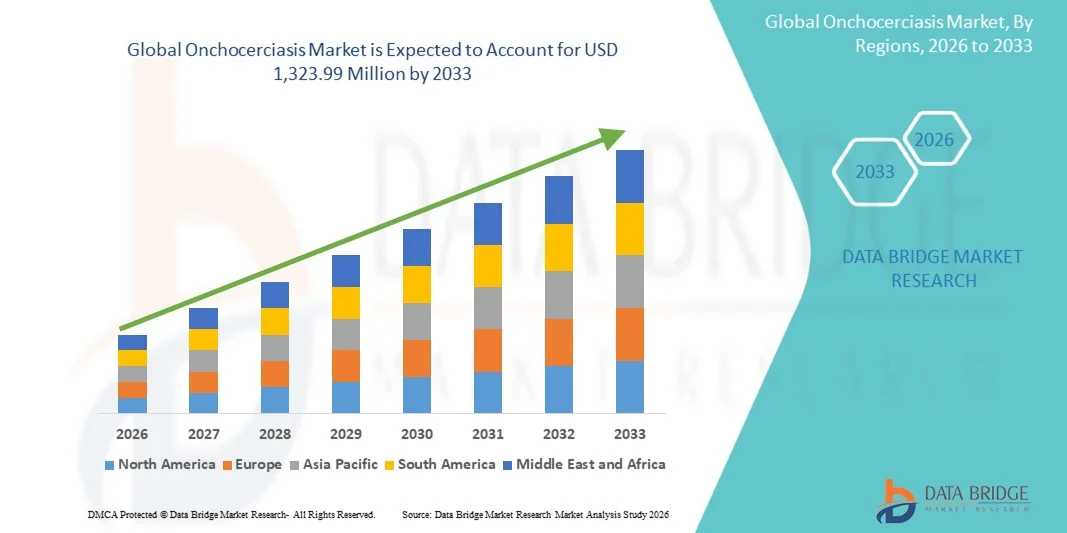
- Согласно анализу рынка Data Bridge Market Research, глобальный объем рынка онхоцеркоза был оценен как800 млн долларов США в 2025 годуОжидается, что он достигнет$1323,99 млн. к 2033 году, вCAGR 6,5%в течение прогнозируемого периода
- Рост рынка в значительной степени обусловлен увеличением распространенности онхоцеркоза в эндемичных регионах в сочетании с устойчивыми глобальными инициативами в области общественного здравоохранения, программами массового управления наркотиками и поддержкой международных организаций, направленных на ликвидацию заболеваний.
- Кроме того, рост инвестиций в программы борьбы с забытыми тропическими болезнями, улучшение доступа к терапии на основе ивермектина и расширение инфраструктуры здравоохранения в странах с низким и средним уровнем дохода усиливают охват лечением и ускоряют прогресс в направлении долгосрочного искоренения болезней.
Размер рынка и прогноз:
- Глобальная рыночная стоимость (2025):USD 800,00 млн.
- Ожидаемая рыночная стоимость (2033):$1323,99 млн.
- Прогноз CAGR (2026–2033):6.5%
Онхоцеркозный анализ рынка
- Онхоцеркоз, также известный как речная слепота, является забытым тропическим заболеванием, вызванным Onchocerca volvulus и передаваемым через укусы черной мухи, требующий долгосрочной профилактической химиотерапии и скоординированных мер общественного здравоохранения, а не традиционных коммерческих путей лечения, что делает программы массового введения лекарств критическим компонентом борьбы с болезнями и усилий по ликвидации.
- Эскалация бремени в эндемичных регионах Африки к югу от Сахары в сочетании с устойчивой поддержкой со стороны глобальных организаций здравоохранения, правительственных программ элиминации и широкомасштабных инициатив по распространению ивермектина является основным фактором, стимулирующим спрос на рынке онхоцеркоза.
- Северная Америка доминировала на рынке онхоцеркоза с самой большой долей 37,5% в 2025 году, в первую очередь из-за активного участия глобальных учреждений здравоохранения, финансирующих организаций и фармацевтических компаний со штаб-квартирой в регионе, которые поддерживают крупномасштабные программы пожертвований, исследовательские инициативы и кампании по ликвидации, несмотря на то, что регион имеет минимальную распространенность местных заболеваний.
- Ожидается, что Азиатско-Тихоокеанский регион станет самым быстрорастущим регионом на рынке онхоцеркоза в течение прогнозируемого периода из-за увеличения инвестиций в здравоохранение, улучшения систем эпиднадзора за заболеваниями и расширения инфраструктуры общественного здравоохранения, наряду с растущим акцентом на устранение забытых тропических заболеваний в уязвимых группах населения.
- Сегмент Ивермектина доминировал на рынке онхоцеркоза с наибольшей долей 72,4% в 2025 году, что обусловлено его доказанной эффективностью, крупномасштабными программами пожертвований фармацевтическими заинтересованными сторонами и его центральной ролью в качестве краеугольного камня терапии в стратегиях повторного массового введения лекарств, направленных на снижение передачи и достижение долгосрочных целей ликвидации.
Сфера охвата и сегментация рынка онхоцеркоза
|
Атрибуты |
Onchocerciasis Ключевые рыночные идеи |
|
Сегменты покрыты |
|
|
Страны, охваченные |
Северная Америка
Европа
Азиатско-Тихоокеанский регион
Ближний Восток и Африка
Южная Америка
|
|
Ключевые игроки рынка |
|
|
Рыночные возможности |
|
|
Информационные наборы данных с добавленной стоимостью |
В дополнение к информации о рыночных сценариях, таких как рыночная стоимость, темпы роста, сегментация, географический охват и основные игроки, рыночные отчеты, курируемые Data Bridge Market Research, также включают углубленный экспертный анализ, эпидемиологию пациентов, анализ трубопроводов, анализ цен и нормативную базу. |
Тенденции рынка онхоцеркоза
«Расширение программ массового наркоконтроля и глобальной ликвидации»
- Значительной и ускоряющейся тенденцией на мировом рынке онхоцеркоза является продолжающееся расширение программ массового введения лекарств (MDA), поддерживаемых глобальными организациями здравоохранения, такими как ВОЗ, с целью прерывания передачи и достижения элиминации в эндемичных регионах.
- Например, в странах Африки к югу от Сахары проводятся кампании по распространению ивермектина на основе партнерских отношений с национальными правительствами и НПО, что позволяет проводить периодическое лечение групп риска с помощью мероприятий, ориентированных на общины.
- Эти крупномасштабные программы опираются на повторяющиеся циклы дозирования и скоординированную логистику для обеспечения высокого охвата, а цифровые инструменты здравоохранения и мониторинг в режиме реального времени все чаще используются для отслеживания соответствия и эффективности программ. Кроме того, интеграция систем картографирования и наблюдения позволяет улучшить идентификацию эндемичных горячих точек и оптимизировать распределение ресурсов.
- Бесшовная координация между правительствами, донорами и программами по донорству лекарственных средств облегчает централизованный контроль за предоставлением лечения и отчетностью, создавая единый подход к лечению заболеваний в разных регионах.
- Эта тенденция к структурированным, основанным на данных и высоко скоординированным стратегиям ликвидации коренным образом меняет ожидания в отношении забытого контроля тропических болезней. Следовательно, заинтересованные стороны все больше уделяют внимание укреплению систем доставки последней мили и расширению доступа к отдаленным и недостаточно обслуживаемым общинам.
- Спрос на устойчивые крупномасштабные программы вмешательства, обеспечивающие непрерывный охват лечением, быстро растет в эндемичных регионах, поскольку глобальные заинтересованные стороны активизируют усилия по ликвидации онхоцеркоза как проблемы общественного здравоохранения.
Динамика рынка онхоцеркоза
водитель
Растущий глобальный фокус на ликвидацию болезней и устойчивую поддержку финансирования
- Растущая глобальная приверженность ликвидации забытых тропических болезней в сочетании с устойчивым финансированием со стороны международных организаций и программ, поддерживаемых донорами, является значительным фактором для повышения спроса на инициативы по борьбе с онхоцеркозом и лечению.
- Например, скоординированные усилия под руководством ВОЗ и при поддержке государственно-частных партнерств продолжают расширять программы донорства ивермектина и укреплять национальные стратегии элиминации в эндемичных странах, ускоряя охват лечением и реализацию программ.
- Поскольку правительства и учреждения здравоохранения уделяют приоритетное внимание долгосрочным целям ликвидации болезней, массовые кампании по лечению предлагают эффективный подход к сокращению передачи и предотвращению новых инфекций среди групп высокого риска.
- Кроме того, растущий акцент на укреплении систем первичной медико-санитарной помощи и интеграции программ NTD в более широкие инициативы в области здравоохранения делает контроль над онхоцеркозом ключевым компонентом планирования общественного здравоохранения в пострадавших регионах.
- Доступность донорской терапии в сочетании с улучшением охвата населения, вовлечением сообщества и упрощенными протоколами лечения являются ключевыми факторами, способствующими принятию крупномасштабных программ вмешательства как в сельских, так и в труднодоступных районах. Тенденция к моделям распределения, возглавляемым сообществом, и повышение осведомленности способствуют успеху программы.
Сдержанность/вызов
«Ограниченная инфраструктура здравоохранения и проблемы, связанные с лечением»
- Ограничения, связанные со слабой инфраструктурой здравоохранения в эндемичных регионах, включая ограниченный доступ к медицинским учреждениям и обученным медицинским работникам, представляют собой серьезную проблему для эффективного осуществления программ контроля онхоцеркоза.
- Например, отдаленные и труднодоступные общины часто сталкиваются с материально-техническими трудностями в поддержании последовательных циклов распределения лекарств, что приводит к пробелам в охвате лечением и снижению эффективности программ.
- Решение этих проблем путем совершенствования систем цепочки поставок, повышения уровня подготовки медицинских работников в общинах и укрепления механизмов наблюдения имеет важное значение для поддержания усилий по ликвидации. Кроме того, зависимость от повторного дозирования в течение многих лет может привести к проблемам с приверженностью пациентов и усталостью программ среди целевых групп населения.
- В то время как программы массового введения наркотиков широко реализуются, поддержание высокого уровня участия остается трудным в некоторых регионах из-за мобильности населения и ограниченной осведомленности о болезни и ее долгосрочных последствиях.
- Преодоление этих проблем за счет расширения участия сообщества, улучшения доступности здравоохранения и постоянной международной поддержки будет иметь жизненно важное значение для достижения устойчивого контроля и возможной ликвидации онхоцеркоза.
Сфера охвата рынка онхоцеркоза
Рынок сегментирован на основе диагностики, лечения, лекарственного средства, пути введения, конечных пользователей и канала распространения.
- По диагнозу
На основании диагноза рынок онхоцеркоза сегментирован на физическое обследование, биопсию кожи, тест Маццотти, нодулектомию, ПЦР-тест и другие. Сегмент физической экспертизы доминировал на рынке с наибольшей долей выручки в 2025 году. Это доминирование в первую очередь связано с его широким использованием в эндемичных регионах, где развитая диагностическая инфраструктура ограничена. Медицинские работники полагаются на видимые клинические симптомы, такие как узелки кожи, дерматит и участие глаз, чтобы поставить предварительный диагноз. Он экономичен, требует минимального оборудования и может быть выполнен в сельской местности и с ограниченными ресурсами. Кроме того, программы массового скрининга часто начинаются с физической оценки перед подтверждением лабораторными методами. Простота и доступность этого метода делают его первым диагностическим подходом во многих регионах с низким уровнем дохода.
Ожидается, что сегмент PCR-тестов продемонстрирует самый быстрый рост за прогнозируемый период. Этот рост обусловлен растущим внедрением молекулярной диагностики, которая обеспечивает более высокую чувствительность и специфичность по сравнению с традиционными методами. ПЦР позволяет раннее выявление инфекции Onchocerca volvulus даже при низких нагрузках паразитов, улучшая результаты лечения заболеваний. Расширение лабораторной инфраструктуры, повышение осведомленности и технологические достижения в области молекулярной диагностики еще больше ускоряют внедрение. Кроме того, глобальные программы ликвидации все чаще полагаются на точные диагностические инструменты, такие как ПЦР, для мониторинга прерывания передачи. Снижение стоимости молекулярного тестирования также способствует его растущей доступности в развивающихся регионах.
- Лечение
На основе лечения рынок сегментирован на медикаменты, поддерживающую помощь и другие. Сегмент лекарств доминировал на рынке из-за его центральной роли в программах управления и контроля заболеваний. Фармакологические вмешательства, особенно кампании массового введения лекарств (MDA), являются краеугольным камнем стратегий ликвидации онхоцеркоза. Лекарства помогают уменьшить микрофилярийную нагрузку, облегчить симптомы и предотвратить передачу. Крупномасштабные инициативы правительств и глобальных организаций здравоохранения обеспечили широкую доступность лекарственной терапии. Лекарственное лечение также предпочтительнее, потому что оно неинвазивное, экономически эффективное и масштабируемое среди населения. Непрерывная зависимость от профилактической химиотерапии еще больше усиливает ее доминирование в эндемичных регионах.
Сегмент поддерживающей терапии, как ожидается, будет расти самыми быстрыми темпами в течение прогнозируемого периода из-за увеличения внимания к управлению осложнениями, связанными с хронической инфекцией. Пациенты, страдающие прогрессирующим онхоцеркозом, часто нуждаются в офтальмологической помощи, дерматологическом лечении и лечении вторичных инфекций. Растущая осведомленность о долгосрочной инвалидности и улучшении качества жизни стимулирует спрос на вспомогательные мероприятия. Системы здравоохранения также расширяют реабилитационные и симптоматические услуги наряду с первичным медикаментозным лечением. Интеграция междисциплинарных подходов к уходу также способствует расширению этого сегмента.
- Наркотики
На основе препарата рынок сегментирован на ивермектин, миксиктин и другие. Сегмент ивермектина доминировал на рынке с долей рынка 72,4% из-за его длительного использования в качестве золотого стандарта в программах контроля онхоцеркоза. Он широко распространен в рамках массовых инициатив по администрированию наркотиков, поддерживаемых глобальными организациями здравоохранения. Ивермектин эффективно снижает микрофилярную плотность, тем самым облегчая симптомы и прерывая передачу. Установленный профиль безопасности, доступность и доступность делают его наиболее часто используемым препаратом в эндемичных регионах. Десятилетия клинического применения и включения в программы общественного здравоохранения укрепили его доминирующее положение на рынке.
Ожидается, что сегмент миксиктина зафиксирует самый быстрый рост за прогнозируемый период из-за более длительного подавления микрофилярии по сравнению с ивермектином. Он предлагает улучшенную эффективность с меньшим количеством циклов лечения, что делает его привлекательным для стратегий элиминации. Утверждение регулирующих органов и расширение участия в программах контроля способствуют его принятию. Moxidectin особенно ценен в регионах с постоянной передачей, несмотря на повторное лечение ивермектином. Текущие исследования, благоприятные клинические результаты и потенциал для улучшения соответствия являются ключевыми факторами, способствующими его быстрому росту.
- По маршруту администрации
На основе маршрута администрирования рынок сегментирован на устный и другие. Пероральный путь введения доминировал на рынке, так как большинство онхоцеркозов, включая ивермектин и миксиктин, вводятся перорально. Пероральные препараты просты в распространении, не требуют специальной медицинской подготовки для введения и подходят для крупномасштабных массовых кампаний по борьбе с наркотиками. Этот маршрут обеспечивает высокий уровень соблюдения требований пациентов и особенно эффективен в отдаленных и недостаточно обслуживаемых регионах. Пероральное введение также устраняет необходимость в инъекциях, снижая риски, связанные с инвазивными процедурами. Его практичность и масштабируемость делают его предпочтительным маршрутом в программах общественного здравоохранения.
Ожидается, что другие сегменты будут расти самыми быстрыми темпами в течение прогнозируемого периода, что обусловлено продолжающимися исследованиями альтернативных методов доставки и дополнительной терапии. Хотя в настоящее время инновации в лекарственных препаратах и механизмах доставки могут повысить эффективность лечения и приверженность пациентов. В некоторых клинических сценариях могут быть изучены альтернативные пути введения для таргетной терапии или комбинированного лечения. Увеличение внимания к персонализированным и оптимизированным подходам к лечению также способствует росту этого сегмента.
- конечными пользователями
На базе конечных пользователей рынок сегментирован на больницы, домашнюю помощь, специализированные клиники и другие. Сегмент домашнего ухода доминировал на рынке из-за широкого внедрения программ массового введения лекарств, которые позволяют проводить лечение на уровне сообщества. Пациенты часто получают лекарства дома или через местных медицинских работников, что снижает необходимость посещения больницы. Этот подход особенно эффективен в сельских и отдаленных районах, где доступ к медицинским учреждениям ограничен. Домашний уход также улучшает охват лечением и соблюдение в больших группах населения. Правительственные инициативы и участие неправительственных организаций еще больше поддерживают эту децентрализованную модель ухода.
Ожидается, что сегмент специализированных клиник будет наблюдать самый быстрый рост в течение прогнозируемого периода, поскольку осведомленность и диагностика распространенных случаев увеличиваются. Специализированные клиники обеспечивают целенаправленный уход за глазными осложнениями и хроническими состояниями кожи, связанными с онхоцеркозом. Растущий спрос на специализированные диагностические и терапевтические услуги подталкивает пациентов к этим услугам. Кроме того, расширение сегмента способствует улучшению инфраструктуры здравоохранения и доступности подготовленных специалистов. Интеграция передовых диагностических инструментов и целевых подходов к лечению способствует дальнейшему росту специализированных клиник.
- Дистрибьюторский канал
На основе канала дистрибуции рынок сегментирован в больничную аптеку, онлайн-аптеку и розничную аптеку. Сегмент больничных аптек доминировал на рынке благодаря централизованной закупке и распределению лекарств через учреждения здравоохранения, участвующие в программах общественного здравоохранения. Больницы часто выступают в качестве основных пунктов распределения для массовых кампаний по администрированию лекарств и клинического лечения. Они обеспечивают надлежащее хранение, контроль качества и регулируемое распределение лекарств. Государственная и институциональная поддержка еще больше укрепляет сети распределения на базе больниц. Этот канал особенно важен в организованных системах здравоохранения и крупномасштабных лечебных инициативах.
Ожидается, что сегмент онлайн-аптек будет расти самыми быстрыми темпами в течение прогнозируемого периода, что обусловлено увеличением цифровизации медицинских услуг и улучшением проникновения Интернета. Онлайн-платформы обеспечивают удобный доступ к лекарствам, особенно в городских и полугородских районах. Растущее предпочтение потребителей услуг доставки на дом и интеграции телемедицины повышает спрос. Онлайн-аптеки также улучшают доступность для пациентов с ограниченными возможностями передвижения или в отдаленных местах. Расширение экосистем здравоохранения электронной коммерции и прогресс в области регулирования еще больше ускоряют внедрение этого канала.
Региональный анализ рынка онхоцеркоза
- Северная Америка доминировала на рынке онхоцеркоза с самой большой долей 37,5% в 2025 году, в первую очередь из-за активного участия глобальных учреждений здравоохранения, финансирующих организаций и фармацевтических компаний со штаб-квартирой в регионе, которые поддерживают крупномасштабные программы пожертвований, исследовательские инициативы и кампании по ликвидации, несмотря на то, что регион имеет минимальную распространенность местных заболеваний.
- Присутствие ведущих фармацевтических и биотехнологических компаний, наряду с хорошо зарекомендовавшими себя научно-исследовательскими институтами, поддерживает непрерывные достижения в лечении, таком как ивермектин и новые методы лечения, такие как миксиктин.
- Высокое внедрение передовых диагностических технологий, включая тестирование на основе ПЦР, еще больше усиливает вклад региона в доходы рынка за счет исследований, наблюдения и экспорта технологий. Государственная поддержка, наряду с сотрудничеством с международными организациями здравоохранения, увеличивает финансирование усилий по искоренению и клинических испытаний, направленных на онхоцеркоз.
Американский Onchocerciasis Market Insight
Соединенные Штаты захватили самую большую долю доходов в 2025 году в Северной Америке на мировом рынке онхоцеркоза, что обусловлено его сильной ролью в исследованиях, финансировании и глобальных инициативах в области здравоохранения, а не распространенностью заболеваний. Страна является ключевым участником программ по борьбе с забытыми тропическими болезнями, поддерживая крупномасштабные усилия по ликвидации через финансовую помощь, политические рамки и международное сотрудничество. Передовые фармацевтические ибиотехнологияОтрасли в США активно участвуют в разработке улучшенных терапевтических и диагностических решений, включая методы молекулярного тестирования, такие как ПЦР. Наличие ведущих научно-исследовательских учреждений и хорошо налаженной инфраструктуры клинических испытаний еще больше ускоряет инновации в стратегиях лечения и наблюдения. Кроме того, активное участие правительства и неправительственных организаций поддерживает программы массового управления наркотиками в эндемичных регионах. Сочетание технологического лидерства, потенциала финансирования и глобального участия в здравоохранении укрепляет США как доминирующего участника рынка онхоцеркоза.
Европейский рынок онхоцеркоза Insight
Европейский рынок онхоцеркоза, по прогнозам, будет расширяться при существенном CAGR в течение прогнозируемого периода, главным образом за счет увеличения участия в глобальных программах ликвидации и сильного акцента на исследования и разработки. Европейские страны вносят значительный вклад посредством финансирования инициатив, совместных исследований и поддержки международных организаций здравоохранения, направленных на борьбу с забытыми тропическими заболеваниями. Регион пользуется передовой инфраструктурой здравоохранения и хорошо отлаженной нормативно-правовой базой, способствующей инновациям в диагностике и терапии. Растущие инвестиции в исследования тропических болезней и внедрение технологий молекулярной диагностики повышают роль Европы в мониторинге и контроле заболеваний. Кроме того, повышение осведомленности научно-исследовательских учреждений и директивных органов способствует совместным усилиям с эндемичными регионами. Ожидается, что акцент региона на научном развитии и глобальном партнерстве в области здравоохранения будет способствовать устойчивому росту рынка.
Великобритания Onchocerciasis Market Insight
Ожидается, что в течение прогнозируемого периода рынок онхоцеркоза в Соединенном Королевстве будет расти на примечательном уровне CAGR, что обусловлено его активным участием в глобальных исследованиях в области здравоохранения и инициативах по финансированию, направленных на борьбу с забытыми тропическими заболеваниями. Великобритания является домом для ведущих академических и исследовательских учреждений, которые активно способствуют разработке диагностических инструментов и терапевтических подходов для паразитарных инфекций. Поддерживаемые правительством программы и сотрудничество с международными организациями поддерживают усилия по ликвидации в эндемичных регионах. Передовая экосистема здравоохранения и исследований страны позволяет разрабатывать и тестировать инновационные решения, включая молекулярную диагностику и улучшенные стратегии лечения. Кроме того, его активное участие в глобальных массовых кампаниях по администрированию наркотиков усиливает его вклад в усилия по борьбе с болезнями. Повышение внимания к международной безопасности в области здравоохранения и передовым исследованиям продолжает стимулировать рост рынка Великобритании.
Немецкий рынок онхоцеркоза Insight
Ожидается, что в течение прогнозируемого периода рынок онхоцеркоза в Германии будет расширяться на значительном CAGR, чему способствуют сильные инвестиции в экономику.биомедицинскийисследования и развитая инфраструктура здравоохранения. Германия играет важную роль в развитии диагностических технологий и поддержке исследовательских инициатив, направленных на борьбу с тропическими заболеваниями. Акцент страны на инновации, устойчивость и точную медицину способствует принятию передовых методов молекулярной диагностики и улучшенных терапевтических подходов. Немецкие научно-исследовательские учреждения активно сотрудничают с глобальными организациями для поддержки программ ликвидации и эпиднадзора за болезнями. Кроме того, повышение осведомленности о забытых тропических болезнях среди заинтересованных сторон здравоохранения стимулирует дальнейшие исследования и разработки. Сочетание научного опыта, технического прогресса и международного сотрудничества позиционирует Германию как ключевой вклад в глобальный рынок онхоцеркоза.
Азиатско-Тихоокеанский рынок онхоцеркоза
Рынок онхоцеркоза в Азиатско-Тихоокеанском регионе будет расти самыми быстрыми темпами в течение прогнозируемого периода, что обусловлено увеличением инвестиций в здравоохранение, ростом исследовательской деятельности и расширением участия в глобальных программах ликвидации. В то время как регион имеет ограниченную эндемическую распространенность, такие страны, как Индия, Китай и Япония, активно вносят вклад в фармацевтическое производство, диагностику и исследовательские инициативы. Быстрая урбанизация, улучшение инфраструктуры здравоохранения и повышение осведомленности о забытых тропических заболеваниях способствуют расширению рынка. Правительственные инициативы, способствующие цифровизации и программам общественного здравоохранения, еще больше расширяют возможности эпиднадзора и борьбы с болезнями. Кроме того, сильная производственная база региона повышает доступность лекарств, используемых в массовых лечебных кампаниях. Ожидается, что совместные усилия с международными организациями еще больше ускорят рост в Азиатско-Тихоокеанском регионе.
Японский рынок онхоцеркоза
Японский рынок онхоцеркоза набирает обороты благодаря передовым технологическим возможностям страны, сильной системе здравоохранения и сосредоточенности на инновациях в медицинских исследованиях. Япония активно участвует в разработке диагностических технологий и терапевтических решений для инфекционных и тропических заболеваний посредством сотрудничества с глобальными организациями здравоохранения. Акцент страны на точную медицину и высококачественную диагностику поддерживает достижения в методах молекулярного тестирования, таких как ПЦР. Кроме того, государственное и институциональное финансирование исследований инфекционных заболеваний способствует разработке более совершенных стратегий лечения. Старение населения Японии и растущий спрос на эффективные решения в области здравоохранения еще больше способствуют внедрению передовых инструментов диагностики и мониторинга. Его приверженность инновациям и глобальным инициативам в области здравоохранения усиливает его вклад в рынок онхоцеркоза.
Индия Onchocerciasis Market Insight
В 2025 году Индия получила самую большую долю рынка в Азиатско-Тихоокеанском регионе, что объясняется ее сильной фармацевтической производственной базой, растущей инфраструктурой здравоохранения и активным участием в глобальных инициативах в области здравоохранения. Страна играет значительную роль в производстве экономически эффективных препаратов, таких как ивермектин, которые широко используются в программах массового введения лекарств в эндемичных регионах. Быстрая урбанизация, рост располагаемых доходов и растущее внедрение передовых технологий здравоохранения поддерживают рост рынка. Расширяющаяся исследовательская экосистема Индии и правительственные инициативы в области здравоохранения также способствуют повышению осведомленности о заболеваниях и борьбе с ними. Наличие доступных вариантов диагностики и лечения, наряду с сильными отечественными производителями, повышает доступность для различных групп населения. Эти факторы коллективно позиционируют Индию в качестве ключевого участника глобального рынка онхоцеркоза.
Лучшие компании на рынке Onchocerciasis
Индустрия Onchocerciasis в основном возглавляется хорошо зарекомендовавшими себя компаниями, в том числе:
- Merck & Co., Inc.(США)
- Alnylam Pharmaceuticals, Inc.(США)
- GSK plc(Великобритания)
- Компания Pfizer Inc(США)
- АстраЗенека(Великобритания)
- Novartis AG (Швейцария)
- Санофи (Франция)
- Eisai Co., Ltd. (Япония)
- Bayer AG (Германия)
- AbbVie Inc. (США)
- Разработка лекарственных средств для Global Health Ltd. (Австралия)
- Инициатива «Лекарства для забытых болезней» (Швейцария)
- A·WOL Ltd. (Великобритания)
- Sightsavers (Великобритания)
- Центр Картера (США)
- PATH (США)
- BIO Ventures for Global Health (США)
- Ливерпульская школа тропической медицины (Великобритания)
- Университет Ганы (Ghana)
Каковы последние события на мировом рынке онхоцеркоза
- В декабре 2025 года государственный министр здравоохранения и социального обеспечения Нигерии сообщил, что 47,1 миллиона нигерийцев больше не нуждаются в лечении онхоцеркоза (речной слепоты) и лимфатического филяриоза после успешного завершения проекта BLON, крупномасштабной инициативы по оценке и контролю заболеваний, поддерживаемой финансированием Фонда Билла и Мелинды Гейтс.
- В марте 2025 года в Женеве состоялась 2-я Глобальная встреча по проблемам забытых тропических болезней кожи, посвященная ускорению прогресса посредством интеграции и инноваций. Онхоцеркоз (речная слепота) был ключевой темой, и заинтересованные стороны обсуждали стратегии улучшения скоординированного контроля и эпиднадзора за заболеваниями в эндемичных регионах.
- В январе 2025 года Всемирная организация здравоохранения подтвердила, что Нигер успешно прервал передачу Onchocerca volvulus, что делает его первой страной в Африканском регионе и пятой в мире по ликвидации онхоцеркоза. Эта веха была достигнута благодаря устойчивому массовому администрированию наркотиков с высоким покрытием и усилиям по борьбе с переносчиками, что ознаменовало историческое достижение общественного здравоохранения в борьбе с речной слепотой.
- В сентябре 2025 года исследователи инициировали клиническое испытание стоимостью 4,9 миллиона фунтов стерлингов, чтобы оценить, можно ли перепрофилировать существующий антибиотик в качестве лекарства от онхоцеркоза. Исследование, проведенное Центром забытых тропических болезней (CNTD), направлено на изучение новых подходов к лечению, выходящих за рамки текущих стратегий массового введения лекарств.
- В декабре 2024 года Управление по контролю за продуктами и лекарствами Ганы выдало разрешение на продажу миксиктина для лечения онхоцеркоза у взрослых и детей в возрасте 4 лет и старше. Это одобрение регулирующих органов поддерживает пилотные программы лечения и представляет собой ключевой шаг к более широкому использованию этого нового препарата в эндемичных странах.
SKU-
Получите онлайн-доступ к отчету на первой в мире облачной платформе рыночной аналитики
- Интерактивная панель анализа данных
- Панель анализа компании для возможностей с высоким потенциалом роста
- Доступ аналитика-исследователя для настройки и запросов
- Анализ конкурентов с помощью интерактивной панели
- Последние новости, обновления и анализ тенденций
- Используйте возможности сравнительного анализа для комплексного отслеживания конкурентов
Методология исследования
Сбор данных и анализ базового года выполняются с использованием модулей сбора данных с большими размерами выборки. Этап включает получение рыночной информации или связанных данных из различных источников и стратегий. Он включает изучение и планирование всех данных, полученных из прошлого заранее. Он также охватывает изучение несоответствий информации, наблюдаемых в различных источниках информации. Рыночные данные анализируются и оцениваются с использованием статистических и последовательных моделей рынка. Кроме того, анализ доли рынка и анализ ключевых тенденций являются основными факторами успеха в отчете о рынке. Чтобы узнать больше, пожалуйста, запросите звонок аналитика или оставьте свой запрос.
Ключевой методологией исследования, используемой исследовательской группой DBMR, является триангуляция данных, которая включает в себя интеллектуальный анализ данных, анализ влияния переменных данных на рынок и первичную (отраслевую экспертную) проверку. Модели данных включают сетку позиционирования поставщиков, анализ временной линии рынка, обзор рынка и руководство, сетку позиционирования компании, патентный анализ, анализ цен, анализ доли рынка компании, стандарты измерения, глобальный и региональный анализ и анализ доли поставщика. Чтобы узнать больше о методологии исследования, отправьте запрос, чтобы поговорить с нашими отраслевыми экспертами.
Доступна настройка
Data Bridge Market Research является лидером в области передовых формативных исследований. Мы гордимся тем, что предоставляем нашим существующим и новым клиентам данные и анализ, которые соответствуют и подходят их целям. Отчет можно настроить, включив в него анализ ценовых тенденций целевых брендов, понимание рынка для дополнительных стран (запросите список стран), данные о результатах клинических испытаний, обзор литературы, обновленный анализ рынка и продуктовой базы. Анализ рынка целевых конкурентов можно проанализировать от анализа на основе технологий до стратегий портфеля рынка. Мы можем добавить столько конкурентов, о которых вам нужны данные в нужном вам формате и стиле данных. Наша команда аналитиков также может предоставить вам данные в сырых файлах Excel, сводных таблицах (книга фактов) или помочь вам в создании презентаций из наборов данных, доступных в отчете.