


Global Patient Derived Xenografts Market Segmentation, By Type (Mice Models and Rat Models), Tumor Type (Hematological Tumor Models, Urological Tumor Models, Respiratory Tumor Models, Gynecological Tumor Models, Gastrointestinal Tumor Models, and Other), Application (Discovery And Preclinical Drug Development, Basic Cancer Research, and Biomarker Analysis), End User (Hospitals And Surgical Centers, Oncology Centers, Clinics, Community Healthcare, and Others) - Industry Trends and Forecast to 2033
Каков размер рынка ксенотрансплантатов и темпы роста
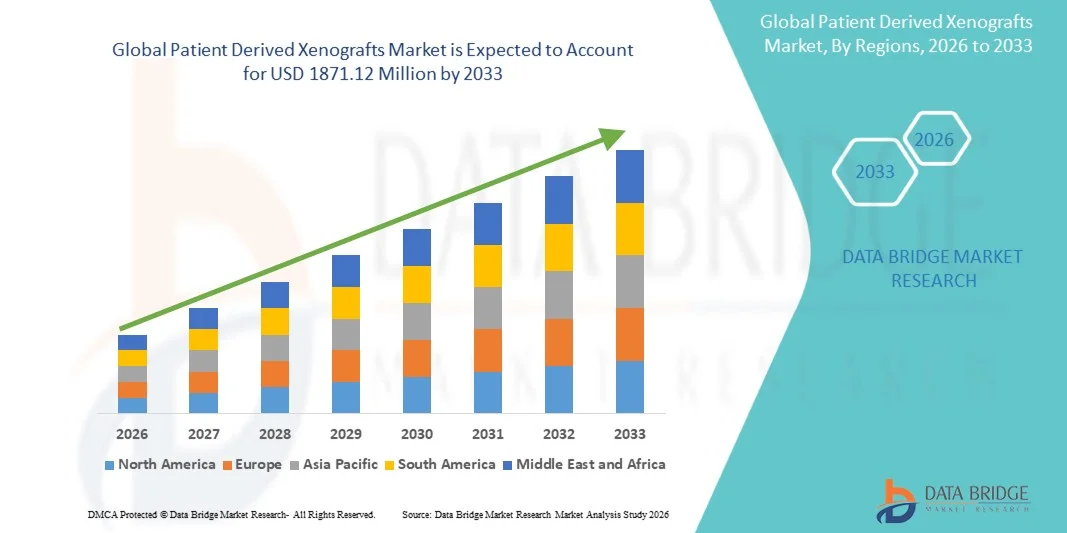
- По данным Data Bridge Market Research Analysis Глобальный размер рынка ксенотрансплантатов, полученных от пациентов, был оценен542,06 млн долларов США в 2025 годуОжидается, что он достигнет1871,12 млн долларов США к 2033 году, вCAGR 16,75%в течение прогнозируемого периода
- Рост рынка в значительной степени подпитывается растущей распространенностью рака и растущим спросом на персонализированную медицину, что приводит к более широкому внедрению передовых доклинических моделей для открытия лекарств и трансляционных исследований в фармацевтических и биотехнологических компаниях.
- Кроме того, рост инвестиций вонкологияИсследования, расширение использования подходов точной медицины и потребность в более прогнозирующих и клинически значимых опухолевых моделях устанавливают ксенотрансплантаты, полученные от пациента, в качестве критического инструмента в исследованиях рака и терапевтических разработках. Эти конвергентные факторы ускоряют внедрение решений Xenografts для пациентов, тем самым значительно повышая рост отрасли.
Размер рынка и прогноз
Глобальная рыночная стоимость (2025):542,06 млн долларов США
Ожидаемая рыночная стоимость (2033):1871,12 млн. долларов США
Прогноз CAGR (2026–2033):16.75%
Пациент получил анализ рынка ксенотрансплантатов
- Ксенотрансплантаты (PDX), включающие имплантацию опухолевых тканей человека иммунодефицитным мышам, становятся все более важными инструментами в онкологических исследованиях и разработке лекарств из-за их способности близко воспроизводить биологию опухоли человека и улучшать точность трансляции в доклинических исследованиях.
- Растущий спрос на ксенотрансплантаты, полученные от пациентов, в первую очередь подпитывается растущей распространенностью рака, растущим вниманием к персонализированной медицине и увеличением инвестиций в фармацевтические исследования и разработки, направленные на повышение эффективности лекарств и снижение частоты неудач клинических испытаний.
- Северная Америка доминировала на рынке ксенотрансплантатов с самой большой долей дохода в 42,3% в 2025 году, характеризующейся передовой исследовательской инфраструктурой, высоким финансированием исследований в области онкологии, сильным присутствием ведущих биотехнологических и фармацевтических компаний и значительным ростом программ точной онкологии в США.
- Ожидается, что Азиатско-Тихоокеанский регион станет самым быстрорастущим регионом на рынке ксенотрансплантатов для пациентов в течение прогнозируемого периода с прогнозируемым CAGR в 14,1%, что обусловлено расширением инициатив по исследованиям рака, увеличением государственного финансирования, растущей деятельностью клинических испытаний и растущим внедрением передовых доклинических моделей в таких странах, как Китай и Индия.
- Сегмент мышиных моделей доминировал на крупнейшей доле рынка в 72% в 2025 году, чему способствовало их широкое признание в исследованиях онкологии и разработке доклинических лекарств.
Сфера охвата и сегментация рынка ксенотрансплантатов
|
Атрибуты |
Пациент получил Ксенотрансплантаты ключевые идеи рынка |
|
Сегменты покрыты |
|
|
Страны, охваченные |
Северная Америка
Европа
Азиатско-Тихоокеанский регион
Ближний Восток и Африка
Южная Америка
|
|
Ключевые игроки рынка |
|
|
Рыночные возможности |
|
|
Информационные наборы данных с добавленной стоимостью |
|
Каковы основные тенденции на рынке ксенотрансплантатов для пациентов
"Развитие персонализированной онкологии и геномной интеграции"
- Значительной и ускоряющейся тенденцией на мировом рынке ксенотрансплантатов для пациентов является растущая интеграция подходов геномного профилирования и точной медицины в онкологических исследованиях. Модели PDX, которые включают имплантацию опухолевых тканей человека иммунодефицитным мышам, все чаще используются для репликации специфической биологии опухоли пациента для целенаправленной разработки лекарств.
- Например, такие организации, как Лаборатория Джексона и Crown Bioscience, расширяют свои библиотеки моделей PDX, интегрированные с данными геномной характеристики для поддержки программ точной онкологии. Эти модели позволяют фармацевтическим компаниям тестировать методы лечения на генетически подобранных профилях опухолей.
- Включение секвенирования следующего поколения (NGS) и исследований, основанных на биомаркерах, повышает прогностическую точность моделей PDX при оценке терапевтических реакций. Исследователи все чаще объединяют платформы PDX с молекулярной диагностикой для выявления действенных мутаций и оптимизации стратегий лечения.
- Кроме того, появление гуманизированных моделей PDX, где иммунные клетки человека вводятся в модели мышей, позволяет проводить более точные иммуноонкологические исследования. Компании, такие как Charles River Laboratories, инвестируют в передовые гуманизированные мышиные платформы для повышения релевантности перевода.
- Растущий спрос на персонализированные методы лечения рака и переход к разработке лекарств на основе биомаркеров коренным образом меняют направления исследований и разработок в онкологии, позиционируя модели PDX в качестве критического доклинического инструмента проверки.
- Поскольку фармацевтические и биотехнологические компании сосредоточены на улучшении показателей успеха клинических испытаний, внедрение геномно-охарактеризованных и клинически аннотированных моделей PDX быстро расширяется в глобальных исследовательских институтах.
Пациент получил динамику рынка ксенотрансплантатов
водитель
«Растущая глобальная заболеваемость раком и рост разработки онкологических препаратов»
- Растущая глобальная распространенность рака является основным фактором роста рынка ксенотрансплантатов. По мере того, как заболеваемость раком продолжает расти во всем мире, растет спрос на надежные доклинические модели, которые точно имитируют поведение опухоли человека.
- Например, глобальная статистика рака, представленная такими организациями, как Всемирная организация здравоохранения, подчеркивает устойчивое увеличение бремени рака, побуждая фармацевтические компании ускорить усилия по открытию лекарств для онкологии.
- Модели PDX обеспечивают более высокую трансляционную релевантность по сравнению с традиционными моделями ксенотрансплантата клеточной линии, улучшая предсказуемость реакции на лекарства и уменьшая неудачи клинических испытаний на поздних стадиях. Это преимущество побуждает биотехнологические и фармацевтические компании внедрять платформы PDX на ранних этапах разработки лекарств.
- Кроме того, увеличение инвестиций в онкологические исследования и расширение клинических испытаний в сегментах иммунотерапии и таргетной терапии значительно повышают спрос на модели опухолей для конкретных пациентов.
- Стратегическое сотрудничество между академическими учреждениями и отраслевыми игроками еще больше укрепляет рынок. Например, партнерство с Horizon Discovery сосредоточено на улучшении трансляционных онкологических решений с использованием передовых платформ ксенотрансплантата.
- Растущее внимание к точной медицине и необходимость выявления прогностических биомаркеров для терапевтического ответа являются ключевыми факторами, способствующими внедрению моделей PDX в глобальных исследовательских экосистемах.
Сдержанность/вызов
"Высокая стоимость, этические проблемы и ограничения моделей"
- Высокая стоимость, связанная с разработкой и обслуживанием моделей PDX, является серьезной проблемой для расширения рынка. Создание колоний ксенотрансплантата требует специализированных объектов для животных, квалифицированного персонала и длительных сроков разработки, что делает процесс дорогостоящим и ресурсоемким.
- По сравнению с традиционными моделями in vitro, системы PDX требуют иммунодефицитных мышей и непрерывного мониторинга, что увеличивает эксплуатационные расходы для исследовательских лабораторий и контрактных исследовательских организаций.
- Этические проблемы, связанные с тестированием на животных и нормативным контролем в различных странах, также могут ограничить широкое распространение. Строгие правила защиты животных могут увеличить затраты на соблюдение правил и сложность процедур.
- Кроме того, хотя модели PDX очень похожи на опухоли человека, они не могут полностью воспроизводить иммунную микросреду человека, если не используются гуманизированные модели. Это ограничение может повлиять на результаты исследований иммунотерапии.
- Относительно длительное время приживления и изменчивость показателей приема опухолей также могут задерживать экспериментальные сроки, создавая проблемы для быстро меняющихся программ разработки лекарств.
- Преодоление этих проблем с помощью технологических достижений, таких как улучшенные гуманизированные модели мышей, стратегии оптимизации затрат и альтернативные подходы к интеграции 3D-органоидов, будет иметь решающее значение для поддержания долгосрочного роста на рынке ксенотрансплантатов.
Сфера рынка ксенотрансплантатов
Рынок сегментирован на основе типа, типа опухоли, приложения и конечного пользователя.
• По типу
В зависимости от типа, рынок ксенотрансплантатов (PDX) сегментирован на модели мышей и крыс. Сегмент мышиных моделей доминировал на крупнейшей доле рынка в 72% в 2025 году, чему способствовало их широкое признание в исследованиях онкологии и разработке доклинических лекарств. Мышиные модели являются предпочтительными из-за их генетического сходства с людьми, более коротких репродуктивных циклов и экономической эффективности. Фармацевтические и биотехнологические компании широко используют модели мыши PDX для оценки поведения опухоли и терапевтических реакций. Их совместимость с иммунодефицитными штаммами повышает показатели успеха приживления опухолей. Увеличение финансирования исследований рака во всем мире поддерживает спрос. Установленная лабораторная инфраструктура и наличие утвержденных протоколов еще более укрепляют процесс принятия. Академические исследовательские институты в значительной степени полагаются на модели мышей для трансляционных исследований. Рост числа клинических испытаний таргетной терапии также способствует росту. Знакомство с данными мыши ускоряет процессы утверждения лекарств. Сильные сети поставщиков и криоконсервированные библиотеки опухолей усиливают доминирование на рынке.
Ожидается, что в сегменте крысиных моделей самый быстрый CAGR составит 11,6% с 2026 по 2033 год, что обусловлено растущим спросом на модели, предлагающие более крупные анатомические структуры для хирургических и визуализационных процедур. Модели PDX обеспечивают преимущества в исследованиях фармакокинетики и токсичности из-за их большего объема крови. Растущие исследования сложных опухолевых микросред поддерживают их принятие. Технологические достижения в инструментах редактирования генов повышают эффективность приживления у крыс. Онкологические центры изучают модели крыс для передовых трансляционных применений. Расширение инициатив в области точной медицины еще больше подпитывает спрос. Развивающиеся рынки, инвестирующие в передовую исследовательскую инфраструктуру, способствуют росту. Растущее сотрудничество между академическими институтами и фармацевтическими фирмами ускоряет разработку моделей. Улучшенная совместимость изображений повышает точность эксперимента. Увеличение финансирования сравнительных онкологических исследований также способствует быстрому расширению.
• По типу опухоли
На основе типа опухоли рынок сегментирован на гематологические модели опухолей, урологические модели опухолей, модели респираторных опухолей, гинекологические модели опухолей, модели опухолей желудочно-кишечного тракта и другие. Сегмент моделей опухолей желудочно-кишечного тракта составил самую большую долю рынка в 26% в 2025 году из-за высокой глобальной распространенности колоректального и желудочного рака. Модели PDX широко используются для изучения неоднородности опухолей и лекарственной устойчивости при раке желудочно-кишечного тракта. Фармацевтические компании отдают приоритет этим моделям для валидации таргетной терапии. Растущие показатели заболеваемости и спрос на персонализированную медицину способствуют принятию. Наличие хорошо охарактеризованных образцов опухоли повышает точность исследований. Расширение программ обнаружения биомаркеров способствует дальнейшему росту. Государственное финансирование исследований рака усиливает расширение сегмента. Академические учреждения используют модели опухолей GI для трансляционных онкологических исследований.
Сегмент моделей респираторных опухолей, по прогнозам, станет свидетелем самого быстрого CAGR в 12,4% с 2026 по 2033 год, что обусловлено растущим бременем рака легких во всем мире. Растущий спрос на точную онкологию и иммунотерапию способствует принятию. Респираторные модели PDX позволяют оценить новые ингибиторы контрольных точек и целевые препараты. Технологические достижения в методах приживления опухолей повышают надежность. Расширение сотрудничества в области клинических исследований повышает эффективность использования. Рост инвестиций в программы исследований рака легких ускоряет рост. Развивающиеся рынки с растущей распространенностью рака, связанного с курением, также вносят свой вклад. Интеграция геномного профилирования с платформами PDX усиливает исследовательские возможности.
• Подача заявки
На основе применения рынок сегментирован на открытие и доклиническую разработку лекарств, фундаментальные исследования рака и анализ биомаркеров. Сегмент открытий и доклинических разработок лекарственных средств доминировал на крупнейшей доле рынка в 49% в 2025 году, чему способствовало увеличение инвестиций в НИОКР фармацевтическими и биотехнологическими компаниями. Модели PDX широко используются для оценки безопасности и эффективности перед клиническими испытаниями. Растущий спрос на таргетную терапию поддерживает ее использование. Регулирующие органы подчеркивают надежные доклинические данные, стимулируя принятие. Растущие онкопатрубки лекарств способствуют росту топливного сегмента. Стратегическое сотрудничество между КРО и фармацевтическими компаниями способствует расширению сферы услуг. Технологические достижения в гуманизированных моделях PDX повышают точность прогнозирования. Увеличение частоты отказов на поздних стадиях испытаний стимулирует раннюю валидацию с использованием систем PDX.
Ожидается, что в сегменте анализа биомаркеров будет наблюдаться самый быстрый CAGR в 13,1% с 2026 по 2033 год, чему способствует растущий акцент на персонализированной медицине и сопутствующей диагностике. Платформы PDX помогают определить прогностические биомаркеры для ответа на терапию. Достижения в технологиях геномного секвенирования улучшают результаты исследований. Расширение интеграции аналитики на основе ИИ с наборами данных PDX поддерживает инновации. Растущие партнерские отношения между диагностическими фирмами и онкологическими центрами повышают спрос. Расширение инициатив в области точной онкологии во всем мире ускоряет их внедрение. Исследовательские гранты, поддерживающие биомаркерную терапию, также способствуют росту.
• Конечный пользователь
На базе конечного пользователя рынок сегментирован на больницы и хирургические центры, онкологические центры, клиники, общественное здравоохранение и другие. Сегмент онкологических центров занимал самую большую долю рынка в 38% в 2025 году, что обусловлено их специализацией в области лечения рака и исследовательской деятельности. Эти центры активно участвуют в клинических испытаниях и программах трансляционных исследований. Увеличение объема пациентов и расширенные лабораторные условия поддерживают использование PDX. Сотрудничество с фармацевтическими фирмами улучшает результаты исследований. Растущее внедрение подходов точной медицины усиливает спрос. Государственное финансирование онкологических центров также способствует расширению.
Ожидается, что сотрудничество в области фармацевтических и биотехнологических исследований в больницах и специализированных исследовательских учреждениях продемонстрирует самый быстрый CAGR в 12,8% с 2026 по 2033 год, чему будет способствовать растущий ассортимент онкологических препаратов и развитие персонализированной терапии. Расширение контрактных исследовательских организаций, предлагающих услуги PDX, способствует росту рынка. Инвестиции в инфраструктуру исследований рака открывают новые возможности для развивающихся стран. Расширение трансграничных партнерских отношений в области исследований ускоряет процесс принятия. Рост спроса на гуманизированные модели еще больше повышает перспективы роста.
Пациент получил региональный анализ рынка ксенотрансплантатов
- Северная Америка доминировала на рынке ксенотрансплантатов с самой большой долей дохода в 42,3% в 2025 году, характеризующейся передовой исследовательской инфраструктурой, высоким финансированием исследований в области онкологии и сильным присутствием ведущих биотехнологических и фармацевтических компаний.
- Научно-исследовательские учреждения в регионе высоко ценят точность, трансляционную значимость и прогностические возможности, предлагаемые моделями производных ксенотрансплантатов пациентов (PDX) в разработке онкологических препаратов и открытии биомаркеров.
- Это широкое распространение также поддерживается надежными программами точной онкологии, значительным федеральным финансированием, расширением сетей клинических испытаний и постоянными инновациями в технологиях моделирования опухолей, созданием платформ PDX в качестве критического инструмента в доклинических исследованиях рака.
Американский пациент получил представление о рынке ксенотрансплантатов
Американский рынок ксенотрансплантатов, полученных от пациентов, занял самую большую долю доходов в 2025 году в Северной Америке, чему способствовал сильный рост программ точной онкологии и расширение трубопроводов лекарств для онкологии. Академические исследовательские центры, биотехнологические фирмы и фармацевтические компании все чаще полагаются на модели PDX для повышения точности трансляционных исследований и снижения частоты неудач клинических испытаний. Растущая заболеваемость раком и растущий спрос на персонализированные стратегии лечения еще больше ускоряют принятие. Существенное федеральное финансирование исследований рака и хорошо налаженная инфраструктура биобанкинга укрепляют рыночный ландшафт. Кроме того, расширение сотрудничества между контрактными исследовательскими организациями и разработчиками лекарств расширяет возможности доклинических исследований. Непрерывные инновации в гуманизированных моделях мышей и передовых методах приживления опухолей способствуют дальнейшему росту промышленности в США.
Европейский пациент получил представление о рынке ксенотрансплантатов
Прогнозируется, что рынок ксенотрансплантатов в Европе будет расширяться при существенном CAGR в течение прогнозируемого периода, что обусловлено ростом инвестиций в исследования в области онкологии и расширением инициатив в области точной медицины. Такие страны, как Германия, Великобритания и Франция, укрепляют свои возможности в области трансляционных исследований рака. Растущая распространенность рака и растущий спрос на таргетную терапию поощряют использование высокопрогностических доклинических моделей опухолей. Государственные исследовательские гранты и государственно-частное партнерство способствуют развитию инноваций. Расширение передовых лабораторных учреждений и опухолевых биобанков также способствует росту рынка. В регионе наблюдается растущее внедрение платформ PDX в академических исследовательских институтах и программах развития фармацевтики.
Британский пациент получил представление о рынке ксенотрансплантатов
Ожидается, что рынок ксенотрансплантатов, полученных в Великобритании, вырастет в течение прогнозируемого периода благодаря расширению программ геномики рака и точным исследованиям онкологии. Университеты и онкологические исследовательские центры все чаще интегрируют модели PDX в трансляционные исследования. Растущая активность клинических испытаний, ориентированных на редкие и агрессивные виды рака, также способствует спросу. Государственное финансирование биомедицинских инноваций и совместных исследовательских инициатив укрепляет экосистему. Растущий акцент на разработке лекарств, основанных на биомаркерах, также способствует принятию. Великобритания продолжает позиционировать себя как ключевой вклад в развитие онкологических исследований в Европе.
В Германии пациент получил представление о рынке ксенотрансплантатов
Ожидается, что рынок ксенотрансплантатов в Германии в течение прогнозируемого периода будет расширяться на значительном CAGR, чему будет способствовать сильная инфраструктура биомедицинских исследований и увеличение расходов на исследования рака. Созданный фармацевтический сектор страны активно использует платформы PDX для доклинической валидации таргетной терапии. Растущий спрос на инновационные онкологические методы лечения стимулирует инвестиции в передовые системы моделирования опухолей. Государственная поддержка инноваций в области трансляционной медицины и биотехнологии способствует дальнейшему росту рынка. Расширение сотрудничества между научно-исследовательскими институтами и биотехнологическими компаниями укрепляет потенциал развития. Германия остается центральным центром онкологических исследований в Европе.
Азиатско-Тихоокеанский пациент получил представление о рынке ксенотрансплантатов
Ожидается, что рынок ксенотрансплантатов Азиатско-Тихоокеанского региона будет самым быстрорастущим регионом в течение прогнозируемого периода, регистрируя прогнозируемый CAGR в 14,1%. Рост обусловлен расширением инициатив по исследованию рака, увеличением государственного финансирования и ростом клинических испытаний в таких странах, как Китай и Индия. Быстрое развитие биотехнологической инфраструктуры и растущее понимание точной онкологии ускоряют внедрение передовых доклинических моделей. Многонациональные фармацевтические компании расширяют исследовательскую деятельность в регионе. Улучшения в нормативно-правовой базе и механизмах финансирования исследований еще больше укрепляют экосистему. Азиатско-Тихоокеанский регион открывает широкие долгосрочные возможности для расширения рынка PDX.
Японский пациент получил представление о рынке ксенотрансплантатов
Рынок ксенотрансплантатов в Японии набирает обороты благодаря передовым исследовательским возможностям страны и сильному акценту на инновации в области онкологии. Рост заболеваемости раком и старение населения увеличивают спрос на точные доклинические модели опухолей. Академические учреждения и фармацевтические фирмы интегрируют платформы PDX в разработку таргетной терапии. Правительственные инициативы, поддерживающие точную медицину и трансляционные исследования, способствуют дальнейшему росту. Передовые лабораторные технологии и высокие стандарты исследований способствуют принятию новых решений. Япония по-прежнему вносит значительный вклад в расширяющийся ландшафт исследований в области онкологии в Азиатско-Тихоокеанском регионе.
Китайский пациент получил представление о рынке ксенотрансплантатов
Китайский рынок ксенотрансплантатов обеспечил наибольшую долю доходов в Азиатско-Тихоокеанском регионе в 2025 году, чему способствовало быстрое расширение сектора биотехнологий и увеличение финансирования исследований рака. Правительственные инициативы по продвижению отечественных фармацевтических инноваций значительно повышают спрос на передовые системы моделирования опухолей. Расширение онкологических центров и научно-исследовательских учреждений ускоряет внедрение PDX. Растущие объемы клинических испытаний и растущее многонациональное сотрудничество еще больше увеличивают рост рынка. Улучшения в лабораторной инфраструктуре и регуляторных процессах повышают эффективность исследований. Китай по-прежнему является быстрорастущим и стратегически важным рынком в мировой индустрии PDX.
Каковы основные компании на рынке ксенотрансплантатов
Индустрия ксенотрансплантатов, полученных от пациентов, в основном возглавляется хорошо зарекомендовавшими себя компаниями, в том числе:
•Лаборатории реки Чарльз (США)
Лаборатория Джексона (США)
Taconic Biosciences (США)
•Horizon Discovery Group (Великобритания)
Crown Bioscience (США)
• Inotiv (США)
Шанхайский центр образцовых организмов (Китай)
Фармацевтические услуги (Финляндия)
Креативная анимодель (Китай)
• GemPharmatech (Китай)
•Vitalstar Biotechnology (Китай)
• Envigo (США)
Услуги Oncodesign (Франция)
BioDuro-Sundia (Китай/США)
•Онкология чемпионов (США)
Последние события на мировом рынке ксенотрансплантатов
- В январе 2021 года Charles River Laboratories International, Inc. объявила о стратегическом партнерстве с Cypre, Inc. для использования технологии 3D-гидрогеля (Falcon-X) для улучшения понимания микросреды опухоли и повышения производительности прогностической модели PDX для исследований терапевтической эффективности в онкологических исследованиях.
- В марте 2024 года InVitro Research Solutions Private Limited, индийская контрактная исследовательская организация, запустила инновационную ортотопную модель PDX человеческой глиобластомы у мышей NSG-SGM3, используя визуализацию биолюминесценции in vivo для улучшения персонализированных исследований лечения агрессивных видов рака мозга и поддержки разработки целевых методов лечения.
- В феврале 2024 года Charles River Laboratories заключила многолетний контракт с OncoOne на разработку модели ксенотрансплантата для пациентов и сопутствующие доклинические услуги, направленные на ускорение трансляционных онкологических исследовательских программ, сигнализируя промышленности о спросе на специализированные модели рака высокой точности.
- В мае 2025 года Crown Bioscience вступила в стратегическое сотрудничество с Jiangsu Hengrui Medicine, совместно разрабатывая и проверяя модели PDX для использования в открытии лекарств для онкологии и персонализированном доклиническом тестировании - интеграции реальных данных о опухоли пациента в терапевтические программы Хенгруя.
- В марте 2025 года Thermo Fisher Scientific расширила свои доклинические онкологические услуги, приобретя Cognate BioServices, укрепив возможности в разработке моделей PDX и более широкую поддержку in vivo рабочих процессов по разработке лекарств от рака.
- В октябре 2025 года Crown Bioscience расширила свое присутствие в США, открыв новый Центр разработки моделей в Северной Каролине, в котором размещена одна из крупнейших в мире коммерчески доступных коллекций PDX, охватывающая около 1000 моделей опухолевых органоидов по более чем 35 показаниям к раку.
- В октябре 2025 года Charles River Laboratories завершила приобретение Oncodesign, специалиста по онкологии, значительно расширив свой портфель PDX и охват опухолевого типа для услуг моделей in vivo.
- В октябре 2025 года японская компания JSR Corporation приобрела портфель моделей рака предстательной железы PDX у крупного исследовательского учреждения США для расширения своей платформы исследований онкологии и предложений доклинических моделей для разработки точных лекарств.
- В октябре 2025 года Champions Oncology заключила лицензионное соглашение с Weill Cornell Medicine для распространения и коммерциализации широкого банка гематологических моделей PDX по всему миру, ускорив доступ к клинически аннотированным опухолевым моделям для исследований рака и терапевтической оценки.
SKU-
Получите онлайн-доступ к отчету на первой в мире облачной платформе рыночной аналитики

- Интерактивная панель анализа данных
- Панель анализа компании для возможностей с высоким потенциалом роста
- Доступ аналитика-исследователя для настройки и запросов
- Анализ конкурентов с помощью интерактивной панели
- Последние новости, обновления и анализ тенденций
- Используйте возможности сравнительного анализа для комплексного отслеживания конкурентов
Методология исследования
Сбор данных и анализ базового года выполняются с использованием модулей сбора данных с большими размерами выборки. Этап включает получение рыночной информации или связанных данных из различных источников и стратегий. Он включает изучение и планирование всех данных, полученных из прошлого заранее. Он также охватывает изучение несоответствий информации, наблюдаемых в различных источниках информации. Рыночные данные анализируются и оцениваются с использованием статистических и последовательных моделей рынка. Кроме того, анализ доли рынка и анализ ключевых тенденций являются основными факторами успеха в отчете о рынке. Чтобы узнать больше, пожалуйста, запросите звонок аналитика или оставьте свой запрос.
Ключевой методологией исследования, используемой исследовательской группой DBMR, является триангуляция данных, которая включает в себя интеллектуальный анализ данных, анализ влияния переменных данных на рынок и первичную (отраслевую экспертную) проверку. Модели данных включают сетку позиционирования поставщиков, анализ временной линии рынка, обзор рынка и руководство, сетку позиционирования компании, патентный анализ, анализ цен, анализ доли рынка компании, стандарты измерения, глобальный и региональный анализ и анализ доли поставщика. Чтобы узнать больше о методологии исследования, отправьте запрос, чтобы поговорить с нашими отраслевыми экспертами.
Доступна настройка
Data Bridge Market Research является лидером в области передовых формативных исследований. Мы гордимся тем, что предоставляем нашим существующим и новым клиентам данные и анализ, которые соответствуют и подходят их целям. Отчет можно настроить, включив в него анализ ценовых тенденций целевых брендов, понимание рынка для дополнительных стран (запросите список стран), данные о результатах клинических испытаний, обзор литературы, обновленный анализ рынка и продуктовой базы. Анализ рынка целевых конкурентов можно проанализировать от анализа на основе технологий до стратегий портфеля рынка. Мы можем добавить столько конкурентов, о которых вам нужны данные в нужном вам формате и стиле данных. Наша команда аналитиков также может предоставить вам данные в сырых файлах Excel, сводных таблицах (книга фактов) или помочь вам в создании презентаций из наборов данных, доступных в отчете.











