Global Pleural Effusion Market Segmentation, By Type (Transudative, Exudative, and Others), Treatment (Surgery, Medication, and Others), Route of Administration (Oral, Parenteral, and Others), End-Users (Hospitals, Homecare, Speciality Centres, and Others), Distribution Channel (Hospital Pharmacy, Online Pharmacy, and Retail Pharmacy) - Industry Trends and Forecast to 2033
Каков размер рынка плевральной эффузии и темпы роста
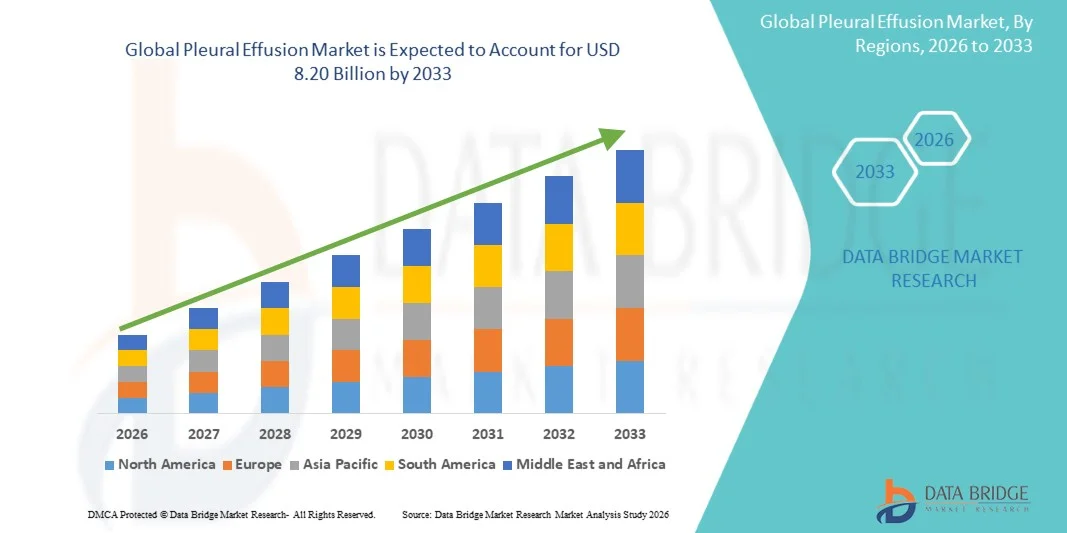
- Согласно анализу Data Bridge Market Research, размер мирового рынка плевральной эффузии был оценен как5,15 млрд долларов в 2025 годуОжидается, что он достигнет8,20 млрд долларов к 2033 году, вCAGR 6.00%в течение прогнозируемого периода
- Рост рынка в значительной степени подпитывается растущей распространенностью респираторных и сердечно-сосудистых заболеваний, включая пневмонию, рак и застойную сердечную недостаточность, которые являются основными причинами плеврального выпота. Достижения в области методов диагностической визуализации и минимально инвазивных процедур лечения также способствуют более широкому внедрению в клинических условиях.
- Кроме того, растущий спрос на безопасные, эффективные и удобные для пациента варианты лечения, такие как торасцентез, плевродез и внутривенные плевральные катетеры, устанавливает решения для управления плевральным выпотом как необходимые в современном здравоохранении. Эти конвергентные факторы ускоряют освоение решений плеврального выпота, тем самым значительно стимулируя рост на мировом рынке плеврального выпота.
Размер рынка и прогноз
- Глобальная рыночная стоимость (2025):$5,15 млрд.
- Ожидаемая рыночная стоимость (2033):8,20 млрд. долларов США
- Прогноз CAGR (2026–2033):6.00%
Каковы основные выводы рынка плевральной эффузии
- Решения для управления плевральной эффузией, включая диагностическую визуализацию, торасцентез, плевродез и внутриплевральные катетеры, становятся все более важными в современном здравоохранении из-за растущего бремени респираторных заболеваний, рака и сердечно-сосудистых заболеваний, которые приводят к накоплению жидкости в плевральном пространстве. Достижения в области минимально инвазивных процедур и технологий визуализации еще больше улучшают результаты лечения и принятие во всех медицинских учреждениях.
- Растущий спрос на лечение плевральной эффузии в первую очередь подпитывается увеличением распространенности хронических заболеваний, таких как рак легких, туберкулез и сердечная недостаточность, а также растущей осведомленностью о ранней диагностике и эффективном лечении заболеваний. Эти факторы способствуют принятию передовыхтерапевтическийДиагностические решения по всему миру
- Северная Америка доминировала на рынке плеврального выпота, на долю которого в 2025 году приходилось около 43% мирового дохода, поддерживаемого передовой инфраструктурой здравоохранения, высокими расходами на здравоохранение и сильным присутствием ключевых медицинских устройств.фармацевтическийкомпаний. США лидируют в регионе с широким внедрением малоинвазивных процедур
- Ожидается, что Азиатско-Тихоокеанский регион станет самым быстрорастущим регионом на рынке плеврального выпота в течение прогнозируемого периода, при этом прогнозируемый CAGR обусловлен увеличением инвестиций в здравоохранение, ростом распространенности респираторных заболеваний и улучшением доступа к диагностическим и лечебным учреждениям.
- Парентеральный сегмент доминировал на 47% рынка в 2025 году, что обусловлено его эффективностью в условиях неотложной помощи и быстрым терапевтическим действием.
Сфера охвата и сегментация рынка плевральной эффузии
|
Атрибуты |
Ключ плевральной эфузииОбзор рынка |
|
Сегменты покрыты |
|
|
Страны, охваченные |
Северная Америка
Европа
Азиатско-Тихоокеанский регион
Ближний Восток и Африка
Южная Америка
|
|
Ключевые игроки рынка |
|
|
Рыночные возможности |
|
|
Информационные наборы данных с добавленной стоимостью |
В дополнение к информации о рыночных сценариях, таких как рыночная стоимость, темпы роста, сегментация, географическое покрытие и основные игроки, рыночные отчеты, курируемые Data Bridge Market Research, также включают углубленный экспертный анализ, эпидемиологию пациентов, анализ трубопроводов, анализ цен и нормативную базу. |
Каковы основные тенденции на рынке плевральной эффузии
"Повышение внимания к ранней диагностике и минимально инвазивным методам лечения"
- Значительной и ускоряющейся тенденцией на мировом рынке плевральной эфузии является растущий акцент на раннюю диагностику и внедрение малоинвазивных методов лечения.
- Медицинские работники все больше сосредотачиваются на улучшении результатов лечения пациентов посредством своевременной идентификации и эффективных стратегий управления жидкостью, снижения осложнений и госпитализации.
- Например, растущее использование ультразвукового торасцентеза в больницах и учреждениях неотложной помощи значительно улучшило безопасность и точность процедур дренажа плевральной жидкости, минимизируя такие риски, как пневмоторакс и повышая показатели восстановления пациентов.
- Развитие технологий визуализации, включая рентген грудной клетки, компьютерную томографию и ультразвуковую терапию, позволяет клиницистам обнаруживать плевральный выпот на более ранних стадиях, облегчая быстрое клиническое вмешательство.
- Существует также растущее предпочтение внутрибольничных плевральных катетеров и амбулаторных управленческих решений, которые позволяют пациентам управлять повторяющимися выпотами в домашних условиях, тем самым снижая бремя госпитализации и улучшая качество жизни.
- Кроме того, расширение исследований целевых методов лечения основных причин, таких как злокачественные опухоли, инфекции и сердечно-сосудистые заболевания, способствует более эффективным и персонализированным подходам к лечению.
- Эта тенденция к ориентированному на пациента уходу, улучшенной диагностической точности и менее инвазивным процедурам меняет протоколы лечения и стимулирует непрерывные инновации на рынке плеврального выпота.
Каковы основные драйверы рынка плевральной эффузии
водитель
«Повышение распространенности хронических заболеваний и увеличение использования медицинских услуг»
- Растущая распространенность хронических заболеваний, таких как рак, сердечная недостаточность, цирроз печени и легочные инфекции, является основным драйвером для рынка плевральной эфузии.
- Эти условия являются основными факторами накопления жидкости в плевральном пространстве, что приводит к росту пула пациентов, требующих диагностики и лечения.
- Например, согласно глобальным исследованиям в области здравоохранения, злокачественное плевральное выпот обычно наблюдается у пациентов с распространенным раком легких и молочной железы, что побуждает поставщиков медицинских услуг принимать повторные процедуры дренажа и долгосрочные решения для управления.
- Рост расходов на здравоохранение и улучшение доступа к стационарной помощи, особенно в развитых регионах, позволяют большему количеству пациентов проходить своевременную диагностику и лечение, тем самым поддерживая рост рынка.
- Повышение осведомленности среди медицинских работников о ранних симптомах и осложнениях, связанных с плевральным выпотом, приводит к более высоким показателям диагностики и лучшему лечению заболеваний.
- Кроме того, достижения в области медицинских устройств, включая улучшенные дренажные системы и портативные катетеры, повышают эффективность лечения и комфорт пациентов, что способствует дальнейшему внедрению в медицинских учреждениях.
Сдержанность/вызов
"Высокие затраты на лечение и ограниченный доступ в условиях ограниченных ресурсов"
- Несмотря на растущий спрос, высокие затраты, связанные с диагностической визуализацией, госпитализацией и передовыми процедурами лечения, остаются значительным барьером, особенно в регионах с низким и средним уровнем дохода, где бюджеты здравоохранения ограничены.
- Например, стоимость повторных процедур торасцентеза и долгосрочного использования внутривенных плевральных катетеров в частных медицинских учреждениях может быть финансово обременительной для пациентов без надлежащего страхового покрытия, ограничивая непрерывность лечения.
- Ограниченный доступ к передовой инфраструктуре здравоохранения, особенно в сельских и недостаточно обслуживаемых районах, может задержать диагностику и лечение, что приводит к прогрессированию заболеваний и осложнениям.
- Нехватка квалифицированных медицинских работников и недостаточная осведомленность о ранних симптомах могут еще больше препятствовать своевременному вмешательству в определенных регионах.
- Вариабельность протоколов лечения и политики возмещения в разных странах также может создавать проблемы для стандартизированного оказания медицинской помощи и расширения рынка.
- Решение этих проблем потребует улучшения финансирования здравоохранения, расширения диагностической инфраструктуры, повышения осведомленности пациентов и разработки экономически эффективных решений лечения для обеспечения более широкой доступности.
Как сегментируется рынок плевральной эффузии
Рынок сегментирован на основе типа, лечения, пути введения, конечных пользователей и канала распределения.
• По типу
По типу рынок Плевральной Эффузии сегментирован на транссудативный, экссудативный и другие. Транссудативный сегмент доминировал на крупнейшей доле рынка в 43,6% в 2025 году, что обусловлено его высокой распространенностью, связанной с такими состояниями, как сердечная недостаточность, цирроз печени и расстройства почек. Больницы и специализированные центры часто диагностируют транссудативное плевральное выпот из-за его сильной клинической связи с системными заболеваниями. Ранняя диагностика и стандартные диагностические протоколы поддерживают его доминирование. Высокий приток пациентов в больницы способствует увеличению спроса на лечение. Знакомство с врачом и установленные клинические рекомендации усиливают принятие. Диагностическая визуализация и лабораторные исследования улучшают показатели обнаружения. Страховое покрытие основных заболеваний поддерживает лечение. Мониторинг на дому также способствует управлению. Программы информирования о хронических заболеваниях способствуют раннему выявлению. Соответствие пациентов остается высоким из-за постоянного мониторинга. Исследовательские инициативы еще больше укрепляют клиническое понимание. Увеличение стареющего населения поддерживает устойчивое доминирование.
Ожидается, что в экссудативном сегменте самый быстрый CAGR составит 9,7% с 2026 по 2033 год, чему способствует рост заболеваемости инфекциями, злокачественными новообразованиями и воспалительными заболеваниями, приводящими к плевральным осложнениям. Больницы и специализированные центры расширяют протоколы диагностики и лечения экссудативных состояний. Достижения в области визуализации и торасцентезных процедур улучшают обнаружение и управление. Повышение осведомленности среди врачей способствует усыновлению. Развивающиеся рынки демонстрируют сильный рост за счет улучшения инфраструктуры здравоохранения. Фармацевтические инновации поддерживают целевые подходы к лечению. Программы обучения пациентов способствуют ранней диагностике. Интеграция с онкологией и лечением инфекционных заболеваний повышает спрос. Государственные инициативы в области здравоохранения улучшают доступ к медицинской помощи. Телемедицина и удаленная консультация поддерживают мониторинг пациентов. Растущая распространенность рака легких и туберкулеза еще больше ускоряет рост.
• Лечение
На основе лечения рынок плевральной эфузии сегментирован на хирургию, лекарства и другие. Сегмент лекарств доминировал на крупнейшей доле рынка в 40,8% в 2025 году, что обусловлено его широким использованием в управлении основными причинами, такими как инфекции, сердечная недостаточность и воспаление. Больницы и поставщики услуг по уходу на дому часто назначают лекарства для контроля симптомов и лечения заболеваний. Высокое соответствие пациентов поддерживает доминирование сегмента. Предпочтение врача неинвазивному лечению усиливает усыновление. Наличие широкого спектра препаратов повышает гибкость лечения. Страхование и доступность улучшают доступность. Комбинированная терапия повышает эффективность. Программы осведомленности поддерживают приверженность лекарствам. Развивающиеся рынки демонстрируют рост потребления. Непрерывные исследования и разработки повышают эффективность препарата. Интеграция с поддерживающей заботой улучшает результаты. Распространенность хронических заболеваний поддерживает спрос.
Ожидается, что сегмент хирургии будет наблюдать самый быстрый CAGR в 10,5% с 2026 по 2033 год, чему способствует увеличение использования торасцентеза, плевродеза и передовых хирургических вмешательств для тяжелых случаев. Больницы и специализированные центры расширяют хирургические возможности. Технологические достижения улучшают процедурную безопасность и результаты. Растущие случаи повторного плеврального выпота поддерживают спрос. Рекомендация врача способствует усыновлению. Развивающиеся рынки показывают растущий доступ к хирургической помощи. Программы обучения повышают хирургический опыт. Интеграция с технологиями визуализации повышает точность. Осведомленность пациентов о передовых методах лечения повышает их принятие. Страховая поддержка облегчает процедуры. Минимально инвазивные методы еще больше ускоряют рост.
• По маршруту администрации
На основе пути администрирования рынок плевральной эффузии сегментирован на оральный, парентеральный и другие. Сегмент парентеральной терапии доминировал на 47% рынка в 2025 году, что обусловлено его эффективностью в условиях неотложной помощи и быстрым терапевтическим действием. Больницы и специализированные центры отдают предпочтение парентеральному управлению при тяжелых случаях. Клинические протоколы поддерживают его широкое использование. Высокая эффективность и контролируемое дозирование усиливают усыновление. Интеграция с больничным уходом улучшает результаты. Доверие врачей и одобрение регулирующих органов укрепляют доминирование. Развивающиеся рынки демонстрируют растущее принятие. Технологические усовершенствования IV доставки повышают безопасность. Системы мониторинга пациентов поддерживают администрирование. Комбинированная терапия повышает эффективность лечения. Критические настройки ухода в значительной степени зависят от парентеральных маршрутов.
Ожидается, что в пероральном сегменте будет наблюдаться самый быстрый CAGR в 8,9% с 2026 по 2033 год, что обусловлено удобством, тенденциями амбулаторного лечения и растущим предпочтением ухода на дому. Поставщики услуг по уходу на дому и амбулаторные клиники широко применяют пероральную терапию. Соответствие пациентов является высоким из-за простоты использования. Фармацевтические инновации улучшают составы лекарств. Программы информирования способствуют раннему лечению. Развивающиеся рынки демонстрируют сильный рост. Телемедицина поддерживает рецепт и мониторинг. Экономическая эффективность стимулирует усыновление. Управление хроническими заболеваниями увеличивает спрос. Рекомендации врачей усиливают использование. Доступность и удобство поддерживают рост.
• Конечными пользователями
На базе конечных пользователей рынок Pleural Effusion сегментирован на больницы, домашнюю помощь, специализированные центры и другие. Сегмент больниц доминировал на рынке с самой большой долей выручки в 49,2% в 2025 году, что обусловлено высоким притоком пациентов, наличием передовых диагностических инструментов и доступом к специализированному лечению. Больницы эффективно управляют как острыми, так и хроническими случаями. Интеграция с междисциплинарными командами улучшает уход за пациентами. Опыт врача поддерживает точную диагностику. Передовые изображения и лабораторные объекты усиливают доминирование. Страховое покрытие улучшает доступ пациентов. Службы неотложной помощи способствуют более высокому приему. Государственные инициативы поддерживают инфраструктуру больниц. Постоянный мониторинг улучшает результаты. Исследования и клинические испытания укрепляют роль больницы.
Ожидается, что в сегменте услуг по уходу за домом будет наблюдаться самый быстрый CAGR в 11,3% с 2026 по 2033 год, чему способствует увеличение предпочтений в лечении на дому, интеграции телемедицины и удобстве. Пациенты выбирают уход на дому для лечения хронических заболеваний. Технологии удаленного мониторинга поддерживают лечение. Экономическая эффективность стимулирует усыновление. Развивающиеся рынки показывают рост услуг по уходу за домом. Осведомленность и образование пациентов улучшают соблюдение. Интеграция с цифровыми платформами здравоохранения повышает доступность. Поставщики медицинских услуг расширяют предложения по уходу на дому. Решения для поддерживающей терапии способствуют росту. Удобство и комфорт еще больше ускоряют усыновление.
• Распределительный канал
На основе канала дистрибуции рынок Pleural Effusion сегментирован в больничную аптеку, онлайн-аптеку и розничную аптеку. Сегмент больничных аптек доминировал на рынке с наибольшей долей выручки в 45,4% в 2025 году, что обусловлено прямой интеграцией с протоколами лечения в больницах и немедленной доступностью лекарств. Больницы полагаются на внутренние аптеки для лекарств критической помощи. Рецепты врачей в основном выполняются по больничным каналам. Соответствие нормативным требованиям обеспечивает качество и безопасность. Эффективность цепочки поставок поддерживает доступность. Доверие пациентов способствует усыновлению. Страховое покрытие облегчает доступ. Развивающиеся рынки укрепляют сети больничных аптек.
Ожидается, что сегмент онлайн-аптек будет наблюдать самый быстрый CAGR в 12,1% с 2026 по 2033 год, что обусловлено ростом электронной коммерции, удобством и услугами доставки. Увеличение использования смартфонов поддерживает онлайн-принятие. Пациенты предпочитают легкий доступ к лекарствам. Цифровые платформы повышают осведомленность. Развивающиеся рынки демонстрируют быстрый рост. Интеграция телемедицины улучшает рецепты. Скидки и предложения привлекают потребителей. Доступность и удобство поддерживают спрос. Расширение цифрового здравоохранения способствует долгосрочному росту.
В каком регионе находится наибольшая доля рынка плевральной эффузии
- Северная Америка доминировала на рынке плеврального выпота, на долю которого в 2025 году приходилось около 43% мирового дохода, поддерживаемого передовой инфраструктурой здравоохранения, высокими расходами на здравоохранение и сильным присутствием ведущих фармацевтических и медицинских компаний, специализирующихся на респираторной и грудной помощи. Регион выигрывает от хорошо зарекомендовавших себя диагностических возможностей, включая передовые технологии визуализации, такие как рентген грудной клетки, КТ-сканирование и ультразвук, которые позволяют раннее и точное обнаружение плеврального выпота, тем самым увеличивая скорость лечения.
- Например, широкое внедрение минимально инвазивных процедур, таких как торасцентез и размещение плеврального катетера в больницах США, значительно улучшило результаты лечения пациентов и сократило пребывание в больнице. Кроме того, благоприятные механизмы возмещения и страховые полисы в США и Канаде расширяют доступ пациентов к диагностическим и терапевтическим процедурам, поощряя своевременное медицинское вмешательство.
- Растущая распространенность основных состояний, таких как рак легких, пневмония, туберкулез и сердечная недостаточность, также способствует растущему спросу на решения для управления плевральным выпотом в регионе. Кроме того, постоянные инвестиции в исследования и разработки, наряду с присутствием квалифицированных медицинских работников и специализированных центров пульмонологии, укрепляют лидирующие позиции Северной Америки на рынке.
Обзор рынка плевральной эффузии США
Рынок плеврального выпота в США занимает самую большую долю в Северной Америке, что обусловлено надежной инфраструктурой здравоохранения, высокими расходами на здравоохранение и сильным внедрением передовых диагностических и терапевтических технологий. Страна выигрывает от высокой распространенности хронических и острых респираторных заболеваний, включая рак легких и застойную сердечную недостаточность, которые являются основными причинами плеврального выпота. Кроме того, наличие передовых вариантов лечения, таких как торасцентез с визуальным наведением, плевродез и долгосрочное управление катетером, поддерживает улучшение ухода за пациентами. Активная деятельность в области клинических исследований, наряду с постоянными инновациями фармацевтических и медицинских компаний, еще больше ускоряют рост рынка. Наличие благоприятных систем возмещения и повышение осведомленности как среди поставщиков медицинских услуг, так и среди пациентов также в значительной степени способствуют расширению рынка в США.
Европейский рынок плевральной эффузии Insight
Ожидается, что европейский рынок плеврального выпота будет расти на значительном CAGR в течение прогнозируемого периода, что обусловлено хорошо зарекомендовавшими себя системами общественного здравоохранения и растущим вниманием к лечению респираторных заболеваний. Растущая распространенность легочных инфекций, рака и возрастных заболеваний способствует повышению показателей диагностики в таких странах, как Германия, Великобритания и Франция. Государственные программы здравоохранения и политика возмещения обеспечивают доступ к диагностическим изображениям и процедурам лечения. Кроме того, растущее внедрение малоинвазивных методов и увеличение инвестиций в инфраструктуру больниц поддерживают рост рынка в Западной и Восточной Европе.
Великобритания Pleural Effusion Market Insight
Ожидается, что рынок плеврального выпота в Великобритании будет наблюдать устойчивый рост, поддерживаемый сильным присутствием Национальной службы здравоохранения (NHS) и повышением осведомленности о ранней диагностике респираторных заболеваний. Растущее бремя рака легких и пневмонии значительно стимулирует спрос на управление плевральным выпотом. Кроме того, прогресс в амбулаторной помощи и растущее использование амбулаторных дренажных систем улучшают удобство пациентов и снижают показатели госпитализации. Постоянные усилия по раннему скринингу и своевременному вмешательству еще больше укрепляют перспективы рынка в стране.
Германия Pleural Effusion Market Insight
Ожидается, что рынок плеврального выпота в Германии будет расширяться значительными темпами благодаря передовой инфраструктуре здравоохранения и сильному акценту на клиническое превосходство. Страна пользуется большим количеством специализированных больниц и диагностических центров, оснащенных передовыми технологиями визуализации. Расширение внедрения инновационных подходов к лечению, включая процедуры дренажа с визуальным управлением и целевую терапию, улучшает результаты лечения пациентов. Кроме того, сосредоточенность Германии на исследованиях, технологическом прогрессе и высоких расходах на здравоохранение поддерживает постоянное развитие в лечении плевральных заболеваний.
Азиатско-Тихоокеанский рынок плевральной эффузии
Ожидается, что рынок плеврального выпота в Азиатско-Тихоокеанском регионе будет расти самыми быстрыми темпами в течение прогнозируемого периода, что обусловлено увеличением инвестиций в здравоохранение, ростом распространенности респираторных заболеваний и улучшением доступа к диагностическим и лечебным учреждениям. Быстрая урбанизация, загрязнение окружающей среды и высокая заболеваемость инфекционными заболеваниями, такими как туберкулез, способствуют росту числа пациентов. Правительства таких стран, как Китай и Индия, сосредоточены на укреплении инфраструктуры здравоохранения и расширении доступа к медицинским услугам. Кроме того, растущая осведомленность о ранней диагностике и лечении наряду с растущей доступностью экономически эффективных медицинских процедур значительно стимулирует рост рынка в регионе.
Японский рынок плевральной эффузии
Рынок плеврального выпота в Японии переживает устойчивый рост благодаря своей передовой системе здравоохранения и старению населения, которое более восприимчиво к хроническим заболеваниям, таким как рак и заболевания сердца. В стране особое внимание уделяется ранней диагностике и точному лечению, чему способствует широкое распространение передовых технологий визуализации. Кроме того, все более широкое применение минимально инвазивных процедур и сильный клинический опыт улучшают результаты лечения пациентов. Государственная поддержка инноваций в здравоохранении и управления болезнями также способствует расширению рынка.
Китайская Pleural Effusion Market Insight
Китайский рынок плевральной эффузии занимает значительную долю на Азиатско-Тихоокеанском рынке плевральной эффузии, что обусловлено большой базой населения, увеличением заболеваемости респираторными заболеваниями и быстрым улучшением инфраструктуры здравоохранения. В стране наблюдается растущее внедрение передовых диагностических технологий и процедур лечения как в городских, так и в полугородских районах. Правительственные инициативы, направленные на расширение охвата услугами здравоохранения и улучшение доступа к медицинским услугам, способствуют дальнейшему росту рынка. Кроме того, растущий акцент на раннее выявление заболеваний и увеличение инвестиций в развитие больниц укрепляют позиции Китая на региональном рынке.
Каковы основные компании на рынке плевральной эффузии
Индустрия Pleural Effusion в основном возглавляется хорошо зарекомендовавшими себя компаниями, в том числе:
- BD (США)
- Baxter International (США)
- Fresenius Medical Care (Германия)
- Medtronic (Ирландия)
- Teleflex Incorporated (США)
- Cook Medical (США)
- Бостонская научная корпорация (США)
- Smith & Nephew (Великобритания)
- Abbott Laboratories (США)
- Johnson & Johnson (США)
- Pfizer (США)
- F. Hoffmann-La Roche Ltd (Швейцария)
- Novartis AG (Швейцария)
- Санофи (Франция)
- GlaxoSmithKline (Великобритания)
- B. Braun Melsungen AG (Германия)
- Terumo Corporation (Япония)
- Nipro Corporation (Япония)
- Кардинальное здоровье (США)
- Olympus Corporation (Япония)
Каковы последние события на рынке плевральной эффузии
- В апреле 2021 года результаты клинических оценок лечения внутриплевральным катетером (IPC) продолжали демонстрировать улучшение амбулаторного управления рецидивирующим плевральным выпотом, сокращение пребывания в больнице и обеспечение долгосрочного дренажа жидкости в домашних условиях, усиливая их растущее внедрение в клиническую практику.
- В мае 2023 года продолжающиеся клинические исследования сообщили о достижениях в методах плевральной биопсии с ультразвуковой эластографией, показывающих улучшенную диагностическую точность в дифференцировке доброкачественного и злокачественного плеврального выпота, тем самым улучшая раннюю диагностику и принятие решений о лечении.
- В октябре 2023 года рандомизированные и обсервационные исследования, оценивающие стратегии плеврального дренажа с использованием внутрибольничных катетеров против талькового плевродеза, выявили улучшение облегчения симптомов и удобства пациентов, поддерживая переход к минимально инвазивным и амбулаторным подходам к управлению.
- В марте 2024 года достижения в области клинических исследований подчеркнули расширение использования внутриплевральных катетеров (ИПК) как при злокачественных, так и при незлокачественных плевральных выпотах, демонстрируя высокие показатели облегчения симптомов и управляемые профили осложнений, усиливая их роль в качестве стандартного варианта лечения.
- В августе 2025 года опубликованное исследование представило полностью имплантируемую систему плеврального катетера (Celsite DRAINAPORT), показывающую улучшенный комфорт пациента, снижение риска заражения и эффективное долгосрочное управление сложными плевральными выпотами, что ознаменовало собой значительное новшество в подходах к лечению на основе устройств.
- В октябре 2025 года достижения в области технологий визуализации и сегментации на основе ИИ для обнаружения плевральной эффузии и измерения объема продемонстрировали значительно улучшенную диагностическую точность от КТ-сканирования, поддерживая более быстрое принятие клинических решений и персонализированное планирование лечения.
SKU-
Получите онлайн-доступ к отчету на первой в мире облачной платформе рыночной аналитики
- Интерактивная панель анализа данных
- Панель анализа компании для возможностей с высоким потенциалом роста
- Доступ аналитика-исследователя для настройки и запросов
- Анализ конкурентов с помощью интерактивной панели
- Последние новости, обновления и анализ тенденций
- Используйте возможности сравнительного анализа для комплексного отслеживания конкурентов
Методология исследования
Сбор данных и анализ базового года выполняются с использованием модулей сбора данных с большими размерами выборки. Этап включает получение рыночной информации или связанных данных из различных источников и стратегий. Он включает изучение и планирование всех данных, полученных из прошлого заранее. Он также охватывает изучение несоответствий информации, наблюдаемых в различных источниках информации. Рыночные данные анализируются и оцениваются с использованием статистических и последовательных моделей рынка. Кроме того, анализ доли рынка и анализ ключевых тенденций являются основными факторами успеха в отчете о рынке. Чтобы узнать больше, пожалуйста, запросите звонок аналитика или оставьте свой запрос.
Ключевой методологией исследования, используемой исследовательской группой DBMR, является триангуляция данных, которая включает в себя интеллектуальный анализ данных, анализ влияния переменных данных на рынок и первичную (отраслевую экспертную) проверку. Модели данных включают сетку позиционирования поставщиков, анализ временной линии рынка, обзор рынка и руководство, сетку позиционирования компании, патентный анализ, анализ цен, анализ доли рынка компании, стандарты измерения, глобальный и региональный анализ и анализ доли поставщика. Чтобы узнать больше о методологии исследования, отправьте запрос, чтобы поговорить с нашими отраслевыми экспертами.
Доступна настройка
Data Bridge Market Research является лидером в области передовых формативных исследований. Мы гордимся тем, что предоставляем нашим существующим и новым клиентам данные и анализ, которые соответствуют и подходят их целям. Отчет можно настроить, включив в него анализ ценовых тенденций целевых брендов, понимание рынка для дополнительных стран (запросите список стран), данные о результатах клинических испытаний, обзор литературы, обновленный анализ рынка и продуктовой базы. Анализ рынка целевых конкурентов можно проанализировать от анализа на основе технологий до стратегий портфеля рынка. Мы можем добавить столько конкурентов, о которых вам нужны данные в нужном вам формате и стиле данных. Наша команда аналитиков также может предоставить вам данные в сырых файлах Excel, сводных таблицах (книга фактов) или помочь вам в создании презентаций из наборов данных, доступных в отчете.