


Global Sodium Silicate Market Segmentation, By Type (Solid Sodium Silicate and Liquid Sodium Silicate), Form (Crystalline and Anhydrous), Grade (Neutral and Alkaline), Application (Detergents, Precipitated Silica, Construction, Pulp and Paper, Water Treatment, Metal Casting, Food Preservation, and Others), End Use Industry (Building and Construction, Automotive, Food and Beverage, Oil and Gas, and Others) - Industry Trends and Forecast to 2033
Размер рынка силиката натрия
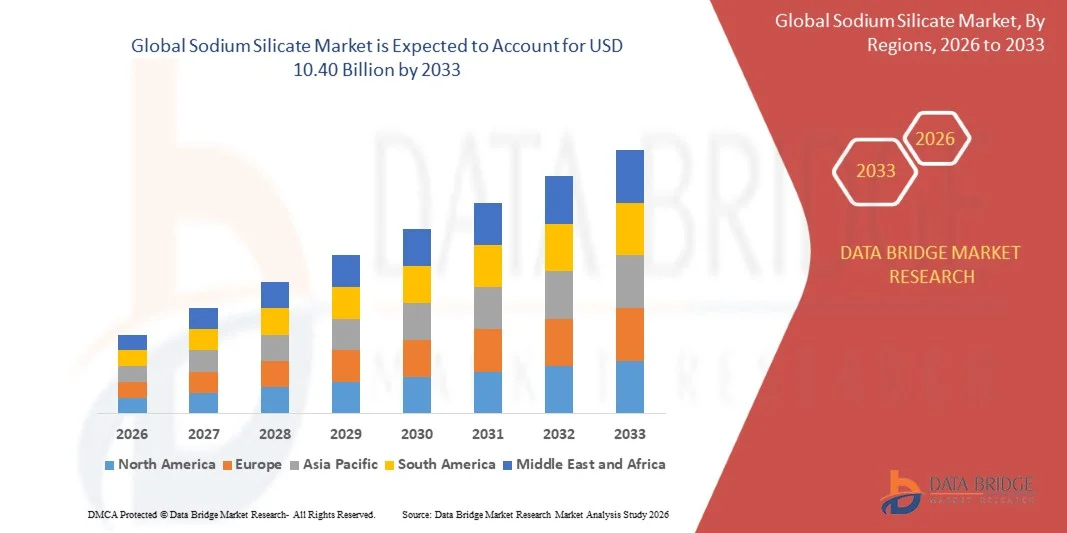
- Согласно анализу Data Bridge Market Research, глобальный размер рынка силикатов натрия был оценен как7,78 млрд долларов в 2025 годуОжидается, что он достигнет10,40 млрд долларов к 2033 году, вCAGR 3,7%в течение прогнозируемого периода
- Рост рынка в значительной степени подпитывается растущим спросом на моющие средства, строительство и водоочистку, что обусловлено растущей урбанизацией и индустриализацией в странах с развивающейся экономикой. Универсальные химические свойства силиката натрия, включая возможности связывания, уплотнения и очистки, усиливают его внедрение в широком спектре промышленных применений, тем самым поддерживая последовательное расширение рынка.
- Кроме того, растущий акцент на устойчивых и экологически чистых химических решениях, наряду с увеличением инвестиций в инфраструктуру и промышленное развитие, усиливает спрос на силикат натрия во всем мире. Эти комбинированные факторы ускоряют его использование в таких приложениях, как осажденный диоксид кремния, цемент и очистка воды, тем самым значительно повышая рост отрасли.
Размер рынка и прогноз
Глобальная рыночная стоимость (2025):$7,78 млрд.
Ожидаемая рыночная стоимость (2033):$10,40 млрд.
Прогноз CAGR (2026–2033):3.7%
Анализ рынка силиката натрия
- Силикат натрия является неорганическим соединением, широко используемым в качестве клея, связующего и дефлоккулянта в таких отраслях, как моющие средства, строительство, целлюлоза и бумага, а также обработка воды. Он играет важную роль в повышении производительности продукта, долговечности и химической стабильности, что делает его важным материалом как в промышленных, так и в коммерческих применениях.
- Растущий спрос на силикат натрия в первую очередь обусловлен его широким использованием в составе моющих средств, растущей потребностью в устойчивых строительных материалах и растущим вниманием к эффективным решениям для очистки воды. Растущая промышленная деятельность и расширение применения в автомобильной и химической промышленности также способствуют устойчивому росту рынка.
- Азиатско-Тихоокеанский регион доминирует на рынке силикатов натрия с долей 47,7%В 2025 году из-за высокого спроса со стороны моющих средств, строительной и водоочистной промышленности, а также наличия крупных центров химического производства в регионе.
- Ожидается, что Северная Америка станет самым быстрорастущим регионом на рынке силикатов натрия в течение прогнозируемого периода из-за растущего спроса на моющие средства, строительство и водоочистку.
- Сегмент жидких силикатов натрия доминировал на рынке с долей рынка 63% в 2025 году из-за его широкого использования в моющих средствах, обработке воды и химической обработке. Его простота обработки, однородный состав и прямая применимость в жидких составах делают его очень предпочтительным в промышленных операциях. Жидкая форма также обеспечивает лучшую эффективность смешивания и контроль процесса, что способствует ее внедрению на крупных производственных предприятиях.
Сфера охвата и сегментация рынка силикатов натрия
|
Атрибуты |
Sodium Silicate Key Market |
|
Сегменты покрыты |
|
|
Страны, охваченные |
Северная Америка
Европа
Азиатско-Тихоокеанский регион
Ближний Восток и Африка
Южная Америка
|
|
Ключевые игроки рынка |
|
|
Рыночные возможности |
|
|
Информационные наборы данных с добавленной стоимостью |
В дополнение к информации о рыночных сценариях, таких как рыночная стоимость, темпы роста, сегментация, географическое покрытие и основные игроки, рыночные отчеты, курируемые Data Bridge Market Research, также включают анализ экспорта импорта, обзор производственных мощностей, анализ потребления продукции, анализ ценового тренда, сценарий изменения климата, анализ цепочки поставок, анализ цепочки создания стоимости, обзор сырья / расходных материалов, критерии выбора поставщиков, анализ PESTLE, анализ Porter и нормативную базу. |
Тенденции рынка силикатов натрия
Растущее принятие устойчивых и экологически чистых силикатных решений
- Значительной тенденцией на рынке силикатов натрия является растущий сдвиг в сторону устойчивых и экологически чистых химических решений, обусловленный более строгими экологическими нормами и растущей необходимостью сокращения выбросов углерода в промышленных процессах. Этот переход повышает роль силиката натрия как более безопасной и экологически совместимой альтернативы в таких приложениях, как моющие средства, строительство и очистка воды.
- Например, Evonik Industries AG разработала устойчивые решения для кремнезема, полученные из золы из рисовой шелухи под своим брендом Ultrasil, поддерживая инициативы по круговой экономике и снижая зависимость от обычного сырья. Такие инновации укрепляют экологический профиль силиката натрия и расширяют сферу его применения в зеленых продуктах.
- Строительный сектор все чаще использует силикат натрия в экологически чистых цементных и уплотнительных применениях, где он повышает долговечность и снижает воздействие на окружающую среду. Это позиционирует силикат натрия как важный материал в устойчивом развитии инфраструктуры в соответствии со стандартами зеленого строительства.
- Отрасли водоочистки расширяют использование силиката натрия благодаря его нетоксичности и эффективности в процессах контроля и стабилизации коррозии. Эта тенденция поддерживает развитие более безопасных систем управления водными ресурсами и повышение операционной эффективности в муниципальных и промышленных очистных сооружениях.
- Отрасль моющих средств также переходит на безфосфатные составы, где силикат натрия служит эффективным заменителем, который поддерживает эффективность очистки при минимизации вреда окружающей среде. Это стимулирует постоянный спрос на силикат натрия в бытовых и промышленных чистящих средствах.
- Растущее согласование отраслей с целями устойчивого развития и требованиями нормативного соответствия усиливает долгосрочное внедрение силиката натрия. Эта тенденция формирует более экологически ответственный химический рынок и поддерживает устойчивый рост в глобальных приложениях.
Динамика рынка силикатов натрия
водитель
Рост спроса со стороны детергентов и строительной отрасли
- Растущий спрос на моющие средства и строительную промышленность является ключевым драйвером рынка силикатов натрия, поддерживаемого его многофункциональными свойствами, такими как связывание, уплотнение и улучшение очистки. Эти отрасли в значительной степени полагаются на силикат натрия для повышения производительности продукта, долговечности и экономической эффективности в крупномасштабных приложениях.
- Например, PQ Corporation поставляет силикат натрия для составов моющих средств и строительных материалов, что позволяет производителям повысить производительность очистки и прочность конструкции. Эта сильная промышленная зависимость вносит значительный вклад в устойчивый спрос на рынке.
- В моющих средствах силикат натрия действует как строитель и ингибитор коррозии, повышая эффективность стирки и продлевая срок службы приборов. Растущее потребление чистящих средств, обусловленное осведомленностью о гигиене и урбанизацией, еще больше усиливает спрос.
- Строительная промышленность использует силикат натрия в цементе, уплотнении бетона и огнезащите, где он повышает долговечность и устойчивость к факторам окружающей среды. Растущее развитие инфраструктуры и расширение городов ускоряют его внедрение в этом секторе.
- Непрерывное расширение этих отраслей конечного использования и основные функциональные преимущества силиката натрия стимулируют последовательный рост рынка. Ожидается, что этот драйвер останется сильным, поскольку промышленная деятельность и инвестиции в строительство продолжают расти во всем мире.
Сдержанность/вызов
Волатильность цен на сырье и энергетических затрат
- Рынок силикатов натрия сталкивается с проблемами из-за колебаний цен на сырье и высокого потребления энергии, связанного с его производственным процессом. Ключевые факторы, такие как содовая зола и кремнезем, наряду с энергоемкими операциями печи, способствуют нестабильным производственным затратам.
- Например, Solvay столкнулся с колебаниями цен на содовую из-за изменения затрат на энергию и сбоев в цепочке поставок, что повлияло на общую структуру затрат на производство силиката натрия. Эти изменения создают ценовое давление для производителей и влияют на прибыль.
- Производство силиката натрия требует высокотемпературной обработки, что делает его сильно зависимым от доступности энергии и стабильности затрат. Рост цен на энергоносители увеличивает эксплуатационные расходы и ограничивает конкурентоспособность затрат для производителей
- Перебои в цепочке поставок и геополитические факторы еще больше влияют на доступность и ценообразование сырья, создавая неопределенность в стратегиях планирования производства и закупок. Это усложняет поддержание стабильной структуры поставок и ценообразования.
- Продолжающаяся волатильность входных затрат и цен на энергоносители по-прежнему является сдерживающим фактором роста рынка. Решение этих проблем требует стратегического поиска, оптимизации процессов и инвестиций в энергоэффективные технологии для поддержания долгосрочной конкурентоспособности.
Схема рынка силиката натрия
Рынок сегментируется на основе типа, формы, класса, применения и отрасли конечного использования.
• По типу
Исходя из типа, рынок силиката натрия сегментирован на твердый силикат натрия и жидкий силикат натрия. Сегмент жидкого силикатного натрия доминировал на крупнейшей доле рынка в 63% в 2025 году, чему способствовало его широкое использование в моющих средствах, очистке воды и химической обработке. Его простота обработки, однородный состав и прямая применимость в жидких составах делают его очень предпочтительным в промышленных операциях. Жидкая форма также обеспечивает лучшую эффективность смешивания и управления процессом, что способствует ее внедрению на крупных производственных предприятиях. Кроме того, его совместимость с автоматизированными системами дозирования и технологиями непрерывной обработки усиливает его доминирование на рынке.
Ожидается, что сегмент твердых силикатов натрия будет наблюдать самые быстрые темпы роста с 2026 по 2033 год, чему способствуют его преимущества в стабильности хранения и эффективности транспортировки. Твердые формы снижают риски, связанные с разливом, и предлагают более длительный срок хранения, что делает их пригодными для удаленных или экспортно-ориентированных приложений. Увеличение спроса со стороны строительных и огнеупорных применений еще больше стимулирует его рост, поскольку твердые силикаты часто предпочитаются в цементных и связующих составах. Гибкость растворения и настройки концентрации в соответствии с требованиями заявки также способствует ее расширению.
• по форме
На основе формы рынок силикатов натрия сегментирован на кристаллический и безводный. Кристаллический сегмент доминировал на крупнейшей доле рынка в 2025 году, чему способствовало его широкое использование в моющих средствах, клеях и процессах очистки воды. Кристаллический силикат натрия обеспечивает согласованные химические свойства и простоту хранения, что делает его пригодным для массового промышленного потребления. Его структурированная композиция улучшает контроль растворимости и обеспечивает надежную производительность в нескольких приложениях. Кроме того, его рентабельность и широкая доступность способствуют его высокому спросу на развивающихся и развитых рынках.
Ожидается, что безводный сегмент станет свидетелем самого быстрого CAGR с 2026 по 2033 год, что обусловлено растущим спросом на химические составы высокой чистоты и без влаги. Безводный силикат натрия является предпочтительным в специализированных промышленных процессах, где содержание воды должно быть сведено к минимуму для поддержания стабильности продукта. Его использование в современных покрытиях, катализаторах и точном химическом производстве набирает обороты. Растущее внимание к высокопроизводительным материалам и специальным химическим веществам еще больше ускоряет внедрение безводных форм в нишевых приложениях.
• По степени
Исходя из сорта, рынок силикатов натрия сегментирован на нейтральный и щелочный. Сегмент щелочей доминировал на крупнейшей доле рынка в 2025 году, чему способствовала его сильная химическая реактивность и широкая применимость в моющих средствах, целлюлозно-бумажной и водоочистной промышленности. Щелочный силикат натрия повышает эффективность очистки, коррозионную стойкость и связывающие свойства, что делает его необходимым в нескольких промышленных составах. Его эффективность в удалении жира и стабилизации отбеливающих агентов также поддерживает его высокое потребление. Кроме того, его экономичность и функциональная универсальность укрепляют его лидирующие позиции на рынке.
Ожидается, что в нейтральном сегменте будут наблюдаться самые быстрые темпы роста с 2026 по 2033 год, чему способствует растущий спрос на контролируемые pH-приложения и экологически чувствительные процессы. Нейтральные сорта все чаще используются в специальных составах, где чрезмерная щелочность может повлиять на производительность или безопасность продукта. Рост производства пищевых продуктов, фармацевтических препаратов и передовых материалов поддерживает спрос на нейтральный силикат натрия. Кроме того, регулирующее внимание к более безопасному использованию химических веществ побуждает отрасли принимать сбалансированные и менее агрессивные сорта.
• Подача заявки
На основе применения рынок силикатов натрия сегментирован на моющие средства, осажденный кремнезем, конструкцию, целлюлозу и бумагу, очистку воды, литье металлов, консервацию продуктов питания и другие. Сегмент моющих средств доминировал на крупнейшей доле рынка в 2025 году, что обусловлено его ролью в качестве строителя, эмульгатора и ингибитора коррозии в чистящих составах. Силикат натрия улучшает эффективность очистки и стабилизирует промывочные соединения, что делает его необходимым как в бытовых, так и в промышленных моющих средствах. Растущий спрос на чистящие средства, поддерживаемый осведомленностью о гигиене и урбанизацией, еще больше повышает этот сегмент. Его рентабельность и многофункциональные свойства увеличивают его широкое использование на мировых рынках.
Ожидается, что в сегменте осажденного кремнезема будет наблюдаться самый быстрый CAGR с 2026 по 2033 год, что обусловлено растущим спросом на производство шин, обработку резины и продукты личной гигиены. Силикат натрия служит ключевым сырьем в производстве осажденного кремнезема, что повышает производительность и долговечность продукта. Увеличение производства автомобилей и переход к зеленым шинам значительно способствуют этому росту. Кроме того, расширение применения в уходе за полостью рта и косметике еще больше ускоряет спрос в этом сегменте.
• Индустрия конечного использования
На основе промышленности конечного использования рынок силиката натрия сегментирован на строительство и строительство, автомобилестроение, продукты питания и напитки, нефть и газ и другие. Сегмент строительства и строительства доминировал на крупнейшей доле рынка в 2025 году, чему способствовало широкое использование силиката натрия в цементе, уплотнении бетона и огнезащите. Он повышает долговечность, химическую стойкость и структурную целостность, что делает его очень ценным в инфраструктурных проектах. Быстрая урбанизация и увеличение инвестиций в жилищное и коммерческое строительство еще больше усиливают спрос. Его роль в устойчивых строительных материалах также поддерживает его широкое распространение.
Ожидается, что в автомобильном сегменте будут наблюдаться самые быстрые темпы роста с 2026 по 2033 год, чему способствует растущее использование силиката натрия в металлическом литье, покрытиях и передовых материалах. Рост электромобилей и легких компонентов увеличивает спрос на высокопроизводительные материалы, где силикат натрия играет вспомогательную роль. Его применение в производстве шин через производство диоксида кремния еще больше повышает его актуальность в автомобильном секторе. Расширение мирового производства автомобилей и инновации в автомобильных материалах ускоряют рост в этом сегменте.
Региональный анализ силикатного рынка натрия
- Азиатско-Тихоокеанский регион доминировал на рынке силикатов натрия с самой большой долей дохода в 47,7% в 2025 году, что обусловлено высоким спросом на моющие средства, строительство и водоочистку, а также наличием крупных центров химического производства по всему региону.
- Экономически эффективные производственные возможности региона, обильная доступность сырья и растущая промышленная деятельность ускоряют расширение рынка в ключевых экономиках.
- Быстрая урбанизация, развитие инфраструктуры и поддерживающие правительственные инициативы, способствующие промышленному росту, способствуют увеличению потребления силиката натрия в нескольких секторах конечного использования.
Китайский рынок силикатного натрия
Китай занимал самую большую долю на Азиатско-Тихоокеанском рынке силикатов натрия в 2025 году, благодаря доминирующему положению в химическом производстве и обширным производственным мощностям. Страна выигрывает от дешевого сырья, сильного внутреннего спроса и крупномасштабного экспорта силиката натрия для моющих средств, строительства и промышленного применения. Постоянные инвестиции в инфраструктуру и расширение промышленности еще больше усиливают рост рынка.
Индия Sodium Silicate Market Insight
Индия является свидетелем самого быстрого роста в Азиатско-Тихоокеанском регионе, чему способствует быстрая индустриализация, расширение производства моющих средств и увеличение инвестиций в строительство и водоочистку. Государственные инициативы, поддерживающие рост производства и развитие инфраструктуры, повышают спрос. Рост потребления текстильной, целлюлозно-бумажной и химической промышленности способствует дальнейшему расширению рынка.
Европейское исследование рынка силикатов натрия
Европейский рынок силикатов натрия неуклонно расширяется, чему способствует высокий спрос на экологически чистые моющие средства, устойчивые строительные материалы и передовые решения для очистки воды. В регионе особое внимание уделяется экологическим нормам и высоким стандартам производства, поощряя использование силиката натрия в зеленых продуктах. Повышение внимания к практике круговой экономики также способствует росту рынка.
Германия Sodium Silicate Market Insight
Рынок силикатов натрия в Германии обусловлен его передовой промышленной базой, сильным присутствием в специализированных химических веществах и высоким спросом со стороны автомобильного и строительного секторов. Акцент страны на устойчивых материалах и энергоэффективных производственных процессах поддерживает внедрение силиката натрия в различных областях применения. Постоянные инновации и технологические достижения способствуют дальнейшему росту рынка.
Британский Sodium Silicate Market Insight
Рынок Великобритании поддерживается растущим спросом на решения для очистки воды, увеличением использования моющих средств и расширением строительной деятельности. Внимание страны к экологической устойчивости и соблюдению нормативных требований способствует принятию силикат натрия в экологически чистых рецептурах. Рост инвестиций в инфраструктуру и промышленное применение также способствует устойчивому росту.
Северная Америка Sodium Silicate Market Insight
Ожидается, что Северная Америка будет расти самыми быстрыми темпами с 2026 по 2033 год, что обусловлено растущим спросом на моющие средства, строительные материалы и водоочистные сооружения. Технологические достижения, растущее внимание к устойчивым химическим веществам и растущие инвестиции в инфраструктуру поддерживают расширение рынка. Кроме того, растущее внедрение в автомобильные и промышленные приложения еще больше повышает спрос.
Американский Sodium Silicate Market Insight
На долю США пришлась наибольшая доля на рынке Северной Америки в 2025 году, чему способствовал высокий спрос со стороны строительной, моющих и водоочистных отраслей. Передовые производственные возможности страны, акцент на инновации и растущее внедрение устойчивых химических решений являются ключевыми факторами роста. Присутствие крупных производителей и постоянные инвестиции в инфраструктуру еще больше укрепляют ее рыночные позиции.
Доля рынка силиката натрия
Индустрия силикатов натрия в основном возглавляется хорошо зарекомендовавшими себя компаниями, в том числе:
- Siedziba CIECH S.A. (Польша)
- PPG Industries, Inc. (США)
- Malpro Silica Pvt Ltd. (Индия)
- PQ Corporation (США)
- BASF SE (Германия)
- Oriental Silicas Corporation (Индия)
- Kiran Global Chem Limited (Индия)
- Silica Gel Co. Ltd. (Китай)
- Shayona Land Corporation (Индия)
- Coogee Chemicals (Австралия)
- Tokuyama Corporation (Япония)
- Сольвей (Бельгия)
- Silmaco NV (Бельгия)
- Occidental Petroleum Corporation (США)
- Z. Ch. Rudniki S.A. (Польша)
- Nippon Chemical Industrial Co., Ltd. (Япония)
- Sahajanand Industries (Индия)
Последние события на мировом рынке силикатов натрия
- В январе 2025 года Evonik Industries AG объявила о планируемом закрытии своих заводов по производству кремнезема в Уотерфорде, Нью-Йорк и Гавр-де-Грейс, штат Мэриленд, в рамках стратегической инициативы по оптимизации сети, которая, как ожидается, повысит экономическую эффективность и упростит глобальное производство. Этот шаг позволяет компании перераспределить ресурсы на более передовые и эффективные объекты, повышая общую производительность и укрепляя свою конкурентоспособность на рынке силиката натрия и диоксида кремния.
- В январе 2025 года PQ Corporation завершила строительство новой высокоэффективной силикатной печи натрия на своем заводе в Августе, штат Джорджия, которая, как ожидается, значительно увеличит производственные мощности при одновременном сокращении потребления энергии и выбросов. Разработка поддерживает растущий спрос на устойчивые силикатные решения и позволяет компании лучше обслуживать ключевые отрасли, такие как моющие средства, строительство и очистка воды в Северной Америке.
- В январе 2025 года PQ Corporation завершила сделку по приобретению специализированного силикатного бизнеса Sibelco Group в Швеции, значительно расширив свое присутствие на европейском рынке и укрепив свой портфель высокоценных силикатных продуктов. Это приобретение обеспечивает расширенный доступ к передовым технологиям и специализированным приложениям, улучшает способность компании удовлетворять разнообразные промышленные требования и увеличивает ее конкурентное преимущество.
- В марте 2024 года корпорация Tokuyama объявила о расширении своих производственных мощностей по производству силиката натрия в Азии, что, как ожидается, позволит удовлетворить растущий спрос со стороны быстро растущих отраслей, таких как строительство, автомобилестроение и химическая промышленность. Расширение улучшает региональные возможности поставок, снижает зависимость от импорта и укрепляет позиции компании на конкурентном мировом рынке силикатов натрия.
- В сентябре 2022 года Evonik Industries в партнерстве с Poerner Group и Phichit Bio Power Co. разработала устойчивый кремнезем из золы из рисовой шелухи под брендом Ultrasil, который способствует инициативам по круговой экономике и снижению зависимости от обычного сырья. Это сотрудничество улучшает профиль устойчивости компании, создавая новые возможности роста в экологически чистых приложениях, особенно в шинной и резиновой промышленности.
SKU-
Получите онлайн-доступ к отчету на первой в мире облачной платформе рыночной аналитики

- Интерактивная панель анализа данных
- Панель анализа компании для возможностей с высоким потенциалом роста
- Доступ аналитика-исследователя для настройки и запросов
- Анализ конкурентов с помощью интерактивной панели
- Последние новости, обновления и анализ тенденций
- Используйте возможности сравнительного анализа для комплексного отслеживания конкурентов
Методология исследования
Сбор данных и анализ базового года выполняются с использованием модулей сбора данных с большими размерами выборки. Этап включает получение рыночной информации или связанных данных из различных источников и стратегий. Он включает изучение и планирование всех данных, полученных из прошлого заранее. Он также охватывает изучение несоответствий информации, наблюдаемых в различных источниках информации. Рыночные данные анализируются и оцениваются с использованием статистических и последовательных моделей рынка. Кроме того, анализ доли рынка и анализ ключевых тенденций являются основными факторами успеха в отчете о рынке. Чтобы узнать больше, пожалуйста, запросите звонок аналитика или оставьте свой запрос.
Ключевой методологией исследования, используемой исследовательской группой DBMR, является триангуляция данных, которая включает в себя интеллектуальный анализ данных, анализ влияния переменных данных на рынок и первичную (отраслевую экспертную) проверку. Модели данных включают сетку позиционирования поставщиков, анализ временной линии рынка, обзор рынка и руководство, сетку позиционирования компании, патентный анализ, анализ цен, анализ доли рынка компании, стандарты измерения, глобальный и региональный анализ и анализ доли поставщика. Чтобы узнать больше о методологии исследования, отправьте запрос, чтобы поговорить с нашими отраслевыми экспертами.
Доступна настройка
Data Bridge Market Research является лидером в области передовых формативных исследований. Мы гордимся тем, что предоставляем нашим существующим и новым клиентам данные и анализ, которые соответствуют и подходят их целям. Отчет можно настроить, включив в него анализ ценовых тенденций целевых брендов, понимание рынка для дополнительных стран (запросите список стран), данные о результатах клинических испытаний, обзор литературы, обновленный анализ рынка и продуктовой базы. Анализ рынка целевых конкурентов можно проанализировать от анализа на основе технологий до стратегий портфеля рынка. Мы можем добавить столько конкурентов, о которых вам нужны данные в нужном вам формате и стиле данных. Наша команда аналитиков также может предоставить вам данные в сырых файлах Excel, сводных таблицах (книга фактов) или помочь вам в создании презентаций из наборов данных, доступных в отчете.











