


Сегментация глобального рынка кранов-штакеров, по типу укладки (одномачтовые краны-штакеры, двухмачтовые краны-штакеры и трехмачтовые краны), режим работы (автоматизированные управляемые краны-штакеры (AGV) и управляемые вручную краны-штакеры), грузоподъемность (легкие краны-штакеры, краны-штакеры средней грузоподъемности и краны-штакеры большой грузоподъемности), высота подъема (краны-штакеры малой грузоподъемности, краны-штакеры средней грузоподъемности и краны-штакеры высокой грузоподъемности), применение (автомобильная промышленность, пищевая промышленность, фармацевтическая промышленность, а также логистика и складирование, металлообработка) - отраслевые тенденции и прогноз до 2033 года
Размер рынка кранов Stacker
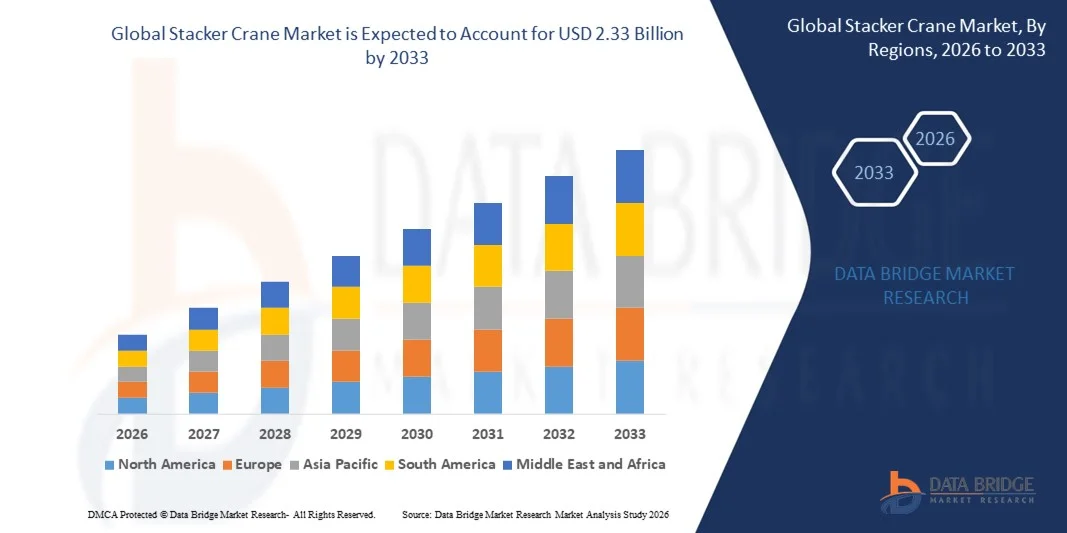
- Объем мирового рынка стакерных кранов был оценен$1,35 млрд в 2025 годуОжидается, что он достигнет2,33 млрд долларов к 2033 году, вCAGR 7,01%в течение прогнозируемого периода
- Рост рынка в значительной степени обусловлен растущим спросом на автоматизированные системы хранения и поиска (AS / RS) на складах, распределительных центрах и производственных объектах.
- Растущее внедрение Индустрии 4.0 и интеллектуальных складских технологий в сочетании с растущей деятельностью в области электронной коммерции обусловливает необходимость в эффективных решениях для обработки материалов.
Анализ рынка кранов Stacker
- Стакерные краны становятся все более предпочтительными из-за их способности автоматизировать операции по хранению и поиску, снизить затраты на рабочую силу и повысить безопасность на складах.
- Рынок стал свидетелем значительных инвестиций в передовые стакерные краны с такими функциями, как высокоскоростная работа, интеграция IoT и возможности удаленного мониторинга.
- Северная Америка доминировала на рынке стакерных кранов с самой большой долей выручки в 38,45% в 2025 году, что обусловлено растущим внедрением автоматизированных складов, расширением электронной коммерции и растущим спросом на эффективные решения для обработки материалов.
- Ожидается, что в Азиатско-Тихоокеанском регионе будут наблюдаться самые высокие темпы роста в мире.крепежный кранрынок, обусловленный быстрой урбанизацией, увеличением электронной коммерции и производственной деятельности, а также правительственными инициативами, поддерживающими интеллектуальные склады. Растущий спрос на высокоплотные системы хранения и экономически эффективные автоматизированные решения способствует расширению рынка в регионе.
- Сегмент одноместных мачт занимал самую большую долю рынка в 2025 году, что обусловлено его экономичностью, компактным дизайном и пригодностью для складского хранения средней плотности. Одномачтовые стакерные краны широко используются в распределительных центрах и производственных объектах, где требуется умеренная оптимизация пропускной способности и хранения.
Сфера охвата и сегментация рынка кранов Stacker
| Атрибуты | Обзор рынка Stacker Crane Key |
| Сегменты покрыты |
|
| Страны, охваченные | Северная Америка
Европа
Азиатско-Тихоокеанский регион
Ближний Восток и Африка
Южная Америка
|
| Ключевые игроки рынка |
|
| Рыночные возможности |
|
| Информационные наборы данных с добавленной стоимостью | В дополнение к рыночным идеям, таким как рыночная стоимость, темпы роста, сегменты рынка, географический охват, игроки рынка и рыночный сценарий, отчет о рынке, курируемый командой Data Bridge Market Research, включает углубленный экспертный анализ, анализ импорта / экспорта, анализ цен, анализ потребления продукции и анализ пестле. |
Тренды рынка Stacker Crane
Растущее внедрение автоматизированных решений для обработки материалов
- Растущее внимание к автоматизации складов и эффективным решениям для хранения значительно формирует глобальный рынок стакерных кранов, поскольку компании все чаще стремятся снизить затраты на рабочую силу, оптимизировать пространство и повысить операционную эффективность. Стакерные краны набирают обороты благодаря своей способности обрабатывать хранилища высокой плотности, ускорять операции по поиску и беспрепятственно интегрироваться с автоматизированными системами хранения и поиска (AS / RS). Эта тенденция усиливает их внедрение в электронной коммерции, производстве и холодильной промышленности, поощряя производителей к инновациям с помощью высокоскоростных интеллектуальных решений для кранов.
- Увеличение инвестиций в интеллектуальное складирование и промышленную автоматизацию ускорило спрос на краны в распределительных центрах, складах и производственных предприятиях. Компании развертывают стакерные краны, оснащенные датчиками, подключением к IoT и программными системами управления, чтобы повысить точность, уменьшить ошибки и обеспечить отслеживание запасов в режиме реального времени. Растущие требования к электронной коммерции и омниканальной логистике приводят к постоянному обновлению и модернизации систем обработки материалов.
- Интеграция с системами управления складом (WMS) и технологиями Индустрии 4.0 влияет на решения о покупке, при этом операторы подчеркивают совместимость системы, эффективность автоматизации и мониторинг в режиме реального времени. Эти факторы помогают предприятиям уменьшить операционные узкие места, улучшить пропускную способность и максимизировать использование хранилища, а также способствуют внедрению передовых решений для кранов в новых и существующих объектах.
- Например, в 2024 году Swisslog в Швейцарии и Dematic в Германии расширили свои продуктовые портфели, представив высокоскоростные краны с автоматическим управлением и интеллектуальной интеграцией программного обеспечения. Эти развертывания были нацелены на электронные торговые и фармацевтические склады для хранения высокой плотности и быстрого поиска. Решения также подчеркнули безопасность, точность и энергоэффективность, поддерживая улучшенную производительность склада.
- В то время как спрос на стакерные краны растет, устойчивое расширение рынка зависит от непрерывных исследований и разработок, экономически эффективного развертывания и интеграции с существующей складской инфраструктурой. Производители сосредоточены на повышении масштабируемости, грузоподъемности, интеграции программного обеспечения и операционной надежности для более широкого внедрения в различных отраслях промышленности.
Динамика рынка кранов Stacker
водитель
Растущий спрос на автоматизацию склада и эффективное хранение
- Растущая потребность в автоматизированных решениях для хранения и поиска является основным драйвером для рынка кранов. Компании все чаще используют стакерные краны для повышения плотности хранения, снижения трудовой зависимости и повышения оперативной скорости. Эта тенденция также поощряет технологические инновации в проектировании кранов, системах управления и интеграции с системами управления складом.
- Расширение приложений в центрах электронной коммерции, холодильных складах и производственных складах влияет на рост рынка. Стакерные краны помогают оптимизировать пространство, сократить время поиска и повысить точность управления запасами. Растущее внедрение интеллектуальных складов во всем мире еще больше усиливает эту тенденцию.
- Поставщики логистики и обработки материалов активно продвигают решения на основе стакерных кранов посредством модернизации автоматизации, интеграции программного обеспечения и индивидуальных системных проектов. Эти усилия поддерживаются растущим спросом на более быстрое выполнение заказов, снижение ошибок и повышение безопасности на рабочем месте, поощряя партнерские отношения между производителями оборудования и операторами складов.
- Например, в 2023 году Dematic в Германии и Swisslog в Швейцарии сообщили об увеличении развертывания автоматических стакерных кранов в электронной коммерции и холодильных хранилищах. Принятие последовало за более высоким спросом на эффективную обработку материалов, отслеживание запасов в режиме реального времени и снижение эксплуатационных расходов. Обе компании отметили интеллектуальную интеграцию и энергоэффективность в маркетинговых кампаниях для укрепления доверия клиентов и долгосрочных партнерских отношений.
- Хотя растущие тенденции автоматизации поддерживают рост, более широкое внедрение зависит от высоких капитальных инвестиций, технического опыта и совместимости систем. Инвестиции в интеграцию программного обеспечения, обучение операторов и передовые конструкции кранов будут иметь решающее значение для удовлетворения глобального спроса и поддержания конкурентных преимуществ.
Сдержанность/вызов
Высокие капитальные затраты и техническая сложность
- Сравнительно высокая стоимость систем стакерных кранов по сравнению с обычными решениями для хранения остается ключевой проблемой, ограничивая внедрение среди небольших и средних складов. Повышенные затраты на закупки, установку и техническое обслуживание способствуют более медленному поглощению на чувствительных к цене рынках.
- Операционная сложность и потребность в квалифицированном персонале также создают проблемы, особенно в регионах, где возникает автоматизация складов. Ограниченное понимание возможностей системы и отсутствие обученных операторов ограничивают внедрение в определенных отраслях.
- Интеграция с существующими системами управления складом и инфраструктурой обработки материалов также может повлиять на рост рынка. Стакерные краны требуют точной установки, совместимости программного обеспечения и постоянного обслуживания, увеличивая операционное планирование и расходы.
- Например, в 2024 году операторы складов в Юго-Восточной Азии и Латинской Америке сообщили о более медленном внедрении кранов-стакеров высокой плотности из-за высоких первоначальных затрат, требований к технической экспертизе и проблем системной интеграции. Эти факторы также побудили некоторые компании отложить модернизацию и ограничить инвестиции в автоматизацию.
- Преодоление этих проблем потребует экономически эффективных решений, масштабируемых проектов и программ обучения операторов. Сотрудничество с поставщиками логистических услуг, разработчиками программного обеспечения и производителями оборудования может помочь раскрыть долгосрочный потенциал роста мирового рынка кранов. Разработка модульных, энергоэффективных и удобных для пользователя систем будет иметь важное значение для широкого распространения.
Рынок кранов Stacker
Рынок сегментирован на основе типа штабелирования, режима работы, грузоподъемности, высоты подъема и применения.
- По типу Stacking
На основе типа укладки мировой рынок стакерных кранов сегментирован на одномачтовые стакерные краны, двухмачтовые стакерные краны и тримачтовые стакерные краны. Сегмент одноместных мачт занимал самую большую долю рынка в 2025 году, что обусловлено его экономичностью, компактным дизайном и пригодностью для складского хранения средней плотности. Одномачтовые стакерные краны широко используются в распределительных центрах и производственных объектах, где требуется умеренная пропускная способность и оптимизация хранения.
Ожидается, что в сегменте с двумя мачтами будут наблюдаться самые быстрые темпы роста с 2026 по 2033 год, что обусловлено его способностью обрабатывать более высокие нагрузки и более высокие системы стеллажа. Двухмачтовые стакерные краны становятся все более предпочтительными для складов высокой плотности и автоматизированных хранилищ, предлагая повышенную стабильность, скорость и эффективность работы.
- Режим работы
На основе режима работы рынок сегментирован на стакерные краны с автоматическим управляемым транспортным средством (AGV) и управляемые вручную стакерные краны. Сегмент стакерных кранов AGV занимал самую большую долю рынка в 2025 году, чему способствовало растущее внедрение полностью автоматизированных складских операций и систем обработки материалов с поддержкой Industry 4.0. Штакерные краны AGV снижают трудовую зависимость и повышают точность управления запасами.
Ожидается, что в сегменте стакерных кранов с ручным управлением будут наблюдаться самые быстрые темпы роста с 2026 по 2033 год, обусловленные спросом на малых и средних складах, где полуавтоматизация более возможна. Эти краны предлагают гибкость, более низкие первоначальные затраты и легкую интеграцию в существующие системы хранения.
- По объему грузоподъемности
На основе грузоподъемности рынок сегментирован на стакерные краны малой мощности, стакерные краны средней мощности и стакерные краны большой мощности. Сегмент средней грузоподъемности занимал самую большую долю рынка в 2025 году благодаря балансу возможностей подъема, операционной эффективности и пригодности для широкого спектра приложений хранения. Средние стакерные краны обычно используются в логистических центрах, производственных объектах и складах холодильного хранения.
Ожидается, что в сегменте тяжелой грузоподъемности будут наблюдаться самые быстрые темпы роста с 2026 по 2033 год, чему способствует растущий спрос со стороны таких отраслей, как автомобилестроение, металлообработка и крупномасштабные распределительные центры, требующие высокой грузоподъемности и надежных возможностей обработки.
- Поднимая высоту
На основе высоты подъема рынок сегментирован на стакерные краны с низким подъемом, стакерные краны со средним подъемом и стакерные краны с высоким подъемом. Сегмент средней грузоподъемности занимал самую большую долю рынка в 2025 году, что обусловлено его способностью оптимизировать вертикальное хранение в складских стойках средней высоты при сохранении скорости и эксплуатационной безопасности.
Ожидается, что в сегменте High-lift будут наблюдаться самые высокие темпы роста с 2026 по 2033 год из-за растущего внедрения высотных автоматизированных систем хранения и необходимости максимизации плотности хранения в современных логистических и распределительных объектах.
- С помощью приложения
На основе применения рынок сегментирован в автомобильную промышленность, пищевую и пивоваренную промышленность, фармацевтическую промышленность, логистику и складирование и металлообработку. Сегмент логистики и складирования занимал самую большую долю рынка в 2025 году, чему способствовали растущая электронная коммерция, розничная дистрибуция и расширение автоматизированных центров исполнения заказов. Стакерные краны помогают улучшить управление запасами, плотность хранения и эффективность работы на складах.
Ожидается, что в сегменте фармацевтической промышленности будут наблюдаться самые быстрые темпы роста с 2026 по 2033 год, чему способствуют строгие требования к хранению и поиску, управление холодильными цепями и растущее внедрение автоматизированных систем для обеспечения безопасности и соответствия продукции.
Региональный анализ рынка кранов Stacker
- Северная Америка доминировала на рынке стакерных кранов с самой большой долей выручки в 38,45% в 2025 году, что обусловлено растущим внедрением автоматизированных складов, расширением электронной коммерции и растущим спросом на эффективные решения для обработки материалов.
- Компании в регионе высоко ценят способность стакерных кранов оптимизировать плотность хранения, снизить затраты на рабочую силу и повысить скорость и безопасность эксплуатации.
- Это широкое внедрение также поддерживается высокими инвестициями в промышленную автоматизацию, технологически развитую логистическую инфраструктуру и растущим предпочтением высокопроизводительных центров исполнения, устанавливая краны в качестве предпочтительного решения для складов, производственных и распределительных центров.
Американский Stacker Crane Market Insight
Рынок стакерных кранов в США занял самую большую долю доходов в 2025 году в Северной Америке, чему способствовало быстрое расширение электронной коммерции, автоматизация в логистике и потребность в космических решениях для хранения. Компании все чаще инвестируют в краны с автоматическим управлением транспортными средствами (AGV) и высокоскоростные краны для повышения пропускной способности склада и точности инвентаризации. Кроме того, интеграция стакерных кранов с системами управления складом (WMS) и IoT-мониторингом значительно способствует росту рынка.
Европейский рынок кранов Stacker Market Insight
Ожидается, что на европейском рынке стакерных кранов будут наблюдаться самые быстрые темпы роста с 2026 по 2033 год, в основном за счет модернизации складов, роста затрат на рабочую силу и растущего внедрения технологий Индустрии 4.0. Растущий спрос на автоматизированные системы хранения и поиска в логистическом, автомобильном и производственном секторах способствует внедрению стакерных кранов. Европейские компании также сосредоточены на энергоэффективных и высокоточных кранах, что способствует быстрому росту рынка в различных областях применения.
Германия Stacker Crane Market Insight
Ожидается, что на рынке стакерных кранов Германии будут наблюдаться самые быстрые темпы роста с 2026 по 2033 год, чему способствуют растущая автоматизация складов, технологические инновации и спрос на решения для хранения высокой плотности. Надежная промышленная инфраструктура Германии, сосредоточенность на эффективности и акцент на устойчивых операциях способствуют внедрению кранов в логистику, автомобилестроение и производство. Интеграция с интеллектуальными складскими системами и мониторингом с поддержкой IoT еще больше ускоряет внедрение.
Азиатско-Тихоокеанский рынок кранов Stacker
Ожидается, что рынок стакерных кранов в Азиатско-Тихоокеанском регионе продемонстрирует самые быстрые темпы роста с 2026 по 2033 год, обусловленные быстрой урбанизацией, расширением электронной коммерции и растущим спросом на автоматизированные складские решения в таких странах, как Китай, Япония и Индия. Правительственные инициативы, поддерживающие цифровизацию и интеллектуальную логистику, поощряют развертывание стакерных кранов. Кроме того, APAC становится производственным центром для оборудования для обработки материалов, повышая доступность и доступность для складов и промышленных объектов.
Китайская Stacker Crane Market Insight
Китайский рынок стакерных кранов составил самую большую долю доходов в Азиатско-Тихоокеанском регионе в 2025 году, что объясняется быстрым промышленным ростом, крупномасштабным строительством складов и ростом центров электронной коммерции. Стакерные краны все чаще используются в производстве, логистике и холодильных хранилищах для оптимизации пространства и повышения операционной эффективности. Сильные отечественные производители и государственная поддержка инициатив «умного складирования» являются ключевыми факторами расширения рынка в Китае.
Япония Stacker Crane Market Insight
Ожидается, что на японском рынке стакерных кранов будут наблюдаться самые высокие темпы роста с 2026 по 2033 год из-за высокого внедрения промышленной автоматизации, технологических достижений и спроса на эффективные системы хранения. Японские компании сосредоточены на высокоскоростных автоматических кранах, интегрированных с решениями IoT и WMS. Кроме того, необходимость оптимизации площадей в густонаселенных регионах и растущая тенденция автоматизированных производств подпитывают рост рынка.
Доля рынка Stacker Crane
Индустрия Stacker Crane в основном возглавляется хорошо зарекомендовавшими себя компаниями, в том числе:
- Kion Group AG (Германия)
- Daifuku Co., Ltd. (Япония)
- Dematic Corporation (США)
- Jungheinrich AG (Германия)
- SSI Schafer Group (Германия)
- Toyota Industries (Япония)
- Mecalux S.A. (Испания)
- KUKA AG (Германия)
- Konecranes (Финляндия)
Последние события на мировом рынке кранов
- В сентябре 2025 года Dematic в партнерстве с ведущей компанией электронной коммерции разработала передовой автоматизированный центр выполнения заказов, повысив операционные возможности, обеспечивая анализ данных и укрепляя свои конкурентные позиции на рынке.
- В августе 2025 года Konecranes представила автоматизированную систему кранов с поддержкой ИИ для оптимизации складских операций, повышения производительности и установления новых эталонов эффективности, что привело к технологическому внедрению в отрасли.
- В июле 2025 года Mitsubishi Logisnext расширила свое производственное присутствие новым предприятием в Юго-Восточной Азии, направленным на удовлетворение растущего спроса на рынке Азиатско-Тихоокеанского региона, оптимизацию цепочек поставок и снижение затрат.
- В январе 2021 года Toyota Industries завершила приобретение Vanderlande, голландского поставщика решений для автоматизированной обработки материалов, включая стакерные краны, для укрепления своего глобального портфеля, расширения возможностей автоматизации и расширения своего присутствия на рынке в области логистики и складских операций.
- В марте 2021 года Konecranes запустила новую линейку стакерных кранов для автоматизированной обработки контейнеров, предназначенных для повышения операционной эффективности, безопасности и автоматизации портовых и терминальных операций, укрепив свое лидерство в отрасли.
SKU-
Получите онлайн-доступ к отчету на первой в мире облачной платформе рыночной аналитики

- Интерактивная панель анализа данных
- Панель анализа компании для возможностей с высоким потенциалом роста
- Доступ аналитика-исследователя для настройки и запросов
- Анализ конкурентов с помощью интерактивной панели
- Последние новости, обновления и анализ тенденций
- Используйте возможности сравнительного анализа для комплексного отслеживания конкурентов
Методология исследования
Сбор данных и анализ базового года выполняются с использованием модулей сбора данных с большими размерами выборки. Этап включает получение рыночной информации или связанных данных из различных источников и стратегий. Он включает изучение и планирование всех данных, полученных из прошлого заранее. Он также охватывает изучение несоответствий информации, наблюдаемых в различных источниках информации. Рыночные данные анализируются и оцениваются с использованием статистических и последовательных моделей рынка. Кроме того, анализ доли рынка и анализ ключевых тенденций являются основными факторами успеха в отчете о рынке. Чтобы узнать больше, пожалуйста, запросите звонок аналитика или оставьте свой запрос.
Ключевой методологией исследования, используемой исследовательской группой DBMR, является триангуляция данных, которая включает в себя интеллектуальный анализ данных, анализ влияния переменных данных на рынок и первичную (отраслевую экспертную) проверку. Модели данных включают сетку позиционирования поставщиков, анализ временной линии рынка, обзор рынка и руководство, сетку позиционирования компании, патентный анализ, анализ цен, анализ доли рынка компании, стандарты измерения, глобальный и региональный анализ и анализ доли поставщика. Чтобы узнать больше о методологии исследования, отправьте запрос, чтобы поговорить с нашими отраслевыми экспертами.
Доступна настройка
Data Bridge Market Research является лидером в области передовых формативных исследований. Мы гордимся тем, что предоставляем нашим существующим и новым клиентам данные и анализ, которые соответствуют и подходят их целям. Отчет можно настроить, включив в него анализ ценовых тенденций целевых брендов, понимание рынка для дополнительных стран (запросите список стран), данные о результатах клинических испытаний, обзор литературы, обновленный анализ рынка и продуктовой базы. Анализ рынка целевых конкурентов можно проанализировать от анализа на основе технологий до стратегий портфеля рынка. Мы можем добавить столько конкурентов, о которых вам нужны данные в нужном вам формате и стиле данных. Наша команда аналитиков также может предоставить вам данные в сырых файлах Excel, сводных таблицах (книга фактов) или помочь вам в создании презентаций из наборов данных, доступных в отчете.











