



Global Sexually Transmitted Diseases (STD) Testing Market Segmentation, By Disease Type (Chlamydia, Syphilis, Gonorrhea, Herpes Simplex Virus, Human Papilloma Virus, Human Immunodeficiency Virus, and Other), Location of Testing (Laboratory Testing and Point of Care (POC) Testing)- Industry Trends and Forecast to 2033
Что такое заболевания, передаваемые половым путем (ЗППП), для определения размера рынка и темпов роста
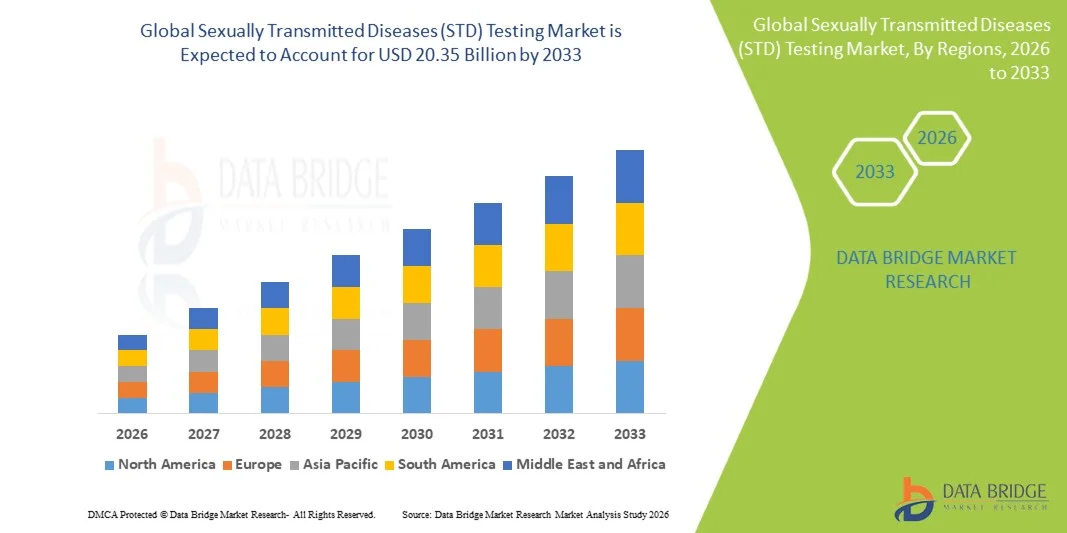
- Согласно анализу рынка Data Bridge Market Research, глобальный объем рынка тестирования заболеваний, передающихся половым путем (ЗППП), был оценен как11,12 млрд долларов в 2025 годуОжидается, что он достигнет20,35 млрд долларов к 2033 году, вCAGR 7,85%в течение прогнозируемого периода
- Рост рынка в значительной степени подпитывается ростом распространенности инфекций, передаваемых половым путем, повышением осведомленности о ранней диагностике и растущими инициативами правительства и общественного здравоохранения, способствующими регулярному скринингу и профилактическому здравоохранению.
- Кроме того, достижения в области диагностических технологий, включаяБыстрое тестированиемолекулярной диагностики иконтрольная точкаНаряду с расширением доступности через домашние и децентрализованные решения для тестирования, они способствуют более широкому внедрению и значительному расширению индустрии тестирования на ЗППП.
Размер рынка и прогноз
Глобальная рыночная стоимость (2025):$11,12 млрд.
Ожидаемая рыночная стоимость (2033):$20,35 млрд.
Прогноз CAGR (2026–2033):7.85%
Каковы основные выводы рынка тестирования заболеваний, передаваемых половым путем (ЗППП)
- Тестирование на заболевания, передаваемые половым путем (ЗППП), включая лабораторную диагностику, быстрые тесты в пунктах оказания медицинской помощи и решения для скрининга на дому, становится все более важным в современных системах здравоохранения из-за его критической роли в раннем выявлении, профилактике заболеваний и эффективном управлении лечением как в государственных, так и в частных учреждениях здравоохранения.
- Растущий спрос на тестирование на ЗППП в первую очередь обусловлен ростом глобальной заболеваемости инфекциями, передаваемыми половым путем, повышением осведомленности о профилактическом здравоохранении, поддерживающими правительственными программами скрининга и растущим акцентом на рутинное и анонимное тестирование среди групп высокого риска.
- Северная Америка доминировала на рынке тестирования на ЗППП с самой большой долей дохода в 40,5% в 2025 году, при поддержке передовой инфраструктуры здравоохранения, высокого уровня осведомленности, широкого страхового покрытия и сильного присутствия крупных диагностических компаний.тесты на амплификацию нуклеиновой кислоты(NAAT) и наборы для тестирования на дому, основанные на инновациях в молекулярной диагностике и интеграции телемедицины
- Ожидается, что Азиатско-Тихоокеанский регион станет самым быстрорастущим регионом на рынке тестирования на ЗППП в течение прогнозируемого периода благодаря улучшению доступа к здравоохранению, расширению кампаний по повышению осведомленности, увеличению урбанизации и растущим правительственным инициативам, направленным на борьбу с распространением инфекционных заболеваний.
- Сегмент лабораторного тестирования доминировал на рынке тестирования на ЗППП с долей рынка 50,9% в 2025 году, что объясняется его высокой точностью, надежностью и широким внедрением в клиническую диагностику, в то время как сегменты быстрого и домашнего тестирования набирают обороты благодаря удобству, более быстрым результатам и увеличению потребительских предпочтений для частных и децентрализованных вариантов тестирования.
Сфера охвата и заболевания, передаваемые половым путем (ЗППП), тестирование сегментации рынка
|
Атрибуты |
Заболевания, передаваемые половым путем (ЗППП), тестирование ключевых рыночных представлений |
|
Сегменты покрыты |
|
|
Страны, охваченные |
Северная Америка
Европа
Азиатско-Тихоокеанский регион
Ближний Восток и Африка
Южная Америка
|
|
Ключевые игроки рынка |
|
|
Рыночные возможности |
|
|
Информационные наборы данных с добавленной стоимостью |
В дополнение к информации о рыночных сценариях, таких как рыночная стоимость, темпы роста, сегментация, географический охват и основные игроки, рыночные отчеты, курируемые Data Bridge Market Research, также включают углубленный экспертный анализ, эпидемиологию пациентов, анализ трубопроводов, анализ цен и нормативную базу. |
Какова ключевая тенденция на рынке тестирования заболеваний, передаваемых половым путем (ЗППП)
«Расширение молекулярной диагностики и решений для тестирования на дому»
- Значительной и ускоряющейся тенденцией на мировом рынке тестирования на ЗППП является растущее внедрение передовых методов молекулярной диагностики, таких как тесты на амплификацию нуклеиновых кислот (NAAT), наряду с быстрым ростом наборов для тестирования на дому и непосредственно для потребителей, улучшение доступности и точности скрининга.
- Например, такие компании, как Everlywell, предлагают на дому наборы для тестирования на ЗППП, которые позволяют пользователям собирать образцы в частном порядке и получать лабораторные результаты в Интернете, повышая удобство и конфиденциальность.
- Молекулярная диагностика позволяет высокочувствительно выявлять инфекции, такие как хламидиоз, гонорея и ВИЧ, с более быстрым временем обращения, в то время как решения для тестирования на дому интегрируются с цифровыми платформами, чтобы обеспечить бесшовный заказ, сбор образцов и отчетность о результатах.
- Интеграция услуг по тестированию на ЗППП с платформами телемедицины и цифровыми экосистемами здравоохранения облегчает централизованное управление пациентами, позволяя пользователям удаленно консультироваться с медицинскими работниками, получая доступ к услугам по тестированию и лечению через единый интерфейс.
- Эта тенденция к более доступным, точным и ориентированным на пациента решениям для тестирования меняет ожидания в области профилактического здравоохранения. Следовательно, такие компании, как LetsGetChecked, предлагают комплексные панели STI с сбором образцов для дома и цифровой доставкой результатов, поддерживая более широкое внедрение как на развитых, так и на развивающихся рынках.
- Спрос на удобные, сдержанные и технологические решения для тестирования на ЗППП быстро растет среди населения мира, поскольку потребители все чаще отдают приоритет конфиденциальности, скорости и простоте доступа к медицинским услугам.
Заболевания, передаваемые половым путем (ЗППП), тестирование динамики рынка
водитель
Повышение осведомленности и увеличение глобального бремени инфекций, передаваемых половым путем
- Растущая распространенность инфекций, передающихся половым путем, в сочетании с растущей осведомленностью о ранней диагностике и профилактическом здравоохранении является значительным фактором растущего спроса на услуги по тестированию на ЗППП.
- Например, ожидается, что инициативы таких организаций, как Всемирная организация здравоохранения и национальные учреждения здравоохранения, продвигающие программы рутинного скрининга и раннего выявления, будут способствовать увеличению объемов тестирования в различных регионах.
- По мере того, как люди становятся более осведомленными о рисках, связанных с нелеченными инфекциями, тестирование на ЗППП обеспечивает критические преимущества, такие как раннее выявление, своевременное лечение и профилактика передачи, что делает его важным компонентом стратегий общественного здравоохранения.
- Кроме того, расширение финансируемых правительством программ скрининга и информационно-просветительских кампаний, нацеленных на группы высокого риска, поощряют регулярное тестирование и снижение стигмы, связанной с заболеваниями, передаваемыми половым путем.
- Удобство быстрого тестирования, доступность диагностики в пунктах оказания медицинской помощи и интеграция услуг тестирования в платформы первичной медико-санитарной помощи и телемедицины являются ключевыми факторами, способствующими внедрению тестирования на ЗППП как в клинических, так и в неклинических условиях. Растущее использование комплектов для самотестирования и мобильных медицинских устройств также способствует росту рынка.
- Кроме того, расширение сотрудничества между организациями общественного здравоохранения и частными диагностическими компаниями для расширения охвата скринингом и улучшения инфраструктуры тестирования еще больше ускоряет проникновение на рынок во всем мире.
Сдержанность/вызов
«Стигма, связанная с проблемами тестирования и регулирования и конфиденциальности данных»
- Социальная стигма и отсутствие осведомленности, связанные с заболеваниями, передающимися половым путем, остаются серьезной проблемой, ограничивающей широкое распространение услуг по тестированию на ЗППП, поскольку многие люди избегают тестирования из-за проблем конфиденциальности и общественного восприятия.
- Например, нежелание проходить тестирование в традиционных медицинских учреждениях из-за страха осуждения или дискриминации продолжает задерживать диагностику и лечение, влияя на общее проникновение на рынок.
- Решение этих проблем с помощью анонимных вариантов тестирования, конфиденциальных систем отчетности и кампаний по информированию общественности имеет решающее значение для повышения уровня участия. Такие компании, как Labcorp и Quest Diagnostics, уделяют особое внимание конфиденциальным услугам тестирования и безопасной обработке данных для укрепления доверия пациентов.
- Кроме того, требования к соблюдению нормативных требований и строгие процедуры утверждения для диагностических тестов, а также проблемы, связанные с конфиденциальностью данных и защитой конфиденциальной информации о здоровье, могут представлять операционные проблемы для участников рынка.
- В то время как достижения в цифровых платформах здравоохранения улучшают доступность, обеспечение надежных мер кибербезопасности, соблюдения нормативных требований и конфиденциальности пациентов будет иметь жизненно важное значение для поддержания доверия и поддержки долгосрочного роста рынка тестирования на ЗППП.
- Кроме того, изменчивость инфраструктуры здравоохранения и ограниченный доступ к диагностическим учреждениям в регионах с низким и средним уровнем дохода еще больше ограничивают своевременное тестирование и диагностику, создавая диспропорции в принятии на рынок в разных регионах.
Как сегментируется рынок тестирования заболеваний, передаваемых половым путем (ЗППП)
Рынок сегментирован по типу заболевания и месту проведения тестирования.
- По типу болезни
На основе типа заболевания рынок тестирования на ЗППП сегментирован на Chlamydia, Syphilis, Gonorrhea, вирус простого герпеса, вирус папилломы человека (ВПЧ), вирус иммунодефицита человека (ВИЧ) и другие. Сегмент ВИЧ доминировал на рынке с самой большой долей доходов рынка в 2025 году, что обусловлено высоким глобальным бременем болезней, сильными инициативами в области общественного здравоохранения и широкими программами скрининга, поддерживаемыми правительствами и НПО. Тестирование на ВИЧ часто уделяется приоритетное внимание в обычных диагностических панелях из-за его критических последствий для здоровья, наличия быстрых и лабораторных методов тестирования и широких кампаний по повышению осведомленности. Сегмент также выигрывает от установленных рамок возмещения и постоянных инноваций в высокочувствительных технологиях тестирования, обеспечивающих раннее выявление и эффективное управление заболеваниями как в развитых, так и в развивающихся регионах.
Ожидается, что сегмент вируса папилломы человека (ВПЧ) станет свидетелем самых быстрых темпов роста с 2026 по 2033 год, чему способствует повышение осведомленности о скрининге рака шейки матки и растущее внедрение тестирования ДНК ВПЧ в рамках рутинного профилактического здравоохранения для женщин. Растущая реализация национальных программ скрининга, особенно в странах с развивающейся экономикой, способствует ранней диагностике и профилактике осложнений, связанных с ВПЧ. Кроме того, достижения в области молекулярной диагностики и интеграции тестирования на ВПЧ с протоколами скрининга рака шейки матки значительно повышают спрос. Расширение охвата вакцинацией и увеличение рекомендаций органов здравоохранения для регулярного скрининга ВПЧ также способствуют быстрому росту этого сегмента.
- По месту проведения испытаний
На основе местоположения тестирования рынок тестирования на ЗППП сегментирован на лабораторное тестирование и тестирование в точках обслуживания (POC). Сегмент лабораторных испытаний доминировал на рынке с самой большой долей рынка в 50,9% в 2025 году, что обусловлено его высокой диагностической точностью, надежностью и широким распространением в больницах, диагностических центрах и справочных лабораториях. Лабораторное тестирование, особенно молекулярная диагностика, такая как ПЦР и НААТ, широко предпочтительнее для подтверждающего тестирования и выявления множественных инфекций с высокой чувствительностью. Сегмент выигрывает от хорошо налаженной инфраструктуры, наличия квалифицированных специалистов и способности обрабатывать большие объемы образцов, что делает его стандартным подходом для комплексного скрининга и диагностики ЗППП.
Ожидается, что в сегменте тестирования точка обслуживания (POC) будет наблюдаться самый быстрый CAGR с 2026 по 2033 год, что обусловлено растущим спросом на быстрые, удобные и доступные решения для тестирования. Тестирование POC позволяет получить немедленные результаты на месте или вблизи места ухода за пациентом, сокращая время обработки и облегчая своевременные клинические решения. Растущее внедрение наборов для самостоятельного тестирования, расширение децентрализованных медицинских услуг и расширение использования быстрых диагностических тестов в клиниках и учреждениях общественного здравоохранения являются ключевыми факторами, ускоряющими рост сегмента. Кроме того, достижения в области портативных диагностических устройств и интеграции с цифровыми платформами здравоохранения повышают удобство использования и способствуют более широкому внедрению POC-тестирования как в городских, так и в отдаленных регионах.
В каком регионе находится наибольшая доля рынка тестирования заболеваний, передаваемых половым путем (ЗППП)
- Северная Америка доминировала на рынке тестирования на ЗППП с самой большой долей выручки в 40,5% в 2025 году, поддерживаемой передовой инфраструктурой здравоохранения, высоким уровнем осведомленности, широким охватом страхованием и сильным присутствием крупных диагностических компаний.
- Потребители и поставщики медицинских услуг в регионе уделяют первоочередное внимание ранней диагностике, профилактической помощи и плановому скринингу, чему способствует широкое распространение передовых диагностических технологий и страховое покрытие услуг по тестированию на ЗППП.
- Это широкое внедрение также поддерживается высокими уровнями осведомленности, инициативами в области общественного здравоохранения, сильным присутствием ведущих диагностических компаний и растущим использованием решений для тестирования на дому и телемедицины, устанавливая тестирование на ЗППП в качестве критического компонента управления здравоохранением как в жилых, так и в клинических условиях.
Заболевания, передаваемые половым путем (ЗППП), США тестируют рыночное понимание
Американский рынок тестирования на ЗППП занял самую большую долю дохода в 80% в Северной Америке в 2025 году, чему способствовала высокая распространенность инфекций, передаваемых половым путем, и сильное присутствие передовой диагностической инфраструктуры. Потребители и поставщики медицинских услуг в стране все чаще отдают приоритет обычному скринингу, ранней диагностике и профилактическому уходу, поддерживаемому благоприятными политиками возмещения и широким страхованием. Растущее внедрение домашних тестовых наборов, телемедицинских услуг и технологий молекулярной диагностики способствует дальнейшему росту рынка. Кроме того, интеграция цифровых медицинских платформ с диагностическими услугами, наряду с активным участием ведущих компаний, значительно способствует расширению индустрии тестирования на ЗППП в США.
Европейские заболевания, передаваемые половым путем (ЗППП), тестируя рыночное понимание
Прогнозируется, что европейский рынок тестирования на ЗППП будет расширяться на устойчивой CAGR в течение прогнозируемого периода, в первую очередь за счет повышения осведомленности о инфекциях, передающихся половым путем, и реализации государственных программ скрининга. Увеличение расходов на здравоохранение наряду с сильной нормативно-правовой базой, поддерживающей профилактическое здравоохранение, способствует внедрению услуг по тестированию на ЗППП во всем регионе. Европейские потребители также все больше склоняются к конфиденциальным и доступным вариантам тестирования, включая лабораторную диагностику и тестирование в пунктах обслуживания. Рынок демонстрирует рост в государственных системах здравоохранения, частных диагностических центрах и инициативах по тестированию на уровне сообществ, уделяя особое внимание раннему выявлению и профилактике заболеваний.
Британские заболевания, передающиеся половым путем (STD), тестируя рыночное понимание
Ожидается, что рынок тестирования на ЗППП в Великобритании в течение прогнозируемого периода будет расти при заметном CAGR, что обусловлено повышением осведомленности о сексуальном здоровье и доступностью финансируемых государством услуг тестирования через Национальную службу здравоохранения (NHS). Озабоченность по поводу растущего числа инфекций и важности ранней диагностики побуждает людей проходить регулярный скрининг. Кроме того, наличие наборов для домашнего тестирования и онлайн-сервисов тестирования поддерживает сдержанный и удобный доступ к тестированию на ЗППП. Ожидается, что сильная инфраструктура здравоохранения Великобритании в сочетании с внедрением цифровых технологий и кампаниями по информированию общественности будет продолжать стимулировать рост рынка.
Немецкие заболевания, передаваемые половым путем (ЗППП) тестируют рыночное понимание
Ожидается, что в течение прогнозируемого периода рынок тестирования на ЗППП в Германии будет расширяться на значительном CAGR, чему будет способствовать повышение осведомленности о профилактическом здравоохранении и спрос на высококачественные диагностические услуги. Хорошо развитая система здравоохранения Германии в сочетании с сильными лабораторными сетями и передовыми диагностическими возможностями поддерживает широкое внедрение тестирования на ЗППП. Предпочтение населения конфиденциальности, точности и надежных методов тестирования поощряет использование молекулярной диагностики и лабораторного скрининга. Кроме того, интеграция тестирования на ЗППП в обычные медицинские осмотры и повышение внимания к инициативам в области общественного здравоохранения способствуют устойчивому росту рынка в стране.
Азиатско-тихоокеанские заболевания, передаваемые половым путем (ЗППП), тестирование рыночного зрения
Азиатско-тихоокеанский рынок тестирования на ЗППП будет расти быстрее всего на 11% в течение прогнозируемого периода с 2026 по 2033 год, что обусловлено повышением осведомленности о инфекциях, передаваемых половым путем, улучшением инфраструктуры здравоохранения и ростом правительственных инициатив по профилактике заболеваний. Большая демографическая база региона в сочетании с растущей урбанизацией и расширением доступа к диагностическим услугам значительно повышает спрос на тестирование на ЗППП. Кроме того, растущее внедрение доступных решений для тестирования, расширение частных диагностических цепочек и растущее проникновение наборов для тестирования на дому способствуют росту рынка. По мере улучшения доступа к здравоохранению в странах с развивающейся экономикой тестирование на ЗППП становится все более распространенным и доступным.
Японские заболевания, передаваемые половым путем (ЗППП), тестируя рыночное понимание
Японский рынок тестирования на ЗППП набирает обороты благодаря передовой системе здравоохранения страны, высоким стандартам медицинской диагностики и растущей осведомленности о профилактическом здравоохранении. Старение населения и увеличение внимания к рутинным проверкам здоровья способствуют устойчивому спросу на услуги по тестированию на ЗППП. Сильный акцент Японии на точность и технологический прогресс способствует внедрению молекулярной диагностики и автоматизированных лабораторных систем. Кроме того, интеграция тестирования на ЗППП с более широкими программами скрининга здоровья и наличие конфиденциальных вариантов тестирования поддерживают расширение рынка как в городских, так и в медицинских условиях.
Индийские заболевания, передаваемые половым путем (ЗППП), тестируя рыночное понимание
В 2025 году на индийский рынок тестирования на ЗППП пришлась значительная доля доходов в Азиатско-Тихоокеанском регионе, что объясняется большой демографической базой страны, повышением осведомленности о сексуальном здоровье и улучшением доступа к диагностическим услугам. Быстрая урбанизация, расширение инфраструктуры здравоохранения и растущее проникновение частных диагностических лабораторий являются ключевыми факторами роста рынка. Внимание Индии к инициативам в области общественного здравоохранения в сочетании с растущим внедрением доступных решений для тестирования и диагностики в пунктах оказания медицинской помощи повышает доступность в городских и сельских районах. Кроме того, увеличение кампаний по повышению осведомленности и правительственных программ, направленных на борьбу с распространением инфекций, еще больше стимулирует спрос на услуги по тестированию на ЗППП в стране.
Какие ведущие компании на рынке тестирования заболеваний, передаваемых половым путем (ЗППП)
Отрасль тестирования заболеваний, передаваемых половым путем (ЗППП), в основном возглавляется хорошо известными компаниями, в том числе:
- Эбботт (США)
- Everlywell, Inc. (США)
- OraSure Technologies, Inc. (США)
- BIOMÉRIEUX (Франция)
- BD (США)
- F. Hoffmann-La Roche Ltd (Швейцария)
- Thermo Fisher Scientific Inc. (США)
- Hologic, Inc. (США)
- Цефеид (США)
- QIAGEN (Нидерланды)
- Trinity Biotech plc (Ирландия)
- Chembio Diagnostics, Inc. (США)
- MedMira Inc. (Канада)
- MyLAB Box (США)
- LetsGetChecked (США)
- Visby Medical, Inc. (США)
- Biosure UK Ltd (Великобритания)
- JAL Medical Pte. Ltd. (Сингапур)
- Preventx Ltd (Великобритания)
- Hangzhou Biotest Biotech Co., Ltd. (Китай)
Каковы последние события на рынке тестирования заболеваний, передаваемых половым путем (ЗППП)
- В апреле 2026 года регулирующий орган Южной Кореи принял решение расширить категории самодиагностических тестов, включив в них наборы для диагностики гриппа и заболеваний, передающихся половым путем (ЗППП), что позволило разработать первый в стране комплект для самодиагностики ВИЧ и ускорить рост отрасли в домашнем тестировании на ЗППП.
- В январе 2026 года варианты тестирования на дому на ЗППП продолжали расширяться с появлением новых методов скрининга и лечения в США, включая тесты на множественные инфекции и связанную с ними поддержку телемедицины, сигнализируя об увеличении инноваций частного сектора в доступном тестировании.
- В июне 2025 года Visby MedicalTM привлекла до 65 миллионов долларов США в виде нового финансирования для ускорения запуска своего экспресс-теста ПЦР на домашнюю инфекцию, передающуюся половым путем (ИППП), что свидетельствует о сильном интересе инвесторов к доступным технологиям тестирования на ЗППП.
- В апреле 2025 года была закрыта критическая лаборатория CDC по заболеваниям, передаваемым половым путем, что нарушило надзор за общественным здравоохранением в США по поводу лекарственно-устойчивой гонореи и других ЗППП и выявило проблемы инфраструктуры в тестировании и мониторинге ЗППП.
- В марте 2025 года Управление по контролю за продуктами и лекарствами США (FDA) выдало разрешение на маркетинг первого диагностического теста на дому на хламидиоз, гонорею и трихомониаз, который можно приобрести без рецепта и выполнять полностью дома, что позволяет получить результаты в ~ 30 минут и расширить доступ к скринингу на ЗППП.
SKU-
Получите онлайн-доступ к отчету на первой в мире облачной платформе рыночной аналитики

- Интерактивная панель анализа данных
- Панель анализа компании для возможностей с высоким потенциалом роста
- Доступ аналитика-исследователя для настройки и запросов
- Анализ конкурентов с помощью интерактивной панели
- Последние новости, обновления и анализ тенденций
- Используйте возможности сравнительного анализа для комплексного отслеживания конкурентов
Методология исследования
Сбор данных и анализ базового года выполняются с использованием модулей сбора данных с большими размерами выборки. Этап включает получение рыночной информации или связанных данных из различных источников и стратегий. Он включает изучение и планирование всех данных, полученных из прошлого заранее. Он также охватывает изучение несоответствий информации, наблюдаемых в различных источниках информации. Рыночные данные анализируются и оцениваются с использованием статистических и последовательных моделей рынка. Кроме того, анализ доли рынка и анализ ключевых тенденций являются основными факторами успеха в отчете о рынке. Чтобы узнать больше, пожалуйста, запросите звонок аналитика или оставьте свой запрос.
Ключевой методологией исследования, используемой исследовательской группой DBMR, является триангуляция данных, которая включает в себя интеллектуальный анализ данных, анализ влияния переменных данных на рынок и первичную (отраслевую экспертную) проверку. Модели данных включают сетку позиционирования поставщиков, анализ временной линии рынка, обзор рынка и руководство, сетку позиционирования компании, патентный анализ, анализ цен, анализ доли рынка компании, стандарты измерения, глобальный и региональный анализ и анализ доли поставщика. Чтобы узнать больше о методологии исследования, отправьте запрос, чтобы поговорить с нашими отраслевыми экспертами.
Доступна настройка
Data Bridge Market Research является лидером в области передовых формативных исследований. Мы гордимся тем, что предоставляем нашим существующим и новым клиентам данные и анализ, которые соответствуют и подходят их целям. Отчет можно настроить, включив в него анализ ценовых тенденций целевых брендов, понимание рынка для дополнительных стран (запросите список стран), данные о результатах клинических испытаний, обзор литературы, обновленный анализ рынка и продуктовой базы. Анализ рынка целевых конкурентов можно проанализировать от анализа на основе технологий до стратегий портфеля рынка. Мы можем добавить столько конкурентов, о которых вам нужны данные в нужном вам формате и стиле данных. Наша команда аналитиков также может предоставить вам данные в сырых файлах Excel, сводных таблицах (книга фактов) или помочь вам в создании презентаций из наборов данных, доступных в отчете.











