Global Tinnitus Market Segmentation, By Type (Subjective Tinnitus, Objective Tinnitus, Sensory Tinnitus, Somatic Tinnitus, and Others), Treatment (Medication, Surgery, Therapy, Devices, and Others), Drug Class (Antidepressants, Benzodiazepine, Corticosteroid, Prostaglandin Analogues, and Others), Treatment Type (Natural/Homemade, and Medical), Route of Administration (Oral, Parenteral, and Others), End-Users (Hospitals, Homecare, Specialty Clinics, and Others), Distribution Channel (Hospital Pharmacy, Online Pharmacy, and Retail Pharmacy)- Industry Trends and Forecast to 2033
Tinnitus Market Size
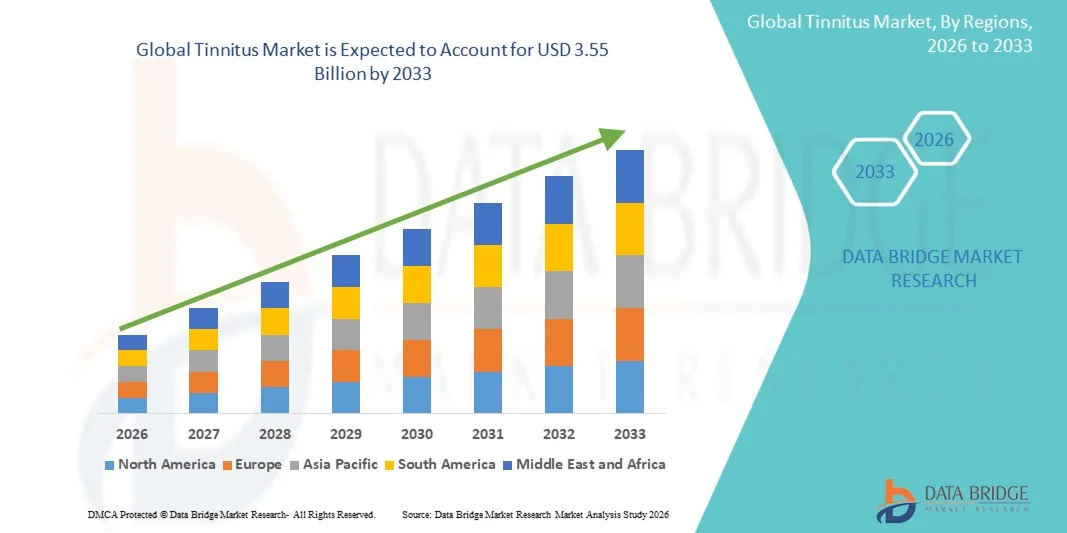
- The global tinnitus market size was valued at USD 2.81 billion in 2025 and is expected to reach USD 3.55 billion by 2033, at a CAGR of 3.00% during the forecast period
- The market growth is largely driven by the increasing prevalence of tinnitus cases globally, supported by rising exposure to noise pollution, aging populations, and higher incidence of hearing-related disorders across both developed and emerging economies
- Furthermore, growing awareness regarding early diagnosis and treatment options, coupled with advancements in therapeutic approaches such as sound therapy, cognitive behavioral therapy, and neuromodulation devices, is strengthening patient adoption of effective management solutions
Tinnitus Market Analysis
- Tinnitus, characterized by the perception of ringing or noise in the ears without an external source, is increasingly recognized as a significant public health concern, driving demand for diagnostic, therapeutic, and management solutions across clinical and homecare settings due to its impact on quality of life, sleep, and mental well-being
- The escalating prevalence of tinnitus is primarily fueled by factors such as rising exposure to loud noise, age-related hearing loss, increasing cases of ear infections and ototoxic drug use, along with growing awareness and diagnosis rates among both urban and aging population
- North America dominated the tinnitus market with a substantial revenue share of 38.5% in 2025, supported by advanced healthcare infrastructure, high awareness levels, strong adoption of hearing healthcare services, and the presence of key audiology and medical device providers, with the U.S. witnessing significant uptake of tinnitus management therapies and digital hearing solutions driven by technological advancements and expanding clinical research initiatives
- Asia-Pacific is expected to be the fastest growing region in the tinnitus market during the forecast period due to increasing healthcare investments, rising urbanization, growing disposable incomes, and expanding awareness and diagnosis of hearing disorders across emerging economies
- Therapy segment dominated the tinnitus market with a significant share of 42.7% in 2025, driven by the widespread adoption of cognitive behavioral therapy, sound therapy, tinnitus retraining therapy, and other non-invasive approaches aimed at managing symptoms and improving patient quality of life
Report Scope and Tinnitus Market Segmentation
|
Attributes |
Tinnitus Key Market Insights |
|
Segments Covered |
|
|
Countries Covered |
North America
Europe
Asia-Pacific
Middle East and Africa
South America
|
|
Key Market Players |
|
|
Market Opportunities |
|
|
Value Added Data Infosets |
In addition to the insights on market scenarios such as market value, growth rate, segmentation, geographical coverage, and major players, the market reports curated by the Data Bridge Market Research also include in-depth expert analysis, patient epidemiology, pipeline analysis, pricing analysis, and regulatory framework |
Tinnitus Market Trends
“Advancement in Digital Therapeutics and AI-Driven Personalized Care”
- A significant and accelerating trend in the global tinnitus market is the increasing integration of digital therapeutics, artificial intelligence (AI), and mobile-based health platforms aimed at delivering personalized and remote tinnitus management solutions
- For instance, AI-enabled tinnitus applications such as mobile sound therapy platforms and cognitive behavioral therapy (CBT)-based digital tools are being used to customize treatment plans based on patient-reported symptoms and usage patterns
- AI integration in tinnitus management enables features such as adaptive sound masking, predictive symptom tracking, and intelligent recommendations that adjust therapy intensity based on patient response over time
- The growing integration of digital health platforms with wearable devices and tele-audiology services allows continuous monitoring of auditory conditions and seamless access to remote consultations, improving patient adherence and engagement
- This trend towards data-driven, patient-centric, and technology-enabled tinnitus care is fundamentally reshaping treatment expectations, with companies and healthcare providers developing app-based ecosystems and connected hearing solutions compatible with smartphones and wearable devices
- The demand for AI-powered and digitally delivered tinnitus management solutions is growing rapidly across both developed and emerging regions, as patients increasingly prioritize convenience, accessibility, and personalized long-term symptom relief
- Additionally, the growing penetration of smartphones and internet connectivity is supporting wider adoption of app-based tinnitus therapies and remote monitoring solutions
Tinnitus Market Dynamics
Driver
“Rising Prevalence of Hearing Disorders and Growing Awareness of Tinnitus Management”
- The increasing incidence of hearing disorders, including tinnitus, driven by factors such as prolonged noise exposure, aging populations, and lifestyle-related auditory damage, is a significant driver for the heightened demand for tinnitus diagnosis and treatment solutions
- For instance, growing screening initiatives and awareness campaigns by healthcare organizations and audiology clinics are encouraging early diagnosis and intervention, leading to higher adoption of tinnitus management therapies and hearing care services
- As patients and healthcare providers become more aware of the long-term impacts of untreated tinnitus on mental health and quality of life, there is a rising preference for advanced therapeutic options such as sound therapy, cognitive behavioral therapy, and neuromodulation-based treatments
- Furthermore, the expansion of audiology infrastructure and increasing availability of specialized hearing care professionals are making tinnitus diagnosis and treatment more accessible across both urban and semi-urban populations
- The growing use of digital hearing aids, masking devices, and telehealth platforms that offer integrated tinnitus management features is further propelling market adoption across residential and clinical settings
- Additionally, increasing healthcare expenditure and government initiatives aimed at improving hearing health are supporting broader access to tinnitus care services
- Moreover, rising collaborations between medical device companies and research institutions are fostering innovation in advanced tinnitus treatment solutions
Restraint/Challenge
“Limited Cure Availability and Challenges in Accurate Diagnosis”
- One of the major challenges in the tinnitus market is the absence of a definitive cure, as most available treatment options focus on symptom management rather than complete elimination of the condition
- For instance, variability in tinnitus perception among patients and the subjective nature of symptoms make accurate diagnosis and standardized treatment planning difficult for healthcare providers
- The complexity of underlying causes, ranging from neurological to auditory system disorders, often requires multidisciplinary approaches, which can increase treatment duration and costs while limiting consistent outcomes
- Additionally, lack of awareness in certain developing regions and underreporting of symptoms due to stigma or low perceived severity further restrict timely diagnosis and treatment adoption
- Addressing these challenges through improved diagnostic technologies, increased awareness programs, and continued research into targeted and curative therapies will be essential for overcoming barriers and supporting long-term market growth
- Furthermore, limited access to specialized audiology professionals in rural and underserved regions restricts timely intervention and disease management
- Also, variability in regulatory approvals and clinical validation requirements for new tinnitus therapies can delay product commercialization and market entry
Tinnitus Market Scope
The market is segmented on the basis of type, treatment, drug class, treatment type, route of administration, end-users, and distribution channel.
- By Type
On the basis of type, the tinnitus market is segmented into subjective tinnitus, objective tinnitus, sensory tinnitus, somatic tinnitus, and others. The subjective tinnitus segment dominated the market with the largest market revenue share of 72.4% in 2025, as it accounts for the majority of diagnosed cases globally and is commonly linked to noise-induced hearing loss, aging, and auditory system damage. Its dominance is supported by higher clinical reporting rates and broader availability of management options such as sound therapy, hearing aids, and cognitive behavioral therapy. Additionally, subjective tinnitus is widely researched, enabling continuous improvements in treatment approaches and digital therapeutic solutions. The high burden of chronic cases requiring long-term management further reinforces its leading position. Growing awareness and early diagnosis initiatives also contribute to its widespread adoption across healthcare settings.
The somatic tinnitus segment is anticipated to witness the fastest growth rate of 11.8% from 2026 to 2033, driven by increasing recognition of its association with musculoskeletal and neurological conditions such as temporomandibular joint disorders and cervical spine dysfunction. Improved diagnostic techniques and multidisciplinary treatment approaches involving physiotherapy and dental interventions are supporting its growth. Rising awareness among clinicians regarding non-auditory triggers of tinnitus is leading to better identification of somatic cases. Furthermore, increasing patient preference for targeted therapies addressing underlying causes is accelerating demand in this segment. Expanding research into the relationship between physical movement and tinnitus modulation is also expected to support future growth.
- By Treatment
On the basis of treatment, the tinnitus market is segmented into medication, surgery, therapy, devices, and others. The therapy segment dominated the market with the largest market revenue share of 42.7% in 2025, primarily due to the widespread adoption of non-invasive approaches such as cognitive behavioral therapy (CBT), sound therapy, and tinnitus retraining therapy. These therapies are highly preferred as they help patients manage symptoms, reduce distress, and improve quality of life without surgical risks. Increasing integration of digital platforms and telehealth services has further enhanced accessibility to therapy-based treatments. Additionally, therapy is often recommended as a first-line intervention by healthcare professionals, reinforcing its dominant position. Continuous innovation in personalized and app-based therapy solutions is also contributing to its widespread adoption.
The devices segment is expected to witness the fastest CAGR from 2026 to 2033, driven by the rising use of advanced hearing aids with tinnitus masking features, neuromodulation devices, and wearable sound generators. Technological advancements are enabling improved connectivity with smartphones and personalized sound therapy options. Increasing patient preference for portable and user-friendly solutions is boosting demand for device-based treatments. Furthermore, the growing prevalence of chronic tinnitus cases requiring long-term management is supporting adoption of such devices. Expanding availability of affordable and feature-rich devices is also accelerating growth in this segment.
- By Drug Class
On the basis of drug class, the tinnitus market is segmented into antidepressants, benzodiazepine, corticosteroid, prostaglandin analogues, and others. The antidepressants segment dominated the market with the largest market revenue share of 35.6% in 2025, as these drugs are commonly used to manage psychological conditions associated with tinnitus such as anxiety, depression, and sleep disturbances. Their widespread prescription is due to the strong link between tinnitus severity and mental health conditions. Antidepressants help improve patient coping mechanisms and overall quality of life, making them a key component of tinnitus management. Increasing awareness among clinicians regarding the psychological impact of tinnitus further supports their usage. Additionally, their established clinical profile and availability across healthcare systems contribute to segment dominance.
The benzodiazepine segment is anticipated to witness the fastest CAGR from 2026 to 2033, driven by its effectiveness in reducing anxiety and promoting sleep in patients with severe tinnitus symptoms. These medications are often used for short-term symptomatic relief in carefully monitored clinical settings. Rising cases of stress-related tinnitus and sleep disturbances are contributing to their demand. However, their usage is regulated due to dependency risks, which limits long-term application. Despite this, ongoing clinical use in specialized cases continues to support segment growth.
- By Treatment Type
On the basis of treatment type, the tinnitus market is segmented into natural/homemade and medical. The medical segment dominated the market with the largest market revenue share of 81.3% in 2025, driven by the widespread reliance on clinically validated treatments such as prescription drugs, sound therapy, hearing aids, and neuromodulation devices. Patients and healthcare providers prefer medical treatments due to their proven efficacy, standardized protocols, and integration within formal healthcare systems. The availability of specialized tinnitus management programs in hospitals and clinics further strengthens this segment. Increasing adoption of advanced diagnostic and therapeutic technologies also supports its dominance. Moreover, insurance coverage and reimbursement for medical treatments encourage patients to opt for clinically supervised care.
The natural/homemade segment is expected to witness the fastest CAGR from 2026 to 2033, fueled by growing interest in complementary and alternative approaches such as herbal remedies, relaxation techniques, dietary changes, and mindfulness practices. Increasing awareness of holistic health and wellness is encouraging patients to explore non-pharmacological options. These methods are often used as supportive therapies alongside medical treatments. Rising preference for lifestyle-based interventions with minimal side effects is also contributing to growth. Expansion of digital platforms providing guidance on self-managed tinnitus care is further supporting this segment.
- By Route of Administration
On the basis of route of administration, the tinnitus market is segmented into oral, parenteral, and others. The oral segment dominated the market with the largest market revenue share of 68.9% in 2025, owing to the widespread use of orally administered drugs such as antidepressants, corticosteroids, and anxiolytics for managing tinnitus-related symptoms. Oral medications are preferred due to their ease of administration, non-invasive nature, and high patient compliance. They are commonly prescribed for long-term management of chronic tinnitus cases. The availability of a wide range of oral formulations further supports their dominant position. Additionally, oral routes are widely accessible across hospitals, retail, and homecare settings.
The parenteral segment is expected to witness the fastest CAGR from 2026 to 2033, driven by its use in acute and severe tinnitus cases requiring rapid therapeutic response. Injectable corticosteroids and other targeted therapies are increasingly used in clinical environments for specific conditions. Parenteral administration allows for faster drug delivery and higher bioavailability. Growing adoption in hospital settings for specialized care is contributing to segment growth. Advances in injectable formulations and targeted delivery approaches are also supporting increased utilization.
Tinnitus Market Regional Analysis
- North America dominated the tinnitus market with a substantial revenue share of 38.5% in 2025, supported by advanced healthcare infrastructure, high awareness levels, strong adoption of hearing healthcare services, and the presence of key audiology and medical device providers
- Consumers in the region benefit from well-established audiology infrastructure, widespread availability of diagnostic and therapeutic services, and growing use of digital hearing aids, sound therapy devices, and telehealth platforms for tinnitus care
- This widespread adoption is further supported by high healthcare expenditure, a technologically advanced patient population, and increasing preference for early diagnosis and personalized treatment approaches, establishing tinnitus management as a key component of hearing healthcare across residential and clinical settings
U.S. Tinnitus Market Insight
The U.S. tinnitus market captured the largest revenue share of 81% in North America in 2025, fueled by the high prevalence of hearing disorders and strong adoption of advanced tinnitus management solutions. Consumers are increasingly prioritizing early diagnosis and treatment through audiology services, hearing aids, and digital therapeutics. The growing preference for telehealth consultations, AI-driven tinnitus apps, and personalized therapy solutions further propels the market. Moreover, the integration of advanced healthcare infrastructure, strong reimbursement systems, and continuous innovation in neuromodulation and sound therapy devices is significantly contributing to the market’s expansion.
Europe Tinnitus Market Insight
The Europe tinnitus market is projected to expand at a substantial CAGR throughout the forecast period, primarily driven by increasing healthcare awareness, supportive reimbursement frameworks, and rising investments in hearing health programs. The region’s aging population and growing prevalence of noise-induced hearing loss are fostering the adoption of tinnitus management solutions. European consumers are also drawn to advanced diagnostic tools and non-invasive therapies such as cognitive behavioral therapy and sound therapy. The region is experiencing significant growth across hospitals, specialty clinics, and homecare settings, with tinnitus care being integrated into broader audiology and preventive healthcare services.
U.K. Tinnitus Market Insight
The U.K. tinnitus market is anticipated to grow at a noteworthy CAGR during the forecast period, driven by rising awareness of hearing health and increasing demand for effective tinnitus management options. Additionally, concerns regarding noise exposure, stress-related hearing issues, and aging-related auditory decline are encouraging individuals to seek professional diagnosis and treatment. The U.K.’s well-established healthcare system and access to audiology services are supporting adoption of therapies, hearing aids, and digital tinnitus management solutions. Furthermore, the expansion of tele-audiology services and online healthcare platforms is expected to continue stimulating market growth.
Germany Tinnitus Market Insight
The Germany tinnitus market is expected to expand at a considerable CAGR during the forecast period, fueled by growing awareness of auditory health, strong healthcare infrastructure, and demand for technologically advanced treatment solutions. Germany’s emphasis on innovation and precision healthcare promotes the adoption of digital therapeutics, hearing devices, and personalized tinnitus management approaches. The integration of tinnitus care with audiology services in hospitals and specialty clinics is becoming increasingly prevalent. Additionally, a strong focus on research and development in hearing sciences and patient-centric care models aligns with local expectations for high-quality and effective treatment options.
Asia-Pacific Tinnitus Market Insight
The Asia-Pacific tinnitus market is poised to grow at the fastest CAGR of 11.2% during the forecast period of 2026 to 2033, driven by increasing urbanization, rising disposable incomes, and growing awareness of hearing disorders in countries such as China, Japan, and India. The region’s expanding healthcare infrastructure and improving access to audiology services are supporting adoption of tinnitus management solutions. Furthermore, increasing noise pollution levels and lifestyle-related hearing issues are contributing to higher incidence rates. The growing penetration of digital health platforms and affordable treatment options is expanding accessibility across a wider patient base.
Japan Tinnitus Market Insight
The Japan tinnitus market is gaining momentum due to the country’s aging population, advanced healthcare system, and strong focus on technological innovation. The increasing prevalence of age-related hearing loss is driving demand for tinnitus diagnosis and management solutions. Japan’s high adoption of digital healthcare technologies, including AI-based sound therapy applications and advanced hearing aids, is supporting market growth. Additionally, integration of tinnitus management with IoT-enabled medical devices and telehealth services is enhancing patient convenience. The emphasis on precision medicine and personalized care is further strengthening the adoption of targeted tinnitus treatments.
India Tinnitus Market Insight
The India tinnitus market accounted for the largest market revenue share in Asia Pacific in 2025, attributed to rapid urbanization, a growing middle-class population, and increasing awareness of hearing health. India is witnessing rising cases of tinnitus due to exposure to noise pollution, occupational hazards, and lifestyle-related factors. The expanding availability of affordable hearing aids, mobile health applications, and access to audiology services is supporting market growth. Government initiatives promoting healthcare infrastructure and digital health adoption, along with the growth of telemedicine platforms, are key factors propelling the market in India.
Tinnitus Market Share
The Tinnitus industry is primarily led by well-established companies, including:
- Starkey Laboratories, Inc. (U.S.)
- Sonova AG (Switzerland)
- Phonak AG (Switzerland)
- Oticon A/S (Denmark)
- GN Hearing A/S (Denmark)
- Widex A/S (Denmark)
- ReSound (Denmark)
- Sivantos Pte. Ltd (Singapore)
- Rexton Hearing Solutions GmbH (Germany)
- Unitron Hearing Ltd (Canada)
- AudioNova International B.V. (Netherlands)
- Sonic Innovations, Inc. (U.S.)
- Interton Hearing Systems (Denmark)
- Rion Co., Ltd. (Japan)
- Hansaton Akustik GmbH (Germany)
- Audina Hearing Instruments (U.S.)
- MicroTech Hearing (Germany)
- Neuromod Devices Ltd (Ireland)
- Eargo, Inc. (U.S.)
- WS Audiology A/S (Denmark)
What are the Recent Developments in Global Tinnitus Market?
- In December 2025, Sonova strengthened its digital health portfolio by acquiring SilentCloud™, a move aimed at advancing integrated hearing care solutions for people with tinnitus and hearing loss worldwide. This acquisition underscores the increasing focus on expanding comprehensive hearing care ecosystems that combine hearing devices with tinnitus management platforms, enhancing long-term patient support and engagement
- In December 2025, researchers at Newcastle University introduced a smartphone-based sound therapy approach designed to reduce tinnitus loudness using personalized audio stimulation. This innovation demonstrates the growing emphasis on accessible, non-invasive, and scalable treatment methods that can be delivered through widely available consumer devices, potentially improving global reach of tinnitus therapies
- In November 2025, Neurotone AI launched its Tinnitus Pro digital therapeutic app combining personalized sound therapy, cognitive behavioral tools, and mindfulness features aimed at simplifying tinnitus management for patients and hearing care providers. This development highlights the growing shift toward app-based, patient-centric tinnitus management solutions leveraging digital therapeutics and AI-driven customization to improve accessibility and treatment adherence
- In January 2025, clinical and real-world evidence updates on Lenire, an FDA-approved tinnitus treatment device, indicated consistent positive outcomes among patients using bimodal neuromodulation therapy. This development reinforces the increasing adoption of device-based therapeutic interventions in tinnitus care, particularly for patients seeking alternatives to pharmacological treatments
- In September 2021, ongoing research and pipeline developments in tinnitus therapeutics were highlighted through global drug pipeline studies, showcasing multiple investigational compounds and treatment approaches under evaluation. This reflects the growing pharmaceutical and research interest in identifying targeted and potentially curative treatments for tinnitus, beyond symptom management strategies
SKU-
Получите онлайн-доступ к отчету на первой в мире облачной платформе рыночной аналитики
- Интерактивная панель анализа данных
- Панель анализа компании для возможностей с высоким потенциалом роста
- Доступ аналитика-исследователя для настройки и запросов
- Анализ конкурентов с помощью интерактивной панели
- Последние новости, обновления и анализ тенденций
- Используйте возможности сравнительного анализа для комплексного отслеживания конкурентов
Методология исследования
Сбор данных и анализ базового года выполняются с использованием модулей сбора данных с большими размерами выборки. Этап включает получение рыночной информации или связанных данных из различных источников и стратегий. Он включает изучение и планирование всех данных, полученных из прошлого заранее. Он также охватывает изучение несоответствий информации, наблюдаемых в различных источниках информации. Рыночные данные анализируются и оцениваются с использованием статистических и последовательных моделей рынка. Кроме того, анализ доли рынка и анализ ключевых тенденций являются основными факторами успеха в отчете о рынке. Чтобы узнать больше, пожалуйста, запросите звонок аналитика или оставьте свой запрос.
Ключевой методологией исследования, используемой исследовательской группой DBMR, является триангуляция данных, которая включает в себя интеллектуальный анализ данных, анализ влияния переменных данных на рынок и первичную (отраслевую экспертную) проверку. Модели данных включают сетку позиционирования поставщиков, анализ временной линии рынка, обзор рынка и руководство, сетку позиционирования компании, патентный анализ, анализ цен, анализ доли рынка компании, стандарты измерения, глобальный и региональный анализ и анализ доли поставщика. Чтобы узнать больше о методологии исследования, отправьте запрос, чтобы поговорить с нашими отраслевыми экспертами.
Доступна настройка
Data Bridge Market Research является лидером в области передовых формативных исследований. Мы гордимся тем, что предоставляем нашим существующим и новым клиентам данные и анализ, которые соответствуют и подходят их целям. Отчет можно настроить, включив в него анализ ценовых тенденций целевых брендов, понимание рынка для дополнительных стран (запросите список стран), данные о результатах клинических испытаний, обзор литературы, обновленный анализ рынка и продуктовой базы. Анализ рынка целевых конкурентов можно проанализировать от анализа на основе технологий до стратегий портфеля рынка. Мы можем добавить столько конкурентов, о которых вам нужны данные в нужном вам формате и стиле данных. Наша команда аналитиков также может предоставить вам данные в сырых файлах Excel, сводных таблицах (книга фактов) или помочь вам в создании презентаций из наборов данных, доступных в отчете.