


Global Wearable Sensors Market Segmentation, By Type (Motion Sensors, Medical-Based Sensors, Image Sensors, Position Sensors, Pressure Sensors, Inertial Sensors, and Other Sensors), Application (Smart Wrist wear, Smart Glasses, Smart Body wears, Smart Footwear, and Other Wearable Devices), End-User (Consumer Applications, Healthcare Applications, and Enterprise and Industrial Applications) - Industry Trends and Forecast to 2033
Что такое глобальный размер рынка носимых датчиков и темпы роста
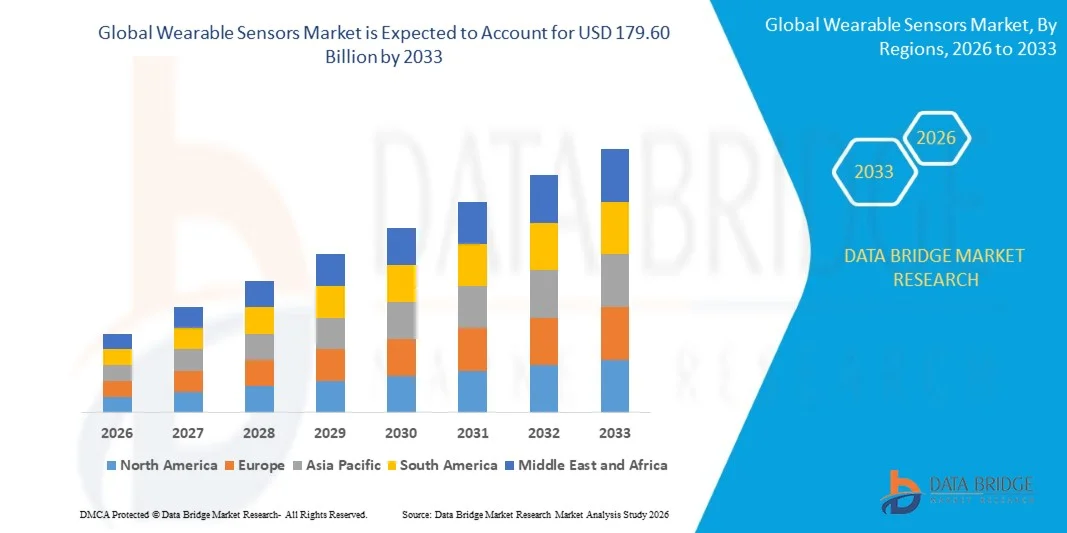
- Согласно анализу рынка Data Bridge Market Research, глобальный размер рынка носимых датчиков был оценен как8,35 млрд долларов в 2025 годуОжидается, что он достигнет179,60 млрд долларов к 2033 году, вCAGR 46,75%в течение прогнозируемого периода
- Этот рост обусловлен такими факторами, как растущее внедрение носимых устройств для лечения хронических заболеваний и достижения в сенсорных технологиях.
Размер рынка и прогноз
- Глобальная рыночная стоимость (2025):8,35 млрд. долларов США
- Ожидаемая рыночная стоимость (2033):$179,60 млрд.
- Прогноз CAGR (2026–2033):46.75%
Каковы основные выводы рынка носимых датчиков
- Мировой рынок носимых датчиков переживает значительное расширение, прогнозы указывают на значительное увеличение.
- Инновации в сенсорных технологиях, включая миниатюризацию и повышенную точность, улучшают функциональность носимых устройств.
- Носимые датчики интегрируются в различные устройства, такие как умные часы, фитнес-трекеры и умная одежда, удовлетворяя широкий спектр потребностей потребителей.
- Растет интерес потребителей к мониторингу здоровья и фитнеса, что стимулирует внедрение носимых устройств, оснащенных передовыми датчиками.
- Северная Америка доминировала на рынке носимых датчиков с долей дохода 34,12% в 2025 году, чему способствовало сильное внедрение передовых носимых технологий в здравоохранении, фитнесе и медицине.потребительская электроникасекторов в США и Канаде. Увеличение использования умных часов, фитнес-трекеров и медицинскихносимые устройстваМониторинг состояния здоровья в режиме реального времени значительно повышает спрос
- Ожидается, что Азиатско-Тихоокеанский регион зарегистрирует самый быстрый CAGR в 7,12% с 2026 по 2033 год, что обусловлено быстрым ростом потребительской электроники, увеличением проникновения смартфонов и ростом внедрения носимых устройств в Китае, Японии, Индии, Южной Корее и Юго-Восточной Азии.
- Сегмент датчиков движения доминировал на рынке с долей 34,6% в 2025 году, чему способствовала широко распространенная интеграция в фитнес-трекеры, умные часы и устройства мониторинга активности.
Сфера охвата и сегментация рынка носимых датчиков
|
Атрибуты |
Носимые датчики Key Market Insights |
|
Сегменты покрыты |
|
|
Страны, охваченные |
Северная Америка
Европа
Азиатско-Тихоокеанский регион
Ближний Восток и Африка
Южная Америка
|
|
Ключевые игроки рынка |
|
|
Рыночные возможности |
|
|
Информационные наборы данных с добавленной стоимостью |
|
Каковы основные тенденции на рынке носимых датчиков
"Интеграция умных колец в носимые технологии"
- Рынок носимых датчиков демонстрирует заметную тенденцию с возрождением умных колец.
- Эти компактные устройства предлагают функции, выходящие за рамки традиционных носимых устройств, такие как постоянный мониторинг здоровья, отслеживание сна и бесшовная интеграция с другими интеллектуальными устройствами.
- Например, введение Samsung Galaxy Ring в 2024 году означает переход к более сдержанным и универсальным носимым решениям.
- Для Instance компания Ōura, специализирующаяся на интеллектуальных кольцах, продемонстрировала значительный рост, удваивая свои продажи ежегодно и привлекая значительные инвестиции.
- Эта тенденция указывает на растущее предпочтение потребителей носимых устройств, которые сочетают функциональность с комфортом и стилем.
Каковы основные драйверы рынка носимых датчиков
- Рост заболеваемости хроническими заболеваниями, такими как диабет, сердечно-сосудистые заболевания игипертонияявляется важным драйвером для рынка носимых датчиков
- Носимые устройства, оснащенные датчиками, обеспечивают непрерывный мониторинг жизненно важных параметров здоровья, что позволяет своевременно выявлять и управлять этими состояниями.
- Для Instance носимые биосенсоры могут контролировать биохимические маркеры в жидкостях организма без инвазивных процедур, облегчая непрерывный скрининг и сбор данных о здоровье в режиме реального времени.
- Эта способность особенно полезна для лечения хронических заболеваний, где регулярное отслеживание имеет решающее значение для эффективного лечения и вмешательства.
Какой фактор влияет на рост рынка носимых датчиков
- Несмотря на достижения в области носимых сенсорных технологий, проблемы конфиденциальности и безопасности остаются значительными проблемами.
- Носимые устройства собирают конфиденциальные персональные данные, включая показатели здоровья, местоположение и модели активности, что вызывает опасения по поводу защиты данных.
- Несанкционированный доступ к этой информации или потенциальное злоупотребление третьими лицами может подорвать доверие потребителей и препятствовать широкому распространению.
- Например, случаи утечек данных в подключенных устройствах повышают осведомленность и беспокойство пользователей относительно безопасности их личной информации.
- Решение этих проблем с помощью надежных мер защиты данных и прозрачной политики конфиденциальности имеет решающее значение для дальнейшего роста рынка носимых датчиков.
Как сегментируется рынок носимых датчиков
Рынок сегментирован на основеТип, приложение и конечный пользователь.
• По типу
На основе типа рынок носимых датчиков сегментирован на датчики движения, датчики на медицинской основе, датчики изображения, датчики положения, датчики давления, инерциальные датчики и другие датчики. Сегмент датчиков движения доминировал на рынке с долей 34,6% в 2025 году, чему способствовала широко распространенная интеграция в фитнес-трекеры, умные часы и устройства мониторинга активности. Эти датчики играют важную роль в отслеживании движения, шагов, осанки и распознавания жестов, что делает их необходимыми для потребительских носимых приложений. Их низкое энергопотребление, компактные размеры и высокая точность значительно увеличили их использование в мониторинге состояния здоровья.спортивная аналитикаустройств. Кроме того, достижения в технологии MEMS повысили производительность датчиков и снизили затраты, что еще больше поддерживает расширение рынка.
Ожидается, что сегмент медицинских датчиков будет расти самыми быстрыми темпами с 2026 по 2033 год, чему способствует растущий спрос на решения для непрерывного мониторинга здоровья, растущая распространенность хронических заболеваний и растущее внедрение систем удаленного мониторинга пациентов. Увеличение цифровизации здравоохранения и носимой диагностики ускоряют рост сегмента.
• Подача заявки
На основе применения рынок носимых датчиков сегментирован на Smart Wristwear, Smart Glasses, Smart Body Wears, Smart Footwear и другие носимые устройства. Сегмент Smart Wristwear доминировал на рынке с долей 41,2% в 2025 году, чему способствовало широкое внедрение умных часов и фитнес-групп среди потребителей. Эти устройства широко используют носимые датчики для мониторинга сердечного ритма, отслеживания сна, подсчета калорий и отслеживания активности. Сильная осведомленность потребителей о здоровье и фитнесе в сочетании с растущим проникновением смартфонов и интеграцией передовых функций, таких как ЭКГ и мониторинг SpO2, продолжает стимулировать спрос. Кроме того, постоянные инновации в продуктах ведущих производителей носимых устройств укрепляют доминирование на рынке.
Сегмент Smart Body Wears, по прогнозам, будет расти самыми быстрыми темпами с 2026 по 2033 год, что обусловлено ростом внедрения в области здравоохранения, мониторинга спортивных результатов и реабилитационных приложений. Расширение использования сенсорно-интегрированной одежды для биометрического отслеживания в режиме реального времени значительно ускоряет рост сегмента.
• Конечный пользователь
На основе конечного пользователя рынок носимых датчиков сегментирован на потребительские приложения, приложения для здравоохранения и корпоративные и промышленные приложения. Сегмент потребительских приложений доминировал на рынке с долей 49,8% в 2025 году, что обусловлено высоким спросом на фитнес-трекинг, оздоровительный мониторинг и носимые устройства для образа жизни. Повышение осведомленности о здоровье, рост располагаемого дохода и растущая популярность интеллектуальных устройств значительно способствовали широкому распространению носимых датчиков в повседневной жизни. Интеграция искусственного интеллекта, мобильной связи и персонализированной аналитики здравоохранения еще больше повышает вовлеченность пользователей и проникновение на рынок.
Сегмент приложений для здравоохранения, как ожидается, будет расти самыми быстрыми темпами с 2026 по 2033 год, чему способствует растущее внедрение дистанционного мониторинга пациентов, телемедицинских решений и носимых медицинских устройств. Рост гериатрической популяции, распространенность хронических заболеваний и переход к профилактическому здравоохранению стимулируют высокий спрос на передовые носимые сенсорные технологии в клинических и домашних условиях.
В каком регионе находится наибольшая доля рынка носимых датчиков
- Северная Америка доминировала на рынке носимых датчиков с долей дохода 34,12% в 2025 году, чему способствовало сильное внедрение передовых носимых технологий в секторах здравоохранения, фитнеса и бытовой электроники в США и Канаде. Увеличение использования умных часов, фитнес-трекеров и медицинских носимых устройств для мониторинга здоровья в режиме реального времени значительно повышает спрос. Регион также выигрывает от хорошо зарекомендовавшей себя цифровой экосистемы здравоохранения, высоких расходов на здравоохранение и быстрой интеграции носимых решений с поддержкой IoT в клинических и личных приложениях.
- Ведущие компании Северной Америки постоянно внедряют передовые технологии носимых датчиков с повышенной точностью, миниатюризацией, многофункциональностью и аналитикой с поддержкой ИИ, укрепляя технологическое лидерство региона. Постоянные инвестиции в удаленный мониторинг пациентов, телемедицинские платформы и интеллектуальные потребительские устройства еще больше ускоряют долгосрочный рост рынка.
- Наличие ключевых игроков рынка, высокая осведомленность потребителей и растущее внедрение технологий профилактического здравоохранения еще больше укрепляют доминирование на региональном рынке.
Американские носимые датчики Market Insight
США являются крупнейшим поставщиком в Северной Америке, чему способствует широкое внедрение носимых устройств в области здравоохранения, фитнеса и образа жизни. Растущий спрос на постоянный мониторинг здоровья, управление хроническими заболеваниями и дистанционную диагностику стимулирует широкое использование носимых датчиков, таких как мониторы сердечного ритма, датчики движения и биосенсоры. Расширение интеграции ИИ, облачных вычислений и мобильных платформ здравоохранения улучшает отслеживание данных в режиме реального времени и персонализированные решения в области здравоохранения. Присутствие ведущих носимых технологических компаний, сильные возможности НИОКР и раннее внедрение инновационных цифровых решений в области здравоохранения способствуют дальнейшему росту рынка.
Канадские носимые датчики Market Insight
Канада вносит значительный вклад в региональный рост, обусловленный растущим внедрением цифровых решений в области здравоохранения, увеличением инвестиций в медицинские технологии и расширением использования носимых устройств для отслеживания фитнеса и хорошего самочувствия. Поставщики медицинских услуг и исследовательские учреждения все чаще используют носимые датчики для мониторинга пациентов, реабилитации и лечения хронических заболеваний. Правительственные инициативы, поддерживающие инновации в области здравоохранения, растущую осведомленность о профилактическом здравоохранении и растущий спрос на решения для удаленного мониторинга, еще больше укрепляют рынок носимых датчиков по всей стране.
Азиатско-Тихоокеанский рынок носимых датчиков
По прогнозам, Азиатско-Тихоокеанский регион зарегистрирует самый быстрый CAGR в 7,12% с 2026 по 2033 год, что обусловлено быстрым ростом потребительской электроники, увеличением проникновения смартфонов и растущим внедрением носимых устройств в Китае, Японии, Индии, Южной Корее и Юго-Восточной Азии. Расширение населения среднего класса, растущая осведомленность о здоровье и растущий спрос на доступные носимые технологии способствуют расширению рынка. Кроме того, сильные производственные экосистемы, быстрая цифровизация и растущая интеграция технологий IoT и AI в носимые устройства ускоряют региональный рост.
Китайские носимые датчики Market Insight
Китай является крупнейшим вкладчиком в Азиатско-Тихоокеанский регион благодаря своей огромной производственной базе потребительской электроники и сильному присутствию производителей носимых устройств. Растущий спрос на умные часы, фитнес-трекеры и устройства для мониторинга здоровья стимулирует широкомасштабное внедрение носимых датчиков. Государственная поддержка цифровых инноваций, расширение инфраструктуры 5G и усиление внимания к носимым технологиям на основе искусственного интеллекта еще больше стимулируют рост рынка. Конкурентное ценообразование и крупномасштабные производственные возможности также расширяют возможности внутреннего потребления и экспорта.
Японские носимые датчики Market Insight
Япония демонстрирует устойчивый рост, поддерживаемый развитой инфраструктурой здравоохранения, сильным акцентом на уход за пожилыми людьми и растущим внедрением носимых устройств мониторинга здоровья. Высокий спрос на точные датчики, надежность и технологически продвинутые носимые решения стимулирует инновации на рынке. Растущие применения в робототехнике, мониторинге здравоохранения и умной бытовой электронике также поддерживают долгосрочный рост. Постоянные инвестиции в НИОКР и сильные производственные возможности электроники укрепляют позиции Японии на рынке носимых датчиков.
Индийский рынок носимых датчиков Insight
Индия становится крупным центром роста, что обусловлено ростом осведомленности о здоровье, растущим внедрением фитнес-устройств и быстрым расширением цифровой инфраструктуры. Правительственные инициативы, способствующие цифровому здоровью, растущей экосистеме стартапов и увеличению проникновения смартфонов, подпитывают спрос на носимые устройства. Приложения в области мониторинга здравоохранения, спорта и управления образом жизни быстро расширяются. Повышение доступности носимых технологий и рост инвестиций в местное производство еще больше ускоряют освоение рынка.
Рынок носимых датчиков Южной Кореи
Южная Корея вносит значительный вклад благодаря высокому спросу на передовую потребительскую электронику, интеллектуальные устройства и медицинские носимые устройства. Лидерство страны в полупроводниковых и дисплейных технологиях поддерживает разработку высокопроизводительных носимых датчиков. Растущее внедрение носимых устройств с поддержкой ИИ, сосредоточение внимания на интеллектуальных решениях в области здравоохранения и быстрое расширение подключения к 5G способствуют росту рынка. Сильные инновационные возможности и присутствие ведущих компаний электроники продолжают поддерживать устойчивое расширение рынка носимых датчиков.
Какие компании находятся на рынке носимых датчиков
Индустрия носимых датчиков в основном возглавляется хорошо зарекомендовавшими себя компаниями, в том числе:
- TE Connectivity (Швейцария)
- Panasonic Corporation (Япония)
- Infineon Technologies AG (Германия)
- ams-OSRAM AG (Австрия)
- Robert Bosch GmbH (Германия)
- STMicroelectronics (Швейцария)
- Analog Devices, Inc. (США)
- Asahi Kasei Corporation (Япония)
- Knowles Electronics, LLC. (США)
- Broadcom (США)
- NXP Semiconductors (Нидерланды)
- ARM Holdings PLC (Великобритания)
- Texas Instruments Inc. (США)
- mCube (США)
- Sensirion AG (Швейцария)
- Invensense, Inc. (США)
- Shenzhen Emeno Technology Co., Ltd. (Китай)
- Novus International (США)
Каковы последние события на мировом рынке носимых датчиков
- В марте 2025 года IdentifyHer представила Peri, носимую для перименопаузы: на выставке CES 2025 стартап в области здравоохранения представил Peri, носимую, предназначенную для того, чтобы помочь пользователям отслеживать и управлять симптомами перименопаузы. В отличие от типичных носимых устройств для репродуктивного здоровья, ориентированных на отслеживание периода и фертильность, Peri обращается к переходной фазе до менопаузы, предоставляя объективные данные о симптомах, образе жизни и сне.
- В октябре 2024 года Oura Health объявила о запуске Oura Ring 4 с новыми обновлениями аппаратного и программного обеспечения. Кольцо теперь включает в себя датчики кислорода крови, частоты сердечных сокращений и дыхания во сне, все встроенные в тело кольца. Кроме того, Oura подписала контракт на сумму 96 миллионов долларов на поставку интеллектуальных колец военнослужащим США, включая услуги анализа данных для департамента здравоохранения Пентагона.
- В мае 2024 года Sensirion представила серию SLD3x, миниатюрную платформу для датчиков потока жидкости, для доставки лекарств подкожно. Настраиваемые решения Sensirion обеспечивают оптимальное закрытие, тем самым повышая безопасность пациентов для лечения, требующего подкожной доставки лекарств.
- В мае 2023 года инженеры Калифорнийского университета (Сан-Диего) разработали первую полностью интегрированную носимую ультразвуковую систему для глубокого мониторинга тканей. Это облегчает потенциально спасающий жизнь сердечно-сосудистый мониторинг и знаменует собой крупный прорыв для одной из ведущих в мире носимых ультразвуковых лабораторий.
- В апреле 2023 года Knowles Electronics представила микрофоны Trio of Sisonic MEMS для ушей и носимых решений. Новые микрофоны SiSonic помогают повысить уровень звука для современного образа жизни.
SKU-
Получите онлайн-доступ к отчету на первой в мире облачной платформе рыночной аналитики

- Интерактивная панель анализа данных
- Панель анализа компании для возможностей с высоким потенциалом роста
- Доступ аналитика-исследователя для настройки и запросов
- Анализ конкурентов с помощью интерактивной панели
- Последние новости, обновления и анализ тенденций
- Используйте возможности сравнительного анализа для комплексного отслеживания конкурентов
Методология исследования
Сбор данных и анализ базового года выполняются с использованием модулей сбора данных с большими размерами выборки. Этап включает получение рыночной информации или связанных данных из различных источников и стратегий. Он включает изучение и планирование всех данных, полученных из прошлого заранее. Он также охватывает изучение несоответствий информации, наблюдаемых в различных источниках информации. Рыночные данные анализируются и оцениваются с использованием статистических и последовательных моделей рынка. Кроме того, анализ доли рынка и анализ ключевых тенденций являются основными факторами успеха в отчете о рынке. Чтобы узнать больше, пожалуйста, запросите звонок аналитика или оставьте свой запрос.
Ключевой методологией исследования, используемой исследовательской группой DBMR, является триангуляция данных, которая включает в себя интеллектуальный анализ данных, анализ влияния переменных данных на рынок и первичную (отраслевую экспертную) проверку. Модели данных включают сетку позиционирования поставщиков, анализ временной линии рынка, обзор рынка и руководство, сетку позиционирования компании, патентный анализ, анализ цен, анализ доли рынка компании, стандарты измерения, глобальный и региональный анализ и анализ доли поставщика. Чтобы узнать больше о методологии исследования, отправьте запрос, чтобы поговорить с нашими отраслевыми экспертами.
Доступна настройка
Data Bridge Market Research является лидером в области передовых формативных исследований. Мы гордимся тем, что предоставляем нашим существующим и новым клиентам данные и анализ, которые соответствуют и подходят их целям. Отчет можно настроить, включив в него анализ ценовых тенденций целевых брендов, понимание рынка для дополнительных стран (запросите список стран), данные о результатах клинических испытаний, обзор литературы, обновленный анализ рынка и продуктовой базы. Анализ рынка целевых конкурентов можно проанализировать от анализа на основе технологий до стратегий портфеля рынка. Мы можем добавить столько конкурентов, о которых вам нужны данные в нужном вам формате и стиле данных. Наша команда аналитиков также может предоставить вам данные в сырых файлах Excel, сводных таблицах (книга фактов) или помочь вам в создании презентаций из наборов данных, доступных в отчете.











