


Глобальный рынок беспроводных систем пожарной сигнализации по типу продукции (датчики/детекторы, извещатели, панели и модули пожарной сигнализации, модули ввода/вывода, другие), типу системы (полностью беспроводные системы, гибридные системы), типу установки (новая установка, модернизация), применению (внутри помещений, на открытом воздухе), отраслям (промышленность, жилые помещения, коммерческие здания, государственные учреждения, производство, другие). Тенденции отрасли и прогноз до 2032 года.
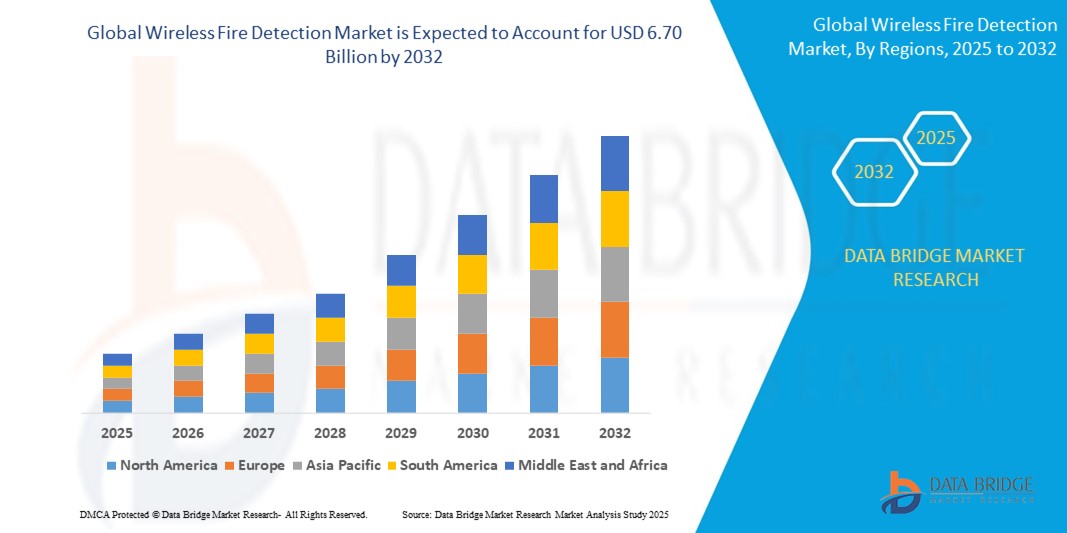
Размер рынка беспроводных систем обнаружения пожара
- Объем мирового рынка беспроводных систем обнаружения пожара в 2024 году оценивался в 4,12 млрд долларов США и, как ожидается, достигнет 6,70 млрд долларов США к 2032 году , демонстрируя среднегодовой темп роста в 6,4% в течение прогнозируемого периода.
- Этот рост обусловлен такими факторами, как строгие правила пожарной безопасности, внедрение в интеллектуальные здания и системы Интернета вещей, экономичные беспроводные установки, спрос со стороны промышленного сектора и технологические достижения в области обнаружения на основе искусственного интеллекта.
Анализ рынка беспроводных систем обнаружения пожара
- Беспроводная система обнаружения пожара определяется как система, обеспечивающая надежную передачу данных. Эти системы идеально подходят для нового строительства или реконструкции, когда в процессе строительства прокладываются кабельные каналы. Кроме того, беспроводные системы обнаружения пожара включают в себя дистанционный ключ, используемый для активации тревожной кнопки. Благодаря сотовой связи эти системы обмениваются данными по беспроводной сети, позволяя пользователям активировать функции системы с помощью мобильного устройства.
- Рост популярности беспроводных систем безопасности в жилых и коммерческих зданиях, а также развитие таких технологий, как искусственный интеллект (ИИ) и интернет вещей (IoT), окажут влияние на рост рынка беспроводных систем обнаружения пожара.
- Ожидается, что Северная Америка будет доминировать на рынке беспроводных систем обнаружения пожара благодаря присутствию крупных игроков и широкому распространению беспроводных систем обнаружения пожара в коммерческом и жилом секторах.
- Ожидается, что Европа станет самым быстрорастущим регионом на рынке беспроводных систем обнаружения пожара в течение прогнозируемого периода благодаря растущему присутствию производителей беспроводных систем обнаружения пожара и строгим государственным правилам установки дымовых извещателей и датчиков дыма в этом регионе.
- Ожидается, что коммерческий сегмент, включающий офисы, торговые площади, медицинские учреждения и предприятия общественного питания, будет доминировать на рынке беспроводных систем обнаружения пожара, занимая более 45% рынка. Это обусловлено, главным образом, строгими государственными нормами безопасности для общественных зданий, быстрым внедрением технологий «умных зданий» и растущим спросом на системы пожарной безопасности с поддержкой Интернета вещей (IoT).
Обзор отчета и сегментация рынка беспроводных систем обнаружения пожара
|
Атрибуты |
Анализ ключевых тенденций рынка беспроводных систем обнаружения пожара |
|
Охваченные сегменты |
|
|
Охваченные страны |
Северная Америка
Европа
Азиатско-Тихоокеанский регион
Ближний Восток и Африка
Южная Америка
|
|
Ключевые игроки рынка |
|
|
Рыночные возможности |
|
|
Информационные наборы данных, представляющие добавленную стоимость |
Помимо анализа рыночных сценариев, таких как рыночная стоимость, темпы роста, сегментация, географический охват и основные игроки, отчеты о рынке, подготовленные Data Bridge Market Research, также включают анализ импорта и экспорта, обзор производственных мощностей, анализ производства и потребления, анализ ценовых тенденций, сценарий изменения климата, анализ цепочки поставок, анализ цепочки создания стоимости, обзор сырья/расходных материалов, критерии выбора поставщиков, PESTLE-анализ, анализ Портера и нормативно-правовую базу. |
Тенденции рынка беспроводных систем обнаружения пожара
«Появление систем обнаружения пожара и интеллектуальных систем безопасности на основе искусственного интеллекта»
- Беспроводные системы обнаружения пожара развиваются благодаря функциям, основанным на искусственном интеллекте, таким как прогнозный анализ пожарной опасности, снижение количества ложных срабатываний и адаптивная калибровка датчиков, что повышает надежность в промышленных, коммерческих и жилых помещениях.
- Интеграция LoRaWAN, Zigbee и сотовой связи IoT (NB-IoT/LTE-M) обеспечивает бесперебойную связь между крупными объектами и инфраструктурой умного города.
- Например, к январю 2025 года генеративный ИИ стремительно развивается, а спрос на вычислительные мощности резко возрастает по мере того, как модели увеличиваются до миллиардов параметров. К 2025 году прогнозируется, что глобальный объем данных достигнет 175 зеттабайт. Доктор Чжоу Чжэньюй подчеркивает важность гибридного ИИ, где облачные и периферийные устройства взаимодействуют для эффективного развертывания ИИ. Среди проблем – балансировка производительности, энергопотребления, стоимости и создание единой экосистемы для внедрения ИИ.
- Эта тенденция подпитывается растущим спросом на умные колонки, наушники и саундбары, обеспечивающие захватывающее, интеллектуальное и энергоэффективное акустическое звучание.
Динамика рынка беспроводных систем обнаружения пожара
Водитель
«Растущий спрос на решения по модернизации устаревающей инфраструктуры»
- Растет внедрение беспроводных систем пожарной сигнализации в старых зданиях, где проводная установка нецелесообразна или дорогостояща, что обусловлено строгими правилами безопасности (например, NFPA, EN 54).
- Усовершенствования в протоколах беспроводной связи дальнего действия (например, Wi-SUN, RF Mesh) и датчиков с 10-летним сроком службы батарей позволяют снизить затраты на техническое обслуживание и повысить масштабируемость.
- В настоящее время муниципалитеты отдают приоритет беспроводным системам для мониторинга пожаров в режиме реального времени в исторических районах, используя сети 5G и периферийные вычисления для мгновенного оповещения.
Например,
- В апреле 2025 года беспроводной Bluetooth-передатчик обнаружения пожара Nulaxy Air для использования в самолете станет доступен по цене 17 долларов (скидка 40%). Этот компактный адаптер позволяет беспроводным способом передавать аудио с проводных устройств, таких как сиденья в самолете или спортивное оборудование, на Bluetooth-наушники. Он обеспечивает до 20 часов автономной работы, поддерживает сопряжение двух наушников и Bluetooth 5.3 для высококачественной передачи звука.
- В результате рынок беспроводных систем обнаружения пожара расширяется благодаря модернизации устаревшей инфраструктуры, внедрению передовых протоколов, таких как Wi-SUN, и соблюдению нормативных требований. Интеграция в концепцию «умного города» и повышение устойчивости к стихийным бедствиям еще больше способствуют внедрению таких систем.
Возможность
«Системы пожаротушения нового поколения на основе искусственного интеллекта и интеграции с Интернетом вещей»
- Искусственный интеллект позволяет заблаговременно прогнозировать пожары за счет обнаружения аномалий (например, скачков температуры, утечек газа) и интеграции с интеллектуальными системами зданий (системы отопления, вентиляции и кондиционирования, системы контроля доступа).
- Технологии 5G и граничных вычислений обеспечивают обработку данных в режиме реального времени для критически важных объектов, таких как центры обработки данных и химические заводы.
- В настоящее время системы искусственного интеллекта запускают предварительно запрограммированные действия (например, разблокировку выходов, отключение лифтов) на 30% быстрее, чем ручные протоколы (данные NFPA 2024).
Например,
- В апреле 2025 года компания Sennheiser выпустила в Индии специальную версию наушников Accentum Wireless SE по цене 10 990 рупий (ранее 20 990 рупий). В комплект входят беспроводные наушники Accentum Wireless и адаптер BTD600 (5 990 рупий), улучшающий качество звука. Наушники отличаются превосходным звуком с активным шумоподавлением и элегантным дизайном, а также оснащены сопутствующим приложением для настройки и обновления прошивки.
- Интеграция ИИ и Интернета вещей совершает революцию в беспроводных системах обнаружения пожаров, обеспечивая прогнозирование причин возгорания, автоматизированное реагирование на чрезвычайные ситуации и оптимизированное техническое обслуживание систем. Благодаря технологиям 5G и граничным вычислениям, расширяющим возможности работы в режиме реального времени, эти интеллектуальные решения устанавливают новые стандарты безопасности, эффективности и соответствия требованиям в системах противопожарной защиты.
Сдержанность/Вызов
«Высокие затраты и проблемы совместимости в многовендорных экосистемах»
- Высокая первоначальная стоимость беспроводных систем обнаружения пожара с интегрированным искусственным интеллектом — обусловленная использованием интеллектуальных чипсетов, современных датчиков и лицензированием программного обеспечения — ограничивает доступность для сегментов рынка, чувствительных к цене.
- Отсутствие универсальных стандартов приводит к фрагментации экосистемы; такие платформы, как AirPlay, AlexaCast и Chromecast, часто не взаимодействуют должным образом, что сбивает с толку потребителей.
- Соответствие двойным стандартам UL/EN увеличивает затраты на разработку на 20-30%, что задерживает вывод новых технологий на рынок.
Например,
- В июле 2021 года число мер по локализации данных во всем мире за четыре года увеличилось более чем вдвое: 62 страны ввели 144 ограничения. Эти меры наносят ущерб экономике, сокращая торговлю, производительность и повышая цены. Китай, Индонезия, Россия и Южная Африка являются странами с наиболее жесткими ограничениями в отношении данных. Политикам необходимо найти баланс между проблемами, связанными с данными, и развитием открытой цифровой экономики, а также содействовать международному сотрудничеству для решения проблем локализации данных.
- Рынок беспроводных систем обнаружения пожара сталкивается с препятствиями на пути внедрения, такими как высокая стоимость систем искусственного интеллекта, фрагментированные стандарты и проблемы интеграции устаревших систем.
Обзор рынка беспроводных систем обнаружения пожара
Рынок сегментирован по типу продукции, типу системы, типу установки, области применения и отраслям.
|
Сегментация |
Субсегментация |
|
По типу продукции |
|
|
По типу системы |
|
|
По типу установки |
|
|
По заявлению |
|
|
По вертикали |
|
По прогнозам , в 2025 году рекламный сегмент будет доминировать на рынке, занимая наибольшую долю в каждом вертикальном сегменте.
Ожидается, что коммерческий сегмент будет доминировать на рынке беспроводных систем обнаружения пожара, занимая более 45% рынка, в основном благодаря строгим государственным нормам безопасности для общественных зданий, быстрому внедрению технологий «умных зданий» и растущему спросу на системы пожарной безопасности с поддержкой Интернета вещей.
Ожидается, что в течение прогнозируемого периода датчики/детекторы займут наибольшую долю на рынке беспроводных систем обнаружения пожара.
В 2025 году сегмент датчиков/детекторов на рынке беспроводных систем пожарной сигнализации, по прогнозам, займет наибольшую долю – приблизительно 42,13%. Это доминирование обусловлено многокритериальным обнаружением на основе искусственного интеллекта, соответствием стандартам NFPA/EN54 и внедрением концепции «умного города». Благодаря 10-летнему сроку службы батарей и снижению затрат на модернизацию на 50%, эти системы превосходят традиционные решения в коммерческих и муниципальных приложениях.
Региональный анализ рынка беспроводных систем обнаружения пожара
«Северная Америка занимает наибольшую долю на рынке беспроводных систем обнаружения пожара».
- Северная Америка доминирует на рынке беспроводных систем обнаружения пожара, чему способствуют растущее внедрение беспроводных технологий в системы безопасности, сильное присутствие ведущих поставщиков беспроводных систем обнаружения пожара и строгие правила безопасности в коммерческом, жилом и промышленном секторах.
- США занимают значительную долю рынка благодаря быстрому внедрению беспроводных технологий обнаружения пожара в системах автоматизации зданий, промышленной безопасности и системах «умного дома». Растущий спрос на экономичные и легко устанавливаемые решения в области пожарной безопасности еще больше способствует расширению рынка.
- Развитая инфраструктура региона, растущее внимание к пожарной безопасности и инвестиции в проекты «умных зданий» и промышленной безопасности еще больше укрепляют доминирующее положение Северной Америки на рынке.
- Кроме того, растущее число новых строительных проектов, модернизация старых зданий с использованием современных систем безопасности, а также внедрение беспроводных технологий обнаружения пожара ведущими охранными компаниями продолжают стимулировать рост в регионе.
«Прогнозируется, что Европа продемонстрирует самый высокий среднегодовой темп роста на рынке беспроводных систем обнаружения пожара».
- По прогнозам, Европа продемонстрирует самый высокий темп роста на рынке беспроводных систем обнаружения пожара, чему способствуют строгие государственные нормативные акты, обязывающие устанавливать современные системы обнаружения пожара, повышенное внимание к безопасности людей и внедрение энергоэффективных беспроводных решений в жилых, коммерческих и промышленных зданиях.
- Благодаря сильной нормативно-правовой базе, государственным инициативам по обеспечению пожарной безопасности и растущему потребительскому спросу на надежные и масштабируемые беспроводные устройства обнаружения пожара, такие страны, как Великобритания, Германия и Франция, становятся ключевыми рынками.
- Германия, известная своим пристальным вниманием к стандартам безопасности и технологическим достижениям, продолжает лидировать в внедрении беспроводных систем пожарной сигнализации, особенно в коммерческом и промышленном секторах. Интеграция беспроводных систем пожарной сигнализации в интеллектуальные здания и инфраструктуру способствует росту рынка.
- В Великобритании и Франции, благодаря растущим инвестициям в инфраструктуру и строгим правилам безопасности, наблюдается значительное внедрение беспроводных систем обнаружения пожара в жилых зданиях, медицинских учреждениях и образовательных организациях. Наличие инновационных производителей беспроводных систем обнаружения пожара и растущая осведомленность о пожарных рисках еще больше способствуют росту рынка в регионе.
Доля рынка беспроводных систем обнаружения пожара
Анализ конкурентной среды рынка предоставляет подробную информацию по каждому конкуренту. Включает в себя: обзор компании, финансовые показатели, полученную выручку, рыночный потенциал, инвестиции в исследования и разработки, новые рыночные инициативы, глобальное присутствие, производственные площадки и мощности, производственные возможности, сильные и слабые стороны компании, запуск продукции, ассортимент продукции, доминирование в применении. Приведенные выше данные относятся только к деятельности компаний на рынке.
Крупнейшими лидерами рынка, работающими на данной платформе, являются:
- EMS Ltd (Великобритания)
- Sterling and Wilson Pvt. Ltd. (Индия)
- Электродетекторы Ltd (Великобритания)
- Siemens (Германия)
- WAGNER Group GmbH (Германия)
- Корпорация HOCHIKI (Япония)
- Honeywell International, Inc. (США)
- Halma Plc. (Великобритания)
- Пожарные извещатели Apollo (Великобритания)
- Detectomat Systems GmbH (Германия)
- Robert Bosch Gmbh (Германия)
- EUROFYRE LTD. (Великобритания)
- Napco Security Technologies, Inc. (США)
- Sonatech Nederland (Нидерланды)
- Ceasefire Industries Pvt. Ltd (Индия)
- Johnson Controls (Ирландия)
- Zeta Alarms Ltd (Великобритания)
- Attentis Pty Ltd. (Австралия)
- Vigilys, Inc. (США)
- Libelium Comunicaciones Distribuidas SL (Испания)
Последние разработки на мировом рынке беспроводных систем обнаружения пожара
- В декабре 2024 года новейшие технологии искусственного интеллекта и беспроводные технологии совершают революцию в противопожарной защите: современные системы сокращают количество ложных срабатываний на 40% благодаря адаптивным датчикам (UL 2024). Решения на базе IoT обеспечивают мониторинг в режиме реального времени, а беспроводные установки снижают затраты на модернизацию на 50%. По мере ужесточения требований NFPA и EN54 эти инновации обеспечивают более быстрое реагирование, прогнозируемое техническое обслуживание и бесшовную интеграцию с интеллектуальными системами зданий, устанавливая новые стандарты эффективности противопожарной безопасности.
- В феврале 2025 года искусственный интеллект и Интернет вещей совершат революцию в обнаружении пожаров: многоспектральные датчики сократят количество ложных срабатываний на 40% и улучшат время реагирования. Беспроводные системы теперь позволяют масштабировать установки без дорогостоящей проводки. Усовершенствованные тепловые и оптические детекторы обеспечивают более раннее предупреждение, а интегрированные системы управления зданием автоматизируют протоколы реагирования на чрезвычайные ситуации. Эти инновации обеспечивают на 30% более быстрое выявление угроз и оповещения о необходимости профилактического обслуживания, преобразуя систему пожарной безопасности коммерческих зданий.
- В апреле 2025 года компания UltraProlink выпустила Air-Tunes Duo — Bluetooth-передатчик и адаптер, который добавляет функцию беспроводного обнаружения возгорания к устройствам с 3,5-мм аудиоразъемом. Он обеспечивает потоковую передачу звука в двух направлениях, поддерживает проводные наушники и предлагает до 15 часов автономной работы. Доступный по цене 1841 рупия, он предназначен для пользователей, желающих получить беспроводную свободу при использовании существующих высококачественных наушников или вкладышей.
- В декабре 2024 года компания Sennheiser выпустила в Индии беспроводную микрофонную систему Profile Wireless, ориентированную на создателей контента. Система предлагает двухканальный беспроводной звук на частоте 2,4 ГГц с радиусом действия до 245 метров, 15-часовым временем автономной работы и 30 часами записи. Цена системы составляет 29 900 рупий, она поддерживает различные конфигурации и включает функции резервной записи для повышения качества звука во время производства.
SKU-
Получите онлайн-доступ к отчету на первой в мире облачной платформе рыночной аналитики

- Интерактивная панель анализа данных
- Панель анализа компании для возможностей с высоким потенциалом роста
- Доступ аналитика-исследователя для настройки и запросов
- Анализ конкурентов с помощью интерактивной панели
- Последние новости, обновления и анализ тенденций
- Используйте возможности сравнительного анализа для комплексного отслеживания конкурентов
Методология исследования
Сбор данных и анализ базового года выполняются с использованием модулей сбора данных с большими размерами выборки. Этап включает получение рыночной информации или связанных данных из различных источников и стратегий. Он включает изучение и планирование всех данных, полученных из прошлого заранее. Он также охватывает изучение несоответствий информации, наблюдаемых в различных источниках информации. Рыночные данные анализируются и оцениваются с использованием статистических и последовательных моделей рынка. Кроме того, анализ доли рынка и анализ ключевых тенденций являются основными факторами успеха в отчете о рынке. Чтобы узнать больше, пожалуйста, запросите звонок аналитика или оставьте свой запрос.
Ключевой методологией исследования, используемой исследовательской группой DBMR, является триангуляция данных, которая включает в себя интеллектуальный анализ данных, анализ влияния переменных данных на рынок и первичную (отраслевую экспертную) проверку. Модели данных включают сетку позиционирования поставщиков, анализ временной линии рынка, обзор рынка и руководство, сетку позиционирования компании, патентный анализ, анализ цен, анализ доли рынка компании, стандарты измерения, глобальный и региональный анализ и анализ доли поставщика. Чтобы узнать больше о методологии исследования, отправьте запрос, чтобы поговорить с нашими отраслевыми экспертами.
Доступна настройка
Data Bridge Market Research является лидером в области передовых формативных исследований. Мы гордимся тем, что предоставляем нашим существующим и новым клиентам данные и анализ, которые соответствуют и подходят их целям. Отчет можно настроить, включив в него анализ ценовых тенденций целевых брендов, понимание рынка для дополнительных стран (запросите список стран), данные о результатах клинических испытаний, обзор литературы, обновленный анализ рынка и продуктовой базы. Анализ рынка целевых конкурентов можно проанализировать от анализа на основе технологий до стратегий портфеля рынка. Мы можем добавить столько конкурентов, о которых вам нужны данные в нужном вам формате и стиле данных. Наша команда аналитиков также может предоставить вам данные в сырых файлах Excel, сводных таблицах (книга фактов) или помочь вам в создании презентаций из наборов данных, доступных в отчете.











