


Сегментация рынка автоматизации лабораторий Северной Америки по типу продукции (оборудование, программное обеспечение и информатика, анализаторы), типу автоматизации (модульная автоматизация и полная автоматизация лабораторий), применению (разработка лекарств, клиническая диагностика, геномные решения, протеомные решения, биоанализ, белковая инженерия, лиофилизация, системная биология, аналитическая химия и другие), конечным пользователям (биотехнологии и фармацевтика, больницы и лаборатории, научно-исследовательские и академические учреждения и другие) — отраслевые тенденции и прогноз до 2033 года.
Каков размер рынка автоматизации и темпы роста в Северной Америке
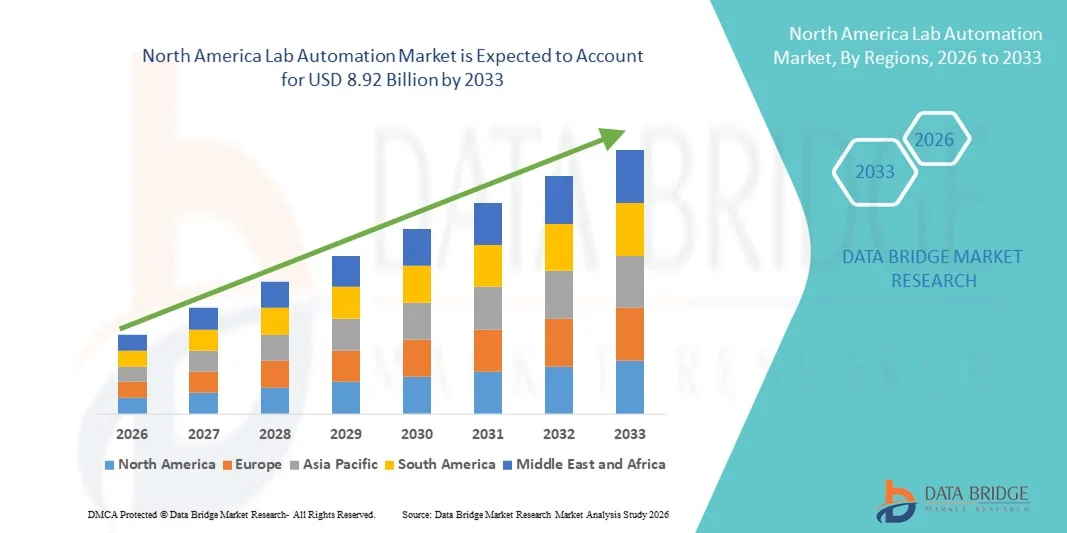
- По данным Data Bridge Market Research Analysis Размер рынка автоматизации лабораторий в Северной Америке оценивается как5,27 млрд долларов в 2025 годуОжидается, что он достигнет8,92 млрд долларов к 2033 году, вCAGR 6,8%в течение прогнозируемого периода
- Рост рынка в значительной степени обусловлен увеличением инвестиций в автоматизацию лабораторного оборудования, передовую робототехнику и интеграцию программного обеспечения, а также растущим спросом на высокопроизводительный скрининг и снижение ошибок в рабочих процессах в биотехнологических, клинической диагностике и фармацевтических научно-исследовательских учреждениях в США, Канаде и Мексике.
- Кроме того, продолжающаяся цифровая трансформация лабораторных процессов с помощью анализа с использованием ИИ, модульных платформ автоматизации и инструментов оптимизации рабочих процессов повышает спрос на более эффективные, надежные и воспроизводимые лабораторные решения. Сближение технологического прогресса, сокращение нехватки рабочей силы и капитальные затраты на инновационные автоматизированные платформы ускоряют внедрение систем автоматизации лабораторий в Северной Америке, тем самым значительно поддерживая рост промышленности.
Размер рынка и прогноз
- Рыночная стоимость Северной Америки (2025)USD 5,27 млрд.
- Ожидаемая рыночная стоимость (2033)$ 8,92 млрд.
- Прогноз CAGR (2026–2033): 6.8%
Анализ рынка автоматизации North America Lab
- Автоматизация лабораторий, охватывающая автоматизированные анализаторы, платформы программного обеспечения и информатики и роботизированное оборудование, становится все более важной в современных лабораториях в фармацевтических, клинических и исследовательских условиях в таких странах, как США и Канада, благодаря повышению эффективности, точности и бесшовной интеграции с цифровыми лабораторными экосистемами.
- Растущий спрос на автоматизацию лабораторий в первую очередь обусловлен потребностью в высокопроизводительной обработке, снижением человеческих ошибок, более быстрым временем оборота и растущим внедрением ИИ, систем с поддержкой IoT и облачных инструментов управления лабораторной информацией.
- США доминировали на рынке автоматизации лабораторий Северной Америки с самой большой долей дохода в 75,8% в 2025 году, чему способствовало раннее внедрение передовых лабораторных технологий, значительные инвестиции в НИОКР и сильное присутствие ключевых игроков рынка.
- Ожидается, что в течение прогнозируемого периода в Канаде будет наблюдаться устойчивый рост из-за увеличения инвестиций в клиническую диагностику.биотехнологияисследования и внедрение передовых лабораторных решений в больницах и научно-исследовательских учреждениях;
- Сегмент анализаторов доминировал на рынке автоматизации лабораторий Северной Америки с долей 42,7% в 2025 году, что обусловлено их способностью улучшать пропускную способность, обеспечивать воспроизводимость и эффективно интегрировать как модульные, так и общие рабочие процессы автоматизации лабораторий.
Сегментация рынка автоматизации лабораторий Северной Америки
|
Атрибуты |
North America Lab Automation - обзор рынка |
|
Сегменты покрыты |
|
|
Страны, охваченные |
Северная Америка
|
|
Ключевые игроки рынка |
|
|
Рыночные возможности |
|
|
Информационные наборы данных с добавленной стоимостью |
В дополнение к информации о рыночных сценариях, таких как рыночная стоимость, темпы роста, сегментация, географический охват и основные игроки, рыночные отчеты, курируемые Data Bridge Market Research, также включают углубленный экспертный анализ, эпидемиологию пациентов, анализ трубопроводов, анализ цен и нормативную базу. |
Каковы основные тенденции на рынке автоматизации лабораторий в Северной Америке
Повышение эффективности с помощью ИИ и интегрированных рабочих процессов
- Значительной и ускоряющейся тенденцией на рынке автоматизации лабораторий в Северной Америке является углубление интеграции.искусственный интеллект(AI) с автоматизированными анализаторами, модульными системами и платформами программного обеспечения и информатики, повышая эффективность лабораторий и оптимизацию рабочих процессов в фармацевтических, клинических и исследовательских лабораториях
- Например, автоматизированные платформы обработки жидкостей Thermo Fisher Scientific интегрируют планирование и прогнозное обслуживание с поддержкой ИИ для оптимизации пропускной способности и уменьшения человеческих ошибок.
- Интеграция ИИ в лабораторную автоматизацию обеспечивает такие функции, как прогнозный анализ для обработки образцов, обнаружение аномалий в результатах анализа и интеллектуальное планирование роботизированных рабочих процессов. Например, системы STARlet компании Hamilton используют ИИ для повышения точности пипетки с течением времени и могут предупреждать операторов о нерегулярных рабочих процессах.
- Бесшовная интеграция систем автоматизации лабораторий с цифровыми платформамилабораторные системы управления информацией(LIMS) облегчает централизованное управление несколькими инструментами, позволяя лабораториям контролировать и управлять рабочими процессами, отслеживанием образцов и анализом данных из одного интерфейса.
- Эта тенденция к более интеллектуальным, интегрированным и подключенным лабораторным решениям меняет ожидания производительности и воспроизводимости. Следовательно, такие компании, как Beckman Coulter, разрабатывают автоматизированные анализаторы с поддержкой ИИ, способные прогнозировать обслуживание и интеграцию с несколькими лабораторными инструментами.
- Спрос на решения для автоматизации лабораторий, которые предлагают интеграцию ИИ и рабочих процессов, быстро растет в фармацевтических, биотехнологических и клинических диагностических лабораториях, поскольку организации все чаще отдают приоритет эффективности, точности и оперативной масштабируемости.
- Растущий акцент на воспроизводимость и стандартизацию в клинических и исследовательских лабораториях способствует внедрению интегрированных систем автоматизации лабораторий, которые обеспечивают согласованные и высококачественные результаты.
Динамика рынка автоматизации North America Lab
водитель
Растущая потребность в НИОКР и операционная эффективность
- Растущий объем открытий лекарств, клинической диагностики и геномных исследований в сочетании со спросом на более быстрые и надежные результаты в лабораториях является важным фактором для растущего внедрения систем автоматизации лабораторий.
- Например, в марте 2025 года PerkinElmer запустила модульную платформу автоматизации с поддержкой ИИ для ускорения высокопроизводительного скрининга в фармацевтических исследованиях с целью повышения операционной эффективности.
- Поскольку лаборатории сталкиваются с давлением, чтобы уменьшить ошибки, оптимизировать использование ресурсов и обрабатывать большие объемы выборки, автоматизация лабораторий предлагает точные, воспроизводимые и высокопроизводительные возможности по сравнению с ручными рабочими процессами.
- Кроме того, интеграция автоматизированных анализаторов, программных и информационных платформ и модульных систем обеспечивает бесперебойную работу лабораторий, поддерживая растущую тенденцию к централизованным и подключенным лабораторным средам.
- Возможность отслеживать образцы, автоматизировать повторяющиеся задачи и управлять рабочими процессами в цифровом виде, а также масштабируемые решения как для малых, так и для крупных лабораторий способствует внедрению систем автоматизации лабораторий в фармацевтике, биотехнологии и клинической диагностике.
- Например, системы обработки жидкостей Labcyte Echo улучшают пропускную способность анализа и минимизируют отходы реагентов, поддерживая цели устойчивого развития в научно-исследовательских лабораториях.
- Увеличение государственного и частного финансирования исследований в области геномики, протеомики и персонализированной медицины создает новые возможности для роста автоматизированных лабораторных решений в Северной Америке.
- Растущее сотрудничество между производителями приборов и фармацевтическими компаниями для сквозных автоматизированных рабочих процессов стимулирует внедрение интегрированных платформ автоматизации лабораторий.
Сдержанность/вызов
Высокая начальная инвестиционно-интеграционная сложность
- Относительно высокая стоимость автоматизированных лабораторных систем в сочетании со сложностью интеграции нескольких инструментов представляет собой серьезную проблему для внедрения на рынок, особенно для малых и средних лабораторий.
- Например, лаборатории, ищущие решения для автоматизации лабораторий, часто сталкиваются с существенными первоначальными капитальными затратами и требуют квалифицированного персонала для управления внедрением и обслуживанием.
- Кроме того, опасения по поводу совместимости программного обеспечения, интеграции данных между инструментами и калибровки системы могут замедлить развертывание и помешать некоторым учреждениям инвестировать в передовую автоматизацию.
- В то время как рентабельность инвестиций в автоматизированные системы с течением времени высока, первоначальное финансовое и операционное бремя может стать барьером, особенно для академических и небольших клинических лабораторий.
- Преодоление этих проблем с помощью модульных решений, масштабируемых платформ, обучения персонала и поддерживаемых поставщиками интеграционных услуг будет иметь решающее значение для более широкого внедрения и устойчивого роста автоматизации лабораторий в Северной Америке.
- Например, небольшие больницы могут отложить внедрение современной робототехники из-за ограниченной ИТ-инфраструктуры или технических знаний, необходимых для бесшовной интеграции.
- Строгие требования к соблюдению нормативных требований и валидации в клинических и фармацевтических лабораториях могут увеличить время и стоимость внедрения, ограничивая быстрое развертывание новых автоматизированных систем.
- Сопротивление изменениям среди персонала лаборатории, привыкшего к ручным рабочим процессам, может замедлить внедрение, что требует обширной подготовки и стратегий управления изменениями для реализации всех преимуществ автоматизации.
Североамериканский рынок автоматизации лабораторий
Рынок сегментируется на основе типа продукта, типа автоматизации, приложения и конечных пользователей.
- Тип продукта
На основе типа продукта рынок автоматизации лабораторий Северной Америки сегментирован на оборудование, программное обеспечение и информатику, а также анализаторы. Сегмент анализаторов доминировал на рынке с самой большой долей выручки в 42,7% в 2025 году, что обусловлено их критической ролью в клинической диагностике, открытии лекарств и рабочих процессах биоанализа. Анализаторы обеспечивают точную, высокопроизводительную обработку образцов, обеспечивая воспроизводимость и точность, что особенно важно в фармацевтических научно-исследовательских и больничных лабораториях. Их интеграция с системами управления лабораторной информацией (LIMS) позволяет осуществлять централизованный мониторинг и автоматизированную отчетность результатов. Кроме того, анализаторы поддерживают различные лабораторные рабочие процессы, включая геномику, протеомику и аналитическую химию, что делает их универсальными инструментами для исследований и диагностики. Непрерывные инновации и миниатюризация также способствовали их внедрению, благодаря анализаторам с поддержкой ИИ, предлагающим профилактическое обслуживание и обнаружение ошибок.
Ожидается, что в сегменте программного обеспечения и информатики будет наблюдаться самый быстрый рост в течение 2026–2033 годов, чему способствует растущий спрос на облачное лабораторное управление, оптимизацию рабочих процессов на основе ИИ и аналитику данных в реальном времени. Программные решения обеспечивают централизованное управление несколькими инструментами, автоматизируют повторяющиеся задачи и облегчают соблюдение нормативных требований посредством цифрового учета. Растущая тенденция к подключению лабораторий и удаленному мониторингу еще больше ускоряет внедрение информационных платформ. Исследовательские учреждения и фармацевтические компании все чаще используют программное обеспечение для управления сложными экспериментами, интеграции роботизированных систем и анализа крупномасштабных наборов данных. Кроме того, по мере того, как лаборатории внедряют модульные и комплексные решения по автоматизации лабораторий, программные платформы становятся незаменимыми для бесперебойной координации рабочих процессов и повышения эффективности.
- По типу автоматизации
По типу автоматизации рынок сегментирован на модульную автоматизацию и полную автоматизацию лабораторий. Сегмент модульной автоматизации доминировал на рынке в 2025 году, что объясняется его гибкостью и адаптивностью в существующих лабораторных установках. Модульные системы позволяют лабораториям осуществлять автоматизацию на этапах, интегрируя конкретные инструменты, такие как обработчики жидкости, анализаторы или модули подготовки образцов, не требуя полномасштабного капитального ремонта. Такой подход сокращает первоначальные капитальные затраты и позволяет постепенно масштабировать операции. Кроме того, модульная автоматизация поддерживает различные рабочие процессы, от клинической диагностики до геномики и протеомики, что делает ее подходящей как для небольших, так и для крупных лабораторий. Лаборатории также извлекают выгоду из улучшенной воспроизводимости, минимизации человеческих ошибок и оптимизации управления данными посредством модульной интеграции.
Ожидается, что в течение прогнозируемого периода Total Lab Automation будет наблюдать самый быстрый рост, обусловленный ростом внедрения в крупных фармацевтических компаниях, больницах и исследовательских центрах биотехнологий. Полная автоматизация лабораторий обеспечивает комплексную интеграцию всех лабораторных процессов, включая обработку образцов, обработку и анализ данных, обеспечивая максимальную эффективность и пропускную способность. Организации, занимающиеся высокопроизводительным скринингом и сложными проектами по обнаружению лекарств, все чаще предпочитают полную автоматизацию для своих возможностей экономии времени и повышения точности. Кроме того, достижения в области искусственного интеллекта и робототехники улучшают общие решения для автоматизации лабораторий, позволяя прогнозировать техническое обслуживание, оптимизацию рабочих процессов в режиме реального времени и улучшенное использование ресурсов. Растущие инвестиции в НИОКР и персонализированную медицину еще больше ускоряют спрос на полностью интегрированные платформы автоматизации лабораторий.
- С помощью приложения
На основе применения рынок сегментирован на открытие лекарств, клиническую диагностику, геномные решения, протеомические решения, биоанализ, белковую инженерию, лиофилизацию, системную биологию, аналитическую химию и другие. Сегмент клинической диагностики доминировал на рынке Северной Америки в 2025 году, чему способствовал растущий спрос на быстрое и точное тестирование в больницах и диагностических лабораториях. Автоматизированные клинические диагностические системы оптимизируют обработку образцов, минимизируют человеческие ошибки и обеспечивают более быстрое время обработки, что имеет решающее значение для ухода за пациентами. Интеграция с анализаторами с поддержкой LIMS и AI еще больше повышает эффективность, отслеживаемость и соответствие нормативным стандартам. Больницы и клинические лаборатории отдают приоритет автоматизации в сценариях крупномасштабного тестирования, таких как иммуноанализ, гематология и молекулярная диагностика. Сегмент также выигрывает от растущей инфраструктуры здравоохранения и растущей распространенности хронических заболеваний, требующих регулярного диагностического мониторинга.
Ожидается, что сегмент Genomics Solutions продемонстрирует самый быстрый рост с 2026 по 2033 год, что обусловлено ростом инвестиций в персонализированную медицину, секвенирование следующего поколения и точную терапию. Автоматизированные платформы геномики уменьшают ручное вмешательство, повышают воспроизводимость и ускоряют обработку высокопроизводительных рабочих процессов секвенирования и подготовки образцов. Фармацевтические и биотехнологические компании все чаще принимают геномные решения для поддержки открытия лекарств, идентификации биомаркеров и клинических исследований. Геномная автоматизация с поддержкой ИИ позволяет проводить прогнозный анализ, интерпретацию данных и интеграцию больших наборов данных для аналитических исследований. Кроме того, правительственные и частные инициативы по финансированию исследований геномики в США и Канаде способствуют внедрению, особенно в академических и корпоративных лабораториях, ориентированных на передовые терапевтические методы.
- Конечными пользователями
На базе конечных пользователей рынок сегментирован на биотехнологии и фармацевтику, больницы и лаборатории, исследовательские и академические учреждения и другие. Сегмент биотехнологии и фармацевтики доминировал на рынке в 2025 году, благодаря зависимости сектора от высокопроизводительных автоматизированных решений для обнаружения лекарств, биоанализа, протеомики и исследований геномики. Автоматизация уменьшает ручные ошибки, повышает воспроизводимость и ускоряет сроки исследований и разработок, что имеет решающее значение в высококонкурентной отрасли. Биофармацевтические компании также используют автоматизацию для соблюдения нормативных требований, эффективного использования ресурсов и интеграции с аналитическими и информационными системами. Стратегическое сотрудничество с производителями инструментов и программного обеспечения способствует внедрению передовых платформ автоматизации.
Ожидается, что сегмент научно-исследовательских и академических учреждений будет наблюдать самый быстрый рост в течение прогнозируемого периода, обусловленный увеличением финансирования передовых исследований, внедрением автоматизированных рабочих процессов для повышения воспроизводимости и растущим интересом к междисциплинарным исследованиям, таким как системная биология, аналитическая химия и белковая инженерия. Автоматизированные решения позволяют учреждениям эффективно проводить крупномасштабные эксперименты, интегрировать робототехнику с информационными платформами и обучать студентов передовым лабораторным методам. Кроме того, в лабораториях геномики и протеомики растет потребность в высокопроизводительной обработке образцов и точном анализе данных в трансляционных и персонализированных исследованиях.
North America Lab Automation Market Региональный анализ
- США доминировали на рынке автоматизации лабораторий Северной Америки с самой большой долей дохода в 75,8% в 2025 году, чему способствовало раннее внедрение передовых лабораторных технологий, значительные инвестиции в НИОКР и сильное присутствие ключевых игроков рынка.
- Организации в регионе высоко ценят эффективность, точность и воспроизводимость, предлагаемые решениями автоматизации лабораторий, включая автоматизированные анализаторы, модульные системы и платформы программного обеспечения и информатики, которые упрощают рабочие процессы и уменьшают ручные ошибки.
- Это широкое внедрение также поддерживается хорошо налаженной инфраструктурой здравоохранения и исследований, высоким финансированием исследований в области открытия лекарств и геномики и растущим спросом на высокопроизводительные и интегрированные лабораторные решения, что делает автоматизацию лабораторий предпочтительным выбором как для исследовательских учреждений, так и для коммерческих лабораторий.
Американская лаборатория автоматизации Market Insight
Американский рынок автоматизации лабораторий занял самую большую долю дохода в 75,8% в 2025 году в Северной Америке, чему способствовало раннее внедрение передовых лабораторных технологий и высокие инвестиции в исследования и разработки в фармацевтическом, биотехнологическом и клиническом секторах диагностики. Организации все чаще отдают приоритет эффективности, воспроизводимости и высокопроизводительным возможностям, предлагаемым автоматизированными анализаторами, модульными системами и платформами программного обеспечения и информатики. Растущая тенденция интеграции систем с поддержкой ИИ и платформ LIMS улучшает оптимизацию рабочих процессов и уменьшает человеческие ошибки, что способствует дальнейшему развитию рынка. Кроме того, США извлекают выгоду из сильной инфраструктуры здравоохранения и исследований, надежного финансирования геномики и открытия лекарств, а также технологически квалифицированной рабочей силы, что поддерживает расширение рынка.
Канадская лаборатория автоматизации Market Insight
Рынок автоматизации лабораторий в Канаде демонстрирует устойчивый рост, что обусловлено увеличением инвестиций в клиническую диагностику, биотехнологические исследования и внедрение передовых лабораторных решений в больницах и научно-исследовательских учреждениях. Автоматизированные системы высоко ценятся для повышения эффективности, воспроизводимости и точности данных, особенно в рабочих процессах геномики и протеомики. Правительственные инициативы страны, поддерживающие инновационную и исследовательскую инфраструктуру, способствуют дальнейшему внедрению. Интеграция модульных и полных платформ автоматизации лабораторий, наряду с управлением рабочими процессами с поддержкой ИИ, становится все более распространенной в академических и коммерческих лабораториях. Повышение осведомленности о преимуществах автоматизации в снижении эксплуатационных расходов и времени оборота также способствует расширению рынка.
Мексика Лаборатория автоматизации рынка Insight
Рынок автоматизации лабораторий в Мексике неуклонно растет, чему способствует увеличение инвестиций в здравоохранение, диагностику и биотехнологические исследования. Автоматизированные анализаторы и модульные системы используются в больницах, клинических лабораториях и научно-исследовательских учреждениях для повышения эффективности рабочего процесса, снижения человеческих ошибок и повышения воспроизводимости. Правительственные инициативы по модернизации лабораторий и улучшению инфраструктуры здравоохранения способствуют внедрению. Кроме того, растущее присутствие многонациональных фармацевтических и биотехнологических компаний способствует использованию передовых решений для автоматизации лабораторий. Экономически эффективные платформы автоматизации и местные учебные программы помогают небольшим лабораториям внедрять автоматизированные рабочие процессы. Например, учреждения интегрируют роботизированные системы обработки жидкостей и программные платформы для оптимизации обработки образцов и аналитических рабочих процессов.
Доля рынка автоматизации Лаборатории Северной Америки
Индустрия автоматизации лабораторий Северной Америки в основном возглавляется хорошо зарекомендовавшими себя компаниями, в том числе:
- Thermo Fisher Scientific Inc. (США)
- Agilent Technologies, Inc. (США)
- Opentrons Labworks Inc. (США)
- BioMicroLab (США)
- Biosero, Inc. (США)
- Beckman Coulter, Inc. (США)
- Hamilton Company (США)
- PerkinElmer, Inc. (США)
- QIAGEN (Нидерланды)
- Эппендорф Северная Америка (США)
- Молекулярные устройства (США)
- Hudson Robotics (США)
- Aurora Biomed Inc. (США)
- AutoGen, Inc. (США)
- BioTek Instruments, Inc. (США)
- Curiox Biosystems (США)
- Sirius Automation (США)
- HighRes Biosolutions, Inc. (США)
- Labcyte, Inc. (США)
- Tomtec Systems, Inc. (США)
Каковы последние тенденции на рынке автоматизации лабораторий в Северной Америке
- В феврале 2026 года Agilent Technologies снова представила автоматизированные решения следующего поколения на SLAS2026, демонстрируя расширенные экосистемы автоматизации, которые интегрируют визуализацию, оптимизацию на основе ИИ, робототехнику и программное обеспечение для ускорения открытий в исследовательских лабораториях.
- В январе 2025 года Trilobio представила на конференции SLAS2025 платформу для автоматизации всей лаборатории, демонстрирующую интегрированную систему робототехники, оборудования и программного обеспечения, которая позволяет биологам быстро автоматизировать исследовательские рабочие процессы и значительно увеличить пропускную способность и воспроизводимость данных.
- В январе 2025 года Agilent Technologies представила новые автоматизированные решения для лабораторных рабочих процессов на международной конференции и выставке SLAS2025, подчеркнув улучшения в подготовке образцов, автоматическом разведении и автоматизации доставки, которые повышают производительность и воспроизводимость лабораторий.
- В сентябре 2025 года E Tech Group объявила о том, что на выставке ISPE Boston Area Product Show представит свою платформу оркестровки лабораторной автоматизации и промышленной робототехники (LAIR), предназначенную для подключения лабораторных инструментов, робототехники и корпоративных систем к масштабируемым автоматизированным рабочим процессам, которые улучшают пропускную способность и соответствие требованиям.
- В июле 2025 года компания MilliporeSigma (американский и канадский бизнес Merck в области наук о жизни) запустила AAWTM Automated Assay Workstation, решение для автоматизации plug-and-play на базе Opentrons, которое сокращает время работы и обеспечивает согласованные результаты в различных лабораторных экспериментах.
SKU-
Получите онлайн-доступ к отчету на первой в мире облачной платформе рыночной аналитики

- Интерактивная панель анализа данных
- Панель анализа компании для возможностей с высоким потенциалом роста
- Доступ аналитика-исследователя для настройки и запросов
- Анализ конкурентов с помощью интерактивной панели
- Последние новости, обновления и анализ тенденций
- Используйте возможности сравнительного анализа для комплексного отслеживания конкурентов
Методология исследования
Сбор данных и анализ базового года выполняются с использованием модулей сбора данных с большими размерами выборки. Этап включает получение рыночной информации или связанных данных из различных источников и стратегий. Он включает изучение и планирование всех данных, полученных из прошлого заранее. Он также охватывает изучение несоответствий информации, наблюдаемых в различных источниках информации. Рыночные данные анализируются и оцениваются с использованием статистических и последовательных моделей рынка. Кроме того, анализ доли рынка и анализ ключевых тенденций являются основными факторами успеха в отчете о рынке. Чтобы узнать больше, пожалуйста, запросите звонок аналитика или оставьте свой запрос.
Ключевой методологией исследования, используемой исследовательской группой DBMR, является триангуляция данных, которая включает в себя интеллектуальный анализ данных, анализ влияния переменных данных на рынок и первичную (отраслевую экспертную) проверку. Модели данных включают сетку позиционирования поставщиков, анализ временной линии рынка, обзор рынка и руководство, сетку позиционирования компании, патентный анализ, анализ цен, анализ доли рынка компании, стандарты измерения, глобальный и региональный анализ и анализ доли поставщика. Чтобы узнать больше о методологии исследования, отправьте запрос, чтобы поговорить с нашими отраслевыми экспертами.
Доступна настройка
Data Bridge Market Research является лидером в области передовых формативных исследований. Мы гордимся тем, что предоставляем нашим существующим и новым клиентам данные и анализ, которые соответствуют и подходят их целям. Отчет можно настроить, включив в него анализ ценовых тенденций целевых брендов, понимание рынка для дополнительных стран (запросите список стран), данные о результатах клинических испытаний, обзор литературы, обновленный анализ рынка и продуктовой базы. Анализ рынка целевых конкурентов можно проанализировать от анализа на основе технологий до стратегий портфеля рынка. Мы можем добавить столько конкурентов, о которых вам нужны данные в нужном вам формате и стиле данных. Наша команда аналитиков также может предоставить вам данные в сырых файлах Excel, сводных таблицах (книга фактов) или помочь вам в создании презентаций из наборов данных, доступных в отчете.











