


U.S. Ship Repair and Maintenance Services Market Segmentation, By Vessel (Oil & Chemical Tankers, Container Ships, Dry Bulk Carriers, General Cargo, Gas Carriage, Passenger Ships, Reefer Ships and Others), Service Type (Maintenance and Repair), Application (Dockage, Engine Parts, General Services, Electric Works & Auxiliary Services and Others), End-User (Government & Defense and Commercial) – Industry Trends and Forecast to 2031
Ship Repair and Maintenance Services Market Analysis
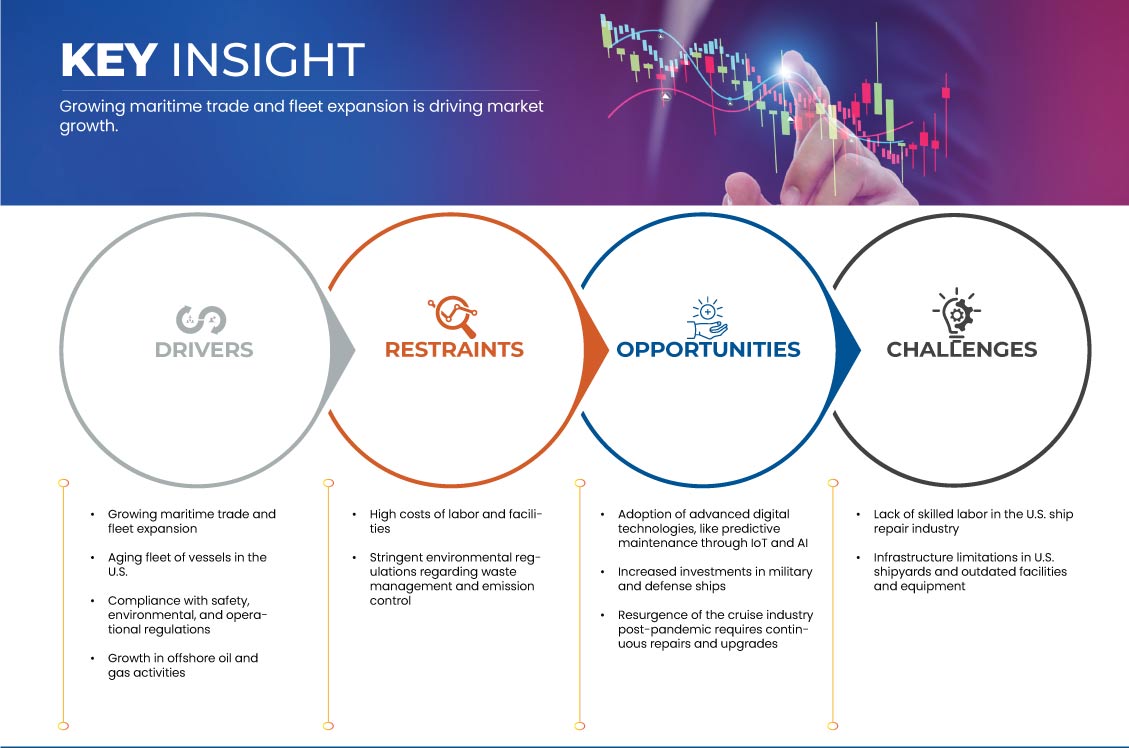
The ship repair and maintenance market is experiencing robust growth, driven by growing maritime trade and fleet expansion. As the U.S. ship repair and maintenance services industry continues to expand, due to the aging fleet of vessels in the U.S. adoption of advanced digital technologies, like predictive maintenance through IoT and AI and increased investments in military and defense ships are providing opportunities for the market. Market dynamics are also influenced by high costs of labor and facilities. Overall, the market is expected to continue expanding, with a focus on innovation and sustainability to meet evolving industrial demands.
Ship Repair and Maintenance Services Market Size
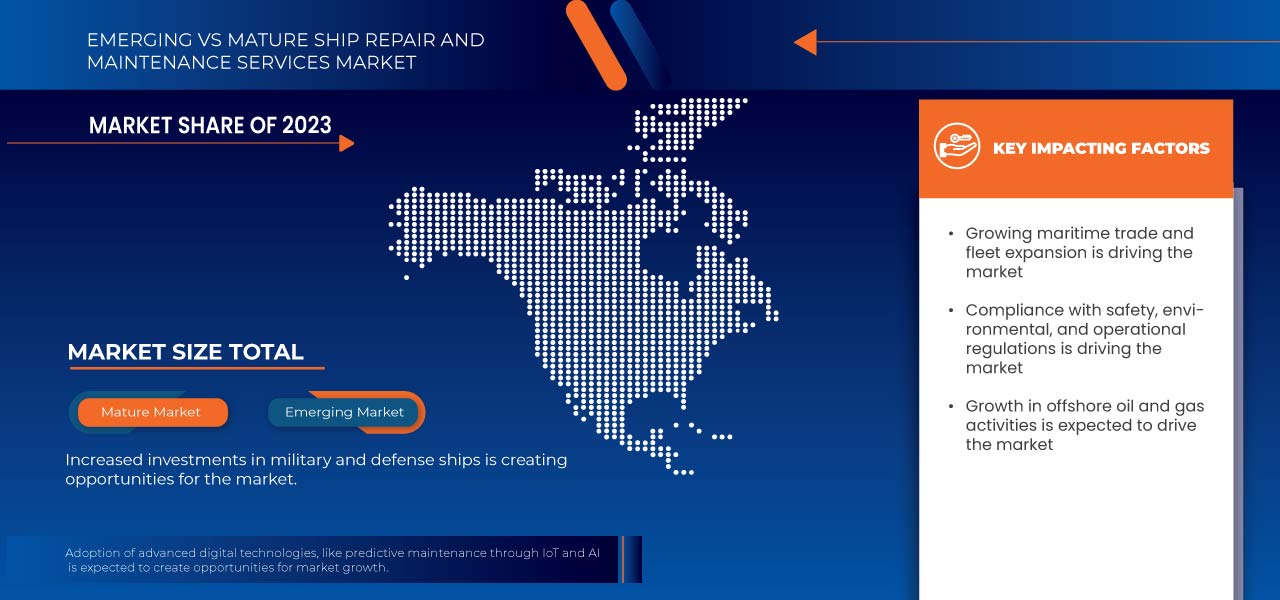
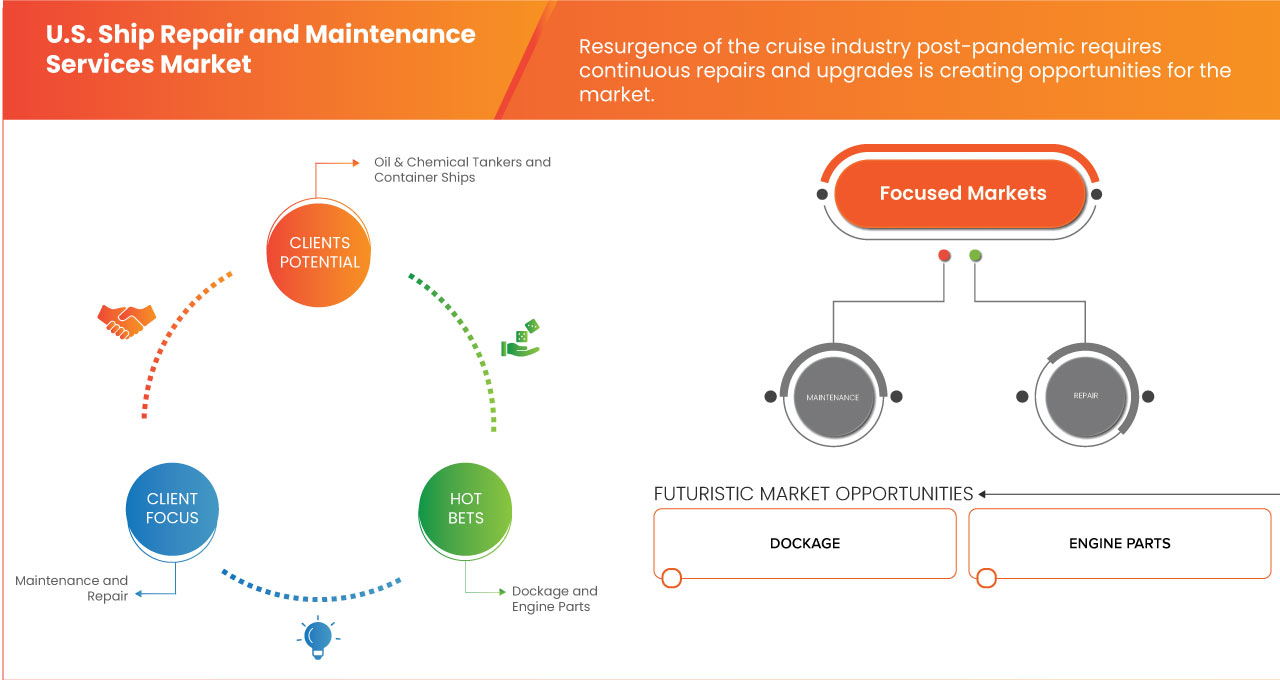
U.S. ship repair and maintenance services market size was valued at USD 11.90 billion in 2023 and is projected to reach USD 12.98 billion by 2031, with a CAGR of 1.2% during the forecast period of 2024 to 2031.
U.S. Ship Repair and Maintenance Services Market Trends
“Growth in Offshore Oil and Gas Activities”
As the demand for energy increases globally, offshore drilling and production operations have expanded, creating a robust need for specialized vessels and the services that maintain them. As offshore oil and gas exploration intensifies, there is a corresponding increase in the number and diversity of vessels required to support these operations. This includes supply ships, drilling rigs, and specialized construction vessels, all of which require regular maintenance and repairs to remain operational. The rising trend of offshore activities leads to an increased demand for ship repair services as companies seek to ensure their fleets are equipped to handle the rigors of challenging marine environments.
Vessels operating in offshore oil and gas sectors often face unique operational challenges, including exposure to harsh weather conditions and corrosive environments. This necessitates specialized maintenance and repair services that can address these challenges effectively. For instance, the integrity of hulls, propulsion systems, and safety equipment must be meticulously maintained to prevent accidents and ensure compliance with safety regulations. Shipyards that can provide specialized services tailored to the needs of offshore vessels are increasingly valuable, driving growth in the repair and maintenance sector.
The offshore oil and gas industry is subject to stringent regulatory standards designed to protect both the environment and human safety. Compliance with these regulations requires regular inspections and maintenance of vessels. Ship operators must ensure that their vessels meet the latest safety and environmental regulations, which often necessitates upgrades and repairs. This ongoing need for compliance creates a steady stream of work for shipyards, as operators seek to avoid penalties and maintain operational licenses.
The offshore sector is at the forefront of technological advancements, including the adoption of more sophisticated drilling and extraction techniques. As these technologies evolve, the vessels supporting them must also be updated and maintained to incorporate new systems and equipment. This creates opportunities for ship repair and maintenance companies to offer innovative solutions that can enhance operational efficiency and safety. Facilities that invest in advanced technologies and skilled labor to service these vessels are well-positioned for growth.
For instance,
- In 2021, according to an article published by J-Stage, as onshore energy sources deplete, offshore energy has become a vital strategic resource, prompting countries to accelerate research and development. The offshore oil and gas industry has evolved significantly, advancing from coastal areas to shallow and deep waters, with substantial increases in production. This paper reviews the industry's history concerning time, water depth, and output, explores technological advancements and equipment in offshore exploitation, and identifies current challenges. It concludes that the future of the industry will focus on deep water, automation, and gas hydrates, providing insights into the sector's evolution and prospects
The growth in offshore oil and gas activities is a crucial driver for the U.S. ship repair and maintenance services market. The increased demand for specialized vessels, the need for rigorous maintenance to withstand harsh conditions, compliance with regulatory standards, and the integration of advanced technologies collectively fuel the market's expansion. As offshore operations continue to grow, the importance of reliable repair and maintenance services will only intensify, providing significant opportunities for shipyards across the U.S.
Report Scope and Market Segmentation
|
Attributes |
Ship Repair and Maintenance Services Ingredients Key Market Insights |
|
Segments Covered |
· Vessel: Oil & Chemical Tankers, Container Ships, Dry Bulk Carriers, General Cargo, Gas Carriage, Passenger Ships, Reefer Ships and Others · Service Type: Maintenance and Repair · Application: Dockage, Engine Parts, General Services, Electric Works & Auxiliary Services and Others · End-User: Government & Defense and Commercial |
|
Countries Covered |
U.S. |
|
Key Market Players |
BAE Systems (U.K.), General Dynamics NASSCO (U.S.), Fincantieri Marine Group (U.S.), Vigor Industrial LLC. (U.S.), Epsilon Systems Solutions, INC (U.S.), Bludworth Marine, L.L.C. (U.S.), Colonna's Shipyard, INC (U.S.), Conrad Shipyards (U.S.), Detyens Shipyards (U.S.), Gulf Copper & Manufacturing Corporation (U.S.), HSD Marine and Shiprepair Pte LTD. (Singapore) among others |
|
Market Opportunities |
· Adoption of advanced digital technologies, like predictive maintenance through IOT and ai · Increased investments in military and defense ships |
|
Value Added Data Info sets |
In addition to the market insights such as market value, growth rate, market segments, geographical coverage, market players, and market scenario, the market report curated by the Data Bridge Market Research team includes in-depth expert analysis, import/export analysis, pricing analysis, production consumption analysis, and PESTLE analysis. |
Ship Repair and Maintenance Services Market Definition
Ship repair and maintenance services encompass a range of activities aimed at ensuring the operational efficiency, safety, and longevity of maritime vessels. This market includes routine maintenance, emergency repairs, retrofitting, and refurbishment of ships, encompassing both commercial and military vessels. Key services involve hull repairs, machinery overhauls, electrical and electronic system upgrades, and the application of protective coatings. The industry serves ship-owners, operators, and managers, responding to regulatory compliance and environmental standards. Market growth is driven by increasing global trade, aging fleets, and advancements in repair technologies. Additionally, the rise of sustainability initiatives prompts the adoption of eco-friendly practices in ship maintenance, further shaping the landscape of this essential maritime sector.
Ship Repair and Maintenance Services Market Dynamics
Drivers
- Growing Maritime Trade and Fleet Expansion
The exponential growth in global trade has led to a marked increase in shipping volume. As economies around the world become more interconnected, the demand for shipping services rises accordingly. This increase means that shipping companies are expanding their fleets to accommodate a higher volume of goods. More vessels in operation translate to a greater need for regular maintenance and repair services. As ships log more miles, they face wear and tear that necessitates scheduled dry-dock repairs and maintenance work. This continuous cycle of repair not only ensures that vessels remain compliant with operational standards but also enhances their longevity, which is critical for shipping companies looking to maximize their investment. Consequently, U.S. shipyards that can offer reliable and timely maintenance services find themselves in high demand, thus driving the market's growth.
The maritime industry is heavily regulated, with stringent standards governing safety, environmental impact, and operational efficiency. These regulations mandate regular inspections and maintenance routines to ensure compliance. As regulatory frameworks become more rigorous, ship operators face pressure to maintain their fleets in accordance with evolving guidelines. This creates a consistent demand for ship repair and maintenance services, as compliance is not just a legal obligation but a critical factor in maintaining operational licenses and avoiding costly penalties. U.S. shipyards that can demonstrate compliance expertise and a track record of meeting regulatory requirements position themselves as essential partners to shipping companies, thus driving further growth in the market. Geopolitical dynamics play a significant role in influencing maritime trade patterns and shipping demands. Changes in trade policies, sanctions, or political instability can lead to shifts in shipping routes and the overall volume of goods transported. For instance, trade disputes can disrupt established routes, requiring companies to adapt quickly and possibly expand their fleets to explore new markets. This unpredictability necessitates a robust repair and maintenance network capable of responding to rapid changes. U.S. shipyards that offer flexible, responsive services are crucial in ensuring fleet readiness in a volatile environment, thereby enhancing their importance in the maritime ecosystem. The ability to adapt to geopolitical shifts not only secures a steady flow of business for repair services but also strengthens the overall resilience of the U.S. maritime industry.
For instance,
- In November 2020, according to an article published by Elsevier B.V., maritime trade and access to deep-water territories are crucial for a nation's economic success, with approximately 75% of international trade conducted via sea due to its fuel efficiency. Economic geography issues, such as being landlocked, directly impact global development patterns. A country's participation in international trade and its capacity to transport goods is vital in today's global economy. This study examines the connection between five key factors of maritime dependency and economic prosperity, revealing a significant correlation between maritime dependency and GDP per capita, leading to the creation of a Maritime Dependency Index mapped geographically.
The interplay of increased shipping volume, an aging fleet, technological advancements, regulatory compliance, and geopolitical factors collectively drives the growth of the U.S. ship repair and maintenance services market. As these dynamics evolve, they present ongoing opportunities for innovation and investment within this critical sector.
- Aging Fleet of Vessels in the U.S.
As many ships in operation reach or exceed their designed lifespan, the need for extensive repair and maintenance services becomes increasingly urgent. Older vessels often require more frequent maintenance due to wear and tear. Components such as engines, hulls, and safety equipment deteriorate over time, necessitating regular inspections and repairs to ensure operational safety and efficiency. This increased demand for repair services means that shipyards are seeing a rise in the number of dry-docking requests and routine maintenance jobs. As aging vessels frequently need to comply with updated regulatory standards, this further intensifies the need for specialized maintenance services tailored to older technology.
The maritime industry is governed by strict safety and environmental regulations. As ships age, they must be updated or repaired to meet these evolving standards. For example, older vessels may require retrofitting with modern emissions control technologies or safety equipment. The complexities involved in ensuring compliance with these regulations mean that ship operators often turn to specialized repair services, thereby generating consistent demand for the ship repair market. This creates a niche for companies that can provide expertise in regulatory compliance and safety upgrades, reinforcing the importance of ship repair services in maintaining fleet integrity.
Maintaining an aging fleet often requires specific skills and expertise, particularly for repairs that involve outdated technologies. Skilled labor is essential for retrofitting older ships with modern components or repairing specialized systems that may no longer be in production. As a result, the demand for workforce training and development in shipyards grows, further fueling the market for repair services. Companies that invest in training their workforce to handle the complexities of older vessels are likely to gain a competitive edge, positioning themselves as leaders in this niche market.
While aging vessels create a demand for repair services, they also present opportunities for modernization. Many ship owners are looking to extend the life of their vessels through upgrades, such as installing energy-efficient systems or retrofitting for compliance with new environmental regulations. This trend not only requires repair services but also opens avenues for innovation within the market. Companies that offer modernization solutions will find increased opportunities to collaborate with vessel owners, aiming to balance cost-effectiveness with regulatory compliance.
For instance,
- In May 2023, according to an article published by gCaptain, Aging cargo vessels, averaging over 20 years old, pose safety risks to crews and global trade. While some ships can last 25 to 30 years with proper maintenance, many face issues like hull corrosion and outdated technology. Notable disasters, such as the sinking of El Faro in 2015 and SS Marine Electric in 1983, highlight the dangers of neglected vessels. Despite calls for stricter regulations and modernization, older ships remain in operation due to economic factors. Industry stakeholders must prioritize improving safety standards and phasing out aging vessels to protect maritime workers.
The aging fleet of vessels in the U.S. is a significant driver for the ship repair and maintenance services market. The increasing frequency of repairs, the need for regulatory compliance, the demand for specialized skills, and the opportunities for modernization collectively create a robust environment for growth in this sector. As ship operators navigate the challenges of maintaining an aging fleet, the importance of reliable repair services will only continue to escalate.
Opportunity
- Adoption of Advanced Digital Technologies, Like Predictive Maintenance through IoT and AI
Predictive maintenance is a game-changer in the maritime industry, leveraging IoT sensor and AI to provide real-time monitoring of vessel conditions. These sensors can be installed on critical machinery and systems, gathering data on temperature, pressure, vibration, and other performance metrics. By analyzing this data using AI algorithms, ship operators can identify patterns that indicate potential failures before they occur. For example, if a sensor detects abnormal vibrations in an engine, the system can alert maintenance teams to investigate before a breakdown happens. This proactive maintenance approach not only minimizes costly unplanned repairs but also allows ship operators to schedule maintenance during optimal operational windows, thus reducing downtime. For shipyards, this means a more predictable workflow, enabling them to allocate resources more effectively. Rather than responding reactively to emergency repair requests, shipyards can plan their schedules around known maintenance needs, leading to improved efficiency and higher throughput. This transformation can also enhance customer satisfaction, as vessels can be serviced more quickly and reliably.
The implementation of predictive maintenance technologies can lead to significant cost savings across the board. For ship operators, reducing the frequency of unplanned repairs directly translates to lower operational expenses. Emergency repairs often come with inflated costs due to the need for rapid response, overtime labor, and potential losses from vessel downtime. By shifting to a predictive maintenance model, companies can optimize maintenance schedules based on actual data rather than routine checks or assumptions. For shipyards, this technological shift also presents an opportunity to increase throughput without a corresponding rise in overhead costs. By streamlining operations and improving the efficiency of the repair process, shipyards can handle more jobs simultaneously, enhancing their profitability.
For instance,
- In March 2023, according to an article published by SINAY SAS, the maritime industry is witnessing significant technological innovations aimed at enhancing sustainability and efficiency. Key advancements include robotics for automated cargo handling, big data analytics for optimizing routes and reducing emissions, and IoT for real-time monitoring and predictive maintenance. AI and cloud computing are streamlining operations, while autonomous ships promise improved safety and cost savings. Additionally, green shipping practices, renewable energy solutions, and blockchain technology are enhancing transparency and efficiency. Despite these advancements, challenges such as regulatory compliance, cyber risks, and a skills gap remain critical concerns for the industry
The adoption of advanced digital technologies like predictive maintenance through IoT and AI presents substantial opportunities for the U.S. ship repair and maintenance services market. By enhancing maintenance practices, improving safety and compliance, enabling data-driven decision-making, and providing a competitive advantage, these technologies are poised to transform the industry. Embracing this digital shift will be crucial for shipyards aiming to thrive in an increasingly competitive landscape, positioning them for sustained growth and innovation.
Restraints/Challenges
- Stringent Environmental Regulations Regarding Waste Management and Emission Control
Regulations are essential for promoting sustainability and protecting marine environments, but they impose considerable challenges on shipyards and repair facilities. The necessity to comply with increasingly stringent environmental regulations often requires significant investment from ship repair facilities. Shipyards must implement advanced waste management systems to handle hazardous materials, including oil, paint, and chemicals. Additionally, emission control technologies, such as scrubbers and other filtration systems, are often required to minimize pollutants released during repair activities. These compliance measures entail substantial capital expenditures and operational costs, which can strain the financial resources of shipyards, particularly smaller ones. As a result, the overall cost of repair services may increase, potentially discouraging shipowners from opting for maintenance work.
Environmental regulations can impose operational constraints on ship repair facilities. For example, strict guidelines on noise, air quality, and water discharges can limit the types of repairs that can be performed or the hours during which work can occur. These restrictions may lead to longer turnaround times for repair jobs, affecting the efficiency and capacity of shipyards. Consequently, ship operators may face delays in getting their vessels back into service, which can disrupt their operational schedules and affect their bottom line.
The regulatory landscape surrounding environmental issues is dynamic and can change rapidly, leading to increased liability for shipyards. Non-compliance with environmental regulations can result in hefty fines, legal actions, and reputational damage. Shipyards must invest in training and systems to ensure compliance, adding to operational costs. This heightened risk can deter investment in expansion or innovation, as shipyards prioritize compliance over growth, limiting their ability to adapt to market changes.
For instance,
- According to an article published by National Academy of Sciences, the Committee on Shipboard Pollution Control, established by the Naval Studies Board, examined the U.S. Navy's compliance with MARPOL Annex V regarding nonfood solid waste. Although naval ships are exempt from MARPOL, U.S. legislation mandates compliance. The committee assessed the technical feasibility of eliminating solid waste discharges by 2000 for surface ships and 2008 for submarines, focusing on waste management technologies. Recommendations include using compactors, shredders, and modern incinerators to reduce waste volume and improve compliance, despite challenges related to equipment and space limitations
Строгие экологические нормы в отношении управления отходами и контроля выбросов накладывают существенные ограничения на рынок услуг по ремонту и обслуживанию судов в США. Высокие затраты на соответствие, эксплуатационные ограничения, возросшая ответственность и конкурентные недостатки в совокупности бросают вызов прибыльности и устойчивости американских верфей. Поскольку отрасль преодолевает эти сложности, поиск баланса между соответствием и эксплуатационной эффективностью будет иметь решающее значение для будущего роста.
- Нехватка квалифицированной рабочей силы в судоремонтной отрасли США
Поскольку спрос на услуги по ремонту продолжает расти, что обусловлено такими факторами, как старение флота, увеличение военных инвестиций и возрождение круизной индустрии, верфи изо всех сил пытаются найти и удержать квалифицированных рабочих, способных удовлетворить эти требования. Судоремонтная отрасль требует разнообразных специализированных навыков, включая сварку, электромонтажные работы, механическое обслуживание и военно-морскую архитектуру. Однако многие квалифицированные рабочие уходят на пенсию, а инвестиций в программы обучения и ученичества для их замены недостаточно. Этот разрыв привел к нехватке опытной рабочей силы, что вынуждает верфи либо работать с меньшей производительностью, либо идти на компромисс с качеством своих услуг. Проблема усугубляется конкуренцией со стороны других секторов, таких как строительство и производство, которые также ищут квалифицированную рабочую силу, но часто предлагают лучшую оплату и льготы.
Нехватка квалифицированной рабочей силы напрямую влияет на эффективность работы верфей. При меньшем количестве квалифицированных рабочих верфи могут столкнуться с более длительными сроками выполнения ремонтных проектов, что приводит к задержкам в возвращении судов в эксплуатацию. Эта неэффективность может привести к потере деловых возможностей, поскольку судовладельцы могут искать услуги в других местах, особенно в регионах или странах с более доступной квалифицированной рабочей силой. Кроме того, длительные сроки выполнения проектов могут привести к увеличению расходов для верфей, поскольку им может потребоваться нанимать сверхурочно или временных работников, что может повлиять на прибыльность.
Устранение пробелов в навыках требует значительных инвестиций в программы обучения и развития, которые многие верфи могут с трудом себе позволить. Разработка комплексных программ обучения требует времени и ресурсов, а у небольших верфей может не быть финансовых возможностей для эффективной реализации этих инициатив. Более того, привлечение новых талантов в отрасль может быть сложной задачей, поскольку молодые поколения могут воспринимать судоремонт как менее привлекательный выбор карьеры по сравнению с другими, более высокотехнологичными областями.
Нехватка квалифицированной рабочей силы также вызывает опасения по поводу обеспечения качества при ремонте судов. Недостаточно обученные рабочие могут оказаться неспособными выполнять ремонт в соответствии с требуемыми стандартами, что повышает риск несчастных случаев и проблем с соблюдением требований. Это не только ставит под угрозу безопасность экипажа и пассажиров, но и может привести к дорогостоящим юридическим и финансовым последствиям для верфей. Владельцы судов, скорее всего, будут искать ремонтные мастерские с репутацией высококачественной работы, что оказывает дополнительное давление на верфи, борющиеся с нехваткой рабочей силы.
Например,
- Согласно статье, опубликованной в International Transport Journal, в июне 2024 года морской сектор сталкивается с серьезной нехваткой квалифицированной рабочей силы, усугубляемой технологическими достижениями и новыми методами движения. На недавней конференции в Берлине, организованной Немецкой ассоциацией судовладельцев и Немецкой морской ассоциацией, эксперты обсудили проблемы подбора персонала. Несмотря на 11%-ный рост числа новых сотрудников в 2023 году, Bimco и ICS оценивают потребность в почти 18 000 офицеров ежегодно до 2026 года. Лидеры отрасли, такие как Эрик Хирш из Hapag-Lloyd, подчеркивают необходимость инвестирования в обучение и цифровизацию для повышения эффективности и привлечения молодых талантов, что жизненно важно для конкурентоспособной морской отрасли
Нехватка квалифицированной рабочей силы в судоремонтной отрасли США представляет собой существенную проблему для рынка услуг по ремонту и обслуживанию судов. Этот дефицит влияет на эффективность работы, обеспечение качества и способность верфей удовлетворять растущий спрос. Решение этих проблем посредством целевых программ обучения и улучшенных стратегий подбора персонала будет иметь решающее значение для роста и устойчивости отрасли в будущем. Без квалифицированной рабочей силы верфи США могут столкнуться с трудностями в поддержании конкурентоспособности на все более требовательном рынке.
Влияние и текущий рыночный сценарий нехватки сырья и задержек поставок
Data Bridge Market Research предлагает высокоуровневый анализ рынка и предоставляет информацию, учитывая влияние и текущую рыночную среду нехватки сырья и задержек поставок. Это приводит к оценке стратегических возможностей, созданию эффективных планов действий и оказанию помощи предприятиям в принятии важных решений.
Помимо стандартного отчета, мы также предлагаем углубленный анализ уровня закупок на основе прогнозируемых задержек поставок, картирования дистрибьюторов по регионам, анализа товаров, анализа производства, тенденций ценового картирования, поиска поставщиков, анализа эффективности категорий, решений по управлению рисками в цепочке поставок, расширенного сравнительного анализа и других услуг по закупкам и стратегической поддержке.
Ожидаемое влияние экономического спада на ценообразование и доступность продукции
Когда экономическая активность замедляется, отрасли начинают страдать. Прогнозируемое влияние экономического спада на ценообразование и доступность продуктов учитывается в отчетах по анализу рынка и услугах по разведке, предоставляемых DBMR. Благодаря этому наши клиенты обычно могут быть на шаг впереди своих конкурентов, прогнозировать свои продажи и доходы, а также оценивать свои расходы на прибыль и убытки.
Объем рынка услуг по ремонту и обслуживанию судов
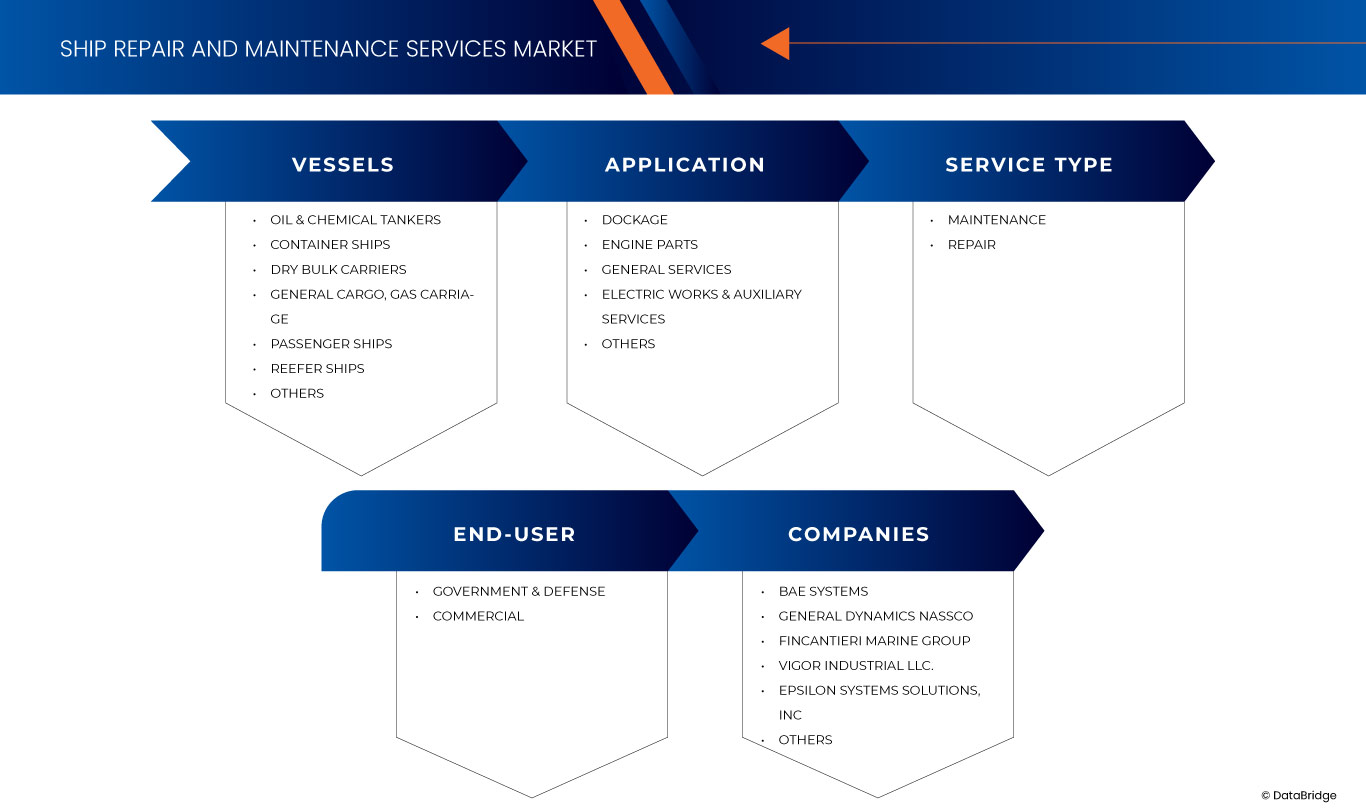
Рынок сегментирован на основе судна, типа обслуживания, применения и конечного пользователя. Рост среди этих сегментов поможет вам проанализировать сегменты с незначительным ростом в отраслях и предоставить пользователям ценный обзор рынка и рыночные идеи, которые помогут им принимать стратегические решения для определения основных рыночных приложений.
Судно
- Танкеры для перевозки нефти и химикатов
- Контейнеровозы
- Сухогрузы
- Генеральный груз
- Газовый транспорт
- Пассажирские суда
- Рефрижераторные суда
- Другие
Тип услуги
- Обслуживание
- Техническое обслуживание, по типу обслуживания
- Профилактическое обслуживание
- Техническое обслуживание состояния
- Техническое обслуживание при поломках
- Техническое обслуживание, по типу обслуживания
- Ремонт
- Ремонт, по типу обслуживания
- Аварийный ремонт
- Механический ремонт
- Ремонт электрики и приборов
- Техническое обслуживание и ремонт главного двигателя
- Ремонт перемотки двигателя
- Подводная очистка и ремонт
- Другие
- Ремонт, по типу обслуживания
Приложение
- Докедж
- Швартовка, судном
- Танкеры для перевозки нефти и химикатов
- Контейнеровозы
- Сухогрузы
- Генеральный груз
- Газовый транспорт
- Пассажирские суда
- Рефрижераторные суда
- Другие
- Швартовка, судном
- Детали двигателя
- Детали двигателя, по судну
- Танкеры для перевозки нефти и химикатов
- Контейнеровозы
- Сухогрузы
- Генеральный груз
- Газовый транспорт
- Пассажирские суда
- Рефрижераторные суда
- Другие
- Детали двигателя, по судну
- Общие услуги
- Общие услуги, по судну
- Танкеры для перевозки нефти и химикатов
- Контейнеровозы
- Сухогрузы
- Генеральный груз
- Газовый транспорт
- Пассажирские суда
- Рефрижераторные суда
- Другие
- Общие услуги, по судну
- Электромонтажные работы и вспомогательные услуги
- Электромонтажные работы и вспомогательные услуги, по судну
- Пассажирские суда
- Рефрижераторные суда
- Танкеры для перевозки нефти и химикатов
- Контейнеровозы
- Сухогрузы
- Генеральный груз
- Газовый транспорт
- Другие
- Электромонтажные работы и вспомогательные услуги, по судну
- Другие
- Другие, по судну
- Танкеры для перевозки нефти и химикатов
- Контейнеровозы
- Генеральный груз
- Сухогрузы
- Газовый транспорт
- Пассажирские суда
- Рефрижераторные суда
- Другие
- Другие, по судну
Конечный пользователь
- Правительство и оборона
- Коммерческий
Доля рынка услуг по ремонту и обслуживанию судов
Конкурентная среда рынка содержит сведения о конкурентах. Включены сведения о компании, ее финансах, полученном доходе, рыночном потенциале, инвестициях в исследования и разработки, новых рыночных инициативах, присутствии в стране, производственных площадках и объектах, производственных мощностях, сильных и слабых сторонах компании, запуске продукта, широте и широте продукта, доминировании приложений. Приведенные выше данные касаются только фокуса компаний на рынке.
Лидерами рынка услуг по ремонту и обслуживанию судов являются:
- BAE Systems (США)
- General Dynamics NASSCO (США)
- Fincantieri Marine Group (США)
- Vigor Industrial LLC. (США)
- Epsilon Systems Solutions, INC (США)
- Bludworth Marine, LLC (США)
- Верфь Колонны, INC (США)
- Верфь Conrad (США)
- Верфь Detyens (США)
- Gulf Copper & Manufacturing Corporation (США)
- HSD Marine and Shiprepair Pte LTD. (Сингапур)
Последние события на рынке услуг по ремонту и обслуживанию судов в США
- В октябре 2024 года BAE Systems получила контракт на сумму 92 миллиона долларов США от ВМС США на производство движителей для подводных лодок класса Virginia. Этот контракт расширит возможности компании в области передовых технологий для подводных лодок и укрепит ее позиции в оборонном секторе, способствуя постоянному росту и инновациям, одновременно поддерживая инициативы в области национальной безопасности.
- В мае BAE Systems отметила своих лучших поставщиков судоремонта 2023 года, признав их важную роль в обеспечении качества и производительности в сфере морских услуг. На мероприятии была подчеркнута важность прочных партнерских отношений для достижения операционного совершенства. Признавая этих поставщиков, BAE Systems подтверждает свою приверженность сотрудничеству и инновациям в судоремонтной отрасли, гарантируя, что они продолжат удовлетворять меняющиеся потребности своих клиентов и улучшать общее предоставление услуг.
- В октябре 2023 года компания General Dynamics NASSCO получила контракт от ВМС США на сумму до 754 млн долларов США на техническое обслуживание, модернизацию и ремонт USS Chung-Hoon и USS James E. Williams. Начальный этап стоимостью 15,6 млн долларов США будет проходить в Норфолке и Сан-Диего с возможным продлением до ноября 2030 года, что еще больше усилит возможности NASSCO по ремонту на море
- В июле 2023 года Fincantieri Bay Shipbuilding и Northeast Wisconsin Technical College расширяют свое партнерство с целью улучшения подготовки морских рабочих. После успешной пилотной программы они предложат больше курсов, чтобы удовлетворить растущий спрос на квалифицированных специалистов в морской производственной отрасли
- В сентябре 2022 года Fincantieri Bay Shipbuilding заложила фундамент нового механического цеха площадью 19 000 кв. футов в заливе Стерджен. Объект улучшит ремонтные операции с помощью современной инфраструктуры, поддерживая флот Великих озер и одновременно минимизируя воздействие на окружающую среду для окружающего сообщества.
SKU-
Получите онлайн-доступ к отчету на первой в мире облачной платформе рыночной аналитики

- Интерактивная панель анализа данных
- Панель анализа компании для возможностей с высоким потенциалом роста
- Доступ аналитика-исследователя для настройки и запросов
- Анализ конкурентов с помощью интерактивной панели
- Последние новости, обновления и анализ тенденций
- Используйте возможности сравнительного анализа для комплексного отслеживания конкурентов
Методология исследования
Сбор данных и анализ базового года выполняются с использованием модулей сбора данных с большими размерами выборки. Этап включает получение рыночной информации или связанных данных из различных источников и стратегий. Он включает изучение и планирование всех данных, полученных из прошлого заранее. Он также охватывает изучение несоответствий информации, наблюдаемых в различных источниках информации. Рыночные данные анализируются и оцениваются с использованием статистических и последовательных моделей рынка. Кроме того, анализ доли рынка и анализ ключевых тенденций являются основными факторами успеха в отчете о рынке. Чтобы узнать больше, пожалуйста, запросите звонок аналитика или оставьте свой запрос.
Ключевой методологией исследования, используемой исследовательской группой DBMR, является триангуляция данных, которая включает в себя интеллектуальный анализ данных, анализ влияния переменных данных на рынок и первичную (отраслевую экспертную) проверку. Модели данных включают сетку позиционирования поставщиков, анализ временной линии рынка, обзор рынка и руководство, сетку позиционирования компании, патентный анализ, анализ цен, анализ доли рынка компании, стандарты измерения, глобальный и региональный анализ и анализ доли поставщика. Чтобы узнать больше о методологии исследования, отправьте запрос, чтобы поговорить с нашими отраслевыми экспертами.
Доступна настройка
Data Bridge Market Research является лидером в области передовых формативных исследований. Мы гордимся тем, что предоставляем нашим существующим и новым клиентам данные и анализ, которые соответствуют и подходят их целям. Отчет можно настроить, включив в него анализ ценовых тенденций целевых брендов, понимание рынка для дополнительных стран (запросите список стран), данные о результатах клинических испытаний, обзор литературы, обновленный анализ рынка и продуктовой базы. Анализ рынка целевых конкурентов можно проанализировать от анализа на основе технологий до стратегий портфеля рынка. Мы можем добавить столько конкурентов, о которых вам нужны данные в нужном вам формате и стиле данных. Наша команда аналитиков также может предоставить вам данные в сырых файлах Excel, сводных таблицах (книга фактов) или помочь вам в создании презентаций из наборов данных, доступных в отчете.











