


Global Agricultural Biofungicides Market Segmentation, By Type (Microbial Species, and Botanical), Form (Wettable Powder, Aqueous Solution, and Granules), Species (Bacillus, Trichoderma, Pseudomonas, Streptomyces, and Other Species), Application (Foliar Spray, Soil Treatment, Seed Treatment, and Other Modes of Application), Crop Type (Fruits and Vegetables, Cereals and Grains, Oilseeds and Pulses, Turf, and Ornamentals) - Industry Trends and Forecast to 2033
ما هو حجم سوق مبيدات الآفات الأحيائية الزراعية العالمية ومعدل نموها؟
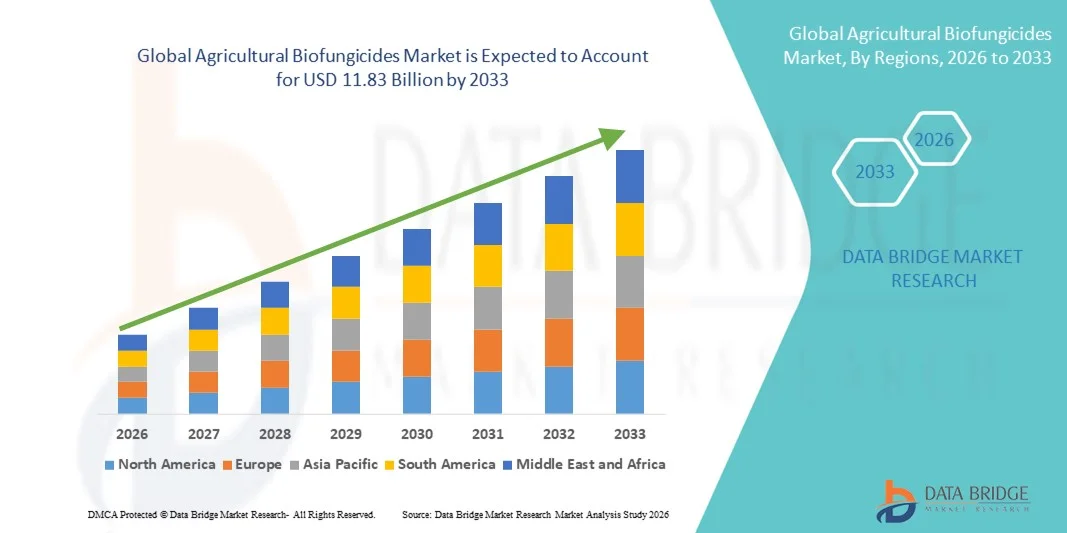
- وفقاً لتحليلات سوق سوق بيانات جسر الجسر، قُيِّر حجم السوق العالمية لمبيدات المبيدات الأحيائية الزراعية الزراعية بقيمة3.58 مليار دولار في عام 2025ومن المتوقع أن يتم ذلكب 11.83 مليار, ما(أ) 16,10 في المائةخلال الفترة التي
- ويشكل ارتفاع نسبة تفضيل المنتجات الغذائية العضوية بين المستهلكين في جميع أنحاء العالم أحد العوامل الرئيسية التي تدفع نمو سوق المبيدات الأحيائية الزراعية.
- ويؤدي ارتفاع مستوى الوعي بين المزارعين بشأن فوائد اعتماد مبيدات المبيدات البيولوجية والفطرة، وزيادة الضغوط التنظيمية والآثار الضارة المرتبطة باستخدام مواد الحماية النباتية التركيبية إلى تسريع نمو السوق
سوق الحجم و توقّر
- قيمة السوق العالمية (25):3-58 مليار
- القيمة السوقية المتوقعة (2033):11.83 بليون
- التنبؤات المتوقعة لـ CAGR (2026-2033):16.10%
ما هي أهم عمليات الاستحواذ على سوق مبيدات الآفات البيولوجية الزراعية؟
- :: زيادة تفضيل المنتجات العضوية لتشجيع اعتمادمـنزيادة تأثير زيادة التركيز على حلول الإدارة المتكاملة للآفات في السوق
- وبالإضافة إلى ذلك، فإن الزيادة في الاستثمارات والتدخل في الزراعة الرقمية والممارسات الزراعية الدقيقة، وارتفاع استخدام مختلف أشكال مبيدات الفطر البيولوجي في المزارع والمزارع الخاصة، وزيادة الشواغل المتعلقة بالبيئة تؤثر تأثيرا إيجابيا على سوق مبيدات الفطر الأحيائي الزراعية
- غلبت أمريكا الشمالية على سوق مبيدات الآفات الزراعية البيولوجية والفطرة الزراعية بحصة من الإيرادات قدرها 39.8 في المائة في عام 2025، مدفوعة باعتماد قوي لممارسات الزراعة العضوية، وزيادة القيود التنظيمية على مبيدات الفطريات الاصطناعية، وزيادة الطلب الاستهلاكي على المنتجات الغذائية الخالية من مخلفات المخلفات عبر الولايات المتحدة وكندا
- ومن المتوقع أن تسجل منطقة آسيا والمحيط الهادئ أسرع معدل للأرصدة الزراعية الإجمالية في منطقة آسيا والمحيط الهادئ حيث بلغ 10.32 في المائة من عام 2026 إلى عام 2033، وذلك بسبب التوسع في الإنتاج الزراعي، وارتفاع الشواغل الأمنية الغذائية، وزيادة الوعي بالممارسات الزراعية المستدامة في جميع أنحاء الصين والهند واليابان وكوريا الجنوبية وجنوب شرق آسيا.
- وقد هيمنت شريحة الأنواع الميكروبية على السوق بحصة قدرها 68.4 في المائة في عام 2025، مدفوعة بفاعلية عالية، وإجراءات محددة الهدف، وتوافق قوي مع برامج الإدارة المتكاملة للآفات
التقرير عن النطاق والسوق الزراعية
|
الصفات الأولى |
الأسواق الرئيسية |
|
المُسَجَّل |
|
|
البلدان |
أمريكا الشمالية
أوروبا
منطقة آسيا والمحيط الهادئ
الشرق الأوسط وأفريقيا
جنوب أمريكا الجنوبية
|
|
& مفتاح |
|
|
ما |
|
|
جاري |
وبالإضافة إلى الرؤى المتعلقة بسيناريوهات السوق مثل القيمة السوقية، ومعدل النمو، والتجزئة، والتغطية الجغرافية، والجهات الفاعلة الرئيسية، فإن تقارير السوق التي تُعدها بحوث سوق جسر البيانات تشمل أيضاً تحليلاً متعمقاً للخبراء، وتحليلاً للتسعير، وتحليلاً لحصص العلامات التجارية، واستقصاءات للمستهلكين، وتحليلاً ديمغرافياً، وتحليلاً لسلسلة التوريد، وتحليلاً لسلاسل القيمة، واستعراضاً عاماً للمواد الخام/الأصناف الاستهلاكية، ومعايير اختيار البائعين، وتحليلاً للعلامات التجارية، وتحليلاً للمستهلكين، وتحليلاً لسلسلة التوريد، وتحليلاً لسلاسل القيمة، واستعراضاً عاماً للمواد الخام/الأصناف الاستهلاكية، ومعايير اختيار البائعين، وتحليلاً للنقاط التجارية، وتحليلاً للبورتر، وإطاراً تنظيمياً. |
ما هو الاتجاه الرئيسي في سوق مبيدات الآفات البيولوجية الزراعية؟
تزايد اعتماد الحلول المستدامة والقائمة على الميكروبيات والمخلوقات الخالية من المحاصيل
- وتشهد سوق مبيدات مبيدات المبيدات الأحيائية الزراعية نمواً قوياً في الميكروبات و- - -التركيبات المستمدة من البكتيريا المفيدة، والفطريات، والاستخلاصات النباتية، التي تدعم ممارسات الزراعة المستدامة
- يقوم المصنعون بإدخال مبيدات حيوية للفطرة ذات طيف واسع مع تحسين عمر الرف وتحسين الاستقرار الميداني والتوافق مع برامج الإدارة المتكاملة للآفات
- ويعجل الطلب المتزايد على المنتجات الغذائية الخالية من مخلفات النفايات واللوائح التنظيمية الأكثر صرامة بشأن مبيدات الفطريات الكيميائية الاصطناعية بالتحول نحو البدائل البيولوجية
- فعلى سبيل المثال، تقوم شركات مثل BASF SSE، وBayer AG، وCorteva, Inc.، وSyingenta AG بتوسيع نطاق حوافظها لحماية المحاصيل البيولوجية من خلال البحث والتطوير والشراكات الاستراتيجية
- :: زيادة دعم توسيع الأسواق من خلال زيادة زراعة الأراضي الزراعية العضوية واعتماد ممارسات الزراعة المتجددة
- ومع تحول الاستدامة والسلامة البيئية إلى مركز محوري للسياسات الزراعية، ستؤدي مبيدات المبيدات الأحيائية الزراعية دورا حيويا في الاستراتيجيات الطويلة الأجل لحماية المحاصيل
ما هي المحركات الرئيسية لسوق مبيدات الآفات البيولوجية الزراعية؟
- زيادة الطلب الاستهلاكي على المنتجات الغذائية العضوية والخالة من المواد الكيميائية والمزروعة على نحو مستدام عبر الأسواق العالمية
- ففي عام 2025 على سبيل المثال، وسعت الشركات الكيميائية الزراعية الرائدة إنتاج مبيدات المبيدات الميكروفية البيولوجية للفطرة الميكروبية لتلبية الاعتماد المتزايد في الفواكه والخضر والحبوب والمحاصيل المتخصصة.
- وضع قيود تنظيمية صارمة على مبيدات الفطريات الاصطناعية في أوروبا وأمريكا الشمالية يشجع المزارعون على اعتماد بدائل بيولوجية
- زيادة الوعي بين المزارعين فيما يتعلق بصحة التربة، وإدارة المقاومة، وإنتاجية المحاصيل الطويلة الأجل
- تحسين فعالية المنتج واستقراره من خلال التقدم في تكنولوجيا التخمير وتقنيات الصياغة والتدبير وتطوير السلال الميكروبي
- ومن المتوقع أن تشهد سوق مبيدات الآفات الأحيائية الزراعية نموا قويا طويل الأجل، بدعم من الحوافز الحكومية وبرامج إصدار الشهادات العضوية ومبادرات الزراعة المستدامة.
ما هو العامل الذي يواجه نمو سوق مبيدات الآفات البيولوجية الزراعية؟
- قد يؤدي الثبات الميداني المحدود والأداء المتغير في ظل ظروف مناخية قاسية إلى تقييد التبني على نطاق واسع
- فعلى سبيل المثال، خلال الفترة ٢٠٢٤ - ٢٠٢٥، أبرزت النتائج غير المتسقة في الكفاءة في بعض المناطق الحاجة إلى تحسين استقرار الصياغة وتدريب المزارعين
- ويمكن أن يؤدي ارتفاع تكاليف الإنتاج مقارنة ببعض المبيدات الفطرية التقليدية إلى الحد من القدرة التنافسية للأسعار في الأسواق التي تراعي التكلفة
- تُحدِثُ الحياة الأقصر للمنتجات الميكروبية وحساسية تخزينها تحديات في سلسلة الإمداد والتوزيع
- ضعف الوعي والمعرفة التقنية لدى صغار المزارعين بطء دخول أسواق الاقتصادات الناشئة
- وبغية التصدي لهذه التحديات، تركز الشركات على تكنولوجيات الصياغة المتقدمة، وبرامج تثقيف المزارعين، والتعاون الاستراتيجي، وشبكات التوزيع الموسعة لتعزيز الاعتماد العالمي لمبيدات المبيدات الأحيائية الزراعية
كيف يتم دمج سوق مبيدات الآفات البيولوجية الزراعية؟
وتقسم السوق على أساسنوع الجنس، والشكل، والأنواع، والتطبيق، وأنواع المحاصيل.
- نوع
وعلى أساس النوع، فإن سوق مبيدات الآفات الأحيائية الزراعية مقسمة إلى أنواع جرثومية وبوتانية، وسيطر قطاع الأنواع الجرثومية على السوق بحصة قدرها 68.4 في المائة في عام 2025، مدفوعة بفعالية عالية، وإجراءات محددة الهدف، وانسجام قوي مع برامج الإدارة المتكاملة للآفات، وتُعتمد مبيدات الألياف الأحيائية الميكروبية، المستمدة من البكتيريا والفطريات المفيدة، على نطاق واسع لمكافحة الأمراض المنقولة بالتربة والفوليار مع تحسين صحة التربة، مع تحسين قدرتها على تعزيز نمو النباتات ومقاومة مقاومتها، وهي أفضلية عالية لدى المزارعين العضويين والتقليديين.
ومن المتوقع أن ينمو الجزء النباتي في أسرع معدلات نمو له من عام 2026 إلى عام 2033، مدعوماً بزيادة الطلب على الحلول القائمة على استخراج النباتات، بالحد الأدنى.البيئة البيئية:: الاعتماد على نطاق واسع في نظم الزراعة العضوية.
- في شكل
وعلى أساس الشكل، تنقسم السوق إلى مسحوق قابل للرطوبة، وذوبان مائي، وغرانول، ويهيمن قطاع البارود القابل للرطوبة على السوق بحصة قدرها 44.7 في المائة في عام 2025، نظراً لطول عمر السوق، وسهولة التخزين، والفعالية من حيث التكلفة، وملاءمة الرش الزراعي على نطاق واسع، ويفضل المزارعون المساحيق القابلة للرطوبة من أجل استقرارها وتوافقها مع معدات الرش التقليدية.
ومن المتوقع أن ينمو الجزء الخاص بالذوبان المائي في أسرع معدلات نمو له من عام 2026 إلى عام 2033، مدفوعاً بسهولة التطبيق، والتوزيع الموحد، وزيادة الاستخدام في الممارسات الزراعية الدقيقة.
- (ب) حسب النوع
وعلى أساس الأنواع، فإن سوق مبيدات الآفات الأحيائية الزراعية مقسمة إلى باسيلوس، تريشوديرما، بيوسدوموناس، ستريبتوميموس، وأنواع أخرى. وكان قطاع الباسيلوس مهيمناً على السوق بحصة بلغت 36.9% في عام 2025، مدعومة بخصائصه القوية المضادة للفطريات، واستقرار التكوين الجرثومي، ومكافحة الأمراض الطيفية العريضة عبر المحاصيل المتعددة.
ومن المتوقع أن ينمو قطاع تريشودرما بأسرع ما يمكن في الفترة من عام 2026 إلى عام 2033، حيث يغذيه تزايد الاعتماد على علاج التربة، وإدارة الأمراض الجذرية، وفوائد تعزيز نمو النباتات.
- ألف -
وعلى أساس الطلب، تُقسم السوق إلى سبراي فوليار، ومعالجة التربة، ومعالجة البذور، وغير ذلك من أشكال التطبيق. وكان قطاع سبراي الفوليار يهيمن على السوق بحصة 40.3% في عام 2025، حيث يسمح بالتطبيق المباشر على الأسطح النباتية المصابة، بما يضمن مكافحة الأمراض بسرعة والحماية الوقائية.
ومن المتوقع أن ينمو الجزء الخاص بمعالجة البذور في أسرع وقت ممكن من عام 2026 إلى عام 2033، مدفوعا بزيادة التركيز على حماية المحاصيل في المراحل المبكرة، وتحسين معدلات التلقيح، واستراتيجيات الوقاية المستدامة من الأمراض.
- (ب)
وعلى أساس نوع المحاصيل، تُقسم سوق مبيدات الآفات الأحيائية الزراعية إلى فاكهة وخضروات، وسيريلات وحبوب، وبذور الزيت والبقول، وتورف، وخلخلوقات.
ومن المتوقع أن ينمو قطاع الحبوب والحبوب في أسرع وقت ممكن من عام 2026 إلى عام 2033، مدعوما بزيادة الطلب العالمي على الأغذية، وتوسيع نطاق الممارسات الزراعية المستدامة، وزيادة اعتماد حماية المحاصيل القائمة على أساس بيولوجي.
ما هي المنطقة التي تملك أكبر حصة في سوق مبيدات الآفات البيولوجية الزراعية؟
- غلبت أمريكا الشمالية على سوق مبيدات الآفات الزراعية البيولوجية والفطرة الزراعية بحصة من الإيرادات قدرها 39.8 في المائة في عام 2025، مدفوعة باعتماد قوي لممارسات الزراعة العضوية، وزيادة القيود التنظيمية على مبيدات الفطريات الاصطناعية، وزيادة الطلب الاستهلاكي على المنتجات الغذائية الخالية من مخلفات المخلفات عبر الولايات المتحدة وكندا
- :: قيام الجهات الرائدة في أمريكا الشمالية التي تقدم الخدمات الزراعية الكيميائية والحل البيولوجي في مجالي المواد الكيميائية الزراعية في أمريكا الشمالية بتوسيع حافظات المنتجات الميكروبية، والاستثمار في تكنولوجيات التخمير المتقدمة، وتعزيز شبكات التوزيع لدعم استراتيجيات حماية المحاصيل المستدامة
- :: مواصلة تعزيز قيادة السوق الإقليمية من خلال الوجود القوي للمزارع التجارية الكبيرة الحجم ونظم الإرشاد الزراعي الراسخة ودعم الحكومة للزراعة المستدامة
سوق الولايات المتحدة الزراعية
والولايات المتحدة هي أكبر مساهم في أمريكا الشمالية، يدعمها توسيع رقعة الأراضي العضوية، وزيادة اعتماد ممارسات الإدارة المتكاملة للآفات، وزيادة الوعي بتحسين صحة التربة.
سوق مبيدات الآفات البيولوجية الزراعية
وتساهم كندا إسهاماً كبيراً في النمو الإقليمي، مدفوعاً بتزايد الطلب على الحماية المستدامة للمحاصيل في الحبوب والبقول والبذور الزيتية. وتعزز المبادرات البيئية التي تدعمها الحكومة وزيادة التركيز على الحد من استخدام مبيدات الآفات الكيميائية اعتماد مبيدات الآفات البيولوجية.
سوق مبيدات الآفات البيولوجية الزراعية
ومن المتوقع أن تسجل منطقة آسيا والمحيط الهادئ أسرع معدلات نمو في الناتج المحلي الإجمالي حيث بلغت 10.3% في الفترة من 2026 إلى 2033، وذلك بسبب التوسع في الإنتاج الزراعي، وارتفاع المخاوف الأمنية الغذائية، وزيادة الوعي بالممارسات الزراعية المستدامة في مختلف أنحاء الصين والهند واليابان وكوريا الجنوبية وجنوب شرق آسيا. والنمو السريع في زراعة البستنة والفواكه والخضروات والزراعة الموجهة نحو التصدير يعجل الطلب على حلول حماية المحاصيل الخالية من المخلفات. والإعانات الحكومية، وبرامج إصدار الشهادات العضوية، والاستثمارات المتنامية في التكنولوجيا الحيوية الزراعية تزيد من دعم التوسع في الأسواق.
سوق مبيدات الآفات البيولوجية
إن الصين هي أكبر مساهم في آسيا والمحيط الهادئ بسبب قوة الناتج الزراعي، والمبادرات الحكومية التي تشجع الزراعة الخضراء، وزيادة القيود المفروضة على مبيدات الفطريات الكيميائية. إن توسيع القدرة الإنتاجية المحلية يعزز اختراق الأسواق.
مبيدات الآفات البيولوجية الزراعية في الهند
وتظهر الهند كسوق ذات نمو مرتفع يدعمها تزايد اعتماد الزراعة العضوية، والمخططات الحكومية التي تشجع المدخلات البيولوجية، وزيادة الوعي بين صغار المزارعين.
مبيدات الحشرات الزراعية الزراعية
وتظهر اليابان نمواً مطرداً مدفوعاً بمعايير صارمة لسلامة الأغذية وزيادة الطلب على منتجات عالية الجودة وخالية من المخلفات.
سوق مبيدات الآفات البيولوجية الزراعية
وتساهم كوريا الجنوبية باطراد بسبب تحديث الممارسات الزراعية، واعتماد مدخلات ملائمة للبيئة، والتركيز المتزايد على الإنتاجية الزراعية المستدامة.
من هي الشركات الكبرى في سوق مبيدات الآفات البيولوجية الزراعية؟
وتقود صناعة مبيدات الآفات الأحيائية الزراعية أساسا شركات راسخة، بما في ذلك:
- (ألمانيا)
- شركة باير AG (ألمانيا)
- كورتيفا، Inc. (الولايات المتحدة الأمريكية)
- Sindgena AG (سويسرا)
- شركة FMCC (الولايات المتحدة الأمريكية)
- (الهند)
- شركة Sumimitomomo Chemical Co., Ltd. (اليابان)
- شركة Nippon سودا Co.، المحدودة (اليابان)
- شركة ADAMA Gurgurg Sddes Ltd. (إسرائيل)
- شركة CASSA Cemch Corporation (اليابان)
- (الولايات المتحدة)
- شركة Kuppert Bi Systs (هولندا)
- شركة Bioworks Inc. (الولايات المتحدة)
- التكنولوجيات الأحيائية (إسرائيل)
- علوم الحياة الفيدسيا (الولايات المتحدة الأمريكية)
- سيباسا س. أ. (إسبانيا)
- Ihihara Sangyo Kaisch, Ltd. (اليابان)
ما هي التطورات الأخيرة في السوق الزراعية العالمية لمبيدات الآفات الأحيائية؟
- وفي تشرين الثاني/نوفمبر ٢٠٢٥، أصدرت وكالة حماية البيئة في الولايات المتحدة الأمريكية قرارا مقترحا بتسجيل الفيتامينات الحيوية، وهو مبيد حيوي للمغذيات قائم على البروتين تم تطويره لمكافحة مسببات الأمراض الفطرية، بما في ذلك البوكريتس ودغدة البودرة في الفواكه والخضروات، مع إعفاء عنصرها النشط من حدود التسامح إزاء المخلفات، وتعزيز صورتها القوية للسلامة وتعزيز الدعم التنظيمي لحلول الجيل المقبل من حماية المحاصيل البيولوجية.
- في تموز/يوليه 2025، كشفت شركة UUL Corp أستراليا عن ثايوبرون في واين تيتش 2025 كمبيد آفات أحيائي كمبيد آفات حُدِّدت خصيصاً للعنب الذي يُصمَّم خصيصاً للعنب من أجل مكافحة العجينة المسحية وغيرها من الأمراض الفطرية، وجعلته بديلاً مستداماً لمبيدات الفطريات التقليدية، وتعزيز التزام الاتحاد بتوسيع حافظته البيولوجية تمشياً مع اتجاهات الاستدامة العالمية.
- وفي تشرين الأول/أكتوبر 2024، وسّعت شركة سيرتيس بيولوجيز (ميسوي) نطاق حافظتها الخاصة بأمريكا الشمالية بإطلاق مبيد أحيائي لمبيد أحيائي للمسح الصالح للرطوبة يهدف إلى تحسين حياة الرفوف ومدى توافق الدبابات - المختلط، واكتساب قوة الجر بين مزارعي الدفيئة والمزارعين المتخصصين للفواكه وتعزيز قيادتها في الحلول البيولوجية الخالية من المخلفات.
- في أيار/مايو 2024، أدخلت شركة UPL Limited مشروع مبيد حيوي للمغذيات البيولوجية في مجال معالجة البذور القائمة على أساس ثلاثي شوكديرما في جميع أنحاء آسيا والمحيط الهادئ لتحسين التكاثر، وتنمية الجذور، وحماية الفطريات في المراحل المبكرة في الحبوب والبقول، ودعم مبادرات الزراعة المستدامة وتعزيز توسع الاتحاد في تكنولوجيات حماية المحاصيل الخضراء عبر الأسواق الناشئة.
- وفي شباط/فبراير 2024، ضمنت شركة Bayer AG تسجيل الاتحاد الأوروبي لمبيد حيوي جرثومي جديد يحتوي على سلالات متعددة من الباسيلوس بهدف إدارة العنب والخضراوات من العنب والبطاطس المسحوقية، بما يتماشى مع أهداف الحد من مبيدات الآفات من المزرعة إلى الشوكة وتعزيز خط أنابيب حماية المحاصيل المستدامة لباير في أوروبا
- في كانون الثاني/يناير 2024، أعلنت شركة سيرتيز بيولوجيز إطلاق مشروع التقارب، وهو مبيد حيوي حيوي جرثومي جرثومي متعدد الأوردة وجرثومي متعدد الأزرار صُمِّم للذرة، وفول الصويا، والفول السوداني، مما أدى إلى مكافحة الأمراض على نطاق طيف واسع وتعزيز تركيزه الاستراتيجي على حلول مستدامة ومتكاملة لحماية المحاصيل.
SKU-
احصل على إمكانية الوصول عبر الإنترنت إلى التقرير الخاص بأول سحابة استخبارات سوقية في العالم

- لوحة معلومات تحليل البيانات التفاعلية
- لوحة معلومات تحليل الشركة للفرص ذات إمكانات النمو العالية
- إمكانية وصول محلل الأبحاث للتخصيص والاستعلامات
- تحليل المنافسين باستخدام لوحة معلومات تفاعلية
- آخر الأخبار والتحديثات وتحليل الاتجاهات
- استغل قوة تحليل المعايير لتتبع المنافسين بشكل شامل
منهجية البحث
يتم جمع البيانات وتحليل سنة الأساس باستخدام وحدات جمع البيانات ذات أحجام العينات الكبيرة. تتضمن المرحلة الحصول على معلومات السوق أو البيانات ذات الصلة من خلال مصادر واستراتيجيات مختلفة. تتضمن فحص وتخطيط جميع البيانات المكتسبة من الماضي مسبقًا. كما تتضمن فحص التناقضات في المعلومات التي شوهدت عبر مصادر المعلومات المختلفة. يتم تحليل بيانات السوق وتقديرها باستخدام نماذج إحصائية ومتماسكة للسوق. كما أن تحليل حصة السوق وتحليل الاتجاهات الرئيسية هي عوامل النجاح الرئيسية في تقرير السوق. لمعرفة المزيد، يرجى طلب مكالمة محلل أو إرسال استفسارك.
منهجية البحث الرئيسية التي يستخدمها فريق بحث DBMR هي التثليث البيانات والتي تتضمن استخراج البيانات وتحليل تأثير متغيرات البيانات على السوق والتحقق الأولي (من قبل خبراء الصناعة). تتضمن نماذج البيانات شبكة تحديد موقف البائعين، وتحليل خط زمني للسوق، ونظرة عامة على السوق ودليل، وشبكة تحديد موقف الشركة، وتحليل براءات الاختراع، وتحليل التسعير، وتحليل حصة الشركة في السوق، ومعايير القياس، وتحليل حصة البائعين على المستوى العالمي مقابل الإقليمي. لمعرفة المزيد عن منهجية البحث، أرسل استفسارًا للتحدث إلى خبراء الصناعة لدينا.
التخصيص متاح
تعد Data Bridge Market Research رائدة في مجال البحوث التكوينية المتقدمة. ونحن نفخر بخدمة عملائنا الحاليين والجدد بالبيانات والتحليلات التي تتطابق مع هدفهم. ويمكن تخصيص التقرير ليشمل تحليل اتجاه الأسعار للعلامات التجارية المستهدفة وفهم السوق في بلدان إضافية (اطلب قائمة البلدان)، وبيانات نتائج التجارب السريرية، ومراجعة الأدبيات، وتحليل السوق المجدد وقاعدة المنتج. ويمكن تحليل تحليل السوق للمنافسين المستهدفين من التحليل القائم على التكنولوجيا إلى استراتيجيات محفظة السوق. ويمكننا إضافة عدد كبير من المنافسين الذين تحتاج إلى بيانات عنهم بالتنسيق وأسلوب البيانات الذي تبحث عنه. ويمكن لفريق المحللين لدينا أيضًا تزويدك بالبيانات في ملفات Excel الخام أو جداول البيانات المحورية (كتاب الحقائق) أو مساعدتك في إنشاء عروض تقديمية من مجموعات البيانات المتوفرة في التقرير.











