



Global Electrotherapy Devices Market Segmentation, By Product Type (Low Frequency, Mid Frequency, and High Frequency), Application (Pain Management, Urine & Fecal Incontinence, Sports Injury Treatment, Tissue Repair, Iontophoresis, Acute & Chronic Edema, Wound Healing, Cosmetic, and Others), End-User (Rehabilitation Centers, Long-term Care Centers, Specialty Clinics, Hospitals, Homecare Settings, and Others)- Industry Trends and Forecast to 2033
Electrotherapy Devices Market Size
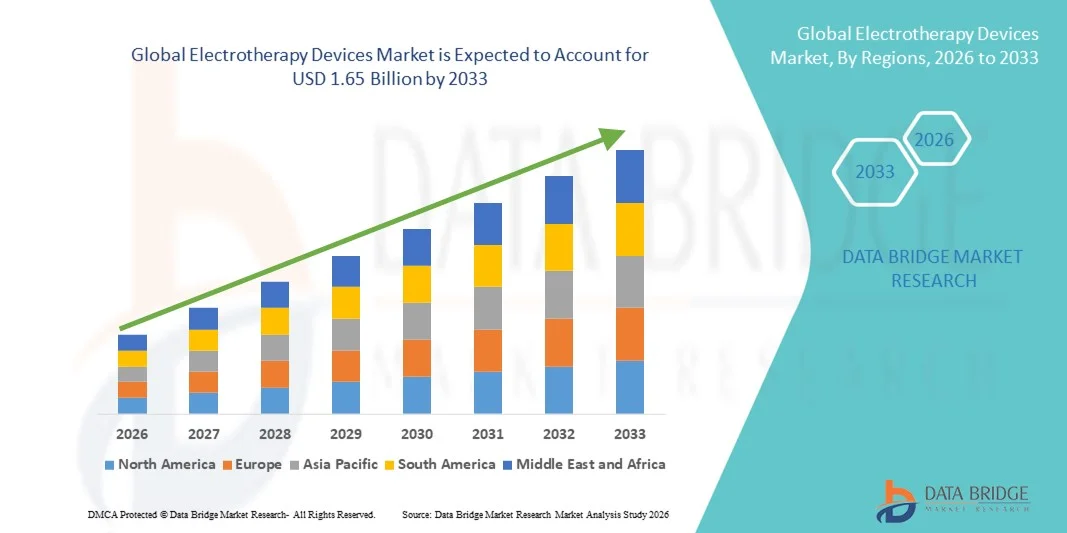
- The global electrotherapy devices market size was valued at USD 1.24 billion in 2025 and is expected to reach USD 1.65 billion by 2033, at a CAGR of 3.71% during the forecast period
- The market growth is largely fueled by the increasing prevalence of chronic pain, musculoskeletal disorders, and neurological conditions, which are boosting adoption of non‑invasive and portable electrotherapy technologies in clinical and home settings
- Furthermore, ongoing technological advancements in device design, user‑friendliness, digital connectivity, and growing consumer preference for drug‑free treatment options are establishing electrotherapy devices as essential therapeutic tools across healthcare, rehabilitation, and sports medicine, thereby significantly accelerating industry expansion
Electrotherapy Devices Market Analysis
- Electrotherapy devices, including low, mid, and high-frequency systems, are increasingly vital components of pain management, rehabilitation, and therapeutic care due to their non-invasive nature, ease of use, and ability to provide targeted muscle stimulation and tissue repair
- The escalating demand for electrotherapy devices is primarily fueled by the rising prevalence of chronic pain, sports injuries, wound healing needs, and other therapeutic applications, along with growing awareness of non-pharmacological treatment options in both clinical and home settings
- North America dominated the electrotherapy devices market with the largest revenue share of 38.5% in 2025, characterized by advanced healthcare infrastructure, high patient awareness, and a strong presence of leading device manufacturers, with the U.S. showing substantial growth in homecare and hospital-based electrotherapy solutions driven by innovations in wearable and app-controlled devices
- Asia-Pacific is expected to be the fastest growing region in the electrotherapy devices market during the forecast period due to rising healthcare expenditure, increasing geriatric population, and growing adoption of rehabilitation centers and specialty clinics equipped with electrotherapy systems
- Pain management segment dominated the electrotherapy devices market with a market share of 42.9% in 2025, driven by the effectiveness of electrotherapy in alleviating chronic and acute pain, supporting tissue repair, and enhancing recovery in rehabilitation and sports injury treatment programs
Report Scope and Electrotherapy Devices Market Segmentation
|
Attributes |
Electrotherapy Devices Key Market Insights |
|
Segments Covered |
|
|
Countries Covered |
North America
Europe
Asia-Pacific
Middle East and Africa
South America
|
|
Key Market Players |
|
|
Market Opportunities |
|
|
Value Added Data Infosets |
In addition to the insights on market scenarios such as market value, growth rate, segmentation, geographical coverage, and major players, the market reports curated by the Data Bridge Market Research also include in-depth expert analysis, patient epidemiology, pipeline analysis, pricing analysis, and regulatory framework |
Electrotherapy Devices Market Trends
Shift Toward Portable and Home-Based Electrotherapy Solutions
- A significant and accelerating trend in the global electrotherapy devices market is the growing shift toward portable, compact, and home-use devices, driven by rising demand for convenient, non-invasive therapy solutions outside traditional clinical environments
- For instance, several manufacturers are introducing lightweight, battery-operated electrotherapy systems designed for homecare settings, allowing patients to manage pain, muscle stimulation, and rehabilitation independently with minimal clinical supervision
- Technological advancements in device miniaturization, wireless connectivity, and user-friendly interfaces are enabling broader adoption of electrotherapy devices across homecare and long-term care centers
- The increasing integration of digital features such as mobile app connectivity and programmable therapy modes is enhancing treatment personalization and improving patient compliance across various applications
- The expansion of home-based rehabilitation programs and the rising aging population requiring long-term pain and mobility management are further accelerating this trend globally
- This growing emphasis on portable and home-use electrotherapy solutions is reshaping market dynamics, prompting companies to focus on ease of use, safety, and affordability to capture a wider patient base
- Increasing availability of over-the-counter and prescription-free electrotherapy devices is widening consumer access and supporting market penetration beyond clinical settings
Electrotherapy Devices Market Dynamics
Driver
Rising Prevalence of Chronic Pain and Rehabilitation Needs
- The increasing prevalence of chronic pain, musculoskeletal disorders, sports injuries, and post-surgical rehabilitation needs is a major driver fueling demand for electrotherapy devices worldwide
- For instance, healthcare providers are increasingly incorporating electrotherapy into pain management and rehabilitation protocols to reduce reliance on pharmacological treatments and improve patient outcomes
- Electrotherapy devices offer effective, non-invasive treatment options for conditions such as acute and chronic pain, edema, tissue repair, and wound healing, making them widely adopted across hospitals and rehabilitation centers
- The growing awareness of non-drug-based therapies and the rising focus on physical therapy and recovery programs are further supporting market growth
- In addition, increasing healthcare expenditure and expanding rehabilitation infrastructure, particularly in emerging economies, are accelerating adoption across multiple end-user segments
- The rising geriatric population, which is more susceptible to mobility issues and chronic conditions, is further driving long-term demand for electrotherapy solutions
- Increased focus on early rehabilitation and faster recovery outcomes is encouraging clinicians to integrate electrotherapy devices into standard treatment protocols.
Restraint/Challenge
Skin Irritation Issues and Regulatory Compliance Hurdle
- Concerns related to skin irritation, discomfort, and adverse reactions caused by prolonged or improper use of electrotherapy devices pose a challenge to widespread adoption, particularly among sensitive patient populations
- For instance, reports of mild burns or skin reactions from electrode pads have led some patients and clinicians to exercise caution when using electrotherapy treatments
- Strict regulatory requirements and approval processes for medical devices across different regions can delay product launches and increase development costs for manufacturers
- Ensuring consistent safety standards, clinical validation, and compliance with medical regulations adds complexity for companies operating in multiple markets
- Addressing these challenges through improved electrode materials, enhanced safety features, user education, and streamlined regulatory strategies will be critical for sustained growth in the global electrotherapy devices market
- Limited awareness and improper usage of electrotherapy devices in certain regions can reduce treatment effectiveness and hinder market expansion
- Reimbursement limitations and inconsistent insurance coverage for electrotherapy treatments may restrict adoption, particularly in cost-sensitive healthcare systems
Electrotherapy Devices Market Scope
The market is segmented on the basis of product type, application, and end-user.
- By Product Type
On the basis of product type, the global electrotherapy devices market is segmented into low frequency, mid frequency, and high frequency devices. The low frequency segment dominated the market with the largest revenue share in 2025, driven by its widespread use in pain management, muscle stimulation, and rehabilitation therapies. Low frequency electrotherapy devices are extensively adopted due to their proven clinical effectiveness, safety profile, and affordability compared to higher-frequency systems. These devices are commonly used across hospitals, rehabilitation centers, and homecare settings for treating chronic pain, musculoskeletal disorders, and post-operative recovery. Their ease of use and compatibility with portable and home-based therapy models further strengthen their dominance. In addition, strong clinician familiarity and long-standing clinical acceptance contribute to sustained demand for low frequency electrotherapy systems globally.
The mid frequency segment is expected to witness the fastest growth rate during the forecast period, fueled by its increasing application in deep tissue stimulation, sports injury treatment, and advanced rehabilitation programs. Mid frequency devices offer improved patient comfort and deeper tissue penetration compared to low frequency systems, making them increasingly preferred in specialty clinics and rehabilitation centers. Growing adoption in sports medicine and physiotherapy settings, along with rising investments in advanced therapeutic technologies, is accelerating segment growth. Technological advancements improving waveform modulation and treatment precision are further enhancing clinical outcomes. As awareness of mid frequency therapy benefits expands, demand for these systems is anticipated to rise significantly.
- By Application
On the basis of application, the market is segmented into pain management, urine & fecal incontinence, sports injury treatment, tissue repair, iontophoresis, acute & chronic edema, wound healing, cosmetic, and others. The pain management segment dominated the electrotherapy devices market in 2025 with a revenue share of 42.9%, owing to the rising prevalence of chronic pain, arthritis, back pain, and post-surgical discomfort worldwide. Electrotherapy is widely used as a non-invasive and drug-free solution for both acute and chronic pain conditions, making it a preferred option among clinicians and patients. The growing focus on reducing opioid dependency has further increased reliance on electrotherapy for pain relief. Strong adoption across hospitals, rehabilitation centers, and homecare settings supports sustained dominance of this segment. In addition, increasing patient awareness and accessibility of portable pain management devices are reinforcing market leadership.
The sports injury treatment segment is expected to register the fastest growth during the forecast period, driven by increasing participation in sports, fitness activities, and professional athletics. Electrotherapy devices are increasingly used to accelerate muscle recovery, reduce inflammation, and enhance rehabilitation outcomes in athletes. Rising demand from sports medicine clinics, physiotherapy centers, and athletic training facilities is fueling segment growth. The integration of electrotherapy into preventive care and performance enhancement programs is further expanding its application scope. Growing awareness of faster recovery benefits and improved treatment outcomes is expected to sustain strong growth momentum.
- By End-User
On the basis of end-user, the global electrotherapy devices market is segmented into rehabilitation centers, long-term care centers, specialty clinics, hospitals, homecare settings, and others. The hospitals segment dominated the market in 2025, supported by high patient inflow, advanced treatment infrastructure, and availability of skilled healthcare professionals. Hospitals extensively utilize electrotherapy devices for pain management, post-surgical rehabilitation, wound healing, and edema treatment. The ability to provide supervised therapy and integrate electrotherapy into comprehensive treatment protocols strengthens hospital adoption. In addition, favorable reimbursement policies and access to advanced electrotherapy systems contribute to this segment’s dominance. Continuous investments in hospital-based rehabilitation services further support sustained demand.
The homecare settings segment is anticipated to be the fastest growing end-user segment during the forecast period, driven by the increasing preference for home-based treatment and long-term therapy management. Rising aging population, growing prevalence of chronic conditions, and demand for convenient, self-administered therapy are accelerating adoption in homecare environments. Advances in portable, easy-to-use electrotherapy devices are enabling wider patient access outside clinical settings. Cost-effectiveness and reduced dependency on frequent hospital visits further support segment expansion. The growing focus on remote care and patient-centric treatment models is expected to sustain rapid growth in homecare adoption.
Electrotherapy Devices Market Regional Analysis
- North America dominated the electrotherapy devices market with the largest revenue share of 38.5% in 2025, characterized by advanced healthcare infrastructure, high patient awareness, and a strong presence of leading device manufacturers, with the U.S. showing substantial growth in homecare and hospital-based electrotherapy solutions driven by innovations in wearable and app-controlled devices
- Healthcare providers and patients in the region highly value the clinical effectiveness, non-invasive nature, and wide application range of electrotherapy devices across pain management, rehabilitation, and post-surgical recovery settings
- This widespread adoption is further supported by high healthcare spending, strong reimbursement frameworks, early adoption of advanced medical technologies, and a growing preference for homecare and outpatient rehabilitation solutions, positioning North America as a leading market for electrotherapy devices
U.S. Electrotherapy Devices Market Insight
The U.S. electrotherapy devices market captured the largest revenue share within North America in 2025, driven by the high prevalence of chronic pain, musculoskeletal disorders, and sports-related injuries. Healthcare providers increasingly prioritize non-invasive and drug-free treatment options, positioning electrotherapy as a core component of pain management and rehabilitation protocols. The growing adoption of homecare and outpatient rehabilitation services, combined with strong reimbursement support, further propels market growth. Moreover, continuous technological advancements and high patient awareness are significantly contributing to the expansion of the U.S. electrotherapy devices market.
Europe Electrotherapy Devices Market Insight
The Europe electrotherapy devices market is projected to expand at a substantial CAGR during the forecast period, primarily driven by the rising aging population and increasing demand for rehabilitation and long-term care services. The region’s strong emphasis on non-pharmacological therapies and structured physiotherapy programs is fostering adoption across hospitals and rehabilitation centers. European healthcare systems are increasingly integrating electrotherapy into standard treatment pathways. In addition, growing investments in medical technology and expanding access to advanced rehabilitation infrastructure are supporting sustained market growth across the region.
U.K. Electrotherapy Devices Market Insight
The U.K. electrotherapy devices market is anticipated to grow at a noteworthy CAGR during the forecast period, supported by increasing awareness of pain management solutions and expanding rehabilitation services. The rising incidence of chronic pain conditions and sports injuries is encouraging broader adoption of electrotherapy devices. The U.K.’s well-established healthcare system and growing focus on outpatient and home-based care are further stimulating market growth. In addition, increasing patient preference for non-invasive therapies is expected to sustain demand across multiple end-user settings.
Germany Electrotherapy Devices Market Insight
The Germany electrotherapy devices market is expected to expand at a considerable CAGR during the forecast period, fueled by strong demand for advanced rehabilitation technologies and a high focus on clinical effectiveness. Germany’s emphasis on evidence-based treatment and technological innovation supports widespread adoption of electrotherapy devices in hospitals and specialty clinics. The country’s robust healthcare infrastructure and growing investments in physiotherapy and rehabilitation services further enhance market expansion. Moreover, increasing demand for efficient post-operative and chronic care solutions is driving steady growth.
Asia-Pacific Electrotherapy Devices Market Insight
The Asia-Pacific electrotherapy devices market is poised to grow at the fastest CAGR during the forecast period of 2026 to 2033, driven by rising healthcare expenditure, rapid urbanization, and a growing geriatric population in countries such as China, Japan, and India. Increasing awareness of rehabilitation therapies and expanding access to healthcare services are accelerating adoption across the region. The growing presence of rehabilitation centers and improving availability of affordable electrotherapy devices are further supporting market growth. In addition, government initiatives aimed at strengthening healthcare infrastructure are contributing to rapid regional expansion.
Japan Electrotherapy Devices Market Insight
The Japan electrotherapy devices market is gaining momentum due to the country’s aging population and strong demand for long-term pain management and rehabilitation solutions. Electrotherapy devices are increasingly adopted to address mobility issues, chronic pain, and post-surgical recovery among elderly patients. Japan’s advanced medical technology landscape and high acceptance of innovative healthcare solutions further support market growth. Moreover, the integration of electrotherapy into homecare and outpatient settings is expanding its adoption across both residential and clinical environments.
India Electrotherapy Devices Market Insight
The India electrotherapy devices market accounted for a significant revenue share in Asia-Pacific in 2025, attributed to rising incidence of musculoskeletal disorders, increasing sports injuries, and expanding rehabilitation infrastructure. Growing healthcare awareness and improving access to physiotherapy services are driving adoption across hospitals and rehabilitation centers. The increasing focus on affordable, non-invasive treatment options is further supporting market growth. In addition, expansion of homecare services and rising investments in healthcare facilities are expected to continue propelling the electrotherapy devices market in India.
Electrotherapy Devices Market Share
The Electrotherapy Devices industry is primarily led by well-established companies, including:
- Zynex, Inc. (U.S.)
- Medtronic (Ireland)
- Boston Scientific Corporation (U.S.)
- Abbott (U.S.)
- BTL Industries Inc. (Czech Republic)
- Enraf-Nonius B.V. (Netherlands)
- Mettler Electronics Corp. (U.S.)
- NeuroMetrix, Inc. (U.S.)
- Avazzia, Inc. (U.S.)
- GymnaUniphy NV (Belgium)
- Eme Srl (Italy)
- Astar Sp. z o.o. (Poland)
- RS Medical, Inc. (U.S.)
- Orthofix Medical Inc. (U.S.)
- BioMedical Life Systems, Inc. (U.S.)
- ITO Co., Ltd. (Japan)
- Stymco Technologies Inc. (U.S.)
- HoMedics, LLC (U.S.)
- Electromedical Products International, Inc. (U.S.)
- Chattanooga Group, Inc. (U.S.)
What are the Recent Developments in Global Electrotherapy Devices Market?
- In July 2024, Omron Healthcare introduced the “Omron Smart Pain Relief” device, an advanced TENS-based electrotherapy solution that combines smart sensor technology for personalized adaptive pain therapy, reflecting innovation in connected pain management
- In February 2024, Zynex received FDA clearance for its M-Wave neuromuscular electrical stimulation (NMES) device, marking regulatory progress and the expansion of its electrotherapy product portfolio with enhanced therapeutic capabilities
- In August 2023, Zynex announced it had treated its 1 millionth patient using its electrotherapy technologies, highlighting the widespread clinical adoption and real-world impact of its NexWave devices in pain management and rehabilitation
- In March 2023, Zynex, Inc. launched the NexWave Electrotherapy Device, a new pain management solution that delivers significantly stronger pain relief than standard TENS devices and is designed for both short- and long-term pain conditions, marking a key product introduction in the electrotherapy space
- In March 2023, BTL Medical announced the launch of its new Tens 9000 portable electrotherapy system, a wireless TENS device with multiple treatment modes aimed at enhancing user accessibility and treatment flexibility in pain relief and rehabilitation
SKU-
世界初のマーケットインテリジェンスクラウドに関するレポートにオンラインでアクセスする

- インタラクティブなデータ分析ダッシュボード
- 成長の可能性が高い機会のための企業分析ダッシュボード
- カスタマイズとクエリのためのリサーチアナリストアクセス
- インタラクティブなダッシュボードによる競合分析
- 最新ニュース、更新情報、トレンド分析
- 包括的な競合追跡のためのベンチマーク分析のパワーを活用
調査方法
データ収集と基準年分析は、大規模なサンプル サイズのデータ収集モジュールを使用して行われます。この段階では、さまざまなソースと戦略を通じて市場情報または関連データを取得します。過去に取得したすべてのデータを事前に調査および計画することも含まれます。また、さまざまな情報ソース間で見られる情報の不一致の調査も含まれます。市場データは、市場統計モデルと一貫性モデルを使用して分析および推定されます。また、市場シェア分析と主要トレンド分析は、市場レポートの主要な成功要因です。詳細については、アナリストへの電話をリクエストするか、お問い合わせをドロップダウンしてください。
DBMR 調査チームが使用する主要な調査方法は、データ マイニング、データ変数が市場に与える影響の分析、および一次 (業界の専門家) 検証を含むデータ三角測量です。データ モデルには、ベンダー ポジショニング グリッド、市場タイムライン分析、市場概要とガイド、企業ポジショニング グリッド、特許分析、価格分析、企業市場シェア分析、測定基準、グローバルと地域、ベンダー シェア分析が含まれます。調査方法について詳しくは、お問い合わせフォームから当社の業界専門家にご相談ください。
カスタマイズ可能
Data Bridge Market Research は、高度な形成的調査のリーダーです。当社は、既存および新規のお客様に、お客様の目標に合致し、それに適したデータと分析を提供することに誇りを持っています。レポートは、対象ブランドの価格動向分析、追加国の市場理解 (国のリストをお問い合わせください)、臨床試験結果データ、文献レビュー、リファービッシュ市場および製品ベース分析を含めるようにカスタマイズできます。対象競合他社の市場分析は、技術ベースの分析から市場ポートフォリオ戦略まで分析できます。必要な競合他社のデータを、必要な形式とデータ スタイルでいくつでも追加できます。当社のアナリスト チームは、粗い生の Excel ファイル ピボット テーブル (ファクト ブック) でデータを提供したり、レポートで利用可能なデータ セットからプレゼンテーションを作成するお手伝いをしたりすることもできます。











