



Global Rehabilitation Equipment Market Segmentation, By Product (Daily Living Aids, Mobility Equipment, Walking Assist Devices, Exercise Equipment, Body Support Devices and Therapy Equipment), Application (Physical Rehabilitation & Training, Occupational Rehabilitation & Training, Strength and Endurance and Pain Reduction), End User (Rehabilitation Centres, Physiotherapy Centres, Home Care Settings, Hospitals & Clinics and Other)- Industry Trends and Forecast to 2033
グローバルリハビリテーション機器市場規模は
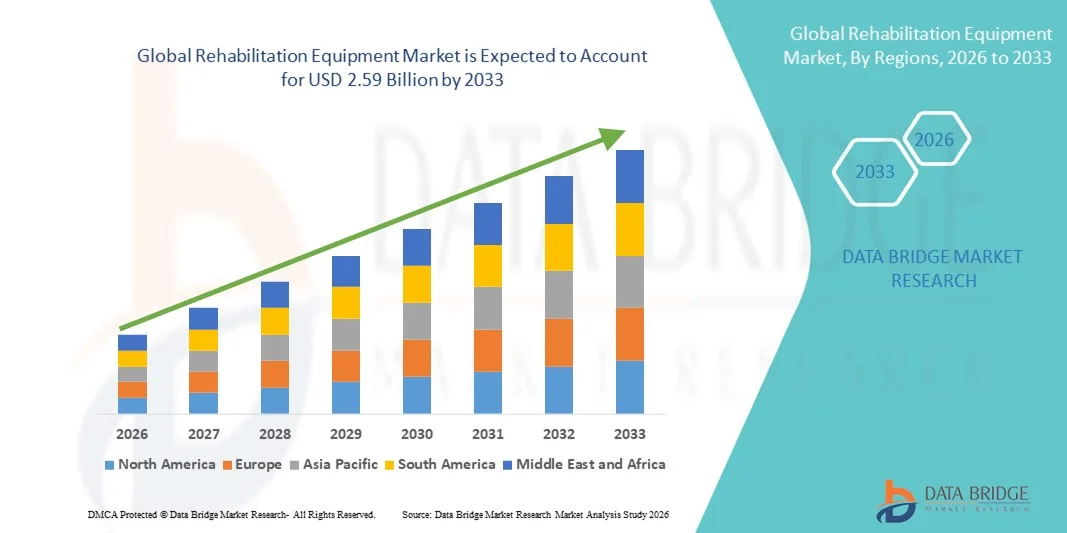
- グローバルなリハビリテーション機器市場規模が評価されたデータブリッジ市場調査分析2025年のUSD 1.74億そして到達する予定2033年までのUSD 2.59億, お問い合わせ5.10%のCAGR予報期間中
- 市場成長は、慢性疾患の上昇の蔓延によって大きく燃料を供給されます,筋骨格障害と神経学的条件, 世界的な成長するgtriceria人口とともに, 物理的な治療と健康設定を横断モビリティサポートソリューションの需要の増加につながる
- さらに、早期リハビリテーション、ロボティック・アシスト療法およびスマートリハビリテーション装置における技術進歩に関する意識を高め、近代的な患者の回復と長期ケア管理の重要な要素として、家庭医療サービスを展開しています。 これらの収束因子は、先進的なリハビリテーションソリューションの採用を加速し、これにより、業界の成長を著しく向上しています
市場規模と予測
- グローバル市場価値 (2025):USD 1.74 請求
- 期待される市場価値 (2033):USD 2.59 請求
- 予測CAGR (2026–2033):5.10%
リハビリテーション機器市場の主要なテイクアウトは何ですか
- リハビリテーション装置、回復を助け、移動性を改善し、そして物理的な機能を元通りに設計されている装置を包囲することは、病院、リハビリテーションセンター、および患者の結果を高め、長期療法プログラムを支える重要な役割のためのホーム ケアの設定を渡る現代ヘルスケア システムの重要なコンポーネントになりました
- リハビリテーション装置に対するエスカレートの要求は、主に慢性疾患の上昇の蔓延によって燃料を供給され、スポーツや事故関連の怪我の増加、胃の人口の拡大、早期および継続的な物理的な治療の利点に関する意識の増加
- 北米は、2025年に38.9%の最大の収益分配でリハビリテーション装置市場を支配しました。先進医療インフラ、有利な償還枠組み、技術的に先進的なリハビリテーションソリューションの高い採用率、米国は、ロボティック支援療法システムおよび家庭用リハビリテーション装置に対する需要の著しい成長を目撃しました
- アジア・パシフィックは、急速な医療インフラ整備による予測期間におけるリハビリテーション機器市場で最も急速に成長する地域であり、ヘルスケア支出の増加、医療ツーリズムの拡大、術後の神経リハビリテーションサービスに関する意識の高まりが期待されています
- モビリティ機器のセグメントは、2025年に41.5%の市場シェアでリハビリテーション機器市場を支配しました。車いす、歩行者、スクーターの需要が増加する高齢者の人口と世界中のモビリティ障害の症例の増加に陥っています。
レポートスコープとリハビリテーション機器市場セグメント
|
アトリビュート |
リハビリテーション機器キーマーケットインサイト |
|
カバーされる区分 |
|
|
カバーされた国 |
北アメリカ
ヨーロッパ
アジアパシフィック
中東・アフリカ
南米
|
|
主要市場プレイヤー |
|
|
マーケットチャンス |
|
|
付加価値データインフォセットを追加 |
市場価値、成長率、セグメンテーション、地理的カバレッジ、主要なプレーヤーなどの市場シナリオに関する洞察に加えて、Data Bridge Market Researchがキュレーションした市場レポートには、詳細なエキスパート分析、患者疫学、パイプライン分析、価格設定分析、規制フレームワークも含まれています。 |
リハビリテーション機器市場の重要な傾向は何ですか
ロボティックアシストとスマートリハビリシステムの導入
- 世界的なリハビリテーション機器市場における有意で加速的な傾向は、ロボット支援技術の統合が増加しています。ウェアラブルセンサー、および臨床および家ベースのリハビリテーション プログラムへのAI対応療法システム。 治療精度、患者のエンゲージメント、および測定可能な回復結果が大幅に向上する技術のこの影響
- 例えば、ロボティックギャイトトレーニングシステムとエクススケルトンデバイスは、脊髄損傷や脳卒中障害のある患者を支援するために、高度リハビリテーションセンターに導入され、繰り返しおよびデータ主導の移動療法を可能にします。 同様に、AIを搭載したリハビリテーションプラットフォームは、パーソナライズされたエクササイズレジメンとリアルタイムのパフォーマンストラッキングを提供します。
- リハビリテーション装置のAIの統合は動きの追跡、適応性の抵抗の調節のような特徴を可能にし、予測分析患者の進行状況に基づいて治療セッションを最適化します。 たとえば、特定のスマートリハビリテーションデバイスは、埋め込まれたセンサーを活用して、生体力測定パラメータを監視し、セラピストにインテリジェントなフィードバックを提供します。 さらに、接続されたシステムは、臨床医が患者の付着と回復マイルストーンをリモートで監視できるようにします。
- テレヘルスプラットフォームと電子健康記録を備えたリハビリテーション機器のシームレスな統合により、患者の回復の旅の調整されたケアと一元化された監視が容易になります。 統一されたデジタルインターフェイスにより、ヘルスケアプロバイダは、治療プロトコルの管理、結果の追跡、および複数のケア設定で効率的に治療計画を調整することができます。
- よりインテリジェントでパーソナライズされた、テクノロジー主導のリハビリテーションソリューションへのこの傾向は、根本的に回復と機能的な独立のための患者の期待を再構築することです。 その結果、自動療法モードとリモート接続機能を備えた高度なロボットとセンサーベースのリハビリシステムを開発しています。
- 高度でデータ処理可能なリハビリテーション機器の需要は、病院、専門リハビリテーションセンター、およびヘルスケア環境全体で急速に成長しています。ヘルスケアプロバイダーは、結果ベースの治療モデルと長期にわたる患者の関与を優先的に優先しています。
- また、バーチャルリアリティベースの治療ソリューションの増大した組み込まれる患者のモチベーションと治療の遵守を強化し、より速く、より魅力的な回復プロセスをサポートする没入型リハビリテーション体験を作成しています。
リハビリテーション機器市場ダイナミクス
ドライバー
慢性疾患および老化の人口の優先順位を高めることによる成長の必要性
- 慢性疾患、musculoskeletal障害、および神経疾患の増加の発生率は急速に拡大する世界的なgeriatric人口と相まって、リハビリテーション装置のための高まる要求のための重要な運転者です
- 例えば、増加するケースのストローク、骨関節炎および脊椎の傷害は高度の物理的な療法および移動性の回復装置に忍耐強い回復適性および機能結果を改善するために投資するためにヘルスケア設備を導きました。 医療機関によるそのような戦略的投資は、予測期間におけるリハビリテーション機器市場成長を促進することが期待されています
- 早期の介入と構造のリハビリテーションプログラムに対する意識が高まるにつれて、リハビリテーション装置は、長期的な障害と医療費を削減し、モビリティ、強度、独立性を回復するための重要なサポートを提供します
- さらに、ホームヘルスケアサービスおよびポストアクチュアケアプログラムの拡張は、リハビリテーション装置を回復経路の不可欠なコンポーネントにし、患者は従来の病院環境外での治療を継続することを可能にします
- 携帯用リハビリテーション装置、カスタマイズ可能な療法プログラムおよび改善された忍耐強い監視の機能の便利は臨床およびホーム設定のリハビリテーション装置の採用を促進する主要な要因です。 バリューベースのヘルスケアモデルに重点を置き、市場拡大に貢献
- 障害者支援プログラムやリハビリテーションサービスの普及を推進する政府の取り組みは、高度治療機器のインフラ開発と資金調達の高度化を強化しています
- また、スポーツへの参加の増加や、若年人口の怪我のリハビリテーションに関する意識の高まりが、現代のリハビリテーションソリューションの持続可能な需要に貢献しています。
拘束/チャレンジ
高い設備費および限定の払い戻しの適用範囲
- ロボットシステムや技術的に高度な治療装置を含む高度なリハビリテーション機器の高コストを取り巻く懸念、特にコスト感度地域における市場浸透への大きな課題を提起
- たとえば、プレミアムロボットリハビリテーションシステムとエクセルトンデバイスは、多くの場合、実質的な資本投資を必要とするため、限られた予算で小規模なクリニックやリハビリテーションセンターへのアクセスが少なくなります
- 柔軟な資金調達オプション、スケーラブルな製品提供、および拡張された払い戻し枠組みを通じて、これらのコスト関連の障壁に対処することは、より広いアクセシビリティを確保するために不可欠です。 また、各国の不整合方針は、高度リハビリテーション技術への患者アクセスを制限することができます。
- また、訓練を受けた専門家が複雑なリハビリテーションシステムを運営し、パフォーマンスデータを解釈する必要性は、運用コストに追加し、委託された医療施設での採用を制限する場合があります。
- 技術の進歩は徐々に有価と使いやすさを改善していますが、高水準の投資と不確実な償還のカバレッジの認識は、特にヘルスケア市場を発展させるために、依然として広範な採用を強化することができます
- 特定の新興国における先進的なリハビリテーション技術についての限られた意識は、市場浸透を抑制し、採用率を遅くします
- コストの最適化戦略、保険の幅広い範囲、ターゲティングトレーニングのイニシアチブ、および意識プログラムを通じてこれらの課題を克服することは、グローバルなリハビリテーション機器市場における長期的な成長を持続させるために不可欠です
リハビリテーション機器市場はどのように区分されますか
市場は製品、アプリケーション、エンドユーザーに基づいてセグメント化されます。
- 製品情報
製品のベースでは、リハビリテーション機器市場は、毎日の生活補助、モビリティ機器、歩行補助装置、エクササイズ機器、ボディサポート機器、および治療機器に分けられます。 モビリティ機器セグメントは、2025年に41.5%の最大の市場収益シェアで市場を支配し、老化、怪我、または神経障害による移動性を低下させる患者のための運動と独立性を可能にする重要な役割を担っています。 病院、リハビリテーションセンター、ホームケアの設定は、車いす、歩行者、スクーターなどのモビリティの援助に大きく依存し、患者のリハビリテーションや毎日の活動をサポートします。 需要は、成長する領域の人口によって燃料を供給し、モビリティソリューションを通じて生活の質を向上させるための意識を高めています。 電動車いす、スマートモビリティデバイス、センサー一体型スクーターなどの技術的進歩により、より安全性と機能性が向上します。 モビリティ機器は、効果的な物理的なリハビリテーションプログラムを提供し、強度と耐久性を向上させる運動を実行している患者をサポートしています。 臨床およびホーム・セッティングの広範な使用は、リハビリテーション機器市場での優位性を強調します。
毎日の生活補助セグメントは、予測期間中に最速の成長率を目撃し、患者が日常活動を独立して実行できるようにするデバイスに対する需要の増加によって推進されています。 適応性用具、ドレッシングの援助、リーファーおよび棒のようなプロダクトはホーム ケアおよび忍耐強いリハビリテーションの環境の牽引を得ています。 高齢者の人口と独立生活の重要性に関する術後の患者の意識を高めることは、燃料の採用です。 人間工学に基づいたデザイン、軽量素材、スマートホームテクノロジーとの統合のイノベーションは、さらなるユーザビリティと魅力を強化しています。 毎日の生活援助はますますパーソナライズされた治療プログラムに組み込まれており、ケアと患者の遵守の継続性を確保しています。 また、政府主導のリハビリテーションやエイジング・イン・プレース・ソリューションを推進する取り組みは、この分野における市場拡大を推進しています。
- 用途別
用途に応じて、リハビリテーション機器市場は、物理的なリハビリテーションとトレーニング、職業リハビリテーション&トレーニング、強度と耐久性、痛みの軽減に分けられます。 物理的なリハビリテーション及び訓練の区分は傷害、外科、または神経学的な条件の後で機能能力そして可動性を回復するために広範な必要性によって運転される2025の市場を支配しました。 このアプリケーションには、病院、理学療法センター、リハビリテーション施設を横断する治療的演習、歩行訓練、機能的モビリティプログラムが含まれます。 治療精度と患者の関与を改善し、ロボティックアシスト治療装置とAI対応のエクササイズ機器の統合によるセグメントメリット。 需要は、脳卒中、整形外科障害、および外科的リハビリテーションの要件の上昇の発生によって燃料を供給されます。 セラピストによるリアルタイム監視とデータ主導の調整により、結果と患者の遵守をさらに高めます。 セグメントの優位性は、構造リハビリテーションプログラムをサポートする保険のカバレッジおよび返金ポリシーによって強化されます。
予防および後傷害リハビリテーションプログラムの意識を高めるため、予測期間中に最も速い成長を目撃する強さと耐久性セグメントが期待されます。 それは筋肉強さ、スタミナおよび全面的な耐久性を高めるために設計されている抵抗の訓練装置、機能練習機械およびスマートな療法装置を含んでいます。 成長は、ホームベースのリハビリテーションプログラムおよびテレリハビリテーションプラットフォームの採用の増加によってサポートされています。 スポーツ傷害、整形外科、または慢性疾患から回復する患者は、機能的回復を加速するために、強度重視のリハビリテーション装置に依存しています。 統合と統合ウェアラブルセンサーそして、デジタルプラットフォームは、臨床医が進行状況を遠隔に追跡し、パーソナライズされたエクササイズレジメンを提供します。 さらに、リハビリテーションに焦点を絞ったフィットネス技術の投資が市場採用を加速しています。
- エンドユーザーによる
エンドユーザーに基づいて、リハビリテーション機器市場はリハビリテーションセンター、理学療法センター、ホームケア設定、病院、クリニックなどに分かれています。 病院および医院は2025年に最大の収益分配と市場を支配し、患者および外来リハビリテーションサービスのための第一次センターを維持しています。 ロボット療法システム、モビリティ・エイズ、ボディ・サポート機器、スマート・エクササイズ・マシンなどの高度リハビリテーション装置を幅広く展開し、患者様の成果を改善します。 病院は、構造化されたリハビリテーションプログラム、訓練されたセラピスト、および機器の活用を最適化する集中された施設から恩恵を受ける。 政府の取り組み、保険のカバレッジ、およびヘルスケアの資金調達は、ハイエンドのリハビリテーションソリューションのさらなるサポートを採用しています。 リハビリテーション装置をマルチディストリビューションケアチームに統合することで、より迅速な回復、読解率の低減、および患者の満足度の向上を実現します。 慢性疾患および手術後のリハビリテーションの高い予防は、このエンドユーザーセグメントの優位性を強化します。
ホームケアの設定は、ホームのリハビリテーションソリューションの優先度を高め、ポータブル、コネクティッド、AI対応のリハビリテーションデバイスを採用することにより、最も急速に成長しているエンドユーザーセグメントであることが期待されます。 ホームベースの装置は患者が臨床環境の外で療法を続け、独立性および長期遵守を促進することを可能にします。 テレリハビリテーションプラットフォームとウェアラブルセンサーは、臨床医による遠隔監視を容易にし、ケアの継続性を確保します。 成長は、高齢化の人口、慢性疾患の上昇、および世界の家庭医療サービスの拡大によってさらに支持されます。 一貫性、費用効果が大きい、および個人化された療法プログラムは採用の主要な運転者です。 政府の政策と家庭のリハビリテーションのための保険サポートはまた、このセグメントの普及を強化しています。
リハビリテーション機器市場最大のシェアはどの地域ですか
- 北米は、2025年に38.9%の最大の収益分配でリハビリテーション装置市場を支配しました。先進医療インフラ、有利な償還枠組み、技術的に高度なリハビリテーションソリューションの高い採用率が特徴です。
- ロボット支援療法装置、モビリティ支援、AI対応のエクササイズ機器など、回復効果を高める地域におけるヘルスケアプロバイダーや患者はますますます価値が高まっています。
- この広範囲にわたる採用は、高ヘルスケアの支出、有利な保険の補償、リハビリテーションサービスの推進に関する政府の取り組み、および訓練された医療専門家の存在によって、先進的なリハビリテーション装置を米国およびカナダの病院、診療所、およびホームケア設定で優先する選択肢として確立します。
米国リハビリテーション機器市場インサイト
米国のリハビリテーション機器市場は、先進医療インフラ、技術を活用した治療機器の高度採用、および成長するガリアクト人口の82%の最大の収益率を占めています。 患者さんやヘルスケアプロバイダーは、ロボット支援療法システム、モビリティ支援、AI対応の演習機器など、効率的な回復をサポートする機器をますます優先的に優先します。 家庭用リハビリテーションおよびテレリハビリテーションプラットフォームの上昇傾向は、市場をさらに推進します。 政府の取り組み、保険のカバレッジ、およびリハビリテーションプログラムをサポートする返金ポリシーも成長に貢献します。 また、大手医療機器メーカーや強力な研究開発活動の存在感は、革新的なソリューションの可用性を拡大しています。
ヨーロッパリハビリテーション機器市場情報
欧州リハビリテーション機器市場は、ヘルスケア支出の増加、慢性疾患の蔓延、および厳しい医療基準によって駆動され、予測期間中に安定したCAGRで成長するために計画されています。 ドイツ、フランス、イタリアなどの国々は、病院、診療所、理学センターの高度リハビリテーション機器の強力な採用を目撃しています。 都市化と成長する高齢者の人口は、モビリティの援助、毎日の生活援助、および運動機器の需要を高めています。 欧州の消費者は、患者の成果と機能的な独立性を向上させる、高品質で技術主導のソリューションを大切にしています。 市場は、後方ケアと家庭ベースのリハビリプログラムを促進する政府の取り組みからも恩恵を受けています。
U.K.リハビリテーション機器市場インサイト
米国のリハビリテーション機器市場は、予測期間中に注目すべきCAGRで成長することを期待しています, 増加するヘルスケア意識によって駆動, 家庭ベースのリハビリテーションの需要の増加, 慢性疾患管理のための政府サポート. 携帯用および接続されたリハビリテーション装置の採用は整形外科、打撃、または神経学的条件から回復する患者間で増加しています。 U.K.の堅牢な医療インフラは、スマートセラピー機器の技術的進歩と組み合わせ、市場成長をサポートします。 モビリティの障害と生活の質に関するライジングの懸念は、リハビリテーション機器に投資するヘルスケアプロバイダーと患者を奨励しています。 また、成長するテレリハビリテーションとリモートモニタリングの傾向は、市場の拡大を刺激しています。
ドイツリハビリテーション機器市場情報
ドイツのリハビリテーション機器市場は、先進医療施設が推進し、技術革新に注力し、ポストキュートケアの意識を高め、予測期間中に強力なCAGRで拡大することが期待されています。 先進のリハビリテーションセンターと病院は、ロボット支援療法、ボディサポート機器、および患者ケア計画へのモビリティ支援を統合しています。 環境に優しい、人間工学的、およびデータ可能なリハビリテーションの解決のための要求は着実に成長しています。 政府は、厳格なケアと慢性疾患管理に重点を置いています。 テレヘルスプラットフォームを用いたリハビリテーション機器の統合は、アクセシビリティとモニタリングの効率性を高め、長期使用を推進しています。
アジア太平洋リハビリテーション機器市場動向
アジア・パシフィックのリハビリテーション機器市場は、中国、日本、インドなどの国における急速な都市化、増加する使い捨て所得、および技術進歩によって推進された予測期間における最速のCAGRで成長することが評価されています。 リハビリテーションのメリットや、ホームヘルスケアサービスの拡大に対する地域の成長意識が高まっています。 デジタルヘルス・リハビリテーションインフラの推進を推進する政府の取り組みが増加し、市場成長をサポートします。 また、再生装置の製造拠点としてAPACの誕生により、使いやすさが向上しています。 病院、理学療法センター、ホームケア設定の需要が高まっています。
日本リハビリテーション機器市場動向
日本リハビリテーション機器市場は、国の老化人口、ハイテク医療インフラ、患者様の利便性に重点を置いています。 スマートセラピー機器、ウェアラブルセンサー、ロボット支援リハビリテーションシステムの導入が病院、クリニック、ホームケア環境で増加しています。 遠隔リハビリテーションおよび遠隔監視の解決は療法の付着力を高めるために普及しています。 高齢者ケアや慢性疾患管理に重点を置き、市場成長をサポートします。 生活の質と独立性を重視した文化は、高度なリハビリテーション機器の好みを駆動します。 接続された健康プラットフォームとの統合により、臨床医は患者様の回復を効率的に追跡することができます。
インドリハビリテーション機器市場情報
インドのリハビリテーション機器市場は、2025年にアジア・パシフィックで最大の収益シェアを占め、急速な都市化、成長を続ける中級、リハビリテーションや物理療法に関する意識を高めています。 病院、ホームケアの設定、および理学療法センターは、モビリティ補助、毎日の生活支援、そして迅速なペースでエクササイズ機器を採用しています。 ヘルスケアインフラやデジタルヘルスを推進する政府の取り組みは、さらなる採用を加速しています。 地元で製造されたリハビリテーション機器の信頼性と可用性は、消費者やヘルスケアプロバイダーを惹きつけています。 慢性疾患および整形外科の発生率を高めることは、持続的な需要に貢献しています。 家庭用リハビリテーションおよびテレリハビリテーションソリューションに対する成長の焦点は、市場成長を加速しています。
リハビリテーション機器市場でトップ企業は
リハビリテーション装置工業は主に下記のものを含んでいる十分に確立された会社によって、導きます:
- インバレーケアインターナショナルホールディングス株式会社(米国)
- エノビス(アメリカ)
- オットボックSE&Co. KGaA(ドイツ)
- ReWalk ロボティクス株式会社. (イスラエル)
- エクソ・ビオニクス・ホールディングス株式会社(米国)
- サイバーディーン代表取締役社長
- ホコマAG(スイス)
- Tyromotion GmbH(オーストリア)
- バイオニック研究所(カナダ)
- ダイナスプリントシステムズ株式会社(アメリカ)
- Caremaxのリハビリテーション装置Co.、株式会社(中国)
- GF健康製品株式会社(米国)
- メドリン・インダストリーズ、LP(米国)
- Arjo AB(スウェーデン)
- HandicareグループAB(スウェーデン)
- LINETグループSE(チェコ共和国)
- Guldmann A/S (デンマーク)
- サンライズメディカル合同会社(米国)
- プリズムメディカルUK株式会社(イギリス)
グローバルリハビリテーション機器市場の最近の発展は何ですか
- 2025年10月には、スマートブレース、エクスカレトン、およびデジタルリカバリツールを含むウェアラブルなテクノロジーが、リアルタイムトラッキング、パーソナライズされた治療調整、および統合された患者進捗報告によって、消費者および臨床ウェアラブルが従来のリハビリテーションパラダイムシフトをどのようにシフトしているかを明らかにしました。
- 2025年10月、クイーンズランド大学の研究者が、モーターニューロン病(MND)の人々のために、世界初の軽量足首に焦点をあたるエクソンクレトンの試験を開始しました。これにより、車いすの運動の信頼性と遅延の信頼性が向上し、現実のウェアラブルロボティクスを通して向上します。
- 2025年7月、WandercraftのAIパワード・エクスカレトンは、臨床設定でパラリンジされた患者を再び歩き、NvidiaとAWSと連携し、バランスとモビリティ技術を強化し、より広範な家庭利用とMedicareの償還支援に押し込む
- 2025年4月、タイロモーションは、新しいヨーロッパ本社をウィーンにオープンし、ロボティックとセンサーベースのリハビリテーションデバイスを横断してイノベーションを加速し、リハビリテーション技術の拡大と先進的な製品開発を支援
- 2025年6月、Wandercraftは、Atarante Xの臨床使用および日常のハンズフリーウォーキング用に設計されたパーソナルエクオスクルトン・イブの商用化を含むAIを搭載したリハビリテーション・エクスカレットの開発とグローバル展開を加速するために、USD 75,000,000 Series Dの資金調達ラウンドを保証しました。
SKU-
世界初のマーケットインテリジェンスクラウドに関するレポートにオンラインでアクセスする

- インタラクティブなデータ分析ダッシュボード
- 成長の可能性が高い機会のための企業分析ダッシュボード
- カスタマイズとクエリのためのリサーチアナリストアクセス
- インタラクティブなダッシュボードによる競合分析
- 最新ニュース、更新情報、トレンド分析
- 包括的な競合追跡のためのベンチマーク分析のパワーを活用
調査方法
データ収集と基準年分析は、大規模なサンプル サイズのデータ収集モジュールを使用して行われます。この段階では、さまざまなソースと戦略を通じて市場情報または関連データを取得します。過去に取得したすべてのデータを事前に調査および計画することも含まれます。また、さまざまな情報ソース間で見られる情報の不一致の調査も含まれます。市場データは、市場統計モデルと一貫性モデルを使用して分析および推定されます。また、市場シェア分析と主要トレンド分析は、市場レポートの主要な成功要因です。詳細については、アナリストへの電話をリクエストするか、お問い合わせをドロップダウンしてください。
DBMR 調査チームが使用する主要な調査方法は、データ マイニング、データ変数が市場に与える影響の分析、および一次 (業界の専門家) 検証を含むデータ三角測量です。データ モデルには、ベンダー ポジショニング グリッド、市場タイムライン分析、市場概要とガイド、企業ポジショニング グリッド、特許分析、価格分析、企業市場シェア分析、測定基準、グローバルと地域、ベンダー シェア分析が含まれます。調査方法について詳しくは、お問い合わせフォームから当社の業界専門家にご相談ください。
カスタマイズ可能
Data Bridge Market Research は、高度な形成的調査のリーダーです。当社は、既存および新規のお客様に、お客様の目標に合致し、それに適したデータと分析を提供することに誇りを持っています。レポートは、対象ブランドの価格動向分析、追加国の市場理解 (国のリストをお問い合わせください)、臨床試験結果データ、文献レビュー、リファービッシュ市場および製品ベース分析を含めるようにカスタマイズできます。対象競合他社の市場分析は、技術ベースの分析から市場ポートフォリオ戦略まで分析できます。必要な競合他社のデータを、必要な形式とデータ スタイルでいくつでも追加できます。当社のアナリスト チームは、粗い生の Excel ファイル ピボット テーブル (ファクト ブック) でデータを提供したり、レポートで利用可能なデータ セットからプレゼンテーションを作成するお手伝いをしたりすることもできます。











