



中東およびアフリカの白物家電市場セグメンテーション、製品別(冷蔵庫、エアコン、洗濯機、調理器具、オーブン、食器洗い機、ウォーターディスペンサー/ROシステム、扇風機、電気・ガスヒーター、冷凍庫、パーソナルケア、スマート医療機器、その他) - 2032年までの業界動向と予測
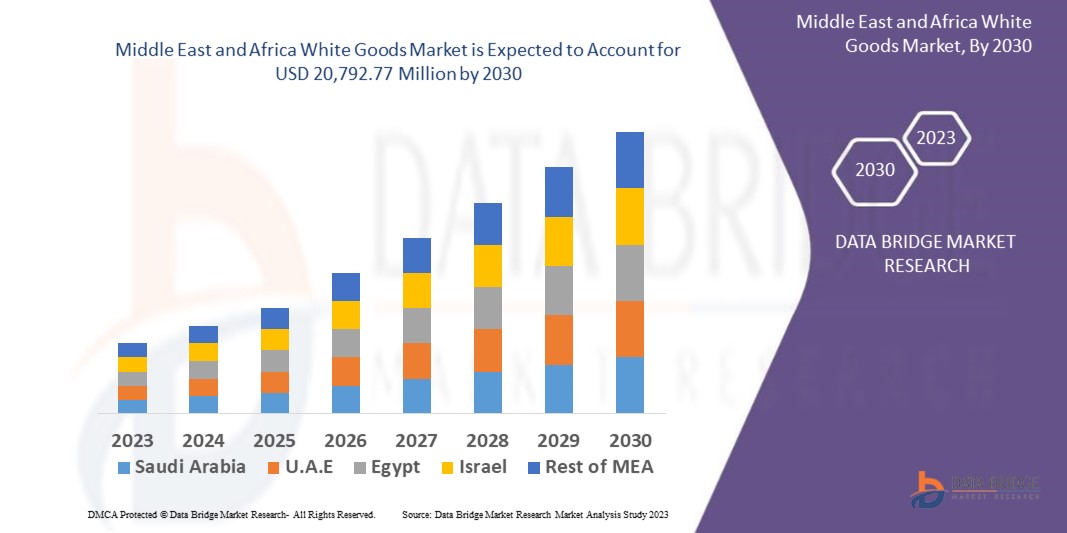
白物家電市場分析
白物家電市場は、冷蔵庫の最新モデルへの需要増加に牽引され、堅調な成長を遂げています。中東およびアフリカの白物家電産業が拡大を続ける中、医療施設における洗濯機の消費も増加しています。省エネ家電への政府の取り組みや、新技術を搭載した新興家電ブランドが急速に台頭し、市場にビジネスチャンスをもたらしています。冷蔵庫のメンテナンス費用の高さも市場動向に影響を与えています。全体として、市場は今後も拡大を続け、変化する産業ニーズに対応するためのイノベーションと持続可能性に重点が置かれると予想されます。
白物家電市場規模
中東およびアフリカの白物家電市場規模は、2024年に335億4,000万米ドルと評価され、2025年から2032年の予測期間中に5.26%のCAGRで成長し、2032年には505億5,000万米ドルに達すると予測されています。市場価値、成長率、セグメンテーション、地理的範囲、主要プレーヤーなどの市場シナリオに関する洞察に加えて、データブリッジ市場調査がまとめた市場レポートには、専門家による詳細な分析、患者の疫学、パイプライン分析、価格分析、規制の枠組みも含まれています。
白物家電市場の動向
「組織化された小売店のシェア増加」
小売店の増加により、消費者はいつでもどこでも簡単に製品にアクセスできるようになりました。消費者は最寄りの小売店に直接アクセスして、購入したい特定の製品について問い合わせることができます。小売店は製品のプロモーション手段として機能します。ブランドは通常、消費者を引き付ける方法として小売店に大きな看板を設置します。小売店の数が増えるということは、特定の製品の市場シェアが拡大していることを意味し、その製品の販売が増加することを示唆しています。また、市場プレーヤーは大きな市場シェアをカバーするために、より多くの小売店を展開しています。小売業者は、単一ブランドの小売店の代わりに、同じ小売店で異なるブランドの製品を販売するという新しい戦略を採用しています。これにより顧客に選択肢が増え、購入の機会が増えるため、あるブランドの製品に満足しない顧客は他のブランドに切り替えることができます。例えば、2024年10月にForbes Middle Eastが発表した記事によると、中東の小売業界は力強い経済成長と消費者所得の増加によって繁栄してきましたが、現在では成熟期を迎えており、多くのグローバル小売業者は横ばいまたはマイナス成長を経験しています。テクノロジーが消費者の期待を変える中、大手小売業者はeコマースへの投資を通じてデジタルプレゼンスを強化しています。この地域の小売業界は多様でありながら集中化しており、特に高級品分野では、国際的なブランドのフランチャイズを保有する少数の家族経営企業が主流となっています。この記事では、従業員数、地理的範囲、ブランドの多様性、店舗面積などの要素を考慮し、最大の小売チェーンを取り上げています。
さらに、認知度の高まり、ライフスタイルの変化、そして製品へのアクセスの容易さにより、顧客は小売店を利用するようになりました。組織化された小売店のシェア拡大は白物家電の売上増加につながり、中東およびアフリカの白物家電市場の成長を牽引すると期待されています。
レポートの範囲と白物家電市場のセグメンテーション
|
属性 |
白物家電の主要市場インサイト |
|
対象セグメント |
|
|
対象国 |
サウジアラビア、UAE、エジプト、カタール、クウェート、オマーン、アルジェリア、モロッコ、チュニジア、リビア、その他の中東およびアフリカ |
|
主要な市場プレーヤー |
サムスン(韓国)、LGエレクトロニクス(韓国)、ワールプール(米国)、ハイアールグループ(中国)、ロバート・ボッシュGmbH(ドイツ)、ABエレクトロラックス(スウェーデン)、ニカイグループ(UAE)、スーパーゼネラル(UAE)、三菱電機(日本)、ミドルビーコーポレーション(米国) |
|
市場機会 |
|
|
Value Added Data Infosets |
In addition to the insights on market scenarios such as market value, growth rate, segmentation, geographical coverage, and major players, the market reports curated by the Data Bridge Market Research also include depth expert analysis, patient epidemiology, pipeline analysis, pricing analysis, and regulatory framework. |
White Goods Market Definition
White goods refer to large household appliances primarily designed for daily use in domestic settings. These typically include refrigerators, washing machines, ovens, dishwashers, and air conditioners. Named for their traditional white enamel finish, these appliances play a crucial role in enhancing convenience, efficiency, and comfort in homes. White goods are generally characterized by their larger size and capacity compared to smaller appliances, often requiring permanent installation. They contribute significantly to modern lifestyles by automating tasks such as food preservation, laundry, and cooking. In recent years, the definition has expanded to include energy-efficient and smart appliances that integrate technology for improved functionality and user experience. Overall, white goods are essential components of contemporary household life.
White Goods Market Dynamics
Drivers
- Inclination towards Advanced Model of Refrigerators
Technological awareness in the refrigerators has increased the market of advanced models of refrigerators. Advance models of refrigerators include modern features such as automatic temperature controls, chiller, door style and sensors for lighting, among others. The market is inclining towards advanced model due to rise in buying power, technological advancement and smart refrigerators which can be controlled by smart phones and Wi-Fi.
In recent years, refrigerators are modified in such a way that they consume less electricity and save power for customers. In other words, power efficient models are highly in demand as they are cost effective and consume less energy. Moreover, smart refrigerators have inclined the market towards advanced refrigerators which are installed with the Wi-Fi feature and can be controlled through smart devices such as smart phones and laptops. Smart refrigerators are highly in demand as it can be controlled from any location through the mobile and only thing which it requires is an internet connection.
Wi-Fiに加え、冷蔵庫には様々なセンサーデバイスが搭載されています。冷蔵庫に搭載されているセンサーデバイスは、指紋センサー(タッチするだけで誰でも冷蔵庫の扉を開けられる)や、熱センサー(必要に応じて温度を下げる)など、様々な機能を備えています。また、抗菌冷蔵も先進的な冷蔵庫の重要な特徴の一つであり、市場を先進的な冷蔵庫へと押し上げています。冷蔵庫の縁には銀色のラインがコーティングされており、冷蔵庫の開閉を繰り返す際に侵入する微生物が、冷蔵庫内の有機食品に悪影響を与えるのを防ぎます。
例えば、
2024年5月、ヒンドゥスタン・タイムズ紙の記事によると、現代の冷蔵庫は、二重冷却システムや空気清浄技術といった高度な機能により、食品の保存方法を変革しています。従来の冷蔵庫とは異なり、これらの革新的な設計は、最適な鮮度を保つために独立した冷却ゾーンを備えています。フレンチドア冷蔵庫などの構成は、広々とした冷蔵室と便利な引き出し式冷凍庫を備え、スタイルと機能性を兼ね備えています。調節可能な棚とスマートな接続機能により、大家族や高級家電を求める人にも適しています。これらの冷蔵庫は、収納スペースを最大限に活用するだけでなく、キッチンの美観も向上させるため、利便性とエレガンスを重視する人に最適です。
したがって、冷蔵庫モデルの自動化と進歩により白物家電の需要が増加し、中東およびアフリカの白物家電市場の成長を促進すると予想されます。
- 医療施設における洗濯機の消費量の増加
洗濯機は衣類の汚れを落とすために使われます。病院では、医療の観点から洗濯サービスが重要です。病院には毎日何百人もの患者が様々な病気で入院しており、彼らの衣類は細菌や病原菌の影響で汚染されてしまいます。
一般的に、病院では高温水用に設計された洗濯機を使用しています。一般的に、衣類は細菌や病原菌を除去するため、60~70度程度の温度で洗濯されます。衣類は通常、洗濯機の中で少なくとも10分間放置されます。
洗濯機は、人から人へと感染する可能性のある感染症の抑制に役立ちます。病院の衛生基準を維持するためには、洗濯機が不可欠です。衣類の洗浄時には、メチシリン耐性黄色ブドウ球菌などの細菌や微生物を殺菌できる特殊な洗剤を使用することで、交差感染のリスクを回避しています。
感染した衣類を毎回処分するのは不可能です。感染症の付着した衣類を捨てることは、周囲を汚染し、土壌や大気汚染につながります。衣類を洗濯することは、これらの問題に対処するための最適な方法です。そのため、病院では洗濯機の需要が高まっています。
例えば、
2022年5月、DANUBE INTERNATIONAL(無断複写・転載を禁じます)が発表した記事によると、病院では高い衛生基準を維持することが不可欠であり、リネンや衣類による感染を防ぐためには、効率的なランドリー機器の設置が不可欠です。適切に設計されたランドリー設備は、水とエネルギーの使用を最適化し、経営上の意思決定に影響を与えます。重要な考慮事項としては、汚染への配慮、適切な素材の選択、ランドリー業務の効率的な管理などが挙げられます。作業スケジュールを立てることで毎日の清潔さを確保し、洗濯脱水機やバリアウォッシャーなどの高度な機器は効率を高め、細菌との接触を最小限に抑えます。全体として、ランドリー機器の選択は、施設の衛生要件と運用ニーズに適合している必要があります。
結論として、地域および各国における患者数および病院数の増加も、病院における洗濯機の消費増加の要因の 1 つとして機能しており、中東およびアフリカの白物家電市場の成長を促進することが期待されます。
機会
- 省エネ家電に向けた政府の取り組み
スマート家電には、高度な家庭・キッチン自動化技術が含まれており、各国の住宅における機械、暖房、冷房、照明システムの監視・制御方法を改善し、システムの効率向上に貢献しています。近年、中東およびアフリカ諸国の政府は、長期的にエネルギー効率を向上させるスマート冷蔵庫などの革新的で高度な家庭用・キッチン家電の開発に向けて、様々な研究活動と投資を行っています。
スマートホーム・イニシアチブは、革新的な技術を導入し、省エネの機会を特定することで、政府が真の変化をもたらすことを可能にします。政府はスマートホーム・イニシアチブを通じて、住宅と商業ビルの両方においてエネルギー性能管理を改善するための様々な対策を継続的に講じています。これにより、インテリジェントなキッチンやホームオートメーションシステムの導入を通じて、環境フットプリントとエネルギーコストの削減が実現します。
エネルギー効率の向上は、持続可能な開発を促進するエネルギー資源の効率的な利用を意味します。中東・アフリカにおける経済成長とそれに伴う所得増加を背景に、この地域の不動産セクターはここ数年で劇的な変革を遂げました。その中心にあるのは中東・アフリカ諸国の政府政策であり、不動産業界の成長に重要な刺激を与えるとともに、中小投資家による不動産セクターへの投資を奨励しています。
例えば、
2021年6月、Zawyaの記事によると、中東諸国はエネルギー効率に重点を置いたグリーン経済を推進するための国家行動計画を実施している。エジプト・ビジョン2030やサウジアラビア・ビジョン2030といったイニシアチブは、気候変動対策とエネルギー効率の向上を目指している。
さらに、排出量の少ない家庭用・キッチン家電の製造に向けた持続可能性への開発投資も、白物家電の需要増加に寄与しています。これは、中東およびアフリカの白物家電市場の成長機会となることが期待されます。
- 新技術を搭載した急速に台頭する電子機器ブランド
エレクトロニクス部門は、一般的に民生用電子機器、電力会社、一般電子機器に分類されます。この部門の成長の大部分は、主にスマートホームおよびキッチン家電を含む民生用電子機器によって牽引されています。スマートフォン、人工知能、音声認識技術への需要の高まり、そして旧式家電や手動家電の買い替えサイクルの長期化が、スマート電子機器の消費を促進しています。
競争が激しく成熟した家電業界は、長年にわたり製品イノベーションに重点を置いてきました。新製品開発を積極的に行うことで製品イノベーションが加速し、ひいてはブランド化を促進します。製品イノベーションは、エレクトロニクス業界の環境変化に効果的であり、現在の消費者需要パターンに合わせた新たなブランドを生み出します。家電製品セクターでは、新興技術に注力する企業が白物家電市場の大幅な成長を牽引しています。
スマート家電業界におけるブランドイノベーションのトレンドは、成長機会をもたらす最も競争が激しく成熟した企業戦略の一つと見られています。特に競争の激しい市場においては、様々な電子機器メーカーが多くの偽ブランドに遭遇しています。需要の変化に伴い、様々な家電製品の新ブランドが集結し、白物家電市場を含む家電業界全体に新たなビジネスチャンスが生まれるでしょう。
例えば、
In September, 2023 according to an article published by Evolute, the electronics manufacturing services (EMS) sector is rapidly evolving due to emerging technologies that enhance product design and production. Key innovations include the Internet of Things (IoT), artificial intelligence (AI), robotics, 5G, augmented and virtual reality, 3D printing, and sustainable manufacturing practices. These advancements enable EMS providers to produce more efficient, miniaturized components, improve quality control, and adopt eco-friendly practices. Additionally, technologies like blockchain and advanced materials are enhancing supply chain transparency and product functionality. As these trends continue, EMS companies are positioned to lead innovation in the electronics industry.
Furthermore, rising e-commerce activities and advanced technology development in manufacturing electronic goods in the smart home appliance industry have increased the demand for white goods. This, in turn, is expected to enhance the growth of the Middle East and Africa white goods market.
Restraints/Challenges
- Low Replacement Rate due to Life Span of Refrigerators
Refrigerators are built to last, typically functioning well for 10 to 15 years. This durability means consumers are less likely to replace them frequently. In the MEA region, many households prioritize the longevity of their appliances, focusing on repairs rather than replacements when issues arise. This trend slows market turnover, as a stable inventory of working refrigerators means fewer new sales.
Moreover, economic conditions in MEA countries significantly influence consumer behavior. In many African nations, a large portion of the population is price-sensitive, often due to lower disposable incomes and economic instability. As a result, consumers tend to repair their existing refrigerators instead of buying new ones, as repairs are usually more affordable than the cost of a new appliance. This preference is common in both urban centers and rural areas, where economic constraints dictate household spending.
Cultural attitudes toward consumption also impact replacement rates. In many MEA societies, there is a strong inclination to hold onto household items for extended periods, valuing reliability and durability over trends. This cultural preference results in a slower adoption of new refrigerator models, as consumers may view replacing appliances as unnecessary, especially if their current units still function adequately.
The low replacement rate creates challenges and opportunities for the white goods market. A stagnant replacement cycle can limit revenue growth for manufacturers, as fewer new units are sold. However, this situation also opens up opportunities for businesses focused on maintenance and repair services. Companies that offer extended warranties, service contracts, or parts for aging models may find a lucrative market among consumers reluctant to upgrade, ensuring steady revenue from service rather than new sales.
To counteract the effects of low replacement rates, manufacturers can adopt strategies centered on innovation and sustainability. Introducing energy-efficient models with advanced features can motivate consumers to upgrade. Modern refrigerators that promise lower electricity bills, better food preservation, and smart technology may appeal to consumers looking for long-term value. Effective marketing strategies that highlight these benefits can help shift consumer attitudes towards newer models, encouraging more frequent replacements.
For instance,
According to an article published by Truearth, refrigerators are essential household appliances, and maximizing their lifespan is crucial for making the most of your investment. Typically, refrigerators last between 10 to 20 years, with most averaging 14 to 17 years. To extend their durability, choose high-quality, energy-efficient models, perform regular maintenance, and maintain optimal temperature settings. Managing door seals, avoiding overloa, and inspecting components can also help. Be mindful of your refrigerator's condition; signs like frequent repairs or inefficient cooling may indicate it's time for a replacement. Proactive care ensures your fridge remains energy-efficient and long-lasting
The low replacement rate of refrigerators in the MEA region significantly impacts the growth of white goods market. This phenomenon poses challenges to sales growth, as fewer new units are purchased, limiting revenue potential for manufacturers. Additionally, the extended lifespan of these appliances, influenced by economic factors and cultural attitudes, contributes to a stagnant replacement cycle. Understanding these dynamics is essential for stakeholders in the market, as they must navigate a landscape shaped by unique consumer behaviors and preferences. The ongoing trends highlight the complexity of engaging consumers in a market where longevity often outweighs the desire for new purchases.
- Difficulties in Recycling Waste Materials
The Middle East and Africa white goods market faces significant challenges in recycling waste materials, particularly as the demand for household appliances continues to rise. This growth is accompanied by an increase in electronic waste (e-waste), with white goods such as refrigerators, washing machines, and ovens contributing substantially to the environmental burden.
One of the primary challenges is the lack of structured waste management systems across many MEA countries. Inadequate infrastructure means that e-waste is often improperly disposed of, leading to environmental pollution and health risks. Many nations lack dedicated recycling facilities for white goods, resulting in appliances ending up in landfills, where hazardous materials can leach into the soil and water systems. The informal waste collection sector often dominates, complicating the ability to ensure that materials are recycled effectively and safely.
Technical complexities also hinder recycling efforts. White goods are made from various materials, including metals, plastics, and refrigerants, each requiring specialized processes for extraction and recycling. Many local recycling facilities in the MEA region lack the technology and expertise needed to handle these materials properly. Consequently, valuable resources remain unrecovered, while harmful substances pose risks to both the environment and public health.
Economic factors further complicate the recycling landscape. Establishing and maintaining recycling facilities can be prohibitively expensive, deterring investment in proper waste management solutions. Additionally, the market for recycled materials is underdeveloped, providing minimal financial incentives for businesses to engage in recycling operations. This lack of economic motivation undermines efforts to create a circular economy where materials are reused and recycled effectively.
Regulatory frameworks regarding waste management and recycling are often weak or non-existent in many MEA countries. Without robust regulations and enforcement mechanisms, there is little accountability for manufacturers and consumers regarding the disposal of white goods. While some governments are starting to recognize the need for policies that promote responsible recycling and waste management, progress varies significantly across the region.
For instance,
In April, 2022 according to an article published by Colorado, recycling is often seen as a straightforward solution to plastic waste, but the industry faces several challenges that consumers can help alleviate. Many people lack knowledge about what can be recycled, leading to contamination of recyclable materials. Workers in the recycling sector face safety hazards, and some cities lack the resources for effective recycling services. Additionally, low market demand for recycled materials makes it less appealing for businesses to invest in recycling. However, recycling remains crucial for addressing plastic pollution, and individuals can contribute by educating themselves and supporting products made from recycled materials
This market report provides details of new recent developments, trade regulations, import-export analysis, production analysis, value chain optimization, market share, impact of domestic and localized market players, analyses opportunities in terms of emerging revenue pockets, changes in market regulations, strategic market growth analysis, market size, category market growths, application niches and dominance, product approvals, product launches, geographic expansions, technological innovations in the market. To gain more info on the market contact Data Bridge Market Research for an Analyst Brief, our team will help you take an informed market decision to achieve market growth.
White Goods Market Scope
The market is segmented on the basis of product. The growth amongst these segments will help you analyse meagre growth segments in the industries and provide the users with a valuable market overview and market insights to help them make strategic decisions for identifying core market applications.
Product
- Refrigerator
- Air Conditioners
- Washing Machines
- Cooker
- Ovens
- Dishwashing Machines
- Water Dispenser/RO System
- Fans
- Electric & Gas Heaters
- Freezers
- Personal Care
- Smart Medical Device
- Others
White Goods Market Regional Analysis
The market is analysed and market size insights and trends are provided by country and product as referenced above.
The countries covered in the market report are Saudi Arabia, U.A.E., Egypt, Qatar, Kuwait, Oman, Algeria, Morocco, Tunisia, Libya, and Rest of Middle East and Africa.
Saudi Arabia is expected to dominate the market due to growing demand for soaring temperature and humidity levels have increased the demand of air conditioners, and rising shares of organized retail stores.
The country section of the report also provides individual market impacting factors and changes in regulation in the market domestically that impacts the current and future trends of the market. Data points such as down-stream and upstream value chain analysis, technical trends and porter's five forces analysis, case studies are some of the pointers used to forecast the market scenario for individual countries. Also, the presence and availability of global brands and their challenges faced due to large or scarce competition from local and domestic brands, impact of domestic tariffs and trade routes are considered while providing forecast analysis of the country data.
White Goods Market Share
The market competitive landscape provides details by competitor. Details included are company overview, company financials, revenue generated, market potential, investment in research and development, new market initiatives, global presence, production sites and facilities, production capacities, company strengths and weaknesses, product launch, product width and breadth, application dominance. The above data points provided are only related to the companies' focus related to market.
White Goods Market Leaders Operating in the Market Are:
- SAMSUNG (South Korea)
- LG Electronics (South Korea)
- Whirlpool Corporation (U.S.)
- Haier Group (China)
- Robert Bosch GmbH (Germany)
- AB Electrolux (Sweden)
- Nikai Group (U.A.E)
- Super General (U.A.E)
- Mitsubishi Electric Corporation (Japan)
- The Middleby Corporation (U.S.)
Latest Developments in White Goods Market
- In May 2024, LG Electronics unveiled its latest home entertainment lineup for the Middle East and Africa (MEA) region, showcasing cutting-edge technology and innovative features. The new range includes OLED TVs with enhanced picture quality, immersive audio experiences, and AI-driven capabilities that elevate the viewing experience. LG's commitment to sustainability is also evident, as the company incorporates eco-friendly practices in its production processes. This new lineup is designed to meet the evolving demands of consumers in the MEA region, positioning LG as a leader in the home entertainment sector
- In September 2024, LG Electronics launched its innovative WashTower in Qatar, revolutionizing laundry convenience with a compact and space-saving design. The WashTower combines a high-efficiency washer and dryer in a single vertical unit, allowing for seamless laundry management without compromising performance. Equipped with advanced technology such as AI DD™ for optimized washing and drying cycles, the WashTower enhances user experience while ensuring optimal fabric care. This launch underscores LG's commitment to meeting the diverse needs of consumers in the Middle East, offering innovative solutions that adapt to modern lifestyles
- In April 2024, Arçelik has completed the acquisition of Whirlpool's subsidiaries in Morocco and the UAE, along with its operations in the MENA region. This move is part of Arçelik's strategy to expand its presence and strengthen its market position in the home appliances sector. The acquisition is expected to enhance Arçelik’s portfolio and operational capabilities in these key markets
- In March 2023, LG Electronics Middle East and Africa (MEA) launched a unique range of innovative home appliance products designed to meet the diverse needs of consumers in the region. This new lineup includes advanced technologies such as AI-powered washing machines and energy-efficient refrigerators, aimed at enhancing convenience and sustainability in daily household tasks. LG emphasizes smart features that integrate seamlessly into modern lifestyles, offering users greater control and efficiency. This initiative reflects LG’s commitment to innovation and consumer satisfaction in the home appliance market, further solidifying its position as a leader in the region
- In June 2022, Samsung announced an extended warranty policy for its home appliances in the UAE, offering a three-year warranty for all customers. This initiative reflects Samsung's commitment to enhancing customer satisfaction and ensuring confidence in the durability and reliability of its products
- 2021年9月、GEアプライアンスは、食器洗い機の内部と表面の細菌の増殖を抑えるマイクロバン抗菌技術を搭載したGEプロファイルウルトラフレッシュシステム食器洗い機を発表しました。
SKU-
世界初のマーケットインテリジェンスクラウドに関するレポートにオンラインでアクセスする

- インタラクティブなデータ分析ダッシュボード
- 成長の可能性が高い機会のための企業分析ダッシュボード
- カスタマイズとクエリのためのリサーチアナリストアクセス
- インタラクティブなダッシュボードによる競合分析
- 最新ニュース、更新情報、トレンド分析
- 包括的な競合追跡のためのベンチマーク分析のパワーを活用
調査方法
データ収集と基準年分析は、大規模なサンプル サイズのデータ収集モジュールを使用して行われます。この段階では、さまざまなソースと戦略を通じて市場情報または関連データを取得します。過去に取得したすべてのデータを事前に調査および計画することも含まれます。また、さまざまな情報ソース間で見られる情報の不一致の調査も含まれます。市場データは、市場統計モデルと一貫性モデルを使用して分析および推定されます。また、市場シェア分析と主要トレンド分析は、市場レポートの主要な成功要因です。詳細については、アナリストへの電話をリクエストするか、お問い合わせをドロップダウンしてください。
DBMR 調査チームが使用する主要な調査方法は、データ マイニング、データ変数が市場に与える影響の分析、および一次 (業界の専門家) 検証を含むデータ三角測量です。データ モデルには、ベンダー ポジショニング グリッド、市場タイムライン分析、市場概要とガイド、企業ポジショニング グリッド、特許分析、価格分析、企業市場シェア分析、測定基準、グローバルと地域、ベンダー シェア分析が含まれます。調査方法について詳しくは、お問い合わせフォームから当社の業界専門家にご相談ください。
カスタマイズ可能
Data Bridge Market Research は、高度な形成的調査のリーダーです。当社は、既存および新規のお客様に、お客様の目標に合致し、それに適したデータと分析を提供することに誇りを持っています。レポートは、対象ブランドの価格動向分析、追加国の市場理解 (国のリストをお問い合わせください)、臨床試験結果データ、文献レビュー、リファービッシュ市場および製品ベース分析を含めるようにカスタマイズできます。対象競合他社の市場分析は、技術ベースの分析から市場ポートフォリオ戦略まで分析できます。必要な競合他社のデータを、必要な形式とデータ スタイルでいくつでも追加できます。当社のアナリスト チームは、粗い生の Excel ファイル ピボット テーブル (ファクト ブック) でデータを提供したり、レポートで利用可能なデータ セットからプレゼンテーションを作成するお手伝いをしたりすることもできます。











