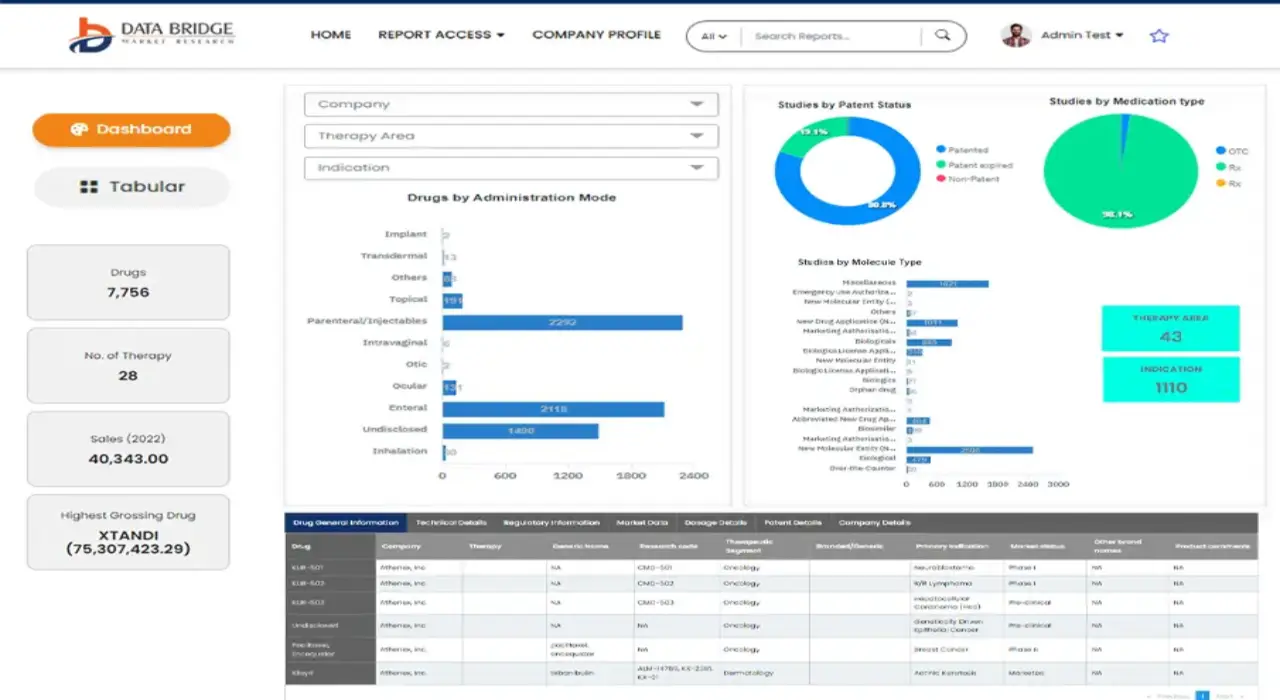
Segmentação do mercado global de combinações antidiabéticas por classe de medicamento (combinação de tiazolidinediona e sulfonilureia, combinação de tiazolidinediona e biguanida e outras), via de administração (oral, injetável e outras), usuários finais (hospitais, assistência domiciliar, centros especializados e outros) e canal de distribuição (farmácia hospitalar, farmácia online e farmácia de varejo) - Tendências e previsões do setor até 2033.
O que é o tamanho do mercado de combinações antidiabéticas e taxa de crescimento
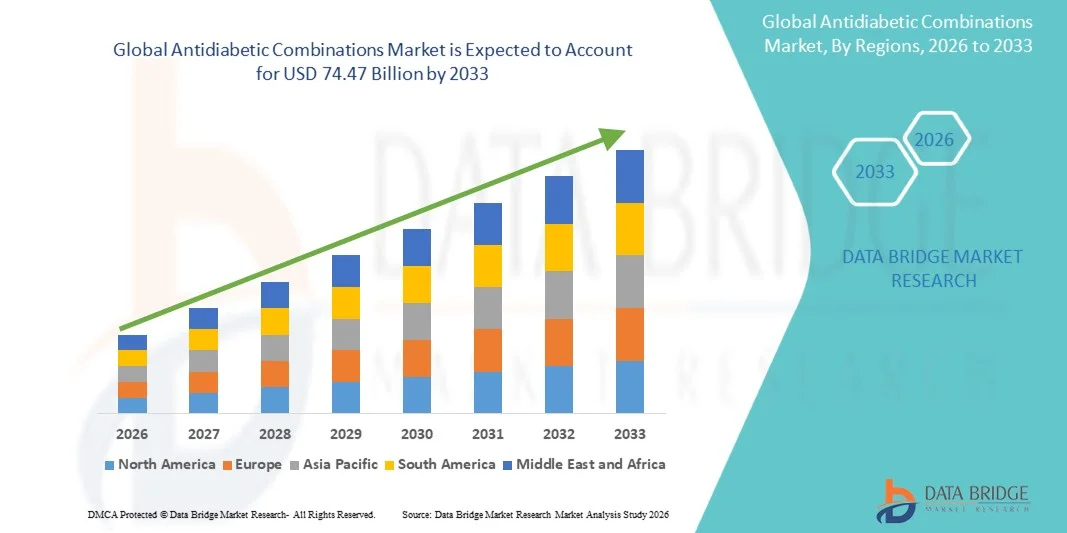
- De acordo com Data Bridge Market Research Analysis the as combinações antidiabéticas globais foram avaliadas emUSD 45.00 mil milhões em 2025e espera-se alcançar74,47 mil milhões de USD até 2033, em umaCAGR de 6,50%durante o período de previsão
- O crescimento do mercado é amplamente alimentado pela prevalência crescente de diabetes em todo o mundo, juntamente com a necessidade crescente de um melhor controle glicêmico através de terapias multimecanismo que combinam dois ou mais agentes antidiabéticos em uma única formulação
- Além disso, a crescente preferência clínica por terapias combinadas que melhoram a adesão ao tratamento, reduzem a carga de comprimidos e melhoram os resultados terapêuticos está acelerando a adoção em ambas as populações de diabetes tipo 1 (em casos selecionados) e tipo 2, particularmente em idosos demográficos e regiões urbanizadas
Tamanho e previsão do mercado
- Valor de mercado global (2025):45,00 mil milhões de dólares
- Valor de mercado previsto (2033):74,47 mil milhões de USD
- Previsões CAGR (2026-2033):6.50%
Quais são os principais destinos do mercado de combinações antidiabéticas
- As terapias de combinação antidiabética, que integram dois ou mais agentes redutores de glicose em uma única formulação, são componentes cada vez mais vitais do manejo moderno do diabetes tanto no contexto ambulatorial quanto clínico, devido ao seu melhor controle glicêmico, redução da carga de comprimidos e melhor adesão dos pacientes, particularmente entre os pacientes com diabetes tipo 2, que representam a maior parcela da população tratada globalmente.
- A crescente demanda por combinações antidiabéticas é principalmente alimentada pela crescente prevalência global de diabetes, pela crescente ênfase clínica na intensificação precoce da terapia e pelo aumento da preferência por combinações de doses fixas que melhorem a adesão ao tratamento ao abordar múltiplas vias fisiopatológicas simultaneamente.
- A América do Norte dominou o mercado de combinações antidiabéticas com a maior parcela de receita de 40% em 2025, apoiada pela alta prevalência de diabetes, infraestrutura avançada de saúde, fortes quadros de reembolso e adoção precoce de terapias inovadoras, com os EUA liderando em volumes de prescrição impulsionados pelo uso generalizado de medicamentos combinados em ambientes hospitalares e de varejo
- Espera-se que a Ásia-Pacífico seja a região de crescimento mais rápido no mercado de combinações antidiabéticas durante o período de previsão, devido a uma população diabética em rápida expansão, aumentando a urbanização, melhorando o acesso aos cuidados de saúde e aumentando a conscientização das terapias combinadas em economias emergentes, como Índia e China
- O segmento oral dominou o mercado de combinações antidiabéticas com market share de 60,4% em 2025, impulsionado pela forte preferência médica por combinações baseadas em metformina, facilidade de administração, custo-efetividade e maior adesão dos pacientes em comparação com terapias combinadas injetáveis.
Âmbito do relatório e combinações antidiabéticas Segmentação do mercado
|
Atributos |
Combinações Antidiabéticas Principais Perspectivas do Mercado |
|
Segmentos Cobertos |
|
|
Países abrangidos |
América do Norte
Europa
Ásia- Pacífico
Médio Oriente e África
América do Sul
|
|
Jogadores do mercado chave |
|
|
Oportunidades de Mercado |
|
|
Informações sobre o Valor Adicionado |
|
Qual é a tendência chave no mercado de combinações antidiabéticas
“Adoção crescente de terapias combinadas de dose fixa com classes avançadas de drogas”
- Uma tendência significativa e acelerada no mercado global de combinações antidiabéticas é a adoção crescente de terapias de combinação de dose fixa (DCF) que incorporam classes avançadas de medicamentos, como inibidores do SGLT2, inibidores da DPP-4 e agonistas dos receptores do GLP-1 para melhorar o controle glicêmico e a adesão do paciente.
- Por exemplo, associações como empagliflozina + metformina e sitagliptina + metformina são amplamente prescritas, permitindo o controlo da glucose multimecanismo com uma dose única diária, simplificando assim os regimes de tratamento para doentes com diabetes tipo 2.
- A integração de mecanismos farmacológicos complementares permite um melhor controle dos níveis glicêmicos, abordando também comorbidades associadas, como risco cardiovascular, manejo do peso e proteção renal, tornando essas combinações clinicamente preferenciais nas modernas diretrizes de tratamento.
- Além disso, o desenvolvimento de formulações uma vez ao dia e de liberação prolongada está aumentando a conveniência e adesão do paciente, enquanto as empresas farmacêuticas estão investindo em novas combinações que visam múltiplas vias metabólicas simultaneamente
- Além disso, a adoção crescente de estratégias de escalada de terapia orientadas por diretrizes está incentivando o uso mais precoce de regimes combinados, uma vez que os profissionais de saúde visam prevenir a progressão da doença e complicações a longo prazo de forma mais eficaz
- Essa tendência de terapias combinadas mais abrangentes, baseadas em evidências e centradas no paciente está reformulando as expectativas de tratamento no cuidado ao diabetes, uma vez que os profissionais de saúde favorecem cada vez mais regimes que otimizam a eficácia, a segurança e o gerenciamento de doenças em longo prazo em diversas populações de pacientes.
Combinações Antidiabéticas Dinâmica do Mercado
Controlador
“Prevalência crescente de diabetes e preferência crescente para terapias combinadas”
- A crescente prevalência global de diabetes, aliada a uma crescente mudança clínica em direção à terapia combinada precoce para melhor controle glicêmico, é um fator importante para o aumento da demanda por combinações antidiabéticas.
- Por exemplo, a adoção generalizada de combinações à base de metformina como terapia de primeira linha e de segunda linha reflete a evolução das diretrizes de tratamento que recomendam abordagens multi-fármacas quando a monoterapia não atinge metas glicêmicas adequadas
- À medida que os doentes evoluem através de diferentes fases da diabetes, as terapêuticas combinadas proporcionam uma maior eficácia, visando múltiplas vias fisiológicas, incluindo resistência à insulina, absorção de glucose e reabsorção da glucose renal.
- Além disso, a crescente conscientização entre profissionais de saúde e pacientes sobre os benefícios das terapias combinadas, tais como redução da complexidade do tratamento, melhoria da adesão e melhores resultados clínicos, está apoiando o crescimento do mercado em economias desenvolvidas e emergentes.
- O aumento da carga deobesidadee os transtornos relacionados ao estilo de vida, juntamente com a ampliação do acesso aos serviços de saúde e aos produtos farmacêuticos, vêm contribuindo para a crescente utilização de combinações antidiabéticas na prática clínica de rotina
- Além disso, os avanços na I&D farmacêutica e a introdução contínua de novas combinações de medicamentos estão permitindo abordagens de tratamento mais personalizadas adaptadas aos perfis metabólicos específicos do paciente.
- Além disso, diretrizes clínicas de suporte recomendando terapia combinada em estágios mais precoces do manejo da doença estão acelerando ainda mais a adoção dessas terapias em ambientes hospitalares e ambulatoriais.
Restrição/Desafio
“Preocupações de segurança, efeitos adversos e alto custo das terapias combinadas”
- As preocupações em torno do risco potencial de efeitos adversos, interações medicamentosas e perfis de segurança a longo prazo de combinações multi-droga antidiabéticas representam um desafio significativo para a adoção mais ampla do mercado
- Por exemplo, certas associações envolvendo secretagogos de insulina podem aumentar o risco dehipoglicemia, enquanto outras classes de medicamentos podem estar associadas a efeitos colaterais como distúrbios gastrointestinais ou infecções do trato urinário, limitando seu uso em grupos específicos de pacientes
- Enfrentar essas preocupações de segurança por meio de cuidadosa seleção do paciente, otimização da dose e monitoramento contínuo é essencial para garantir resultados terapêuticos eficazes e seguros, particularmente em populações idosas e comorbidas.
- Além disso, o custo relativamente mais elevado das terapias combinadas de dose fixa marcadas em comparação com a monoterapia ou alternativas genéricas pode funcionar como uma barreira à adoção, especialmente em regiões sensíveis aos preços e em desenvolvimento com cobertura de reembolso limitada
- Embora a disponibilidade de medicamentos genéricos combinados esteja gradualmente melhorando a acessibilidade, a percepção de preços premium de novas terapias combinadas e a cobertura de seguros limitada em algumas regiões podem ainda dificultar a adoção generalizada entre populações de pacientes economicamente constrangidas
- Além disso, a consciência limitada em certos mercados emergentes relativamente aos benefícios clínicos das terapias de combinação avançadas pode abrandar as taxas de adopção, apesar da sua disponibilidade.
- Além disso, complexidades regulatórias associadas à aprovação de combinações multidose fixa podem atrasar o lançamento do produto e restringir a rápida expansão de terapias inovadoras no mercado global.
Como é segmentado o mercado de combinações antidiabéticas
O mercado é segmentado com base na classe de drogas, via de administração, usuários finais e canal de distribuição.
- Por Classe de Drogas
Com base na classe de fármacos, o mercado de combinações antidiabéticas é segmentado em tiazolidinediona esulfonilureiaassociação, tiazolidinediona e biguanida, entre outros. O segmento de combinação de tiazolidinediona e biguanida dominou o mercado com a maior participação de receita em 2025, impulsionado principalmente pela forte eficácia clínica dos regimes à base de metformina na melhoria da sensibilidade à insulina e redução da produção de glicose hepática. Essas combinações são amplamente prescritas como terapias de primeira linha e segunda linha para o diabetes tipo 2 devido ao seu perfil de segurança comprovado, custo-efetividade e familiaridade médica extensa. O segmento também se beneficia da alta adoção global de combinações de dose fixa contendo metformina, que são recomendadas em múltiplas diretrizes clínicas. Além disso, a disponibilidade de numerosas formulações genéricas e de marca ainda suporta o uso generalizado em mercados desenvolvidos e emergentes.
Espera-se que o segmento “outros”, incluindo combinações como terapias baseadas em inibidores do SGLT2 e terapias baseadas em inibidores do DPP-4, testemunhe a taxa de crescimento mais rápida durante o período de previsão, impulsionada pelo aumento da adoção de novas classes de medicamentos que ofereçam benefícios adicionais, como redução de peso, proteção cardiovascular e vantagens renais. Essas combinações avançadas estão ganhando força entre os profissionais de saúde devido aos seus mecanismos de ação multialvo e melhores resultados clínicos. O aumento dos investimentos em I&D por parte das empresas farmacêuticas e a introdução de combinações triplas inovadoras de dose fixa estão a acelerar ainda mais o crescimento neste segmento. Além disso, a crescente conscientização entre pacientes e médicos sobre os benefícios de novas terapias está contribuindo para sua rápida captação em regiões desenvolvidas e emergentes.
- Por Via de Administração
Com base na via de administração, o mercado de combinações antidiabéticas é segmentado em via oral, injeções e outras. O segmento oral dominou o mercado com a maior parcela de receita de 60,4% em 2025, impulsionada pela ampla preferência pela combinação oral de dose fixa entre pacientes e profissionais de saúde, devido à sua facilidade de administração, maior adesão e natureza não invasiva. As associações orais, particularmente as terapêuticas à base de metformina, são comumente utilizadas como tratamento de primeira linha para a diabetes tipo 2, estando amplamente disponíveis tanto em formas genéricas como de marca. O segmento também se beneficia de menor custo em relação às terapias injetáveis, tornando-o mais acessível em mercados sensíveis aos custos. Além disso, as formulações orais são frequentemente incluídas nas diretrizes de tratamento padrão, reforçando sua posição dominante no mercado.
Espera-se que o segmento de injeções testemunhe a taxa de crescimento mais rápida durante o período de previsão, impulsionada pelo aumento da adoção de terapias combinadas injetáveis, tais como combinações à base de insulina e combinações de agonistas do receptor GLP-1. Essas terapias estão ganhando popularidade devido à sua eficácia superior em pacientes com diabetes avançada ou mal controlada. O aumento da prevalência de obesidade e distúrbios metabólicos vem contribuindo ainda mais para a demanda de combinações injetáveis que ofereçam benefícios tanto no controle glicêmico quanto no manejo do peso. Além disso, os avanços nas tecnologias de entrega de medicamentos, incluindo injeções uma vez por semana e dispositivos de caneta melhorados, estão aumentando a conveniência do paciente e apoiando o crescimento do segmento.
- Por Usuários Finais
Com base nos usuários finais, o mercado de combinações antidiabéticas é segmentado em hospitais, cuidados domiciliares, centros de especialidade, entre outros. O segmento hospitalar dominou o mercado com maior participação de receita em 2025, impulsionado pelo alto volume de diabetes diagnóstico, início do tratamento e manejo de casos complexos que requerem terapias combinadas. Os hospitais servem como pontos primários de cuidado para pacientes com complicações ou diabetes não controlada, onde os médicos frequentemente prescrevem regimes de combinação avançados para um manejo glicêmico eficaz. A disponibilidade de profissionais de saúde especializados e o acesso a uma ampla gama de medicamentos reforçam a dominância desse segmento. Além disso, as farmácias hospitalares garantem a disponibilidade imediata de medicamentos combinados prescritos, contribuindo para maiores taxas de utilização.
Espera-se que o segmento de cuidado domiciliar testemunhe a taxa de crescimento mais rápida durante o período de previsão, impulsionada pela tendência crescente de autogestão do diabetes e pela crescente preferência pelo atendimento ambulatorial. Os pacientes estão cada vez mais gerenciando sua condição no domicílio utilizando terapias combinadas prescritas, apoiadas em ferramentas digitais de saúde, telemedicina e soluções de monitoramento remoto. A conscientização crescente sobre o manejo da doença crônica e a conveniência do tratamento domiciliar estão incentivando a adesão à terapia de longo prazo. Além disso, a expansão dos serviços de saúde domiciliar e a disponibilidade de medicamentos combinados de uso amigável estão contribuindo para o rápido crescimento desse segmento.
- Por Canal de Distribuição
Com base no canal de distribuição, o mercado de combinações antidiabéticas é segmentado em farmácia hospitalar, farmácia on-line e farmácia de varejo. O segmento de farmácia de varejo dominou o mercado com a maior parcela de receita em 2025, impulsionada pela sua ampla acessibilidade, forte presença em áreas urbanas e rurais, e conveniência para os pacientes que necessitam de recarga regular de medicamentos. As farmácias de varejo são, muitas vezes, o principal ponto de compra de medicamentos para doenças crônicas, incluindo combinações antidiabéticas, devido à proximidade e disponibilidade de medicamentos de marca e genéricos. O segmento também se beneficia com cadeias de abastecimento estabelecidas e fortes relações com distribuidores farmacêuticos. Além disso, os farmacêuticos desempenham papel fundamental no aconselhamento do paciente e na adesão medicamentosa, apoiando ainda mais a dominância do segmento.
Espera-se que o segmento de farmácia on-line testemunhe a taxa de crescimento mais rápida durante o período de previsão, impulsionada pela adoção crescente deComércio electrónicoplataformas, serviços digitais de saúde e fornecimentos domiciliares de medicamentos. A crescente penetração na internet, o uso de smartphones e a preferência do consumidor pela compra sem contato estão acelerando a mudança para canais de farmácia online. A conveniência de encomendar medicamentos on-line, juntamente com descontos e modelos de entrega baseados em assinatura, está atraindo um número crescente de pacientes. Além disso, a expansão dos serviços de telemedicina e a integração com as prescrições digitais vêm aumentando a acessibilidade e a confiabilidade das farmácias on-line, contribuindo para seu rápido crescimento.
Que região detém a maior parte do mercado de combinações antidiabéticas
- A América do Norte dominou o mercado de combinações antidiabéticas com a maior parcela de receita de 40% em 2025, apoiada pela alta prevalência de diabetes, infraestrutura avançada de saúde, fortes quadros de reembolso e adoção precoce de terapias inovadoras
- Os doentes e os prestadores de cuidados de saúde na região valorizam muito a eficácia clínica, a melhoria da adesão e o controlo multimecanismo da glucose oferecido pelas terapêuticas antidiabéticas combinadas, particularmente as associações orais de dose fixa, tais como regimes à base de metformina e as associações mais recentes de inibidores de SGLT2 ou DPP-4
- Esta adopção generalizada é ainda apoiada por elevados custos de cuidados de saúde, fortes sistemas de seguro e reembolso, acesso precoce a medicamentos inovadores e presença de empresas farmacêuticas líderes, estabelecendo terapias combinadas como uma abordagem de tratamento preferencial para o tratamento da diabetes tipo 2 em ambientes de cuidados residenciais e hospitalares
U.S. Antidiabético Combinações Introdução ao Mercado
O mercado de combinações antidiabéticas dos EUA capturou a maior participação de receita na América do Norte em 2025, impulsionada pela alta prevalência de diabetes e pela rápida adoção de regimes de tratamento avançados em ambientes de saúde. Pacientes e profissionais de saúde da região priorizam cada vez mais o controle glicêmico efetivo por meio de terapias combinadas de dose fixa que melhoram a adesão e simplificam esquemas complexos de medicamentos. A crescente preferência pela terapia combinada precoce, sustentada por diretrizes clínicas estabelecidas, impulsiona ainda mais o crescimento do mercado. Além disso, a ampla disponibilidade de combinações inovadoras de medicamentos, fortes quadros de reembolso e aprovações contínuas de produtos pelas autoridades reguladoras contribuem significativamente para a expansão do mercado de combinações antidiabéticas nos EUA.
Europa Antidiabética Combinações Visão do Mercado
Prevê-se que o mercado europeu de combinações antidiabéticas se expanda num CAGR substancial ao longo do período de previsão, impulsionado principalmente pelo aumento da carga da diabetes e pela ênfase crescente no tratamento precoce e eficaz da doença. A região se beneficia de sistemas de saúde bem estabelecidos, de fortes marcos regulatórios e da adoção crescente de protocolos de tratamento baseados em evidências que incentivam o uso de terapias combinadas. Os prestadores de cuidados de saúde europeus estão a prescrever cada vez mais combinações de doses fixas para aumentar a adesão dos doentes e reduzir a complexidade do tratamento. Além disso, o crescente envelhecimento da população e o aumento da conscientização sobre o gerenciamento do diabetes estão fomentando a demanda em hospitais, clínicas e ambientes de atenção domiciliar, apoiando o crescimento constante do mercado.
U.K. Antidiabético Combinações Introdução ao Mercado
O mercado de combinações antidiabéticas do Reino Unido está previsto para crescer em um CAGR notável durante o período de previsão, impulsionado pelo aumento da prevalência de diabetes e um forte foco na melhoria dos resultados dos pacientes através de abordagens de terapia combinada. O Serviço Nacional de Saúde (NSH) desempenha um papel crucial na promoção de diretrizes padronizadas de tratamento que incentivem o uso de metformina e outras terapias combinadas. Além disso, o aumento da conscientização das doenças relacionadas ao estilo de vida e a adoção crescente de medidas preventivas de saúde estão contribuindo para a expansão do mercado. A disponibilidade de medicamentos combinados de marca e genéricos, juntamente com redes de distribuição eficientes, suporta ainda mais a acessibilidade e a captação em todo o país.
Alemanha Antidiabética Combinações Introdução ao Mercado
Espera-se que o mercado de combinações antidiabéticas da Alemanha se expanda em um considerável CAGR durante o período de previsão, alimentado por uma alta população diabética e uma forte ênfase em tratamentos médicos avançados baseados em evidências. A infraestrutura de saúde bem desenvolvida da Alemanha e focada na inovação promovem a adoção de novas terapias combinadas que oferecem melhor controle glicêmico e benefícios cardiovasculares. Os médicos no país preferem cada vez mais combinações de dose fixa para aumentar a adesão ao tratamento e otimizar os resultados dos pacientes. Além disso, a presença de empresas farmacêuticas líderes e atividades de pesquisa robustas na assistência ao diabetes contribuem para a disponibilidade e desenvolvimento contínuo de medicamentos combinados inovadores.
Visão do mercado de combinações antidiabéticas Ásia-Pacífico
O mercado de combinações antidiabéticas Ásia-Pacífico está preparado para crescer mais rapidamente no CAGR durante o período de previsão, impulsionado por uma população diabética em rápido aumento, urbanização crescente e melhoria do acesso aos serviços de saúde em países como China, Índia e Japão. A crescente sensibilização da região para a gestão do diabetes e a adopção crescente de abordagens de tratamento modernas estão a aumentar significativamente a procura de terapias combinadas. Além disso, a expansão da infraestrutura de saúde, o aumento da renda disponível e as iniciativas governamentais voltadas para melhorar o manejo de doenças crônicas estão acelerando o crescimento do mercado. A crescente disponibilidade de medicamentos genéricos combinados a preços acessíveis está também a aumentar a acessibilidade numa base de doentes mais ampla.
Japão Antidiabética Combinações Visão do Mercado
O mercado de combinações antidiabéticas do Japão está ganhando força devido ao envelhecimento da população do país, altos padrões de saúde e forte foco em tratamentos médicos avançados. A crescente prevalência de diabetes tipo 2 entre idosos está impulsionando a demanda por esquemas terapêuticos simplificados, como combinações de dose fixa. Os profissionais de saúde japoneses enfatizam a adesão dos pacientes e o manejo de longo prazo da doença, que apoia a adoção de terapias combinadas. Além disso, a inovação contínua em formulações farmacêuticas e a integração de classes avançadas de medicamentos em terapias combinadas estão contribuindo para o crescimento do mercado. A presença de um sistema de saúde altamente desenvolvido garante ainda maior disponibilidade e utilização desses tratamentos.
Índia Antidiabética Combinações Visão do Mercado
O mercado de combinações antidiabéticas da Índia representou uma parcela significativa da receita na Ásia Pacífico em 2025, atribuída à população diabética em rápido crescimento do país, expandindo a classe média e aumentando a conscientização sobre a gestão do diabetes. A Índia é um dos maiores mercados de diabetes a nível mundial, impulsionando uma forte procura de terapias combinadas de fácil acesso e rentável. A utilização generalizada de combinações de doses fixas baseadas em metformina, apoiadas por fabricantes farmacêuticos nacionais e multinacionais, é um factor de crescimento fundamental. Além disso, a expansão da infraestrutura de saúde, o aumento da penetração de farmácias de varejo e on-line e as iniciativas governamentais para melhorar o cuidado às doenças crônicas estão impulsionando o crescimento do mercado em regiões urbanas e semiurbanas.
Quais são as principais empresas no mercado de combinações antidiabéticas
A indústria de Combinações Antidiabéticas é liderada principalmente por empresas bem estabelecidas, incluindo:
- Merck & Co., Inc. (EUA)
- Astellas Pharma Inc. (Japão)
- Sanofi (França)
- Bayer AG (Alemanha)
- Takeda Pharmaceutical Company Limited (Japão)
- Abbott (EUA)
- Novo Nordisk A/S (Dinamarca)
- Eli Lilly and Company (EUA)
- Boehringer Ingelheim International GmbH (Alemanha)
- AstraZeneca PLC (U.K.)
- Pfizer Inc. (EUA)
- Novartis AG (Suíça)
- GSK plc (UK)
- Amgen Inc. (EUA)
- Bristol- Myers Squibb Company (EUA)
- Biocon Limited (Índia)
- Cipla Limited (Índia)
- Dr. Reddy’s Laboratories Limited (Índia)
- Sun Pharmaceutical Industries Limited
Quais são os recentes desenvolvimentos no mercado global de combinações antidiabéticas
- Em setembro de 2025, o Comité dos Medicamentos para Uso Humano (CHMP) da Agência Europeia de Medicamentos recomendou a aprovação de Kyinsu uma combinação de dose fixa de insulina icodec e semaglutido uma vez por semana para adultos com diabetes tipo 2, marcando um marco regulador significativo para as terapias combinadas em cuidados com a diabetes na UE
- Em junho de 2025, Novo Nordisk anunciou planos para apresentar novos dados de portfólio extensivos nas Sessões Científicas ADA 2025, incluindo estudos envolvendo terapias combinadas como semaglutido e IcoSema (uma combinação de insulina basal icodec e semaglutido), destacando o desenvolvimento clínico em curso e a expansão de evidências para regimes de associação
- Em fevereiro de 2025, a Akums Drugs and Pharmaceuticals lançou um comprimido de associação Dapagliflozina + Pioglitazona para o tratamento da diabetes tipo 2, oferecendo uma terapia de dupla ação que simplifica o tratamento e melhora o controle glicêmico além do regime padrão
- Em agosto de 2024, Novo Nordisk divulgou planos para apresentar pedidos de aprovação regulatória para IcoSema (insulin icodec/semaglutide) fora dos EUA após resultados positivos de Fase III, indicando esforços de expansão estratégica global para candidatos a terapia combinada
- Em outubro de 2023, a Akums Drugs and Pharmaceuticals recebeu aprovação da DCGI para uma combinação tripla de medicamentos para diabetes (Sitagliptina + Pioglitazona + Metformin), marcando um marco regulatório para opções avançadas de terapia combinada na Índia
SKU-
Obtenha acesso online ao relatório sobre a primeira nuvem de inteligência de mercado do mundo
- Painel interativo de análise de dados
- Painel de análise da empresa para oportunidades de elevado potencial de crescimento
- Acesso de analista de pesquisa para personalização e customização. consultas
- Análise da concorrência com painel interativo
- Últimas notícias, atualizações e atualizações Análise de tendências
- Aproveite o poder da análise de benchmark para um rastreio abrangente da concorrência
Metodologia de Investigação
A recolha de dados e a análise do ano base são feitas através de módulos de recolha de dados com amostras grandes. A etapa inclui a obtenção de informações de mercado ou dados relacionados através de diversas fontes e estratégias. Inclui examinar e planear antecipadamente todos os dados adquiridos no passado. Da mesma forma, envolve o exame de inconsistências de informação observadas em diferentes fontes de informação. Os dados de mercado são analisados e estimados utilizando modelos estatísticos e coerentes de mercado. Além disso, a análise da quota de mercado e a análise das principais tendências são os principais fatores de sucesso no relatório de mercado. Para saber mais, solicite uma chamada de analista ou abra a sua consulta.
A principal metodologia de investigação utilizada pela equipa de investigação do DBMR é a triangulação de dados que envolve a mineração de dados, a análise do impacto das variáveis de dados no mercado e a validação primária (especialista do setor). Os modelos de dados incluem grelha de posicionamento de fornecedores, análise da linha de tempo do mercado, visão geral e guia de mercado, grelha de posicionamento da empresa, análise de patentes, análise de preços, análise da quota de mercado da empresa, normas de medição, análise global versus regional e de participação dos fornecedores. Para saber mais sobre a metodologia de investigação, faça uma consulta para falar com os nossos especialistas do setor.
Personalização disponível
A Data Bridge Market Research é líder em investigação formativa avançada. Orgulhamo-nos de servir os nossos clientes novos e existentes com dados e análises que correspondem e atendem aos seus objetivos. O relatório pode ser personalizado para incluir análise de tendências de preços de marcas-alvo, compreensão do mercado para países adicionais (solicite a lista de países), dados de resultados de ensaios clínicos, revisão de literatura, mercado remodelado e análise de base de produtos . A análise de mercado dos concorrentes-alvo pode ser analisada desde análises baseadas em tecnologia até estratégias de carteira de mercado. Podemos adicionar quantos concorrentes necessitar de dados no formato e estilo de dados que procura. A nossa equipa de analistas também pode fornecer dados em tabelas dinâmicas de ficheiros Excel em bruto (livro de factos) ou pode ajudá-lo a criar apresentações a partir dos conjuntos de dados disponíveis no relatório.