


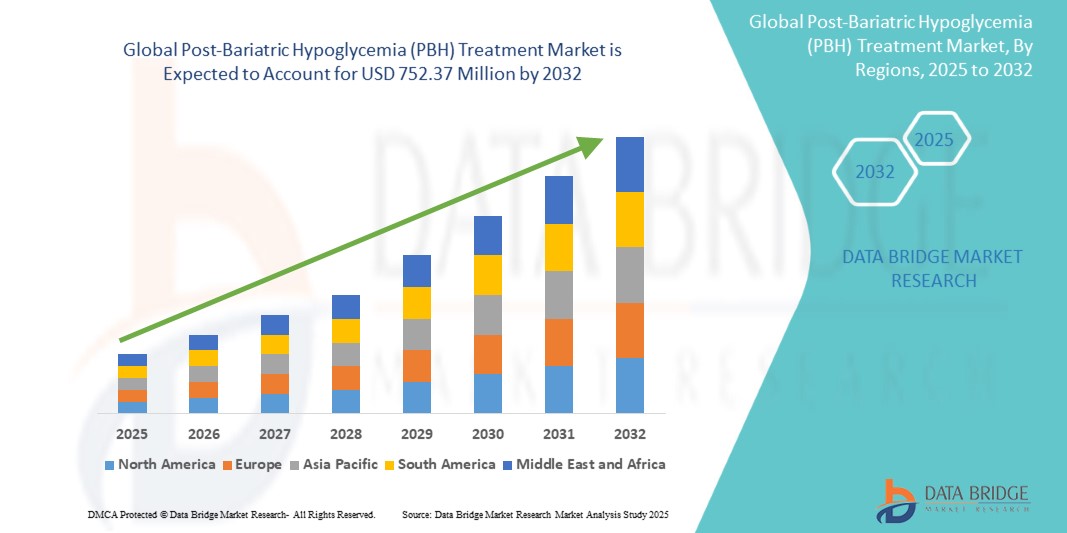
Post-Bariatric Hypoglycemia (PBH) Treatment Market Size
- The global post-bariatric hypoglycemia treatment market size was valued at USD 415.63 million in 2024 and is expected to reach USD 752.37 million by 2032, at a CAGR of 7.7% during the forecast period
- This growth is driven by factors such as the increasing number of bariatric surgeries, growing awareness of PBH among patients and clinicians, and the development of targeted pharmacological therapies
Post-Bariatric Hypoglycemia (PBH) Treatment Market Analysis
- post-bariatric hypoglycemia (PBH) is a rare but serious complication that can occur after bariatric surgery, especially Roux-en-Y gastric bypass It is characterized by recurrent episodes of low blood glucose levels and is typically triggered by high-carbohydrate meals
- The demand for PBH treatment is increasing due to the rise in obesity treatment through bariatric surgery, growing recognition of PBH among healthcare professionals, and the availability of novel therapeutic options such as gLp-1 receptor agonists and alpha-glucosidase inhibitors
- North America is expected to dominate the post-bariatric hypoglycemia (PBH) treatment market with a share of 38 9%, due to a high volume of bariatric procedures, well-established healthcare systems, and early adoption of new therapies
- Asia-pacific is expected to be the fastest growing region in the post-bariatric hypoglycemia (PBH) treatment market during the forecast period due to rising obesity rates, increasing medical tourism for bariatric surgery, and improved diagnostic awareness of PBH
- Alpha-glucosidase inhibitors are anticipated to dominate the market with a market share of 33 2%, owing to their effectiveness in slowing carbohydrate absorption, thereby preventing postprandial glucose spikes and subsequent hypoglycemia Despite emerging options, alpha-glucosidase inhibitors remain widely used due to their clinical efficacy, low cost, and tolerability profile Their familiarity among clinicians and suitability for long-term use contributes to their market leadership
Report Scope and post-bariatric hypoglycemia (PBH) treatment Market Segmentation
|
Attributes |
post-bariatric hypoglycemia (PBH) treatment Key Market Insights |
|
Segments Covered |
|
|
Countries Covered |
North America
Europe
Asia-pacific
Middle East and Africa
South America
|
|
Key Market players |
|
|
Market Opportunities |
|
|
Value Added Data Infosets |
In addition to the insights on market scenarios such as market value, growth rate, segmentation, geographical coverage, and major players, the market reports curated by the Data Bridge Market Research also include depth expert analysis, patient epidemiology, pipeline analysis, pricing analysis, and regulatory framework |
post-bariatric hypoglycemia (PBH) treatment Market Trends
“Rising Awareness of PBH Among patients and physicians”
- One prominent trend in the PBH treatment market is the increasing awareness of this underdiagnosed condition
- The rise in post-bariatric surgical procedures globally has heightened focus on the long-term management of metabolic complications such as PBH
- For instance, healthcare systems are adopting proactive screening and multidisciplinary treatment approaches, incorporating medications such as acarbose and diazoxide to reduce the frequency and severity of hypoglycemic episodes
- This trend is significantly transforming postoperative care in bariatric surgery, emphasizing patient education, diet management, and pharmacological intervention
- The post-bariatric hypoglycemia treatment market is poised for steady growth, supported by advancements in treatment strategies, growing clinical trials for new drug candidates, and the increasing need for patient-centric care as obesity rates continue to rise globally, effective management of PBH will remain a critical aspect of post-surgical outcomes and long-term patient health
post-bariatric hypoglycemia (PBH) treatment Market Dynamics
Driver
“Growing Technological Advancements in glucose Monitoring and Therapeutics”
- The increasing technological advancements in glucose monitoring systems and pharmacological therapies are significantly driving the demand for more precise and effective management of post-bariatric hypoglycemia (PBH)
- Continuous innovations such as continuous glucose monitoring (CgM), closed-loop insulin delivery systems, and novel drug therapies enable healthcare providers to better track and manage glycemic fluctuations in PBH patients
- These advancements help in the early detection of hypoglycemic episodes, improve the customization of nutritional and therapeutic interventions, and enhance the quality of life for post-bariatric surgery patients
- Technologies such as wearable CgMs offer real-time data and alerts for hypoglycemia, allowing timely interventions and reducing the risk of severe episodes This is crucial as more patients undergo bariatric surgery and require long-term glucose management
- With growing emphasis on patient safety and long-term outcomes, healthcare providers are increasingly integrating advanced monitoring systems and personalized treatment regimens into post-operative care This shift is enhancing the management of PBH and reducing hospital readmission rates
- For instance, Dexcom and Abbott’s continuous glucose monitoring systems are being widely adopted in post-bariatric care settings, offering improved visibility into glycemic trends and helping physicians better manage PBH through data-driven decisions
- The rise in technological advancements is expected to continue, with more healthcare institutions adopting integrated digital health solutions and advanced therapeutics to improve PBH patient care and outcomes
Opportunity
“High Strategic partnerships”
- The growing awareness of post-bariatric hypoglycemia and its long-term complications is driving strategic partnerships between medical technology firms, pharmaceutical companies, and healthcare institutions
- These collaborations facilitate the development of novel treatment approaches, including gLp-1 receptor modulators, nutrition-based therapies, and dual-hormone pumps tailored to PBH management
- With the increasing number of bariatric surgeries performed globally, the demand for accurate diagnostic and therapeutic tools for PBH is rising Strategic partnerships help accelerate clinical research, regulatory approvals, and broader access to effective treatments
For instance,
- Hologic's collaboration with healthcare providers has facilitated the widespread adoption of its Affirm® breast biopsy guidance system, enhancing the accuracy and ease of breast lesion localization during biopsy procedures
- Such initiatives are expected to create substantial opportunities for innovation and market expansion in PBH treatment, particularly as more attention is directed toward post-surgical metabolic care
Restraint/Challenge
“Limited Access to Healthcare Services”
- A major challenge in the PBH treatment market is the limited access among both patients and healthcare professionals regarding the condition as symptoms often overlap with other metabolic disorders, PBH is frequently underdiagnosed or misdiagnosed
- Delayed diagnosis can lead to inadequate management, increased risk of severe hypoglycemic episodes, and decreased patient quality of life This challenge is particularly prevalent in regions where follow-up care post-bariatric surgery is not systematically integrated into patient pathways
- Additionally, limited availability of endocrinologists and metabolic specialists in some healthcare settings restricts timely identification and intervention
For instance,
- In many developing countries, smaller hospitals are still relying on older wire-based localization systems due to the high upfront cost of magnetic and radar-based alternatives
- This lack of awareness and structured follow-up creates a barrier to optimal care and slows the adoption of emerging treatment solutions, thereby restraining the growth potential of the post-bariatric hypoglycemia treatment market
Post-Bariatric Hypoglycemia Treatment Market Scope
The market is segmented on the basis of type, route of administration, end user, and application
|
Segmentation |
Sub-Segmentation |
|
By Type |
|
|
By Route of Administration |
|
|
By End User |
|
|
By Application |
|
In 2025, the Alpha-glucosidase Inhibitors segment is projected to dominate the market with the largest share in the type segment
The Alpha-glucosidase Inhibitors segment is expected to dominate the global post-bariatric hypoglycemia treatment market with the largest share of 31 8% in 2025 due to its effectiveness in managing carbohydrate absorption and preventing rapid glucose fluctuations after meals These agents delay carbohydrate digestion and absorption in the intestines, thus helping to stabilize postprandial glucose levels and reduce the risk of hypoglycemic episodes Their widespread clinical use, oral administration route, and favorable safety profile continue to make them a first-line pharmacological option in PBH treatment protocols
The oral segment is expected to account for the largest share during the forecast period in the route of administration segment
In 2025, the oral segment is expected to dominate the market due to the convenience of administration, strong patient adherence, and broad applicability across various PBH pharmacotherapies The growing availability of oral formulations such as acarbose and calcium channel blockers that are effective in preventing hypoglycemic events contributes to their leading market position Additionally, increasing prescriptions for oral medications in outpatient settings enhances their utilization, especially among post-bariatric surgery patients seeking long-term glycemic control
post-bariatric hypoglycemia (PBH) treatment Market Regional Analysis
“North America Holds the Largest Share in the post-bariatric hypoglycemia (PBH) treatment Market”
- North America dominates the post-bariatric hypoglycemia treatment market with a share of 39 2%, driven by high rates of bariatric surgeries, growing awareness of PBH as a clinical condition, and the presence of specialized obesity and metabolic disorder treatment centers
- The U S holds a significant share of 74 5% due to the rising incidence of bariatric surgery-related complications and increasing demand for targeted treatments for PBH The well-established healthcare infrastructure and research focus on metabolic disorders support the adoption of effective pharmacologic and lifestyle interventions
- The presence of major pharmaceutical companies developing novel therapies and the proactive involvement of healthcare providers in patient education and post-operative care management fuel market expansion
- Increasing research funding, favorable reimbursement policies, and the prevalence of obesity-related complications make North America a hub for PBH diagnosis and treatment, strengthening its leading role in the market
“Asia-pacific is projected to Register the Highest CAGR in the post-bariatric hypoglycemia (PBH) treatment Market”
- The Asia-pacific region is expected to witness the highest growth rate in the post-bariatric hypoglycaemia treatment market, driven by rising obesity rates, expanding access to bariatric procedures, and increased awareness about metabolic side effects such as PBH
- Countries such as India, China, and South Korea are becoming key growth markets due to the growing number of bariatric surgeries and the improving availability of specialized treatments for associated complications such as PBH
- Japan, with its advanced medical infrastructure and robust clinical research capabilities, continues to contribute to the development and application of effective pharmacologic interventions for PBH
- The region’s increasing healthcare expenditure and focus on chronic disease management are anticipated to accelerate the demand for safe and effective PBH therapies, making Asia-pacific the fastest-growing market
Post-Bariatric Hypoglycemia Treatment Market Share
The market competitive landscape provides details by competitor Details included are company overview, company financials, revenue generated, market potential, investment in research and development, new market initiatives, global presence, production sites and facilities, production capacities, company strengths and weaknesses, product launch, product width and breadth, application dominance The above data points provided are only related to the companies' focus related to market
The Major Market Leaders Operating in the Market Are:
- Novo Nordisk A/S (Denmark)
- Eli Lilly and Company (U S )
- Takeda pharmaceutical Company Limited (Japan)
- Sanofi (France)
- Johnson & Johnson (U S )
- AstraZeneca (U K )
- Boehringer Ingelheim International gmbH (Germany)
- Merck & Co , Inc (U S )
- Amgen Inc (U S )
- GSK plc (U K )
Latest Developments in Global Post-Bariatric Hypoglycemia Treatment Market
- In March 2025, Novo Nordisk began phase 2 clinical trials on a novel gLp-1 receptor agonist tailored for post-bariatric hypoglycemia, aimed at reducing insulin hypersecretion and stabilizing glucose levels post-meal The development marks a major step forward in offering targeted therapies for PBH patients
- In January 2025, Eli Lilly announced a partnership with the Obesity Society to enhance awareness and early detection of PBH among bariatric patients This initiative is expected to accelerate diagnosis and treatment uptake for PBH, strengthening Lilly’s market presence
- In October 2024, Takeda launched a post-bariatric care initiative in Asia focusing on metabolic complication management, including PBH The campaign includes access to specialized medications and post-op follow-up programs to improve long-term patient outcomes

- Interactive Data Analysis Dashboard
- Company Analysis Dashboard for high growth potential opportunities
- Research Analyst Access for customization & queries
- Competitor Analysis with Interactive dashboard
- Latest News, Updates & Trend analysis
- Harness the Power of Benchmark Analysis for Comprehensive Competitor Tracking
Data collection and base year analysis are done using data collection modules with large sample sizes. The stage includes obtaining market information or related data through various sources and strategies. It includes examining and planning all the data acquired from the past in advance. It likewise envelops the examination of information inconsistencies seen across different information sources. The market data is analysed and estimated using market statistical and coherent models. Also, market share analysis and key trend analysis are the major success factors in the market report. To know more, please request an analyst call or drop down your inquiry.
The key research methodology used by DBMR research team is data triangulation which involves data mining, analysis of the impact of data variables on the market and primary (industry expert) validation. Data models include Vendor Positioning Grid, Market Time Line Analysis, Market Overview and Guide, Company Positioning Grid, Patent Analysis, Pricing Analysis, Company Market Share Analysis, Standards of Measurement, Global versus Regional and Vendor Share Analysis. To know more about the research methodology, drop in an inquiry to speak to our industry experts.
Data Bridge Market Research is a leader in advanced formative research. We take pride in servicing our existing and new customers with data and analysis that match and suits their goal. The report can be customized to include price trend analysis of target brands understanding the market for additional countries (ask for the list of countries), clinical trial results data, literature review, refurbished market and product base analysis. Market analysis of target competitors can be analyzed from technology-based analysis to market portfolio strategies. We can add as many competitors that you require data about in the format and data style you are looking for. Our team of analysts can also provide you data in crude raw excel files pivot tables (Fact book) or can assist you in creating presentations from the data sets available in the report.












