


Global Deep Transcranial Magnetic Estimulator (DTMS) Device Market, Por Tipo (Deep Transcranial Magnetic Estimulator (dTMS), Repetitive Transcranial Magnetic Estimulator (rTMS), e Outros), Tecnologia (sistemas estacionários, sistemas portáteis e sistemas guiados pela navegação), Aplicação (Doença de Alzheimer, Depressão, Doença de Parkinson, Epilepsia e Outros), Uso Final (Pesquisa, Diagnóstico e Terapêutica) Tendências e Previsão da Indústria para 2033
Visão geral do mercado do dispositivo de estimulação magnética transcraniana profunda (DTMS)
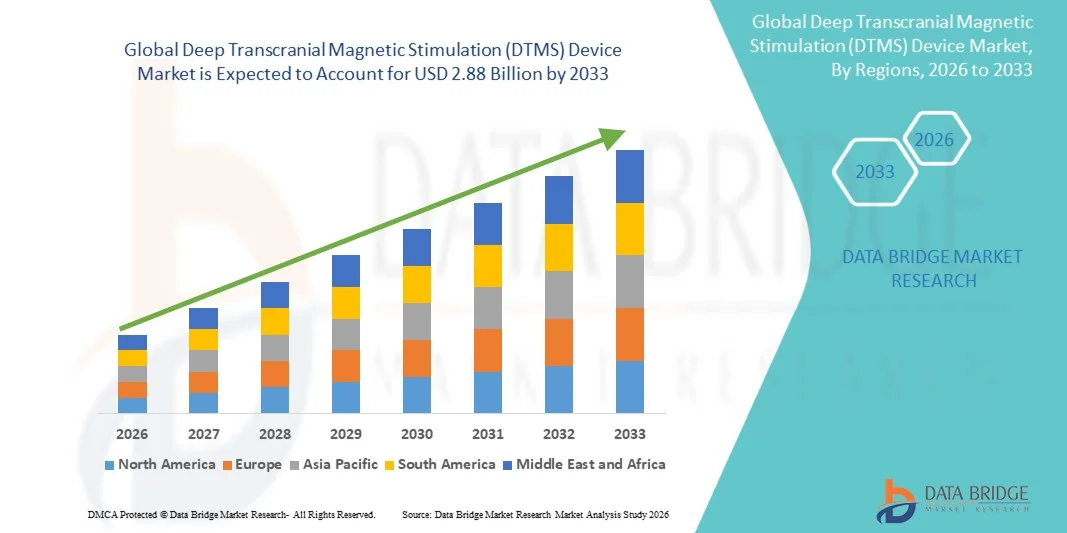
De acordo com a Data Bridge Market Research Analysis, o Deep Transcranial Magnetic Estimulation (DTMS) Device Market foi avaliado emUSD 1,46 mil milhões em 2025e é projetado para alcançarUSD 2,88 mil milhões até 2033, crescendo emCAGR de 8,90% de 2026 a 2033O mercado está testemunhando um crescimento constante impulsionado pela crescente prevalência de transtornos neurológicos e psiquiátricos, aumentando a adoção de terapias de estimulação cerebral não invasivas e avanços contínuos em neurotecnologia e precisão de dispositivos.
A crescente carga de depressão resistente ao tratamento, transtorno obsessivo-compulsivo e outras condições neuropsiquiátricas, juntamente com o aumento da consciência de alternativasneuromodulaçãoterapias, vem apoiando significativamente a expansão do mercado. Além disso, as aprovações regulatórias favoráveis, a expansão das evidências clínicas que sustentam a eficácia do dTMS e o aumento da integração desses sistemas em hospitais, clínicas psiquiátricas e instituições de pesquisa estão acelerando ainda mais a adoção em mercados de saúde desenvolvidos e emergentes.
Tamanho e previsão do mercado
- Valor de Mercado Global (2025): USD 1,46 Bilhões
- Valor de mercado esperado (2033): USD 2,88 bilhões
- Previsões CAGR (2026-2033): 8,90%
- Região líder em 2025: América do Norte
- Região de crescimento mais rápido: Ásia Pacífico
Principais tendências do mercado e perspectivas
- A América do Norte dominou o Deep Transcranial Magnetic Estimulation (DTMS) Device Market com a maior parcela de receita de 40,94% em 2025, apoiada pela adoção clínica precoce, forte infraestrutura de saúde mental e aprovação regulatória favorável para terapias de neuromodulação.
- O segmento Deep Transcranial Magnetic Estimulator (dTMS) liderou o mercado com uma participação de 55,60% em 2025, impulsionado pela sua capacidade superior de alcançar estruturas cerebrais mais profundas envolvidas na regulação do humor e distúrbios psiquiátricos resistentes ao tratamento.
- Espera-se que a Ásia-Pacífico seja a região de crescimento mais rápido em um CAGR de 9,7% de 2026 a 2033, alimentado pelo aumento da consciência de saúde mental, aumento dos investimentos em saúde e ampliação do acesso a tecnologias avançadas de tratamento psiquiátrico em economias emergentes.
- RepetitivoEstimulador magnético transcraniano(rTMS) são o tipo de crescimento mais rápido, projetado para registrar um CAGR de 7,9%, refletindo o aumento no menor custo, maior disponibilidade clínica e uso terapêutico estabelecido.
- O segmento de Sistemas Estacionários dominou a categoria tecnológica com uma participação de 65,70% de receita em 2025, liderada pela implantação generalizada em hospitais, centros psiquiátricos e clínicas de neuromodulação.
- A depressão representou 60,65% do mercado, preferencialmente pela alta prevalência global de transtorno depressivo maior e aumento de casos de depressão resistente ao tratamento.
- O segmento da doença de Alzheimer é a categoria de aplicação que mais cresce, com um CAGR de 10,1%, impulsionado pelo aumento da população idosa e aumento da carga de doenças neurodegenerativas globalmente.
Escopo do relatório e profunda estimulação magnética transcraniana (DTMS) Segmentação do mercado de dispositivos
|
Atributos |
Insights do mercado chave do dispositivo da estimulação magnética transcraniana profunda (DTMS) |
|
Segmentos Cobertos |
|
|
Países abrangidos |
América do Norte
Europa
Ásia- Pacífico
Médio Oriente e África
América do Sul
|
|
Jogadores do mercado chave |
|
|
Oportunidades de Mercado |
|
|
Informações sobre o Valor Adicionado |
Além dos insights sobre cenários de mercado, como valor de mercado, taxa de crescimento, segmentação, cobertura geográfica e grandes atores, os relatórios de mercado curados pela Data Bridge Market Research também incluem análise de especialistas em profundidade, epidemiologia de pacientes, análise de pipelines, análise de preços e marco regulatório. |
Tendências do mercado de dispositivos de estimulação magnética transcraniana profunda (DTMS)
Tendência: Expansão da neuromodulação na gestão da depressão resistente ao tratamento
A adoção da DTMS está se expandindo rapidamente, pois os sistemas de saúde mental se concentram cada vez mais na depressão resistente ao tratamento, onde drogas antidepressivas convencionais e psicoterapia muitas vezes apresentam eficácia limitada. A dTMS oferece um método não invasivo que estimula regiões cerebrais corticais e subcorticais mais profundas envolvidas na regulação do humor, tornando-o uma opção preferencial no atendimento psiquiátrico avançado. Hospitais e centros neuropsiquiátricos especializados estão integrando a sTMd em vias de tratamento estruturadas, particularmente para pacientes que não responderam a múltiplas terapias prévias. Por exemplo, a crescente utilização de protocolos de estimulação profunda baseados em bobina H em centros clínicos de neuromodulação reflete sua crescente aceitação como terapia adjuvante convencional para casos de depressão refratária.
Estimulação Magnética Transcraniana Profunda (DTMS) Dinâmica do Mercado de Dispositivos
Motorista do Mercado-Chave: Prevalência crescente de transtornos neuropsiquiátricos e demanda de terapia não invasiva
O aumento global dos transtornos de saúde mental, particularmente depressão, condições relacionadas à ansiedade e transtorno obsessivo-compulsivo, é um dos principais fatores que aceleram a demanda por dispositivos DTMS. Ao mesmo tempo, há uma crescente preferência do paciente por alternativas de tratamento não farmacológicas e não invasivas devido à preocupação com efeitos colaterais de longo prazo e resistência ao tratamento. Os profissionais de saúde estão, portanto, adotando tecnologias de estimulação cerebral como parte de planos integrados de tratamento psiquiátrico. A crescente validação clínica das terapias de neuromodulação também melhorou a confiança do médico na prescrição de DTMS. Por exemplo, a ampliação da implantação de sistemas DTMS em hospitais psiquiátricos especializados para pacientes com depressão crônica resistente ao tratamento destaca sua crescente importância clínica na prática neuroterapêutica moderna.
Chave de restrição / desafio: alto custo do dispositivo e acesso limitado em mercados emergentes
Apesar de suas vantagens clínicas, a adoção da tecnologia DTMS é significativamente limitada por seu alto custo de capital, exigências complexas de instalação e necessidade de neuroespecialistas treinados para operar o sistema. Esses fatores o tornam menos acessível para hospitais de pequeno e médio porte, especialmente em economias em desenvolvimento onde os orçamentos de saúde são limitados. Além disso, as limitações de reembolso em várias regiões restringem ainda mais a adopção generalizada. Custos de manutenção e atualizações periódicas de software e hardware também aumentam o custo total de propriedade, desencorajando clínicas psiquiátricas menores de investir na tecnologia. Por exemplo, a instalação de sistemas avançados de DTMS em apenas hospitais terciários de grande porte e centros especializados de neuromodulação destaca a lacuna entre ambientes de saúde de alta renda e recursos limitados no acesso a essa tecnologia.
Oportunidade de Mercado Chave: Integração da Psiquiatria de Precisão Baseada em IA e Estimulação Cerebral Personalizada
Uma grande oportunidade emergente no mercado DTMS é a integração da inteligência artificial, neuroimagem e planejamento de tratamento orientado a dados para permitir a psiquiatria de precisão. Sistemas habilitados para IA podem analisar padrões de atividade cerebral do paciente e otimizar parâmetros de estimulação em tempo real, melhorando a eficácia do tratamento e reduzindo a variabilidade dos resultados. Essa mudança para a neuromodulação personalizada deve aumentar significativamente as taxas de sucesso clínico e expandir a gama de condições tratáveis. Além disso, análises de tratamento baseadas em nuvem e ferramentas de monitoramento digital estão permitindo rastrear a resposta do paciente ao longo do tempo e ajustar a terapia dinamicamente. Por exemplo, os hospitais de pesquisa que implementam sistemas de neuronavegação assistidos por IA para refinar a colocação de bobinas e a intensidade de estimulação demonstram como tecnologias inteligentes estão moldando o futuro de terapias de estimulação cerebral direcionadas.
Alcance do mercado de dispositivos de estimulação magnética transcraniana profunda (DTMS)
O mercado de dispositivos de Estimulação Magnética Transcraniana Profunda (DTMS) é segmentado com base no tipo, tecnologia, aplicação e uso final.
- Por Tipo
Com base no tipo, o mercado de dispositivos de estimulação magnética transcraniana profunda (DTMS) é segmentado em estimulador magnético transcraniano profundo (dTMS), estimulador magnético transcraniano repetitivo (rTMS) e outros. O segmento Deep Transcranial Magnetic Estimulator (dTMS) dominou o mercado com a maior parcela de 55,60% em 2025, devido à sua capacidade superior de alcançar estruturas cerebrais mais profundas envolvidas na regulação do humor e distúrbios psiquiátricos resistentes ao tratamento. É amplamente utilizado em hospitais e clínicas psiquiátricas especializadas para casos de transtorno depressivo maior em que as terapias convencionais falham. Forte validação clínica e aprovação regulatória têm reforçado significativamente a confiança do médico em seu uso. O aumento da integração em vias de tratamento de neuromodulação estruturadas reforça ainda mais a adoção. Melhorias contínuas no desenho da bobina e na profundidade da estimulação estão aumentando os resultados terapêuticos. A crescente demanda por terapias de estimulação cerebral não invasivas está sustentando sua posição de liderança.
Espera-se que o segmento de Estimulador Magnético Transcraniano Repetitivo (STMr) testemunhe o crescimento mais rápido com um CAGR de 7,9% de 2026 a 2033, impulsionado por seu menor custo, maior disponibilidade clínica e uso terapêutico estabelecido. A rTMS é cada vez mais utilizada para depressão e vem sendo explorada para transtornos de ansiedade, TEPT e aplicações de neurorreabilitação. Seu design de sistema mais simples permite a adoção em ambulatórios e serviços de saúde de médio porte. O alargamento do apoio ao reembolso em várias regiões está a acelerar ainda mais a aceitação. O refinamento contínuo dos protocolos de estimulação está melhorando os resultados do tratamento. A crescente conscientização das terapias de neuromodulação também está expandindo a adoção global.
- Por Tecnologia
Com base na tecnologia, o mercado global de dispositivos DTMS é segmentado em sistemas estacionários, sistemas portáteis e sistemas guiados por navegação. O segmento Sistemas Estacionários dominou o mercado com a maior parcela de 65,70% em 2025, devido à ampla implantação em hospitais, centros psiquiátricos e clínicas de neuromodulação. Esses sistemas proporcionam alta estabilidade, precisão consistente de estimulação e adequação para sessões repetidas de tratamento. São preferidos para ambientes clínicos estruturados que tratam depressão e TOC. A integração com plataformas de software avançadas aumenta ainda mais o controle de monitoramento e tratamento. Fortes quadros de reembolso nas regiões desenvolvidas apoiam o domínio continuado. Sua presença estabelecida na infraestrutura de saúde garante a liderança do mercado.
Espera-se que o segmento Sistemas Guiados de Navegação testemunhe o crescimento mais rápido com um CAGR de 9,1% de 2026 a 2033, impulsionado pela crescente demanda por psiquiatria de precisão e terapias personalizadas de neuromodulação. Esses sistemas utilizam neuroimagem e direcionamento assistido por IA para melhorar a precisão da estimulação. A adoção crescente em hospitais e centros de pesquisa avançados de neurologia está acelerando a demanda. Reduzem a variabilidade na colocação da bobina, melhorando a consistência e os resultados do tratamento. O crescente investimento em tecnologias de mapeamento cerebral e de imagem está apoiando ainda mais a expansão. Expandir ensaios clínicos utilizando sistemas avançados de segmentação também está impulsionando a adoção.
- Por Aplicação
Com base na aplicação, o mercado global de dispositivos DTMS é segmentado para doença de Alzheimer, depressão, doença de Parkinson,epilepsia, e outros. O segmento Depressão dominou o mercado com a maior parcela de 60,65% em 2025, devido à alta prevalência global de transtorno depressivo maior e aumento de casos de depressão resistente ao tratamento. A DTMS é amplamente utilizada como terapia não invasiva em pacientes que não respondem a antidepressivos ou psicoterapia. Fortes evidências clínicas têm reforçado sua inclusão em protocolos de tratamento psiquiátrico. A sensibilização para a saúde mental está a aumentar as taxas de diagnóstico e tratamento dos doentes. A ampliação da cobertura de reembolso em sistemas de saúde desenvolvidos vem apoiando ainda mais a adoção. A integração contínua nas diretrizes clínicas está fortalecendo sua posição dominante.
Espera-se que o segmento da doença de Alzheimer testemunhe o crescimento mais rápido com um CAGR de 10,1% de 2026 a 2033, impulsionado pelo aumento das populações de envelhecimento e aumento da carga de doenças neurodegenerativas globalmente. dTMS está sendo ativamente pesquisada por seu potencial papel na melhoria da função cognitiva e no retardamento da progressão da doença. A eficácia limitada dos tratamentos de Alzheimer existentes está a aumentar o interesse em abordagens de neuromodulação. Os crescentes ensaios clínicos e o financiamento da pesquisa em neurociência estão acelerando o desenvolvimento. Avanços na estimulação cerebral visando e neuroimagem estão melhorando a viabilidade. A expansão das colaborações académico-industriais está a apoiar ainda mais a inovação neste segmento.
- Por Uso Final
Com base no uso final, o mercado global de dispositivos dTMS é segmentado em pesquisa, diagnóstico e terapêutica. O segmento Terapêutica dominou o mercado com a maior parcela de 70,75% em 2025, devido ao uso clínico generalizado no tratamento da depressão, TOC e outros transtornos neuropsiquiátricos. Hospitais e clínicas psiquiátricas continuam sendo os usuários primários dos sistemas de STMd terapêuticos. O aumento da procura de opções de tratamento não invasivas e sem drogas está a conduzir a adopção. Fortes validações clínicas e aprovações regulatórias têm apoiado a integração em vias de cuidado padrão. Aumentar a preferência dos pacientes por terapias de neuromodulação é uma demanda ainda maior. A expansão contínua da infraestrutura de saúde mental vem reforçando o domínio.
Espera-se que o segmento Pesquisa testemunhe o crescimento mais rápido com um CAGR de 9,1% de 2026 a 2033, impulsionado pelo aumento de estudos clínicos explorando novas aplicações da tecnologia de estimulação cerebral. Instituições acadêmicas e centros de pesquisa em neurociências estão expandindo investigações sobre aplicações cognitivas e comportamentais da dTMS. Aumentar o financiamento para iniciativas de investigação cerebral está a acelerar a adopção. A integração de IA e ferramentas de neuroimagem está melhorando a precisão e eficiência da pesquisa. A expansão da colaboração entre universidades e empresas de dispositivos médicos está promovendo a inovação. O aumento da concentração na psiquiatria de precisão está a aumentar a procura orientada para a investigação.
Análise regional do mercado de dispositivos de estimulação magnética transcraniana profunda (DTMS)
A América do Norte dominou o Deep Transcranial Magnetic Estimulation (DTMS) Device Market com a maior parcela de receita de 40,94% em 2025, apoiada pela adoção clínica precoce, forte infraestrutura de saúde mental e aprovação regulatória favorável para terapias de neuromodulação. A região beneficia-se de alta prevalência de depressão e outros transtornos neuropsiquiátricos, de quadros de reembolso bem estabelecidos e de ampla disponibilidade de clínicas especializadas em saúde mental. Aumentar a integração dos sistemas dTMS em protocolos de tratamento hospitalares e crescentes investimentos em pesquisas de estimulação cerebral estão fortalecendo ainda mais a dominância regional. Avanços contínuos na psiquiatria de precisão e ampliação da conscientização das opções de tratamento não invasivo continuam reforçando a posição de liderança da América do Norte no mercado global.
Insight do mercado de dispositivos de estimulação magnética transcraniana profunda (DTMS) dos EUA
O mercado de dispositivos de estimulação magnética transcraniana profunda dos EUA (DTMS) está testemunhando forte crescimento devido ao aumento da prevalência de depressão, transtornos de ansiedade e condições psiquiátricas resistentes ao tratamento, juntamente com a adoção crescente de terapias avançadas de neuromodulação. A bem desenvolvida infraestrutura de saúde mental do país, as aprovações regulatórias precoces e a forte presença dos principais fornecedores de neurotecnologia estão conduzindo a demanda em hospitais e clínicas psiquiátricas especializadas. Além disso, o aumento da cobertura de seguros para terapias de estimulação cerebral e o aumento da integração da sTMd em protocolos de tratamento clínico estão acelerando a adoção. Expandir investimentos em pesquisa de neurociência e psiquiatria de precisão continua a fortalecer os EUA como o mercado líder para dispositivos dTMS globalmente.
Europa Profunda Estimulação Magnética Transcraniana (DTMS)
O mercado europeu de dispositivos DTMS continua a ser um contributo significativo para as receitas globais, impulsionado por sistemas de saúde fortes, por uma maior sensibilização para a saúde mental e por quadros regulamentares de apoio às terapias de estimulação cerebral não invasivas. A região se beneficia com a crescente adoção de dTMS em hospitais psiquiátricos, instituições de pesquisa e centros de neuromodulação em grandes economias. O aumento do foco na depressão resistente ao tratamento e a expansão da evidência clínica que suporta a eficácia do dTMS estão apoiando o crescimento do mercado. Além disso, os crescentes investimentos em pesquisas em neurociências e programas estruturados de saúde mental vêm potencializando a adoção. O avanço contínuo das tecnologias de neuromodulação e a integração em vias de cuidados padronizados continuam a reforçar a posição da Europa no mercado global.
Insight do mercado de dispositivos do U.K. Deep Transcranial Magnetic Estimulation (DTMS)
O mercado de dispositivos DTMS do Reino Unido está experimentando crescimento constante, apoiado pelo aumento da demanda por tratamentos avançados de saúde mental e adoção crescente de terapias não invasivas de neuromodulação em cuidados psiquiátricos. O aumento da prevalência de transtornos depressivos e ansiosos, juntamente com forte apoio público de saúde através da TAN, está impulsionando a adoção clínica. Hospitais e centros especializados de saúde mental estão cada vez mais integrando a sTMd em vias de tratamento para casos resistentes. Além disso, a crescente atividade de pesquisa em neurociências e a ampliação da conscientização das terapias de estimulação cerebral estão apoiando a expansão do mercado. A integração tecnológica contínua e o foco na melhoria dos resultados da saúde mental estão fortalecendo ainda mais o mercado do Reino Unido.
Alemanha Profunda Estimulação Magnética Transcraniana (DTMS)
O mercado de dispositivos dTMS da Alemanha está se expandindo constantemente devido à forte infraestrutura de saúde, alta consciência dos transtornos mentais e adoção crescente de tecnologias avançadas de neuromodulação. Hospitais, clínicas psiquiátricas e instituições de pesquisa estão cada vez mais usando a sTMd para tratar depressão e outras condições neuropsiquiátricas. O forte foco do país na inovação médica e na pesquisa em neurociências está apoiando a adoção clínica. O aumento da prevalência de depressão resistente ao tratamento e o crescente interesse em terapias não farmacológicas estão na origem da procura. Avanços contínuos na tecnologia de dispositivos médicos e integração da dTMS em programas de tratamento psiquiátrico estruturados estão fortalecendo o crescimento do mercado na Alemanha.
Insight do mercado magnético transcraniano profundo da Ásia-Pacífico (DTMS)
Espera-se que o mercado de dispositivos da Asia-Pacific dTMS testemunhe um rápido crescimento, impulsionado pelo aumento da consciência da saúde mental, aumento dos investimentos em saúde e ampliação do acesso a tratamentos psiquiátricos avançados em países como China, Índia e Japão. O aumento da prevalência de depressão e outros transtornos neuropsiquiátricos vem apoiando a demanda por terapias de neuromodulação não invasivas. O aumento da adoção de tecnologias médicas avançadas e a expansão da infraestrutura de assistência psiquiátrica estão acelerando ainda mais o crescimento do mercado. Além disso, o aumento dos investimentos em pesquisas de neurociências e a crescente aceitação clínica de terapias de estimulação cerebral estão contribuindo para a expansão regional. A presença de um grande pool de pacientes continua a posicionar Ásia-Pacífico como o mercado regional de crescimento mais rápido.
Japão Profunda Estimulação Magnética Transcraniana (DTMS)
O mercado de dispositivos dTMS do Japão está testemunhando crescimento constante devido ao crescente foco em soluções avançadas de saúde mental, aumento da população idosa e crescente prevalência de transtornos relacionados à depressão. Hospitais, institutos de pesquisa e centros especializados de neurologia estão cada vez mais adotando a sTMd para tratamento não invasivo de condições neuropsiquiátricas. A forte ênfase na inovação médica e na integração de tecnologias avançadas, tais como neuroimagem e alvo baseado em IA, está apoiando a adoção. Além disso, o foco do Japão em melhorar a saúde cognitiva e os cuidados neurológicos em populações idosas está impulsionando ainda mais a demanda. A contínua pesquisa clínica e o avanço tecnológico estão fortalecendo o crescimento do mercado no país.
China Profunda Estimulação Magnética Transcraniana (DTMS)
O mercado de dispositivos dTMS da China está crescendo rapidamente, impulsionado pelo aumento da carga de transtornos de saúde mental, aumento dos investimentos em saúde e expansão da adoção de terapias avançadas de neuromodulação. O aumento da consciência sobre depressão e condições relacionadas à ansiedade está apoiando a demanda por opções de tratamento não invasivas. A expansão dos hospitais psiquiátricos e centros especializados de saúde mental vem acelerando ainda mais a adoção. O aumento dos investimentos em pesquisa de neurociências e desenvolvimento de tecnologia médica também estão contribuindo para o crescimento do mercado. Além disso, a crescente integração de soluções de saúde orientadas por IA e a expansão da aceitação clínica de terapias de estimulação cerebral estão posicionando a China como um dos mercados de dTMS de crescimento mais rápido globalmente.
Profunda Estimulação Magnética Transcraniana (DTMS)
A indústria de dispositivos de estimulação magnética transcraniana profunda (DTMS) é liderada principalmente por empresas bem estabelecidas, incluindo:
- BrainsWay Ltd.. (Israel)
- MagVenture A/S (Dinamarca)
- Nexstim Plc(Finlândia)
- Deymed Diagnostic s.r.o. (República Checa)
- Magstim Company Ltd.(U.K.)
- NeuroStar Advanced Therapy (EUA)
- TMS Neuro Solutions, Inc. (EUA)
- eNeura Inc. (EUA)
- Mag & More GmbH (Alemanha)
- Neurosoft S.A. (Grécia)
- ANT Neuro B.V. (Países Baixos)
- Rogue Research Inc. (Canadá)
- Soterix Medical Inc. (EUA)
- NeuroCare Group GmbH (Alemanha)
- EB Neuro S.p.A. (Itália)
- NeuroSigma, Inc. (EUA)
- CloudTMS (EUA)
- Brainbox Ltd. (U.K.)
- Medtronic (Irlanda)
- Abbott(EUA)
Mais recentes desenvolvimentos no mercado de dispositivos de estimulação magnética transcraniana profunda (DTMS)
- Em maio de 2024, a BrainsWay Ltd. anunciou a liberação da FDA dos EUA para o seu sistema Deep Transcranial Magnetic Estimulation (Deep TMS) para o tratamento de adolescentes com transtorno obsessivo-compulsivo (OCD), expandindo a população de pacientes aprovada da terapia para além dos adultos. Esse desenvolvimento fortaleceu significativamente o alcance clínico da sTMd na psiquiatria pediátrica e adolescente, abordando uma necessidade crítica não satisfeita no tratamento precoce do TOC. A aprovação reflete a crescente confiança clínica em terapias de neuromodulação não invasivas para pacientes mais jovens e apoia a adoção mais ampla em centros especializados de saúde mental
- Em novembro de 2023, BrainsWay relatou contínua expansão da adoção global de seus sistemas Deep TMS, apoiados pelo aumento da utilização em clínicas psiquiátricas e hospitais em todo o mundo, destacando forte tração comercial e clínica da tecnologia. A empresa destacou a crescente demanda por neuromodulação não invasiva em casos de depressão resistente ao tratamento e TOC. Esse desenvolvimento reflete a aceitação acelerada da Deep TMS como terapia adjuvante padrão em sistemas de saúde mental, particularmente na América do Norte e na Europa
- Em junho de 2023, publicações de evidências clínicas e do mundo real reforçaram a eficácia a longo prazo da terapia de TMS profunda para transtorno depressivo maior, demonstrando redução sustentada dos sintomas em pacientes resistentes ao tratamento. Esses achados contribuíram para uma maior confiança do médico na integração da sTMd em vias de tratamento psiquiátrico estruturadas. Os resultados corroboraram ainda a expansão das terapias baseadas em neuromodulação como alternativas viáveis às intervenções farmacológicas no manejo da depressão crônica.
- Em setembro de 2022, o crescente apoio ao seguro e reembolso para terapias de estimulação magnética transcraniana, incluindo a Deep TMS em mercados selecionados, ajudou a melhorar o acesso dos pacientes a tratamentos avançados de neuromodulação, particularmente nos Estados Unidos. Esse desenvolvimento reduziu as barreiras financeiras para pacientes submetidos a sessões repetidas de tratamento, que normalmente são necessárias para resultados efetivos. Também incentivou a adoção mais ampla de sTMd em ambulatórios psiquiátricos e unidades de neuromodulação hospitalares
- Em março de 2021, o aumento da adoção clínica de sistemas de TMS profundos foi relatado em centros de tratamento psiquiátrico, impulsionado pelo aumento da carga de saúde mental durante o período pós-pandemia e pela crescente demanda por terapias de depressão não invasivas. Os profissionais de saúde integram cada vez mais a neuromodulação em protocolos de tratamento para pacientes com depressão e transtornos de ansiedade resistentes ao tratamento. Este período marcou uma aceleração significativa na conscientização e utilização de tecnologias de estimulação cerebral dentro da atenção psiquiátrica mainstream
SKU-
Obtenha acesso online ao relatório sobre a primeira nuvem de inteligência de mercado do mundo

- Painel interativo de análise de dados
- Painel de análise da empresa para oportunidades de elevado potencial de crescimento
- Acesso de analista de pesquisa para personalização e customização. consultas
- Análise da concorrência com painel interativo
- Últimas notícias, atualizações e atualizações Análise de tendências
- Aproveite o poder da análise de benchmark para um rastreio abrangente da concorrência
Metodologia de Investigação
A recolha de dados e a análise do ano base são feitas através de módulos de recolha de dados com amostras grandes. A etapa inclui a obtenção de informações de mercado ou dados relacionados através de diversas fontes e estratégias. Inclui examinar e planear antecipadamente todos os dados adquiridos no passado. Da mesma forma, envolve o exame de inconsistências de informação observadas em diferentes fontes de informação. Os dados de mercado são analisados e estimados utilizando modelos estatísticos e coerentes de mercado. Além disso, a análise da quota de mercado e a análise das principais tendências são os principais fatores de sucesso no relatório de mercado. Para saber mais, solicite uma chamada de analista ou abra a sua consulta.
A principal metodologia de investigação utilizada pela equipa de investigação do DBMR é a triangulação de dados que envolve a mineração de dados, a análise do impacto das variáveis de dados no mercado e a validação primária (especialista do setor). Os modelos de dados incluem grelha de posicionamento de fornecedores, análise da linha de tempo do mercado, visão geral e guia de mercado, grelha de posicionamento da empresa, análise de patentes, análise de preços, análise da quota de mercado da empresa, normas de medição, análise global versus regional e de participação dos fornecedores. Para saber mais sobre a metodologia de investigação, faça uma consulta para falar com os nossos especialistas do setor.
Personalização disponível
A Data Bridge Market Research é líder em investigação formativa avançada. Orgulhamo-nos de servir os nossos clientes novos e existentes com dados e análises que correspondem e atendem aos seus objetivos. O relatório pode ser personalizado para incluir análise de tendências de preços de marcas-alvo, compreensão do mercado para países adicionais (solicite a lista de países), dados de resultados de ensaios clínicos, revisão de literatura, mercado remodelado e análise de base de produtos . A análise de mercado dos concorrentes-alvo pode ser analisada desde análises baseadas em tecnologia até estratégias de carteira de mercado. Podemos adicionar quantos concorrentes necessitar de dados no formato e estilo de dados que procura. A nossa equipa de analistas também pode fornecer dados em tabelas dinâmicas de ficheiros Excel em bruto (livro de factos) ou pode ajudá-lo a criar apresentações a partir dos conjuntos de dados disponíveis no relatório.











