


Transcranial Magnetic Stimulator Market Size
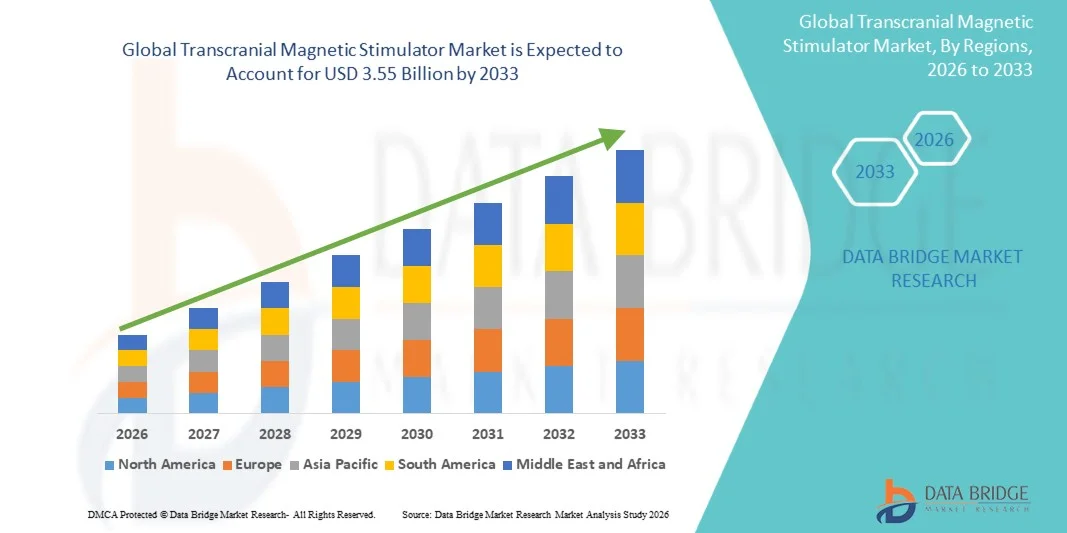
- The global Transcranial Magnetic Stimulator market size was valued at USD 1.59 billion in 2025and is expected to reach USD 3.55 billion by 2033, at a CAGR of 10.60% during the forecast period
- The market growth is largely fueled by the increasing prevalence of neurological and psychiatric disorders such as depression, anxiety, and obsessive-compulsive disorder, along with growing adoption of non-invasive brain stimulation therapies, leading to higher utilization of transcranial magnetic stimulation (TMS) systems in clinical practice
- Furthermore, rising clinical acceptance of TMS as an alternative or adjunct to pharmacological treatments, expanding research in neuropsychiatry, and continuous technological advancements in precision stimulation and treatment protocols are establishing Transcranial Magnetic Stimulator solutions as a key modality in modern mental healthcare. These converging factors are accelerating the uptake of Transcranial Magnetic Stimulator solutions, thereby significantly boosting the industry's growth
Transcranial Magnetic Stimulator Market Analysis
- Transcranial Magnetic Stimulator systems, which deliver non-invasive brain stimulation using electromagnetic pulses to modulate neural activity, are increasingly vital in modern neuropsychiatric treatment due to their effectiveness in treating depression, obsessive-compulsive disorder, and other treatment-resistant mental health conditions
- The escalating demand for transcranial magnetic stimulation is primarily fueled by the rising prevalence of major depressive disorder, growing awareness of non-pharmacological treatment options, and increasing clinical adoption of neuromodulation therapies as safer alternatives to long-term medication use
- North America dominated the transcranial magnetic stimulator market with the largest revenue share of 38.5% in 2025, driven by strong mental healthcare infrastructure, high adoption of advanced neuromodulation therapies, increasing insurance coverage, and presence of leading device manufacturers, with the U.S. accounting for the majority of clinical installations and treatment adoption
- Asia-Pacific is expected to be the fastest growing region in the Transcranial Magnetic Stimulator market during the forecast period due to rising mental health awareness, expanding psychiatric healthcare infrastructure, increasing healthcare expenditure, and growing acceptance of advanced neurostimulation therapies across countries such as China, India, and Japan
- The Adults segment dominated the largest market revenue share of 78.6% in 2025, driven by higher prevalence of depression and anxiety disorders in the working-age population
Report Scope and Transcranial Magnetic Stimulator Market Segmentation
|
Attributes |
Transcranial Magnetic Stimulator Key Market Insights |
|
Segments Covered |
|
|
Countries Covered |
North America · U.S. · Canada · Mexico Europe · Germany · France · U.K. · Netherlands · Switzerland · Belgium · Russia · Italy · Spain · Turkey · Rest of Europe Asia-Pacific · China · Japan · India · South Korea · Singapore · Malaysia · Australia · Thailand · Indonesia · Philippines · Rest of Asia-Pacific Middle East and Africa · Saudi Arabia · U.A.E. · South Africa · Egypt · Israel · Rest of Middle East and Africa South America · Brazil · Argentina · Rest of South America |
|
Key Market Players |
• MagVenture A/S (Denmark) |
|
Market Opportunities |
· Rising Adoption of Non-Invasive Neuromodulation Therapies in Mental Health Treatment · Expanding Applications in Neurodegenerative and Cognitive Disorders Research |
|
Value Added Data Infosets |
In addition to the insights on market scenarios such as market value, growth rate, segmentation, geographical coverage, and major players, the market reports curated by the Data Bridge Market Research also include in-depth expert analysis, patient epidemiology, pipeline analysis, pricing analysis, and regulatory framework. |
Transcranial Magnetic Stimulator Market Trends
“Enhanced Precision and Personalization in Neuromodulation Therapy”
- A significant and accelerating trend in the global Transcranial Magnetic Stimulator market is the growing integration of advanced digital intelligence, including artificial intelligence (AI)-based treatment planning and adaptive neuromodulation protocols. This is improving therapy precision, patient targeting, and clinical outcomes in neuropsychiatric and neurological disorders
- For instance, AI-enabled neuronavigation platforms integrated with TMS systems are increasingly being used in advanced neurology clinics in the U.S. and Europe to map individualized cortical targets for depression treatment based on MRI-derived brain structure analysis
- Modern transcranial magnetic stimulation systems are increasingly incorporating AI-assisted mapping tools that help clinicians identify optimal stimulation sites based on individual brain activity patterns, anatomical differences, and real-time response feedback. For instance, some next-generation neurostimulation platforms used in academic hospitals automatically adjust coil positioning using real-time feedback from patient response monitoring systems during therapy sessions
- In addition, software-driven treatment optimization is enhancing session efficiency by automatically adjusting stimulation intensity, frequency, and coil positioning based on patient response data, reducing variability in therapeutic outcomes across sessions. For instance, certain clinical TMS systems deployed in psychiatric research centers have demonstrated protocol adjustments mid-treatment based on patient tolerance and symptom tracking data collected after each session
- The integration of digital health platforms and neuro-navigation systems is further strengthening procedural accuracy, allowing clinicians to visualize and refine targeted brain regions with higher precision and consistency. For instance, hospital-based neuromodulation units in Germany and Japan are increasingly combining TMS with MRI-guided navigation software to improve targeting accuracy in treatment-resistant depression cases
Transcranial Magnetic Stimulator Market Dynamics
Driver
“Rising Prevalence of Treatment-Resistant Neuropsychiatric Disorders and Expanding Clinical Adoption”
- The increasing global burden of depression, anxiety disorders, and other treatment-resistant psychiatric conditions is a key driver for the adoption of transcranial magnetic stimulation therapies. Patients who do not respond adequately to pharmacological treatments are increasingly turning to non-invasive neuromodulation options
- For instance, clinical studies in North America have reported growing use of TMS therapy in major depressive disorder patients who have failed to respond to at least two antidepressant medication regimens, leading to expanded insurance coverage in several U.S. states
- Growing clinical evidence supporting the efficacy of TMS in major depressive disorder, obsessive-compulsive disorder, and certain neurological conditions is encouraging wider acceptance among healthcare providers and regulatory bodies. For instance, regulatory approvals and updated clinical guidelines in countries such as Canada and Australia now increasingly recommend TMS as a second-line therapy for treatment-resistant depression based on large-scale clinical trial outcomes
- The expansion of mental health awareness and reduction of stigma associated with psychiatric treatment are further contributing to higher patient inflow for advanced therapeutic options such as TMS. For instance, public mental health initiatives in Europe have increased patient referrals to neuromodulation clinics, particularly among young adults seeking non-pharmacological depression treatments
- In addition, the growing availability of outpatient neurostimulation clinics and hospital-based neuromodulation centers is improving accessibility and supporting market expansion across both developed and emerging healthcare systems. For instance, specialized TMS clinics in urban healthcare networks across India and Southeast Asia are expanding rapidly to meet rising demand for drug-resistant depression management
Restraint/Challenge
“High Equipment Costs and Limited Access to Specialized Clinical Infrastructure”
- Despite strong clinical potential, the high capital cost of transcranial magnetic stimulation systems remains a significant barrier to widespread adoption, particularly in low- and middle-income healthcare settings. Installation, maintenance, and operational expenses further increase the overall financial burden
- For instance, many secondary and tertiary hospitals in emerging economies continue to rely on limited neuropsychiatric equipment budgets, making large-scale procurement of TMS systems difficult despite growing patient demand
- The requirement for trained neurologists, psychiatrists, or specialized technicians to operate TMS systems limits scalability, especially in regions facing healthcare workforce shortages. For instance, clinics in rural healthcare systems often lack certified neurostimulation technicians, restricting the deployment of TMS even when equipment is available
- Variability in reimbursement policies across countries and insurance systems also affects patient accessibility, as coverage for TMS therapy is not universally standardized. For instance, in several countries, patients must pay out-of-pocket for TMS sessions due to incomplete insurance reimbursement frameworks, limiting adoption among middle-income populations
- In addition, logistical constraints such as treatment duration, need for repeated sessions, and limited availability of dedicated neurostimulation infrastructure can reduce patient throughput and slow overall market penetration. For instance, multi-session TMS protocols requiring daily visits over several weeks can create scheduling bottlenecks in high-demand urban neurology centers
Transcranial Magnetic Stimulator Market Scope
The market is segmented on the basis of type, application, age group, and end-users.
- By Type
On the basis of type, the Transcranial Magnetic Stimulator market is segmented into Deep Transcranial Magnetic Stimulator, Repetitive Transcranial Magnetic Stimulator, and Others. The Repetitive Transcranial Magnetic Stimulator segment dominated the largest market revenue share of 46.8% in 2025, driven by its widespread clinical adoption for psychiatric and neurological disorders. It is considered the standard non-invasive brain stimulation technique in depression treatment. High global prevalence of treatment-resistant depression significantly supports demand. Strong clinical evidence and regulatory approvals enhance physician confidence. Increasing hospital integration of rTMS systems is supporting adoption. Growing reimbursement coverage in developed economies is accelerating usage. Cost-effectiveness compared to invasive procedures further strengthens demand. Expanding psychiatric care infrastructure is improving accessibility. Rising awareness of mental health disorders boosts patient intake. Continuous technological upgrades improve precision and safety. Expanding indications across OCD and PTSD support growth. Overall, it remains the dominant segment in the market.
The Deep Transcranial Magnetic Stimulator segment is expected to witness the fastest growth rate of 12.9% CAGR from 2026 to 2033, driven by its ability to stimulate deeper brain regions. It is increasingly used in treatment-resistant psychiatric and neurological conditions. Improved clinical outcomes compared to conventional systems are boosting adoption. Growing regulatory approvals are expanding clinical acceptance. Rising investment in neurotechnology is accelerating innovation. Expansion of specialty neuromodulation clinics supports demand. Increasing research into brain circuitry is strengthening applications. Higher patient response rates are improving physician preference. Technological advancements are enhancing targeting accuracy. Expanding use beyond depression into addiction and anxiety disorders is emerging. Growing awareness among neurologists is increasing adoption. Overall, it is the fastest-growing segment in the market.
- By Application
On the basis of application, the Transcranial Magnetic Stimulator market is segmented into Alzheimer’s disease, Depression, Parkinson’s disease, Epilepsy, and Others. The Depression segment accounted for the largest market revenue share of 52.4% in 2025, driven by the high global burden of depressive disorders. Treatment-resistant depression remains the primary indication for TMS therapy. Increasing mental health awareness is improving diagnosis rates globally. Strong clinical guidelines support TMS use in depression management. Rising antidepressant resistance is boosting demand for alternative therapies. Expanding psychiatric hospital infrastructure supports adoption. Insurance reimbursement availability enhances patient access. Growing preference for non-invasive treatments is accelerating uptake. Government mental health initiatives are increasing awareness. Continuous clinical validation strengthens physician confidence. Expanding outpatient neuropsychiatric services supports growth. Overall, depression remains the core revenue-generating application.
The Alzheimer’s disease segment is expected to witness the fastest CAGR of 13.4% from 2026 to 2033, driven by the rapidly aging global population. Increasing prevalence of neurodegenerative disorders is boosting demand. Lack of curative treatments is driving interest in neuromodulation therapies. TMS is being explored for cognitive enhancement and memory improvement. Expanding clinical trials are validating therapeutic potential. Rising research funding in neuroscience is supporting development. Increasing healthcare burden of dementia is encouraging alternative treatments. Growing focus on non-pharmacological interventions supports adoption. Hospitals are integrating experimental neuromodulation programs. Technological advancements are improving stimulation accuracy. Academic-industry collaborations are accelerating innovation. Overall, Alzheimer’s represents a high-growth future segment.
- By Age Group
On the basis of age group, the market is segmented into Adults and Children. The Adults segment dominated the largest market revenue share of 78.6% in 2025, driven by higher prevalence of depression and anxiety disorders in the working-age population. Most approved TMS therapies are clinically validated for adult use. Rising workplace stress is increasing treatment demand. Strong insurance coverage for adult psychiatric care supports adoption. Higher diagnosis rates in adults drive procedural volumes. Expanding mental health clinics in urban regions supports accessibility. Clinical trials are predominantly focused on adults, strengthening evidence base. Physician preference for adult neuromodulation therapies is high. Greater awareness of mental health conditions improves uptake. Treatment compliance is higher among adults compared to pediatrics. Growing outpatient psychiatric services support expansion. Overall, adults remain the dominant patient group.
The Children segment is expected to witness the fastest CAGR of 13.1% from 2026 to 2033, driven by rising diagnosis of pediatric neurological and psychiatric disorders. Increasing cases of ADHD and autism spectrum conditions support demand. Growing acceptance of non-invasive brain stimulation in pediatrics is expanding use. Clinical research into pediatric neuromodulation is increasing. Improved safety profiles of modern devices enhance physician confidence. Parental preference for drug-free treatments is boosting adoption. Expanding pediatric neurology departments support integration. Rising awareness of child mental health disorders is increasing treatment rates. Regulatory progress for pediatric indications is accelerating. Early intervention strategies are improving outcomes. Academic research initiatives are expanding. Overall, pediatric use is an emerging high-growth segment.
- By End-Users
On the basis of end-users, the market is segmented into Research, Diagnostics, and Therapeutics. The Therapeutics segment dominated the largest market revenue share of 61.3% in 2025, driven by widespread clinical use in psychiatric treatment. Hospitals and clinics are increasingly adopting TMS as a standard therapy. High burden of depression and related disorders supports demand. Strong clinical validation reinforces therapeutic adoption. Expanding hospital infrastructure enhances treatment capacity. Reimbursement support in developed markets drives usage. Increasing physician preference for non-invasive therapies boosts uptake. Growing outpatient neuromodulation services support expansion. Rising patient demand for drug-free treatments accelerates adoption. Integration into psychiatric treatment protocols strengthens utilization. Continuous innovation improves clinical outcomes. Overall, therapeutics remains the dominant revenue-generating segment.
The Research segment is expected to witness the fastest CAGR of 13.6% from 2026 to 2033, driven by rising investment in neuroscience studies. Increasing focus on brain mapping and neuroplasticity supports demand. Academic institutions are expanding neuromodulation research programs. Pharmaceutical companies are using TMS in drug-response studies. Government funding for neurological research is increasing globally. Expanding clinical trial activity supports growth. Rising interest in cognitive neuroscience boosts adoption. Technological advancements enable more precise research applications. Collaboration between academia and industry is accelerating innovation. Growing use in biomarker discovery supports expansion. Research into psychiatric and neurodegenerative disorders is increasing. Overall, research represents a high-growth innovation segment.
Transcranial Magnetic Stimulator Market Regional Analysis
- North America dominated the transcranial magnetic stimulator market with the largest revenue share of 38.5% in 2025, driven by strong mental healthcare infrastructure, high adoption of advanced neuromodulation therapies, increasing insurance coverage for psychiatric treatments, and the strong presence of leading medical device manufacturers. The region continues to witness growing clinical acceptance of transcranial magnetic stimulation (TMS) as a non-invasive treatment option for depression and other neurological disorders, supported by expanding hospital-based and outpatient neuromodulation centers
- The rising prevalence of treatment-resistant depression, increasing awareness of non-invasive brain stimulation techniques, and supportive reimbursement frameworks have significantly strengthened the adoption of TMS systems across psychiatric and neurological care settings
- This widespread adoption is further supported by advancements in device technology, increasing clinical research activities, and the integration of TMS into standard psychiatric treatment pathways, establishing it as an important modality in modern mental healthcare delivery
U.S. Transcranial Magnetic Stimulator Market Insight
The U.S. transcranial magnetic stimulator market captured the largest revenue share within North America in 2025, driven by high volumes of psychiatric diagnoses, strong healthcare spending, and widespread adoption of neuromodulation therapies across hospitals and specialized mental health clinics. The country has a well-established network of FDA-approved TMS devices and treatment centers, with increasing utilization for depression, anxiety disorders, and obsessive-compulsive disorder. In addition, growing clinical evidence supporting TMS efficacy and expanding insurance reimbursement coverage are further accelerating market growth in the U.S.
Europe Transcranial Magnetic Stimulator Market Insight
The Europe transcranial magnetic stimulator market is projected to expand at a substantial CAGR throughout the forecast period, primarily driven by rising mental health awareness, increasing adoption of non-invasive neurological therapies, and supportive healthcare reimbursement systems in several countries. The region is witnessing growing integration of TMS into psychiatric treatment protocols, particularly for treatment-resistant depression. Expansion of specialized neurology and psychiatry centers is further contributing to market growth across Europe.
U.K. Transcranial Magnetic Stimulator Market Insight
The U.K. transcranial magnetic stimulator market is anticipated to grow at a noteworthy CAGR during the forecast period, driven by increasing prevalence of depression and anxiety disorders, growing acceptance of neuromodulation therapies, and expansion of NHS-supported mental health services. The country is also witnessing rising investment in psychiatric treatment infrastructure and clinical research focused on brain stimulation technologies, supporting broader adoption of TMS systems.
Germany Transcranial Magnetic Stimulator Market Insight
The Germany transcranial magnetic stimulator market is expected to expand at a considerable CAGR during the forecast period, fueled by strong psychiatric care infrastructure, increasing adoption of innovative neurostimulation therapies, and growing emphasis on evidence-based mental health treatment. Germany’s well-developed hospital system and focus on advanced medical technologies are supporting the integration of TMS into clinical practice for depression and other neurological conditions.
Asia-Pacific Transcranial Magnetic Stimulator Market Insight
The Asia-Pacific transcranial magnetic stimulator market is poised to grow at the fastest CAGR during the forecast period of 2026 to 2033, driven by rising mental health awareness, expanding psychiatric healthcare infrastructure, increasing healthcare expenditure, and growing acceptance of advanced neurostimulation therapies across countries such as China, India, and Japan. The region is also experiencing improved access to mental healthcare services and gradual integration of TMS into specialized treatment centers.
Japan Transcranial Magnetic Stimulator Market Insight
The Japan transcranial magnetic stimulator market is gaining momentum due to the country’s advanced healthcare system, strong focus on neurological research, and increasing demand for innovative psychiatric treatment options. Japan’s aging population and rising incidence of depression-related disorders are further supporting adoption of non-invasive brain stimulation therapies, including TMS, in clinical settings.
China Transcranial Magnetic Stimulator Market Insight
The China transcranial magnetic stimulator market accounted for the largest market revenue share in Asia Pacific in 2025, attributed to the country’s rapidly expanding mental healthcare infrastructure, increasing awareness of psychiatric disorders, and growing adoption of advanced neuromodulation technologies. China is witnessing rising investment in hospital-based mental health services and increasing availability of TMS systems in major urban healthcare centers, significantly contributing to market expansion.
Transcranial Magnetic Stimulator Market Share
The Transcranial Magnetic Stimulator industry is primarily led by well-established companies, including:
• MagVenture A/S (Denmark)
• Neuronetics, Inc. (U.S.)
• BrainsWay Ltd. (Israel)
• TMS Neuro Solutions (U.S.)
• Magstim Ltd. (U.K.)
• Soterix Medical Inc. (U.S.)
• ANT Neuro (Netherlands)
• Neurosoft (Russia)
• EB Neuro S.p.A. (Italy)
• NeuroCare Group (Germany)
• NeuroStar (U.S.)
• Mag & More GmbH (Germany)
• BESA GmbH (Germany)
• Rogue Research Inc. (Canada)
• Axilum Robotics (France)
• Neuroelectrics (Spain)
• Localite GmbH (Germany)
• MindMaze (Switzerland)
• Develco Pharma (Switzerland)
• NeuroSigma, Inc. (U.S.)
Latest Developments in Global Transcranial Magnetic Stimulator Market
- In August 2021, FDA-cleared TMS systems such as NeuroStar (Neuronetics), MagVenture, and BrainsWay continued expanding clinical adoption for treatment-resistant major depressive disorder (MDD), reinforcing TMS as a mainstream non-invasive neuromodulation therapy in psychiatric care. The growing clinical penetration strengthened global demand for advanced transcranial magnetic stimulation devices
- In August 2025, MagVenture received U.S. FDA clearance to expand its TMS Therapy system for adolescents aged 15–21 suffering from major depressive disorder, significantly broadening the approved patient population for non-invasive brain stimulation therapy. The expansion addressed rising adolescent depression cases and improved access to device-based psychiatric treatment
- In September 2025, BrainsWay received FDA clearance for an accelerated Deep TMS protocol for major depressive disorder, enabling shorter treatment cycles and improved clinic efficiency. The accelerated protocol demonstrated comparable clinical outcomes to standard Deep TMS while significantly reducing patient visit duration and total treatment time
- In November 2025, BrainsWay obtained FDA label expansion for Deep TMS to treat adolescent patients aged 15–21 with major depressive disorder, making it one of the first TMS systems approved across both adult and adolescent populations for depression treatment. This marked a major milestone in expanding neuromodulation therapy access in younger populations
- In November 2025, Magstim received FDA clearance for its Rapid TMS system for chronic pain treatment, expanding transcranial magnetic stimulation beyond psychiatric indications into neurology and pain management applications. This development supported diversification of clinical use cases for TMS platforms

- Interactive Data Analysis Dashboard
- Company Analysis Dashboard for high growth potential opportunities
- Research Analyst Access for customization & queries
- Competitor Analysis with Interactive dashboard
- Latest News, Updates & Trend analysis
- Harness the Power of Benchmark Analysis for Comprehensive Competitor Tracking
Data collection and base year analysis are done using data collection modules with large sample sizes. The stage includes obtaining market information or related data through various sources and strategies. It includes examining and planning all the data acquired from the past in advance. It likewise envelops the examination of information inconsistencies seen across different information sources. The market data is analysed and estimated using market statistical and coherent models. Also, market share analysis and key trend analysis are the major success factors in the market report. To know more, please request an analyst call or drop down your inquiry.
The key research methodology used by DBMR research team is data triangulation which involves data mining, analysis of the impact of data variables on the market and primary (industry expert) validation. Data models include Vendor Positioning Grid, Market Time Line Analysis, Market Overview and Guide, Company Positioning Grid, Patent Analysis, Pricing Analysis, Company Market Share Analysis, Standards of Measurement, Global versus Regional and Vendor Share Analysis. To know more about the research methodology, drop in an inquiry to speak to our industry experts.
Data Bridge Market Research is a leader in advanced formative research. We take pride in servicing our existing and new customers with data and analysis that match and suits their goal. The report can be customized to include price trend analysis of target brands understanding the market for additional countries (ask for the list of countries), clinical trial results data, literature review, refurbished market and product base analysis. Market analysis of target competitors can be analyzed from technology-based analysis to market portfolio strategies. We can add as many competitors that you require data about in the format and data style you are looking for. Our team of analysts can also provide you data in crude raw excel files pivot tables (Fact book) or can assist you in creating presentations from the data sets available in the report.













