



Segmentação do mercado global de infecções fúngicas, por patógenos (Candida albicans, Candida glabrata, Candida rugosa e outros), tipos (infecção vaginal por fungos, infecção cutânea por fungos, infecção de garganta por fungos e outros), tratamento (tratamento médico e cirurgia), usuário final (hospitais, clínicas, centros ambulatoriais e outros) - Tendências do setor e previsão até 2032
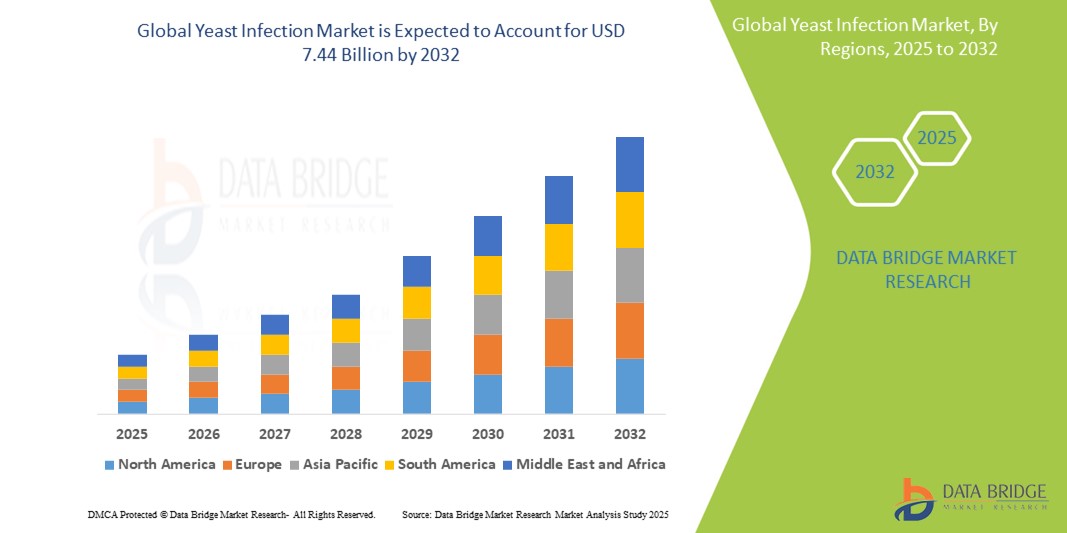
Tamanho do mercado de infecção por fungos
- O tamanho do mercado global de infecções por fungos foi avaliado em US$ 4,63 bilhões em 2024 e deve atingir US$ 7,44 bilhões até 2032 , com um CAGR de 6,10% durante o período previsto.
- Este crescimento é impulsionado por fatores como a crescente prevalência de infecções fúngicas, a crescente conscientização sobre higiene pessoal e a crescente demanda por tratamentos antifúngicos de venda livre e com receita médica.
Análise de Mercado de Infecção por Levedura
- O mercado global de infecções fúngicas concentra-se no diagnóstico, tratamento e prevenção de infecções causadas por espécies de Candida, particularmente Candida albicans, que comumente afeta a pele, a boca, os genitais e a corrente sanguínea.
- O crescimento é impulsionado principalmente por fatores como a crescente incidência de condições imunocomprometidas (por exemplo, HIV / AIDS , diabetes), aumento do uso de antibióticos e maior conscientização sobre a saúde e higiene das mulheres.
- Espera-se que a América do Norte domine o mercado de infecções fúngicas com uma participação de mercado de 42,5%, devido à alta prevalência de condições como diabetes, que aumenta a suscetibilidade a infecções fúngicas, juntamente com infraestrutura avançada de saúde e fortes campanhas de conscientização pública.
- Espera-se que a Ásia-Pacífico seja a região de crescimento mais rápido no mercado de infecções fúngicas, com uma participação de mercado de 22,5%, durante o período previsto, devido à rápida expansão da infraestrutura de saúde, à crescente conscientização sobre infecções fúngicas e ao aumento dos volumes cirúrgicos na região.
- Espera-se que o segmento Candida albicans domine o mercado com uma participação de mercado de 85,7% devido à sua alta prevalência como o principal agente causador da maioria das infecções fúngicas, especialmente candidíase vaginal e oral.
Escopo do Relatório e Segmentação do Mercado de Infecção por Levedura
|
Atributos |
Principais insights de mercado sobre infecção por fungos |
|
Segmentos abrangidos |
|
|
Países abrangidos |
América do Norte
Europa
Ásia-Pacífico
Middle East and Africa
South America
|
|
Key Market Players |
|
|
Market Opportunities |
|
|
Value Added Data Infosets |
In addition to the insights on market scenarios such as market value, growth rate, segmentation, geographical coverage, and major players, the market reports curated by the Data Bridge Market Research also include import export analysis, production capacity overview, production consumption analysis, price trend analysis, climate change scenario, supply chain analysis, value chain analysis, raw material/consumables overview, vendor selection criteria, PESTLE Analysis, Porter Analysis, and regulatory framework. |
Yeast Infection Market Trends
“Rising Adoption of Rapid Diagnostic Testing & Antifungal Resistance Management”
- One prominent trend in the yeast infection market is the growing adoption of rapid diagnostic tests that enable early and accurate detection of various Candida species, enhancing timely treatment and reducing complications
- These diagnostic innovations help differentiate between fungal strains, supporting targeted antifungal therapy and limiting the misuse of broad-spectrum treatments, which contributes to improved patient outcomes
- For instance, molecular diagnostic tools such as PCR and MALDI-TOF mass spectrometry are being increasingly integrated into clinical settings to detect antifungal resistance, especially in recurrent and systemic infections
- These trends are reshaping the yeast infection treatment landscape by promoting precision medicine, combating drug resistance, and driving demand for advanced diagnostics and targeted antifungal therapies
Yeast Infection Market Dynamics
Driver
“Increased Incidence of Immunocompromised Conditions and Antibiotic Overuse”
- The growing prevalence of immunocompromised conditions such as HIV/AIDS, diabetes, cancer, and organ transplantation significantly increases susceptibility to opportunistic infections such as candidiasis, thereby fueling demand for effective yeast infection treatments
- In addition, the widespread and sometimes indiscriminate use of antibiotics disrupts the body’s natural microbiota, creating favorable conditions for fungal overgrowth, particularly Candida albicans, which leads to recurrent infections
- With the increasing burden of chronic diseases and antibiotic resistance, healthcare providers are placing greater emphasis on early diagnosis and effective antifungal therapies to prevent complications and recurrence
For instance,
- According to the Centers for Disease Control and Prevention (CDC), around 1.7 million people are diagnosed with diabetes annually in the United States, and diabetics are at significantly higher risk of developing yeast infections due to elevated glucose levels and weakened immunity
- As a result, the rising incidence of immunocompromised states and antibiotic misuse is directly driving the demand for targeted yeast infection treatments and improved antifungal drug development
Opportunity
“Advancements in Diagnostic Technologies and Personalized Antifungal Therapies”
- The development of rapid and precise diagnostic tools, such as PCR-based assays and next-generation sequencing (NGS), is enabling earlier detection and species-level identification of Candida infections, which is crucial for selecting effective, targeted therapies
- These advanced diagnostics facilitate the shift toward personalized antifungal treatment regimens, reducing resistance development and improving patient outcomes, especially in recurrent or systemic yeast infections
- In addition, innovations in drug delivery systems, including sustained-release formulations and topical nanocarriers, are enhancing treatment adherence and efficacy, particularly in patients with chronic or localized infections
For instance,
- In February 2024, according to a report published by the National Institutes of Health (NIH), researchers successfully trialed a new nanoparticle-based topical antifungal therapy that significantly improved the treatment response in patients with recurrent vulvovaginal candidiasis, showcasing the potential of advanced drug delivery in managing persistent infections
- These innovations present a major opportunity for pharmaceutical companies and diagnostic labs to develop more effective, patient-specific solutions, ultimately transforming the yeast infection treatment landscape through precision medicine and technological integration
Restraint/Challenge
“Antifungal Resistance and Limited Treatment Options”
- The rise of antifungal resistance poses a significant challenge for the yeast infection market, particularly for recurrent and systemic infections caused by Candida albicans and other resistant species. Overuse and misuse of antifungal medications, particularly azoles, have contributed to this growing issue
- This resistance results in fewer effective treatment options, requiring higher doses or alternative therapies that are often less effective or more costly, impacting patient outcomes and increasing healthcare costs
- The limited availability of novel antifungal agents and the slow pace of new drug development due to regulatory challenges and high research costs further compounds the issue, leaving healthcare providers with fewer effective treatments to combat resistant infections
For instance,
- In August 2024, a report by the World Health Organization (WHO) highlighted that the global rise in antifungal resistance is a critical concern, with Candida auris and other resistant strains becoming increasingly prevalent, complicating treatment strategies and leading to longer hospital stays and higher mortality rates
- These challenges are hindering the growth of the yeast infection treatment market by increasing the complexity of treatment regimens and limiting the availability of effective, affordable antifungal therapies for patients worldwide
Yeast Infection Market Scope
The market is segmented on the basis of pathogens, type, treatment, and end user
|
Segmentation |
Sub-Segmentation |
|
By Pathogens |
|
|
By Types |
|
|
By Treatment |
|
|
By End user |
|
In 2025, candida albicans is projected to dominate the market with a largest share in pathogens segment
The candida albicans segment is expected to dominate the yeast infection market with the largest share of 85.7% in 2025 due to its high prevalence as the primary causative agent in most yeast infections, especially vaginal and oral candidiasis. Its strong adaptability to various host environments and ability to form biofilms make it more virulent and resistant to treatment. In addition, widespread antibiotic use and immunocompromised conditions further contribute to its dominance
The vaginal yeast infection is expected to account for the largest share during the forecast period in type market
In 2025, the vaginal yeast infection segment is expected to dominate the market with the largest market share of 63.4% due to its high global prevalence among women, particularly during pregnancy, antibiotic use, and hormonal changes. Increased awareness of women's health, better access to OTC antifungal treatments, and frequent recurrence rates further contribute to its market dominance
Yeast Infection Market Regional Analysis
“North America Holds the Largest Share in the Yeast Infection Market”
- North America dominates the yeast infection market with a market share of estimated 42.5%, driven, by high prevalence of conditions such as diabetes, which increases susceptibility to yeast infections, along with advanced healthcare infrastructure and strong public awareness campaigns
- U.S. holds a market share of 90.5%, due to high rates of recurrent infections, the availability of over-the-counter treatments, and extensive healthcare accessibility
- The region benefits from well-established healthcare policies, including insurance coverage for antifungal treatments and access to cutting-edge diagnostic technologies that support early detection and precise treatment of yeast infections
- In addition, the high spending on healthcare and the rising burden of chronic conditions such as obesity and diabetes in the region contribute to the increasing demand for yeast infection treatments
“Asia-Pacific is Projected to Register the Highest CAGR in the Yeast Infection Market”
- Asia-Pacific is expected to witness the highest growth rate in the Yeast Infection market with a market share of 22.5%, driven by rapid expansion of healthcare infrastructure, growing awareness about yeast infections, and rising surgical volumes in the region
- Countries such as China, India, and Japan are emerging as critical markets due to the increasing number of immunocompromised individuals and the rising incidence of diabetes, which significantly increases the risk of yeast infections
- China, with its large population and increasing focus on healthcare, is also experiencing a significant rise in the demand for both over-the-counter and prescription antifungal treatments, which further drives market growth
- India is projected to register the highest CAGR of 6.3% in the yeast infection treatment market, driven by rapid improvements in healthcare access, rising awareness of women's health, and growing adoption of advanced diagnostic technologies and antifungal treatments
Yeast Infection Market Share
The market competitive landscape provides details by competitor. Details included are company overview, company financials, revenue generated, market potential, investment in research and development, new market initiatives, global presence, production sites and facilities, production capacities, company strengths and weaknesses, product launch, product width and breadth, application dominance. The above data points provided are only related to the companies' focus related to market.
The Major Market Leaders Operating in the Market Are:
- SCYNEXIS, Inc. (U.S.)
- Merck & Co., Inc. (U.S.)
- Bayer AG (Germany)
- Astellas Pharma Inc. (Japan)
- Thermo Fisher Scientific Inc. (U.S.)
- Novartis AG (Switzerland)
- Abbott (U.S.)
- Catalent, Inc (U.S.)
- BIOMÉRIEUX (France)
- Pfizer Inc. (U.S.)
- AbbVie Inc., (U.S.)
- Jubilant Pharmova Limited (India)
- Sanofi (France)
- AstraZeneca (U.K)
- Bruker (U.S.)
- Corden Pharma (Germany)
- Basilea Pharmaceutica AG (Switzerland)
- F2G (U.K.)
Latest Developments in Global Yeast Infection Market
- Em fevereiro de 2025, sociedades médicas internacionais publicaram diretrizes atualizadas para o diagnóstico e tratamento de infecções por Candida. Essas diretrizes recomendam equinocandinas, como caspofungina, micafungina, anidulafungina e a mais recente rezafungina, como terapias de primeira linha para candidíase invasiva devido à sua ampla atividade e perfil de segurança. Além disso, o oteseconazol foi introduzido como opção de tratamento para candidíase vulvovaginal recorrente.
- Em abril de 2024, pesquisadores da Universidade de Tóquio anunciaram o desenvolvimento de uma nova terapia combinada para o tratamento de infecções invasivas por Candida. Este tratamento combina micafungina, uma equinocandina bem conhecida, com um novo agente fungicida que demonstrou resultados promissores em ensaios pré-clínicos, potencialmente proporcionando uma solução mais eficaz para pacientes com infecções resistentes a antifúngicos.
- Em março de 2023, a FDA dos EUA aprovou a rezafungina (nome comercial Rezzayo), um novo antifúngico à base de equinocandina, para o tratamento de candidíase invasiva e candidemia. Este tratamento intravenoso, administrado uma vez por semana, oferece um esquema posológico mais conveniente em comparação com as alternativas diárias, melhorando potencialmente a adesão e os resultados do paciente.
- Em abril de 2022, a FDA dos EUA aprovou o oteseconazol (nome comercial VIVJOA), um inibidor seletivo do CYP51, para o tratamento da candidíase vulvovaginal recorrente (CVRV) em mulheres sem potencial reprodutivo. Essa aprovação marcou o oteseconazol como o primeiro medicamento aprovado pela FDA especificamente para CVRV. Estudos clínicos demonstraram que o oteseconazol reduziu significativamente a incidência de recorrência de CVRV ao longo de um período de 50 semanas.
- Em dezembro de 2021, a Cidara Therapeutics, Inc. e a Mundipharma anunciaram resultados positivos de primeira linha do ensaio clínico fundamental ReSTORE Fase 3, que avaliou a eficácia e a segurança da rezafungina, um tratamento antifúngico de administração semanal, como opção de primeira linha para candidemia e candidíase invasiva.
SKU-
Obtenha acesso online ao relatório sobre a primeira nuvem de inteligência de mercado do mundo

- Painel interativo de análise de dados
- Painel de análise da empresa para oportunidades de elevado potencial de crescimento
- Acesso de analista de pesquisa para personalização e customização. consultas
- Análise da concorrência com painel interativo
- Últimas notícias, atualizações e atualizações Análise de tendências
- Aproveite o poder da análise de benchmark para um rastreio abrangente da concorrência
Metodologia de Investigação
A recolha de dados e a análise do ano base são feitas através de módulos de recolha de dados com amostras grandes. A etapa inclui a obtenção de informações de mercado ou dados relacionados através de diversas fontes e estratégias. Inclui examinar e planear antecipadamente todos os dados adquiridos no passado. Da mesma forma, envolve o exame de inconsistências de informação observadas em diferentes fontes de informação. Os dados de mercado são analisados e estimados utilizando modelos estatísticos e coerentes de mercado. Além disso, a análise da quota de mercado e a análise das principais tendências são os principais fatores de sucesso no relatório de mercado. Para saber mais, solicite uma chamada de analista ou abra a sua consulta.
A principal metodologia de investigação utilizada pela equipa de investigação do DBMR é a triangulação de dados que envolve a mineração de dados, a análise do impacto das variáveis de dados no mercado e a validação primária (especialista do setor). Os modelos de dados incluem grelha de posicionamento de fornecedores, análise da linha de tempo do mercado, visão geral e guia de mercado, grelha de posicionamento da empresa, análise de patentes, análise de preços, análise da quota de mercado da empresa, normas de medição, análise global versus regional e de participação dos fornecedores. Para saber mais sobre a metodologia de investigação, faça uma consulta para falar com os nossos especialistas do setor.
Personalização disponível
A Data Bridge Market Research é líder em investigação formativa avançada. Orgulhamo-nos de servir os nossos clientes novos e existentes com dados e análises que correspondem e atendem aos seus objetivos. O relatório pode ser personalizado para incluir análise de tendências de preços de marcas-alvo, compreensão do mercado para países adicionais (solicite a lista de países), dados de resultados de ensaios clínicos, revisão de literatura, mercado remodelado e análise de base de produtos . A análise de mercado dos concorrentes-alvo pode ser analisada desde análises baseadas em tecnologia até estratégias de carteira de mercado. Podemos adicionar quantos concorrentes necessitar de dados no formato e estilo de dados que procura. A nossa equipa de analistas também pode fornecer dados em tabelas dinâmicas de ficheiros Excel em bruto (livro de factos) ou pode ajudá-lo a criar apresentações a partir dos conjuntos de dados disponíveis no relatório.











