



Sweden Flour Market, By Product Type (Wheat Flour, Oat Flour, Soy Flour, Amaranth Flour, Rye Flour, Almond Flour, Quinoa Flour, Cassava Flour, Sorghum Flour, Tapioca Flour, Rice Flour, Corn Flour, Chickpea Flour, and Others), Technology (Wet Technology and Dry Technology), Category (Conventional and Organic), GMO Category (Non-GMO and GMO), End Use (Food Service Industry, Household/Retail, and Industrial), Distribution Channel (Indirect and Direct) - Industry Trends and Forecast to 2030.
Sweden Flour Market Analysis and Size
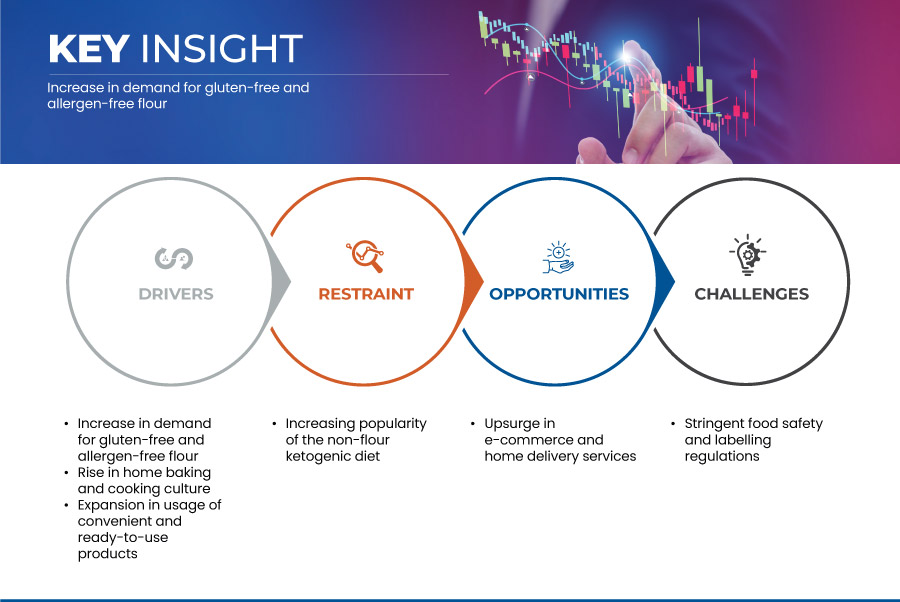
The Sweden flour Market is being driven by the increase in demand for gluten-free and allergen free flour is an important driver for the Sweden flour market. Moreover, the upsurge in e-commerce and home delivery service is expected to boost market growth. However, stringent food safety and labelling regulations is expected to challenge market growth which is expected to restrain the market growth.
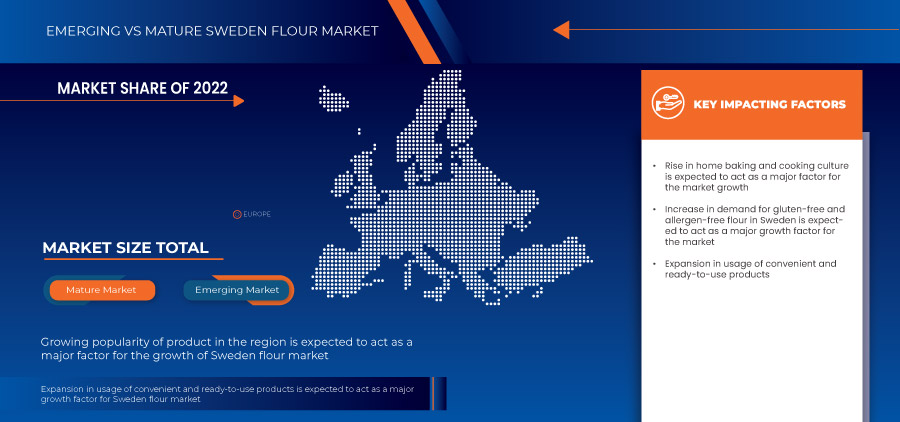
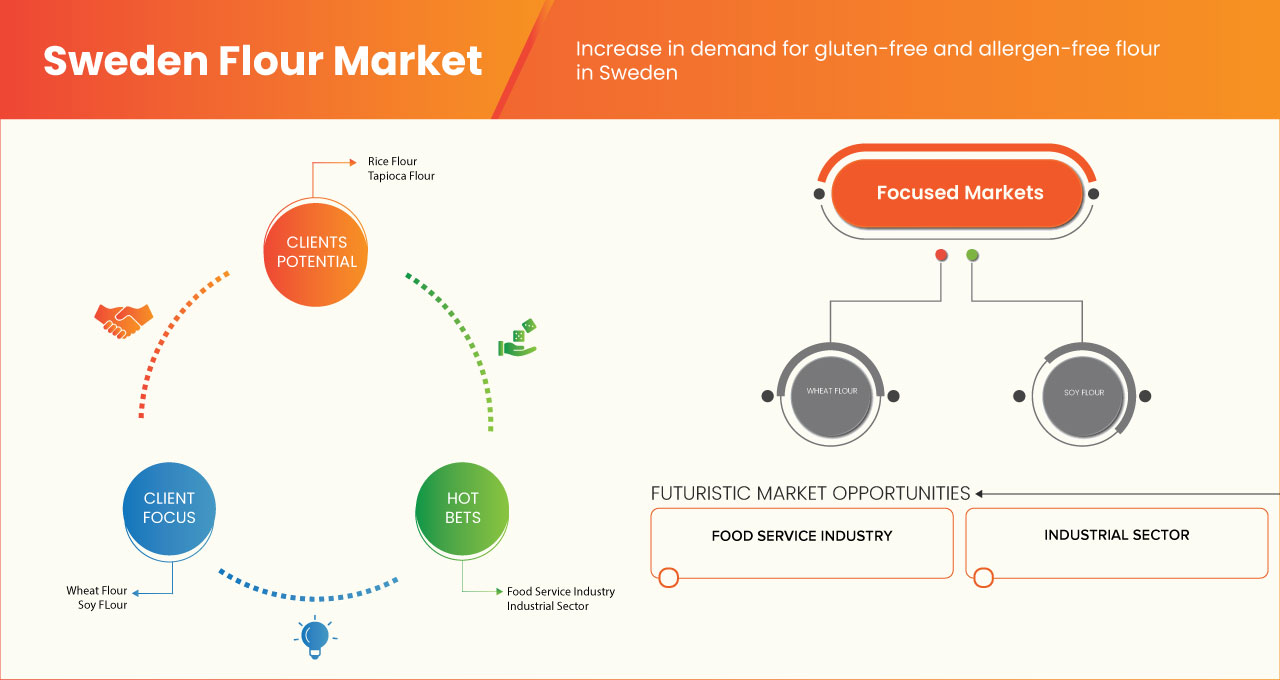
Data Bridge Market Research analyses that the Sweden flour market is expected to reach the value of USD 1,544,894.11 thousand by 2030, at a CAGR of 3.2% during the forecast period.
|
Report Metric |
Details |
|
Forecast Period |
2023 to 2030 |
|
Base Year |
2022 |
|
Historic Year |
2021 (Customizable 2015-2020) |
|
Quantitative Units |
Revenue in USD Thousand |
|
Segments Covered |
Product Type (Wheat Flour, Oat Flour, Soy Flour, Amaranth Flour, Rye Flour, Almond Flour, Quinoa Flour, Cassava Flour, Sorghum Flour, Tapioca Flour, Rice Flour, Corn Flour, Chickpea Flour, and Others), Technology (Wet Technology and Dry Technology), Category (Conventional and Organic), GMO Category (Non-GMO and GMO), End Use (Food Service Industry, Household/Retail, and Industrial), Distribution Channel (Indirect and Direct) |
|
Countries Covered |
Sweden |
|
Market Players Covered |
ADM, Bakels Sweden, Cargill, Incorporated, Salta Kvarn, Lantmannen, and Skane-mollan AB, among others. |
Market Definition
Flour is a fine powdery substance that is obtained by grinding grains, seeds, or roots. It serves as a fundamental ingredient in cooking and baking, providing structure, texture, and bulk to a variety of foods. The most common type of flour is wheat flour, which is derived from milling wheat grains. However, other types of flour can be produced from different sources, such as corn, rice, oats, and more.
Sweden Flour Market Dynamics
This section deals with understanding the market drivers, advantages, opportunities, restraints and challenges. All of this is discussed in detail as below:
Drivers
- Increase in Demand for Gluten-Free and Allergen-Free Flour
The Sweden flour market is being significantly influenced by the rising demand for gluten-free and allergen-free flours, which is resulting in changing consumer tastes and market dynamics. This trend is mostly driven by consumers looking for alternative solutions that satisfy their dietary limitations without sacrificing taste or quality. The knowledge of gluten sensitivity, celiac disease, and other allergies is on the rise.
This increase in demand influences the Sweden flour market to encourage innovations and product diversification. To satisfy the demands of health-conscious consumers, flour producers are driven to create a broader variety of gluten-free and allergen-free flour options using ingredients such as rice, almond, coconut, and chickpea. This diversification not only broadens the range of products available on the market but also opens up a market for more expensive goods with larger profit margins. The increased demand for flour free of gluten and other allergens fosters a competitive climate that forces traditional flour producers to change. Established brands may decide to add these specialty flours to their product lines to appeal to a wider customer base and stay relevant in a competitive market.
- Rise in Home Baking and Cooking Culture
The growing culture of home baking and cooking has become a major force in the Sweden flour market, changing consumer behavior and the distribution of culinary preferences. More and more people are attempting to make homemade meals and sweets due to the growing popularity of home baking and cooking, which in turn has contributed to an increase in the consumption of flour.
Due to the wide range of culinary preferences, there is now a greater demand for a variety of flours, including all-purpose, whole wheat, specialty, and even gluten-free alternatives. Utilizing this trend, flour producers are growing their product portfolios and creating cutting-edge flour varieties that appeal to home cooks.
The trend is significantly fueled by social media platforms' accessibility. Sharing culinary creations on social media sites such as Instagram and TikTok among others has grown in popularity as a method for people to demonstrate their aptitude for baking and cooking. This sharing culture not only increases the allure of home cooking but also provides free advertising for flour brands as marked ingredients are publicly displayed.
- Expansion in Usage of Convenient and Ready-To-Use Products
The growing adoption of convenient and ready-to-use flour-based products is expected to drive market growth, reshaping consumer preferences and influencing market dynamics. This trend is driven by shifting lifestyles, busy schedules, and a desire for simplicity in meal preparation.
Convenient and ready-to-use flour products cater to the demands of modern consumers seeking time-efficient solutions for their meals and snacks. These products, such as pre-made baking mixes, pre-portioned doughs, and instant pancake or waffle mixes, significantly reduce the time and effort required for cooking and baking.
This convenience appeals to a wide range of consumers, including working professionals, busy parents, and students, who seek quick and hassle-free meal options without compromising on taste and quality.
The trend also taps into the expanding trend of on-the-go consumption. Ready-to-use flour-based snacks, such as protein bars, energy bites, and gluten-free crackers, cater to individuals who require portable and nutritious options for their busy lives.
Moreover, the convenience trend can drive product innovation. Manufacturers can experiment with packaging formats, portion sizes, and flavor profiles to meet evolving consumer preferences. For instance, they can offer single-serving portions for solo consumers or larger family-sized options, diversifying their product range and appealing to a broader spectrum of buyers.
Opportunity
- Upsurge in E-Commerce and Home Delivery Services
The upsurge in e-commerce and home delivery services presents a host of opportunities for market growth. The flour industry can leverage this shift to achieve significant growth and expansion as consumer behavior is evolving and embracing online shopping trends.
Firstly, the convenience factor associated with e-commerce and home delivery services aligns perfectly with the busy lifestyles of modern consumers. With a few clicks, customers can browse a wide range of flour products, compare prices, and place orders from the comfort of their homes. This ease of access and streamlined purchasing process can attract a larger customer base, including those who might have been less inclined to visit physical stores.
Secondly, the digital platform provides an avenue for creative marketing and targeted advertising. Flour producers can engage customers through visually appealing websites, social media platforms, and email campaigns. This allows for direct communication with consumers, enabling them to learn about different flour varieties, recipes, and usage tips. Such engagement not only enhances brand loyalty but also educates consumers about the diverse applications of various flours, potentially driving increased consumption.
Restraint
- Increasing Popularity of the Non-Flour Ketogenic Diet
The non-flour ketogenic diet has been experiencing a surge in popularity due to a variety of factors and considerations that have captured the interest and preference of a growing number of individuals. With heightened awareness about the impact of carbohydrates on health and weight management, more people are seeking ways to reduce carbohydrate intake. The non-flour ketogenic diet offers a way to achieve this by avoiding flour-based products, which are typically high in carbohydrates.
The non-flour ketogenic diet's reputation for supporting weight loss, metabolic health, and blood sugar control has captured the attention of those striving to improve their overall well-being. This has led to a considerable interest in adopting this approach. In the ketogenic diet, non-starchy vegetables such as leafy greens, broccoli, cauliflower, zucchini, and peppers are included to provide fiber, vitamins, and minerals while keeping carbohydrate intake low.
In a ketogenic diet, protein plays a crucial role in providing essential amino acids for muscle maintenance, repair, and overall body function. While the primary focus of the keto diet is on consuming high amounts of healthy fats and minimizing carbohydrates to induce a state of ketosis, protein intake remains important for maintaining lean body mass and overall health. Nuts and berries provide healthy fats, fiber, and micronutrients, making them suitable for ketogenic snacking.
Challenge
- Stringent Food Safety and Labelling Regulations
The primary goal of food safety and labeling regulations is to protect consumers from health risks associated with unsafe or improperly labeled food products. Flour is a staple ingredient that is used in a wide range of products, and improper handling, processing, or labeling could lead to foodborne illnesses, allergies, or other health issues. Accurate and clear labeling provides consumers with essential information about the content and characteristics of flour products. This allows consumers, including those with allergies or specific dietary preferences, to make informed choices about the food they purchase and consume
Recent Developments
- In June 2023, The Lantmännen Research Foundation invested in research throughout the agri value chain, from field to fork. The goal is to increase productivity, food security, and robust food systems, as well as reduce the environmental impact of farming, aiming for climate neutrality by 2050.
- In August 2023, the Product Development and Management Association (PDMA) named Cargill, Incorporated as a recipient of the 2023 Outstanding Corporate Innovator (OCI) Award. Recognizing global innovation powerhouses such as Hershey, 3M, Medtronic, DuPont, Starbucks, BMW, and Marriott – the OCI award was granted to the organizations that delivered sustained and quantifiable success. This includes new products, services, and practices, which contribute to this success
Sweden Flour Market Scope
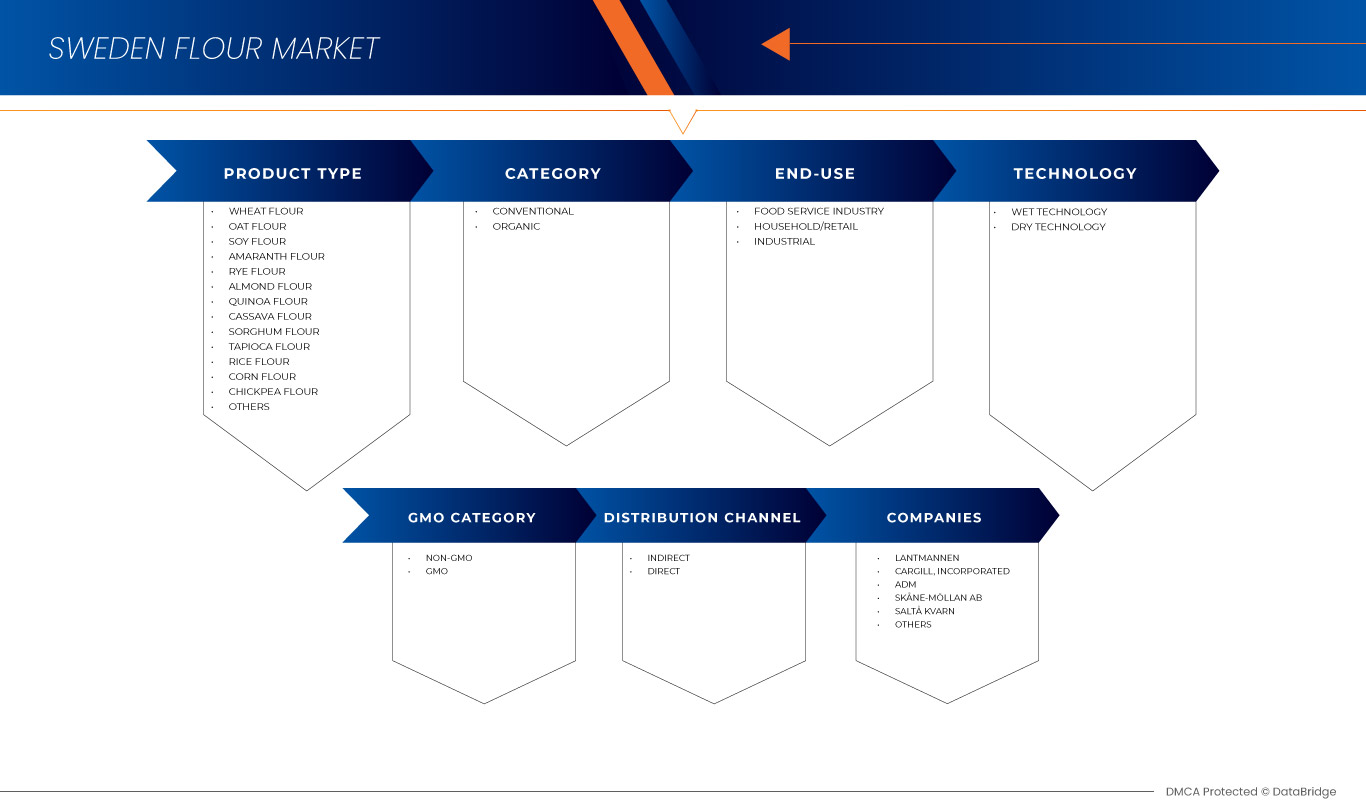
The Sweden flour market is categorized into six notable segments based on type, technology, category, GMO category, end use, and distribution channel. The growth amongst these segments will help you analyze major growth segments in the industries and provide the users with a valuable market overview and market insights to help them make strategic decisions for identifying core market applications.
Product Type
- Wheat Flour
- Oat Flour
- Soy Flour
- Amaranth Flour
- Rye Flour
- Almond Flour
- Quinoa Flour
- Cassava Flour
- Sorghum Flour
- Tapioca Flour
- Rice Flour
- Corn Flour
- Chickpea Flour
- Others
On the basis of product type, the market is segmented into wheat flour, oat flour, soy flour, amaranth flour, rye flour, almond flour, quinoa flour, cassava flour, sorghum flour, tapioca flour, rice flour, corn flour, chickpea flour, and others.
Technology
- Wet Technology
- Dry Technology
On the basis of technology, the market is segmented into wet technology and dry technology.
Category
- Conventional
- Organic
On the basis of automation, t the market is segmented into conventional and organic.
GMO Category
- NON-GMO
- GMO
On the basis of the GMO category, the market is segmented into Non-GMO and GMO
End-Use
- Food Service Industry
- Household/Retail
- Industrial
On the basis of material, the market is segmented into the food service industry, household/retail, and industrial
Distribution Channel
- Direct
- Indirect
On the basis of distribution channel, the market is segmented into direct and indirect
Competitive Landscape and Sweden Flour Market Share Analysis
The Sweden flour market competitive landscape provides details by competitors. Details included are company overview, company financials, revenue generated, market potential, investment in research and development, new market initiatives, production sites and facilities, production capacities, company strengths and weaknesses, product launch, product width and breadth, and application dominance. The above data points provided are only related to the companies' focus on the Sweden flour market.
Some of the major players operating in the Sweden Flour Market are ADM, Bakels Sweden, Cargill, Incorporated, Salta Kvarn, Lantmannen, and Skane-mollan AB, among others.
SKU-
Obtenha acesso online ao relatório sobre a primeira nuvem de inteligência de mercado do mundo

- Painel interativo de análise de dados
- Painel de análise da empresa para oportunidades de elevado potencial de crescimento
- Acesso de analista de pesquisa para personalização e customização. consultas
- Análise da concorrência com painel interativo
- Últimas notícias, atualizações e atualizações Análise de tendências
- Aproveite o poder da análise de benchmark para um rastreio abrangente da concorrência
Metodologia de Investigação
A recolha de dados e a análise do ano base são feitas através de módulos de recolha de dados com amostras grandes. A etapa inclui a obtenção de informações de mercado ou dados relacionados através de diversas fontes e estratégias. Inclui examinar e planear antecipadamente todos os dados adquiridos no passado. Da mesma forma, envolve o exame de inconsistências de informação observadas em diferentes fontes de informação. Os dados de mercado são analisados e estimados utilizando modelos estatísticos e coerentes de mercado. Além disso, a análise da quota de mercado e a análise das principais tendências são os principais fatores de sucesso no relatório de mercado. Para saber mais, solicite uma chamada de analista ou abra a sua consulta.
A principal metodologia de investigação utilizada pela equipa de investigação do DBMR é a triangulação de dados que envolve a mineração de dados, a análise do impacto das variáveis de dados no mercado e a validação primária (especialista do setor). Os modelos de dados incluem grelha de posicionamento de fornecedores, análise da linha de tempo do mercado, visão geral e guia de mercado, grelha de posicionamento da empresa, análise de patentes, análise de preços, análise da quota de mercado da empresa, normas de medição, análise global versus regional e de participação dos fornecedores. Para saber mais sobre a metodologia de investigação, faça uma consulta para falar com os nossos especialistas do setor.
Personalização disponível
A Data Bridge Market Research é líder em investigação formativa avançada. Orgulhamo-nos de servir os nossos clientes novos e existentes com dados e análises que correspondem e atendem aos seus objetivos. O relatório pode ser personalizado para incluir análise de tendências de preços de marcas-alvo, compreensão do mercado para países adicionais (solicite a lista de países), dados de resultados de ensaios clínicos, revisão de literatura, mercado remodelado e análise de base de produtos . A análise de mercado dos concorrentes-alvo pode ser analisada desde análises baseadas em tecnologia até estratégias de carteira de mercado. Podemos adicionar quantos concorrentes necessitar de dados no formato e estilo de dados que procura. A nossa equipa de analistas também pode fornecer dados em tabelas dinâmicas de ficheiros Excel em bruto (livro de factos) ou pode ajudá-lo a criar apresentações a partir dos conjuntos de dados disponíveis no relatório.











