Global Autoimmune Monoclonal Antibodies Market Segmentation, By Indication (Rheumatoid Arthritis, Systemic Lupus Erythematosus, Multiple Sclerosis, Organ Transplant Rejection, Myasthenia Gravis, and Others), Route of Administration (Parenteral and Others), End-Users (Hospitals, Homecare, Speciality Centres, and Others), Distribution Channel (Hospital Pharmacy, Online Pharmacy, and Retail Pharmacy) - Industry Trends and Forecast to 2033
Каковы размеры и темпы роста аутоиммунных моноклональных антител
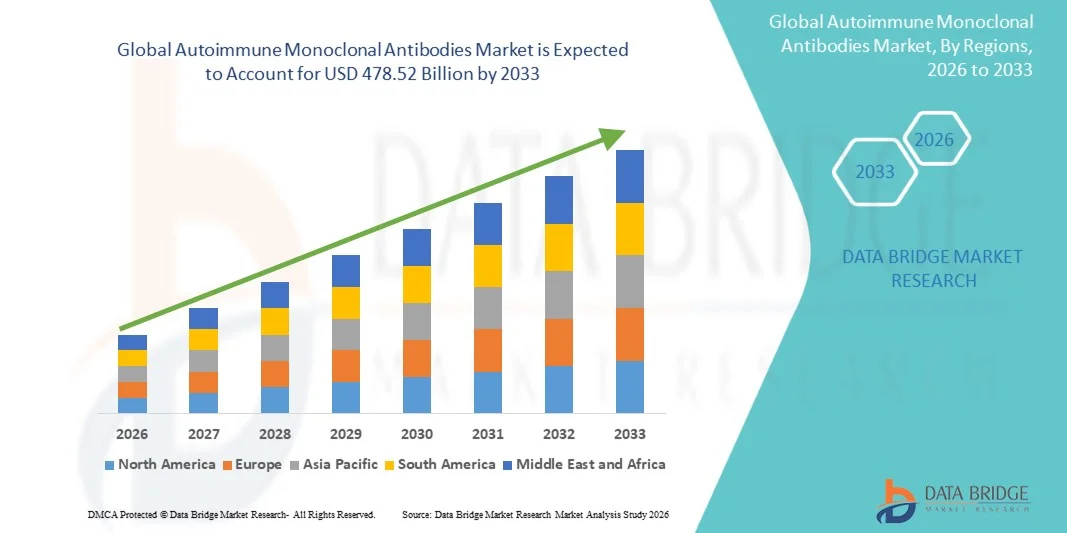
- Согласно анализу рынка Data Bridge Market Research, глобальный размер рынка аутоиммунных моноклональных антител был оценен как180,00 млрд долларов США в 2025 годуОжидается, что он достигнет$478,52 млрд к 2033 году, вCAGR 13.00%в течение прогнозируемого периода
- Рост рынка в значительной степени обусловлен увеличением распространенности аутоиммунных заболеваний, повышением уровня осведомленности и диагностики, а также постоянными достижениями в области биологической терапии, что приводит к более широкому принятию целевых вариантов лечения в медицинских учреждениях.
- Кроме того, растущие инвестиции в исследования и разработки, расширение конвейера моноклональных антител и увеличение предпочтения точной медицины ускоряют поглощение аутоиммунных моноклональных антител, тем самым значительно повышая рост отрасли.
Размер рынка и прогноз
- Глобальная рыночная стоимость (2025):180,00 млрд долларов США в 2025 году
- Ожидаемая рыночная стоимость (2033):$478,52 млрд к 2033 году
- Прогноз CAGR (2026–2033):13.00%
Анализ рынка аутоиммунных моноклональных антител
- Аутоиммунные моноклональные антитела, которые являются целевыми биологическими методами лечения, используемыми для лечения различных аутоиммунных расстройств, становятся все более важными в современном здравоохранении из-за их способности точно модулировать иммунные реакции и улучшать результаты пациентов при нескольких хронических воспалительных состояниях.
- Растущий спрос на аутоиммунные моноклональные антитела в первую очередь подпитывается растущей распространенностью аутоиммунных заболеваний, растущим внедрением биологических препаратов и биоаналогов, а также постоянными достижениями в разработке антител и разработке целевой терапии.
- Северная Америка доминировала на рынке аутоиммунных моноклональных антител с самой большой долей выручки в 44,2% в 2025 году, поддерживаемой передовой инфраструктурой здравоохранения, сильным присутствием ведущих биофармацевтических компаний и высоким внедрением инновационных биологических методов лечения.
- Ожидается, что Азиатско-Тихоокеанский регион станет самым быстрорастущим регионом на рынке аутоиммунных моноклональных антител в течение прогнозируемого периода, регистрируя CAGR в 14,1%, что обусловлено расширением доступа к здравоохранению, ростом расходов на здравоохранение и увеличением диагностики аутоиммунных расстройств в развивающихся странах.
- Парентеральный сегмент доминировал на рынке с долей выручки 89,2% в 2025 году, что обусловлено характером моноклональных антител, которые в основном вводятся внутривенно или подкожно.
Сфера охвата и сегментация рынка аутоиммунных моноклональных антител
|
Атрибуты |
Аутоиммунные моноклональные антитела - ключевые идеи рынка |
|
Сегменты покрыты |
|
|
Страны, охваченные |
Северная Америка
Европа
Азиатско-Тихоокеанский регион
Ближний Восток и Африка
Южная Америка
|
|
Ключевые игроки рынка |
|
|
Рыночные возможности |
|
|
Информационные наборы данных с добавленной стоимостью |
В дополнение к информации о рыночных сценариях, таких как рыночная стоимость, темпы роста, сегментация, географическое покрытие и основные игроки, рыночные отчеты, курируемые Data Bridge Market Research, также включают углубленный экспертный анализ, эпидемиологию пациентов, анализ трубопроводов, анализ цен и нормативную базу. |
Каковы основные тенденции в аутоиммунных моноклональных антителах
"Растущее применение передовых биологических методов терапии и персонализированных подходов к лечению"
- Значительной и ускоряющейся тенденцией на мировом рынке аутоиммунных моноклональных антител является растущее внедрение передовых биологических методов лечения в сочетании с переходом к персонализированной медицине. Эта эволюция значительно улучшает результаты лечения, нацеливаясь на определенные иммунные пути, ответственные за аутоиммунные заболевания.
- Например, методы лечения моноклональными антителами все чаще адаптируются на основе специфических для пациента биомаркеров, что позволяет клиницистам выбирать наиболее эффективное лечение с уменьшенными побочными эффектами. Аналогичным образом разрабатываются новые составы для повышения эффективности и соответствия пациентов с помощью менее частых графиков дозирования.
- Интеграция подходов точной медицины позволяет поставщикам медицинских услуг лучше понимать механизмы заболевания и изменчивость пациентов, что приводит к оптимизации терапевтических стратегий. Кроме того, достижения в области производства и разработки биологических препаратов улучшают стабильность лекарств и механизмы доставки.
- Растущее использование таргетной терапии по таким показаниям, как:ревматоидный артритпсориаз, ивоспалительные заболевания кишечникаЭто еще больше усиливает расширение рынка, поскольку эти методы лечения предлагают более высокую специфичность по сравнению с обычными методами лечения.
- Эта тенденция к более целенаправленным, эффективным и ориентированным на пациента решениям лечения меняет клиническую практику и улучшает долгосрочные результаты лечения заболеваний. Следовательно, фармацевтические компании сосредоточены на расширении своих биологических трубопроводов и разработке моноклональных антител следующего поколения с улучшенными терапевтическими профилями.
- Спрос на инновационные и высокоэффективные биологические методы лечения быстро растет как на развитых, так и на развивающихся рынках, поскольку пациенты и поставщики медицинских услуг все чаще отдают приоритет повышению эффективности, безопасности и качества жизни.
Динамика рынка аутоиммунных моноклональных антител
водитель
Растущая распространенность аутоиммунных заболеваний и растущий спрос на целевую терапию
- Растущая распространенность аутоиммунных расстройств во всем мире в сочетании с повышением уровня осведомленности и диагностики является значительным фактором роста рынка аутоиммунных моноклональных антител.
- Например, в апреле 2025 года ведущие фармацевтические компании объявили о достижениях в области биологической терапии, направленных на улучшение результатов лечения хронических аутоиммунных заболеваний, подчеркнув сильное развитие трубопровода в этом пространстве. Ожидается, что такие инициативы будут стимулировать рост рынка в течение прогнозируемого периода.
- Поскольку пациенты и медицинские работники ищут более эффективные и долгосрочные решения для лечения, моноклональные антитела предлагают целенаправленное действие с улучшенной эффективностью и снижением системных побочных эффектов по сравнению с традиционными методами лечения.
- Кроме того, растущий акцент на раннюю диагностику и вмешательство увеличивает внедрение передовых методов лечения, что позволяет лучше управлять болезнями и предотвращать осложнения.
- Расширение применения моноклональных антител по нескольким аутоиммунным показаниям, наряду с увеличением показателей клинического успеха, еще больше повышает их спрос как в больницах, так и в специализированных учреждениях по уходу.
- Кроме того, благоприятная политика возмещения расходов, увеличение расходов на здравоохранение и постоянные инвестиции в НИОКР поддерживают широкое внедрение этих методов лечения во всем мире.
Сдержанность/вызов
"Высокие затраты на лечение и сложные пути регулирования"
- Высокая стоимость лечения моноклональными антителами остается серьезной проблемой для широкого распространения на рынке, особенно в регионах с низким и средним уровнем дохода. Эти методы лечения часто требуют передовых производственных процессов и обширной клинической проверки, способствуя их премиальному ценообразованию.
- Например, бремя затрат на долгосрочную биологическую терапию может ограничить доступ пациентов, особенно в регионах с ограниченным страховым покрытием или поддержкой возмещения, тем самым ограничивая проникновение на рынок.
- Кроме того, строгие нормативные требования и длительные сроки утверждения биологических препаратов могут задержать запуск продукта и увеличить затраты на разработку для производителей.
- Сложность производства, включая потребность в специализированных объектах и мерах контроля качества, дополнительно усугубляет эксплуатационные проблемы и ограничения поставок.
- Биоаналогическая конкуренция, одновременно повышая доступность, также создает ценовое давление для оригинальных производителей биопрепаратов, влияя на прибыль.
- Решение этих проблем с помощью экономически эффективных методов производства, оптимизированных процессов регулирования и улучшенных программ доступа будет иметь решающее значение для поддержания роста рынка и обеспечения более широкого доступа пациентов к передовым методам лечения.
Рынок аутоиммунных моноклональных антител
Рынок сегментирован на основе индикации, маршрута администрирования, конечных пользователей и канала распределения.
• По показаниям
На основании показаний рынок аутоиммунных моноклональных антител сегментирован на ревматоидный артрит, системную волчанку Erythematosus,Множественный склерозОтказ от трансплантации органов, Myasthenia Gravis и другие. Сегмент ревматоидного артрита доминировал на рынке с долей выручки 31,5% в 2025 году, что обусловлено его высокой глобальной распространенностью и сильным клиническим внедрением методов лечения моноклональными антителами. Больницы и специализированные центры широко назначают моноклональные антитела для лечения умеренного и тяжелого ревматоидного артрита из-за их целенаправленного иммуносупрессивного действия. Сегмент использует хорошо разработанные протоколы лечения и инициативы по ранней диагностике. Повышение осведомленности пациентов и доступа к биологической терапии способствуют росту. Фармацевтические компании активно инвестируют в разработку аутоиммунных препаратов, что еще больше укрепляет сегмент. Благоприятная политика возмещения расходов на развитых рынках повышает доступность. Увеличение расходов на здравоохранение и улучшение инфраструктуры также являются факторами. Постоянные клинические достижения и новые одобрения лекарств повышают результаты лечения. Сегмент поддерживается приверженностью долгосрочной терапии и предпочтениями врача. Растущее бремя хронических воспалительных заболеваний еще больше стимулирует спрос. Сегмент продолжает удерживать лидирующие позиции во всем мире.
Ожидается, что сегмент рассеянного склероза будет наблюдать самый быстрый CAGR в 10,8% с 2026 по 2033 год, что обусловлено увеличением распространенности и достижениями в целевой биологической терапии. Моноклональные антитела набирают силу для их эффективности в снижении частоты рецидивов и прогрессирования заболевания. Повышение осведомленности о неврологических аутоиммунных расстройствах способствует ранней диагностике и лечению. Медицинские работники все чаще принимают передовые биологические препараты вместо обычных методов лечения. Технологические достижения в разработке лекарств улучшают профили безопасности и эффективности. Растущие инвестиции в неврологические исследования поддерживают инновации. Расширение доступа к здравоохранению на развивающихся рынках способствует внедрению. Программы поддержки пациентов и улучшение доступности лечения способствуют дальнейшему росту. Расширению также способствует растущий спрос на персонализированную медицину. Регулирующие одобрения новых методов лечения ускоряют проникновение на рынок. Сильное развитие трубопроводов фармацевтическими компаниями улучшает перспективы на будущее. Ожидается, что сегмент значительно вырастет в течение прогнозируемого периода.
• По маршруту администрации
На основе маршрута администрирования рынок сегментирован на Родительский и другие. Парентеральный сегмент доминировал на рынке с долей выручки 89,2% в 2025 году, что обусловлено характером моноклональных антител, которые в основном вводятся внутривенно или подкожно. Парентеральное введение обеспечивает высокую биодоступность и целенаправленное терапевтическое действие. Больницы и специализированные клиники в значительной степени полагаются на инъекционные биопрепараты для эффективного лечения заболеваний. Сегмент выигрывает от установленных клинических протоколов и широкого признания врача. Предварительно заполненные шприцы и инфузионные системы повышают удобство и точность. Растущее внедрение самоинъекционных устройств в домашних условиях поддерживает рост. Сегмент также обусловлен ростом распространенности аутоиммунных заболеваний, требующих биологической терапии. Фармацевтические компании сосредоточены на улучшении систем доставки для комфорта пациентов. Сильные клинические данные, подтверждающие эффективность, еще больше усиливают усыновление. Сегмент поддерживается надежной инфраструктурой здравоохранения в развитых регионах. Непрерывные достижения в биологических препаратах улучшают результаты. Сегмент остается доминирующим из-за его критической роли в лечении.
Ожидается, что в другом сегменте маршрутов самый быстрый CAGR составит 8,9% с 2026 по 2033 год, что обусловлено продолжающимися исследованиями альтернативных методов доставки. Инновации в оральной и трансдермальной биологии привлекают внимание для улучшения удобства пациентов. Фармацевтические компании инвестируют в новые технологии доставки лекарств. Пациенты все чаще предпочитают неинвазивные методы лечения. Технические достижения направлены на решение проблем, связанных с биодоступностью. Растущее внимание к уходу, ориентированному на пациента, поддерживает исследования и разработки. Ожидается, что новые методы лечения расширят варианты лечения. Все больше клинических испытаний оценивают новые пути введения. Улучшение соответствия и снижение дискомфорта являются ключевыми преимуществами. Регулятивная поддержка инновационных систем доставки способствует развитию. Рост спроса на здравоохранение на развивающихся рынках способствует росту. Сегмент обладает сильным долгосрочным потенциалом. Ожидается, что в течение прогнозируемого периода число усыновлений будет постепенно увеличиваться.
• Конечными пользователями
На базе конечных пользователей рынок сегментирован на больницы, домашние хозяйства, специализированные центры и другие. Сегмент больниц доминировал на рынке с долей выручки 47,8% в 2025 году, что обусловлено высоким объемом пациентов и наличием передовой инфраструктуры лечения. Больницы служат основными центрами диагностики, начала лечения и лечения аутоиммунных заболеваний. Сегмент выигрывает от квалифицированных медицинских работников и междисциплинарных подходов к уходу. Доступ к передовым биологическим методам лечения поддерживает широкое распространение. Больницы оснащены инфузионными установками для введения моноклональных антител. Увеличение числа госпитализаций и распространенность хронических заболеваний стимулируют спрос. Сильные системы закупок и политика возмещения дополнительно поддерживают рост. Государственные инициативы в области здравоохранения расширяют возможности больниц. Сегмент также поддерживается текущими клиническими испытаниями и исследовательской деятельностью. Высокое доверие пациентов к медицинскому обслуживанию способствует доминированию. Интеграция передовых технологий улучшает результаты лечения. Сегмент продолжает лидировать на рынке.
Сегмент услуг по уходу на дому, как ожидается, будет наблюдать самый быстрый CAGR 11,4% с 2026 по 2033 год, что обусловлено растущим предпочтением самоуправления и лечения на дому. Пациенты выбирают уход на дому, чтобы сократить посещение больницы и связанные с этим расходы. Доступность удобных устройств для впрыска поддерживает принятие. Сегмент набирает обороты среди пациентов, нуждающихся в длительной терапии. Технологические достижения в области дистанционного мониторинга и телемедицины обеспечивают безопасное лечение в домашних условиях. Правительственные инициативы по развитию домашнего здравоохранения ускоряют рост. Увеличение гериатрического населения и хроническое бремя болезней являются ключевыми факторами. Улучшенные программы обучения и информирования пациентов поддерживают использование. Фармацевтические компании предлагают услуги по поддержке пациентов. Удобство и экономичность являются основными преимуществами. Растущий спрос на персонализированный уход способствует расширению. Ожидается, что этот сегмент будет быстро расти в ближайшие годы.
• Распределительный канал
На основе канала дистрибуции рынок сегментирован в Больничную аптеку, Онлайн-аптеку и Розничную аптеку. Сегмент больничных аптек доминировал на рынке с долей выручки 53,6% в 2025 году, чему способствовало прямое администрирование лекарств в больницах. Больничные аптеки обеспечивают надлежащее хранение, обработку и дозирование биологических препаратов. Сегмент выигрывает от сильного управления цепочками поставок и систем массовых закупок. Медицинские работники полагаются на больничные аптеки для точного дозирования и безопасности пациентов. Страховое покрытие часто связано с распределением в больницах. Увеличение числа госпитализаций и лечение хронических заболеваний поддерживают спрос. Государственные программы здравоохранения еще больше укрепляют сегмент. Расширенная инфраструктура обеспечивает качество и доступность лекарств. Больницы играют ключевую роль в начале биологической терапии. Сегмент поддерживается высоким доверием и надежностью пациентов. Постоянное расширение медицинских учреждений способствует росту. Сегмент остается доминирующим на рынке.
Ожидается, что сегмент онлайн-аптек будет наблюдать самый быстрый CAGR в 12,6% с 2026 по 2033 год, что обусловлено растущей цифровизацией и внедрением электронной коммерции в здравоохранении. Пациенты предпочитают онлайн-платформы для удобства и доставки лекарств на дом. Растущее проникновение интернета и использование смартфонов поддерживают расширение рынка. Фармацевтические компании сотрудничают с онлайн-платформами для улучшения доступности. Сегмент выигрывает от конкурентных цен и скидок. Растущее внедрение телемедицинских услуг повышает спрос. Во всем мире совершенствуются нормативные рамки для электронных документов. Пациенты, получающие помощь на дому, в значительной степени полагаются на онлайн-каналы для доступа к лекарствам. Технологические достижения обеспечивают безопасные транзакции и своевременную доставку. Повышение осведомленности о цифровом здравоохранении стимулирует рост. На развивающихся рынках наблюдается быстрое внедрение онлайн-аптек. Ожидается, что сегмент будет играть важную роль в будущем распределении.
Региональный анализ рынка аутоиммунных моноклональных антител
- Северная Америка доминировала на рынке аутоиммунных моноклональных антител с самой большой долей дохода в 44,2% в 2025 году, поддерживаемой передовой инфраструктурой здравоохранения, сильным присутствием ведущих биофармацевтических компаний и высоким внедрением инновационных биологических методов лечения. Регион выигрывает от обширной клинической исследовательской деятельности, благоприятных рамок возмещения и раннего доступа к недавно одобренным методам лечения, при этом США вносят значительный вклад в общий доход рынка за счет широкого использования моноклональных антител по нескольким аутоиммунным показаниям.
- Медицинские работники в регионе уделяют первоочередное внимание целевым и точным подходам к лечению, что позволяет улучшить результаты лечения пациентов и долгосрочное лечение заболеваний. Наличие специализированных лечебных центров, квалифицированных специалистов в области здравоохранения и непрерывные достижения в области разработки биологических препаратов еще больше укрепляют рост рынка.
- Это широкое внедрение дополнительно поддерживается высокими расходами на здравоохранение, увеличением распространенности аутоиммунных расстройств и сильной нормативной поддержкой передовых методов лечения, установлением моноклональных антител в качестве предпочтительного варианта лечения в больницах и специализированных учреждениях ухода.
Американский рынок аутоиммунных моноклональных антител
Американский рынок аутоиммунных моноклональных антител занял самую большую долю дохода в 2025 году в Северной Америке, чему способствовало широкое внедрение биологических методов лечения и хорошо развитая экосистема здравоохранения. Сильное внимание страны к исследованиям и разработкам, наряду с присутствием ведущих фармацевтических компаний, продолжает ускорять инновации и коммерциализацию передовых методов лечения. Кроме того, растет распространенность аутоиммунных заболеваний, таких как ревматоидный артрит ипсориазНаряду с благоприятной политикой возмещения значительно способствует расширению рынка. Растущий акцент на персонализированную медицину в сочетании с повышением осведомленности пациентов и доступа к специализированной помощи способствует дальнейшему росту отрасли в США.
Европейский рынок аутоиммунных моноклональных антител
Согласно прогнозам, европейский рынок аутоиммунных моноклональных антител будет расширяться при существенном CAGR в течение прогнозируемого периода, главным образом за счет увеличения распространенности аутоиммунных заболеваний и сильной государственной поддержки систем здравоохранения. Регион извлекает выгоду из хорошо зарекомендовавшей себя нормативно-правовой базы и растущего внедрения передовых биологических методов лечения в крупных экономиках. В европейских странах наблюдается рост инвестиций в инфраструктуру здравоохранения и исследовательские инициативы, которые способствуют развитию и доступности инновационных методов лечения. Кроме того, присутствие ключевых игроков рынка и растущее использование биоаналогов способствуют оптимизации затрат и расширению доступа пациентов.
Британский рынок аутоиммунных моноклональных антител
Ожидается, что в течение прогнозируемого периода рынок аутоиммунных моноклональных антител в Великобритании будет расти с заметным CAGR, что обусловлено повышением осведомленности об аутоиммунных состояниях и увеличением спроса на эффективные целевые методы лечения. Сильная система здравоохранения страны, поддерживаемая правительственными инициативами и финансированием, обеспечивает лучший доступ к современным методам лечения. Кроме того, растущее внедрение биоаналогов и продолжающиеся клинические исследования повышают доступность и доступность лечения. Растущее внимание к ранней диагностике и лечению заболеваний также способствует устойчивому росту рынка.
Немецкий рынок аутоиммунных моноклональных антител
Ожидается, что в течение прогнозируемого периода рынок аутоиммунных моноклональных антител в Германии будет расширяться на значительном CAGR, чему будет способствовать сильная инфраструктура здравоохранения и увеличение инвестиций в медицинские исследования и инновации. Акцент Германии на высококачественные медицинские услуги и передовые решения для лечения способствует внедрению методов лечения моноклональными антителами. В стране также растет число пациентов, страдающих аутоиммунными заболеваниями, что стимулирует спрос на эффективные и долгосрочные варианты лечения. Кроме того, присутствие ведущих фармацевтических компаний и благоприятная политика возмещения дополнительно поддерживает расширение рынка.
Азиатско-Тихоокеанский рынок аутоиммунных моноклональных антител
Рынок аутоиммунных моноклональных антител в Азиатско-Тихоокеанском регионе будет расти с самым быстрым CAGR 14,1% в течение прогнозируемого периода с 2026 по 2033 год, что обусловлено расширением доступа к здравоохранению, ростом расходов на здравоохранение и увеличением диагностики аутоиммунных заболеваний в развивающихся странах, таких как Китай и Индия. В регионе наблюдается быстрое улучшение инфраструктуры здравоохранения и повышение осведомленности о передовых вариантах лечения. Правительственные инициативы, направленные на улучшение доступности здравоохранения и увеличение инвестиций в производство биологических препаратов, способствуют дальнейшему росту рынка. Кроме того, растущее внедрение биоаналогов повышает доступность и доступность лечения для более широкой популяции пациентов.
Японский рынок аутоиммунных моноклональных антител
Японский рынок аутоиммунных моноклональных антител набирает обороты благодаря передовой системе здравоохранения страны и сильному акценту на инновации в области биологической терапии. Растущая распространенность аутоиммунных заболеваний в сочетании с растущим старением населения стимулирует спрос на эффективные решения для лечения. Хорошо зарекомендовавшая себя нормативно-правовая база Японии и широкое внедрение передовых медицинских технологий способствуют дальнейшему росту рынка. Кроме того, продолжающиеся исследования и разработки, наряду с расширением сотрудничества между фармацевтическими компаниями, способствуют расширению рынка.
Китайский рынок аутоиммунных моноклональных антител
Китайский рынок аутоиммунных моноклональных антител составил самую большую долю рынка в Азиатско-Тихоокеанском регионе в 2025 году, что объясняется большим количеством пациентов в стране, увеличением инвестиций в здравоохранение и быстрым расширением биофармацевтической промышленности. В Китае наблюдается значительный рост в разработке и производстве биопрепаратов и биоаналогов, улучшая доступность и доступность лечения. Растущая распространенность аутоиммунных расстройств в сочетании с растущей осведомленностью и улучшенными диагностическими возможностями еще больше стимулирует спрос на рынке. Кроме того, поддержка государственной политики и увеличение иностранных инвестиций в сектор здравоохранения являются ключевыми факторами, стимулирующими рынок в Китае.
Каковы основные компании в области аутоиммунных моноклональных антител
Индустрия аутоиммунных моноклональных антител в основном возглавляется известными компаниями, в том числе:
- AbbVie (США)
- Амген (США)
- Johnson & Johnson (США)
- Рош (Швейцария)
- Novartis (Швейцария)
- Pfizer (США)
- Bristol-Myers Squibb (США)
- Eli Lilly & Company (США)
- Санофи (Франция)
- Merck & Co. (США)
- GlaxoSmithKline (Великобритания)
- AstraZeneca (Великобритания)
- UCB (Бельгия)
- Biogen (США)
- Regeneron Pharmaceuticals (США)
- Teva Pharmaceutical Industries (Израиль)
- Astellas Pharma (Япония)
- Дайичи Санкё (Япония)
- Takeda Pharmaceutical Company (Япония)
- Samsung Bioepis (Южная Корея)
Последние разработки на мировом рынке аутоиммунных моноклональных антител
- В декабре 2021 года FDA США одобрило Vyvgart (efgartigimod alfa), разработанный Argenx для лечения генерализованной миастении (gMG), отметив первую FcRn-блокирующую терапию антителами, которая уменьшает патогенные аутоантитела IgG. Это одобрение внедрило новый механизм действия в управлении аутоиммунными заболеваниями и расширило возможности лечения пациентов.
- В апреле 2025 года FDA США одобрило препарат Амген для лечения иммуноглобулина, связанного с болезнью G4 (IgG4-RD), что делает его первой одобренной терапией для этого редкого аутоиммунного состояния. Моноклональное антитело работает, нацеливаясь на CD19-позитивные В-клетки, устраняя основную иммунную дисфункцию.
- В апреле 2025 года Johnson & Johnson получила одобрение FDA США на Imaavy (nipocalimab), моноклональное антитело следующего поколения, блокирующее FcRn, для генерализованной миастении, предлагая длительный контроль заболеваний среди широкой популяции пациентов. Это развитие подчеркивает продолжающиеся инновации в целевой терапии антителами для аутоиммунных заболеваний.
- В марте 2025 года Roche объявила, что FDA США приняло дополнительную лицензию на биологические препараты (sBLA) для Gazyva (обинутузумаб) для лечения нефрита волчанки на основе положительных данных III фазы, демонстрирующих улучшенные результаты почек. Этот шаг представляет собой прогресс в расширении использования моноклональных антител при системных аутоиммунных заболеваниях.
- В октябре 2025 года FDA США одобрило обинутузумаб (Газива) для лечения нефрита волчанки, что сделало его одним из первых моноклональных антител против CD20, одобренных для этого показания, и усилило варианты биологического лечения аутоиммунных заболеваний почек.
- В июле 2025 года AstraZeneca объявила об успешных результатах исследования III фазы для своего моноклонального гефурулимаба антител в генерализованном миастении, демонстрируя значительное снижение симптомов и функциональное улучшение по сравнению с плацебо. Компания указала планы по нормативному представлению, подчеркнув текущие достижения в области аутоиммунных биопрепаратов.
SKU-
Получите онлайн-доступ к отчету на первой в мире облачной платформе рыночной аналитики
- Интерактивная панель анализа данных
- Панель анализа компании для возможностей с высоким потенциалом роста
- Доступ аналитика-исследователя для настройки и запросов
- Анализ конкурентов с помощью интерактивной панели
- Последние новости, обновления и анализ тенденций
- Используйте возможности сравнительного анализа для комплексного отслеживания конкурентов
Методология исследования
Сбор данных и анализ базового года выполняются с использованием модулей сбора данных с большими размерами выборки. Этап включает получение рыночной информации или связанных данных из различных источников и стратегий. Он включает изучение и планирование всех данных, полученных из прошлого заранее. Он также охватывает изучение несоответствий информации, наблюдаемых в различных источниках информации. Рыночные данные анализируются и оцениваются с использованием статистических и последовательных моделей рынка. Кроме того, анализ доли рынка и анализ ключевых тенденций являются основными факторами успеха в отчете о рынке. Чтобы узнать больше, пожалуйста, запросите звонок аналитика или оставьте свой запрос.
Ключевой методологией исследования, используемой исследовательской группой DBMR, является триангуляция данных, которая включает в себя интеллектуальный анализ данных, анализ влияния переменных данных на рынок и первичную (отраслевую экспертную) проверку. Модели данных включают сетку позиционирования поставщиков, анализ временной линии рынка, обзор рынка и руководство, сетку позиционирования компании, патентный анализ, анализ цен, анализ доли рынка компании, стандарты измерения, глобальный и региональный анализ и анализ доли поставщика. Чтобы узнать больше о методологии исследования, отправьте запрос, чтобы поговорить с нашими отраслевыми экспертами.
Доступна настройка
Data Bridge Market Research является лидером в области передовых формативных исследований. Мы гордимся тем, что предоставляем нашим существующим и новым клиентам данные и анализ, которые соответствуют и подходят их целям. Отчет можно настроить, включив в него анализ ценовых тенденций целевых брендов, понимание рынка для дополнительных стран (запросите список стран), данные о результатах клинических испытаний, обзор литературы, обновленный анализ рынка и продуктовой базы. Анализ рынка целевых конкурентов можно проанализировать от анализа на основе технологий до стратегий портфеля рынка. Мы можем добавить столько конкурентов, о которых вам нужны данные в нужном вам формате и стиле данных. Наша команда аналитиков также может предоставить вам данные в сырых файлах Excel, сводных таблицах (книга фактов) или помочь вам в создании презентаций из наборов данных, доступных в отчете.