


Global Digital Neuritis Drug Market Segmentation, By Type (Dorsal Digital Nerves, Palmar Digital Nerves and Plantar Digital Nerves), Mechanism of Action (Anti-inflammatory, Corticosteroids and Others), Off-Label Drugs (Interferon Beta-1a, Triamcinolone Acetonide, Naproxen Analgesics and Others), Route of Administration (Oral, Intravenous and Others), Treatment (Medication, Ice-Massage and Surgery), Distribution Channel (Direct, Online Pharmacy, Retailers and Others), End-Users (Hospitals, Homecare, Specialty Clinics and Others)- Industry Trends and Forecast to 2033
Digital Neuritis Drug Market Size
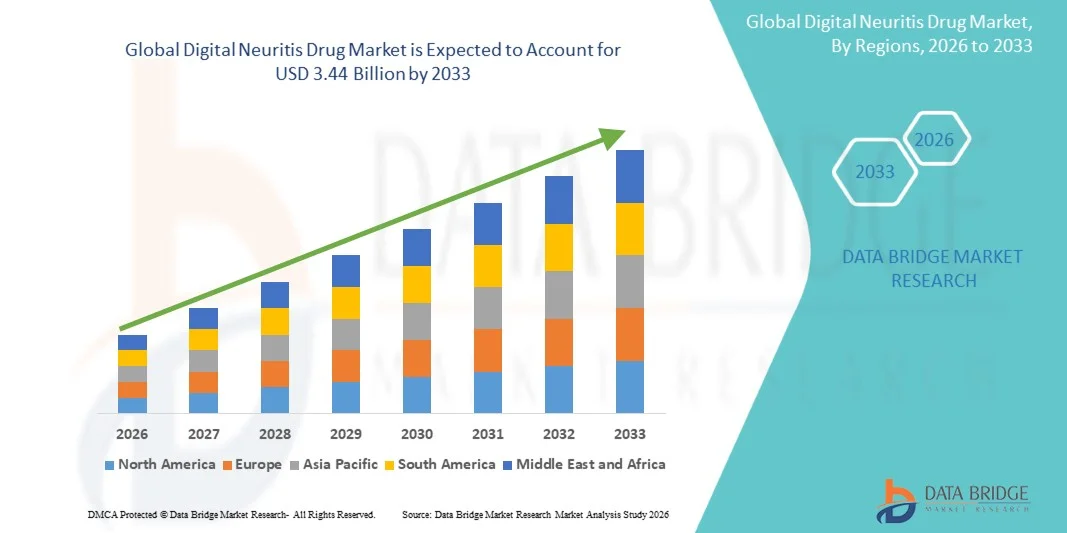
- The global digital neuritis drug market size was valued at USD 2.08 billion in 2025 and is expected to reach USD 3.44 billion by 2033, at a CAGR of 6.50% during the forecast period
- The market growth is largely fueled by the rising prevalence of neuropathic disorders, increasing incidence of diabetes-related neuritis, and continuous advancements in neuroprotective and anti-inflammatory drug therapies, leading to improved treatment accessibility across healthcare systems
- Furthermore, growing patient awareness, demand for effective pain management solutions, and the development of targeted therapeutics are establishing digital neuritis drugs as a preferred treatment approach. These converging factors are accelerating the adoption of neuritis treatment solutions, thereby significantly boosting the industry's growth
Digital Neuritis Drug Market Analysis
- Digital neuritis drugs, encompassing neuroprotective, anti-inflammatory, and pain management therapies, are increasingly critical in treating peripheral neuropathy and related neuritic conditions in both developed and emerging healthcare systems due to their effectiveness in symptom relief, disease management, and improved patient quality of life
- The escalating demand for digital neuritis drugs is primarily fueled by the rising prevalence of neuropathic disorders, increasing diabetes-related complications, and growing awareness among patients and healthcare providers about the importance of early intervention and targeted therapies
- North America dominated the digital neuritis drug market with the largest revenue share of 38.7% in 2025, characterized by advanced healthcare infrastructure, high patient awareness, and a strong presence of key pharmaceutical players. The U.S. experienced substantial growth in neuritis drug prescriptions, particularly in chronic and diabetic neuropathy cases, driven by innovations in drug formulations, personalized medicine approaches, and combination therapies
- Asia-Pacific is expected to be the fastest growing region in the digital neuritis drug market during the forecast period due to increasing healthcare access, rising incidence of diabetes, and expanding pharmaceutical investments in neurotherapeutics
- Anti-inflammatory segment dominated the digital neuritis drug market with a combined market share of 46.3% in 2025, driven by their established efficacy in symptom management and disease progression prevention
Report Scope and Digital Neuritis Drug Market Segmentation
|
Attributes |
Digital Neuritis Drug Key Market Insights |
|
Segments Covered |
|
|
Countries Covered |
North America
Europe
Asia-Pacific
Middle East and Africa
South America
|
|
Key Market Players |
|
|
Market Opportunities |
|
|
Value Added Data Infosets |
In addition to the insights on market scenarios such as market value, growth rate, segmentation, geographical coverage, and major players, the market reports curated by the Data Bridge Market Research also include in-depth expert analysis, patient epidemiology, pipeline analysis, pricing analysis, and regulatory framework |
Digital Neuritis Drug Market Trends
“Advancements in Targeted and Personalized Therapies”
- A significant and accelerating trend in the global digital neuritis drug market is the development of targeted therapies, including neuroprotective agents and biologics, tailored to individual patient profiles, improving treatment efficacy and reducing side effects
- For instance, novel gene therapy approaches are being evaluated for patients with chronic neuropathic pain, enabling precise modulation of nerve signaling pathways to alleviate symptoms
- Integration of digital health platforms with treatment regimens allows real-time patient monitoring, dose adjustments, and adherence tracking, enhancing therapeutic outcomes for neuritis patients
- For instance, wearable neuro-monitoring devices can collect data on nerve function and communicate with prescribing physicians, enabling personalized drug adjustments based on patient-specific responses
- Collaboration between pharmaceutical companies and digital health startups is enabling AI-driven drug discovery and predictive modeling for neuritis treatment optimization
- For instance, some platforms analyze patient datasets to predict individual responses to therapies, helping clinicians select the most effective treatment
- The trend toward personalized and digitally-assisted treatment is fundamentally reshaping expectations for neuritis management, driving pharmaceutical innovation and patient-centric care
- The demand for digital neuritis drugs with enhanced efficacy and patient-tailored mechanisms is growing rapidly across both developed and emerging markets as healthcare providers prioritize precision medicine approaches
- Emerging markets are witnessing increasing investment in local production of neuritis drugs, improving accessibility and affordability for underserved populations
Digital Neuritis Drug Market Dynamics
Driver
“Rising Prevalence of Neuropathic Disorders and Aging Population”
- The increasing incidence of neuropathic disorders, coupled with the growing elderly population prone to diabetes-related neuritis, is a significant driver for the heightened demand for digital neuritis drugs
- For instance, in March 2025, Pfizer announced an expansion of its neuropathic pain portfolio, targeting both diabetic and idiopathic neuritis patients with novel combination therapies
- As awareness of neuropathic complications rises among healthcare providers and patients, digital neuritis drugs offering symptom relief, neuroprotection, and disease progression management are gaining preference over conventional therapies
- Furthermore, the rising burden of chronic pain and associated healthcare costs is driving demand for advanced treatment options that improve patient quality of life. For instance, patient adherence and outcomes are enhanced through digital therapeutics integrated with pharmacological interventions, enabling remote monitoring and dose optimization
- Growing investment in R&D for novel small-molecule drugs and combination therapies is accelerating the pipeline of effective neuritis treatments. For instance, biopharma companies are developing dual-action drugs that reduce nerve inflammation while enhancing nerve repair mechanisms
- The convergence of demographic trends, disease prevalence, and patient awareness is propelling the adoption of digital neuritis drugs in both hospital and outpatient care settings
- Increasing public-private partnerships in healthcare are facilitating faster market access for innovative neuritis therapies
Restraint/Challenge
“Side Effects and Regulatory Approval Complexity”
- Safety concerns related to side effects of neuroactive drugs and stringent regulatory requirements pose significant challenges to broader market adoption. For instance, reports of hepatotoxicity or adverse neurological reactions have made some physicians cautious in prescribing newer digital neuritis therapies
- Navigating complex approval pathways across different countries requires extensive clinical trials, delaying time-to-market for innovative therapies
- Furthermore, high costs associated with advanced drug development, including biologics and gene therapies, can limit access for price-sensitive patients in developing regions. For instance, insurers may impose coverage restrictions or require prior authorization for new neuritis drugs, affecting patient uptake and adherence
- Limited awareness and education among patients about newer digital neuritis therapies may slow adoption despite proven efficacy. For instance, surveys indicate many patients continue using older medications due to lack of understanding of advanced treatment benefits
- Intellectual property disputes and patent expirations can create uncertainty for manufacturers, affecting innovation incentives
- Overcoming these challenges through improved safety profiles, streamlined regulatory strategies, and patient education will be critical for sustained growth in the digital neuritis drug market
- Continued investment in clinician training and awareness programs can mitigate adoption barriers and accelerate patient access to innovative therapies
Digital Neuritis Drug Market Scope
The market is segmented on the basis of type, mechanism of action, off-label drugs, route of administration, treatment, distribution channel, and end-users.
- By Type
On the basis of type, the digital neuritis drug market is segmented into dorsal digital nerves, palmar digital nerves, and plantar digital nerves. The dorsal digital nerves segment dominated the market with the largest revenue share in 2025, due to the higher prevalence of neuropathic conditions affecting these nerves. Drugs targeting dorsal digital neuritis are widely prescribed for effective pain relief and inflammation reduction in upper extremities. Extensive clinical research and established treatment protocols further strengthen its market position. Hospitals and specialty clinics frequently prioritize dorsal nerve treatments, given their proven efficacy and long-term patient outcomes. Growing patient awareness and physician recommendations also contribute to the dominance of this segment.
The plantar digital nerves segment is expected to witness the fastest growth rate from 2026 to 2033, driven by the increasing incidence of diabetic foot complications and peripheral neuropathy. Rising adoption of combination drug therapies, along with non-invasive adjunctive treatments, is fueling this growth. Awareness campaigns emphasizing early intervention for plantar nerve conditions are accelerating patient uptake. Emerging markets with increasing diabetic populations are contributing significantly to the segment’s rapid expansion. The segment’s growth is further supported by ongoing R&D for novel neuroprotective formulations. Clinicians are increasingly recommending plantar nerve-targeted therapies to prevent severe mobility impairments.
- By Mechanism of Action
On the basis of mechanism of action, the market is segmented into anti-inflammatory, corticosteroids, and others. The anti-inflammatory segment dominated the market in 2025 with a market share of 46.3%, attributed to its effectiveness in reducing nerve inflammation and alleviating pain. Anti-inflammatory drugs are widely used as first-line therapy in hospital and outpatient care settings. Extensive clinical evidence and safety profiles reinforce their preference among physicians. Integration with digital health platforms allows real-time monitoring of patient response, further enhancing adherence. This segment also benefits from a strong pipeline of oral and injectable formulations. The availability of generics has increased accessibility, particularly in emerging regions.
The corticosteroids segment is anticipated to witness the fastest growth during the forecast period, driven by advances in localized delivery methods such as intralesional injections. Corticosteroids provide rapid relief in severe cases of digital neuritis. Clinical trials highlighting minimal systemic side effects are encouraging adoption. Combination therapies with neuroprotective agents are increasing the segment’s appeal. Rising awareness among physicians of the benefits of targeted corticosteroid use is further boosting demand. Expansion in specialty clinics and hospital-based treatment programs is supporting growth.
- By Off-Label Drugs
On the basis of off-label drugs, the market is segmented into interferon beta-1a, triamcinolone acetonide, naproxen analgesics, and others. The triamcinolone acetonide segment dominated the market in 2025 due to its strong anti-inflammatory and nerve-protective properties. It is widely used in both acute and chronic digital neuritis cases. Physicians rely on its predictable efficacy, making it the preferred off-label therapy in hospitals and specialty clinics. Clinical studies showing positive patient outcomes strengthen physician confidence. Patient adherence and long-term management benefits contribute to its dominance. The segment is also supported by widespread availability and robust distribution networks.
The interferon beta-1a segment is expected to witness the fastest growth from 2026 to 2033, driven by research demonstrating neuroprotective benefits. Off-label use is increasing in refractory neuropathic cases. Physician awareness and favorable clinical outcomes are accelerating adoption. Expanding clinical trials and digital monitoring of treatment response enhance patient safety. Emerging markets are increasingly adopting interferon therapies due to accessibility and efficacy. The segment benefits from rising investment in innovative drug formulations.
- By Route of Administration
On the basis of route of administration, the market is segmented into oral, intravenous, and others. The oral segment dominated the market in 2025 due to ease of use and high patient compliance. Oral drugs are suitable for chronic therapy and homecare treatment. Their broad availability and affordability increase adoption in both developed and emerging markets. Digital health integration allows real-time tracking of oral medication adherence. Hospitals and specialty clinics prefer oral formulations for outpatient care. Physician familiarity with oral therapy protocols further reinforces the segment’s market share.
The intravenous segment is anticipated to witness the fastest growth during the forecast period, driven by the need for rapid relief in severe neuritis cases. Hospital-administered IV treatments provide immediate therapeutic benefits. Targeted infusion therapies and combination regimens are increasing segment adoption. Physicians prefer IV drugs for acute or complicated cases. Rising hospital investments in specialized infusion facilities support segment growth. Awareness of advanced IV therapies among patients and clinicians enhances acceptance and uptake.
- By Treatment
On the basis of treatment, the market is segmented into medication, ice-massage, and surgery. The medication segment dominated the market in 2025 due to its proven effectiveness in pain relief, inflammation reduction, and nerve recovery. Medications are widely used across hospitals, homecare, and specialty clinics. The availability of multiple formulations ensures flexibility for physicians and patients. Oral, injectable, and topical options strengthen segment adoption. Integration with digital health monitoring improves adherence and outcomes. Physicians often recommend medication-based treatment as first-line therapy for both acute and chronic cases.
The ice-massage segment is expected to witness the fastest growth from 2026 to 2033, driven by non-invasive therapy adoption for symptomatic relief. Ice-massage complements drug therapies for improved patient outcomes. Awareness campaigns are increasing patient interest in adjunctive therapies. Adoption is higher in outpatient clinics and homecare settings. Rising focus on early intervention and rehabilitation supports market expansion. Combined therapy protocols enhance efficacy and fuel growth in this segment.
- By Distribution Channel
On the basis of distribution channel, the market is segmented into direct, online pharmacy, retailers, and others. The direct segment dominated the market in 2025 due to hospital procurement systems and partnerships with pharmaceutical companies. Direct supply ensures timely availability of drugs in hospitals and specialty clinics. Bulk orders by hospitals contribute to higher revenue. Physician trust in direct supply chains reinforces adoption. Established distribution networks ensure consistent drug quality and reliability. Strategic agreements between manufacturers and healthcare providers strengthen market presence.
The online pharmacy segment is anticipated to witness the fastest growth from 2026 to 2033, driven by increasing patient preference for home delivery and convenience. E-prescriptions and telehealth services support online pharmacy adoption. Competitive pricing and wide drug availability attract patients. Digital platforms improve accessibility in remote and underserved regions. Awareness of online ordering for chronic therapy enhances segment growth. Rising smartphone penetration and digital literacy further accelerate online pharmacy adoption.
- By End-Users
On the basis of end-users, the market is segmented into hospitals, homecare, specialty clinics, and others. The hospitals segment dominated the market in 2025 due to the availability of advanced treatments, skilled staff, and comprehensive monitoring systems. Hospitals are preferred for severe or complex digital neuritis cases. Clinical trials and physician recommendations reinforce hospital dominance. Treatment adherence and outcomes are closely monitored in hospital settings. The segment benefits from bulk procurement and partnerships with pharmaceutical companies. Hospitals remain central to early intervention and chronic care management.
The homecare segment is expected to witness the fastest growth from 2026 to 2033, driven by patient preference for convenient at-home management of chronic neuropathic conditions. Digital therapeutics and telemedicine support homecare adoption. Awareness of early intervention and symptom monitoring is increasing patient demand. Physicians are recommending homecare for stable patients with manageable conditions. Remote monitoring ensures treatment adherence and efficacy. Rising investments in home-based healthcare infrastructure support segment expansion.
Digital Neuritis Drug Market Regional Analysis
- North America dominated the digital neuritis drug market with the largest revenue share of 38.7% in 2025, characterized by advanced healthcare infrastructure, high patient awareness, and a strong presence of key pharmaceutical players
- Patients and healthcare providers in the region highly value the effectiveness, safety profiles, and accessibility of digital neuritis drugs, as well as the integration of digital health platforms for monitoring treatment adherence and outcomes
- This widespread adoption is further supported by high healthcare spending, a technologically engaged population, and increasing awareness of early intervention and precision medicine approaches, establishing digital neuritis drugs as the preferred treatment option in both hospitals and specialty clinics
U.S. Digital Neuritis Drug Market Insight
The U.S. digital neuritis drug market captured the largest revenue share of 40% in North America in 2025, fueled by a high prevalence of neuropathic disorders, advanced healthcare infrastructure, and strong pharmaceutical R&D investments. Patients increasingly prioritize effective, targeted therapies for pain management and nerve protection. The growing adoption of digital health platforms, telemedicine, and patient monitoring tools further propels the market. Moreover, government initiatives supporting chronic disease management and reimbursement policies enhance accessibility and uptake of digital neuritis drugs. Hospitals and specialty clinics remain key end-users due to complex treatment requirements. The integration of personalized medicine and combination therapies is significantly contributing to market expansion.
Europe Digital Neuritis Drug Market Insight
The Europe digital neuritis drug market is projected to expand at a substantial CAGR during the forecast period, driven by increasing diabetic populations, rising neuropathic disorder prevalence, and advanced healthcare systems. Stringent healthcare regulations and initiatives promoting early intervention are boosting drug adoption. Urbanization and growing patient awareness are fostering demand for innovative therapies. European patients and physicians value therapies with proven efficacy, safety, and adherence support through digital health tools. The market is experiencing significant growth across hospitals, specialty clinics, and homecare services. Combination therapies and clinical trial-backed drugs are accelerating regional uptake.
U.K. Digital Neuritis Drug Market Insight
The U.K. digital neuritis drug market is anticipated to grow at a noteworthy CAGR, driven by rising incidence of diabetic neuropathy and chronic nerve pain. Patient demand for effective, convenient, and personalized treatment options is increasing. Concerns regarding long-term complications of untreated neuritis are motivating healthcare providers to adopt advanced drug therapies. The U.K.’s robust healthcare infrastructure, growing telemedicine adoption, and digital prescription platforms are expected to stimulate market growth. Both hospitals and homecare services are witnessing increased utilization. Rising physician awareness and clinical guidance for early intervention further support expansion.
Germany Digital Neuritis Drug Market Insight
The Germany digital neuritis drug market is expected to expand at a considerable CAGR, fueled by the country’s high healthcare standards and focus on innovative, evidence-based therapies. Germany’s aging population and increasing prevalence of diabetes-related neuropathy drive demand for effective neuritis drugs. Patients and healthcare providers increasingly value therapies integrated with digital monitoring and outcome tracking. Hospitals, specialty clinics, and outpatient centers are key end-users for advanced treatments. Rising investment in R&D, clinical trials, and patient education programs promotes market growth. The emphasis on precision medicine and safety profiles aligns with local consumer and regulatory expectations.
Asia-Pacific Digital Neuritis Drug Market Insight
The Asia-Pacific digital neuritis drug market is poised to grow at the fastest CAGR during the forecast period, driven by increasing incidence of diabetes, rising awareness of neuropathic disorders, and expanding healthcare infrastructure in countries such as China, Japan, and India. Growing patient demand for early intervention, non-invasive therapies, and homecare solutions is supporting market expansion. Government initiatives promoting digital health and chronic disease management enhance accessibility. The region’s cost-effective manufacturing and availability of affordable drug options increase uptake. Hospitals, specialty clinics, and homecare providers are rapidly adopting digital neuritis therapies. Technological advancements and telemedicine integration are further driving growth.
Japan Digital Neuritis Drug Market Insight
The Japan digital neuritis drug market is gaining momentum due to the country’s aging population, increasing prevalence of diabetes-related neuropathy, and emphasis on quality healthcare. Patients prioritize therapies that are effective, easy to administer, and integrated with digital monitoring solutions. The adoption of telehealth and wearable neuro-monitoring devices is supporting personalized treatment approaches. Hospitals, specialty clinics, and homecare services remain major end-users. Rising awareness among physicians about early intervention benefits is accelerating market uptake. Japan’s culture of embracing advanced healthcare technology is fueling demand for innovative neuritis therapies.
India Digital Neuritis Drug Market Insight
The India digital neuritis drug market accounted for the largest market revenue share in Asia-Pacific in 2025, attributed to increasing diabetes prevalence, rapid urbanization, and growing patient awareness. India is emerging as a key market for both domestic and multinational pharmaceutical companies offering affordable digital neuritis therapies. Rising middle-class population and expanding healthcare access drive adoption in hospitals, specialty clinics, and homecare settings. Government programs promoting chronic disease management and telemedicine support market growth. Affordable drug options and expanding distribution networks are improving accessibility. The combination of cost-effective treatment availability and increasing physician awareness is propelling market expansion.
Digital Neuritis Drug Market Share
The Digital Neuritis Drug industry is primarily led by well-established companies, including:
- Pfizer Inc., (U.S.)
- Eli Lilly and Company, (U.S.)
- Novartis AG (Switzerland)
- Sanofi (France)
- Johnson & Johnson Services, Inc. (U.S.)
- GSK plc (U.K.)
- AbbVie Inc., (U.S.)
- Teva Pharmaceutical Industries Ltd., (Israel)
- Grünenthal GmbH (Germany)
- Biogen Inc., (U.S.)
- Astellas Pharma Inc., (Japan)
- Vertex Pharmaceuticals Incorporated (U.S.)
- Mallinckrodt Pharmaceuticals (U.K.)
- UCB S.A., (Belgium)
- Bayer AG (Germany)
- Assertio Therapeutics, Inc., (U.S.)
- Aptinyx Inc., (U.S.)
- Daiichi Sankyo Co., Ltd. (Japan)
- Sun Pharmaceutical Industries Ltd. (India)
- Dr. Reddy’s Laboratories Ltd., (India)
What are the Recent Developments in Global Digital Neuritis Drug Market?
- In January 2026, Lexicon Pharmaceuticals announced that the FDA raised no objections to advancing pilavapadin into Phase 3 clinical development for diabetic peripheral neuropathic pain following a successful End‑of‑Phase 2 meeting, marking a key step toward a potential new therapy
- In December 2025, the U.S. Food and Drug Administration approved Avance (acellular nerve allograft‑ARWX), a peripheral nerve scaffold designed to support regeneration in adults and pediatric patients with sensory and mixed nerve injuries, marking an important advancement in treatment options for nerve damage and related pain conditions that can include neuropathic symptoms
- In October 2025, Lexicon Pharmaceuticals reported additional Phase 2 clinical data for pilavapadin, supporting advancement of a 10 mg once‑daily dose into Phase 3 trials, and confirmed acceptance of an End‑of‑Phase 2 meeting request with the FDA
- In September 2025, Lexicon Pharmaceuticals presented clinical data from its Phase 2b PROGRESS trial of pilavapadin for diabetic peripheral neuropathic pain, showing meaningful average daily pain score reductions and reinforcing the drug’s potential as a non‑opioid treatment option for neuropathic pain management
- In March 2025, PharmNovo AB announced that it received constructive feedback from the FDA following a pre‑IND meeting for PN6047, a selective delta opioid receptor agonist being developed for peripheral neuropathy with allodynia, providing a clear pathway toward Phase IIa clinical trials
SKU-
Получите онлайн-доступ к отчету на первой в мире облачной платформе рыночной аналитики
- Интерактивная панель анализа данных
- Панель анализа компании для возможностей с высоким потенциалом роста
- Доступ аналитика-исследователя для настройки и запросов
- Анализ конкурентов с помощью интерактивной панели
- Последние новости, обновления и анализ тенденций
- Используйте возможности сравнительного анализа для комплексного отслеживания конкурентов
Методология исследования
Сбор данных и анализ базового года выполняются с использованием модулей сбора данных с большими размерами выборки. Этап включает получение рыночной информации или связанных данных из различных источников и стратегий. Он включает изучение и планирование всех данных, полученных из прошлого заранее. Он также охватывает изучение несоответствий информации, наблюдаемых в различных источниках информации. Рыночные данные анализируются и оцениваются с использованием статистических и последовательных моделей рынка. Кроме того, анализ доли рынка и анализ ключевых тенденций являются основными факторами успеха в отчете о рынке. Чтобы узнать больше, пожалуйста, запросите звонок аналитика или оставьте свой запрос.
Ключевой методологией исследования, используемой исследовательской группой DBMR, является триангуляция данных, которая включает в себя интеллектуальный анализ данных, анализ влияния переменных данных на рынок и первичную (отраслевую экспертную) проверку. Модели данных включают сетку позиционирования поставщиков, анализ временной линии рынка, обзор рынка и руководство, сетку позиционирования компании, патентный анализ, анализ цен, анализ доли рынка компании, стандарты измерения, глобальный и региональный анализ и анализ доли поставщика. Чтобы узнать больше о методологии исследования, отправьте запрос, чтобы поговорить с нашими отраслевыми экспертами.
Доступна настройка
Data Bridge Market Research является лидером в области передовых формативных исследований. Мы гордимся тем, что предоставляем нашим существующим и новым клиентам данные и анализ, которые соответствуют и подходят их целям. Отчет можно настроить, включив в него анализ ценовых тенденций целевых брендов, понимание рынка для дополнительных стран (запросите список стран), данные о результатах клинических испытаний, обзор литературы, обновленный анализ рынка и продуктовой базы. Анализ рынка целевых конкурентов можно проанализировать от анализа на основе технологий до стратегий портфеля рынка. Мы можем добавить столько конкурентов, о которых вам нужны данные в нужном вам формате и стиле данных. Наша команда аналитиков также может предоставить вам данные в сырых файлах Excel, сводных таблицах (книга фактов) или помочь вам в создании презентаций из наборов данных, доступных в отчете.











