Global Irritable Bowel Syndrome (IBS) Market, By Drug Type (Lubiprostone, Linaclotide, Eluxadoline, Rifaximin, Alosetron, Others), Medical Condition (IBS-Constipation, IBS-diarrhea, Mixed), Distribution Channel (Hospital Pharmacies, Online Pharmacies, Retail Pharmacies), End-Users (Hospitals, Clinics, Homecare Settings) - Industry Trends and Forecast to 2033
Что такое синдром раздраженного кишечника (СРК) размер рынка и темпы роста
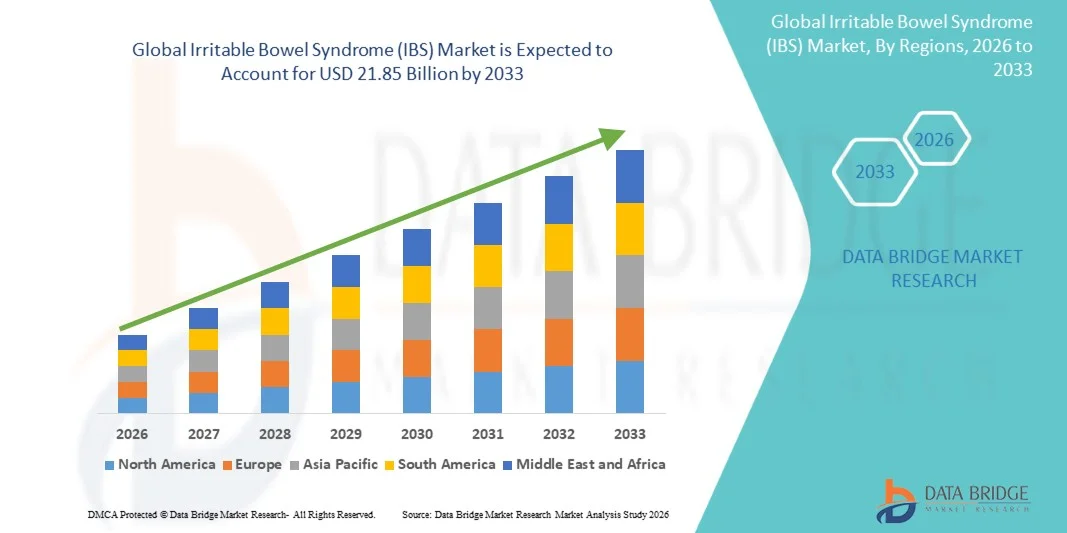
- По данным Data Bridge Market Research Analysis Размер мирового рынка синдрома раздраженного кишечника (IBS) был оценен как8,28 млрд долларов в 2025 годуОжидается, что он достигнет21,85 млрд долларов к 2033 году, вCAGR 12,90%в течение прогнозируемого периода
- Рост рынка в значительной степени подпитывается растущей распространенностью желудочно-кишечных расстройств, растущей осведомленностью о здоровье пищеварения и растущими достижениями в диагностике и лечении.терапевтическийподходы, ведущие к улучшению идентификации и управления синдромом раздраженного кишечника в медицинских учреждениях
- Кроме того, растущий спрос пациентов на эффективные, персонализированные и долгосрочные решения для лечения делает терапию СРК важной областью внимания в гастроэнтерологии. Эти сходящиеся факторы ускоряют поглощение решений синдрома раздраженного кишечника (СРК), тем самым значительно стимулируя рост рынка.
Размер рынка и прогноз
- Глобальная рыночная стоимость (2025):8,28 млрд. долларов США
- Ожидаемая рыночная стоимость (2033):$21,85 млрд.
- Прогноз CAGR (2026–2033):12.90%
Каковы основные выводы рынка синдрома раздраженного кишечника (СРК)
- Синдром раздраженного кишечника (СРК), распространенное желудочно-кишечное расстройство, поражающее толстый кишечник, привлекает повышенное внимание из-за его высокой глобальной распространенности и влияния на качество жизни. Растущее внимание к здоровью пищеварения, наряду с достижениями в диагностических методах и вариантах лечения, делает управление СРК ключевой областью гастроэнтерологической помощи.
- Растущий спрос на лечение СРК в первую очередь обусловлен повышением осведомленности среди пациентов, увеличением показателей диагностики и растущим предпочтением персонализированных и долгосрочных управленческих решений, включая диетические вмешательства, пробиотики и фармакологическую терапию.
- Северная Америка доминировала на рынке синдрома раздраженного кишечника (СРК) с долей дохода около 39,8% в 2025 году, чему способствовала развитая инфраструктура здравоохранения, высокий уровень осведомленности и высокая доступность одобренных вариантов лечения. США лидируют в регионе благодаря большому пулу пациентов и непрерывной научно-исследовательской деятельности.
- Ожидается, что Азиатско-Тихоокеанский регион станет самым быстрорастущим регионом на рынке синдрома раздраженного кишечника (СРК) в течение прогнозируемого периода, что обусловлено повышением осведомленности в области здравоохранения, ростом располагаемых доходов, улучшением доступа к услугам здравоохранения.медицинская помощьи растущая распространенность желудочно-кишечных расстройств в таких странах, как Китай и Индия
- Сегмент IBS-C занимал самую большую долю рынка в 42,9% в 2025 году, что обусловлено более высоким уровнем диагностики и наличием широкого спектра целевых вариантов лечения.
Сфера охвата и синдром раздраженного кишечника (IBS) сегментация рынка
|
Атрибуты |
Синдром раздраженного кишечника (IBS) - ключевые идеи рынка |
|
Сегменты покрыты |
|
|
Страны, охваченные |
Северная Америка
Европа
Азиатско-Тихоокеанский регион
Ближний Восток и Африка
Южная Америка
|
|
Ключевые игроки рынка |
|
|
Рыночные возможности |
|
|
Информационные наборы данных с добавленной стоимостью |
|
Каковы основные тенденции на рынке синдрома раздраженного кишечника (СРК)
"Растущее внимание к персонализированному лечению и терапии на основе микробиома
- Значительной и ускоряющейся тенденцией на мировом рынке синдрома раздраженного кишечника (СРК) является растущее внимание к персонализированным подходам к лечению и развитию терапии на основе микробиома.
- Достижения в понимании оси кишечник-мозг и роли микробиоты кишечника позволяют разрабатывать целевые методы лечения, адаптированные к индивидуальным профилям пациентов и симптомам.
- Например, использование пробиотиков, пребиотиков и диетических вмешательств, таких как диеты с низким содержанием FODMAP, набирает обороты в рамках индивидуальных стратегий управления СРК.
- Кроме того, фармацевтические компании инвестируют в разработку новых лекарств, направленных на решение конкретных подтипов СРК, таких как СРК с запорами (IBS-C) и СРК с диареей (IBS-D).
- Интеграция цифровых инструментов здравоохранения для отслеживания симптомов и мониторинга пациентов также поддерживает персонализированный уход и улучшает соблюдение режима лечения.
- Повышение осведомленности пациентов и медицинских работников о важности индивидуальных подходов к лечению способствует улучшению клинических результатов.
- Этот сдвиг в сторону точной медицины меняет парадигмы лечения и стимулирует инновации на рынке синдрома раздраженного кишечника (СРК).
Синдром раздраженного кишечника (IBS) Динамика рынка
водитель
«Повышение распространенности желудочно-кишечных расстройств и повышение осведомленности»
- Растущая распространенность желудочно-кишечных расстройств, особенно синдром раздраженного кишечника (СРК), является основным фактором роста рынка.
- Такие факторы, как изменение привычек питания, повышение уровня стресса, малоподвижный образ жизни и растущая заболеваемость психическими заболеваниями, способствуют увеличению бремени СРК во всем мире.
- Например, СРК затрагивает значительную часть населения мира, что приводит к растущему спросу на эффективные диагностические и терапевтические решения.
- Повышение осведомленности о СРК и его симптомах побуждает больше пациентов обращаться за медицинской консультацией и лечением.
- Кроме того, достижения в области диагностических методов и улучшенной доступности медицинских услуг поддерживают раннюю диагностику и управление состоянием.
- Растущая доступность безрецептурных лекарств, отпускаемых по рецепту лекарств и нефармакологических вариантов лечения способствует дальнейшему расширению рынка.
- Эти факторы в совокупности вносят значительный вклад в рост рынка синдрома раздраженного кишечника (СРК).
Сдержанность/вызов
"Отсутствие окончательного лечения и изменчивость результатов лечения"
- Одной из основных проблем на рынке синдрома раздраженного кишечника (СРК) является отсутствие окончательного лечения, поскольку состояние является хроническим и значительно варьируется среди людей.
- Неоднородность симптомов и основных причин затрудняет разработку универсально эффективных вариантов лечения.
- Например, пациенты часто по-разному реагируют на одно и то же лечение, требуя подхода проб и ошибок, который может отсрочить облегчение симптомов и повлиять на удовлетворенность пациентов.
- Кроме того, неправильный диагноз или отсроченная диагностика из-за перекрытия симптомов с другими желудочно-кишечными расстройствами могут препятствовать эффективному лечению заболеваний.
- Ограниченная осведомленность в определенных регионах и социальная стигма, связанная с расстройствами пищеварения, также могут помешать пациентам своевременно обращаться за медицинской помощью.
- Кроме того, высокая стоимость долгосрочного лечения, включая лекарства, диетические изменения и консультации, может создать финансовое бремя для пациентов.
- Решение этих проблем путем непрерывных исследований, повышения точности диагностики и разработки целевых методов лечения будет иметь важное значение для устойчивого роста рынка.
Как сегментируется рынок синдрома раздраженного кишечника (IBS)
Рынок сегментирован на основе типа препарата, состояния здоровья, канала распределения и конечных пользователей.
• По типу наркотиков
На основе типа препарата рынок синдрома раздраженного кишечника (IBS) сегментирован на Любипростон, Линаклотид, Элуксадолин, Рифаксимин, Алозетрон и другие. Сегмент Linaclotide доминировал на рынке с наибольшей долей выручки в 38,7% в 2025 году, что обусловлено его сильной эффективностью в лечении СРК с запорами (IBS-C) и его широким клиническим внедрением на основных рынках здравоохранения. Линаклотид работает за счет увеличения секреции кишечной жидкости и ускорения транзита, что делает его очень эффективным в управлении хроническими запорами и болью в животе. Его благоприятный профиль безопасности и одобрение регулирующих органов во многих регионах также поддерживают его доминирование. Врачи широко назначают этот препарат из-за его последовательных терапевтических результатов и соответствия пациенту. Повышение осведомленности о вариантах лечения СРК также способствует повышению ставок рецептов. Кроме того, растущие показатели диагностики IBS-C подпитывают спрос на целевые методы лечения, такие как линаклотид. Наличие фирменных составов и продолжающиеся клинические исследования еще больше укрепляют его присутствие на рынке. Фармацевтические компании также инвестируют в расширение показаний и улучшение доступности. Рост расходов на здравоохранение и улучшение доступа пациентов к лекарствам продолжают стимулировать рост сегмента. В целом, его клиническая эффективность и высокий уровень внедрения поддерживают лидирующие позиции на рынке.
Ожидается, что в сегменте Rifaximin будет наблюдаться самый быстрый рост на 22,3% с 2026 по 2033 год, чему способствует его растущее использование в лечении СРК с диареей (IBS-D) и его уникальный механизм в качестве антибиотика, нацеленного на кишечник. Рифаксимин набирает популярность из-за его минимальной системной абсорбции и целенаправленного действия на микробиоту кишечника, уменьшая такие симптомы, как вздутие живота и диарея. Растущее признание дисбаланса микробиома кишечника в качестве ключевого фактора СРК стимулирует его принятие. Кроме того, увеличение клинических данных, подтверждающих его эффективность, побуждает врачей назначать его чаще. Способность препарата обеспечить долгосрочное облегчение симптомов с повторными циклами лечения еще больше повышает его привлекательность. Растущая распространенность ИБС-D во всем мире также поддерживает спрос. Фармацевтические компании сосредоточены на расширении показаний и улучшении доступа пациентов. Благоприятные сценарии возмещения расходов в развитых регионах также способствуют росту. Кроме того, увеличение предпочтений пациентов в отношении эффективных и хорошо переносимых методов лечения повышает его охват. По мере развития исследований в области лечения, ориентированного на микробиом, ожидается, что этот сегмент будет быстро расти в течение прогнозируемого периода.
• По состоянию здоровья
Исходя из состояния здоровья, рынок синдрома раздраженного кишечника (IBS) сегментирован на IBS-запор (IBS-C), IBS-диарея (IBS-D) и смешанный. Сегмент IBS-C занимал самую большую долю рынка в 42,9% в 2025 году, что обусловлено более высоким уровнем диагностики и наличием широкого спектра целевых вариантов лечения. IBS-C чаще встречается среди пациентов, особенно у женщин, что приводит к увеличению спроса на эффективные методы лечения. Сегмент выигрывает от сильной клинической осведомленности и установленных руководящих принципов лечения. Кроме того, достижения в области фармакологических методов лечения, специально предназначенных для симптомов запоров, поддерживают рост. Повышение осведомленности пациентов и доступа к медицинской помощи также способствуют повышению показателей диагностики. Наличие нескольких одобренных препаратов для IBS-C улучшает варианты лечения и результаты лечения пациентов. Растущее внимание к улучшению качества жизни пациентов еще больше стимулирует спрос. Кроме того, факторы образа жизни, такие как плохое питание и стресс, увеличивают распространенность СРК-С. Непрерывные исследования и разработки также поддерживают инновации в этом сегменте. В целом, сильная клиническая направленность и доступность лечения сохраняют свое доминирование.
Ожидается, что сегмент IBS-D будет наблюдать самый быстрый CAGR в 21,6% с 2026 по 2033 год, что обусловлено повышением осведомленности и улучшением диагностики диареи. Увеличение распространенности желудочно-кишечных инфекций и нарушений микробиома кишечника способствует росту сегмента. Доступность целевых методов лечения, таких как рифаксимин и элюксадолин, улучшает результаты лечения. Пациенты все чаще обращаются за медицинской помощью из-за тяжести и влияния симптомов на повседневную жизнь. Достижения в области диагностических методов также улучшают идентификацию случаев СРК-Д. Растущие исследования здоровья кишечника и микробиоты поддерживают разработку инновационных методов лечения. Кроме того, рост расходов на здравоохранение способствует улучшению доступа к лечению. Фармацевтические компании сосредоточены на расширении своих портфелей препаратов IBS-D. Увеличение предпочтений пациентов в отношении эффективного облегчения симптомов также стимулирует спрос. По мере улучшения информированности и вариантов лечения ожидается, что сегмент значительно вырастет.
• Распределительный канал
На основе канала дистрибуции рынок синдрома раздраженного кишечника (СРК) сегментирован в больничные аптеки, онлайн-аптеки и розничные аптеки. Сегмент розничных аптек составил самую большую долю рынка в 47,5% в 2025 году, что обусловлено их широким присутствием и легкой доступностью для пациентов. Розничные аптеки служат основным пунктом покупки рецептурных и безрецептурных препаратов IBS. Сегмент пользуется сильным доверием потребителей и удобством. Кроме того, фармацевты играют ключевую роль в руководстве пациентов по использованию лекарств. Увеличение доступности препаратов СРК в розничных торговых точках еще больше способствует росту. Расширение аптечных сетей и улучшение цепочек поставок повышают доступность. Повышение осведомленности о методах лечения СРК также приводит к росту числа розничных аптек. Кроме того, доступность как фирменных, так и дженериковых препаратов повышает доступность. Сегмент также выигрывает от сильных распределительных сетей как в городских, так и в сельских районах. Постоянное совершенствование аптечных услуг еще больше укрепляет присутствие на рынке.
Ожидается, что в сегменте онлайн-аптек будет наблюдаться самый быстрый рост на 23,1% с 2026 по 2033 год, чему способствует быстрое внедрение платформ электронной коммерции и цифрового здравоохранения. Онлайн-аптеки предлагают удобство, доставку на дом и конкурентоспособные цены, привлекая все большее число потребителей. Растущее проникновение интернета и использование смартфонов поддерживают рост сегмента. Пациенты с хроническими заболеваниями предпочитают онлайн-платформы для повторных покупок лекарств. Кроме того, пандемия COVID-19 ускорила переход к цифровым услугам здравоохранения. Онлайн-платформы также предоставляют доступ к более широкому спектру лекарств и информации. Технологические достижения и безопасные платежные системы улучшают пользовательский опыт. Растущие партнерские отношения между фармацевтическими компаниями и платформами электронной аптеки способствуют дальнейшему расширению. Регулятивная поддержка в различных регионах также способствует принятию. Поскольку цифровое здравоохранение продолжает развиваться, ожидается, что сегмент будет быстро расти.
• Конечными пользователями
На основе конечных пользователей рынок синдрома раздраженного кишечника (СРК) сегментирован на больницы, клиники и учреждения по уходу на дому. Сегмент больниц доминировал на рынке с самой большой долей дохода в 49,8% в 2025 году, что обусловлено наличием передовых диагностических учреждений и специализированных медицинских работников. Больницы являются основным пунктом ухода за пациентами с тяжелыми симптомами СРК, требующими всесторонней оценки и лечения. Сегмент получает преимущества от интегрированных медицинских услуг и доступа к широкому спектру лекарств. Увеличение посещений больниц при желудочно-кишечных расстройствах еще больше поддерживает рост. Кроме того, наличие многопрофильных групп улучшает результаты лечения пациентов. Рост расходов на здравоохранение и развитие инфраструктуры также способствуют расширению сегмента. Больницы играют ключевую роль в точной диагностике и долгосрочном лечении СРК. Сильная политика возмещения расходов в развитых регионах еще больше способствует доминированию на рынке. Постоянные достижения в области стационарного ухода повышают эффективность лечения. В целом, больницы остаются ведущим сегментом конечного пользователя.
Ожидается, что в сегменте услуг по уходу за домом будет наблюдаться самый быстрый CAGR в 20,9% с 2026 по 2033 год, что обусловлено растущим предпочтением самоконтроля и долгосрочного лечения СРК дома. Пациенты все чаще предпочитают уход на дому из-за удобства и экономической эффективности. Доступность пероральных препаратов и цифровых медицинских инструментов поддерживает эту тенденцию. Повышение осведомленности об управлении образом жизни и диетическом контроле также способствует росту сегмента. Телемедицина и дистанционные консультационные услуги способствуют дальнейшему внедрению услуг по уходу на дому. Кроме того, хронический характер СРК способствует постоянной практике самообслуживания. Фармацевтические компании сосредоточены на вариантах лечения, удобных для пациентов. Растущий спрос на персонализированные медицинские решения также способствует росту. Расширение цифровых медицинских платформ улучшает взаимодействие с пациентами. По мере того, как здравоохранение смещается в сторону моделей, ориентированных на пациента, ожидается, что условия ухода на дому значительно вырастут.
В каком регионе находится наибольшая доля рынка синдрома раздраженного кишечника (СРК)
- Северная Америка доминировала на рынке синдрома раздраженного кишечника (СРК) с самой большой долей дохода примерно 39,8% в 2025 году, поддерживаемой передовой инфраструктурой здравоохранения, высоким уровнем осведомленности и высокой доступностью одобренных вариантов лечения.
- Регион выигрывает от большого числа пациентов с диагнозом, широкого доступа к медицинским услугам и все более широкого внедрения фармакологических и нефармакологических подходов к лечению.
- Это доминирование еще больше усиливается сильными исследованиями и разработками, благоприятными сценариями возмещения и присутствием крупных фармацевтических компаний, устанавливающих Северную Америку в качестве ключевого фактора на рынке синдрома раздраженного кишечника (СРК).
Синдром раздраженного кишечника в США (IBS) Market Insight
Американский рынок синдрома раздраженного кишечника (IBS) занял самую большую долю дохода в 2025 году в Северной Америке, чему способствовал большой пул пациентов и высокая осведомленность о желудочно-кишечных расстройствах. Страна извлекает выгоду из ранней диагностики, высокой доступности одобренных лекарств и непрерывного прогресса в вариантах лечения. Кроме того, увеличение расходов на здравоохранение, продолжающиеся клинические исследования и присутствие ведущих игроков рынка в значительной степени способствуют росту рынка в Соединенных Штатах.
Европейский синдром раздраженного кишечника (IBS) Market Insight
Прогнозируется, что европейский рынок синдрома раздраженного кишечника (СРК) будет расширяться при существенном CAGR в течение прогнозируемого периода, в первую очередь за счет роста распространенности желудочно-кишечных расстройств и сильных систем здравоохранения. Повышение осведомленности о СРК наряду с улучшением доступа к диагностическим и лечебным услугам способствует росту рынка. Кроме того, растущий акцент на уход, ориентированный на пациента, и достижения в терапевтических подходах способствуют улучшению лечения заболеваний во всем регионе.
Британский синдром раздраженного кишечника (IBS) Market Insight
Ожидается, что рынок Великобритании с синдромом раздраженного кишечника (IBS) будет расти с заметным CAGR в течение прогнозируемого периода, что обусловлено повышением осведомленности о здоровье пищеварения и ростом бремени случаев СРК. Правительственные инициативы в области здравоохранения и доступ к услугам общественного здравоохранения способствуют ранней диагностике и лечению. Кроме того, ожидается, что растущее внимание к управлению образом жизни и диетическим вмешательствам будет способствовать расширению рынка в Великобритании.
Немецкий синдром раздраженного кишечника (IBS)
Ожидается, что в течение прогнозируемого периода рынок Германии с синдромом раздраженного кишечника (СРК) будет расширяться на значительном CAGR, чему будет способствовать развитая инфраструктура здравоохранения и сильный акцент на исследованиях и инновациях. Устоявшаяся медицинская система страны поддерживает внедрение передовых методов диагностики и эффективных стратегий лечения. Повышение осведомленности о здоровье желудочно-кишечного тракта и наличие специализированной помощи являются ключевыми факторами, способствующими росту рынка в Германии.
Азиатско-Тихоокеанский синдром раздраженного кишечника (IBS) Market Insight
Азиатско-тихоокеанский рынок синдрома раздраженного кишечника (СРК) будет расти самыми быстрыми темпами в течение прогнозируемого периода с 2026 по 2033 год, что обусловлено повышением осведомленности в области здравоохранения, ростом располагаемых доходов, улучшением доступа к медицинской помощи и растущей распространенностью желудочно-кишечных расстройств в таких странах, как Китай и Индия. В регионе наблюдается значительное улучшение инфраструктуры здравоохранения и диагностических возможностей, что позволяет лучше выявлять и управлять случаями СРК. Кроме того, изменение привычек питания, урбанизация и повышение уровня стресса способствуют увеличению заболеваемости СРК по всему региону. Правительственные инициативы, направленные на улучшение доступа к здравоохранению и увеличение инвестиций в сектор здравоохранения, еще больше ускоряют рост рынка.
Японский синдром раздраженного кишечника (IBS) Market Insight
Японский рынок синдрома раздраженного кишечника (СРК) набирает обороты из-за старения населения страны и растущего внимания к здоровью желудочно-кишечного тракта. Наличие передовых технологий здравоохранения и сильный акцент на ранней диагностике и профилактической помощи способствуют росту рынка. Кроме того, более широкое внедрение целевых методов лечения и подходов к управлению питанием способствует улучшению результатов лечения пациентов в Японии.
Китайский синдром раздраженного кишечника (IBS)
Китайский рынок синдрома раздраженного кишечника (СРК) составил самую большую долю доходов рынка в Азиатско-Тихоокеанском регионе в 2025 году, что объясняется большой базой населения, увеличением распространенности желудочно-кишечных расстройств и улучшением инфраструктуры здравоохранения. Повышение осведомленности о здоровье пищеварительной системы, рост расходов на здравоохранение и расширение доступа к медицинским услугам являются ключевыми факторами, способствующими росту рынка. Кроме того, ожидается, что продолжающиеся реформы здравоохранения и повышенное внимание к ранней диагностике и лечению будут способствовать дальнейшему развитию рынка в Китае.
Каковы основные компании на рынке синдрома раздраженного кишечника (IBS)
Индустрия синдрома раздраженного кишечника (СРК) в основном возглавляется хорошо зарекомендовавшими себя компаниями, в том числе:
•AbbVie Inc. (США)
Ironwood Pharmaceuticals, Inc. (США)
Takeda Pharmaceutical Company Limited (Япония)
Bausch Health Companies Inc. (Канада)
Astellas Pharma Inc. (Япония)
Pfizer Inc. (США)
•GlaxoSmithKline PLC (Великобритания)
• Санофи С.А. (Франция)
• Bayer AG (Германия)
• Novartis AG (Швейцария)
Johnson & Johnson (США)
Procter & Gamble Co. (США)
•Nestlé Health Science (Швейцария)
Ardelyx, Inc. (США)
Synthetic Biologics, Inc. (США)
Sebela Pharmaceuticals (США)
Salix Pharmaceuticals (США)
RedHill Biopharma Ltd. (Израиль)
•Entera Bio Ltd. (Израиль)
Каковы последние события на рынке синдрома раздраженного кишечника (СРК)
- В апреле 2024 года Bausch Health Companies объявила, что суд США оставил в силе свою патентную защиту Xifaxan (рифаксимин), блокируя конкуренцию дженериков до 2029 года, тем самым гарантируя ключевое лечение IBS-D и сохраняя свою позицию эксклюзивности на рынке.
- В апреле 2024 года Bausch Health Companies подала иск о нарушении патентов против Amneal Pharmaceuticals, чтобы предотвратить запуск генерической версии Xifaxan, подчеркнув продолжающуюся динамику конкуренции и интеллектуальной собственности на рынке терапевтических средств IBS.
- В декабре 2024 года ANI Pharmaceuticals объявила о запуске таблеток Prucalopride, общей версии Motegrity, после одобрения FDA США, расширяя варианты лечения пациентов с хроническими запорами, связанными с СРК.
- В январе 2025 года Amneal Pharmaceuticals получила предварительное одобрение Управления по контролю за продуктами и лекарствами США для своих таблеток рифаксимина 550 мг (дженерика Xifaxan) для лечения СРК с диареей (IBS-D), что свидетельствует о предстоящей конкуренции и повышенной доступности на рынке лекарств IBS.
- В январе 2025 года отраслевые отчеты подчеркнули сильный сдвиг в сторону персонализированной медицины и разработки новых методов лечения IBS, с увеличением инвестиций в НИОКР и продвижением трубопроводов, стимулирующих инновации на мировом рынке.
- В ноябре 2025 года Управление по контролю за продуктами и лекарствами США одобрило Linzess (линаклотид), разработанный Ironwood Pharmaceuticals и AbbVie, для педиатрических пациентов в возрасте 7 лет и старше с IBS-C, что ознаменовало первое одобренное FDA лечение для этой популяции и расширение терапевтического ландшафта.
SKU-
Получите онлайн-доступ к отчету на первой в мире облачной платформе рыночной аналитики
- Интерактивная панель анализа данных
- Панель анализа компании для возможностей с высоким потенциалом роста
- Доступ аналитика-исследователя для настройки и запросов
- Анализ конкурентов с помощью интерактивной панели
- Последние новости, обновления и анализ тенденций
- Используйте возможности сравнительного анализа для комплексного отслеживания конкурентов
Методология исследования
Сбор данных и анализ базового года выполняются с использованием модулей сбора данных с большими размерами выборки. Этап включает получение рыночной информации или связанных данных из различных источников и стратегий. Он включает изучение и планирование всех данных, полученных из прошлого заранее. Он также охватывает изучение несоответствий информации, наблюдаемых в различных источниках информации. Рыночные данные анализируются и оцениваются с использованием статистических и последовательных моделей рынка. Кроме того, анализ доли рынка и анализ ключевых тенденций являются основными факторами успеха в отчете о рынке. Чтобы узнать больше, пожалуйста, запросите звонок аналитика или оставьте свой запрос.
Ключевой методологией исследования, используемой исследовательской группой DBMR, является триангуляция данных, которая включает в себя интеллектуальный анализ данных, анализ влияния переменных данных на рынок и первичную (отраслевую экспертную) проверку. Модели данных включают сетку позиционирования поставщиков, анализ временной линии рынка, обзор рынка и руководство, сетку позиционирования компании, патентный анализ, анализ цен, анализ доли рынка компании, стандарты измерения, глобальный и региональный анализ и анализ доли поставщика. Чтобы узнать больше о методологии исследования, отправьте запрос, чтобы поговорить с нашими отраслевыми экспертами.
Доступна настройка
Data Bridge Market Research является лидером в области передовых формативных исследований. Мы гордимся тем, что предоставляем нашим существующим и новым клиентам данные и анализ, которые соответствуют и подходят их целям. Отчет можно настроить, включив в него анализ ценовых тенденций целевых брендов, понимание рынка для дополнительных стран (запросите список стран), данные о результатах клинических испытаний, обзор литературы, обновленный анализ рынка и продуктовой базы. Анализ рынка целевых конкурентов можно проанализировать от анализа на основе технологий до стратегий портфеля рынка. Мы можем добавить столько конкурентов, о которых вам нужны данные в нужном вам формате и стиле данных. Наша команда аналитиков также может предоставить вам данные в сырых файлах Excel, сводных таблицах (книга фактов) или помочь вам в создании презентаций из наборов данных, доступных в отчете.