


What is the Asthma Therapeutics Market Size and Overview ?
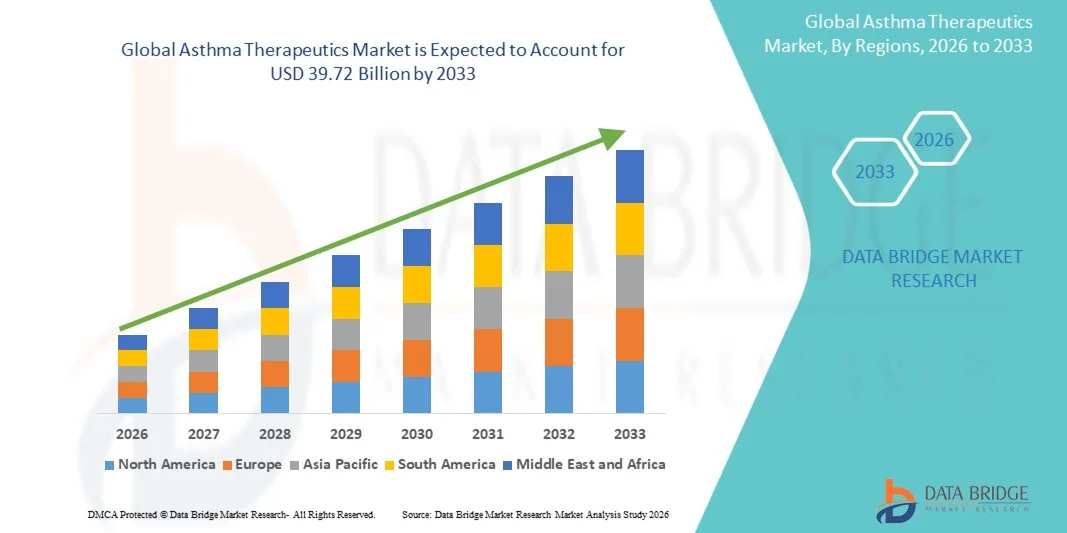
As per Data Bridge Market Research analysis The asthma therapeutics market was valued at USD 26.48 billion in 2025 and is projected to reach USD 39.72 billion by 2033, growing at a CAGR of 5.20% from 2026 to 2033. The market is experiencing consistent growth driven by the rising global prevalence of asthma, increasing adoption of biologics and combination therapies, and continuous advancements in inhalation drug delivery systems.
The growing burden of respiratory diseases, coupled with increasing exposure to air pollution, allergens, and tobacco smoke, is accelerating demand for effective long-term asthma management solutions. In addition, expanding access to targeted biologic therapies, favorable regulatory approvals, and ongoing research focused on precision medicine are supporting market expansion, while pharmaceutical companies continue to introduce innovative inhalers and advanced treatment options to improve disease control and patient outcomes.
Market Size & Forecast
- Global Market Value (2025): USD 26.48 Billion
- Expected Market Value (2033): USD 39.72 Billion
- Forecast CAGR (2026–2033): 5.20%
- Leading Region in 2025: North America
- Fastest Growing Region: Asia Pacific
Key Market Trends & Insights
- North America dominated the asthma therapeutics market with the largest revenue share of 38% in 2025, supported by high asthma prevalence, advanced healthcare infrastructure, favorable reimbursement policies, and early adoption of biologic therapies
- The inhaled corticosteroids (ICS) segment led the market with a 58.6% share in 2025, driven by its position as the cornerstone of asthma management and its widespread recommendation across international treatment guidelines
- Asia-Pacific is expected to be the fastest-growing region, expanding at a CAGR of 6.5% during the forecast period, fueled by rising asthma prevalence, worsening air pollution, improving healthcare access, and increasing adoption of advanced therapies.
- Long-acting beta agonists (LABA) are the fastest-growing drug class type, projected to register a CAGR of 5.6%, reflecting the surge in utilization in combination with inhaled corticosteroids for enhanced symptom control.
- The metered-dose inhalers (MDIs) segment dominated the delivery method category with a 60.6% revenue share in 2025, led by their extensive use in delivering corticosteroids, bronchodilators, and combination therapies.
- Adult patients accounted for 72.7% of the market, preferred by the large global adult asthma population requiring continuous disease management and long-term treatment.
- The mild intermittent asthma segment is the fastest-growing severity of disease category, with a CAGR of 5.6%, driven by increasing diagnosis rates and evolving treatment strategies emphasizing early intervention.
Report Scope and Asthma Therapeutics Market Segmentation
|
Attributes |
Asthma Therapeutics Key Market Insights |
|
Segments Covered |
|
|
Countries Covered |
North America
Europe
Asia-Pacific
Middle East and Africa
South America
|
|
Key Market Players |
|
|
Market Opportunities |
|
|
Value Added Data Infosets |
In addition to the insights on market scenarios such as market value, growth rate, segmentation, geographical coverage, and major players, the market reports curated by the Data Bridge Market Research also include in-depth expert analysis, patient epidemiology, pipeline analysis, pricing analysis, and regulatory framework. |
What is the Key Trend in Asthma Therapeutics Market ?
Trend: Integration of Digital Health and Smart Inhaler Technologies
The growing adoption of digital health solutions and smart inhaler technologies is reshaping asthma management by enabling real-time monitoring and improving medication adherence. Smart inhalers equipped with connected sensors can track inhaler usage patterns, assess inhalation technique, and provide actionable insights that help optimize treatment outcomes. The increasing burden of chronic respiratory diseases is accelerating demand for these technologies, as healthcare providers seek more effective ways to manage patients outside traditional clinical settings.
By facilitating continuous monitoring, personalized treatment adjustments, and improved communication between patients and healthcare professionals, digital health platforms are enhancing overall disease management.
Asthma Therapeutics Market Dynamics
Key Market Driver: Technological Advancements in Biologics and Targeted Therapies
A major factor driving growth in the asthma therapeutics market is the continued advancement of biologic medicines designed to target specific inflammatory mechanisms associated with asthma. Biologics such as omalizumab, mepolizumab, and benralizumab have transformed the treatment landscape by providing personalized therapeutic options for patients with severe allergic and eosinophilic asthma. These therapies have shown strong clinical benefits, including fewer exacerbations, improved symptom control, and better quality of life among patients who do not achieve adequate control with standard inhaled treatments. Furthermore, the development pipeline continues to expand with innovative therapies targeting cytokines such as IL-4 and IL-13, enabling more precise and individualized treatment approaches.
As a result, the growing adoption of biologics is strengthening the specialty pharmaceuticals segment while encouraging substantial research investments, partnerships, and product development activities across the industry.
Key Restraint/Challenge: High Cost and Reimbursement Challenges of Biologics
Despite their clinical effectiveness in managing severe asthma, biologic therapies continue to face adoption barriers due to their substantial costs, specialized manufacturing requirements, and the limited presence of biosimilar alternatives. The annual treatment cost of many biologics can be significant, creating financial pressure on healthcare systems and reducing accessibility, particularly in developing and cost-sensitive markets. In addition, reimbursement frameworks differ considerably across countries, and many insurers require strong evidence of long-term economic value before approving coverage. These challenges can restrict patient access and contribute to uneven treatment availability across regions. To manage rising healthcare expenditures, payers often implement utilization controls such as prior authorization requirements and step-therapy protocols, which may delay access to advanced biologic treatments.
Key Market Opportunity: Development of Next-Generation Biologics and Small Molecule Therapies
The emergence of next-generation biologics and targeted small molecule therapies presents a substantial growth opportunity for the asthma therapeutics market. Researchers and pharmaceutical companies are increasingly focusing on novel inflammatory pathways and underlying disease mechanisms to develop more effective treatment options for patients with severe and difficult-to-control asthma. Compared with biologics, small molecule therapies offer advantages such as oral administration, simpler manufacturing processes, and potentially lower treatment costs, making them attractive alternatives or complementary therapies. Ongoing clinical development includes agents such as Janus kinase (JAK) inhibitors, phosphodiesterase inhibitors, and other targeted molecules designed to address unmet clinical needs while expanding treatment choices. These innovations are expected to broaden the therapeutic landscape, support personalized treatment strategies, and improve long-term disease management for a wider patient population.
Asthma Therapeutics Market Scope
The asthma therapeutics market is segmented on the basis of drug class, delivery method, patient demographics, severity of disease, and treatment stage.
- By Drug Class
On the basis of drug class, the asthma therapeutics market is segmented into inhaled corticosteroids (ICS) and long-acting beta agonists (LABA). The inhaled corticosteroids (ICS) segment dominated the market in 2025 with a market share of 58.6%, owing to its position as the cornerstone of asthma management and its widespread recommendation across international treatment guidelines. ICS therapies effectively reduce airway inflammation, improve lung function, and decrease the risk of asthma exacerbations. They are commonly prescribed as first-line maintenance therapy for patients with persistent asthma and are widely available in both branded and generic formulations. Strong clinical evidence supporting their long-term efficacy and safety has reinforced physician confidence and patient adoption. Their integration into numerous combination therapies has further expanded their use across different severity levels of asthma. The continued emphasis on preventive asthma care and disease control is expected to sustain the segment’s leadership position.
The long-acting beta agonists (LABA) segment is expected to witness the fastest growth at a CAGR of 5.6% during the forecast period, driven by increasing utilization in combination with inhaled corticosteroids for enhanced symptom control. LABAs provide prolonged bronchodilation, helping patients achieve better respiratory function and reduced symptom frequency. Growing adoption of fixed-dose combination therapies is supporting demand for this segment across moderate and severe asthma populations. Advances in inhalation technologies and combination formulations are improving treatment convenience and adherence. Increasing focus on reducing exacerbation rates and improving quality of life is encouraging broader use of LABA-containing therapies. The development of next-generation combination products is further expected to strengthen segment growth.
- By Delivery Method
On the basis of delivery method, the asthma therapeutics market is segmented into metered-dose inhalers (MDIs) and dry powder inhalers (DPIs). The metered-dose inhalers (MDIs) segment dominated the market in 2025 with a market share of 60.6%, owing to their extensive use in delivering corticosteroids, bronchodilators, and combination therapies. MDIs have been a standard treatment option for decades and benefit from strong physician familiarity and widespread availability across healthcare systems worldwide. These inhalers are suitable for both pediatric and adult populations and are supported by established manufacturing and distribution networks. Continuous improvements in inhaler design and formulation technologies have enhanced their effectiveness and usability. Their affordability and broad reimbursement coverage continue to drive adoption across developed and emerging markets. The segment remains a preferred choice for routine asthma management due to its proven clinical performance.
The dry powder inhalers (DPIs) segment is expected to witness the fastest growth at a CAGR of 6.7% during the forecast period, driven by increasing demand for user-friendly and environmentally sustainable inhalation devices. DPIs eliminate the need for coordination between inhalation and device actuation, improving ease of use and medication adherence. Rising awareness regarding the environmental impact of propellant-based inhalers is accelerating interest in DPI technologies. Pharmaceutical manufacturers are increasingly introducing advanced DPI-based combination therapies and innovative device designs. Improvements in drug delivery efficiency and patient convenience are further supporting adoption. The segment is also benefiting from ongoing regulatory and sustainability initiatives across global healthcare systems.
- By Patient Demographics
On the basis of patient demographics, the asthma therapeutics market is segmented into pediatric patients and adult patients. The adult patients segment dominated the market in 2025 with a market share of 72.7%, owing to the large global adult asthma population requiring continuous disease management and long-term treatment. Adults account for a substantial share of healthcare utilization related to asthma and often require maintenance therapies, combination treatments, and biologics for effective symptom control. The increasing prevalence of environmental and occupational triggers has further contributed to treatment demand among adults. Greater access to advanced therapies and specialist respiratory care also supports segment dominance. Continuous monitoring and long-term disease management strategies drive sustained therapeutic consumption. The segment benefits from ongoing innovation in targeted and personalized treatment approaches.
The pediatric patients segment is expected to witness the fastest growth at a CAGR of 5.6% during the forecast period, driven by increasing awareness of childhood asthma and improvements in early diagnosis and treatment. Healthcare providers are emphasizing proactive management to prevent disease progression and improve long-term outcomes. Advances in child-friendly inhalers and pediatric formulations are enhancing treatment adherence and effectiveness. Expanding healthcare access and respiratory disease screening programs are supporting earlier intervention. Growing investments in pediatric respiratory care and research are also contributing to market expansion. Increased focus on reducing childhood asthma burden is expected to accelerate adoption of advanced therapies within this segment.
- By Severity of Disease
On the basis of severity of disease, the asthma therapeutics market is segmented into mild intermittent asthma and mild persistent asthma. The mild persistent asthma segment dominated the market in 2025 with a market share of 55.6%, owing to the continuous requirement for controller medications and ongoing disease management. Patients with mild persistent asthma typically require regular treatment to prevent symptom worsening and reduce the likelihood of exacerbations. Clinical guidelines strongly recommend maintenance therapies for this patient group, resulting in higher therapeutic utilization. Long-term use of inhaled corticosteroids and combination treatments contributes significantly to market demand. Increasing awareness regarding the importance of sustained asthma control is further supporting treatment uptake. Regular physician follow-up and monitoring also contribute to the segment’s strong market presence.
The mild intermittent asthma segment is expected to witness the fastest growth at a CAGR of 5.6% during the forecast period, driven by increasing diagnosis rates and evolving treatment strategies emphasizing early intervention. Healthcare providers are increasingly adopting preventive approaches even in patients with less frequent symptoms. Improved diagnostic capabilities and greater public awareness are helping identify asthma cases earlier. Expanding use of as-needed controller therapies is supporting treatment adoption within this patient population. Continued updates to clinical guidelines are encouraging proactive disease management. These factors are expected to contribute to notable growth in this segment over the coming years.
- By Treatment Stage
On the basis of treatment stage, the asthma therapeutics market is segmented into acute treatment and long-term control. The long-term control segment dominated the market in 2025 with a market share of 68.7%, owing to the chronic nature of asthma and the need for continuous disease management. Long-term therapies help reduce airway inflammation, prevent exacerbations, and improve overall quality of life. Inhaled corticosteroids, combination therapies, and biologics play a critical role in maintaining disease control. Clinical guidelines emphasize preventive treatment approaches to minimize healthcare utilization and improve patient outcomes. Increasing adoption of personalized medicine and adherence-monitoring technologies is further supporting segment growth. The availability of advanced targeted therapies continues to strengthen the long-term control treatment landscape.
The acute treatment segment is expected to witness the fastest growth at a CAGR of 5.5% during the forecast period, driven by the ongoing need for rapid symptom relief and emergency asthma management. Rescue medications remain essential for treating sudden asthma attacks and breakthrough symptoms. Rising awareness regarding asthma action plans and emergency preparedness is supporting broader access to acute therapies. Improvements in emergency healthcare infrastructure and medication availability are contributing to market expansion. Increasing environmental pollution and allergen exposure are creating continued demand for fast-acting treatments. The development of innovative rapid-onset therapies is expected to further support segment growth.
Asthma Therapeutics Market Regional Analysis
North America dominated the asthma therapeutics market with the largest revenue share of 38% in 2025, supported by high asthma prevalence, advanced healthcare infrastructure, favorable reimbursement policies, and early adoption of biologic therapies. The region benefits from the presence of leading pharmaceutical companies, extensive research and development activities, and early access to innovative treatment options. Growing utilization of precision medicine, biomarker-driven therapies, and smart inhaler technologies is further accelerating market expansion. Increasing healthcare expenditure and strong awareness regarding asthma management continue to support treatment adoption across the United States and Canada. Furthermore, ongoing regulatory approvals and investments in respiratory disease research are strengthening the region’s leadership position in the global asthma therapeutics market.
U.S. Asthma Therapeutics Market Insight
The United States represents the largest market for asthma therapeutics in North America, supported by a highly developed healthcare infrastructure, a substantial asthma patient population, and strong investment in pharmaceutical innovation. Growing utilization of biologic therapies for severe asthma, encouraged by established clinical guidelines and reimbursement support, continues to drive market expansion. The increasing availability of home-based disease management solutions, including connected inhalers and remote monitoring technologies, is improving patient outcomes and treatment adherence. Public health programs focused on asthma education, early diagnosis, and disease control are further strengthening the treatment landscape. In addition, continuous research activities and new product approvals are expanding therapeutic options. However, high treatment costs and variations in insurance coverage remain important challenges affecting patient access.
Europe Asthma Therapeutics Market Insight
The Europe represents a well-established market for asthma therapeutics, supported by advanced healthcare systems, high disease awareness, and a strong regulatory framework. The region continues to focus on improving treatment outcomes through innovative therapies, digital health integration, and personalized medicine approaches. Adoption of biologic therapies is increasing across several European countries, aided by supportive clinical guidelines and reimbursement mechanisms. Rising awareness regarding asthma control and disease prevention is contributing to sustained demand for advanced treatment options. In addition, healthcare providers are increasingly utilizing connected health technologies to improve adherence and long-term disease management. Ongoing efforts to balance innovation with healthcare cost efficiency remain a defining characteristic of the European market.
U.K. Asthma Therapeutics Market Insight
The United Kingdom remains an important market for asthma therapeutics, supported by a well-established healthcare system, strong public health initiatives, and high awareness of respiratory diseases. Increasing use of biologics, digital health technologies, and personalized treatment approaches is driving advancements in asthma management. Healthcare programs focused on early diagnosis, patient education, and treatment adherence are helping improve clinical outcomes and reduce disease burden. The growing integration of connected health solutions and remote monitoring technologies is enhancing long-term disease control. In addition, ongoing support for innovation within respiratory care is encouraging the adoption of advanced therapies. Continued emphasis on patient-centered care and technological innovation is expected to strengthen the market's development.
Germany Asthma Therapeutics Market Insight
The Germany is one of the leading markets for asthma therapeutics in Europe, supported by its robust healthcare infrastructure, significant healthcare spending, and strong emphasis on medical innovation. The adoption of biologics and digitally enabled inhaler technologies continues to expand as healthcare providers increasingly focus on individualized treatment strategies. Growing awareness of respiratory health and the need for effective long-term disease control are driving demand for advanced therapies. The integration of telemedicine, remote monitoring, and artificial intelligence into routine care is further enhancing patient management. Germany also benefits from a stable regulatory environment and widespread access to healthcare services. These factors continue to strengthen its position within the European asthma therapeutics landscape.
Asia-Pacific Asthma Therapeutics Market Insight
The Asia Pacific is emerging as one of the most dynamic regions in the asthma therapeutics market, supported by economic development, expanding healthcare infrastructure, and increasing awareness of respiratory diseases. Countries such as China, India, and Australia are experiencing growing asthma prevalence due to urbanization, environmental pollution, and changing lifestyles. Adoption of advanced inhaler technologies and targeted therapies is steadily increasing as healthcare systems improve access to respiratory care. Government initiatives aimed at strengthening healthcare services and disease management programs are further supporting market growth. The expansion of telemedicine and digital health platforms is enhancing patient monitoring and treatment accessibility, particularly in underserved areas. Nevertheless, affordability concerns, regulatory complexities, and differences in healthcare standards across countries continue to influence market development.
Japan Asthma Therapeutics Market Insight
The Japan remains a significant market for asthma therapeutics due to its advanced healthcare system, aging population, and strong focus on innovative respiratory treatments. The adoption of biologics and next-generation inhaler technologies is increasing as healthcare providers emphasize personalized approaches to asthma management. Supportive reimbursement frameworks and evidence-based clinical practices continue to encourage the use of advanced therapies. The country is also investing in strategies that improve quality of life and long-term disease control for patients with chronic respiratory conditions. Furthermore, the integration of digital health tools, artificial intelligence-based diagnostics, and remote monitoring solutions is enhancing treatment efficiency and patient engagement. These developments position Japan among the leading markets for technologically advanced asthma care.
China Asthma Therapeutics Market Insight
The China is witnessing strong growth in the asthma therapeutics market, driven by rapid urbanization, increasing environmental pollution, and rising awareness of respiratory health. Government efforts to strengthen healthcare coverage and encourage the adoption of innovative therapies are contributing to expanding treatment access. The use of biologics and advanced inhalation therapies is gaining momentum, supported by domestic manufacturing capabilities and collaborations between local and international pharmaceutical companies. Healthcare reforms focused on improving disease management and patient outcomes are also supporting market expansion. At the same time, digital health technologies and telemedicine platforms are becoming increasingly important in enhancing access to asthma care. Continued advancements in personalized treatment strategies are expected to further strengthen the market over the coming years.
Asthma Therapeutics Market Share
The asthma therapeutics industry is primarily led by well-established companies, including:
- AstraZeneca (U.K.)
- GSK plc (U.K.)
- Novartis AG (Switzerland)
- Sanofi (France)
- Regeneron Pharmaceuticals, Inc. (U.S.)
- Amgen Inc. (U.S.)
- Teva Pharmaceutical Industries Ltd. (Israel)
- Boehringer Ingelheim International GmbH (Germany)
- Chiesi Farmaceutici S.p.A. (Italy)
- Viatris Inc. (U.S.)
- Cipla Limited (India)
- Lupin (India)
- Glenmark Pharmaceuticals Ltd (India)
- Hikma Pharmaceuticals PLC (U.K.)
- Orion Corporation (Finland)
- KYORIN Pharmaceutical Co., Ltd. (Japan)
- Sumitomo Pharma Co., Ltd. (Japan)
- The Menarini Group (Italy)
- Pfizer Inc. (U.S.)
- Merck & Co., Inc. (U.S.)
Latest Developments in Asthma Therapeutics Market
- In December 2025, GSK announced that the U.S. FDA approved Exdensur (depemokimab) as an add-on maintenance treatment for patients aged 12 years and older with severe eosinophilic asthma. The therapy became the first twice-yearly biologic for severe asthma, offering a more convenient dosing schedule that may improve long-term treatment adherence while reducing asthma exacerbations
- In April 2024, Adherium announced that its Hailie® Smartinhaler® platform received U.S. FDA clearance for compatibility with AIRSUPRA and BREZTRI AEROSPHERE from AstraZeneca. The clearance enables real-time monitoring of medication use and inhaler adherence, supporting connected respiratory care and digital asthma management
- In January 2023, the U.S. Food and Drug Administration approved AIRSUPRA® (albuterol and budesonide) from AstraZeneca for adults with asthma. AIRSUPRA became the first rescue inhaler in the United States combining a short-acting beta agonist with an inhaled corticosteroid, designed to provide symptom relief while reducing the risk of severe asthma exacerbations
- In April 2022, the European Commission approved Dupixent® (dupilumab) from Sanofi and Regeneron Pharmaceuticals as an add-on maintenance treatment for children aged 6 to 11 years with severe asthma characterized by type 2 inflammation. The approval expanded treatment options for pediatric patients following positive Phase III clinical trial results demonstrating fewer asthma attacks and improved lung function
- In December 2021, the U.S. Food and Drug Administration approved TEZSPIRE® (tezepelumab-ekko) from Amgen and AstraZeneca as an add-on maintenance treatment for severe asthma in patients aged 12 years and older. TEZSPIRE was the first biologic targeting thymic stromal lymphopoietin (TSLP), offering a treatment option across a broad range of severe asthma phenotypes irrespective of biomarker status

- Interactive Data Analysis Dashboard
- Company Analysis Dashboard for high growth potential opportunities
- Research Analyst Access for customization & queries
- Competitor Analysis with Interactive dashboard
- Latest News, Updates & Trend analysis
- Harness the Power of Benchmark Analysis for Comprehensive Competitor Tracking
Data collection and base year analysis are done using data collection modules with large sample sizes. The stage includes obtaining market information or related data through various sources and strategies. It includes examining and planning all the data acquired from the past in advance. It likewise envelops the examination of information inconsistencies seen across different information sources. The market data is analysed and estimated using market statistical and coherent models. Also, market share analysis and key trend analysis are the major success factors in the market report. To know more, please request an analyst call or drop down your inquiry.
The key research methodology used by DBMR research team is data triangulation which involves data mining, analysis of the impact of data variables on the market and primary (industry expert) validation. Data models include Vendor Positioning Grid, Market Time Line Analysis, Market Overview and Guide, Company Positioning Grid, Patent Analysis, Pricing Analysis, Company Market Share Analysis, Standards of Measurement, Global versus Regional and Vendor Share Analysis. To know more about the research methodology, drop in an inquiry to speak to our industry experts.
Data Bridge Market Research is a leader in advanced formative research. We take pride in servicing our existing and new customers with data and analysis that match and suits their goal. The report can be customized to include price trend analysis of target brands understanding the market for additional countries (ask for the list of countries), clinical trial results data, literature review, refurbished market and product base analysis. Market analysis of target competitors can be analyzed from technology-based analysis to market portfolio strategies. We can add as many competitors that you require data about in the format and data style you are looking for. Our team of analysts can also provide you data in crude raw excel files pivot tables (Fact book) or can assist you in creating presentations from the data sets available in the report.












