Сегментация мирового рынка ингибиторов митоза по показаниям (рак молочной железы, рак легких, рак крови и другие), классам лекарственных средств (таксаны, алкалоиды барвинка, колхицин, подофиллотоксины и другие), способам применения (пероральный, парентеральный и другие), конечным пользователям (больницы, домашний уход, специализированные клиники и другие), каналам сбыта (больничные аптеки, онлайн-аптеки и розничные аптеки) — отраслевые тенденции и прогноз до 2033 года.
Каковы основные выводы рынка заместительной гормональной терапии
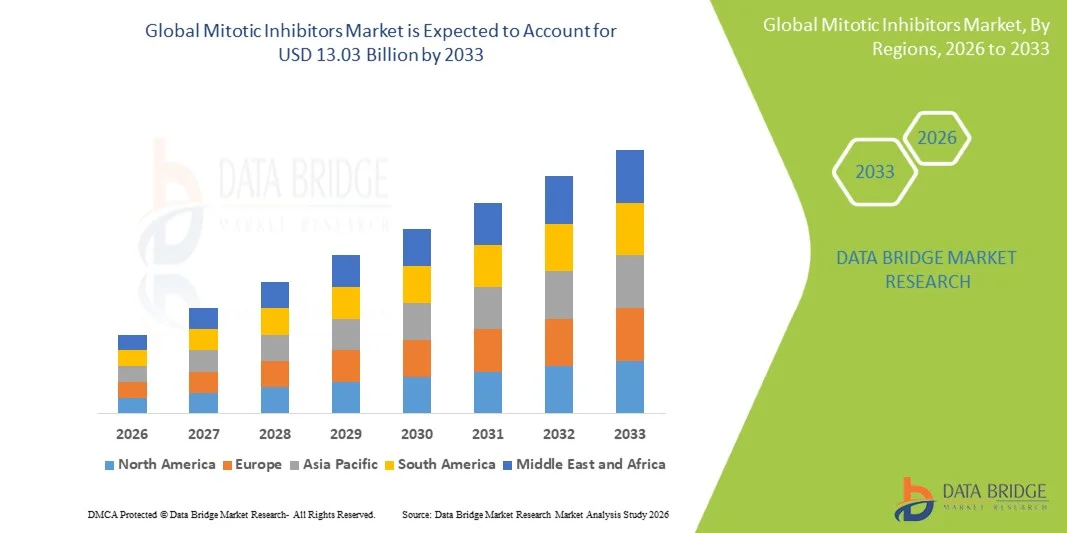
- Согласно анализу Data Bridge Market Research, глобальный размер рынка митотических ингибиторов был оценен как9,36 млрд долларов в 2025 годуОжидается, что он достигнет$13,03 млрд к 2033 году, вCAGR 4,23%в течение прогнозируемого периода
- Рост рынка в значительной степени подпитывается ростом заболеваемости раком во всем мире, особенно раком молочной железы, раком легких и гематологическими злокачественными новообразованиями, что приводит к более широкому принятию митотических ингибиторов в качестве ключевого компонента схем химиотерапии в онкологических условиях лечения.
- Кроме того, постоянные достижения в области терапии рака, включая разработку более целенаправленных и менее токсичных препаратов, наряду с растущими инвестициями в онкологические исследования и улучшением доступа к лечению рака в странах с развивающейся экономикой, создают митотические ингибиторы в качестве основного варианта лечения. Эти факторы ускоряют освоение решений Mitotic Inhibitors, тем самым значительно повышая рост отрасли.
Размер рынка и прогноз
- Глобальная рыночная стоимость (2025):9,36 млрд. долларов США
- Ожидаемая рыночная стоимость (2033):$13,03 млрд.
- Прогноз CAGR (2026–2033):4.23%
Каковы основные выводы рынка заместительной гормональной терапии
- Митотические ингибиторы, класс химиотерапевтических препаратов, которые предотвращают деление клеток, нарушая образование микротрубочек, широко используются в лечении различных видов рака, таких как рак молочной железы, рак легких, лимфома и лейкемия. Эти агенты играют важную роль в онкологии, ингибируя пролиферацию быстро делящихся раковых клеток и улучшая результаты выживаемости пациентов.
- Растущий спрос на митотические ингибиторы в первую очередь подпитывается ростом глобального бремени рака, увеличением воздействия факторов риска, таких как старение населения, изменение образа жизни и влияние окружающей среды. Кроме того, постоянное совершенствование протоколов лечения рака и все более широкое внедрение комбинаций.химиотерапияРежимы еще больше поддерживают рост рынка
- Северная Америка доминировала на рынке митотических ингибиторов с самой большой долей выручки в 38,7% в 2025 году, характеризующейся передовой онкологической инфраструктурой, высокими показателями диагностики рака и сильным присутствием ведущих фармацевтических компаний. США продолжают наблюдать значительный рост, обусловленный увеличением скрининга рака, доступом к передовым химиотерапевтическим препаратам и сильными инвестициями в НИОКР.
- Ожидается, что Азиатско-Тихоокеанский регион станет самым быстрорастущим регионом на рынке митотических ингибиторов в течение прогнозируемого периода из-за роста распространенности рака, улучшения инфраструктуры здравоохранения и расширения доступа к недорогому лечению рака. Расширение услуг онкологической помощи в таких странах, как Китай и Индия, способствует региональному росту.
- Родительский сегмент доминировал на рынке с долей выручки 64,7% в 2025 году, что обусловлено широким использованием внутривенной химиотерапии в больницах.
Сфера охвата и сегментация рынка митотических ингибиторов
|
Атрибуты |
Митотические ингибиторы Ключевые идеи рынка |
|
Сегменты покрыты |
|
|
Страны, охваченные |
Северная Америка
Европа
Азиатско-Тихоокеанский регион
Ближний Восток и Африка
Южная Америка
|
|
Ключевые игроки рынка |
|
|
Рыночные возможности |
|
|
Информационные наборы данных с добавленной стоимостью |
В дополнение к информации о рыночных сценариях, таких как рыночная стоимость, темпы роста, сегментация, географическое покрытие и основные игроки, рыночные отчеты, курируемые Data Bridge Market Research, также включают углубленный экспертный анализ, эпидемиологию пациентов, анализ трубопроводов, анализ цен и нормативную базу. |
Каковы основные тенденции на рынке заместительной гормональной терапии
"Достижения в целевой терапии рака и точной медицине"
- Значительной и ускоряющейся тенденцией на мировом рынке митотических ингибиторов является растущий сдвиг в сторону целевых методов лечения рака и подходов точной медицины, направленных на улучшение результатов лечения и снижение системной токсичности.
- Например, широко используемые митотические ингибиторы, такие как Паклитаксел и Винкристин, все чаще включаются в схемы комбинированной терапии для повышения эффективности при различных типах рака.
- Растущее использование комбинированной терапии с иммунотерапией и целевыми агентами улучшает выживаемость при раке, таком как рак молочной железы, рак легких игематологические злокачественные образования
- Фармацевтические компании сосредоточены на разработке препаратов следующего поколения, которые улучшают доставку лекарств, снижают токсичность и повышают селективность опухоли.
- Расширение внедрения персонализированной медицины на основе генетического профилирования позволяет более эффективно выбирать методы лечения на основе митотических ингибиторов.
- Расширение клинических испытаний, оценивающих новые системы доставки, включая доставку лекарств на основе наночастиц, еще больше укрепляет инновации на этом рынке.
- Рост финансирования онкологических исследований и увеличение глобального бремени рака также поддерживают устойчивый спрос на митотические ингибиторы.
- Этот сдвиг в сторону более точных, эффективных и специфичных для пациента подходов к лечению рака коренным образом меняет рынок митотических ингибиторов.
Каковы основные драйверы рынка заместительной гормональной терапии
водитель
Рост глобальной распространенности рака и расширение спроса на химиотерапию
- Растущая глобальная заболеваемость раком является основным фактором роста рынка ингибиторов митоза, поскольку эти препараты остаются краеугольным камнем в схемах химиотерапии.
- Например, рак молочной железы, рак яичников, рак легких и лейкемия продолжают демонстрировать растущую распространенность, стимулируя спрос на эффективные цитотоксические методы лечения, такие как паклитаксел и винкристин.
- Расширение доступа к онкологической помощи и улучшение диагностических возможностей позволяют проводить раннее выявление и повышать скорость начала лечения.
- Растущие расходы на здравоохранение как в развитых, так и в развивающихся странах улучшают доступ к химиотерапевтическим препаратам.
- Расширение применения протоколов комбинированной химиотерапии способствует дальнейшему использованию митотических ингибиторов в клинической практике.
- Правительственные инициативы и программы информирования о раке поощряют ранний скрининг и лечение среди населения.
- Доступность генерических версий ключевых митотических ингибиторов повышает доступность и расширяет доступ пациентов во всем мире.
- Текущие клинические исследования новых показаний рака еще больше расширяют терапевтическое применение митотических ингибиторов.
- Растущее бремя возрастных раковых заболеваний из-за старения населения также вносит значительный вклад в рост рынка.
Сдержанность/вызов
"Тяжелые побочные эффекты и появление целевой терапии рака"
- Одной из основных проблем на рынке ингибиторов митоза является высокая частота побочных эффектов, связанных с химиотерапией, включая нейротоксичность, миелосупрессию и желудочно-кишечную токсичность.
- Например, такие препараты, как Паклитаксел, могут вызывать периферическую невропатию, что может ограничить длительное использование лечения и соблюдение требований пациента.
- Эти проблемы токсичности часто требуют корректировки дозы или прекращения лечения, что влияет на общую эффективность терапии.
- Появление таргетной терапии и иммунотерапии постепенно снижает зависимость от традиционных цитотоксических митотических ингибиторов при некоторых типах рака.
- Высокая нагрузка на лечение и длительные требования к управлению больницей также могут ограничить прием и доступность пациентов.
- Строгие процессы одобрения регулирующих органов для онкопрепаратов могут задержать выход на рынок новых рецептур митотических ингибиторов
- Развитие резистентности в некоторых типах опухолей еще больше снижает эффективность долгосрочного лечения.
- Несмотря на высокую эффективность, неселективный механизм действия остается ключевым ограничением этого класса лекарств.
- Решение этих проблем с помощью улучшенных систем доставки лекарств, более безопасных рецептур и комбинированных методов лечения будет иметь важное значение для устойчивого роста рынка.
Как сегментируется рынок заместительной гормональной терапии
Рынок сегментирован на основе индикации, класса лекарств, маршрута введения, конечных пользователей и канала распространения.
• По показаниям
Исходя из показаний, рынок ингибиторов митоза сегментирован на рак молочной железы, рак легких, рак крови и другие. Сегмент рака молочной железы доминировал на рынке с самой большой долей дохода в 41,6% в 2025 году, что обусловлено высокой глобальной распространенностью рака молочной железы и сильной зависимостью от митотических ингибиторов в рамках схем химиотерапии. Рост заболеваемости среди женщин во всем мире в значительной степени способствует росту спроса. Ранняя диагностика и расширение программ скрининга поддерживают более высокий охват лечением. Митотические ингибиторы, такие как таксаны, широко используются как на ранней стадии, так и при метастатическом лечении рака молочной железы. Сильная клиническая эффективность в замедлении деления раковых клеток усиливает их принятие. Больницы и онкологические центры являются основными центрами лечения. Достижения в комбинированной химиотерапии еще больше повышают эффективность. Повышение осведомленности о лечении рака молочной железы поддерживает раннее вмешательство. Правительственные и неправительственные программы повышения осведомленности о раке повышают показатели диагностики. В целом, рак молочной железы остается доминирующим сегментом показаний.
Ожидается, что сегмент рака крови будет наблюдать самый быстрый CAGR 15,9% с 2026 по 2033 год, что обусловлено увеличением заболеваемости лейкемией, лимфомой и связанными с ними гематологическими злокачественными новообразованиями. Растущее использование митотических ингибиторов в протоколах химиотерапии при раке крови поддерживает спрос. Достижения в целевых комбинациях терапии улучшают результаты лечения. Рост глобального бремени рака и старение населения еще больше ускоряют рост. Растущее внедрение больничных онкологических методов лечения увеличивает использование. Клинические исследования, поддерживающие улучшенные показатели выживаемости, повышают доверие к терапии. Расширение специализированных центров лечения рака поддерживает доступность. Фармацевтические инновации в комбинированных схемах способствуют внедрению. В целом, рак крови является самым быстрорастущим сегментом показаний.
• Класс наркотиков
На основе класса лекарств рынок сегментирован на таксаны, алкалоиды Винки, колхицин, подофиллотоксины и другие. Сегмент таксанов доминировал на рынке с долей выручки 38,4% в 2025 году, что обусловлено их сильной эффективностью в лечении нескольких типов рака, включая рак молочной железы, легких и яичников. Таксаны, такие как паклитаксел и доцетаксел, широко используются в протоколах химиотерапии. Их способность ингибировать разборку микротрубочек усиливает подавление раковых клеток. Увеличение распространенности солидных опухолей значительно поддерживает спрос. Сильное включение в стандартные руководства по лечению онкологии усиливает принятие. Больницы и онкологические центры широко используют таксаны. Наличие общих формул улучшает доступность и доступность. Непрерывные клинические исследования поддерживают расширенные показания. В целом, таксаны остаются доминирующим сегментом класса лекарств.
Сегмент Vinca Alkaloids, как ожидается, станет свидетелем самого быстрого CAGR в 16,2% с 2026 по 2033 год, что обусловлено ростом использования в гематологическом раке и детской онкологии. Такие препараты, как винкристин и винбластин, все чаще используются в комбинированной терапии. Растущая заболеваемость раком крови поддерживает рост спроса. Улучшенные составы снижают токсичность и повышают толерантность пациентов. Расширение онкологической инфраструктуры на развивающихся рынках способствует ее внедрению. Клинические испытания, поддерживающие эффективность в комбинированных схемах, улучшают использование. Увеличение доступности доступных дженериков поддерживает доступность. В целом, алкалоиды винки являются самым быстрорастущим сегментом класса лекарств.
• По маршруту администрации
На основе маршрута администрирования рынок сегментирован на устный, парентеральный и другие. Сегмент Parenteral доминировал на рынке с долей выручки 64,7% в 2025 году, чему способствовало широкое использование внутривенной химиотерапии в больницах. Митотические ингибиторы преимущественно вводят путем инъекции для более быстрой и контролируемой доставки лекарств. Больницы и онкологические центры предпочитают парентеральное введение при тяжелых случаях рака. Высокая биодоступность и немедленное терапевтическое действие поддерживают его доминирование. Увеличение числа стационарных методов лечения рака еще больше стимулирует спрос. Сильные клинические протоколы рекомендуют парентеральную химиотерапию для многих видов рака. Наличие передовых инфузионных технологий повышает безопасность. В целом, парентеральное введение остается доминирующим сегментом.
Ожидается, что в сегменте ротовой полости самый быстрый CAGR составит 15,4% с 2026 по 2033 год, что обусловлено растущим предпочтением лечения рака на дому и улучшением пероральных химиотерапевтических препаратов. Пациенты предпочитают пероральные препараты для удобства и сокращения посещений больницы. Достижения в области технологий доставки лекарств повышают биодоступность полости рта. Растущее внедрение амбулаторного лечения рака поддерживает рост. Растущее внимание к моделям ухода, ориентированным на пациента, повышает спрос. Расширение доступности пероральных онкологических препаратов улучшает доступность. Растущая инфраструктура здравоохранения в странах с развивающейся экономикой также способствует внедрению. В целом, пероральное введение является самым быстрорастущим сегментом.
• Конечными пользователями
На базе конечных пользователей рынок сегментирован на больницы, домашнюю помощь, специализированные клиники и другие. Сегмент госпиталей доминировал на рынке с долей дохода 55,3% в 2025 году, что обусловлено высоким притоком пациентов для диагностики и лечения рака. Больницы служат в качестве первичных центров для химиотерапии и лечения рака. Наличие развитой онкологической инфраструктуры способствует эффективному лечению. Сильное присутствие специалистов по онкологии улучшает результаты лечения пациентов. Больницы управляют как стационарными, так и амбулаторными случаями рака. Государственное финансирование программ лечения рака поддерживает использование больниц. Увеличение заболеваемости раком еще больше стимулирует спрос. В целом, больницы остаются доминирующим сегментом конечного пользователя.
Ожидается, что в сегменте Homecare самый быстрый CAGR составит 16,7% с 2026 по 2033 год, что обусловлено растущим предпочтением лечения рака на дому и поддерживающего ухода. Пациенты предпочитают домашнюю терапию для комфорта и снижения расходов на госпитализацию. Растущее внедрение пероральной химиотерапии поддерживает расширение ухода на дому. Телеонкологические службы улучшают мониторинг лечения. Повышение осведомленности о паллиативной и поддерживающей помощи повышает спрос. Расширение доступа к здравоохранению в развивающихся регионах способствует росту. Увеличение популяции больных раком у пожилых людей еще больше ускоряет процесс усыновления. В целом, уход на дому является самым быстрорастущим сегментом конечного пользователя.
• Распределительный канал
На основе канала дистрибуции рынок сегментирован в Больничную аптеку, Онлайн-аптеку и Розничную аптеку. Сегмент «Больничная аптека» доминировал на рынке с долей выручки 49,1% в 2025 году, что обусловлено большим объемом дозирования химиотерапевтических препаратов в больницах. Больничные аптеки обеспечивают немедленную доступность митотических ингибиторов для стационарного лечения рака. Сильная интеграция с онкологическими отделениями поддерживает эффективное лекарственное обеспечение. Комплексные системы закупок и контролируемого распределения повышают эффективность. Врачи предпочитают больничные аптеки для лечения рака. Растущие показатели госпитализации для лечения рака требуют поддержки. Больницы поддерживают строгие протоколы обработки и хранения цитотоксических препаратов. В целом, больничная аптека остается доминирующим сегментом распределительного канала.
Ожидается, что сегмент онлайн-аптек будет наблюдать самый быстрый CAGR в 17,3% с 2026 по 2033 год, что обусловлено растущим внедрением цифрового здравоохранения и растущим удобством онлайн-заказа лекарств. Пациенты предпочитают онлайн-платформы для доставки на дом. Увеличение проникновения в Интернет поддерживает быстрый рост. Интеграция с телемедициной улучшает выполнение рецептов. Расширение логистических сетей обеспечивает безопасную и своевременную доставку. Регуляторные улучшения для электронных устройств повышают доверие. Растущее предпочтение сдержанной закупки онкопрепаратов поддерживает спрос. В целом, онлайн-аптека является самым быстрорастущим сегментом каналов распространения.
В каком регионе находится наибольшая доля рынка заместительной гормональной терапии
- Северная Америка доминировала на рынке митотических ингибиторов с самой большой долей выручки в 38,7% в 2025 году, характеризующейся передовой онкологической инфраструктурой, высокими показателями диагностики рака и сильным присутствием ведущих фармацевтических компаний. Регион продолжает извлекать выгоду из программ раннего выявления рака, широкого доступа к химиотерапии и сильного клинического принятия схем лечения на основе митотических ингибиторов.
- США остаются основным поставщиком в регионе, что обусловлено ростом инициатив по скринингу рака, сильными системами возмещения расходов на здравоохранение и растущим использованием передовых химиотерапевтических препаратов в больничных онкологических учреждениях.
- Это доминирование дополнительно поддерживается надежными инвестициями в НИОКР от фармацевтических компаний, что приводит к постоянному развитию улучшенных рецептур и комбинированных методов лечения для улучшения результатов лечения.
Митотические ингибиторы рынка США
Американский рынок митотических ингибиторов занял самую большую долю дохода в 81% в Северной Америке в 2025 году, что обусловлено высоким бременем случаев рака и широким доступом к передовой онкологической помощи. Страна продолжает наблюдать растущее принятие протоколов лечения на основе химиотерапии по нескольким показаниям к раку. Например, широко используемые препараты митотического ингибитора, такие как Паклитаксел, широко используются при лечении рака молочной железы, рака яичников и рака легких. Рост также поддерживается сильными инвестициями в НИОКР, ростом показателей скрининга рака и наличием как фирменных, так и генерических онкологических препаратов, которые улучшают доступность лечения и доступность.
Европейский рынок митотических ингибиторов
Европейский рынок митотических ингибиторов, по прогнозам, будет расширяться при существенном CAGR в течение прогнозируемого периода, что обусловлено ростом заболеваемости раком, сильными системами здравоохранения и растущим внедрением стандартизированных протоколов лечения онкологии. Регион выигрывает от инициатив по ранней диагностике и поддерживаемых правительством программ лечения рака, которые улучшают доступ пациентов к химиотерапии. Растущее использование комбинированной терапии и постоянное совершенствование больничной онкологической инфраструктуры способствуют дальнейшему росту рынка в основных европейских странах.
Британские митотические ингибиторы Market Insight
Ожидается, что рынок митотических ингибиторов в Великобритании в течение прогнозируемого периода будет расти с заметным CAGR, чему будет способствовать увеличение распространенности рака и сильная зависимость от финансируемых государством медицинских услуг. Национальная служба здравоохранения (NHS) играет ключевую роль в обеспечении доступа к химиотерапевтическим методам лечения, включая митотические ингибиторы, среди населения пациентов. Кроме того, продолжающиеся улучшения в программах скрининга рака способствуют более ранней диагностике и улучшению результатов лечения.
Германия: Mitotic Inhibitors Market Insight
Ожидается, что в течение прогнозируемого периода рынок митотических ингибиторов в Германии будет расширяться при значительном CAGR, что обусловлено сильной инфраструктурой онкологии и высокой осведомленностью о вариантах лечения рака. Хорошо развитая система здравоохранения Германии обеспечивает широкий доступ к химиотерапевтическим препаратам и современным онкологическим учреждениям. Растущее использование основанных на фактических данных протоколов лечения и доступность инновационных онкологических препаратов способствуют дальнейшему расширению рынка.
Азиатско-Тихоокеанские митотические ингибиторы рынка
Ожидается, что рынок митотических ингибиторов в Азиатско-Тихоокеанском регионе будет самым быстрорастущим регионом на рынке митотических ингибиторов в течение прогнозируемого периода, что обусловлено ростом распространенности рака, улучшением инфраструктуры здравоохранения и расширением доступа к недорогому лечению рака. В таких странах, как Китай, Индия и Япония, растет спрос на химиотерапевтические препараты из-за увеличения показателей диагностики и расширения услуг по уходу за онкологическими заболеваниями. Правительственные инициативы, направленные на укрепление инфраструктуры лечения рака и расширение доступа к лечению, еще больше ускоряют региональный рост. Увеличение доступности недорогих лекарств для онкологии улучшает доступность лечения среди более широкой популяции пациентов. Расширение больничных сетей и растущие инвестиции в исследования рака способствуют дальнейшему развитию рынка в регионе.
Японские митотические ингибиторы рынка
Японский рынок митотических ингибиторов набирает обороты из-за роста заболеваемости раком и сильного внимания к передовым медицинским технологиям. Старение населения страны является ключевым фактором, способствующим повышению спроса на лечение рака, включая митотические ингибиторы. Улучшение доступа к онкологической помощи и постоянное развитие инновационных протоколов лечения способствуют дальнейшему росту рынка.
Китайские митотические ингибиторы рынка
Китайский рынок митотических ингибиторов составил самую большую долю рынка в Азиатско-Тихоокеанском регионе в 2025 году, чему способствовала быстрая урбанизация, растущее бремя рака и расширение доступа к здравоохранению. Растущее население страны среднего класса и улучшенные диагностические возможности способствуют более раннему выявлению и увеличению показателей лечения. Сильное отечественное фармацевтическое производство и доступность доступных генерических химиотерапевтических препаратов являются ключевыми факторами, способствующими расширению рынка.
Каковы основные компании на рынке заместительной гормональной терапии
Отрасль Mitotic Inhibitors в основном возглавляется хорошо зарекомендовавшими себя компаниями, в том числе:
- Pfizer Inc. (США)
- Novartis AG (Швейцария)
- Бристол Майерс Сквибб (США)
- Roche Holding AG (Швейцария)
- Санофи (Франция)
- AstraZeneca (Великобритания)
- Merck & Co., Inc. (США)
- Eli Lilly & Company (США)
- Johnson & Johnson (США)
- Takeda Pharmaceutical Company Limited (Япония)
- Teva Pharmaceutical Industries Ltd. (Израиль)
- Sun Pharmaceutical Industries Ltd. (Индия)
- Dr. Reddy's Laboratories Ltd. (Индия)
- Lupin Limited (Индия)
- Cipla Ltd. (Индия)
- Aurobindo Pharma Ltd. (Индия)
- Zydus Lifesciences Ltd. (Индия)
- Hikma Pharmaceuticals PLC (Великобритания)
- Sandoz Group AG (Швейцария)
- Viatris Inc. (США)
Каковы последние тенденции на рынке заместительной гормональной терапии
- В июле 2022 года препарат DoceAqualip компании Intas Pharmaceutical (формация доцетакселовой наносуспенсии) показал эффективность и переносимость у пациентов с прогрессирующим немелкоклеточным раком легкого, ранее получавшим химиотерапию на основе платины, что ознаменовало заметное развитие препаратов митотических ингибиторов.
- В мае 2022 года Cristal Therapeutics сообщила, что ее доцетаксел-вхватывающая полимерная наночастица (CPC634) продемонстрировала накопление при лечении в визуализации ПЭТ / КТ, поддерживая потенциал для стратификации пациентов в наномедицине рака.
- В марте 2023 года исследование Phoenix Biotech показало, что объединение его исследуемого соединения Breastin с паклитакселом предотвратило рецидив опухоли in vivo, что свидетельствует об усиленном клиническом потенциале для комбинированных схем с существующими митотическими ингибиторами.
- В марте 2023 года Sudotaxel zendusortide (TH 1902) Theratechnologies продемонстрировал, что схемы инфильтрации иммунных клеток значительно влияют на противоопухолевый ответ, что указывает на многообещающие возможности для сочетания митотического ингибирования со стратегиями иммунотерапии.
- В мае 2023 года Nanoxel M (полимерная мицелла доцетаксела) и комбинация, включающая терапию, ориентированную на HER2, продемонстрировали сильную противоопухолевую активность у пациентов с карциномой слюнных протоков HER2, что подчеркивает прогресс в специализированных показаниях.
- В декабре 2025 года FDA одобрило интравезикальное решение митомицина (Zusduri) для взрослых с рецидивирующим низкосортным немышечно-инвазивным раком мочевого пузыря с промежуточным риском, представляя одно из последних одобрений химиотерапевтического агента, связанного с митотическим ингибитором.
SKU-
Получите онлайн-доступ к отчету на первой в мире облачной платформе рыночной аналитики
- Интерактивная панель анализа данных
- Панель анализа компании для возможностей с высоким потенциалом роста
- Доступ аналитика-исследователя для настройки и запросов
- Анализ конкурентов с помощью интерактивной панели
- Последние новости, обновления и анализ тенденций
- Используйте возможности сравнительного анализа для комплексного отслеживания конкурентов
Методология исследования
Сбор данных и анализ базового года выполняются с использованием модулей сбора данных с большими размерами выборки. Этап включает получение рыночной информации или связанных данных из различных источников и стратегий. Он включает изучение и планирование всех данных, полученных из прошлого заранее. Он также охватывает изучение несоответствий информации, наблюдаемых в различных источниках информации. Рыночные данные анализируются и оцениваются с использованием статистических и последовательных моделей рынка. Кроме того, анализ доли рынка и анализ ключевых тенденций являются основными факторами успеха в отчете о рынке. Чтобы узнать больше, пожалуйста, запросите звонок аналитика или оставьте свой запрос.
Ключевой методологией исследования, используемой исследовательской группой DBMR, является триангуляция данных, которая включает в себя интеллектуальный анализ данных, анализ влияния переменных данных на рынок и первичную (отраслевую экспертную) проверку. Модели данных включают сетку позиционирования поставщиков, анализ временной линии рынка, обзор рынка и руководство, сетку позиционирования компании, патентный анализ, анализ цен, анализ доли рынка компании, стандарты измерения, глобальный и региональный анализ и анализ доли поставщика. Чтобы узнать больше о методологии исследования, отправьте запрос, чтобы поговорить с нашими отраслевыми экспертами.
Доступна настройка
Data Bridge Market Research является лидером в области передовых формативных исследований. Мы гордимся тем, что предоставляем нашим существующим и новым клиентам данные и анализ, которые соответствуют и подходят их целям. Отчет можно настроить, включив в него анализ ценовых тенденций целевых брендов, понимание рынка для дополнительных стран (запросите список стран), данные о результатах клинических испытаний, обзор литературы, обновленный анализ рынка и продуктовой базы. Анализ рынка целевых конкурентов можно проанализировать от анализа на основе технологий до стратегий портфеля рынка. Мы можем добавить столько конкурентов, о которых вам нужны данные в нужном вам формате и стиле данных. Наша команда аналитиков также может предоставить вам данные в сырых файлах Excel, сводных таблицах (книга фактов) или помочь вам в создании презентаций из наборов данных, доступных в отчете.