


What are the Major Takeaways of Hormone Replacement Therapy Market?
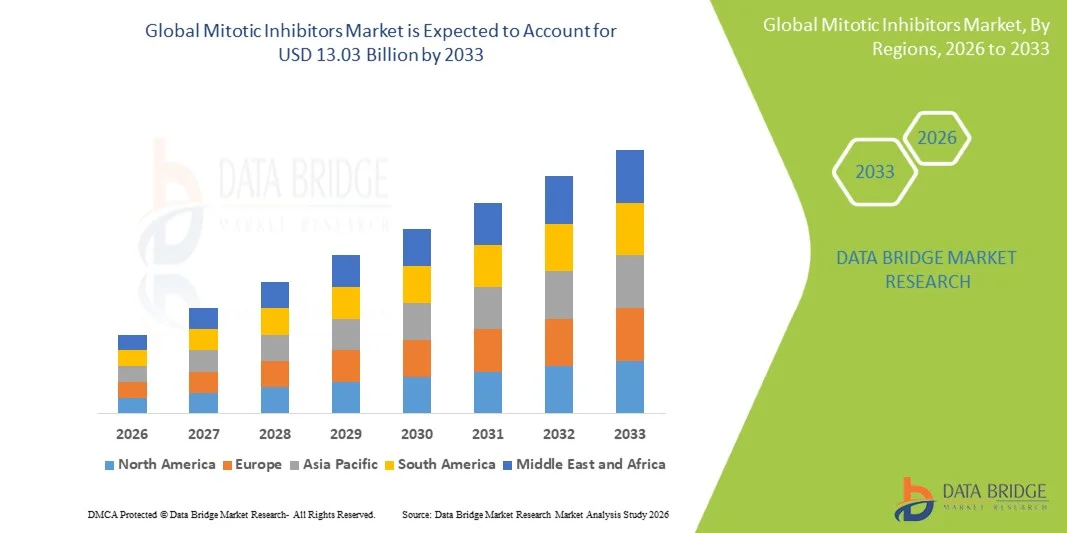
- As per Data Bridge Market Research Analysis theglobal mitotic inhibitors market size was valued at USD 9.36 billion in 2025 and is expected to reach USD 13.03 billion by 2033, at a CAGR of 4.23% during the forecast period
- The market growth is largely fueled by the rising incidence of cancer worldwide, particularly breast cancer, lung cancer, and hematological malignancies, leading to increased adoption of mitotic inhibitors as a key component of chemotherapy regimens across oncology treatment settings
- Furthermore, continuous advancements in cancer therapeutics, including the development of more targeted and less toxic formulations, along with growing investment in oncology research and improved access to cancer care in emerging economies, are establishing mitotic inhibitors as an essential treatment option. These converging factors are accelerating the uptake of Mitotic Inhibitors solutions, thereby significantly boosting the industry's growth
Market Size & Forecast
- Global Market Value (2025): USD 9.36 billion
- Expected Market Value (2033): USD 13.03 billion
- Forecast CAGR (2026–2033): 4.23%
What are the Major Takeaways of Hormone Replacement Therapy Market?
- Mitotic inhibitors, a class of chemotherapy drugs that prevent cell division by disrupting microtubule formation, are widely used in the treatment of various cancers such as breast cancer, lung cancer, lymphoma, and leukemia. These agents play a critical role in oncology by inhibiting the proliferation of rapidly dividing cancer cells and improving patient survival outcomes
- The escalating demand for mitotic inhibitors is primarily fueled by the rising global cancer burden, increasing exposure to risk factors such as aging population, lifestyle changes, and environmental influences. In addition, continuous advancements in cancer treatment protocols and growing adoption of combination chemotherapy regimens are further supporting market growth
- North America dominated the mitotic inhibitors market with the largest revenue share of 38.7% in 2025, characterized by advanced oncology infrastructure, high cancer diagnosis rates, and strong presence of leading pharmaceutical companies. The U.S. continues to witness significant growth driven by increased cancer screening, access to advanced chemotherapy drugs, and strong R&D investments
- Asia-Pacific is expected to be the fastest growing region in the mitotic inhibitors market during the forecast period due to rising cancer prevalence, improving healthcare infrastructure, and increasing access to affordable cancer treatment. Expanding oncology care services in countries such as China and India are further driving regional growth
- The Parenteral segment dominated the market with a revenue share of 64.7% in 2025, driven by the widespread use of intravenous chemotherapy in hospital settings
Report Scope and Mitotic Inhibitors Market Segmentation
|
Attributes |
Mitotic Inhibitors Key Market Insights |
|
Segments Covered |
|
|
Countries Covered |
North America
Europe
Asia-Pacific
Middle East and Africa
South America
|
|
Key Market Players |
|
|
Market Opportunities |
|
|
Value Added Data Infosets |
In addition to the insights on market scenarios such as market value, growth rate, segmentation, geographical coverage, and major players, the market reports curated by the Data Bridge Market Research also include in-depth expert analysis, patient epidemiology, pipeline analysis, pricing analysis, and regulatory framework. |
What is the Key Trend in the Hormone Replacement Therapy Market?
“Advancements in Targeted Cancer Therapy and Precision Medicine”
- A significant and accelerating trend in the global mitotic inhibitors market is the increasing shift toward targeted cancer therapies and precision medicine approaches aimed at improving treatment outcomes and reducing systemic toxicity
- For instance, widely used mitotic inhibitors such as Paclitaxel and Vincristine are being increasingly incorporated into combination therapy regimens to enhance efficacy across various cancer types
- The growing use of combination therapies with immunotherapy and targeted agents is improving survival rates in cancers such as breast cancer, lung cancer, and hematologic malignancies
- Pharmaceutical companies are focusing on developing next-generation formulations that improve drug delivery, reduce toxicity, and enhance tumor selectivity
- Increasing adoption of personalized medicine based on genetic profiling is enabling more effective selection of mitotic inhibitor-based therapies
- The expansion of clinical trials evaluating novel delivery systems, including nanoparticle-based drug delivery, is further strengthening innovation in this market
- Rising oncology research funding and increasing global cancer burden are also supporting sustained demand for mitotic inhibitors
- This shift toward more precise, effective, and patient-specific cancer treatment approaches is fundamentally reshaping the mitotic inhibitors market
What are the Key Drivers of Hormone Replacement Therapy Market?
Driver
“Rising Global Cancer Prevalence and Expanding Chemotherapy Demand”
- The increasing global incidence of cancer is a major driver for the growth of the Mitotic Inhibitors market, as these drugs remain a cornerstone in chemotherapy regimens
- For instance, cancers such as breast cancer, ovarian cancer, lung cancer, and leukemia continue to show rising prevalence, driving demand for effective cytotoxic therapies like paclitaxel and vincristine
- Expanding access to oncology care and improving diagnostic capabilities are enabling earlier detection and increasing treatment initiation rates
- Growing healthcare expenditure in both developed and emerging economies is improving access to chemotherapy drugs
- Increasing adoption of combination chemotherapy protocols is further boosting the utilization of mitotic inhibitors in clinical practice
- Government initiatives and cancer awareness programs are encouraging early screening and treatment uptake across populations
- The availability of generic versions of key mitotic inhibitor drugs is improving affordability and expanding patient access globally
- Ongoing clinical research into new cancer indications is further broadening the therapeutic application of mitotic inhibitors
- The rising burden of age-related cancers due to global population aging is also significantly contributing to market growth
Restraint/Challenge
“Severe Side Effects and Emergence of Targeted Cancer Therapies”
- One of the major challenges in the Mitotic Inhibitors market is the high incidence of adverse effects associated with chemotherapy treatment, including neurotoxicity, myelosuppression, and gastrointestinal toxicity
- For instance, drugs such as Paclitaxel may cause peripheral neuropathy, which can limit long-term treatment use and patient compliance
- These toxicity concerns often require dose adjustments or treatment discontinuation, affecting overall therapy effectiveness
- The emergence of targeted therapies and immunotherapies is gradually reducing dependence on traditional cytotoxic mitotic inhibitors in some cancer types
- High treatment burden and prolonged hospital administration requirements can also limit patient acceptance and accessibility
- Stringent regulatory approval processes for oncology drugs can delay market entry of new mitotic inhibitor formulations
- Resistance development in certain tumor types further reduces long-term treatment effectiveness
- Despite being highly effective, the non-selective mechanism of action remains a key limitation of this drug class
- Addressing these challenges through improved drug delivery systems, safer formulations, and combination therapies will be essential for sustained market growth
How is the Hormone Replacement Therapy Market Segmented?
The market is segmented on the basis of indication, drug class, route of administration, end-users, and distribution channel.
• By Indication
On the basis of indication, the Mitotic Inhibitors market is segmented into Breast Cancer, Lung Cancer, Blood Cancer, and Others. The Breast Cancer segment dominated the market with the largest revenue share of 41.6% in 2025, driven by the high global prevalence of breast cancer and strong reliance on mitotic inhibitors as part of chemotherapy regimens. Increasing incidence rates among women worldwide significantly contribute to demand. Early diagnosis and expanding screening programs support higher treatment uptake. Mitotic inhibitors such as taxanes are widely used in both early-stage and metastatic breast cancer treatment. Strong clinical efficacy in slowing cancer cell division reinforces their adoption. Hospitals and oncology centers are the primary treatment hubs. Advancements in combination chemotherapy further enhance effectiveness. Rising awareness about breast cancer management supports early intervention. Government and NGO-led cancer awareness programs boost diagnosis rates. Overall, breast cancer remains the dominant indication segment.
The Blood Cancer segment is expected to witness the fastest CAGR of 15.9% from 2026 to 2033, driven by increasing incidence of leukemia, lymphoma, and related hematological malignancies. Growing use of mitotic inhibitors in chemotherapy protocols for blood cancers supports demand. Advancements in targeted therapy combinations improve treatment outcomes. Rising global cancer burden and aging population further accelerate growth. Increasing adoption of hospital-based oncology treatments boosts usage. Clinical research supporting improved survival rates enhances confidence in therapies. Expansion of specialized cancer treatment centers supports accessibility. Pharmaceutical innovation in combination regimens drives adoption. Overall, blood cancer is the fastest-growing indication segment.
• By Drug Class
On the basis of drug class, the market is segmented into Taxanes, Vinca Alkaloids, Colchicine, Podophyllotoxins, and Others. The Taxanes segment dominated the market with a revenue share of 38.4% in 2025, driven by their strong efficacy in treating multiple cancer types including breast, lung, and ovarian cancers. Taxanes such as paclitaxel and docetaxel are widely used in chemotherapy protocols. Their ability to inhibit microtubule disassembly enhances cancer cell suppression. Increasing prevalence of solid tumors significantly supports demand. Strong inclusion in standard oncology treatment guidelines reinforces adoption. Hospitals and cancer centers extensively utilize taxanes. Availability of generic formulations improves accessibility and affordability. Continuous clinical research supports expanded indications. Overall, taxanes remain the dominant drug class segment.
The Vinca Alkaloids segment is expected to witness the fastest CAGR of 16.2% from 2026 to 2033, driven by rising use in hematological cancers and pediatric oncology. Drugs such as vincristine and vinblastine are increasingly used in combination therapies. Growing incidence of blood cancers supports demand growth. Improved formulations reduce toxicity and enhance patient tolerance. Expanding oncology infrastructure in emerging markets boosts adoption. Clinical trials supporting efficacy in combination regimens enhance usage. Increasing availability of affordable generics supports accessibility. Overall, vinca alkaloids are the fastest-growing drug class segment.
• By Route of Administration
On the basis of route of administration, the market is segmented into Oral, Parenteral, and Others. The Parenteral segment dominated the market with a revenue share of 64.7% in 2025, driven by the widespread use of intravenous chemotherapy in hospital settings. Mitotic inhibitors are predominantly administered via injection for faster and more controlled drug delivery. Hospitals and oncology centers prefer parenteral administration for severe cancer cases. High bioavailability and immediate therapeutic action support its dominance. Increasing number of inpatient cancer treatments further drives demand. Strong clinical protocols recommend parenteral chemotherapy for many cancers. Availability of advanced infusion technologies enhances safety. Overall, parenteral administration remains the dominant segment.
The Oral segment is expected to witness the fastest CAGR of 15.4% from 2026 to 2033, driven by rising preference for at-home cancer care and improved oral chemotherapy formulations. Patients prefer oral drugs for convenience and reduced hospital visits. Advancements in drug delivery technologies enhance oral bioavailability. Increasing adoption of outpatient cancer treatment supports growth. Rising focus on patient-centric care models boosts demand. Expanding availability of oral oncology drugs improves accessibility. Growing healthcare infrastructure in emerging economies further supports adoption. Overall, oral administration is the fastest-growing segment.
• By End-Users
On the basis of end-users, the market is segmented into Hospitals, Homecare, Specialty Clinics, and Others. The Hospitals segment dominated the market with a revenue share of 55.3% in 2025, driven by high patient inflow for cancer diagnosis and treatment. Hospitals serve as primary centers for chemotherapy administration and cancer care. Availability of advanced oncology infrastructure supports effective treatment delivery. Strong presence of oncology specialists enhances patient outcomes. Hospitals manage both inpatient and outpatient cancer cases. Government funding for cancer treatment programs supports hospital usage. Increasing cancer incidence rates further drive demand. Overall, hospitals remain the dominant end-user segment.
The Homecare segment is expected to witness the fastest CAGR of 16.7% from 2026 to 2033, driven by rising preference for at-home cancer management and supportive care. Patients prefer home-based therapy for comfort and reduced hospitalization costs. Growing adoption of oral chemotherapy supports homecare expansion. Tele-oncology services improve treatment monitoring. Increasing awareness of palliative and supportive care boosts demand. Expanding healthcare access in emerging regions supports growth. Rising elderly cancer patient population further accelerates adoption. Overall, homecare is the fastest-growing end-user segment.
• By Distribution Channel
On the basis of distribution channel, the market is segmented into Hospital Pharmacy, Online Pharmacy, and Retail Pharmacy. The Hospital Pharmacy segment dominated the market with a revenue share of 49.1% in 2025, driven by high volume dispensing of chemotherapy drugs in hospital settings. Hospital pharmacies ensure immediate availability of mitotic inhibitors for inpatient cancer care. Strong integration with oncology departments supports efficient drug supply. Bulk procurement and controlled distribution systems enhance efficiency. Physicians prefer hospital pharmacies for critical cancer medications. Increasing hospitalization rates for cancer treatment support demand. Hospitals maintain strict handling and storage protocols for cytotoxic drugs. Overall, hospital pharmacy remains the dominant distribution channel segment.
The Online Pharmacy segment is expected to witness the fastest CAGR of 17.3% from 2026 to 2033, driven by rising digital healthcare adoption and growing convenience of online drug ordering. Patients prefer online platforms for home delivery and cost benefits. Increasing internet penetration supports rapid growth. Integration with telemedicine enhances prescription fulfillment. Expanding logistics networks ensure safe and timely delivery. Regulatory improvements for e-pharmacies boost confidence. Growing preference for discreet purchasing of oncology supportive drugs supports demand. Overall, online pharmacy is the fastest-growing distribution channel segment.
Which Region Holds the Largest Share of the Hormone Replacement Therapy Market?
- North America dominated the mitotic inhibitors market with the largest revenue share of 38.7% in 2025, characterized by advanced oncology infrastructure, high cancer diagnosis rates, and strong presence of leading pharmaceutical companies. The region continues to benefit from early cancer detection programs, widespread access to chemotherapy, and strong clinical adoption of mitotic inhibitor-based treatment regimens
- The U.S. remains the primary contributor within the region, driven by increased cancer screening initiatives, strong healthcare reimbursement systems, and growing utilization of advanced chemotherapy drugs in hospital oncology settings
- This dominance is further supported by robust R&D investments from pharmaceutical companies, leading to continuous development of improved formulations and combination therapies for better treatment outcomes
U.S. Mitotic Inhibitors Market Insight
The U.S. mitotic inhibitors market captured the largest revenue share of 81% in North America in 2025, driven by a high burden of cancer cases and strong access to advanced oncology care. The country continues to witness increasing adoption of chemotherapy-based treatment protocols across multiple cancer indications. For instance, widely used mitotic inhibitor drugs such as Paclitaxel are extensively utilized in the treatment of breast cancer, ovarian cancer, and lung cancer. Growth is further supported by strong R&D investments, rising cancer screening rates, and the availability of both branded and generic oncology drugs, which improve treatment accessibility and affordability.
Europe Mitotic Inhibitors Market Insight
The Europe mitotic inhibitors market is projected to expand at a substantial CAGR throughout the forecast period, driven by rising cancer incidence, strong healthcare systems, and increasing adoption of standardized oncology treatment protocols. The region benefits from early diagnosis initiatives and government-supported cancer treatment programs, which improve patient access to chemotherapy. Growing use of combination therapies and continuous improvements in hospital-based oncology infrastructure are further supporting market growth across major European countries.
U.K. Mitotic Inhibitors Market Insight
The U.K. mitotic inhibitors market is anticipated to grow at a noteworthy CAGR during the forecast period, supported by increasing cancer prevalence and strong reliance on publicly funded healthcare services. The National Health Service (NHS) plays a key role in ensuring access to chemotherapy treatments, including mitotic inhibitors, across patient populations. In addition, ongoing improvements in cancer screening programs are contributing to earlier diagnosis and improved treatment outcomes.
Germany Mitotic Inhibitors Market Insight
The Germany mitotic inhibitors market is expected to expand at a considerable CAGR during the forecast period, driven by strong oncology infrastructure and high awareness of cancer treatment options. Germany’s well-developed healthcare system ensures broad access to chemotherapy drugs and advanced cancer care facilities. The increasing use of evidence-based treatment protocols and availability of innovative oncology drugs are further supporting market expansion.
Asia Pacific Mitotic Inhibitors Market Insight
Asia-Pacific mitotic inhibitors market is expected to be the fastest growing region in the mitotic inhibitors market during the forecast period, driven by rising cancer prevalence, improving healthcare infrastructure, and increasing access to affordable cancer treatment. Countries such as China, India, and Japan are witnessing a growing demand for chemotherapy drugs due to increasing diagnosis rates and expanding oncology care services. Government initiatives aimed at strengthening cancer care infrastructure and expanding access to treatment are further accelerating regional growth. Increasing availability of low-cost generic oncology drugs is improving treatment affordability across a wider patient population. Expanding hospital networks and growing investments in cancer research are further supporting market development in the region.
Japan Mitotic Inhibitors Market Insight
The Japan mitotic inhibitors market is gaining momentum due to rising cancer incidence and a strong focus on advanced medical technologies. The country’s aging population is a key factor contributing to higher demand for cancer treatment therapies, including mitotic inhibitors. Improved access to oncology care and continuous development of innovative treatment protocols are further supporting market growth.
China Mitotic Inhibitors Market Insight
The China mitotic inhibitors market accounted for the largest market revenue share in Asia Pacific in 2025, driven by rapid urbanization, rising cancer burden, and expanding healthcare access. The country’s growing middle-class population and improved diagnostic capabilities are contributing to earlier detection and increased treatment rates. Strong domestic pharmaceutical manufacturing and availability of affordable generic chemotherapy drugs are key factors supporting market expansion.
Which are the Top Companies in Hormone Replacement Therapy Market ?
The Mitotic Inhibitors industry is primarily led by well-established companies, including:
- Pfizer Inc. (U.S.)
- Novartis AG (Switzerland)
- Bristol Myers Squibb (U.S.)
- Roche Holding AG (Switzerland)
- Sanofi (France)
- AstraZeneca (U.K.)
- Merck & Co., Inc. (U.S.)
- Eli Lilly and Company (U.S.)
- Johnson & Johnson (U.S.)
- Takeda Pharmaceutical Company Limited (Japan)
- Teva Pharmaceutical Industries Ltd. (Israel)
- Sun Pharmaceutical Industries Ltd. (India)
- Dr. Reddy’s Laboratories Ltd. (India)
- Lupin Limited (India)
- Cipla Ltd. (India)
- Aurobindo Pharma Ltd. (India)
- Zydus Lifesciences Ltd. (India)
- Hikma Pharmaceuticals PLC (U.K.)
- Sandoz Group AG (Switzerland)
- Viatris Inc. (U.S.)
What are Latest Developments in Hormone Replacement Therapy Market?
- In July 2022, Intas Pharmaceutical’s DoceAqualip (a docetaxel nanosuspension formulation), showed effectiveness and tolerability in patients with advanced non-small cell lung cancer previously treated with platinum-based chemotherapy, marking a notable development in mitotic inhibitor formulations
- In May 2022, Cristal Therapeutics reported that its docetaxel-entrapping polymeric nanoparticle (CPC634) demonstrated on-treatment accumulation in PET/CT imaging, supporting potential for patient stratification in cancer nanomedicine
- In March 2023, Phoenix Biotech’s study revealed that combining its investigational compound Breastin with paclitaxel prevented tumor relapse in vivo, suggesting enhanced clinical potential for combination regimens with existing mitotic inhibitors
- In March 2023, Theratechnologies’ Sudotaxel zendusortide (TH 1902) demonstrated that immune cell infiltration patterns significantly influence anti-tumor response, indicating promising avenues for combining mitotic inhibition with immunotherapy strategies
- In May 2023, Samyang Group’s Nanoxel M (docetaxel polymeric micelle) and a combination involving HER2-targeted therapy showed strong anti-tumor activity in HER2-positive salivary duct carcinoma patients, underscoring progress in specialized indications
- In December 2025, the FDA approved Mitomycin Intravesical Solution (Zusduri) for adults with recurrent low-grade, intermediate-risk non–muscle-invasive bladder cancer, representing one of the latest approvals of a mitotic inhibitor-related chemotherapeutic agent

- Interactive Data Analysis Dashboard
- Company Analysis Dashboard for high growth potential opportunities
- Research Analyst Access for customization & queries
- Competitor Analysis with Interactive dashboard
- Latest News, Updates & Trend analysis
- Harness the Power of Benchmark Analysis for Comprehensive Competitor Tracking
Data collection and base year analysis are done using data collection modules with large sample sizes. The stage includes obtaining market information or related data through various sources and strategies. It includes examining and planning all the data acquired from the past in advance. It likewise envelops the examination of information inconsistencies seen across different information sources. The market data is analysed and estimated using market statistical and coherent models. Also, market share analysis and key trend analysis are the major success factors in the market report. To know more, please request an analyst call or drop down your inquiry.
The key research methodology used by DBMR research team is data triangulation which involves data mining, analysis of the impact of data variables on the market and primary (industry expert) validation. Data models include Vendor Positioning Grid, Market Time Line Analysis, Market Overview and Guide, Company Positioning Grid, Patent Analysis, Pricing Analysis, Company Market Share Analysis, Standards of Measurement, Global versus Regional and Vendor Share Analysis. To know more about the research methodology, drop in an inquiry to speak to our industry experts.
Data Bridge Market Research is a leader in advanced formative research. We take pride in servicing our existing and new customers with data and analysis that match and suits their goal. The report can be customized to include price trend analysis of target brands understanding the market for additional countries (ask for the list of countries), clinical trial results data, literature review, refurbished market and product base analysis. Market analysis of target competitors can be analyzed from technology-based analysis to market portfolio strategies. We can add as many competitors that you require data about in the format and data style you are looking for. Our team of analysts can also provide you data in crude raw excel files pivot tables (Fact book) or can assist you in creating presentations from the data sets available in the report.












