Global Monoamine Oxidase (MAO) Inhibitor Drugs Market Segmentation, By Type (MAO-A Inhibitor and MAO-B Inhibitor), Drugs (Isocarboxazid, Phenelzine, Tranylcypromine, and Others), Disorder Type (Parkinson’s Disease, Depression, Anxiety, and Others), End Users (Hospitals, Homecare, Specialty Clinics, and Others), Distribution Channel (Hospital Pharmacy, Online Pharmacy, Retail Pharmacy, and Others)- Industry Trends and Forecast to 2033
Что такое моноаминоксидаза (МАО) Ингибиторный рынок наркотиков Размер и темпы роста
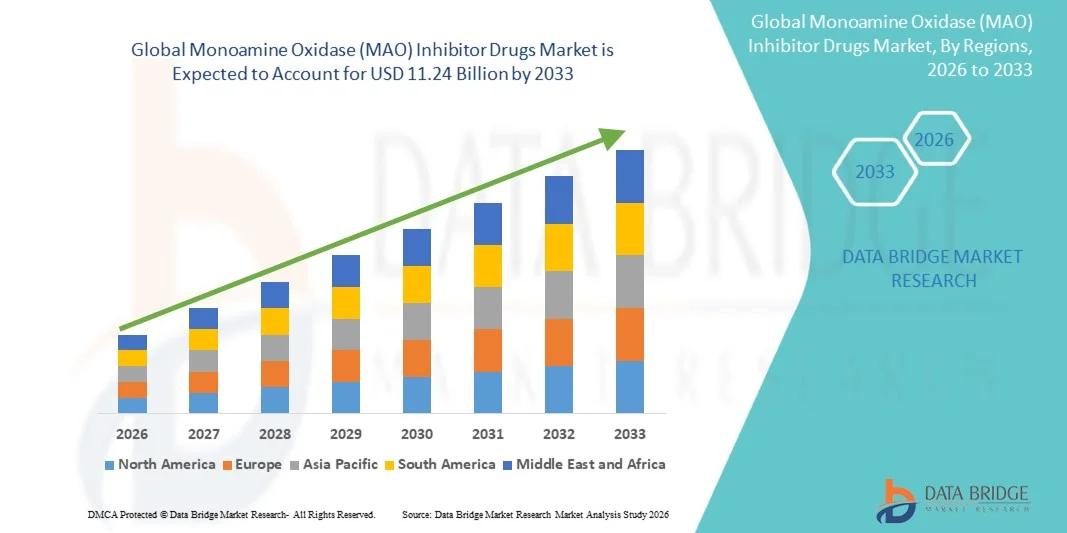
- По данным Data Bridge Market Research Analysis Глобальный объем рынка ингибиторов моноаминовой оксидазы (МАО) был оценен8,14 млрд долларов в 2025 годуОжидается, что он достигнет11,24 млрд долларов к 2033 году, вCAGR 4,12%в течение прогнозируемого периода
- Рост рынка в значительной степени подпитывается растущей распространенностью депрессии.тревожные расстройства,и другие неврологические состояния в сочетании с достижениями в области фармацевтических исследований и разработок и расширением гериатрической популяции, которые стимулируют спрос на эффективные методы лечения ингибиторами МАО
- Кроме того, растущая осведомленность о психическом здоровье, улучшение лекарственных препаратов для повышения эффективности и безопасности и расширение доступа к здравоохранению во всем мире устанавливают ингибиторы МАО в качестве ключевых терапевтических вариантов по психиатрическим и нейродегенеративным показаниям. Эти конвергентные факторы ускоряют внедрение методов лечения ингибиторами МАО, тем самым значительно повышая рост отрасли.
Размер рынка и прогноз
- Глобальная рыночная стоимость (2025):8,14 млрд. долларов США
- Ожидаемая рыночная стоимость (2033):$11,24 млрд.
- Прогноз CAGR (2026–2033):4.12%
Monoamine Oxidase (MAO) Inhibitor Drugs Market Analysis
- Препараты-ингибиторы моноаминоксидазы (МАО), направленные на регуляцию нейротрансмиттеров в головном мозге, становятся все более жизненно важными в лечении депрессии, тревоги.Болезнь Паркинсонаи другие неврологические расстройства, в связи с их доказанной эффективностью, длительным клиническим использованием и постоянными достижениями в более безопасных препаратах
- Растущий спрос на препараты-ингибиторы моноаминоксидазы (МАО) в первую очередь подпитывается растущей распространенностью психических расстройств и нейродегенеративных заболеваний, растущей осведомленностью о вариантах психиатрического лечения и достижениях в разработке лекарств, которые повышают эффективность и уменьшают побочные эффекты.
- Северная Америка доминировала на рынке ингибиторов моноаминоксидазы (МАО) с самой большой долей дохода в 40,5% в 2025 году, характеризующейся хорошо налаженной инфраструктурой здравоохранения, высокими расходами на здравоохранение, ранним внедрением инновационных методов лечения и сильным присутствием ключевых фармацевтических игроков, причем в США наблюдается значительный рост рецептов ингибиторов МАО, обусловленный повышением осведомленности, клиническими исследованиями и улучшением доступа пациентов к специализированным лекарствам.
- Ожидается, что Азиатско-Тихоокеанский регион станет самым быстрорастущим регионом на рынке ингибиторов моноаминоксидазы (МАО) в течение прогнозируемого периода благодаря быстрому расширению доступа к здравоохранению, повышению осведомленности о психическом здоровье, урбанизации и растущим правительственным инициативам по управлению неврологическими расстройствами.
- Сегмент ингибиторов MAO-B доминировал на рынке ингибиторов моноаминоксидазы (MAO) с долей рынка 45,2% в 2025 году, что обусловлено их установленной эффективностью в лечении болезни Паркинсона, благоприятным профилем безопасности и растущим внедрением в комбинированную терапию.
Сфера охвата и моноаминоксидаза (МАО) Сегментация рынка ингибиторов лекарственных средств
|
Атрибуты |
Monoamine Oxidase (MAO) Inhibitor Drugs |
|
Сегменты покрыты |
|
|
Страны, охваченные |
Северная Америка
Европа
Азиатско-Тихоокеанский регион
Ближний Восток и Африка
Южная Америка
|
|
Ключевые игроки рынка |
|
|
Рыночные возможности |
|
|
Информационные наборы данных с добавленной стоимостью |
|
Каковы основные тенденции на рынке ингибиторов моноаминоксидазы (МАО)
«Достижения в области селективных и более безопасных ингибиторов МАО»
- Значительной и ускоряющейся тенденцией на мировом рынке ингибиторов моноаминоксидазы (МАО) является разработка селективных ингибиторов MAO-A и MAO-B с улучшенными профилями безопасности и меньшим количеством диетических или лекарственных взаимодействий.
- Например, запуск обратимых ингибиторов MAO-B позволяет целенаправленно лечить пациентов с болезнью Паркинсона, минимизируя риск гипертонических кризов и побочных эффектов.
- Достижения в технологиях рецептуры позволяют проводить расширенную и комбинированную терапию, усиливая приверженность пациентов и уменьшая побочные эффекты в течение длительного лечения.
- Цифровая терапия и инструменты мониторинга пациентов интегрируются с терапией ингибиторами MAO для отслеживания приверженности, оптимизации дозирования и прогнозирования потенциальных побочных реакций в режиме реального времени.
- БиофармацевтическийСотрудничество расширяется, чтобы обнаружить новые ингибиторы МАО для более широких неврологических и психиатрических показаний, стимулируя инновации.
- Разработка перорально дезинтегрирующих и трансдермальных рецептур ингибиторов МАО улучшает соответствие пациентов, особенно среди пожилых людей и людей с ограниченными возможностями передвижения.
- Эта тенденция к более безопасным, более удобным для пациентов препаратам-ингибиторам MAO меняет практику назначения, а фармацевтические компании инвестируют в ингибиторы следующего поколения, которые уравновешивают эффективность и переносимость.
- Спрос на ингибиторы МАО с улучшенной фармакокинетикой и снижением побочных эффектов быстро растет в психиатрических и нейродегенеративных группах пациентов, поскольку клиницисты все чаще отдают приоритет персонализированным и основанным на фактических данных вариантам лечения.
Динамика рынка ингибиторов моноаминоксидазы (MAO)
водитель
«Повышение распространенности психического здоровья и неврологических расстройств»
- Растущая распространенность депрессии, тревоги и болезни Паркинсона в сочетании с растущей осведомленностью о вариантах лечения является значительным фактором повышенного спроса на ингибиторы МАО.
- Например, в 2025 году несколько фармацевтических компаний объявили о расширении производства ингибиторов МАО, чтобы удовлетворить растущий объем рецептов на болезнь Паркинсона и устойчивую к лечению депрессию.
- Поскольку системы здравоохранения отдают приоритет психическому здоровью, ингибиторы МАО обеспечивают целенаправленную эффективность у пациентов, которые не реагируют на антидепрессанты первой линии, обеспечивая убедительный вариант лечения.
- Кроме того, растущая доступность специализированных клиник и неврологов в городских и развивающихся регионах расширяет доступ к терапии ингибиторами МАО для психиатрических и нейродегенеративных показаний.
- Улучшение охвата услугами здравоохранения и повышение осведомленности пациентов об альтернативных методах лечения делают препараты-ингибиторы МАО неотъемлемой частью комплексных схем лечения, что способствует их внедрению на мировых рынках.
- Удобство перорального введения, многолетний клинический опыт и способность сочетаться с другими фармакотерапиями являются ключевыми факторами, способствующими принятию ингибиторов МАО во всем мире.
- Увеличение правительственных инициатив и программ в области психического здоровья в странах с развивающейся экономикой улучшает доступность и доступность лечения ингибиторами МАО.
- Интеграция ингибиторов МАО в междисциплинарные программы лечения пациентов с болезнью Паркинсона и депрессией способствует более широкому внедрению и долгосрочному росту рынка.
Сдержанность/вызов
«Безопасность и регуляторные барьеры»
- Опасения, связанные с диетическими ограничениями, потенциальными лекарственными взаимодействиями и серьезными побочными эффектами препаратов-ингибиторов МАО, представляют собой серьезную проблему для более широкого проникновения на рынок.
- Например, сообщения о нежелательных явлениях, связанных с гипертоническими кризисами и серотониновым синдромом, заставили некоторых врачей и пациентов колебаться в назначении или использовании ингибиторов МАО.
- Решение этих проблем безопасности с помощью обратимых формулировок, лучшего обучения пациентов и строгого мониторинга имеет решающее значение для укрепления доверия к терапии ингибиторами МАО.
- Кроме того, строгие нормативные требования для одобрения, особенно на развивающихся рынках, могут задержать введение новых ингибиторов МАО и ограничить расширение рынка.
- В то время как новые селективные и обратимые ингибиторы снижают риски, историческое восприятие безопасности ингибиторов МАО продолжает препятствовать поглощению среди осторожных рецепторов и пациентов.
- Преодоление этих проблем с помощью программ клинической осведомленности, надежного фармаконадзора и постоянных инноваций в более безопасных препаратах будет иметь жизненно важное значение для устойчивого роста на рынке ингибиторов МАО.
- Ограниченная доступность долгосрочных клинических данных о новых ингибиторах МАО может создать нерешительность среди врачей, замедляя темпы принятия в консервативных медицинских учреждениях.
- Высокие затраты на разработку и сложные регуляторные пути для инновационных ингибиторов МАО могут ограничить выход на рынок небольших фармацевтических компаний, влияя на конкуренцию и темпы инноваций.
Monoamine Oxidase (MAO) Inhibitor Drugs
Рынок сегментирован на основе типа, наркотиков, типа расстройства, конечных пользователей и каналов распространения.
- По типу
На основе типа рынок ингибиторов моноаминовой оксидазы (МАО) сегментирован на ингибиторы МАО-А и МАО-В. Сегмент ингибиторов MAO-B доминировал на рынке с самой большой долей дохода в 45,2% в 2025 году, что обусловлено его устоявшейся эффективностью в лечении болезни Паркинсона и благоприятным профилем безопасности. Ингибиторы MAO-B часто назначаются для долгосрочного лечения из-за более низкого риска гипертонических кризов по сравнению с неселективными ингибиторами. Сегмент выигрывает от растущей распространенности болезни Паркинсона и увеличения гериатрической популяции во всем мире. Больницы и специализированные клиники предпочитают ингибиторы МАО-Б для лечения двигательных симптомов и повышения качества жизни. Комбинированные методы лечения с ингибиторами MAO-B еще больше повышают уровень усыновления. Их включение в клинические рекомендации и сильное доверие врачей укрепляют доминирующее положение сегмента на рынке.
Ожидается, что в сегменте ингибиторов МАО-А будут наблюдаться самые быстрые темпы роста с 2026 по 2033 год, чему способствует увеличение рецептов на депрессию и тревожные расстройства. Ингибиторы МАО-А особенно эффективны для лечения резистентной депрессии, а новые обратимые составы расширяют клиническое применение. Повышение осведомленности о психическом здоровье и улучшение доступа к здравоохранению на развивающихся рынках стимулируют привлечение пациентов. Фармацевтические компании инвестируют в новые ингибиторы МАО-А с лучшей переносимостью и безопасностью, поддерживая рост рынка. Правительственные инициативы в области психического здоровья и улучшение страхового покрытия еще больше облегчают усыновление. Ожидается, что продолжающиеся исследования комбинированной терапии ингибиторами МАО-А ускорят рост в течение прогнозируемого периода.
- С помощью наркотиков
На основе препаратов рынок сегментирован на Изокарбоксазид, Фенелзин, Транилципромин и другие. Сегмент Phenelzine доминировал на рынке в 2025 году благодаря своей доказанной эффективности в тяжелых и устойчивых к лечению случаях депрессии. Больницы и специализированные клиники предпочитают Phenelzine для пациентов, не реагирующих на антидепрессанты первой линии. Десятилетия клинических данных, подтверждающих долгосрочную эффективность, еще больше укрепляют этот сегмент. Знакомство с врачом и приверженность пациента высоки, поддерживая дальнейшее использование. Его включение в руководящие принципы лечения обеспечивает постоянное внедрение на мировых рынках. Широкая терапевтическая применимость при депрессии и тревожных расстройствах помогает поддерживать доминирование.
Ожидается, что в сегменте Транилципромина будет наблюдаться самый быстрый рост с 2026 по 2033 год, что обусловлено увеличением использования персонализированных планов лечения депрессии и тревоги. Интеграция Транилципромина в комбинированную терапию и разработка более безопасных, обратимых рецептур способствует принятию как на развитых, так и на развивающихся рынках. Кампании по информированию о психическом здоровье поддерживают новых пациентов. Цифровые рецепты и телемедицинские программы облегчают доступ и соблюдение. Расширение инфраструктуры здравоохранения в странах с развивающейся экономикой ускоряет рост сегмента. Инвестиции в фармацевтические исследования и разработки Транилципромина поддерживают инновации в трубопроводах, обеспечивая будущее расширение рынка.
- По типу расстройства
На основе типа расстройства рынок сегментирован на болезнь Паркинсона, депрессию, беспокойство и другие. Сегмент болезни Паркинсона доминировал на рынке с самой большой долей дохода в 2025 году, что обусловлено высокой распространенностью во всем мире и зависимостью от ингибиторов MAO-B в качестве терапии первой линии. Больницы и специализированные клиники используют ингибиторы МАО для управления двигательными симптомами и улучшения качества жизни пациентов. Давние клинические данные и включение в руководящие принципы способствуют принятию врача. Сегмент выигрывает от увеличения гериатрического населения во всем мире. Комбинация терапии с нейропротекторными агентами еще больше увеличивает долю доходов. Установленные протоколы лечения и доверие врачей усиливают доминирование на рынке.
Ожидается, что в сегменте депрессии будет наблюдаться самый быстрый рост с 2026 по 2033 год, чему способствует повышение осведомленности о психическом здоровье и увеличение распространенности устойчивой к лечению депрессии. Ингибиторы МАО-А принимаются более широко благодаря более безопасным, обратимым препаратам. Инструменты мониторинга пациентов и программы цифрового присоединения поддерживают более широкое использование. Государственные инициативы в области психического здоровья повышают доступность и доступность. Расширение психиатрических клиник и телемедицинских услуг ускоряет рост рынка. Фармацевтические компании инвестируют в новые методы лечения депрессии, поддерживая долгосрочное принятие.
- Конечными пользователями
На базе конечных пользователей рынок сегментирован на больницы, домашнюю помощь, специализированные клиники и другие. Сегмент госпиталей доминировал на рынке с наибольшей долей выручки в 2025 году из-за высоких объемов рецептов и доступа к специалистам. Больницы обеспечивают комплексный уход, включая мониторинг, диетическое руководство и комбинированную терапию, усиливая усыновление. Наличие неврологов и психиатров обеспечивает безопасное использование ингибиторов МАО. Больницы интегрируют ингибиторы МАО в долгосрочные программы лечения болезни Паркинсона и депрессии. Госпитальные аптечные системы поддерживают приверженность и обучение пациентов. Научно-исследовательское сотрудничество с больницами еще больше усиливает доминирование сегмента.
Ожидается, что в сегменте специализированных клиник будет наблюдаться самый быстрый рост с 2026 по 2033 год, обусловленный персонализированной психиатрической и неврологической помощью. Клиники обеспечивают целенаправленный мониторинг лекарственных взаимодействий и прогресса пациента, улучшая приверженность. Растет число специализированных клиник психического здоровья и нейродегенеративных клиник. Программы обучения и консультирования пациентов поддерживают более широкое принятие ингибиторов МАО. Цифровые инструменты здравоохранения и интеграция телемедицины оптимизируют результаты лечения. Расширение частной инфраструктуры здравоохранения на развивающихся рынках способствует быстрому росту сегмента.
- Дистрибьюторский канал
На базе канала дистрибуции рынок сегментирован в больничную аптеку, онлайн-аптеку, розничную аптеку и другие. Сегмент Hospital Pharmacy доминировал на рынке с самой большой долей доходов в 2025 году из-за прямого доступа к рецептам и программам консультирования пациентов. Больничные аптеки обеспечивают мониторинг диетических ограничений и лекарственных взаимодействий, что имеет решающее значение для безопасного использования ингибиторов МАО. Интеграция в протоколы лечения в больницах обеспечивает высокий уровень усыновления. Больницы часто предлагают пакеты комбинированной терапии и программы поддержки приверженности. Хорошо налаженные сети распределения больниц обеспечивают надежный доступ к ингибиторам МАО. Клинические партнерства укрепляют доверие пациентов и доминирование сегмента.
Сегмент онлайн-аптек, как ожидается, станет свидетелем самого быстрого роста с 2026 по 2033 год, чему способствует растущее внедрение электронной аптеки и удобство пациентов. Пациенты в отдаленных или недостаточно обслуживаемых районах могут безопасно получить доступ к ингибиторам МАО с доставкой на дом. Интеграция телемедицины позволяет онлайн-прописывать психиатрические и неврологические состояния. Программы доставки на дом и цифрового присоединения улучшают соответствие лечения. Онлайн-платформы обеспечивают обучение пациентов и руководство по безопасности для правильного использования. Расширение онлайн-аптек в развивающихся странах ускоряет рост сегмента, что делает его быстрорастущим каналом распространения.
Monoamine Oxidase (MAO) Inhibitor Drugs Market
- Северная Америка доминировала на рынке ингибиторов моноаминоксидазы (МАО) с самой большой долей дохода в 40,5% в 2025 году, характеризующейся хорошо налаженной инфраструктурой здравоохранения, высокими расходами на здравоохранение, ранним внедрением инновационных методов лечения и сильным присутствием ключевых фармацевтических игроков.
- Пациенты и медицинские работники в регионе высоко ценят установленную эффективность, профиль безопасности и давние клинические данные ингибиторов МАО, что делает их предпочтительным выбором в протоколах лечения как болезни Паркинсона, так и резистентной к лечению депрессии.
- Широкое внедрение ингибиторов МАО также поддерживается хорошо развитой инфраструктурой здравоохранения, высокой осведомленностью о проблемах психического здоровья, передовыми системами возмещения расходов на здравоохранение и присутствием ключевых фармацевтических компаний, активно расширяющих свои портфели лекарств.
Американский моноаминоксидаза (MAO) Inhibitor Drugs Market Insight
Американский рынок ингибиторов МАО занял самую большую долю доходов в Северной Америке в 2025 году, чему способствовала высокая распространенность болезни Паркинсона, депрессии и других нейродегенеративных и психических расстройств. Медицинские работники и пациенты все чаще полагаются на ингибиторы MAO-B для лечения болезни Паркинсона и ингибиторы MAO-A для лечения резистентной депрессии. Растущая осведомленность о психическом здоровье и нейродегенеративных состояниях в сочетании с передовой инфраструктурой здравоохранения поддерживает высокие показатели усыновления. Телемедицинские услуги и каналы электронной аптеки улучшают доступность препаратов-ингибиторов МАО. Кроме того, продолжающиеся клинические исследования и новые, более безопасные препараты ускоряют принятие. Надежное страхование и государственная поддержка программ в области психического здоровья также вносят значительный вклад в рост рынка.
Европейская моноаминоксидаза (MAO) Inhibitor Drugs Market Insight
Европейский рынок ингибиторов МАО, по прогнозам, будет расширяться при существенном CAGR в течение прогнозируемого периода, что обусловлено увеличением распространенности депрессии, тревоги и болезни Паркинсона. Правительственные инициативы по улучшению психиатрической помощи, политики возмещения расходов и программ поддержки пациентов расширяют доступ к ингибиторам МАО. Растущая урбанизация и модернизация здравоохранения в таких странах, как Германия, Франция и Италия, способствуют более широкому внедрению. Специализированные психиатрические и неврологические клиники все чаще назначают ингибиторы МАО в рамках комбинированной или долгосрочной терапии. Инвестиции в фармацевтические исследования и разработки для более безопасных ингибиторов MAO-A и MAO-B способствуют расширению рынка. Регион становится свидетелем внедрения в больницах, специализированных клиниках и учреждениях по уходу на дому, что еще больше повышает проникновение на рынок.
Британский моноаминоксидаза (MAO) Inhibitor Drugs Market Insight
Ожидается, что в течение прогнозируемого периода рынок ингибиторов МАО в Великобритании будет расти с заметным CAGR, что обусловлено повышением осведомленности о психических расстройствах и болезни Паркинсона. Увеличение распространенности депрессии и резистентных к лечению случаев побуждает врачей принимать ингибиторы МАО-А. Инфраструктура здравоохранения и системы возмещения расходов в Великобритании поддерживают доступ к терапии ингибиторами МАО как в больницах, так и в клиниках. Пациенты все чаще ищут эффективные и клинически проверенные варианты, что усиливает спрос. Правительственные инициативы по поддержке программ охраны психического здоровья и улучшению страхового покрытия способствуют дальнейшему росту рынка. Расширение каналов телемедицины и онлайн-аптеки также повышает доступность и приверженность.
Германия Monoamine Oxidase (MAO) Inhibitor Drugs Market Insight
Ожидается, что в течение прогнозируемого периода рынок ингибиторов МАО в Германии будет расширяться при значительном CAGR, чему способствует высокая осведомленность о нейродегенеративных и психических расстройствах. Ингибиторы МАО широко применяются в больницах и специализированных клиниках для лечения болезни Паркинсона и лечения устойчивой депрессии. Сильная инфраструктура здравоохранения Германии, сосредоточенность на исследованиях и разработках и хорошо зарекомендовавший себя фармацевтический сектор способствуют принятию. Увеличение гериатрических популяций способствует повышению спроса на ингибиторы МАО-В. Программы поддержки пациентов и схемы страхования расширяют доступ к лечению. Интеграция ингибиторов МАО в стандартные клинические протоколы укрепляет позиции страны как значимого рынка в Европе.
Азиатско-Тихоокеанская моноаминоксидаза (MAO) Inhibitor Drugs Market Insight
Рынок ингибиторов МАО в Азиатско-Тихоокеанском регионе будет расти самыми быстрыми темпами в течение прогнозируемого периода, что обусловлено ростом распространенности болезни Паркинсона, депрессии и тревоги в сочетании с улучшением инфраструктуры здравоохранения. Повышение осведомленности о проблемах психического здоровья и нейродегенеративных заболеваниях в таких странах, как Китай, Япония и Индия, расширяет базу пациентов. Правительственные инициативы по цифровому здравоохранению и программам психического здоровья поддерживают принятие. Рост располагаемых доходов, урбанизация и рост специализированных клиник также стимулируют поглощение ингибиторов МАО. Кроме того, телемедицина и интернет-аптеки делают эти препараты более доступными. Фармацевтические компании инвестируют в местные исследования и разработки и производство более безопасных рецептур для удовлетворения регионального спроса.
Японская моноаминоксидаза (MAO) Inhibitor Drugs Market Insight
Японский рынок ингибиторов МАО набирает обороты из-за старения населения страны и растущей распространенности нейродегенеративных и психических расстройств. Ингибиторы MAO-B широко назначаются при болезни Паркинсона, в то время как ингибиторы MAO-A используются для лечения резистентной депрессии. Расширенная инфраструктура здравоохранения и высокая осведомленность пациентов поддерживают принятие рынка. Интеграция ингибиторов МАО в клинические протоколы обеспечивает надлежащий мониторинг и соблюдение. Растущее число специализированных психиатрических и неврологических клиник способствует дальнейшему развитию. Исследовательские инициативы и внедрение более безопасных формул способствуют устойчивому росту рынка в Японии.
Индия Monoamine Oxidase (MAO) Inhibitor Drugs Market Insight
Индийский рынок ингибиторов МАО составил самую большую долю рынка в Азиатско-Тихоокеанском регионе в 2025 году, что связано с увеличением распространенности депрессии, тревоги и болезни Паркинсона, наряду с растущей доступностью здравоохранения. Расширение специализированных клиник и больниц в сочетании с повышением осведомленности о проблемах психического здоровья поддерживает усыновление. Правительственные программы, способствующие цифровому здравоохранению и нейродегенеративной помощи, расширяют доступ пациентов. Рост урбанизации, улучшение страхового покрытия и рост населения среднего класса еще больше стимулируют спрос. Телемедицинские услуги и доступность онлайн-аптек улучшают приверженность терапии. Местные фармацевтические производители, производящие доступные рецептуры, также укрепляют рост рынка.
Каковы основные компании на рынке ингибиторов моноаминоксидазы (MAO)
Индустрия ингибиторов моноаминоксидазы (MAO) в основном возглавляется хорошо известными компаниями, в том числе:
- Pfizer Inc. (США)
- GSK plc (Великобритания)
- Teva Pharmaceutical Industries Ltd. (Израиль)
- Viatris Inc. (США)
- Sun Pharmaceutical Industries Ltd. (Индия)
- Lupin Limited (Индия)
- Dr. Reddy's Laboratories Ltd. (Индия)
- Hetero Drugs Limited (Индия)
- Apotex Inc. (Канада)
- Bausch Health Companies Inc. (Канада)
- Novartis AG (Швейцария)
- Eli Lilly & Company (США)
- AstraZeneca (Великобритания)
- Санофи (Франция)
- Merck & Co., Inc. (США)
- Takeda Pharmaceutical Company Limited (Япония)
- Boehringer Ingelheim GmbH (Германия)
- Johnson & Johnson Services, Inc. (США)
- H. Lundbeck A/S (Дания)
- Allergan plc (США)
Каковы последние события на мировом рынке ингибиторов моноаминоксидазы (МАО)
- В октябре 2025 года в научном обзоре в Pharmaceuticals (Базель) были отмечены значительные успехи в открытии лекарств, нацеленных на ингибиторы MAO-B, выявлено около 300 соединений в стадии разработки и подчеркнуто продолжение инноваций в области медицинской химии в терапии болезни Паркинсона.
- В октябре 2025 года журнал клинической психиатрии опубликовал статью, в которой обсуждались новые доказательства и развивающиеся клинические перспективы антидепрессантов-ингибиторов МАО, предлагая «переписать историю» их роли в современном психиатрическом лечении.
- В марте 2025 года исследования подтвердили потенциал KDS2010 (тизолагилин), высокоселективного и обратимого ингибитора MAO-B, для расширения терапевтических применений за пределами болезни Паркинсона, включая улучшение неврологического восстановления на животных моделях.
- В декабре 2024 года Scilex Bio сообщила, что ее новый обратимый ингибитор MAO-B KDS2010 (тизолагилин) находится в клинических испытаниях фазы 2 для болезни Альцгеймера и ожирения, с планами расширить регистрацию пациентов в США в 2025 году, подчеркивая стратегический сдвиг в сторону более широких нейродегенеративных и метаболических показаний.
- В сентябре 2024 года сетевой мета-анализ, опубликованный в European Neurology, укрепил терапевтическую значимость и профиль безопасности ингибиторов MAO-B для ранней болезни Паркинсона, повторив их постоянную клиническую полезность и влияние в парадигмах лечения.
SKU-
Получите онлайн-доступ к отчету на первой в мире облачной платформе рыночной аналитики
- Интерактивная панель анализа данных
- Панель анализа компании для возможностей с высоким потенциалом роста
- Доступ аналитика-исследователя для настройки и запросов
- Анализ конкурентов с помощью интерактивной панели
- Последние новости, обновления и анализ тенденций
- Используйте возможности сравнительного анализа для комплексного отслеживания конкурентов
Методология исследования
Сбор данных и анализ базового года выполняются с использованием модулей сбора данных с большими размерами выборки. Этап включает получение рыночной информации или связанных данных из различных источников и стратегий. Он включает изучение и планирование всех данных, полученных из прошлого заранее. Он также охватывает изучение несоответствий информации, наблюдаемых в различных источниках информации. Рыночные данные анализируются и оцениваются с использованием статистических и последовательных моделей рынка. Кроме того, анализ доли рынка и анализ ключевых тенденций являются основными факторами успеха в отчете о рынке. Чтобы узнать больше, пожалуйста, запросите звонок аналитика или оставьте свой запрос.
Ключевой методологией исследования, используемой исследовательской группой DBMR, является триангуляция данных, которая включает в себя интеллектуальный анализ данных, анализ влияния переменных данных на рынок и первичную (отраслевую экспертную) проверку. Модели данных включают сетку позиционирования поставщиков, анализ временной линии рынка, обзор рынка и руководство, сетку позиционирования компании, патентный анализ, анализ цен, анализ доли рынка компании, стандарты измерения, глобальный и региональный анализ и анализ доли поставщика. Чтобы узнать больше о методологии исследования, отправьте запрос, чтобы поговорить с нашими отраслевыми экспертами.
Доступна настройка
Data Bridge Market Research является лидером в области передовых формативных исследований. Мы гордимся тем, что предоставляем нашим существующим и новым клиентам данные и анализ, которые соответствуют и подходят их целям. Отчет можно настроить, включив в него анализ ценовых тенденций целевых брендов, понимание рынка для дополнительных стран (запросите список стран), данные о результатах клинических испытаний, обзор литературы, обновленный анализ рынка и продуктовой базы. Анализ рынка целевых конкурентов можно проанализировать от анализа на основе технологий до стратегий портфеля рынка. Мы можем добавить столько конкурентов, о которых вам нужны данные в нужном вам формате и стиле данных. Наша команда аналитиков также может предоставить вам данные в сырых файлах Excel, сводных таблицах (книга фактов) или помочь вам в создании презентаций из наборов данных, доступных в отчете.