



Global Overactive Bladder Treatment Market Segmentation, By Pharmacotherapy (Anticholinergics, Solifenacin, Oxybutynin, Darifenacin, Fesoterodine, Tolterodine, Trospium, and Others), Disease Type (Idiopathic Bladder Overactivity, and Neurogenic Bladder Overactivity)- Industry Trends and Forecast to 2033
Каков размер рынка лечения гиперактивного мочевого пузыря и темпы роста
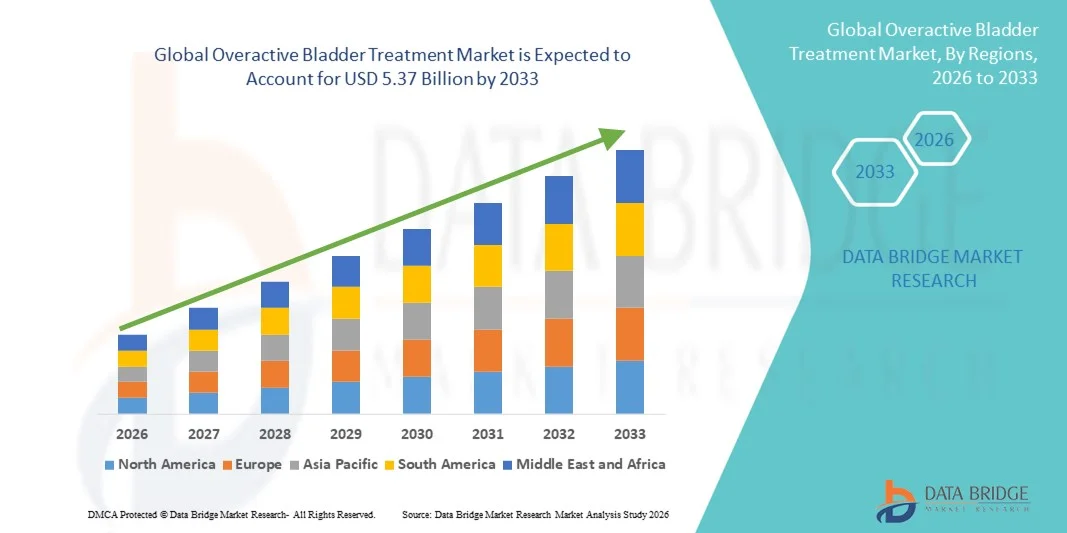
- Согласно анализу Data Bridge Market Research, глобальный размер рынка гиперактивного лечения мочевого пузыря был оценен как3,93 млрд долларов в 2025 годуОжидается, что он достигнет5,37 млрд долларов к 2033 году, вCAGR 4,00%в течение прогнозируемого периода
- Рост рынка в значительной степени обусловлен увеличением распространенности мочевых расстройств, ростом гериатрического населения и растущей осведомленностью о сверхактивном мочевом пузыре и его вариантах управления как в развитых, так и в развивающихся регионах.
- Кроме того, достижения в области фармакологической терапии, минимально инвазивных процедур и подходов к комбинированному лечению расширяют спектр эффективных решений, в то время как растущее предпочтение пациентов удобным и целенаправленным методам лечения устанавливает гиперактивные методы лечения мочевого пузыря в качестве стандарта ухода. Эти факторы коллективно стимулируют принятие рынка, тем самым значительно стимулируя рост отрасли.
Размер рынка и прогноз
- Глобальная рыночная стоимость (2025):$3,93 млрд.
- Ожидаемая рыночная стоимость (2033):5,37 млрд долларов
- Прогноз CAGR (2026–2033): 4.00%
Каковы основные выводы рынка лечения гиперактивного мочевого пузыря
- Сверхактивные методы лечения мочевого пузыря, включая фармакотерапию и специфические вмешательства, становятся все более важными для управления срочностью, частотой и недержанием мочи как у взрослых, так и у гериатрических групп населения из-за их эффективности, безопасности и роли в улучшении качества жизни.
- Растущий спрос на гиперактивную терапию мочевого пузыря в первую очередь обусловлен растущей распространенностью мочевых расстройств, повышением осведомленности пациентов и предпочтением удобных и целенаправленных вариантов лечения.
- Северная Америка доминировала на рынке сверхактивного лечения мочевого пузыря с самой большой долей дохода 38,7% в 2025 году, поддерживаемой передовой инфраструктурой здравоохранения, высокими расходами на здравоохранение и сильным внедрением фармакологических и минимально инвазивных методов лечения, при этом в США наблюдается значительное поглощение рецептурных лекарств и стратегий клинического управления.
- Ожидается, что Азиатско-Тихоокеанский регион станет самым быстрорастущим регионом на рынке лечения гиперактивного мочевого пузыря в течение прогнозируемого периода из-за растущего населения гериатрических заболеваний, повышения осведомленности в области здравоохранения и улучшения доступа к вариантам лечения.
- Сегмент антихолинергики доминировал в категории фармакотерапии рынка гиперактивного лечения мочевого пузыря с долей рынка 46,5% в 2025 году, что обусловлено их эффективностью в управлении симптомами и широким клиническим использованием как при идиопатической, так и при нейрогенной гиперактивности мочевого пузыря.
Сфера охвата и сегментация рынка гиперактивного лечения мочевого пузыря
|
Атрибуты |
Сверхактивное лечение мочевого пузыря ключевые рыночные идеи |
|
Сегменты покрыты |
|
|
Страны, охваченные |
Северная Америка
Европа
Азиатско-Тихоокеанский регион
Ближний Восток и Африка
Южная Америка
|
|
Ключевые игроки рынка |
|
|
Рыночные возможности |
|
|
Информационные наборы данных с добавленной стоимостью |
В дополнение к информации о рыночных сценариях, таких как рыночная стоимость, темпы роста, сегментация, географический охват и основные игроки, рыночные отчеты, курируемые Data Bridge Market Research, также включают углубленный экспертный анализ, эпидемиологию пациентов, анализ трубопроводов, анализ цен и нормативную базу. |
Каковы основные тенденции на рынке лечения гиперактивного мочевого пузыря
Растущее предпочтение комбинированной и персонализированной терапии
- Значительной и ускоряющейся тенденцией на мировом рынке лечения гиперактивного мочевого пузыря является растущее внедрение комбинированной терапии и персонализированных планов лечения, адаптированных к конкретным симптомам и типу заболевания пациента, повышение эффективности лечения и соблюдение требований пациентов.
- Например, клиницисты все чаще назначают антихолинергические препараты в сочетании с β3-адренергическими агонистами для оптимизации контроля симптомов при минимизации побочных эффектов у пациентов с гиперактивностью идиопатического мочевого пузыря.
- Цифровые инструменты здравоохранения и носимые устройства мониторинга интегрируются в схемы лечения для отслеживания мочеиспускания, обеспечения обратной связи и обеспечения более точных корректировок терапии. Например, мобильные приложения позволяют пациентам регистрировать эпизоды аннулирования и приверженность лекарствам, поддерживая персонализированные планы ухода.
- Тенденция к ориентированной на пациента и адаптивной терапии меняет ожидания от гиперактивного управления мочевым пузырем, подчеркивая удобство, снижение побочных эффектов и улучшение качества жизни.
- Спрос на терапию, обеспечивающую эффективный контроль симптомов и индивидуальные стратегии лечения, быстро растет на развитых и развивающихся рынках, поскольку пациенты все чаще отдают приоритет качеству жизни и удобству в лечении хронических заболеваний.
- Интеграция минимально инвазивныхнейромодуляцияТерапия с помощью фармакотерапии становится ключевой тенденцией, предоставляя пациентам альтернативы, не реагирующие на обычные лекарства. Например, сакральные устройства нейромодуляции объединяются с медикаментозной терапией для улучшения результатов лечения.
- Растущее усыновлениетелемедицинаиДистанционный мониторинг пациентовУправление гиперактивным мочевым пузырем также формирует рынок, обеспечивая непрерывную оценку и своевременное вмешательство. Например, платформы позволяют поставщикам медицинских услуг контролировать приверженность пациентов и прогрессирование симптомов.
Динамика рынка гиперактивного лечения мочевого пузыря
Драйв
Увеличение распространенности мочевых расстройств и осведомленности
- Растущая распространенность гиперактивного мочевого пузыря, особенно среди стареющего населения, в сочетании с растущей осведомленностью о доступных вариантах лечения, является основным фактором повышенного спроса на эффективные методы лечения.
- Например, в марте 2025 года Pfizer объявила об инициативах по повышению осведомленности о нарушениях мочеиспускания и продвижению ранней диагностики и лечения, направленных на расширение доступа пациентов к терапии.
- По мере того, как пациенты и лица, осуществляющие уход, становятся более информированными о влиянии гиперактивного мочевого пузыря на повседневную жизнь, появляется более сильная склонность искать фармакологические и минимально инвазивные решения для лечения.
- Кроме того, растущая интеграция технологий здравоохранения и телемедицины облегчает пациентам своевременное консультирование специалистов и доступ к лечению, повышая показатели усыновления.
- Например, онлайн-программы поддержки пациентов и цифровые консультации таких компаний, как Allergan, способствовали своевременному началу терапии и улучшению соблюдения режимов лечения.
- Сочетание растущей распространенности заболеваний, информационно-просветительских кампаний и улучшения доступа к вариантам лечения значительно стимулирует рост рынка гиперактивного лечения мочевого пузыря во всем мире.
- Расширение исследований и разработок в новых классах лекарств, таких как селективные агонисты β3-адренорецепторов с улучшенными профилями безопасности, создает новые возможности роста. Например, текущие клинические испытания изучают соединения следующего поколения для снижения побочных эффектов и улучшения результатов лечения пациентов.
- Расширение сотрудничества между фармацевтическими компаниями и поставщиками медицинских услуг, чтобы предложить обучение пациентов, программы приверженности и стратегии комбинированного лечения, также способствуют росту рынка. Например, совместные инициативы обеспечивают обучение и ресурсы для правильного использования лекарств и управления образом жизни.
Сдержанность/вызов
Побочные эффекты, проблемы безопасности и регуляторные барьеры
- Озабоченность по поводу неблагоприятных последствий фармакологических методов лечения, таких как сухость во рту, запоры или сердечно-сосудистые риски, представляет собой серьезную проблему для более широкого внедрения на рынок, особенно среди пожилых пациентов с сопутствующими заболеваниями.
- Например, антихолинергические препараты были связаны с когнитивными нарушениями у пожилых людей, что заставляет некоторых пациентов колебаться начинать терапию без медицинского наблюдения.
- Нормативно-правовые барьеры и строгие процедуры утверждения новых лекарств и минимально инвазивных устройств могут задержать выход на рынок и ограничить доступность лечения в определенных регионах.
- Например, задержки в одобрении FDA или EMA для новых агонистов β3-адренорецепторов или устройств нейромодуляции замедлили их принятие в клинической практике.
- Высокие затраты на лечение и ограниченное страхование для продвинутых методов лечения могут еще больше ограничить доступ пациентов в развивающихся регионах или тех, у кого есть бюджетные ограничения.
- Преодоление этих проблем за счет улучшения профилей безопасности, обучения пациентов, соблюдения нормативных требований и экономически эффективных вариантов лечения будет иметь решающее значение для устойчивого роста рынка.
- Ограниченная осведомленность пациентов и социальная стигма, связанная с нарушениями мочеиспускания, могут снизить поведение, направленное на лечение, особенно на развивающихся рынках. Например, многие пациенты избегают консультаций из-за смущения, задерживая эффективное лечение.
- Вариабельность инфраструктуры здравоохранения и доступ к специалистам в разных регионах создают проблемы для равномерного роста рынка. Например, в сельских районах могут отсутствовать подготовленные урологи или учреждения для минимально инвазивных процедур, что ограничивает доступность лечения.
Как сегментируется рынок лечения гиперактивного мочевого пузыря
Рынок сегментирован на основе фармакотерапии и типа заболевания.
- Фармакотерапия
На основе фармакотерапии рынок сверхактивного лечения мочевого пузыря сегментирован на антихолинергические препараты, солифенацин, оксибутинин, дарифенацин, фезотеродин, толтеродин, тропий и другие. Сегмент антихолинергики доминировал на рынке с самой большой долей рынка в 46,5% в 2025 году, что обусловлено его давно установленным клиническим использованием и доказанной эффективностью в контроле срочности мочеиспускания, частоты и недержания мочи. Пациенты и медицинские работники часто предпочитают антихолинергические препараты за их широкую доступность, хорошо документированные профили безопасности и знакомство с протоколами лечения. Доминирование сегмента дополнительно поддерживается продолжающимися исследованиями, улучшающими составы для минимизации побочных эффектов, таких как сухость во рту и запор. Кроме того, антихолинергические препараты используются как при идиопатической, так и при нейрогенной гиперактивности мочевого пузыря, что делает их универсальными и широко назначаемыми. Сильные маркетинговые усилия и включение в руководящие принципы лечения во всем мире также укрепляют их лидерство на рынке. Кроме того, комбинации с фиксированными дозами и составы с расширенным высвобождением увеличивают приверженность пациентов, еще больше укрепляя доминирование на рынке.
Ожидается, что сегмент солифенацина будет наблюдать самые быстрые темпы роста с 2026 по 2033 год, чему способствуют его селективное нацеливание на рецепторы, снижение профиля побочных эффектов и превосходная переносимость пациентов по сравнению с более старыми антихолинергическими препаратами. Эффективность солифенацина в снижении частоты мочеиспускания и срочности вызвала высокий спрос на рецепты, особенно в стареющих популяциях, склонных к гиперактивности мочевого пузыря. Медицинские работники все чаще рекомендуют солифенацин пациентам, которые испытывают непереносимость традиционных антихолинергических препаратов или имеют сопутствующие состояния, которые ограничивают другие варианты лекарств. Его режим дозирования один раз в день улучшает соответствие пациентов, что делает его привлекательным в сценариях хронического лечения. Солифенацин также выигрывает от расширения программ информирования и цифровых инструментов поддержки пациентов, которые обучают пациентов соблюдению и отслеживанию симптомов. Растущая доступность генерических версий на развивающихся рынках еще больше ускоряет их внедрение. В целом, сочетание эффективности, безопасности и удобства солифенацина позиционирует его как самый быстрорастущий сегмент фармакотерапии.
- По типу болезни
На основе типа заболевания рынок гиперактивного лечения мочевого пузыря сегментируется на гиперактивность идиопатического мочевого пузыря и гиперактивность нейрогенного мочевого пузыря. Сегмент гиперактивности идиопатического мочевого пузыря доминировал на рынке с самой большой долей дохода в 2025 году, что обусловлено его более высокой распространенностью среди взрослого населения и сильной осведомленностью пациентов. Идиопатические случаи обычно управляются с помощью фармакотерапии, поведенческой терапии и комбинированных подходов, что способствует последовательному спросу на лечение. Врачи часто инициируют терапию антихолинергическими или β3-адренергическими агонистами в идиопатических случаях из-за доказанной эффективности и установленных руководящих принципов лечения. Сегмент также выигрывает от программ обучения пациентов, поддержки телемедицины и широкого доступа к здравоохранению в развитых регионах. Продолжающиеся клинические испытания более безопасных и эффективных препаратов еще больше укрепляют позиции на рынке. Кроме того, приложения для управления образом жизни и мониторинга, адаптированные к идиопатической гиперактивности мочевого пузыря, повышают приверженность пациентов, поддерживая устойчивое доминирование на рынке.
Ожидается, что сегмент гиперактивности нейрогенного мочевого пузыря зафиксирует самые быстрые темпы роста в течение прогнозируемого периода из-за повышения осведомленности, увеличения распространенности неврологических расстройств, таких как:рассеянный склерозтравмы спинного мозга и достижения в вариантах лечения. Нейрогенные случаи часто требуют специализированной фармакотерапии в сочетании с минимально инвазивными процедурами или устройствами нейромодуляции, создавая сильные возможности роста. Медицинские работники принимают персонализированные стратегии лечения для управления тяжестью симптомов при минимизации побочных эффектов. Улучшенные диагностические инструменты и программы раннего вмешательства способствуют своевременному началу лечения. Цифровой мониторинг и носимые устройства также способствуют улучшению лечения заболеваний у нейрогенных пациентов. В результате сегмент гиперактивности нейрогенного мочевого пузыря, по прогнозам, будет быстро расти из-за увеличения популяции пациентов, расширения вариантов лечения и технологических инноваций в доставке терапии.
В каком регионе находится наибольшая доля рынка лечения гиперактивного мочевого пузыря
- Северная Америка доминировала на рынке сверхактивного лечения мочевого пузыря с самой большой долей дохода 38,7% в 2025 году, поддерживаемой передовой инфраструктурой здравоохранения, высокими расходами на здравоохранение и сильным внедрением фармакологических и минимально инвазивных методов лечения.
- Пациенты и поставщики медицинских услуг в регионе высоко ценят эффективную фармакотерапию, минимально инвазивные процедуры и комбинированные методы лечения, которые улучшают управление симптомами и качество жизни.
- Это широкое внедрение дополнительно поддерживается сильными расходами на здравоохранение, доступностью специализированной помощи и хорошо налаженными каналами распределения, устанавливая сверхактивные методы лечения мочевого пузыря в качестве предпочтительного выбора для управления как идиопатической, так и нейрогенной гиперактивностью мочевого пузыря у взрослых и гериатрических групп населения.
Американский рынок сверхактивного лечения мочевого пузыря Insight
Рынок сверхактивного лечения мочевого пузыря в США занял самую большую долю дохода в 82% в 2025 году в Северной Америке, что обусловлено высокой распространенностью заболеваний мочевыводящих путей и развитой инфраструктурой здравоохранения. Пациенты все чаще отдают приоритет эффективной фармакотерапии и минимально инвазивным процедурам, которые улучшают управление симптомами и качество жизни. Растущая осведомленность о вариантах лечения в сочетании с легким доступом к специалистам и инновационным методам лечения способствует дальнейшему развитию рынка. Кроме того, интеграция цифровых медицинских инструментов, телемедицины и программ поддержки пациентов вносит значительный вклад в приверженность лечению и расширение рынка.
Европейский рынок гиперактивного лечения мочевого пузыря Insight
Европейский рынок гиперактивного лечения мочевого пузыря, по прогнозам, будет расширяться при существенном CAGR в течение прогнозируемого периода, в первую очередь за счет увеличения распространенности нарушений мочеиспускания и хорошо зарекомендовавших себя систем здравоохранения. Растущие кампании по повышению осведомленности в сочетании со старением населения в таких странах, как Германия, Франция и Италия, способствуют внедрению фармакологической и минимально инвазивной терапии. Пациенты и врачи все чаще выбирают комбинированные подходы к лечению, улучшая управление симптомами и качество жизни пациентов. Рынок переживает сильный рост как по идиопатической, так и по нейрогенной гиперактивности мочевого пузыря в жилых и клинических условиях.
Британский рынок гиперактивного лечения мочевого пузыря Insight
Ожидается, что рынок сверхактивного лечения мочевого пузыря в Великобритании будет расти в течение прогнозируемого периода, что обусловлено растущей осведомленностью о здоровье мочевого пузыря и предпочтениях пациентов в отношении эффективных методов лечения. Кроме того, растущая распространенность гиперактивного мочевого пузыря среди пожилых людей побуждает как медицинских работников, так и пациентов принимать фармакологические и нейромодуляционные решения. Ожидается, что сильная инфраструктура здравоохранения Великобритании в сочетании с передовой доступностью рецептурных лекарств и телемедицинскими услугами продолжит стимулировать рост рынка.
Германия Overactive Bladder Treatment Market Insight
Ожидается, что в течение прогнозируемого периода рынок гиперактивного лечения мочевого пузыря в Германии будет расширяться при значительном CAGR, чему будет способствовать растущее гериатрическое население и спрос на эффективные, безопасные и удобные для пациентов методы лечения. Хорошо развитая система здравоохранения Германии, акцент на клинических исследованиях и раннее внедрение новых фармакологических и минимально инвазивных методов лечения способствуют росту рынка. Интеграция цифровых инструментов здравоохранения для мониторинга симптомов и соблюдения режима лечения также становится все более распространенной, поддерживая более широкое внедрение как в идиопатических, так и в нейрогенных случаях.
Азиатско-Тихоокеанский рынок гиперактивного лечения мочевого пузыря
Рынок гиперактивного лечения мочевого пузыря в Азиатско-Тихоокеанском регионе будет расти на самом быстром CAGR в 23% в течение прогнозируемого периода с 2026 по 2033 год, что обусловлено ростом гериатрической популяции, увеличением распространенности заболеваний мочевыводящих путей и улучшением доступности здравоохранения в таких странах, как Китай, Япония и Индия. Растущая осведомленность о здоровье мочевого пузыря в сочетании с правительственными инициативами, способствующими развитию инфраструктуры здравоохранения и цифровым решениям в области здравоохранения, стимулирует внедрение фармакотерапии и минимально инвазивных методов лечения. Кроме того, расширение медицинских учреждений и повышение доступности вариантов лечения способствуют проникновению на рынок как городского, так и полугородского населения.
Японский рынок сверхактивного лечения мочевого пузыря
Рынок сверхактивного лечения мочевого пузыря в Японии набирает обороты благодаря быстро стареющему населению страны, высоким стандартам здравоохранения и сильной осведомленности о здоровье мочевого пузыря. Пациенты все чаще требуют эффективных, простых в применении методов лечения, включая фармакологические и нейромодуляционные варианты. Интеграция инструментов цифрового мониторинга и телемедицинских услуг поддерживает приверженность лечению и своевременное вмешательство. Кроме того, рост интеллектуальных медицинских решений и программ обучения пациентов еще больше подпитывает рост рынка в жилых и клинических условиях.
Индийский рынок сверхактивного лечения мочевого пузыря
На индийский рынок сверхактивного лечения мочевого пузыря в 2025 году пришлась самая большая доля доходов рынка в Азиатско-Тихоокеанском регионе, что объясняется ростом гериатрического населения страны, повышением осведомленности о нарушениях мочеиспускания и улучшением инфраструктуры здравоохранения. Расширение доступа к здравоохранению в Индии в сочетании с увеличением доступности доступной фармакотерапии и минимально инвазивных процедур способствует внедрению в городских и полугородских регионах. Правительственные инициативы, способствующие цифровизации здравоохранения, программы обучения пациентов и кампании по ранней диагностике, также являются ключевыми факторами, способствующими развитию рынка в Индии.
Какие ведущие компании на рынке лечения гиперактивного мочевого пузыря
Индустрия лечения гиперактивного мочевого пузыря в основном возглавляется хорошо зарекомендовавшими себя компаниями, в том числе:
- Astellas Pharma Inc. (Япония)
- Pfizer Inc. (США)
- Teva Pharmaceutical Industries Ltd. (Израиль)
- AbbVie Inc. (США)
- Amneal Pharmaceuticals LLC (США)
- Sumitomo Pharma Co., Ltd. (Япония)
- Novartis AG (Швейцария)
- Endo Inc. (США)
- Hisamitsu Pharmaceutical Co., Inc.
- Viatris Inc. (США)
- Medtronic (Ирландия)
- Axonics, Inc. (США)
- Valencia Technologies (США)
- Eli Lilly & Company (США)
- Bayer AG (Германия)
- Takeda Pharmaceutical Company Limited (Япония)
- Zydus Group (Индия)
- DAIICHI SANKYO COMPANY, LIMITED (Япония)
- KYORIN Pharmaceutical Co., Ltd. (Япония)
- Neuspera Medical, Inc. (США)
Каковы последние события на рынке лечения гиперактивного мочевого пузыря
- В июле 2025 года Eisai Co., Ltd. и KYORIN Pharmaceutical запустили Beova® Tablets (вибегрон), агонист β3-адренергических рецепторов один раз в день для сверхактивного лечения мочевого пузыря, в Таиланде после получения региональных разрешений, что ознаменовало расширение доступа в Юго-Восточной Азии.
- В июне 2025 года Neuspera Medical, Inc. получила одобрение FDA на свою интегрированную систему сакральной нейромодуляции (iSNM) для лечения недержания мочи, ключевого симптома гиперактивного мочевого пузыря, предлагая менее инвазивный вариант нейромодуляции.
- В июне 2025 года Relonchem Ltd. (дочерняя компания Marksans Pharma в Великобритании) получила разрешение на маркетинг от Агентства по регулированию лекарственных средств и медицинских изделий Великобритании (MHRA) для перорального раствора оксибутинина гидрохлорида, расширяя доступность лечения симптомов ОАБ в Великобритании.
- В апреле 2025 года Amara Therapeutics запустила рандомизированное контролируемое клиническое исследование (APPROVE Trial) для оценки цифровой терапии по рецепту (приложение RiSolve) для поведенческой терапии у женщин с гиперактивным мочевым пузырем, продвигая цифровые терапевтические подходы за пределами лекарств и устройств.
- В январе 2025 года FDA США расширило одобрение Gemtesa (вибегрон) для лечения гиперактивных симптомов мочевого пузыря у мужчин с доброкачественной гиперплазией предстательной железы (ДГПЖ), улучшив клинические показания препарата и устранив неудовлетворенную потребность в этой подгруппе пациентов.
SKU-
Получите онлайн-доступ к отчету на первой в мире облачной платформе рыночной аналитики

- Интерактивная панель анализа данных
- Панель анализа компании для возможностей с высоким потенциалом роста
- Доступ аналитика-исследователя для настройки и запросов
- Анализ конкурентов с помощью интерактивной панели
- Последние новости, обновления и анализ тенденций
- Используйте возможности сравнительного анализа для комплексного отслеживания конкурентов
Методология исследования
Сбор данных и анализ базового года выполняются с использованием модулей сбора данных с большими размерами выборки. Этап включает получение рыночной информации или связанных данных из различных источников и стратегий. Он включает изучение и планирование всех данных, полученных из прошлого заранее. Он также охватывает изучение несоответствий информации, наблюдаемых в различных источниках информации. Рыночные данные анализируются и оцениваются с использованием статистических и последовательных моделей рынка. Кроме того, анализ доли рынка и анализ ключевых тенденций являются основными факторами успеха в отчете о рынке. Чтобы узнать больше, пожалуйста, запросите звонок аналитика или оставьте свой запрос.
Ключевой методологией исследования, используемой исследовательской группой DBMR, является триангуляция данных, которая включает в себя интеллектуальный анализ данных, анализ влияния переменных данных на рынок и первичную (отраслевую экспертную) проверку. Модели данных включают сетку позиционирования поставщиков, анализ временной линии рынка, обзор рынка и руководство, сетку позиционирования компании, патентный анализ, анализ цен, анализ доли рынка компании, стандарты измерения, глобальный и региональный анализ и анализ доли поставщика. Чтобы узнать больше о методологии исследования, отправьте запрос, чтобы поговорить с нашими отраслевыми экспертами.
Доступна настройка
Data Bridge Market Research является лидером в области передовых формативных исследований. Мы гордимся тем, что предоставляем нашим существующим и новым клиентам данные и анализ, которые соответствуют и подходят их целям. Отчет можно настроить, включив в него анализ ценовых тенденций целевых брендов, понимание рынка для дополнительных стран (запросите список стран), данные о результатах клинических испытаний, обзор литературы, обновленный анализ рынка и продуктовой базы. Анализ рынка целевых конкурентов можно проанализировать от анализа на основе технологий до стратегий портфеля рынка. Мы можем добавить столько конкурентов, о которых вам нужны данные в нужном вам формате и стиле данных. Наша команда аналитиков также может предоставить вам данные в сырых файлах Excel, сводных таблицах (книга фактов) или помочь вам в создании презентаций из наборов данных, доступных в отчете.











