


Global Rice Husk Ash Market Segmentation, By Form (Pallets, Powder, Flake, and Nodule/Granules), Silicon Content (80-84%, 85-89%, 90-94%, and More Than 95%), Downstream Application (Concrete Mixes, Building Blocks, Refractory Bricks, Metal Sheets, Roofing Shingles, Insulators, Water Proofing Chemicals, Pesticides, and Others) - Industry Trends and Forecast to 2033
Каков размер и темпы роста рынка рисового хаска
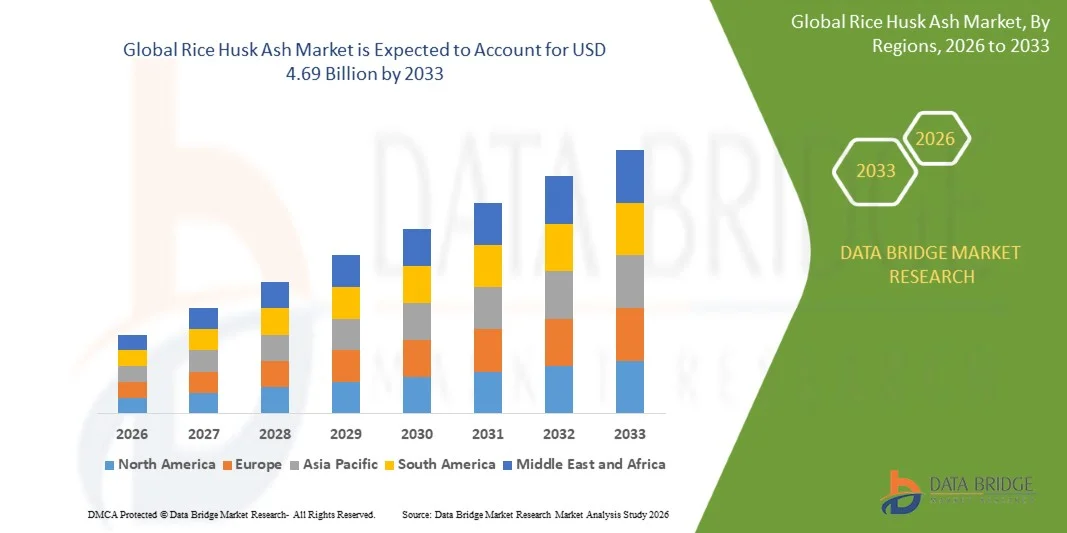
- Согласно анализу Data Bridge Market Research, глобальный размер рынка золы из шелухи риса был оценен как3,19 млрд долларов в 2025 годуОжидается, что он достигнет4,69 млрд долларов к 2033 году, вCAGR 4,9%в течение прогнозируемого периода
- Рост рынка в значительной степени обусловлен растущим внедрением устойчивых и экологически чистых строительных материалов, поскольку Rice Husk Ash (RHA) является высокопроизводительным.Дополнительный цементный material что повышает долговечность бетона и уменьшает углеродный след
- Кроме того, растущий спрос со стороны строительной и цементной промышленности на экономически эффективные и экологически ответственные альтернативы традиционному цементу позиционирует RHA как предпочтительный материал. Эти факторы ускоряют его принятие, тем самым значительно стимулируя рост рынка.
Размер рынка и прогноз
- Глобальная рыночная стоимость (2025):$3,19 млрд.
- Ожидаемая рыночная стоимость (2033):$4,69 млрд.
- Прогноз CAGR (2026–2033):4.9%
Каковы основные выводы рынка рисового хаска
- Rice Husk Ash, произведенный из контролируемого горения рисовой шелухи, ценится за свои пццолановые свойства, которые улучшают прочность, долговечность и работоспособность бетона, что делает его критическим компонентом в устойчивом строительстве и цементном применении.
- Растущий спрос на RHA в первую очередь подпитывается стремлением к экологически чистым строительным материалам, правительственными инициативами по продвижению решений по переработке отходов в ресурсы и акцентом строительной отрасли на сокращение выбросов CO2 и повышение устойчивости бетонных конструкций.
- Азиатско-Тихоокеанский регион доминирует на рынке рисовой шелухи с долей в45,26% в 2025 году из-за быстрой урбанизации, расширения строительной деятельности и сильного присутствия цементных и бетонных производственных центров
- Ожидается, что Северная Америка станет самым быстрорастущим регионом на рынке золы из рисовой шелухи в течение прогнозируемого периода из-за растущего спроса на рис.высокопроизводительныйбетон, зеленые строительные материалы и промышленное применение
- Порошковый сегмент доминировал на рынке с долей рынка 48,1% в 2025 году из-за его широкого применения в цементных и бетонных смесях для повышения прочности и долговечности. Порошковая зола из шелухи риса является предпочтительной из-за ее высокой реактивности и равномерного размера частиц, что позволяет обеспечить постоянную производительность в высокопроизводительном бетоне и других строительных материалах. Легкость смешивания порошка с различными составами и его совместимость с другими дополнительными цементными материалами еще больше укрепляют его присутствие на рынке.
Сегментация рынка пепла Rice Husk Ash Market
Атрибуты |
Rice Husk Ash Key Market |
||
|
Сегменты покрыты |
|
||
|
Страны, охваченные |
Северная Америка
Европа
Азиатско-Тихоокеанский регион
Ближний Восток и Африка
Южная Америка
|
||
|
Ключевые игроки рынка |
|
||
|
Рыночные возможности |
|
||
|
Информационные наборы данных с добавленной стоимостью |
В дополнение к информации о рыночных сценариях, таких как рыночная стоимость, темпы роста, сегментация, географическое покрытие и основные игроки, рыночные отчеты, курируемые Data Bridge Market Research, также включают анализ экспорта импорта, обзор производственных мощностей, анализ потребления продукции, анализ ценового тренда, сценарий изменения климата, анализ цепочки поставок, анализ цепочки создания стоимости, обзор сырья / расходных материалов, критерии выбора поставщиков, анализ PESTLE, анализ Porter и нормативную базу. |
Какова ключевая тенденция на рынке рисового хаска
«Растущее внедрение устойчивых строительных материалов»
- Значительной тенденцией на рынке золы из рисовой шелухи (RHA) является растущая интеграция RHA в качестве экологически чистого и высокоэффективного дополнительного цементного материала в производстве бетона и цемента. Его поццоланные свойства повышают прочность, долговечность и работоспособность, одновременно снижая общие выбросы CO2 в строительных проектах.
- Например, такие компании, как UltraTech Cement и Ambuja Cements, включили золу из рисовой шелухи в свои продукты из смешанного цемента, продвигая экологически устойчивые строительные решения и уменьшая зависимость от традиционного портландцемента.
- Принятие RHA в виде высокопрочного и легкого бетона набирает обороты, поскольку это позволяет строительным фирмам соответствовать стандартам LEED и IGBC. Эти приложения поощряют использование сельскохозяйственных отходов в строительстве, позиционируя RHA как ключевой вклад в практику круговой экономики.
- Использование побочных продуктов в сельскохозяйственном секторе стимулирует спрос на RHA, поскольку страны-производители риса ищут экономически эффективные способы управления отходами рисовой шелухи. Это особенно актуально в таких странах, как Индия и Вьетнам, где выращивание риса ежегодно приносит большое количество шелухи.
- Бетонные производители все чаще ищут RHA за его способность повышать химическую стойкость, уменьшать проницаемость и улучшать долговечность конструкций. Это формирует более сильное предпочтение материалов, которые сочетают устойчивость с производительностью.
- Повышение осведомленности о сокращении углеродного следа и государственная поддержка экологически чистых строительных материалов ускоряет внедрение RHA. Инициативы таких организаций, как Индийский совет по зеленому строительству (IGBC), создают благоприятные рыночные условия для принятия RHA.
Динамика рынка рисового хаска
водитель
«Рост спроса на высокопроизводительные цементные материалы»
- Растущее внимание к прочному, устойчивому и высокоэффективному бетону стимулирует спрос на золу из шелухи риса в качестве дополнительного цементного материала. Его способность заменять часть цемента при одновременном повышении прочности на сжатие и снижении воздействия на окружающую среду является ключевым фактором роста рынка.
- Например, UltraTech Cement использует RHA в своих составах из смешанных цементов, предлагая продукты, которые отвечают как целям устойчивости, так и требованиям к структурным характеристикам, укрепляя свои позиции на рынке.
- Растущая потребность в легком, огнестойком и химически прочном бетоне в промышленных и инфраструктурных проектах способствует внедрению RHA. Строители и подрядчики обращаются к цементу с улучшенным RHA для достижения более качественных результатов строительства.
- Мандаты по устойчивому развитию и экосертификации поощряют строительные фирмы принимать материалы, которые минимизируют выбросы парниковых газов. RHA, как возобновляемый побочный продукт, соответствует этим экологическим целям и нормативным требованиям.
- Расширение городской инфраструктуры и высотных разработок в Азиатско-Тихоокеанском регионе, особенно в Индии и Таиланде, повышает потребность в инновационных цементных решениях. Преимущества и экономическая эффективность RHA в таких проектах способствуют дальнейшему росту рынка.
Сдержанность/вызов
«Несогласованное качество рисовой шелухи»
- Рынок золы из шелухи риса сталкивается с проблемами из-за изменчивости процессов горения, что влияет на согласованность содержания кремнезема и поццолановых свойств. Непоследовательное качество может привести к переменной производительности и снижению популярности среди консервативных строительных фирм.
- Например, мелкие производители RHA в Юго-Восточной Азии часто не имеют стандартизированных процессов горения и измельчения, что приводит к колебаниям тонкости золы и химического состава.
- Достижение однородного качества требует контролируемого горения, точного управления температурой и сложных методов шлифования, которые могут увеличить производственные затраты и сложность.
- Отсутствие стандартизации по всей цепочке поставок и различия в характеристиках шелухи риса от региона к региону также способствуют проблемам качества.
- Эти несоответствия ограничивают масштабное внедрение производителей цемента, стремящихся к надежной производительности, что делает обеспечение качества критически важной проблемой для роста рынка.
Как сегментируется рынок рисового хаска
Рынок сегментирован на основе формы, содержания кремния и последующего применения.
• по форме
На основе формы рынок рисового шелухи сегментирован на поддоны, порошок, хлопья и узелки/гранулы. Сегмент порошка доминировал на рынке с самой большой долей рынка в 48,1% в 2025 году, что обусловлено его широким применением в цементных и бетонных смесях для повышения прочности и долговечности. Порошковая зола из шелухи риса является предпочтительной из-за ее высокой реактивности и равномерного размера частиц, что позволяет обеспечить постоянную производительность в высокопроизводительном бетоне и других строительных материалах. Легкость смешивания порошка с различными составами и его совместимость с другими дополнительными цементными материалами еще больше укрепляют его присутствие на рынке. Производители также предпочитают форму порошка для его эффективной транспортировки, хранения и простоты обработки, что делает его предпочтительным выбором в крупномасштабных строительных проектах.
Ожидается, что в сегменте узелков/гранулов будут наблюдаться самые быстрые темпы роста с 2026 по 2033 год, чему способствует растущее внедрение огнеупорных кирпичей, металлических листов и специализированных систем изоляции. Гранулярные формы обеспечивают контролируемое высвобождение кремнезема во время высокотемпературных процессов, что делает их идеальными для огнеупорного и промышленного применения. Их форма и размерность также улучшают плотность упаковки и тепловые характеристики в инженерных продуктах. Кроме того, универсальность конкреций/гранул в промышленных химических составах повышает спрос во многих секторах, включая водонепроницаемые химикаты и пестициды.
• Силиконовый контент
На основе содержания кремния рынок Rice Husk Ash сегментирован на 80-84%, 85-89%, 90-94% и более 95%. Сегмент с содержанием кремния 90-94% доминировал на рынке в 2025 году благодаря оптимальному балансу реактивности, повышению прочности и экономической эффективности для применения цемента и бетона. Этот диапазон обеспечивает превосходные поццоланные свойства, обеспечивая улучшенную долговечность, снижение проницаемости и более высокую прочность на сжатие в бетонных конструкциях. Его широкое использование в строительной отрасли для жилых и коммерческих проектов поддерживает его доминирование. Кроме того, этот сегмент соответствует целям экологической устойчивости, поскольку позволяет значительно заменить портландцемент, уменьшая выбросы CO2.
Ожидается, что в сегменте с содержанием кремния более 95% будут наблюдаться самые быстрые темпы роста с 2026 по 2033 год, что обусловлено растущим промышленным спросом на высокоэффективные огнеупорные материалы, металлическое литье и передовые изоляционные решения. Ясень из шелухи риса с высоким содержанием кремнезема обеспечивает исключительную термическую стабильность и химическую инертность, что делает его идеальным для критической обработки.инженерное делоприложения. Его внедрение в специализированные продукты, такие как высокопрочный бетон и точное литье, способствует росту. Отрасли, которые ищут сверхчистый кремнезем для электроники и специальных химикатов, также способствуют быстрому расширению этого сегмента.
• Приложение Downstream
На основе применения ниже по течению рынок Rice Husk Ash сегментирован на бетонные смеси, строительные блоки, огнеупорные кирпичи, металлические листы, кровельную черепицу, изоляторы, водонепроницаемые химикаты, пестициды и другие. Сегмент бетонных смесей доминировал на рынке с самой большой долей рынка в 2025 году из-за широкого использования золы из шелухи риса в качестве дополнительного цементного материала, который повышает прочность, долговечность и устойчивость. Его способность частично заменять цемент, улучшая работоспособность и уменьшая тепло гидратации, сделала его предпочтительным выбором для крупномасштабных строительных проектов. Бетонные производители извлекают выгоду из стабильного качества, поццолановой реактивности и экологических преимуществ, предлагаемых золой из шелухи риса. Доминирование сегмента также подкрепляется нормативным поощрением более экологичных строительных материалов во многих странах.
Ожидается, что в сегменте огнеупорных кирпичей будут наблюдаться самые быстрые темпы роста с 2026 по 2033 год, чему способствует растущий спрос на высокотемпературные стойкие строительные материалы в сталелитейной, стеклянной и керамической промышленности. Ясень из шелухи риса в огнеупорных кирпичах улучшает теплоизоляцию, уменьшает усадку и повышает механическую прочность в экстремальных условиях. Его химическая стабильность и богатый кремнезем состав делают его очень подходящим для промышленных печей и печей. Рост металлургического и стекольного секторов, особенно на развивающихся рынках, еще больше стимулирует внедрение в этом сегменте.
В каком регионе находится рынок рисового хаска
- Азиатско-Тихоокеанский регион доминировал на рынке золы из рисовой шелухи с самой большой долей дохода 45,26% в 2025 году, что обусловлено быстрой урбанизацией, расширением строительной деятельности и сильным присутствием цементных и бетонных производственных центров.
- Экономичный производственный ландшафт региона, растущие инвестиции в устойчивые строительные материалы и растущее внедрение высокоэффективных бетонных решений ускоряют расширение рынка.
- Наличие квалифицированной рабочей силы, благоприятные правительственные инициативы, способствующие экологически чистому строительству, и быстрая индустриализация в развивающихся странах способствуют увеличению потребления золы из шелухи риса как в строительстве, так и в промышленности.
Китайская компания Rice Husk Ash Market Insight
Китай занимал самую большую долю на Азиатско-Тихоокеанском рынке рисового хаска в 2025 году, благодаря своей позиции ведущего мирового производителя цемента и быстрому развитию инфраструктуры. Сильная промышленная база страны, государственная поддержка устойчивых методов строительства и высокий спрос на дополнительные цементные материалы являются основными факторами роста. Постоянные инвестиции в высокоэффективные бетонные, огнеупорные материалы и промышленные применения еще больше повышают спрос на рынке.
Индия Rice Husk Ash Market Insight
Индия является свидетелем самого быстрого роста в Азиатско-Тихоокеанском регионе, чему способствуют растущие инфраструктурные проекты, расширение жилищного и коммерческого строительства и повышение осведомленности об устойчивых строительных материалах. Правительственные инициативы, такие как «Миссия умных городов», наряду с растущим внедрением экологически чистых заменителей цемента, усиливают спрос на золу из шелухи риса. Кроме того, растущий экспорт строительных материалов и промышленного использования в огнеупорных кирпичах и изоляторах способствует активному расширению рынка.
Европейская компания Rice Husk Ash Market Insight
Европейский рынок рисового хаска постоянно расширяется, чему способствуют строгие экологические правила, растущий акцент на зеленом строительстве и увеличение инвестиций в устойчивые и энергоэффективные строительные материалы. Регион уделяет большое внимание качеству, соблюдению стандартов устойчивости и внедрению инновационных строительных технологий. Растущее использование золы из рисовой шелухи в высокоэффективных бетонных и специализированных промышленных применениях еще больше усиливает рост рынка.
Германия Rice Husk Ash Market Insight
Рынок Германии обусловлен его лидерством в области устойчивого строительства, передовым производством цемента и бетона и сильным акцентом на соблюдение экологических норм. Хорошо налаженные сети исследований и разработок и сотрудничество между академическими учреждениями и промышленными игроками способствуют инновациям в высокопроизводительных строительных материалах. Спрос особенно высок в сборном бетоне, огнеупорных продуктах и промышленных применениях, требующих зола из рисовой шелухи высокой чистоты.
Великобритания Rice Husk Ash Market Insight
Рынок Великобритании поддерживается зрелой строительной отраслью, растущим внедрением устойчивых строительных материалов и правительственными инициативами, способствующими созданию экологически чистой инфраструктуры. Все большее внимание к сертификации зеленого строительства, энергоэффективному строительству и устойчивому промышленному применению стимулирует потребление золы из шелухи риса. Сильный акцент на НИОКР и партнерские отношения между научными кругами и промышленностью способствуют дальнейшему развитию рынка.
Северная Америка Rice Husk Ash Market Insight
Прогнозируется, что Северная Америка будет расти самыми быстрыми темпами с 2026 по 2033 год, что обусловлено растущим спросом на высокоэффективные бетонные, зеленые строительные материалы и промышленные применения. Растущие строительные и инфраструктурные проекты, наряду с повышением осведомленности об устойчивых альтернативах традиционному цементу, способствуют внедрению на рынке. Кроме того, растущий объем производства строительных материалов и сотрудничество между промышленными и исследовательскими организациями способствуют расширению рынка.
Американский Rice Husk Ash Market Insight
На долю США приходится наибольшая доля на рынке Северной Америки в 2025 году, подкрепленная обширным строительным и промышленным секторами, сильной инфраструктурой исследований и разработок и инвестициями в устойчивые строительные материалы. Акцент страны на экологически чистых методах, соблюдении нормативных требований и высокоэффективных бетонных решениях поощряет использование золы из шелухи риса. Присутствие ключевых игроков и зрелая цепочка поставок золы промышленного класса еще больше укрепляют лидирующие позиции США в регионе.
Какие компании входят в число лучших на рынке рисового хаска
Индустрия золы из рисовой шелухи в основном возглавляется хорошо известными компаниями, в том числе:
- Astrra Chemicals (Индия)
- Global Recycling GmbH (Германия)
- K V Metachem (Индия)
- Brisil Technologies Pvt. Ltd. (Индия)
- Агрилектрические компании (Индия)
- Rice Husk Ash (Таиланд)
- Guru Corporation / Guru Metachem Pvt. Ltd.
- Джасория Райс Милл (Индия)
- PIONEER Carbon Company Pvt. Ltd. (Индия)
- Usher Agro Ltd. (Индия)
- Yihai Kerry Investments Co. Ltd. (Китай)
- Deelert Co. Ltd. (Таиланд)
- Steelcon Industries Pvt. Ltd. (Индия)
- Refsteel Solutions Pvt. Ltd. (Индия)
- M.G. Industries (Индия)
Каковы последние события на рынке рисового хаска
- В январе 2026 года на мировом рынке рисового хаска наблюдается значительный рост, обусловленный увеличением использования RHA в качестве дополнительного цементного материала и его расширением применения в устойчивом строительстве и промышленных секторах. Рост производства высококачественного кремнезема из рисовой шелухи и растущее внедрение в стабилизацию почвы, огнеупорные продукты и экологически чистые строительные решения усиливают важность материала. Эта тенденция повышает доверие инвесторов, поощряет новых участников и стимулирует дальнейшие исследования высокоэффективных рецептур RHA для различных промышленных применений.
- В ноябре 2025 года Ashtech приобрела GreenRHA Technologies для расширения производства гранул из золы из рисовой шелухи, специально предназначенных для применения в цементе и геополимерах. Это стратегическое расширение расширяет производственные возможности Ashtech, позволяя ему удовлетворять растущий спрос на устойчивые строительные добавки, одновременно повышая согласованность и качество продукции. Приобретение укрепляет конкурентные позиции компании и, как ожидается, ускорит более широкое внедрение RHA как в коммерческих, так и в промышленных строительных проектах.
- В январе 2024 года Rescon Pvt. Ltd. сотрудничала с научно-исследовательскими институтами и отраслевыми партнерами для разработки инновационных решений на основе RHA для устойчивого строительства и инфраструктуры. Эти инициативы сосредоточены на передовых бетонных композициях, экологически чистых строительных материалах и технологиях стабилизации почвы, которые используют уникальные свойства RHA. Партнерства повышают производительность материалов, продвигают экологически ответственные методы строительства и повышают осведомленность рынка о RHA как ценной альтернативе традиционным цементным материалам.
- В ноябре 2023 года Yihai Kerry Investments Co., Ltd. расширила свои производственные мощности по производству золы из рисовой шелухи и модернизировала производственные мощности для удовлетворения растущего глобального спроса на высококачественную RHA. Эти улучшения повысили операционную эффективность, обеспечили стабильное качество продукции и сохранили конкурентоспособность затрат. Расширение поддерживает увеличение поставок для различных применений, включая высокоэффективный бетон, огнеупорные кирпичи и промышленные добавки, тем самым укрепляя лидерство компании на рынке.
- В феврале 2021 года Wuhan Kangqiang Pharmaceutical Co., Ltd. инвестировала в исследования и разработки для изучения новых применений RHA в передовых материалах, фармацевтических препаратах и восстановлении окружающей среды. Компания сосредоточилась на раскрытии полного потенциала материала в продуктах с добавленной стоимостью, что позволило его внедрить в развивающихся отраслях. Эти усилия расширяют сферу применения RHA за пределами строительства, подчеркивая его универсальность и поддерживая долгосрочный рост рынка.
SKU-
Получите онлайн-доступ к отчету на первой в мире облачной платформе рыночной аналитики

- Интерактивная панель анализа данных
- Панель анализа компании для возможностей с высоким потенциалом роста
- Доступ аналитика-исследователя для настройки и запросов
- Анализ конкурентов с помощью интерактивной панели
- Последние новости, обновления и анализ тенденций
- Используйте возможности сравнительного анализа для комплексного отслеживания конкурентов
Методология исследования
Сбор данных и анализ базового года выполняются с использованием модулей сбора данных с большими размерами выборки. Этап включает получение рыночной информации или связанных данных из различных источников и стратегий. Он включает изучение и планирование всех данных, полученных из прошлого заранее. Он также охватывает изучение несоответствий информации, наблюдаемых в различных источниках информации. Рыночные данные анализируются и оцениваются с использованием статистических и последовательных моделей рынка. Кроме того, анализ доли рынка и анализ ключевых тенденций являются основными факторами успеха в отчете о рынке. Чтобы узнать больше, пожалуйста, запросите звонок аналитика или оставьте свой запрос.
Ключевой методологией исследования, используемой исследовательской группой DBMR, является триангуляция данных, которая включает в себя интеллектуальный анализ данных, анализ влияния переменных данных на рынок и первичную (отраслевую экспертную) проверку. Модели данных включают сетку позиционирования поставщиков, анализ временной линии рынка, обзор рынка и руководство, сетку позиционирования компании, патентный анализ, анализ цен, анализ доли рынка компании, стандарты измерения, глобальный и региональный анализ и анализ доли поставщика. Чтобы узнать больше о методологии исследования, отправьте запрос, чтобы поговорить с нашими отраслевыми экспертами.
Доступна настройка
Data Bridge Market Research является лидером в области передовых формативных исследований. Мы гордимся тем, что предоставляем нашим существующим и новым клиентам данные и анализ, которые соответствуют и подходят их целям. Отчет можно настроить, включив в него анализ ценовых тенденций целевых брендов, понимание рынка для дополнительных стран (запросите список стран), данные о результатах клинических испытаний, обзор литературы, обновленный анализ рынка и продуктовой базы. Анализ рынка целевых конкурентов можно проанализировать от анализа на основе технологий до стратегий портфеля рынка. Мы можем добавить столько конкурентов, о которых вам нужны данные в нужном вам формате и стиле данных. Наша команда аналитиков также может предоставить вам данные в сырых файлах Excel, сводных таблицах (книга фактов) или помочь вам в создании презентаций из наборов данных, доступных в отчете.











