


Global Telestroke Market Segmentation, By Stroke Type (Ischemic and Hemorrhagic), End User (Telehospitals/Teleclinics, Telehome, and Others)- Industry Trends and Forecast to 2033
Telestroke Market Size
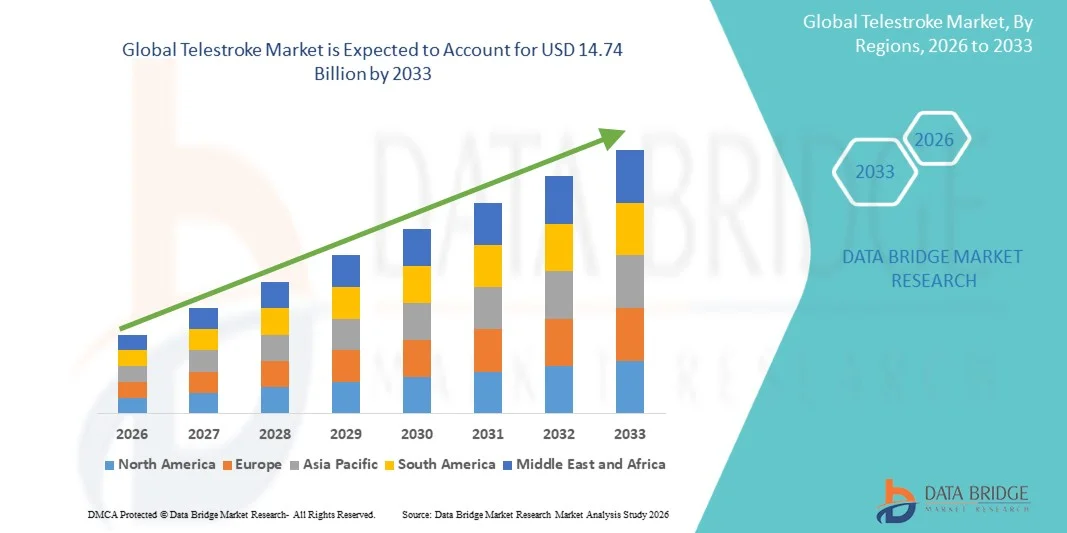
- The global telestroke market size was valued at USD 3.21 billion in 2025 and is expected to reach USD 14.74 billion by 2033, at a CAGR of 21.00% during the forecast period
- The market growth is largely fueled by the increasing prevalence of stroke cases worldwide and the urgent need for rapid diagnosis and treatment, where telestroke solutions enable real-time remote neurological consultations and faster clinical decision-making
- Furthermore, advancements in telemedicine infrastructure, high-speed connectivity, and AI-enabled imaging tools are enhancing the efficiency and reliability of telestroke services across hospitals, emergency care centers, and stroke networks
Telestroke Market Analysis
- Telestroke services, enabling remote neurological evaluation and rapid clinical decision-making for stroke patients through digital communication platforms, are increasingly critical components of modern emergency care systems in hospitals and stroke centers due to their ability to reduce treatment delays, improve access to specialists, and enhance patient outcomes in time-sensitive conditions
- The escalating demand for telestroke solutions is primarily fueled by the rising global burden of stroke, growing awareness of the importance of early intervention, and increasing adoption of telemedicine technologies to address shortages of neurologists and improve access to specialized care in emergency settings
- North America dominated the telestroke market with the largest revenue share of 42.15% in 2025, characterized by advanced healthcare infrastructure, widespread telehealth adoption, favorable reimbursement policies, and strong presence of established telemedicine providers, with the U.S. witnessing significant expansion of telestroke networks across urban and rural hospitals supported by integrated stroke care programs and digital health innovation
- Asia-Pacific is expected to be the fastest growing region in the telestroke market during the forecast period due to rapid healthcare infrastructure development, increasing investments in digital health, growing stroke incidence, and government initiatives aimed at improving access to emergency neurological care in remote and underserved areas
- The ischemic stroke segment dominated the telestroke market with the largest share of 68.4% in 2025, driven by its high global prevalence compared to other stroke types, the critical need for rapid diagnosis and timely intervention through telestroke platforms, and the effectiveness of remote consultations in enabling prompt administration of clot-busting therapies
Report Scope and Telestroke Market Segmentation
|
Attributes |
Telestroke Key Market Insights |
|
Segments Covered |
|
|
Countries Covered |
North America
Europe
Asia-Pacific
Middle East and Africa
South America
|
|
Key Market Players |
|
|
Market Opportunities |
|
|
Value Added Data Infosets |
In addition to the insights on market scenarios such as market value, growth rate, segmentation, geographical coverage, and major players, the market reports curated by the Data Bridge Market Research also include in-depth expert analysis, patient epidemiology, pipeline analysis, pricing analysis, and regulatory framework |
Telestroke Market Trends
“Integration of AI-Driven Diagnostics and Remote Neurological Collaboration”
- A significant and accelerating trend in the global telestroke market is the integration of artificial intelligence (AI) with telemedicine platforms and advanced imaging systems, enabling faster interpretation of CT/MRI scans and improved stroke detection accuracy in emergency settings
- For instance, AI-enabled platforms such as RapidAI are being used alongside telestroke networks to assist clinicians in identifying large vessel occlusions and prioritizing urgent cases for intervention
- AI integration in telestroke systems enables automated image analysis, predictive risk scoring, and intelligent triaging, helping neurologists make quicker and more informed treatment decisions during critical time windows
- Furthermore, telestroke solutions are increasingly being embedded into hospital-wide digital ecosystems, allowing seamless data sharing between emergency departments, radiology units, and remote specialists for coordinated stroke care delivery
- This trend toward intelligent, data-driven, and interconnected telestroke platforms is reshaping clinical workflows and improving response times, with providers such as Siemens Healthineers and Medtronic enhancing their stroke care solutions with AI-enabled capabilities
- The demand for advanced telestroke systems that combine AI analytics, cloud-based communication, and real-time collaboration is growing rapidly across healthcare facilities as hospitals aim to improve stroke outcomes and operational efficiency
- Moreover, interoperability with electronic health records (EHR) systems is becoming a key trend, allowing seamless access to patient history, imaging data, and clinical reports, which enhances diagnostic accuracy and continuity of care
Telestroke Market Dynamics
Driver
“Rising Stroke Incidence and Need for Timely Specialist Access”
- The increasing global burden of stroke cases, coupled with the urgent need for rapid diagnosis and treatment, is a significant driver for the heightened demand for telestroke services in emergency care systems
- For instance, in January 2025, several healthcare networks expanded telestroke programs to improve access to neurologists in rural and underserved regions, aiming to reduce treatment delays and improve patient survival rates
- As stroke requires time-sensitive intervention, telestroke platforms enable real-time remote consultations between emergency physicians and neurologists, ensuring timely administration of thrombolytic therapies
- Furthermore, the growing shortage of neurologists in many regions is making telestroke solutions an essential tool for bridging the gap between patient demand and specialist availability in hospitals and stroke centers
- The ability to provide 24/7 access to expert neurological care, along with integration into emergency response workflows, is a key factor propelling the adoption of telestroke systems across healthcare facilities worldwide
- In addition, increasing government initiatives and investments in telehealth infrastructure are supporting the deployment of telestroke networks in both developed and developing regions
- Moreover, growing collaborations between hospitals and telemedicine service providers are accelerating the establishment of integrated stroke care networks, further driving market growth
Restraint/Challenge
“High Implementation Costs and Connectivity Limitations”
- Concerns surrounding the high initial investment required for telestroke infrastructure, including telemedicine platforms, imaging equipment, and network integration, pose a significant challenge to broader market adoption
- For instance, reports from healthcare providers indicate that smaller hospitals and facilities in low-resource settings often face difficulties in deploying comprehensive telestroke networks due to budget constraints
- Addressing these cost challenges through scalable subscription-based models, government funding, and public-private partnerships is crucial for expanding telestroke accessibility. In addition, inconsistent internet connectivity and limited digital infrastructure in rural areas can hinder the effectiveness of real-time remote consultations
- While telecommunication technologies are improving, bandwidth limitations and network latency issues can still affect the quality of image transmission and communication between specialists and on-site clinicians
- Overcoming these challenges through infrastructure development, improved broadband access, and cost-effective telestroke solutions will be essential for sustained market growth and wider adoption across diverse healthcare settings
- Furthermore, concerns related to data privacy and compliance with healthcare regulations can add complexity to implementation, requiring organizations to invest in secure and compliant telemedicine systems
- In addition, the need for trained personnel to operate and manage telestroke platforms can act as a barrier, particularly in regions with limited technical expertise and workforce availability
Telestroke Market Scope
The market is segmented on the basis of stroke type and end user.
- By Stroke Type
On the basis of stroke type, the telestroke market is segmented into ischemic and hemorrhagic stroke. The ischemic stroke segment dominated the market with the largest market revenue share of 68.4% in 2025, primarily due to its high global prevalence compared to other stroke types and the critical need for rapid intervention through telestroke platforms. Ischemic strokes occur when a blood clot blocks blood flow to the brain, making timely diagnosis and treatment essential to prevent long-term disability or death. Telestroke systems play a crucial role in enabling remote neurologists to quickly evaluate imaging results and recommend thrombolytic therapy within the narrow therapeutic window. The growing adoption of AI-assisted imaging tools and real-time consultation platforms further enhances the efficiency of ischemic stroke management. Hospitals and stroke centers increasingly rely on telestroke networks to ensure faster decision-making and improved patient outcomes. In addition, the established clinical protocols for ischemic stroke treatment make it more suitable for telemedicine-based interventions, further supporting its dominant market position.
The hemorrhagic stroke segment is expected to witness the fastest growth rate from 2026 to 2033, driven by increasing awareness, improved diagnostic capabilities, and the growing need for specialized neurological consultations in complex cases. Hemorrhagic strokes, caused by bleeding in or around the brain, require immediate and accurate assessment to determine surgical or medical intervention strategies. Telestroke platforms enable remote specialists to evaluate CT scans and provide guidance on critical treatment decisions, especially in facilities lacking on-site neurologists. The rising incidence of hypertension and other risk factors contributing to hemorrhagic stroke is also supporting demand for advanced care solutions. Furthermore, improvements in imaging technologies and integration of tele-neurology services are making it easier to manage such cases remotely. Growing investments in stroke care infrastructure and expanding telemedicine adoption in emerging regions are expected to accelerate the growth of this segment.
- By End User
On the basis of end user, the telestroke market is segmented into telehospitals/teleclinics, telehome, and others. The telehospitals/teleclinics segment dominated the market with the largest revenue share in 2025, owing to the high volume of stroke cases handled in hospital emergency departments where telestroke services are most actively deployed. Hospitals and clinics utilize telestroke networks to connect emergency physicians with remote neurologists, ensuring rapid diagnosis and treatment decisions for acute stroke patients. These facilities benefit from integrated telemedicine infrastructure, including imaging systems, communication platforms, and electronic health records, which streamline clinical workflows. The increasing establishment of dedicated stroke centers and hospital partnerships with telehealth providers further strengthens this segment’s dominance. In addition, reimbursement support and institutional investments in telehealth technologies are encouraging widespread adoption of telestroke services within hospital settings. The ability to provide 24/7 access to specialists and improve treatment outcomes makes telehospitals/teleclinics the primary end users in the market.
The telehome segment is expected to witness the fastest growth rate from 2026 to 2033, driven by the increasing adoption of remote patient monitoring and post-stroke care management solutions. Patients recovering from stroke are increasingly being monitored at home using telemedicine platforms that enable continuous communication with healthcare providers. Telestroke-related follow-ups, rehabilitation guidance, and virtual consultations are becoming more common as healthcare systems shift toward decentralized care models. The growing elderly population and rising preference for home-based healthcare services are further contributing to segment growth. Advancements in wearable devices and mobile health applications allow caregivers and clinicians to track patient progress and detect potential complications early. In addition, cost-effectiveness and convenience associated with telehome services are encouraging both patients and providers to adopt remote care solutions, supporting rapid expansion of this segment.
Telestroke Market Regional Analysis
- North America dominated the telestroke market with the largest revenue share of 42.15% in 2025, characterized by advanced healthcare infrastructure, widespread telehealth adoption, favorable reimbursement policies, and strong presence of established telemedicine providers
- Healthcare providers in the region highly value the ability of telestroke platforms to enable rapid neurological consultations, improve treatment timelines, and enhance coordination between emergency departments and remote specialists
- This widespread adoption is further supported by strong reimbursement frameworks, high healthcare spending, a technologically advanced medical ecosystem, and the growing preference for remote and real-time clinical decision support, establishing telestroke services as a critical component of acute stroke care delivery across both urban and rural healthcare facilities
U.S. Telestroke Market Insight
The U.S. telestroke market captured the largest revenue share of 78% in 2025 within North America, fueled by the rapid adoption of telehealth platforms and the strong presence of advanced stroke care infrastructure across hospitals and emergency networks. Healthcare providers are increasingly prioritizing faster diagnosis and treatment of stroke patients through real-time remote neurological consultations. The growing deployment of integrated telestroke networks in urban hospitals and rural healthcare facilities further supports market expansion. Moreover, the widespread use of AI-enabled imaging tools, cloud-based communication systems, and strong reimbursement policies significantly contributes to the growth of the telestroke industry in the U.S.
Europe Telestroke Market Insight
The Europe telestroke market is projected to expand at a substantial CAGR throughout the forecast period, primarily driven by increasing government initiatives to improve access to emergency neurological care and the growing burden of stroke across the region. The rising emphasis on digital health transformation and cross-border telemedicine collaborations is fostering the adoption of telestroke solutions. European healthcare systems are also focusing on improving stroke care pathways through integrated telehealth networks. In addition, the presence of well-established healthcare infrastructure and supportive regulatory frameworks is encouraging hospitals and clinics to implement telestroke services across both urban and rural settings.
U.K. Telestroke Market Insight
The U.K. telestroke market is anticipated to grow at a noteworthy CAGR during the forecast period, driven by the increasing focus on reducing stroke-related mortality and improving emergency response times. The National Health Service (NHS) is actively promoting telemedicine initiatives, including telestroke services, to enhance access to specialist care. Growing awareness of time-sensitive stroke treatments and the need for rapid intervention is encouraging hospitals to adopt remote consultation platforms. In addition, the integration of digital health technologies and investments in healthcare IT infrastructure are supporting the expansion of telestroke networks across the country.
Germany Telestroke Market Insight
The Germany telestroke market is expected to expand at a considerable CAGR during the forecast period, fueled by increasing investments in healthcare digitalization and the demand for efficient stroke management solutions. Germany’s strong healthcare infrastructure and emphasis on precision medicine are promoting the adoption of advanced tele-neurology services. Hospitals are increasingly integrating telestroke platforms with imaging systems and electronic health records to streamline workflows and improve patient outcomes. Furthermore, the country’s focus on innovation and high-quality care delivery is encouraging the implementation of telehealth solutions across both public and private healthcare institutions.
Asia-Pacific Telestroke Market Insight
The Asia-Pacific telestroke market is poised to grow at the fastest CAGR of 22% during the forecast period of 2026 to 2033, driven by rising stroke prevalence, expanding healthcare infrastructure, and increasing adoption of digital health technologies in countries such as China, Japan, and India. Governments in the region are actively investing in telemedicine initiatives to improve access to specialized neurological care in remote and underserved areas. The growing penetration of smartphones, internet connectivity, and cloud-based healthcare platforms is further accelerating market adoption. In addition, the presence of a large patient population and increasing awareness of early stroke management are contributing to rapid market growth.
Japan Telestroke Market Insight
The Japan telestroke market is gaining momentum due to the country’s advanced healthcare system, aging population, and strong emphasis on technological innovation. The increasing incidence of stroke among the elderly is driving demand for efficient and timely neurological care solutions. Telestroke platforms are being widely adopted to connect rural hospitals with specialized stroke centers, ensuring rapid diagnosis and treatment. Furthermore, Japan’s integration of AI, robotics, and digital health technologies into clinical workflows is enhancing the effectiveness of telestroke services. The country’s focus on improving healthcare accessibility and quality is further supporting market growth.
India Telestroke Market Insight
The India telestroke market accounted for the largest market revenue share in Asia Pacific in 2025, attributed to the country’s large population base, rising stroke burden, and expanding digital healthcare ecosystem. Increasing government initiatives aimed at strengthening telemedicine infrastructure and improving rural healthcare access are key drivers of market growth. Telestroke services are gaining traction in tier 2 and tier 3 cities where access to neurologists is limited. The growing adoption of smartphones, improved internet penetration, and rising investments in healthcare IT are further supporting market expansion. In addition, collaborations between hospitals and telemedicine providers are enabling the development of scalable telestroke networks across the country.
Telestroke Market Share
The Telestroke industry is primarily led by well-established companies, including:
- Teladoc Health, Inc. (U.S.)
- TeleSpecialists LLC (U.S.)
- Eagle Telemedicine (U.S.)
- Access TeleCare Holdings, Inc. (U.S.)
- Sevaro Health, Inc. (U.S.)
- Providence Health & Services (U.S.)
- Lakewood Health System (U.S.)
- CEP AMERICA, LLC (U.S.)
- Blue Sky Telehealth (U.S.)
- American TelePhysicians (U.S.)
- Inova Health System (U.S.)
- Alina Telehealth (U.S.)
- NeuroX (U.S.)
- Definitive Healthcare (U.S.)
- UChicago Medicine (U.S.)
- Dignity Health Central California (U.S.)
- McLeod Health (U.S.)
- Rush University Medical Center (U.S.)
- American Well (U.S.)
What are the Recent Developments in Global Telestroke Market?
- In February 2026, Intermountain Children’s Health announced the launch of the nation’s largest pediatric telestroke network, expanding access to rapid stroke diagnosis and expert care for children across Utah and southern Idaho through virtual consultations with pediatric stroke specialists
- In September 2025, TeleSpecialists announced the launch of its Outpatient Neurology Service Line, expanding its comprehensive telemedicine suite to include outpatient follow-up care aimed at reducing long wait times for neurological care and improving continuity of care after acute stroke treatment. This initiative enhances teleneurology infrastructure and supports better patient management beyond emergency settings
- In September 2025, research led by Michigan Medicine revealed that while telestroke expands access to care and increases the likelihood of essential treatment for stroke patients, it may also be associated with longer treatment times in some settings, highlighting ongoing clinical optimization needs
- In October 2024, the European Stroke Organisation (ESO) emphasized the transformative impact of telestroke in Europe, advocating for widespread network adoption to ensure expert stroke care access even in remote areas, underscoring telestroke’s role in bridging geographic care gaps
- In June 2024, the American Heart Association introduced a new telehealth stroke care certification program designed to standardize training and enhance clinician competencies in delivering remote stroke care, aiming to improve outcomes by expanding expertise in telestroke delivery
SKU-
Получите онлайн-доступ к отчету на первой в мире облачной платформе рыночной аналитики

- Интерактивная панель анализа данных
- Панель анализа компании для возможностей с высоким потенциалом роста
- Доступ аналитика-исследователя для настройки и запросов
- Анализ конкурентов с помощью интерактивной панели
- Последние новости, обновления и анализ тенденций
- Используйте возможности сравнительного анализа для комплексного отслеживания конкурентов
Методология исследования
Сбор данных и анализ базового года выполняются с использованием модулей сбора данных с большими размерами выборки. Этап включает получение рыночной информации или связанных данных из различных источников и стратегий. Он включает изучение и планирование всех данных, полученных из прошлого заранее. Он также охватывает изучение несоответствий информации, наблюдаемых в различных источниках информации. Рыночные данные анализируются и оцениваются с использованием статистических и последовательных моделей рынка. Кроме того, анализ доли рынка и анализ ключевых тенденций являются основными факторами успеха в отчете о рынке. Чтобы узнать больше, пожалуйста, запросите звонок аналитика или оставьте свой запрос.
Ключевой методологией исследования, используемой исследовательской группой DBMR, является триангуляция данных, которая включает в себя интеллектуальный анализ данных, анализ влияния переменных данных на рынок и первичную (отраслевую экспертную) проверку. Модели данных включают сетку позиционирования поставщиков, анализ временной линии рынка, обзор рынка и руководство, сетку позиционирования компании, патентный анализ, анализ цен, анализ доли рынка компании, стандарты измерения, глобальный и региональный анализ и анализ доли поставщика. Чтобы узнать больше о методологии исследования, отправьте запрос, чтобы поговорить с нашими отраслевыми экспертами.
Доступна настройка
Data Bridge Market Research является лидером в области передовых формативных исследований. Мы гордимся тем, что предоставляем нашим существующим и новым клиентам данные и анализ, которые соответствуют и подходят их целям. Отчет можно настроить, включив в него анализ ценовых тенденций целевых брендов, понимание рынка для дополнительных стран (запросите список стран), данные о результатах клинических испытаний, обзор литературы, обновленный анализ рынка и продуктовой базы. Анализ рынка целевых конкурентов можно проанализировать от анализа на основе технологий до стратегий портфеля рынка. Мы можем добавить столько конкурентов, о которых вам нужны данные в нужном вам формате и стиле данных. Наша команда аналитиков также может предоставить вам данные в сырых файлах Excel, сводных таблицах (книга фактов) или помочь вам в создании презентаций из наборов данных, доступных в отчете.











