Global Topoisomerase Inhibitors Market Segmentation, By Drugs Classification (Topoisomerase I Inhibitors and Topoisomerase II Inhibitors), Application (Testicular Cancer, Leukaemia, Lung Cancer and Others), Drugs (Etoposide, Irinotecan, Topotecan and Others), Route of Administration (Oral, Injectable and Others), End Users (Hospitals, Homecare, Specialty Clinics and Others), Distribution Channel (Hospital Pharmacy, Online Pharmacy, Retail Pharmacy and Others)- Industry Trends and Forecast to 2033
Каков размер рынка ингибиторов топоизомеразы и темпы роста
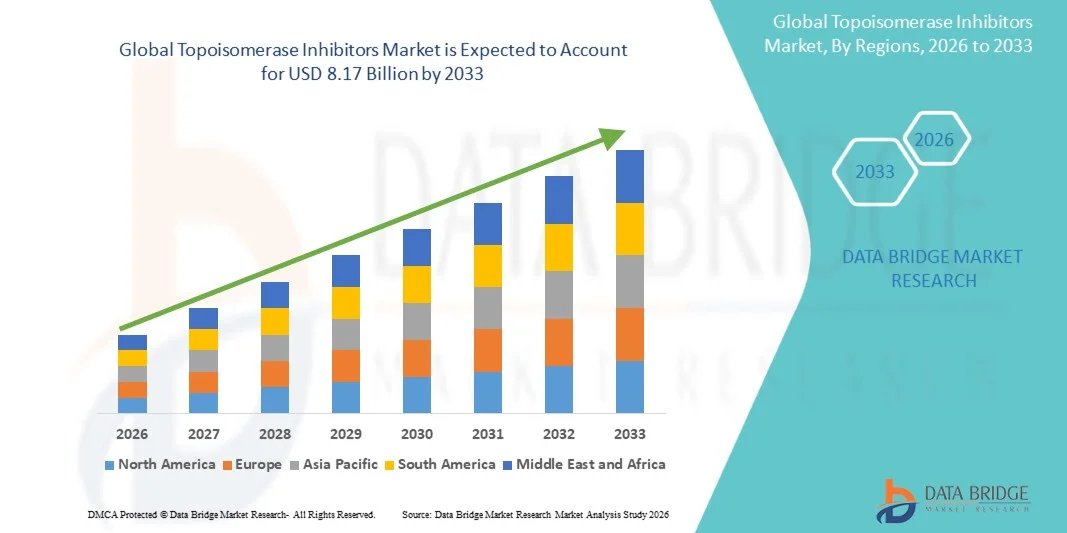
- Согласно анализу рынка Data Bridge Market Research, глобальный размер рынка ингибиторов топоизомеразы был оценен как5,49 млрд долларов в 2025 годуОжидается, что он достигнет8,17 млрд долларов к 2033 году, вCAGR 5.10%в течение прогнозируемого периода
- Рост рынка в значительной степени подпитывается растущей распространенностью рака во всем мире, расширением применения онкологического лечения и продолжающимися достижениями в области топоизомеразы.таргетная терапияЭто повышает эффективность и клинические результаты.
- Кроме того, растущий спрос на целевые, эффективные и точные онкологические решения наряду с увеличением инвестиций в НИОКР и интеграцией ингибиторов следующего поколения устанавливает ингибиторы топоизомеразы в качестве жизненно важных компонентов современных схем лечения рака. Эти сходящиеся факторы ускоряют поглощение в клинических условиях, тем самым значительно повышая рост отрасли.
Размер рынка и прогноз
Глобальная рыночная стоимость (2025):$5,49 млрд.
Ожидаемая рыночная стоимость (2033):$8,17 млрд.
Прогноз CAGR (2026–2033):5.10%
Каковы основные выводы рынка ингибиторов топоизомеразы
- Ингибиторы топоизомеразы, класс целевых противораковых препаратов, которые мешают репликации и восстановлению ДНК, становятся все более важными компонентами современных схем лечения онкологии как при солидных опухолях, так и при гематологических злокачественных новообразованиях из-за их доказанной эффективности, точного таргетинга и интеграции с комбинированной терапией.
- Растущий спрос на ингибиторы топоизомеразы в первую очередь подпитывается ростом глобальной заболеваемости раком, расширением внедрения передовых онкологических методов лечения и продолжающимися инновациями в ингибиторах следующего поколения, которые улучшают результаты лечения пациентов и уменьшают побочные эффекты.
- Северная Америка доминировала на рынке ингибиторов топоизомеразы с самой большой долей дохода в 42,5% в 2025 году, что обусловлено ранним внедрением передовых методов лечения рака, сильной инфраструктурой здравоохранения, высокими инвестициями в исследования и разработки и устойчивым присутствием ключевых фармацевтических компаний, причем США лидируют в клинических испытаниях, одобрении лекарств и интеграции целевой терапии.
- Ожидается, что Азиатско-Тихоокеанский регион станет самым быстрорастущим регионом на рынке ингибиторов топоизомеразы в течение прогнозируемого периода из-за расширения доступа к здравоохранению, повышения осведомленности о раке, роста фармацевтических исследований и разработок и расширения популяции пациентов в таких странах, как Китай и Индия.
- Сегмент ингибиторов топоизомеразы I доминировал на рынке с долей 45,8% в 2025 году, что обусловлено их установленной клинической эффективностью, широким использованием в нескольких типах рака и непрерывным развитием более мощных и безопасных производных.
Сфера охвата и ингибиторы топоизомеразы сегментация рынка
|
Атрибуты |
Topoisomerase Inhibitors Ключевые идеи рынка |
|
Сегменты покрыты |
|
|
Страны, охваченные |
Северная Америка
Европа
Азиатско-Тихоокеанский регион
Ближний Восток и Африка
Южная Америка
|
|
Ключевые игроки рынка |
|
|
Рыночные возможности |
|
|
Информационные наборы данных с добавленной стоимостью |
В дополнение к информации о рыночных сценариях, таких как рыночная стоимость, темпы роста, сегментация, географический охват и основные игроки, рыночные отчеты, курируемые Data Bridge Market Research, также включают углубленный экспертный анализ, эпидемиологию пациентов, анализ трубопроводов, анализ цен и нормативную базу. |
Каковы основные тенденции на рынке ингибиторов топоизомеразы
«Интеграция точной онкологии и комбинированной терапии»
- Значительной и ускоряющейся тенденцией на мировом рынке ингибиторов топоизомеразы является растущая интеграция этих препаратов в схемы точной онкологии и комбинированной терапии с иммунотерапией, целевой терапией и лучевой терапией для улучшения результатов лечения.
- Например, комбинация иринотекана с ингибиторами иммунных контрольных точек в клинических испытаниях продемонстрировала усиленное подавление опухоли при колоректальном раке, подчеркивая потенциал стратегий мультимодального лечения.
- Интеграция точной медицины обеспечивает расслоение пациента на основебиомаркерытакие как уровни экспрессии топоизомеразы, что позволяет клиницистам адаптировать методы лечения для максимальной эффективности и снижения побочных эффектов. Например, текущие исследования рака молочной железы и яичников используют выбор пациентов, управляемых биомаркерами, для оптимизации использования ингибитора топоизомеразы.
- Бесшовное включение ингибиторов топоизомеразы в установленные протоколы онкологии облегчает улучшение клинических результатов и снижение токсичности, позволяя корректировать дозы и целевые комбинации терапии. Благодаря такой интеграции пациенты могут воспользоваться более персонализированным и адаптивным подходом к лечению.
- Эта тенденция к более целенаправленным, комбинированным и специфическим для пациента стратегиям лечения коренным образом меняет ожидания эффективности химиотерапии. Следовательно, фармацевтические компании разрабатывают ингибиторы топоизомеразы следующего поколения с улучшенной потенцией, снижением побочных эффектов и совместимостью с мультимедикаментозными схемами.
- Спрос на ингибиторы топоизомеразы, которые интегрируются с прецизионной онкологией и протоколами комбинированной терапии, быстро растет как на развитых, так и на развивающихся рынках, поскольку лечение рака все чаще отдает приоритет эффективности, безопасности и индивидуальным планам лечения.
- Растущее внимание к сиротскому и редкому раку предлагает новые области применения ингибиторов топоизомеразы, расширяя потенциальные популяции пациентов и стимулируя диверсификацию рынка.
Топоизомеразы тормозят динамику рынка
водитель
«Повышение заболеваемости раком и принятие передовых методов лечения онкологии»
- Растущая распространенность рака во всем мире в сочетании с расширением внедрения передовых онкологических методов лечения является значительным фактором повышенного спроса на ингибиторы топоизомеразы.
- Например, в марте 2025 года Pfizer инициировала клинические испытания, оценивающие ингибиторы топоизомеразы I следующего поколения для нескольких солидных опухолей, сигнализируя о сильной приверженности НИОКР в онкологическом пространстве.
- Поскольку системы здравоохранения отдают приоритет эффективному лечению рака, ингибиторы топоизомеразы предлагают расширенные варианты лечения с доказанной эффективностью в различных типах опухолей, обеспечивая убедительную альтернативу традиционным методам лечения.химиотерапия
- Кроме того, растущие инвестиции в онкологические исследования и разработки и интеграция ингибиторов топоизомеразы в схемы комбинированной терапии делают эти препараты важным компонентом современного лечения рака.
- Эффективность, установленные клинические данные и растущее одобрение ингибиторов следующего поколения наряду с потребностью пациентов в эффективных методах лечения являются ключевыми факторами, способствующими принятию как в развитых, так и в развивающихся регионах.
- Тенденция к прецизионно-целевой терапии и увеличение доступности клинически подтвержденных ингибиторов топоизомеразы также способствуют быстрому росту рынка во всем мире.
- Растущее государственное и частное финансирование исследований рака ускоряет разработку лекарств, что позволяет быстрее получать одобрение и шире проникать на рынок.
- Расширение инфраструктуры здравоохранения в странах с развивающейся экономикой расширяет доступ к передовым методам лечения рака, создавая новые возможности роста для принятия ингибитора топоизомеразы.
Сдержанность/вызов
«Устойчивость к наркотикам и борьба с токсичностью»
- Возникновение лекарственной устойчивости и управление побочными эффектами являются значительными проблемами, которые могут ограничить более широкое применение ингибиторов топоизомеразы в клинических условиях.
- Например, высокая экспрессия переносчиков эффлюкса в опухолевых клетках связана с резистентностью к иринотекану, что делает некоторые методы лечения менее эффективными и требует альтернативных стратегий.
- Решение этих проблем с помощью комбинированной терапии, оптимизации дозы и разработки ингибиторов следующего поколения с улучшенными профилями безопасности имеет решающее значение для поддержания клинического принятия. Например, разрабатываются липосомальные составы ингибиторов топоизомеразы для снижения системной токсичности и улучшения терапевтического индекса.
- Кроме того, относительно высокая стоимость современных ингибиторов топоизомеразы по сравнению с непатентованной химиотерапией может быть препятствием для принятия, особенно в развивающихся странах или для систем здравоохранения с ограниченными бюджетами.
- В то время как текущие исследования и разработки повышают эффективность и переносимость, воспринимаемые побочные эффекты и сложность лечения все еще могут препятствовать широкому использованию, особенно среди пациентов с сопутствующими заболеваниями или плохим состоянием производительности.
- Преодоление этих проблем с помощью клинического образования, улучшенных рецептур и экономически эффективных стратегий будет иметь жизненно важное значение для устойчивого роста рынка и более широкого глобального внедрения ингибиторов топоизомеразы.
- Строгие нормативные требования к одобрению лекарств в разных регионах могут задержать выход на рынок, что усложняет внедрение новых ингибиторов.
- Ограниченная осведомленность пациентов и обучение медицинских работников на развивающихся рынках могут замедлить темпы внедрения, подчеркивая необходимость целевых образовательных инициатив.
Как сегментируется рынок ингибиторов топоизомеразы
Рынок сегментирован на основе классификации, применения, лекарственных средств, пути введения, конечных потребителей и каналов распространения.
- Классификация наркотиков
На основе классификации лекарственных средств рынок ингибиторов топоизомеразы сегментирован на ингибиторы Топоизомеразы I и ингибиторы Топоизомеразы II. Сегмент ингибиторов Топоизомеразы I доминировал на рынке с самой большой долей выручки в 45,8% в 2025 году, чему способствовало широкое использование таких препаратов, как иринотекан и топотекан при лечении множественных солидных опухолей и гематологических раковых заболеваний. Ингибиторы топоизомеразы I являются весьма предпочтительными из-за их установленной эффективности, предсказуемой фармакокинетики и интеграции в схемы комбинированной терапии. Их обширная клиническая валидация и внедрение в точные онкологические протоколы еще больше укрепляют их доминирование на рынке. Больницы и специализированные онкологические клиники часто предпочитают эти ингибиторы для первой линии или комбинированной терапии при колоректальном, яичниковом и легочном раке. Кроме того, непрерывные исследования и разработки в ингибиторах Топоизомеразы I следующего поколения повышают их терапевтический индекс и снижают токсичность, поддерживая устойчивый спрос.
Ожидается, что в сегменте ингибиторов Топоизомеразы II будет наблюдаться самый быстрый темп роста 6,2% CAGR с 2026 по 2033 год, чему способствуют инновации в лекарственных препаратах и более широкое использование при лечении лейкемии, лимфомы и рака яичек. Препараты, такие как этопозид, выигрывают от расширенных показаний и интеграции в схемы химиотерапии с несколькими лекарствами. Ожидается, что новые исследования, направленные на механизмы устойчивости и новые методы доставки, включая носители липосомальных и наночастиц, ускорят поглощение. Сегмент также выигрывает от растущей осведомленности онкологов о целевых комбинациях терапии для улучшения результатов лечения пациентов.
- С помощью приложения
На основе применения рынок сегментирован на рак яичек, лейкемию, рак легких и другие. Сегмент лейкемии доминировал на рынке с долей выручки 38,5% в 2025 году, что обусловлено высокой распространенностью как острых, так и хронических форм заболевания во всем мире. Ингибиторы топоизомеразы, такие как этопозид и топотекан, являются стандартными компонентами в схемах лечения лейкемии из-за их способности избирательно индуцировать повреждение ДНК в быстро делящихся клетках. Больницы и специализированные клиники широко используют эти препараты в протоколах комбинированной терапии, особенно для детей и взрослых пациентов с лейкемией. Непрерывные клинические испытания и одобрение улучшенных составов еще больше поддерживают лидерство этого сегмента. Растущая заболеваемость лейкемией и растущее принятие амбулаторных программ химиотерапии также способствовали доле рынка.
Сегмент рака яичек, как ожидается, будет наблюдать самый быстрый CAGR 5,8% в течение прогнозируемого периода, что обусловлено расширением осведомленности, программ раннего выявления и увеличением использования ингибиторов топоизомеразы в режимах с несколькими лекарствами. Ингибиторы топоизомеразы II, такие как этопозид, особенно эффективны в опухолях зародышевых клеток, способствуя повышению скорости ремиссии. Фармацевтические компании инвестируют в разработку более безопасных и эффективных препаратов для снижения побочных эффектов и улучшения соответствия пациентов. Рост сегмента также поддерживается расширением доступа к здравоохранению на развивающихся рынках и расширением использования врачами целевых методов лечения.
- С помощью наркотиков
На основе лекарственных препаратов рынок сегментирован на этопозид, иринотекан, топотекан и другие. Сегмент Irinotecan доминировал на рынке с долей выручки 41% в 2025 году, благодаря широкому использованию в колоректальном раке, сильной клинической эффективности и широкой доступности в больницах и онкологических центрах. Иринотекан часто включается в протоколы комбинированной терапии, такие как FOLFIRI, и считается основой для многих схем первой линии. Его хорошо документированный фармакологический профиль и установленные данные по безопасности способствуют его лидерству на рынке. Непрерывные улучшения в формулировке, включая липосомальные и оральные варианты, повышают приверженность пациента и терапевтические результаты.
Ожидается, что сегмент Etoposide будет наблюдать самый быстрый темп роста 6% CAGR с 2026 по 2033 год, что обусловлено его эффективностью в лечении лейкемии, лимфомы и рака яичек. Новые составы и протоколы комбинированной терапии улучшают его переносимость и расширяют его клиническое применение. Сегмент также выигрывает от увеличения клинических испытаний онкологии и внедрения на развивающихся рынках. Растущая осведомленность онкологов об оптимальных стратегиях дозирования и управлении резистентностью способствует дальнейшему росту.
- По маршруту администрации
На основе маршрута администрирования рынок сегментирован на пероральный, инъекционный и другие. Инъекционный сегмент доминировал на рынке с долей выручки 52% в 2025 году, в первую очередь из-за его быстрой биодоступности, точного дозирования и предпочтений в больницах и клинических условиях. Инъекционные составы ингибиторов топоизомеразы позволяют онкологам проводить эффективную химиотерапию с контролируемым воздействием, минимизируя системную токсичность. Они широко используются в стационарных условиях для лечения острого рака и в схемах комбинированной терапии. Больницы и специализированные клиники предпочитают инъекционные препараты для управления критической помощью и терапии первой линии. Постоянное совершенствование инфузионных протоколов и мер безопасности поддерживают лидерство сегмента.
Ожидается, что в пероральном сегменте будет наблюдаться самый быстрый CAGR в 6,5% в течение прогнозируемого периода, что обусловлено растущим предпочтением дружественных к пациенту, домашних и амбулаторных программ химиотерапии. Пероральные препараты, такие как капсулы иринотекана, повышают удобство и приверженность, уменьшая необходимость частых посещений больницы. Сегмент выигрывает от увеличения принятия на дому и разработки новых пероральных пролекарств с улучшенной биодоступностью и переносимостью. Оральная доставка также согласуется со стратегиями точной медицины, что позволяет гибко дозировать и интегрировать комбинированную терапию.
- Конечными пользователями
На базе конечных пользователей рынок сегментирован на больницы, домашнюю помощь, специализированные клиники и другие. Сегмент больниц доминировал на рынке с долей выручки 48% в 2025 году, поскольку больницы предоставляют структурированную онкологическую помощь, клинический опыт и доступ к протоколам комбинированной терапии. Больницы также проводят большинство клинических испытаний и назначений химиотерапии первой линии, что делает их основными потребителями ингибиторов топоизомеразы. Доступ к передовым диагностическим инструментам, инфраструктуре точной медицины и обученным онкологам также поддерживает доминирование этого сегмента.
Ожидается, что в сегменте ухода на дому будет наблюдаться самый быстрый CAGR в размере 7% в течение прогнозируемого периода, что обусловлено увеличением амбулаторных программ химиотерапии, предпочтением пациентов для домашнего введения и разработкой пероральных и простых в применении препаратов. Усыновление на дому снижает расходы на здравоохранение и улучшает комфорт и приверженность пациентов. Фармацевтические компании также инвестируют в программы поддержки пациентов и образование для безопасного расширения использования ингибиторов топоизомеразы на дому. Утверждения регулирующих органов и поддержка возмещения еще больше ускоряют рост этого сегмента.
- Дистрибьюторский канал
На базе канала дистрибуции рынок сегментирован в больничную аптеку, онлайн-аптеку, розничную аптеку и другие. Сегмент больничных аптек доминировал на рынке с долей выручки 55% в 2025 году, благодаря централизованным закупкам ингибиторов топоизомеразы для стационарного и амбулаторного лечения онкологии. Больничные аптеки обеспечивают контроль качества, правильное хранение и соблюдение клинических протоколов. Они также облегчают комбинированную терапию и программы мониторинга пациентов, что делает их предпочтительным каналом распределения.
Ожидается, что в сегменте онлайн-аптек будет наблюдаться самый быстрый CAGR в размере 8% в течение прогнозируемого периода, чему способствует растущее внедрение электронной аптеки, удобство и доставка пероральных препаратов на дом. Пандемия COVID-19 ускорила проникновение в интернет-аптеки, создав возможности для пациентов получить удаленный доступ к жизненно важным лекарствам. Сегмент выигрывает от цифрового управления рецептами, поддержки телемедицины и программ обучения пациентов, которые повышают безопасность, соблюдение и охват рынка.
В каком регионе находится наибольшая доля рынка ингибиторов топоизомеразы
- Северная Америка доминировала на рынке ингибиторов топоизомеразы с самой большой долей дохода в 42,5% в 2025 году, что обусловлено ранним внедрением передовых методов лечения рака, сильной инфраструктурой здравоохранения, высокими инвестициями в исследования и разработки и устойчивым присутствием ключевых фармацевтических компаний.
- Пациенты и поставщики медицинских услуг в регионе высоко ценят эффективность, безопасность и клиническую валидацию ингибиторов топоизомеразы, а также их интеграцию в протоколы комбинированной терапии и стратегии точной медицины для различных видов рака, включая лейкемию, колоректальный рак и рак легких.
- Это широкое распространение также поддерживается присутствием ведущих фармацевтических компаний, высокими расходами на здравоохранение, ранним доступом к ингибиторам следующего поколения и растущим предпочтением инновационных, целевых методов лечения, устанавливая ингибиторы топоизомеразы в качестве ключевого компонента современных схем лечения рака как в больницах, так и в специализированных клиниках.
Американские топоизомеразы тормозят рыночное понимание
Рынок ингибиторов топоизомеразы в США занял самую большую долю дохода в 45% в 2025 году в Северной Америке, чему способствовало раннее внедрение передовых онкологических методов лечения и надежная инфраструктура здравоохранения страны. Пациенты и врачи все чаще отдают приоритет целевым, эффективным методам лечения с доказанной эффективностью и снижением токсичности. Растущая интеграция ингибиторов топоизомеразы в комбинированную терапию и точные онкологические протоколы еще больше продвигает рынок. Кроме того, высокие инвестиции в НИОКР, непрерывные клинические испытания и присутствие ведущих фармацевтических компаний значительно способствуют расширению рынка. Наличие рецептур следующего поколения и мощная поддержка возмещения также способствуют росту в больницах и специализированных клиниках.
Европа Топоизомераза Ингибиторы рынка
Европейский рынок ингибиторов топоизомеразы, по прогнозам, будет расширяться при существенном CAGR в течение прогнозируемого периода, в основном за счет роста распространенности рака и необходимости передовых терапевтических вариантов. Сильные системы здравоохранения в сочетании с правительственными инициативами, поддерживающими онкологическое лечение, способствуют усыновлению. Европейские пациенты и врачи предпочитают препараты с установленными клиническими данными и управляемыми профилями безопасности. В регионе наблюдается значительный рост в больницах, специализированных клиниках и амбулаторных условиях, причем ингибиторы топоизомеразы все чаще включаются как в стандартные протоколы ухода, так и в клинические испытания. Кроме того, акцент Европы на прецизионной медицине и стратегиях комбинированной терапии поддерживает более широкое внедрение.
Британские ингибиторы топоизомеразы Market Insight
Ожидается, что рынок ингибиторов топоизомеразы в Великобритании в течение прогнозируемого периода будет расти с заметным CAGR, что обусловлено повышением осведомленности о вариантах лечения рака и спросом на целевые методы лечения. Рост заболеваемости гематологическими и солидными опухолями побуждает как больницы, так и специализированные клиники принимать передовые протоколы химиотерапии, включая ингибиторы топоизомеразы. Кроме того, ожидается, что нормативная поддержка онкологической терапии и хорошо развитая инфраструктура здравоохранения Великобритании будут стимулировать рост рынка. Принятие схем комбинированной терапии и ориентированных на пациента подходов к лечению продолжает усиливать спрос на эти препараты.
Германия Topoisomerase Inhibitors Market Insight
Ожидается, что в течение прогнозируемого периода рынок ингибиторов топоизомеразы в Германии будет расширяться при значительном CAGR, чему будет способствовать растущая осведомленность о раке и спрос на технологически передовые методы лечения онкологии. Сильная фармацевтическая среда исследований и разработок в Германии, хорошо зарекомендовавшие себя медицинские учреждения и акцент на внедрение клинических инноваций. Больницы и онкологические центры все чаще интегрируют ингибиторы топоизомеразы в стандартные и комбинированные протоколы терапии. Кроме того, предпочтение терапии с проверенными профилями безопасности и эффективности соответствует местным нормативным требованиям и ожиданиям пациентов, что способствует устойчивому росту рынка.
Азиатско-Тихоокеанская Топоизомераза Ингибиторы рынка
Рынок ингибиторов топоизомеразы в Азиатско-Тихоокеанском регионе будет расти на самом быстром CAGR 6,8% в течение 2026–2033 годов, что обусловлено ростом заболеваемости раком, расширением доступа к здравоохранению и повышением осведомленности о передовых методах лечения онкологии в таких странах, как Китай, Индия и Япония. Правительственные инициативы, способствующие лечению рака в сочетании с улучшенными диагностическими возможностями и больничной инфраструктурой, способствуют внедрению. Кроме того, растущая активность клинических испытаний и растущее присутствие глобальных фармацевтических компаний расширяют доступ к ингибиторам топоизомеразы следующего поколения. Развивающиеся рынки региона также получают выгоду от экономически эффективных методов лечения и растущей осведомленности пациентов, расширяя рыночную базу.
Япония Топоизомераза Ингибиторы рынка
Японский рынок ингибиторов топоизомеразы набирает обороты благодаря высокой осведомленности о раке, передовым системам здравоохранения и растущему акценту на точную онкологию. Больницы и специализированные клиники отдают приоритет терапии с устоявшейся эффективностью и снижением побочных эффектов. Интеграция в протоколы комбинированной терапии и принятие препаратов следующего поколения также способствуют росту рынка. Кроме того, государственная поддержка исследований в области онкологии, старение населения и высокие возможности страны в области НИОКР подпитывают спрос. Сосредоточение внимания Японии на инновационных решениях по лечению рака усиливает принятие как в стационарных, так и в амбулаторных условиях.
Индия Topoisomerase Inhibitors Market Insight
Индийский рынок ингибиторов топоизомеразы составил самую большую долю рынка в Азиатско-Тихоокеанском регионе в 2025 году, что связано с ростом заболеваемости раком, расширением инфраструктуры здравоохранения и увеличением внедрения передовых методов лечения. Больницы, специализированные клиники и программы по уходу на дому являются ключевыми каналами, стимулирующими спрос. Правительственные инициативы по лечению рака и растущей осведомленности среди пациентов и врачей способствуют дальнейшему росту рынка. Доступность доступных и непатентованных ингибиторов топоизомеразы, наряду с сильным отечественным фармацевтическим производством, расширяет доступ. Быстрая урбанизация, увеличение расходов на здравоохранение и растущее население пациентов среднего класса являются ключевыми факторами, способствующими развитию рынка в Индии.
Каковы основные компании на рынке ингибиторов топоизомеразы
Индустрия ингибиторов топоизомеразы в основном возглавляется хорошо зарекомендовавшими себя компаниями, в том числе:
- Компания Novartis AG(Швейцария)
- Pfizer Inc.(США)
- Производитель: Teva Pharmaceutical Industries Ltd(Израиль)
- Компания Daiichi Sankyo, Limited(Япония)
- Nippon Kayaku Co., Ltd. (Япония)
- MOH Holdings (Сингапур)
- Yakult Honsha Co., Ltd. (Япония)
- Servier Laboratories (Франция)
- Meitheal Pharmaceuticals (США)
- Grand Pharmaceutical Group (Китай)
- Summit Therapeutics (Великобритания)
- Chong Kun Dang Pharmaceutical (Южная Корея)
- Ipsen SA (Франция)
- Eton Pharmaceuticals (США)
- CSPC Pharmaceutical Group (Китай)
- Jiangsu Hengrui Medicine Co., Ltd. (Китай)
- Fresenius Kabi AG (Германия)
- Merck KGaA (Германия)
- Debiopharm Group SA (Швейцария)
- Hikma Pharmaceuticals Plc (Великобритания)
Каковы последние события на рынке ингибиторов топоизомеразы
- В июне 2025 года FDA США предоставило ускоренное одобрение datopotamab deruxtecan-dlnk для взрослых с локально продвинутым или метастатическим EGFR-мутированным немелкоклеточным раком легкого (NSCLC), которые получили предшествующую терапию EGFR и химиотерапию на основе платины, иллюстрируя расширенные применения конъюгатов ингибитора топоизомеразы за пределами лечения рака молочной железы.
- В январе 2025 года Управление по контролю за продуктами и лекарствами США одобрило datopotamab deruxtecan-dlnk, конъюгат антитела-лекарства с полезной нагрузкой ингибитора топоизомеразы I, для лечения взрослых пациентов с неоперабельным или метастатическим рецептором гормона, HER2-отрицательным раком молочной железы после предшествующей эндокринной терапии и химиотерапии, отмечая значительное расширение целевой терапии на основе ингибитора топоизомеразы в онкологии.
- В ноябре 2024 года Zymeworks сообщила, что она дозировала первого пациента в клиническом испытании фазы I ZW191, продвигая этот ингибитор топоизомеразы I, нацеленный на фолиевый рецептор, в раннее тестирование человека на продвинутые солидные опухоли, что является ключевым шагом на пути к потенциальным будущим одобрениям.
- В июле 2024 года Zymeworks Inc. объявила, что FDA США очистило свою исследовательскую новую заявку на препарат (IND) для ZW191, целевого конъюгата ингибитора топоизомеразы I ингибитора топоизомеразы (ADC), что позволило компании начать клинические исследования этой терапии на основе топоизомеразы следующего поколения.
- В мае 2023 года научные исследования, опубликованные в Международном журнале молекулярных наук, подробно описали последние разработки в области комбинированной химиотерапии с использованием ингибиторов топоизомеразы для колоректального рака и рака молочной железы, подчеркнув продолжающиеся инновации в оптимизации схем на основе топоизомеразы для улучшения результатов при трудно поддающихся лечению злокачественных новообразованиях.
SKU-
Получите онлайн-доступ к отчету на первой в мире облачной платформе рыночной аналитики
- Интерактивная панель анализа данных
- Панель анализа компании для возможностей с высоким потенциалом роста
- Доступ аналитика-исследователя для настройки и запросов
- Анализ конкурентов с помощью интерактивной панели
- Последние новости, обновления и анализ тенденций
- Используйте возможности сравнительного анализа для комплексного отслеживания конкурентов
Методология исследования
Сбор данных и анализ базового года выполняются с использованием модулей сбора данных с большими размерами выборки. Этап включает получение рыночной информации или связанных данных из различных источников и стратегий. Он включает изучение и планирование всех данных, полученных из прошлого заранее. Он также охватывает изучение несоответствий информации, наблюдаемых в различных источниках информации. Рыночные данные анализируются и оцениваются с использованием статистических и последовательных моделей рынка. Кроме того, анализ доли рынка и анализ ключевых тенденций являются основными факторами успеха в отчете о рынке. Чтобы узнать больше, пожалуйста, запросите звонок аналитика или оставьте свой запрос.
Ключевой методологией исследования, используемой исследовательской группой DBMR, является триангуляция данных, которая включает в себя интеллектуальный анализ данных, анализ влияния переменных данных на рынок и первичную (отраслевую экспертную) проверку. Модели данных включают сетку позиционирования поставщиков, анализ временной линии рынка, обзор рынка и руководство, сетку позиционирования компании, патентный анализ, анализ цен, анализ доли рынка компании, стандарты измерения, глобальный и региональный анализ и анализ доли поставщика. Чтобы узнать больше о методологии исследования, отправьте запрос, чтобы поговорить с нашими отраслевыми экспертами.
Доступна настройка
Data Bridge Market Research является лидером в области передовых формативных исследований. Мы гордимся тем, что предоставляем нашим существующим и новым клиентам данные и анализ, которые соответствуют и подходят их целям. Отчет можно настроить, включив в него анализ ценовых тенденций целевых брендов, понимание рынка для дополнительных стран (запросите список стран), данные о результатах клинических испытаний, обзор литературы, обновленный анализ рынка и продуктовой базы. Анализ рынка целевых конкурентов можно проанализировать от анализа на основе технологий до стратегий портфеля рынка. Мы можем добавить столько конкурентов, о которых вам нужны данные в нужном вам формате и стиле данных. Наша команда аналитиков также может предоставить вам данные в сырых файлах Excel, сводных таблицах (книга фактов) или помочь вам в создании презентаций из наборов данных, доступных в отчете.