



全球生物製劑注射裝置市場細分,按產品類型(傳統注射裝置及其他)、應用領域(自體免疫疾病、荷爾蒙失調、罕見疾病、美容治療及其他臨床應用)、最終用戶(醫院和診所、家庭護理機構及其他)、給藥部位(皮膚、循環/肌肉骨骼系統、器官和中樞神經系統)、可用性(可重複使用)
生物药品市场规模和增长率的全球注射装置是什么
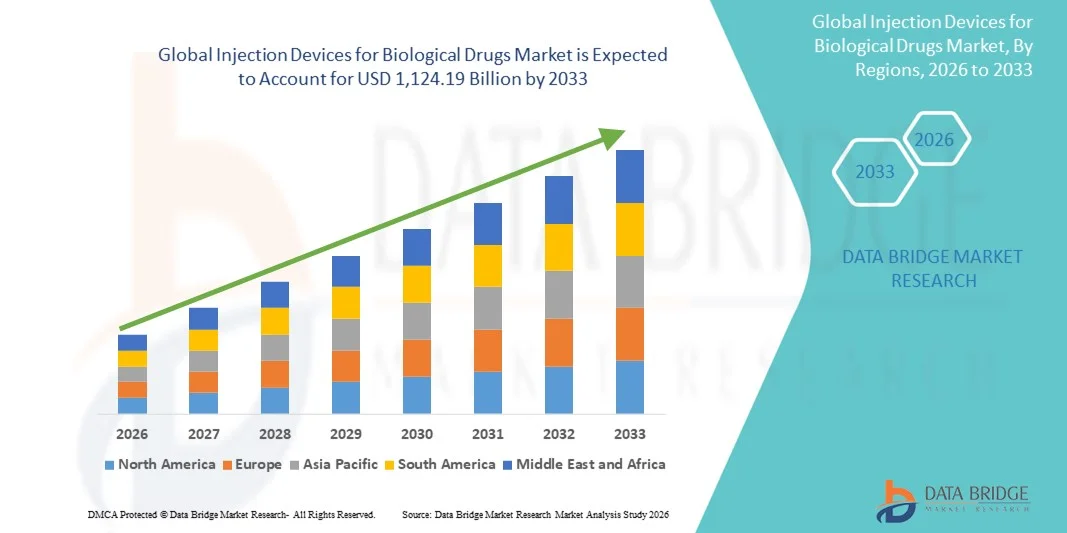
- 根据数据桥市场研究分析,全球生物药物市场规模注射装置的价值为:2025年5,687.7亿美元并可望达到到2033年达到11,241.9亿美元, 以美元计CAGR为8.89%预测期间
- 市场增长主要是由于依赖生物注射剂的慢性病日益普遍、智能特征的结合和病人对自我管理越来越偏好。 这些因素正在推动住宅/家庭护理和临床环境的数字化和创新。
- 此外,对安全、方便用户和综合注射解决方案,包括无针系统和智能注射器的需求日益增加,正在建立先进的注射装置,作为生物药物的首选投放机制。 这些趋同因素加速了注射器的吸收,从而大大地推动了该行业的增长。
市场大小和预测
- 全球市场价值(2025):568.77亿美元
- 预期市场价值(2033年):1,124.19亿美元
- 预测CAGR(2026-2033):8.89%
生物药品市场注射器的主要外卖是什么
- 生物药物的注射装置,包括常规注射装置和其他先进运载系统,由于方便、准确性以及支持复杂生物疗法自我管理的能力,在家庭护理和临床环境下,是现代保健服务提供中越来越重要的部分。
- 对注射器的需求不断上升,主要是由于慢性病日益普遍,例如:自动免疫疾病激素失调和孤儿疾病,以及病人越来越喜欢安全、方便用户和有效的自我注射解决办法
- 2025年,北美主导了生物药物市场的注射器,收入份额最大,为42.3%,其特点是保健基础设施先进、患者意识高和主要行业行为者多,美国在医院和家庭护理场所都大量采用预填注射器和笔接注射器,其驱动力来自已建立的医疗器械公司和以安全和连通注射技术为重点的创业企业。
- 由于医疗保健开支增加、慢性病发病率上升、家庭护理和临床环境中越来越多地采用生物疗法,预计亚太区域在生物药物市场注射器具方面在预测期间将是增长最快的区域。
- 2025年,可处置的钢笔注射器主导了生物药物市场的注射器,其市场份额为53.8%,其驱动力在于其易用性,安全性增强,以及适用于包括皮肤、循环/肌肉骨骼系统、器官和中枢神经系统在内的多个管理地点的自我管理
生物药品市场分割的范围和注射装置报告
|
属性 |
用于生物药品的注射装置 |
|
覆盖部分 |
|
|
涵盖国家 |
北美
欧洲
亚太
中东和非洲
南美洲
|
|
关键市场玩家 |
|
|
市场机会 |
|
|
添加数据信息集的值 |
除了对市场价值、增长率、分块化、地域覆盖和主要参与者等市场假设的深刻见解外,数据桥市场研究编写的市场报告还包括深入的专家分析、病人流行病学、管道分析、定价分析和监管框架。 |
生物药品市场注射装置中的关键趋势是什么
数字和连接的注射设备增强病人的遵守
- 全球注射器械市场一个显著而加速的趋势是将智能接通的注射器械与移动应用软件和云平台相融合,增强患者的坚持度,剂量精准度,以及家庭护理和临床环境下的实时监测.
- 接通的注射器可以实现个性化的注射时间表,注射出错的预测性警报,以及异常注射模式的监测等特征. 例如,一些预先填充的智能笔注射器通知患者和临床医生,如果误入一剂或服用不当。 此外,移动应用程序集成使患者能够记录副作用并跟踪治疗进展,尽量减少人工输入
- 将注射设备与数字平台相结合,有助于病人集中管理,使医生和护理人员能够远程监测多位病人,调整治疗计划,并通过单一接口及时干预
- 这种更聪明,更直观,以病人为中心的注射器械的趋势,从根本上重塑了对生物学疗法管理的期望. 因此,Ypsomed和Euly Injections等公司正在开发连接设备,其中包括自动剂量跟踪和智能手机兼容性
- 医院和家庭护理机构对连接和智能注射设备的需求正在迅速增长,因为病人和保健提供者越来越优先考虑方便、遵守和治疗安全。
生物药品市场注射装置的主要驱动器是什么
驱动程序
由于慢性病发病率上升和家庭护理的采用而不断增长的需求
- 诸如自体免疫障碍、激素缺乏和罕见病症等慢性疾病的发病率不断上升,加上家庭治疗治疗的上升趋势,是增加注射器械需求的关键因素。
- 例如,2025年3月,Ypsomed在欧洲推出了一个智能胰岛素笔会平台,旨在改进医护人员的坚持度并允许他们进行远程监测,推动更广泛地采用自我管理的生物学。
- 由于患者和临床医生寻求更安全、更可靠、更方便用户的分娩方法,注射器提供了预先充药、自动提醒和减少出错机制等先进功能,为传统注射器提供了令人信服的替代品
- 此外,自注射疗法越来越受欢迎,并渴望远程保健管理,使连接的智能注射设备成为生物疗法管理的组成部分。
- 方便使用、减少入院次数、改善病人的遵纪守法状况以及远程监测治疗结果的能力,是推动在医院和家庭护理场所采用注射器械的关键因素
- 设备制造商和制药公司之间加强伙伴关系,共同开发针对具体疗法的注射系统,正在加速产品采用和定制
- 政府促进家庭保健和慢性疗法自我管理的举措正在支持扩大市场,特别是在人口老化的地区
限制/挑战
设备复杂程度、成本和管理性
- 围绕设备复杂性、病人培训要求和遵守监管方面的关切对更广泛的市场渗透构成重大挑战,特别是在保健基础设施有限的新兴区域。
- 例如,高调地回顾自动注射器故障使一些病人不愿采用先进的注射器,尽管这些设备在坚持和方便方面有好处。
- 通过强力装置设计、直观用户界面和全面病人教育来应对这些挑战,对于建立信任至关重要。 BD和SHL等公司强调其培训方案和简化注射协议,以安抚用户. 此外,与常规注射器相比,先进设备的成本相对较高,这可能成为采用价格敏感的病人或保健系统的障碍。
- 虽然费用正在逐渐下降,但对连接式或智能式注射设备的预期溢价仍然会妨碍广泛采用,特别是在患者自费生物疗法的地区。
- 通过调整监管、提高可用性并开发具有成本效益的装置来克服这些挑战,对于市场持续增长至关重要。
- 将连接的注射设备与医院信息技术系统相结合和确保网络安全合规的复杂性仍然是一些供应商面临的技术障碍
- 在某些区域,病人和保健提供者对适当使用先进注射器具的认识和培训有限,可减少使用率并减缓市场渗透
生物药品市场的注射装置如何分离
市场按产品种类,应用,最终用户,经营场所,易用性划分.
- 按产品类型
根据产品种类,市场被分割成常规注射器械等. 传统注射装置部分在2025年占了最大的收入份额。 这些装置包括预填注射器、传统的自动注射器和医院和诊所广泛使用的笔状注射器。 它们的主导地位是由它们长期采用,可靠性和与广泛的生物药物相容而来. 保健提供者往往更喜欢常规装置,因为它们易于使用,安全情况得到证实,监管障碍也较低。 该部分还得益于医生的熟悉程度、完善的供应链和病人的坚定信任。 使用胰岛素或自体免疫治疗等慢性疗法的患者,因其性能可预见并易于处理,往往依赖常规注射装置. 此外,与较新的互联解决办法相比,传统装置具有成本效益,有助于新兴市场的采用。
其他部分包括可穿戴的注射器,无针系统和相接的智能设备,预计2026年至2033年增长最快. 促成这一增长的原因是对自我管理、遵守程度提高和远程监测能力的需求日益增加。 智能和可穿戴的装置允许患者在极少帮助的情况下在家中注入生物logics,减少出院次数并更方便. 这些设备与移动应用程序和云平台相融合,以跟踪剂量,提供提醒,并提醒医护人员误注射或误注射. 病人越来越喜欢连接的保健解决方案和关键角色的技术革新,这正在推动这一部分。 对新分娩系统的监管批准以及对以病人为中心的护理的认识的提高也有助于快速收养。
- 通过应用程序
根据应用情况,市场分为自体免疫疾病,激素失调,孤儿疾病,美学治疗等临床应用. 由于风湿性关节炎,多发性硬化症等疾病的高发率,自发性免疫疾病部分在2025年占据了市场主导地位. 这些慢性病越来越多地被开出生物学处方,患者需要定期,准确的注射,通常在家中. 保健提供者倾向于采用可靠的装置,如预填注射器和笔状注射器,以确保剂量准确并减少并发症。 发达国家的这一部分受益于强有力的认识方案和生物记录学的报销。 为患者方便而设计的注射用具,如人造钢笔等的进步,进一步加强了收用. 此外,全世界自体免疫障碍不断上升,确保了对可靠注射装置的持续需求。
由于对肉毒毒素和皮肤填充剂等化妆生物的需求日益增加,美学治疗部分预计将在2026年至2033年增长最快。 在诊所和家庭护理场所,自我管理和极少监督的注射正在增加。 患者越来越多地采用易于使用的笔状注射器和预填器来安全地进行美学治疗. 紧凑装置和精准剂量系统等技术创新支持了快速采用. 可支配收入的增加和对化妆品程序的认识的提高正在进一步促进增长。 市场参与者正在投资于病人教育方案,以促进安全的自我管理和扩大用户基础。
- 按终端用户
在最终用户的基础上,市场被分割成医院和诊所、家庭护理设施等。 2025年,由于病人吞吐量高和需要控制生物记录的管理,医院和诊所部分占市场主导地位,收入份额最大。 医院往往偏好常规装置,因为工作人员熟悉、使用可靠剂量和已证明安全。 诊所的慢性病管理方案也支持反复使用预填注射器和笔注射器。 该部分得益于批量采购、强有力的分销网络和对坚持治疗的临床监督。 医院和诊所还带头管理需要保健专业监督的复杂疗法。 此外,医生对常规装置的既定建议加强了市场支配地位。
家庭护理环境部分预计将在2026年至2033年期间增长最快,因为患者偏好自我注射和方便。 技术创新,包括智能笔注射器和可穿戴设备,支持远程监测和坚持跟踪. 慢性病发病率上升和保健服务的权力下放加快了家庭的使用。 患者越来越多地寻求方便用户的装置,其培训要求极少,以避免到医院就诊。 支助性报销政策和病人教育方案也有助于增长。 连接设备与远程医疗平台日益融合,进一步推动了家庭护理环境中的采用。
- 按行政地点分列
根据管理地点,市场被分割成皮肤、循环/肌肉骨骼系统、器官和中枢神经系统。 2025年,皮肤管理部分主导了市场,因为皮下注射通常用于胰岛素、单克隆抗体和疫苗等生物学。 皮下分娩可以更容易地自我管理,改善病人的坚持程度。 与肌肉内道或静脉注射途径相比,安全性、最低侵入性以及并发症减少使这一段受益。 预装注射器,笔注射器,自动注射器被广泛用于皮肤管理,提供一致的剂量. 病人由于舒适和易于处理,更喜欢用皮下设备进行家庭护理。 保健人员建议慢性病采用这一途径,以简化治疗管理。
循环/肌肉骨骼系统部分预计将在2026至2033年期间增长最快,其动力是自体免疫障碍和酶替代疗法对静脉注射生物学的需求不断增加。 医院和专科诊所越来越多地采用便于有针对性地送入关节或系统循环的设备。 可穿戴的注射器和高级IV相容设备支持精准剂量并减少管理错误. 最低侵入性注射系统的创新也推动采用。 肌肉骨骼失调症和辅助性报销方案日益普遍,为扩大市场提供了燃料。 市场参与者正在集中力量于增强这一路线的便利性、安全性和有效性的装置。
- 按可用性
根据可使用性,将市场分拆为可再用笔注入器和可支配笔注入器. 2025年,由于易于使用、安全和适合自我管理,可支配的笔注入器部分占了市场最大收入的53.8%。 可处置装置可减少被污染的风险,需要很少的培训,并与多种生物疗法相兼容。 家庭护理和临床环境中的高领养率推动了增长。 病人重视方便和单一用途的可靠性,而保健提供者则重视控制感染。 预填可支配笔被广泛用于胰岛素,自体免疫生物学等慢性疗法和激素治疗. 成本效益和可获得性有助于该部门的持续主导地位。
在成本效益和环境可持续性的推动下,可再使用的钢笔注射器部分预计将在2026年至2033年期间增长最快。 患者可以用可替换的弹匣使用同一种设备,降低长期治疗费用. 人类基因组设计、数字集成和剂量内存特性的进步,可增进方便性和坚持性。 慢性疗法的日益采用和病人对个性化注射方法的偏好有助于迅速增长。 制造商正在创新,以提高安全性、耐用性和用户经验。 新兴市场再利用装置的监管批准进一步推动采用。
哪个地区拥有生物药品市场注射装置的最大份额
- 2025年,北美在生物药物市场的注射装置中占主导地位,收入份额最大,为42.3%,其特点是保健基础设施先进、患者认识高、主要行业行为者众多。
- 本区域的病人和保健提供者高度评价预填注射器、自动注射器和智能笔注射器提供的方便、安全特点和坚持支持,供家庭护理和临床使用
- 这种普遍采用还得到患者强烈认识、强有力的报销政策和技术倾向的人口的支持,将注射装置作为医院、诊所和家庭护理环境的首选解决办法
美国生物药品市场透视注射装置
美国的注射器械市场在2025年占北美最大的收入份额为79%,这得益于慢性疾病的高发和生物疗法自我管理趋势的上升. 病人正在优先使用加强坚持治疗、减少就诊、提供安全、准确剂量的设备。 智能笔注射器和预装注射器日益被采用,加之用于剂量跟踪和远程监测的移动应用集成,进一步推动了市场. 此外,设备制造商同制药公司之间的伙伴关系正在加速开发针对具体疗法的装置,推动其采用。 对基于家庭的治疗和病人教育方案的监管支持极大地促进了市场增长。 美国强调数字医疗解决方案和连接设备,继续加强了市场的扩张.
欧洲注射设备市场透视
预计在整个预测期间,欧洲注射装置市场将大幅扩大,主要是受自体免疫和罕见疾病发病率上升以及支助性报销政策所驱动。 对自我管理和家庭护理疗法的采用的认识不断提高,这促进了对安全和易于使用的注射设备的需求。 欧洲保健提供者正在采用连接的自动注射器和预填注射器来改善病人的遵守和治疗结果。 慢性病管理方案和医院促进以病人为中心的护理倡议的增长,进一步促进了市场渗透。 此外,越来越多地将注射装置纳入新的保健设施和治疗协议,有助于持续采用。 欧洲国家的医院、诊所和家庭护理部门正在扩大。
英国注射设备市场透视
预计在预测期间,联合王国的注射器械市场将在一个值得注意的CAGR增长,其动力是慢性和罕见疾病的发病率不断上升,并大力强调以病人为中心的疗法。 对坚持治疗和优化医院资源的关切鼓励保健提供者和病人采用预填注射器、笔注射器和可穿戴装置。 英国强大的保健基础设施,加上高患者意识和数字保健举措,有望继续刺激市场增长。 此外,远程医疗一体化和家庭生物管理方案正在扩大采用设备的机会。 提供方便用户、连接的装置会进一步加强处理便利。 监管支持和偿还政策加强了市场的总体增长轨迹。
德国注射设备市场透视
预计在预测期间,德国的注射器械市场将在相当规模的CAGR扩大,因为人们对生物疗法和家用疗法的认识不断提高。 德国先进的医疗基础设施和对患者安全的重视,促进了预装注射器、自动注射器和智能笔器的采用。 连接的注射系统与医院信息技术平台和移动应用程序的整合日益普遍,加强了监测和遵守。 对准确性、安全和可靠性的强调与当地病人的期望和医生的偏好是一致的。 此外,促进诊所和家庭护理场所慢性疗法自我管理的举措推动了市场扩张。 市场玩家正专注于创新的,生态意识的,以及符合德国高标准的人类基因组装置.
亚太注射装置市场透视
在2026至2033年的预测期内,由于自体免疫和激素失调发病率上升、保健开支增加以及家庭护理环境中越来越多地采用生物疗法,亚太注射器具市场将增长最快,达到23%。 快速城市化、可支配收入增加以及对自我注射疗法的认识的提高正在促进市场增长。 此外,政府促进数字保健、远程医疗和以病人为中心的方案的举措正在加速采用。 中国、日本和印度等国家正在目睹注射装置的技术进步,包括可穿戴和接通的钢笔。 增加当地制造和可负担性正在使更广泛的病人群体更容易获得设备。 本区域对慢性病管理和分散保健的大力关注继续推动着市场的发展。
日本注射设备市场透视
由于慢性病发病率高,人口老化,对方便的自我管理解决方案的需求不断增长,日本的注射器具市场正在发展势头。 病人和保健提供者优先使用简化生物疗法、提高坚持率和进行远程监测的设备。 连接的钢笔注射器和可穿戴设备与远程医疗平台的结合正在推动采用。 日本技术驱动的医疗保健生态系统支持了人类基因组、安全和精确设备的创新。 对家庭护理治疗选择和病人教育方案的认识日益提高,进一步刺激了市场增长。 针对以病人为中心的护理模式,继续扩大采用先进的连接式注射装置供住院和临床使用。
印度注射设备市场透视
2025年,印度注射器具市场占亚太市场收入份额最大,其原因是慢性病发病率不断上升,城市化速度快,中产阶级人口不断增加。 患者越来越多地采用预填注射器,笔注射器和可穿戴的家用生物疗法设备. 促进数字健康、智能城市和远程医疗的政府举措支持收养。 负担得起的设备选项,加上当地制造商的存在,使得生物疗法更容易获得. 自我管理意识的提高,加上保健基础设施的不断增长,进一步刺激了市场的增长。 印度正在成为生物学疗法提供创新的重要中心,支持区域扩张。
哪些是生物药品市场注射装置中的顶级公司
生物药物工业的注射装置主要由老牌公司领导,其中包括:
- 巴克斯特(美国).
- BD (美国).
- 格雷斯海默股份有限公司(德国)
- 伊莱·莉莉和公司(美国).
- 辉瑞股份有限公司(美国)
- 学校AG(德国)
- 桑多兹国际有限公司(瑞士)
- 特鲁莫公司(日本)
- Teva制药工业有限公司(以色列)
- 南锥体(法国)
- Aptar集团公司(美国)
- 西药业股份有限公司(美国)
- Antares Pharma公司(美国)
- 敏感医疗公司(瑞士)
- SHL医疗公司(瑞士)
- ApiJect系统公司(美国)
- Ypsomed AG(瑞士)
- 内梅拉(法国)
- E3D Elcam药物运送装置有限公司(以色列)
- Debiotech SA(瑞士)
全球生物药物市场注射装置的最新发展情况如何
- 2025年10月,West Pharmace Service在CPHI Worldwide推出"West SynchronyTM Preful Syringe"系统. 该系统旨在简化注射器选择并加快生物仪和疫苗的监管提交,加强了药物交付组件的整合和可靠性,支持高效地开发和提供可注射生物疗法
- 2025年9月,Apiject Systems向美国FDA提交了一份NDA(新药应用),要求其使用Blow-Fill-Seal(BFS)技术进行创新的预填单剂量注射装置,旨在提供可伸缩和负担得起的生物药物. 这份呈文是朝着监管批准新一类的预填注射系统迈出的关键一步,这种系统结合了BFS液体包装和精密注射模具
- 2025年7月,贝克通,迪金森和公司(BD)宣布首次由药材赞助的临床试验,使用其BD LibertasTM可穿戴喷射器技术进行下皮交付复杂的生物学. 这标志着药品的混合产品取得重要进展,从而有可能从医院输液转变为更方便的自注射,同时采用高致幻生物学,强调以病人为中心的治疗方式。
- 2025年5月,桑多斯在欧洲以商业方式推出了PYZCHIVA® (ustekinumab)自动注射器,使其成为该地区第一个在商业上可以获得的生物同型的ustekinumab自动注射器. 这一启动为慢性炎症(如平板花生病和克罗恩病)提供了自我管理的治疗选择,为需要长期生物疗法的病人提供了方便和坚持。
- 2024年10月,BD和Ypsomed宣布进行战略合作,以推进高视距生物学的自注入系统. 该倡议将BD的NeopakTM XtraFlowTM可玻璃预填注射器与Ypsomed的YpsoMate 2.25自动注射器平台相融合,旨在以挑战性粘度剖面来扩大生物药物的交付选择,并增强患者的自我管理能力。
SKU-

研究方法
数据收集和基准年分析是使用具有大样本量的数据收集模块完成的。该阶段包括通过各种来源和策略获取市场信息或相关数据。它包括提前检查和规划从过去获得的所有数据。它同样包括检查不同信息源中出现的信息不一致。使用市场统计和连贯模型分析和估计市场数据。此外,市场份额分析和关键趋势分析是市场报告中的主要成功因素。要了解更多信息,请请求分析师致电或下拉您的询问。
DBMR 研究团队使用的关键研究方法是数据三角测量,其中包括数据挖掘、数据变量对市场影响的分析和主要(行业专家)验证。数据模型包括供应商定位网格、市场时间线分析、市场概览和指南、公司定位网格、专利分析、定价分析、公司市场份额分析、测量标准、全球与区域和供应商份额分析。要了解有关研究方法的更多信息,请向我们的行业专家咨询。
可定制
Data Bridge Market Research 是高级形成性研究领域的领导者。我们为向现有和新客户提供符合其目标的数据和分析而感到自豪。报告可定制,包括目标品牌的价格趋势分析、了解其他国家的市场(索取国家列表)、临床试验结果数据、文献综述、翻新市场和产品基础分析。目标竞争对手的市场分析可以从基于技术的分析到市场组合策略进行分析。我们可以按照您所需的格式和数据样式添加您需要的任意数量的竞争对手数据。我们的分析师团队还可以为您提供原始 Excel 文件数据透视表(事实手册)中的数据,或者可以帮助您根据报告中的数据集创建演示文稿。











