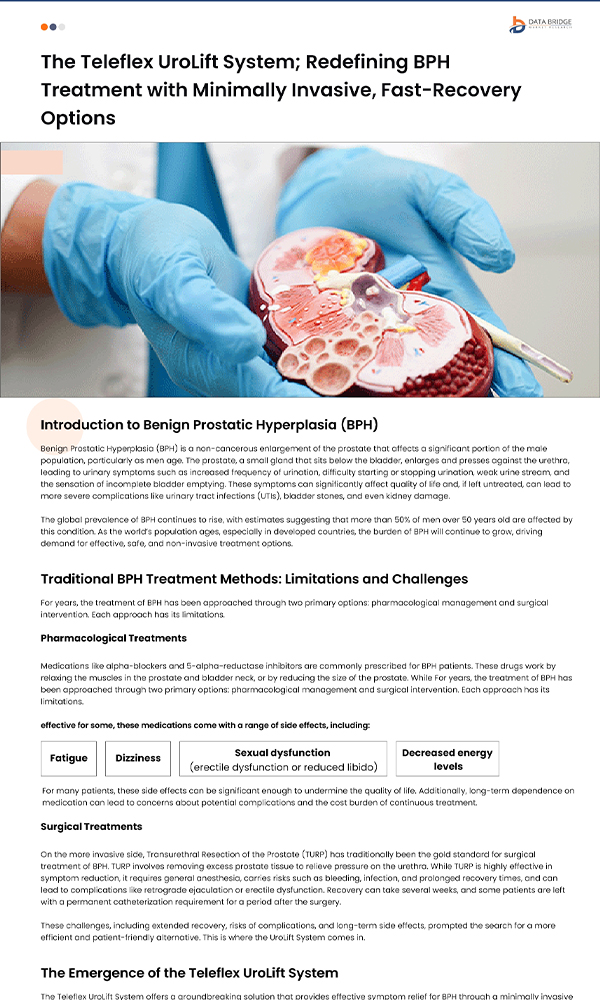

Benign Prostatic Hyperplasia (BPH) is a non-cancerous enlargement of the prostate that affects a significant portion of the male population, particularly as men age. The prostate, a small gland that sits below the bladder, enlarges and presses against the urethra, leading to urinary symptoms such as increased frequency of urination, difficulty starting or stopping urination, weak urine stream, and the sensation of incomplete bladder emptying. These symptoms can significantly affect quality of life and, if left untreated, can lead to more severe complications like urinary tract infections (UTIs), bladder stones, and even kidney damage.
The global prevalence of BPH continues to rise, with estimates suggesting that more than 50% of men over 50 years old are affected by this condition. As the world’s population ages, especially in developed countries, the burden of BPH will continue to grow, driving demand for effective, safe, and non-invasive treatment options.
For years, the treatment of BPH has been approached through two primary options: pharmacological management and surgical intervention. Each approach has its limitations.
Pharmacological Treatments
Medications like alpha-blockers and 5-alpha-reductase inhibitors are commonly prescribed for BPH patients. These drugs work by relaxing the muscles in the prostate and bladder neck, or by reducing the size of the prostate. While For years, the treatment of BPH has been approached through two primary options: pharmacological management and surgical intervention. Each approach has its limitations.
effective for some, these medications come with a range of side effects, including:
For many patients, these side effects can be significant enough to undermine the quality of life. Additionally, long-term dependence on medication can lead to concerns about potential complications and the cost burden of continuous treatment.
Surgical Treatments
On the more invasive side, Transurethral Resection of the Prostate (TURP) has traditionally been the gold standard for surgical treatment of BPH. TURP involves removing excess prostate tissue to relieve pressure on the urethra. While TURP is highly effective in symptom reduction, it requires general anesthesia, carries risks such as bleeding, infection, and prolonged recovery times, and can lead to complications like retrograde ejaculation or erectile dysfunction. Recovery can take several weeks, and some patients are left with a permanent catheterization requirement for a period after the surgery.
These challenges, including extended recovery, risks of complications, and long-term side effects, prompted the search for a more efficient and patient-friendly alternative. This is where the UroLift System comes in.
The Teleflex UroLift System offers a groundbreaking solution that provides effective symptom relief for BPH through a minimally invasive procedure, enabling fast recovery with little to no risk of complications typically associated with traditional surgical methods. The system has garnered attention worldwide for its ability to deliver a patient-centered approach, reducing the need for lengthy hospital stays, invasive surgeries, and dependency on medications.
How the UroLift System Works
The UroLift System works by using small, permanent implants to hold back enlarged prostate tissue and open the urethra. The system is designed to be minimally invasive, requiring only a local anesthesia, and it does not involve cutting, heating, or removing prostate tissue. Instead, the implants are placed directly into the prostate through the urethra, lifting the tissue and keeping it in place, effectively alleviating the pressure on the urethra and improving urine flow.
The key advantages of the UroLift procedure is its minimal disruption of tissue and the fact that it does not impair sexual function, a major concern for many men who are considering treatment for BPH. Unlike other treatments that involve cutting or destroying prostate tissue, UroLift works by repositioning tissue, offering a more targeted and gentle solution.
Clinical Studies and Success Rates
Clinical evidence strongly supports the UroLift System's effectiveness in treating BPH. A landmark study, the LIFT Trial, conducted by prominent urologists, evaluated the UroLift System's efficacy and safety in a multicenter, randomized clinical trial. The study found that patients who underwent the UroLift procedure experienced:
According to a study published in the PMC article, "Minimally Invasive Treatments for BPH," the UroLift procedure was shown to result in faster symptom relief and lower complication rates compared to conventional surgical options like TURP. The study also emphasized the importance of outpatient procedures, which enhance patient comfort and reduce healthcare costs.
Additionally, a study published in ScienceDirect in the article "Minimally Invasive BPH Treatments" highlighted the long-term outcomes of the UroLift System, stating that patients who underwent UroLift reported significantly improved urinary flow and fewer adverse events, including sexual dysfunction, which is often a major concern in BPH treatment.
One of the standout features of the UroLift System is its focus on patient-centered care. Traditional BPH treatments often come with trade-offs: surgery might provide lasting symptom relief but carries the risk of complications and long recovery times, while medications might be easier to manage but come with ongoing side effects and limited efficacy.
Key Patient Benefits of UroLift:
Patients who have undergone UroLift consistently report improvements in both their physical and emotional well-being. A survey conducted by Cleveland Clinic on UroLift patients found that 90% of participants were satisfied with their results, citing relief from BPH symptoms and an improved quality of life.
Leading healthcare institutions, such as Cleveland Clinic, have adopted the UroLift System, recognizing its role in improving patient outcomes while reducing the overall cost of care. Cleveland Clinic’s urology department has extensively researched and integrated UroLift into its treatment protocols, offering it as a first-line treatment for appropriate BPH patients. This adoption is driven by several factors:
Furthermore, urology clinics and private practices have integrated the UroLift procedure into their repertoire, responding to a growing demand from patients for minimally invasive and quick-recovery options. This trend aligns with the increasing preference for outpatient surgeries and the shift towards cost-effective healthcare solutions.
Healthcare providers are increasingly focused on improving cost-effectiveness without compromising patient care. The UroLift procedure offers a cost-effective alternative to traditional BPH treatments:
The UroLift system also helps patients return to work and their daily activities more quickly, improving workplace productivity and reducing the number of sick days.
The demand for minimally invasive treatments for BPH is expected to increase globally. As the aging population grows, particularly in developed countries, the number of men suffering from BPH will continue to rise, driving the need for effective treatments.
The global market for minimally invasive urology devices is projected to expand significantly, with the UroLift System playing a central role in this transformation. As more urologists become trained in performing the UroLift procedure, the treatment will likely become the first-line option for BPH management in many clinical settings.
The future of BPH treatment lies in personalized medicine, with treatment protocols tailored to individual patient needs. As more clinical data emerges and technology continues to evolve, the UroLift System may be refined even further, improving patient outcomes and expanding its application to other urological conditions.
Conclusion: Redefining the Standard for BPH Treatment
The Teleflex UroLift System represents a paradigm shift in the treatment of BPH, offering a minimally invasive, fast-recovery alternative to traditional treatments. With proven clinical effectiveness, high patient satisfaction, and cost-saving benefits, the UroLift system is setting new standards in BPH management. As the demand for outpatient, minimally invasive solutions continues to grow, the UroLift System is poised to lead the way in transforming urological care for BPH patients worldwide.
By providing long-term relief, preserving sexual function, and ensuring quick recovery, UroLift is redefining the standard for BPH treatment, improving both the physical health and quality of life for millions of men globally.