
Advancements in artificial intelligence, advanced sensors, and autonomous navigation technologies are accelerating the adoption of commercial unmanned aircraft systems (UAS) across industries. Modern UAVs equipped with AI-powered analytics, thermal imaging, LiDAR, and multispectral sensors enable real-time data analysis, automated inspections, precise monitoring, and improved operational efficiency in sectors such as agriculture, construction, energy, and infrastructure. In addition, advanced flight control systems, obstacle avoidance, and GPS-enabled navigation support autonomous mission execution with minimal human intervention, improving reliability and scalability for enterprise operations. As these technologies continue to evolve, commercial drones are becoming increasingly efficient, accurate, and essential for data-driven industrial applications, thereby driving the growing demand for commercial UAS solutions.
Access Full Report @ https://www.databridgemarketresearch.com/reports/global-portable-water-filter-systems-and-cartridges-market
Data Bridge market research analyzes that Global Portable Water Filter Systems and Cartridges Market is expected to reach USD 3.53 billion by 2033 from USD 1.06 billion in 2025, growing with a substantial CAGR of 16.4% in the forecast period of 2025 to 2033
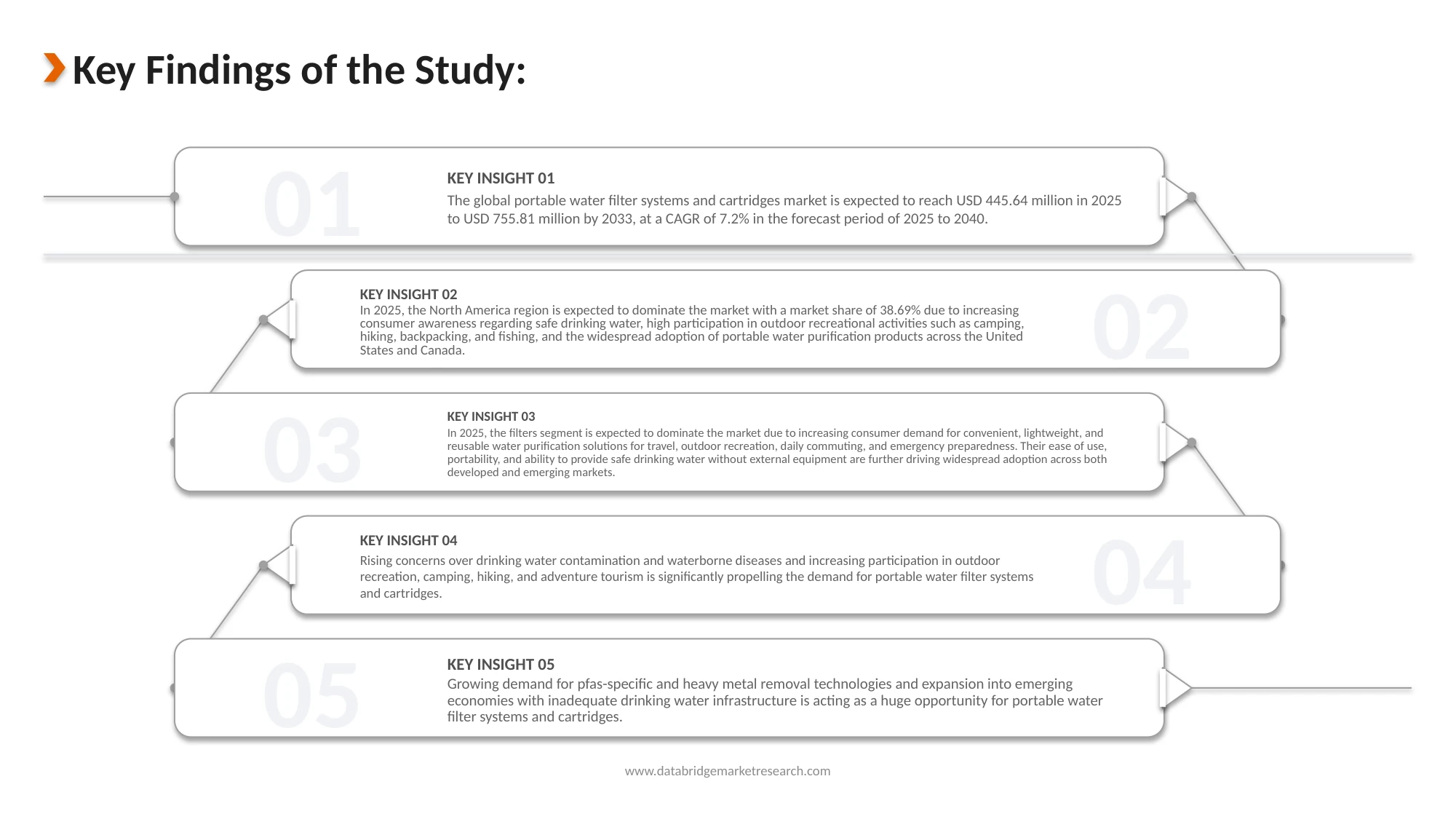
Key Findings of the Study
Increasing Demand for UAVS in Disaster Management and Emergency Response
The increasing demand for UAVs in disaster management and emergency response is creating significant opportunities for the commercial unmanned aircraft systems (UAS) industry by expanding their role in critical, time-sensitive operations. During natural disasters such as floods, earthquakes, hurricanes, and wildfires, traditional response methods often face challenges related to accessibility, safety risks, and slow data collection. Commercial UAVs provide a rapid and cost-effective solution by enabling real-time aerial surveillance, damage assessment, and situational awareness in affected areas. They can quickly reach hazardous or inaccessible locations without putting human responders at risk, allowing authorities to evaluate infrastructure damage, locate trapped victims, and identify safe routes for rescue teams. Additionally, UAVs equipped with thermal imaging cameras, high-resolution sensors, and communication systems support search-and-rescue missions by detecting human presence and monitoring changing environmental conditions. These capabilities significantly improve response efficiency and decision-making for emergency management agencies. Furthermore, commercial UAVs are increasingly used to deliver essential medical supplies, food, and communication equipment to isolated or disaster-stricken regions where ground transportation is disrupted. As governments, humanitarian organizations, and disaster response agencies continue to integrate drone technology into their emergency preparedness strategies, the demand for advanced commercial UAV solutions is expected to grow, creating substantial market opportunities for UAS manufacturers and service providers.
Overall, sustained economic momentum across emerging and developed markets reinforces the structural need for agile workforce solutions such as EOR services. Strong GDP performance reported by organizations, including Press Information Bureau, Instituto Nacional de Estadística y Censos, Statistics South Africa, and the Cabinet Office, highlights expanding business activity and cross-border investment flows. As companies pursue growth in these dynamic environments, the complexity of local compliance, taxation, and employment regulations increases. Employer of record providers, therefore, become strategic enablers, allowing firms to enter high-growth markets efficiently, mitigate regulatory risks, and scale talent acquisition in alignment with accelerating global economic expansion.
Report Scope and Market Segmentation
|
Report Metric
|
Details
|
|
Forecast Period
|
2026 to 2033
|
|
Base Year
|
2025
|
|
Historic Years
|
2024 (Customizable to 2018-2023)
|
|
Quantitative Units
|
Revenue in USD billion
|
|
Segments Covered
|
By Platform Type (Rotary Wing UAVs, Fixed-Wing UAVs, Hybrid UAVs, Nano & Micro UAVs), By Component (Hardware, Sensors & Payload Modules, Software & Intelligent Systems, Services & Support), By Operational Mode (Remotely Piloted UAVs, Semi-Autonomous UAVs, Fully Autonomous UAVs), By Operational Range (Visual Line of Sight (VLOS), Extended Visual Line of Sight (EVLOS), Beyond Visual Line of Sight (BVLOS)), By Maximum Take-Off Weight (MTOW) (Micro (<2 KG), Small (2–25 KG), Medium (25–150 KG), Nano (<250g), Large (>150 KG)), By Propulsion (Electric Propulsion (Battery), Hybrid Propulsion (Electric + Fuel Engine), Internal Combustion Engine (ICE) / Fuel-Powered), By Application (Precision Agriculture, Infrastructure Inspection & Industrial Maintenance, Delivery & Logistics, Filming & Photography, Surveillance & Monitoring, Mapping & Surveying, Oil & Gas / Energy Sector, Emergency & Public Safety, Environmental & Conservation, Mining & Natural Resources), By End-User (Agriculture & Farming, Energy & Utilities, Infrastructure & Construction, Mining & Natural Resources, Delivery & Logistics / E-Commerce, Media & Entertainment, Government & Public Safety, Insurance & Risk Assessment, Real Estate & Surveying, Telecommunications, Environmental & Research Institutions, Others), By Endurance (Short-Endurance (<30 min), Medium-Endurance (30–60 min), Long-Endurance (1–5 hrs), Extended-Endurance (>5 Hrs)), By Pricing (By Price Range (Hardware Only), Drone-as-a-Service Pricing Model), By Sales Channel (Distributor / Reseller Network, Online & E-Commerce, Direct Sales, Leasing / Subscription Models, Systems Integration Partnerships),
|
|
Countries Covered
|
|
|
Market Players Covered
|
|
|
Data Points Covered in the Report
|
In addition to the insights on market scenarios such as market value, growth rate, segmentation, geographical coverage, and major players, the market reports curated by the Data Bridge Market Research also include in-depth expert analysis, geographically represented company-wise production and capacity, network layouts of distributors and partners, detailed and updated price trend analysis and deficit analysis of supply chain and demand.
|
Segment Analysis
The U.K., Turkey, Poland, Ukraine, UAE, and Saudi Arabia Commercial UAS Market is segmented into eleven notable segments based on platform type, component, operational mode, operational range, maximum take-off weight, propulsion, application, end user, endurance, pricing, sales channel.
- On the basis of Platform Type, the U.K., Turkey, Poland, Ukraine, UAE, and Saudi Arabia Commercial UAS Market is segmented into Rotary Wing UAVs, Fixed-Wing UAVs, Hybrid UAVs, and Nano & Micro UAVs
In 2026, the Rotary Wing UAVs segment is expected to dominate the market
In 2026, the Rotary Wing UAVs segment is expected to dominate the U.K., Turkey, Poland, Ukraine, UAE, and Saudi Arabia Commercial UAS market share of 62.02% due to high manoeuvrability, vertical take-off and landing (VTOL) capability, ease of deployment in confined areas, and strong adoption across inspection, surveillance, and precision agriculture applications.
- On the basis of Component, the market is segmented into Hardware, Sensors & Payload Modules, Software & Intelligent Systems, Services & Support
In 2026, the Hardware segment is expected to dominate the market
In 2026, Hardware segment is expected to dominate the U.K., Turkey, Poland, Ukraine, UAE, and Saudi Arabia Commercial UAS market share of 53.88% due to high initial procurement costs of drones, continuous advancements in airframes and propulsion systems, and growing demand for upgraded UAV platforms across industries.
- On the basis of Operational Mode, the market is segmented into Remotely Piloted UAVs, Semi-Autonomous UAVs, Fully Autonomous UAVs
In 2026, the Remotely Piloted UAVs segment is expected to dominate the market
In 2026, the Remotely Piloted UAVs segment is anticipated to dominate the U.K., Turkey, Poland, Ukraine, UAE, and Saudi Arabia Commercial UAS market share of 59.19% due to regulatory restrictions on full autonomy, higher operational control, safety considerations, and widespread commercial adoption across sectors.
- On the basis of Operational Range, the market is segmented into Visual Line of Sight (VLOS), Extended Visual Line of Sight (EVLOS), Beyond Visual Line of Sight (BVLOS)
In 2026, the Visual Line of Sight (VLOS) segment is expected to dominate the market
In 2026, the Visual Line of Sight (VLOS) segment is anticipated to dominate the U.K., Turkey, Poland, Ukraine, UAE, and Saudi Arabia Commercial UAS market share of 53.35% due to strict aviation regulations, lower compliance complexity, and ease of operation for commercial users.
- On the basis of Maximum Take-Off Weight (MTOW), the market is segmented into Micro (<2 KG), Small (2–25 KG), Medium (25–150 KG), Nano (<250g), Large (>150 KG)
In 2026, the Micro (<2 KG) segment is expected to dominate the market
In 2026, the Micro (<2 KG) segment is anticipated to dominate the U.K., Turkey, Poland, Ukraine, UAE, and Saudi Arabia Commercial UAS market share of 30.89% due to lower cost, ease of handling, regulatory flexibility, and high adoption in agriculture, surveillance, and photography applications.
- On the basis of Propulsion, the market is segmented into Electric Propulsion (Battery), Hybrid Propulsion (Electric + Fuel Engine), Internal Combustion Engine (ICE) / Fuel-Powered
In 2026, the Electric Propulsion (Battery) segment is expected to dominate the market
In 2026, the Electric Propulsion (Battery) segment is anticipated to dominate the U.K., Turkey, Poland, Ukraine, UAE, and Saudi Arabia Commercial UAS market share of 63.83% due to lower emissions, reduced operational costs, advancements in battery technology, and suitability for short- to medium-range commercial missions.
- On the basis of Application, the market is segmented into Precision Agriculture, Infrastructure Inspection & Industrial Maintenance, Delivery & Logistics, Filming & Photography, Surveillance & Monitoring, Mapping & Surveying, Oil & Gas / Energy Sector, Emergency & Public Safety, Environmental & Conservation, Mining & Natural Resources.
In 2026, the Precision Agriculture segment is expected to dominate the market
In 2026, the Precision Agriculture segment is anticipated to dominate the U.K., Turkey, Poland, Ukraine, UAE, and Saudi Arabia Commercial UAS market share of 32.51% due to increasing adoption of smart farming practices, need for crop monitoring, yield optimization, and efficient resource utilization.
- On the basis of End-User, the market is segmented into Agriculture & Farming, Energy & Utilities, Infrastructure & Construction, Mining & Natural Resources, Delivery & Logistics / E-Commerce, Media & Entertainment, Government & Public Safety, Insurance & Risk Assessment, Real Estate & Surveying, Telecommunications, Environmental & Research Institutions, Others
In 2026, the Agriculture & Farming segment is expected to dominate the market
In 2026, the Agriculture & Farming segment is anticipated to dominate the U.K., Turkey, Poland, Ukraine, UAE, and Saudi Arabia Commercial UAS market share of 33.00% due to growing demand for precision farming, large agricultural land coverage, and increasing government support for agri-tech adoption.
- On the basis of Endurance, the market is segmented into Short-Endurance (<30 min), Medium-Endurance (30–60 min), Long-Endurance (1–5 hrs), Extended-Endurance (>5 Hrs)
In 2026, the Short-Endurance (<30 min) segment is expected to dominate the market
In 2026, the Short-Endurance (<30 min) segment is anticipated to dominate the U.K., Turkey, Poland, Ukraine, UAE, and Saudi Arabia Commercial UAS market share of 45.82% due to widespread use in short-duration missions such as surveillance, inspection, and aerial imaging, along with cost efficiency and battery limitations.
On the basis of Pricing, the market is segmented into By Price Range (Hardware Only), Drone-as-a-Service Pricing Model.
In 2026, the By Price Range (Hardware Only) segment is expected to dominate the market
In 2026, the By Price Range (Hardware Only) segment is anticipated to dominate the U.K., Turkey, Poland, Ukraine, UAE, and Saudi Arabia Commercial UAS market share of 70.14% due to higher preference for asset ownership, long-term cost benefits, and increased enterprise investment in in-house UAV capabilities.
- On the basis of Sales Channel, the market is segmented into By Distributor / Reseller Network, Online & E-Commerce, Direct Sales, Leasing / Subscription Models, Systems Integration Partnerships.
In 2026, the Distributor / Reseller Network segment is expected to dominate the market
In 2026, the Distributor / Reseller Network segment is anticipated to dominate the U.K., Turkey, Poland, Ukraine, UAE, and Saudi Arabia Commercial UAS market share of 35.94% due to strong regional distribution networks, after-sales support, technical consultation services, and established vendor relationships in the commercial UAV ecosystem.
Major Players
DJI (China), Baykar Tech (Turkey), Teledyne FLIR (USA), WB Group (Poland), and Skydio (USA) among others.
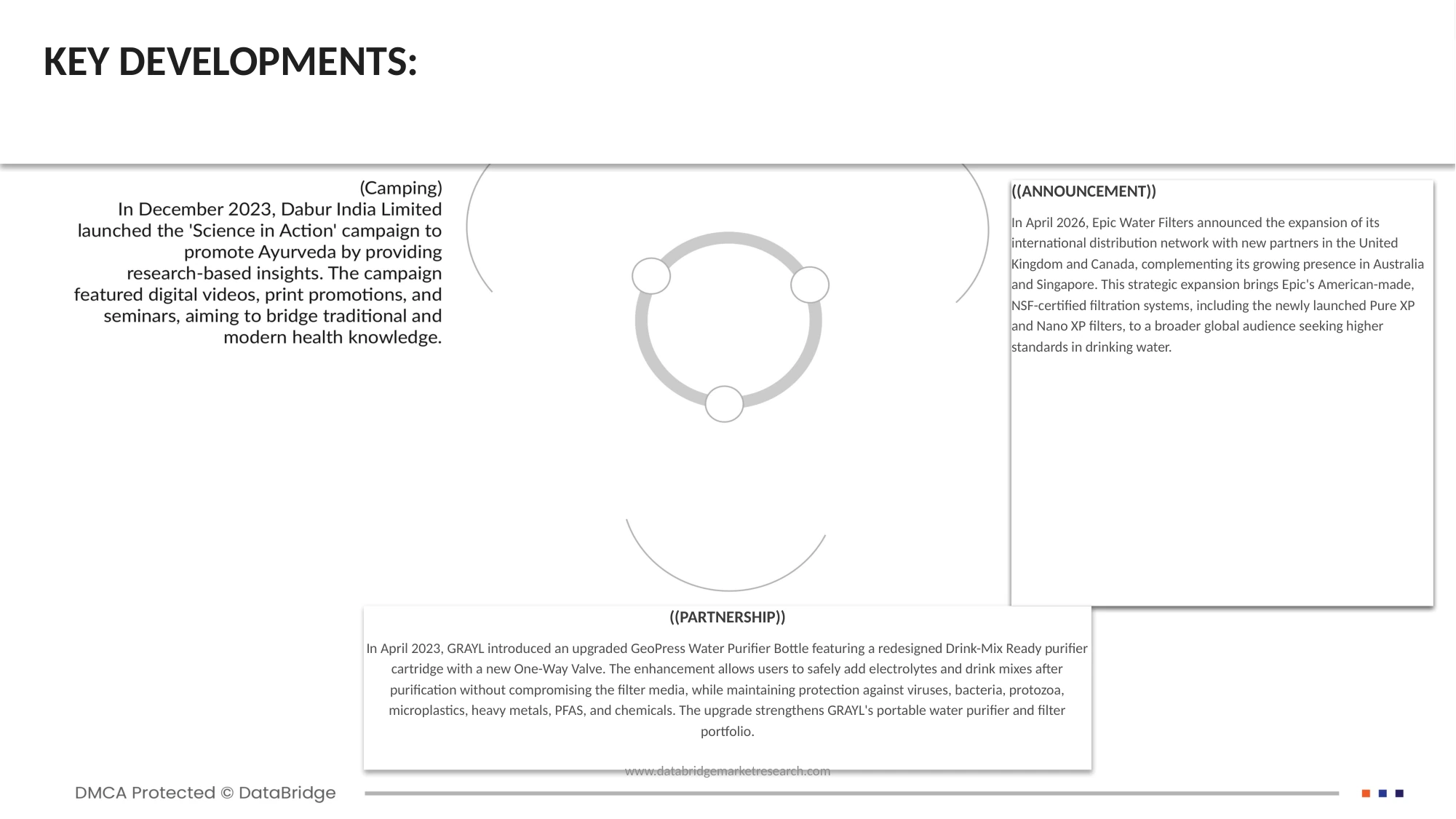
Latest Developments in U.K., Turkey, Poland, Ukraine, UAE, and Saudi Arabia Commercial UAS Market
- In March 2026, WB Group has signed a strategic counter‑drone partnership with Nordic Air Defence and Tantalit to expand integrated C‑UAS capabilities in Poland, combining WB Group’s advanced air defence and electronic warfare systems with Nordic Air Defence’s operational expertise. The collaboration will support tailored anti‑drone solutions and enhanced situational awareness across critical infrastructure and defense markets. This partnership strengthens WB Group’s foothold in European C‑UAS markets by enabling integrated counter‑drone offerings and expanding its defense technology ecosystem in Poland and beyond
- In February 2026, Switzerland has signed a $17.5 million contract to Teledyne FLIR Defense to supply Black Hornet 4 nano‑class unmanned aerial systems for use in dismounted and vehicle‑integrated reconnaissance. The tiny reconnaissance drones will be integrated with the Swiss Armed Forces’ Piranha 8×8 armored engineering vehicles, enabling live aerial intelligence and situational awareness to be shared directly with vehicle crews. This contract underscores the growing role of lightweight drone ISR capabilities in modern land forces while strengthening Teledyne FLIR’s position in tactical UAS markets
- In April 2025, DJI has announced the launch of the DJI FlyCart 100, a next-generation aerial logistics platform designed for industrial transport and delivery operations. The drone features a payload capacity of up to 80 kg, faster charging, and an advanced safety system including LiDAR, radar sensors, and an integrated parachute to improve reliability in complex environments. The launch strengthens DJI’s presence in the industrial drone and aerial logistics market, enabling the company to expand into large-scale delivery and infrastructure applications
- In February 2025, Clogworks Technologies announced a new strategic partnership with GeoCue Corporation to integrate advanced drone data processing and analytics workflows into its geospatial solutions portfolio. This will leverage GeoCue’s UAV LiDAR and photogrammetry automation tools to enhance Clogworks’ ability to deliver high‑accuracy mapping, 3D modeling and surveying services to enterprise and government clients. This partnership enhances company's technical capabilities by enabling deeper, more efficient geospatial data processing strengthening its competitive edge in drone‑enabled mapping and analytics services
- In February 2024, U.S. drone manufacturer Skydio has partnered with Indian UAV firm Aeroarc to jointly develop and manufacture small unmanned aerial systems (sUAS) in India for defence customers across the Indo-Pacific region. Following this defence collaboration, the company indicated that it may also expand into commercial drone applications in India over time, serving non-military and enterprise use cases. The partnership strengthens Skydio’s presence in India’s growing drone ecosystem while creating future opportunities to expand from defence manufacturing into commercial drone markets
- U.K.: Increasing investments in advanced defense surveillance systems, counter-drone technologies, and critical infrastructure security are supporting the growing deployment of commercial and tactical unmanned aerial systems across military, energy, and public safety applications in the country.
- Turkey: Expanding domestic UAV manufacturing capabilities and rising defense exports are strengthening Turkey’s position as a major regional hub for drone technologies, particularly across surveillance, border security, and tactical reconnaissance operations.
- Poland: Ongoing military modernization initiatives and rising geopolitical security concerns are accelerating the adoption of integrated counter-UAS systems, electronic warfare technologies, and tactical drone platforms across Poland’s defense sector.
- Ukraine: The increasing use of unmanned aerial systems for battlefield intelligence, surveillance, reconnaissance, and combat support operations is significantly driving innovation and large-scale deployment of drone technologies across the country’s defense ecosystem.
- UAE: Growing investments in smart city development, autonomous technologies, and advanced defense systems are supporting the rapid expansion of commercial UAV applications across infrastructure monitoring, logistics, surveillance, and public safety sectors in the UAE.
Saudi Arabia: Government-led diversification initiatives and increasing investments in defense localization, smart infrastructure, and industrial automation are accelerating the adoption of UAV technologies across security, energy, construction, and logistics applications in Saudi Arabia.
For more detailed information about the Global Portable Water Filter Systems and Cartridges Market report, click here – https://www.databridgemarketresearch.com/reports/global-portable-water-filter-systems-and-cartridges-market










