



Global Treehouse Glamping Market
Tamaño del mercado en miles de millones de dólares
Tasa de crecimiento anual compuesta (CAGR) :
% 
 USD
393.91 Million
USD
941.02 Million
2025
2033
USD
393.91 Million
USD
941.02 Million
2025
2033
 Período de pronóstico Período de pronóstico |
2026 –2033 |
 Tamaño del mercado (año base) Tamaño del mercado (año base) |
USD 393.91 Million |
 Tamaño del mercado (año de pronóstico) Tamaño del mercado (año de pronóstico) |
USD 941.02 Million |
 Tasa de crecimiento anual compuesta (CAGR) Tasa de crecimiento anual compuesta (CAGR) |
% |
| Jugadoras de los principales mercados |
|
Global Treehouse Glamping Market Segmentation, By Age Group (18-32 Years, 33-50 Years, 51-65 Years, and Above 65 Years), Booking Mode (Online and Offline)- Industry Trends and Forecast to 2033
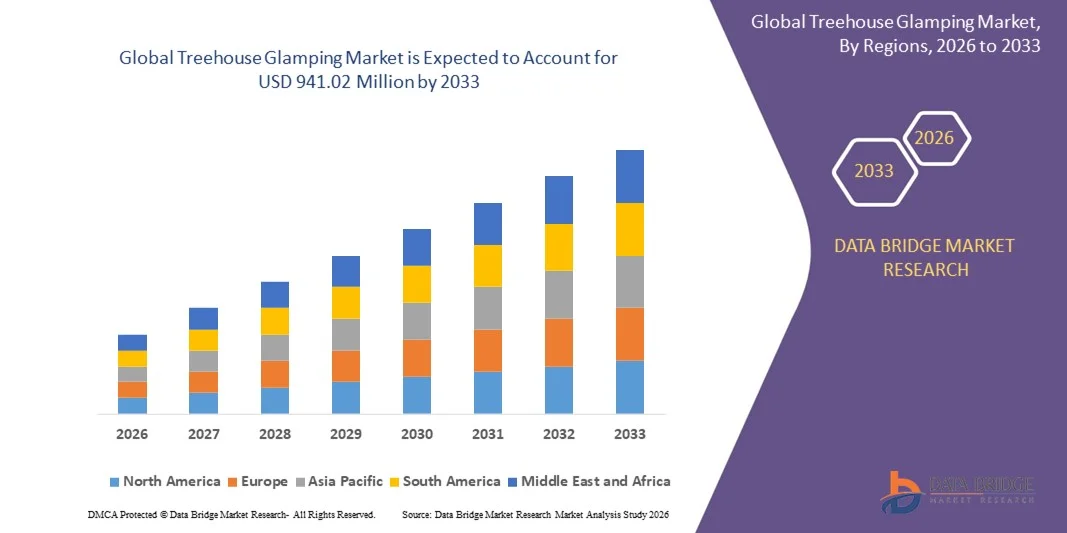
Treehouse Glamping Market Size
- The global treehouse glamping market size was valued at USD 393.91 million in 2025 and is expected to reach USD 941.02 million by 2033, at a CAGR of 11.50% during the forecast period
- The market growth is largely fuelled by the rising trend of experiential travel, increasing demand for eco-friendly and nature-based accommodations, and growing disposable incomes among leisure travelers
- The surge in domestic and international tourism, coupled with the popularity of unique and Instagrammable travel experiences, is further supporting market expansion
Treehouse Glamping Market Analysis
- The market is witnessing strong growth due to the combination of adventure tourism, wellness travel, and eco-conscious consumer preferences
- Rising adoption of treehouse glamping in both urban-adjacent and remote natural destinations is expanding the market footprint
- North America dominated the treehouse glamping market with the largest revenue share of 32.78% in 2025, driven by rising demand for unique, nature-based travel experiences and the growing popularity of eco-friendly accommodations
- Asia-Pacific region is expected to witness the highest growth rate in the global treehouse glamping market, driven by rising disposable incomes, rapid urbanization, expanding tourism sectors in countries such as Thailand, Indonesia, and China, and increasing adoption of experiential and eco-friendly accommodations
- The 33–50 years segment held the largest market revenue share in 2025, driven by higher disposable incomes, frequent travel for leisure, and a preference for unique and experiential accommodations. This age group often seeks premium, nature-based stays that combine comfort, wellness, and adventure
Report Scope and Treehouse Glamping Market Segmentation
|
Attributes |
Treehouse Glamping Key Market Insights |
|
Segments Covered |
|
|
Countries Covered |
North America
Europe
Asia-Pacific
Middle East and Africa
South America
|
|
Key Market Players |
|
|
Market Opportunities |
|
|
Value Added Data Infosets |
In addition to the insights on market scenarios such as market value, growth rate, segmentation, geographical coverage, and major players, the market reports curated by the Data Bridge Market Research also include in-depth expert analysis, pricing analysis, brand share analysis, consumer survey, demography analysis, supply chain analysis, value chain analysis, raw material/consumables overview, vendor selection criteria, PESTLE Analysis, Porter Analysis, and regulatory framework. |
Treehouse Glamping Market Trends
Rising Demand for Experiential and Eco-Friendly Travel
- The growing focus on unique, nature-based travel experiences is significantly shaping the treehouse glamping market, as travelers increasingly prefer accommodations that provide both comfort and a connection with the environment. Treehouse glamping is gaining traction due to its ability to combine luxury, sustainability, and adventure, enhancing the overall travel experience across leisure and wellness tourism segments
- Increasing awareness around wellness, outdoor recreation, and sustainable tourism has accelerated the demand for treehouse glamping in resorts, national parks, and private destinations. Travelers seeking eco-conscious and Instagrammable experiences are actively choosing treehouse stays, prompting operators to invest in innovative designs and premium services
- Sustainability and eco-tourism trends are influencing travel decisions, with operators emphasizing environmentally responsible construction, energy efficiency, and minimal ecological impact. These factors help differentiate properties in a competitive market and attract environmentally aware consumers, while also promoting certifications for sustainable accommodations
- For instance, in 2024, Treehotel in Sweden and Under Canvas in the U.S. expanded their offerings by adding luxury treehouse units with eco-friendly amenities, responding to rising consumer demand for nature-based experiences. These properties were promoted through online travel platforms and social media campaigns highlighting sustainability, exclusivity, and immersive outdoor experiences
- While demand for treehouse glamping is growing, sustained market expansion depends on continuous investment in design innovation, premium amenities, and scalable operations. Operators are also focusing on improving booking accessibility, safety measures, and operational efficiency to maintain high service standards across multiple locations
Treehouse Glamping Market Dynamics
Driver
Rising Preference for Experiential and Nature-Based Travel
- Increasing consumer interest in unique and immersive travel experiences is a major driver for the treehouse glamping market. Travelers are seeking alternatives to conventional hotels, combining comfort with adventure, wellness, and natural surroundings. This trend also supports investment in eco-luxury treehouse accommodations and boutique glamping resorts
- Expanding applications in wellness tourism, adventure tourism, and luxury leisure travel are influencing market growth. Treehouse glamping provides exclusive experiences, promotes relaxation, and aligns with the growing trend of sustainable and nature-based holidays
- Hospitality operators are actively promoting treehouse glamping through innovative design, marketing campaigns, and partnerships with travel agencies and platforms. These efforts are supported by rising consumer preference for environmentally responsible travel and personalized experiences, encouraging collaboration between resort developers and experience curators
- For instance, in 2023, Under Canvas in the U.S. and Free Spirit Spheres in Canada reported increased investment in treehouse glamping units with wellness amenities and eco-conscious designs. This expansion followed higher consumer demand for luxury, experiential, and environmentally friendly accommodations, driving bookings and repeat visits. Both companies also highlighted sustainability and unique design features in marketing campaigns to strengthen brand loyalty
- Although experiential and eco-tourism trends support growth, wider adoption depends on land availability, regulatory approvals, and operational scalability. Investment in sustainable construction, site selection, and premium services will be critical for meeting global demand and maintaining competitive advantage
Restraint/Challenge
High Investment Costs And Operational Complexity
- The relatively high cost of developing treehouse glamping units compared to conventional lodging remains a key challenge, limiting adoption among small operators. Costs related to land acquisition, eco-friendly construction materials, and luxury amenities contribute to elevated investment requirements
- Consumer and operator awareness remains uneven, particularly in emerging markets where glamping is still a niche segment. Limited understanding of the unique value proposition restricts adoption across certain regions, slowing market expansion in less developed tourism destinations
- Operational and logistical challenges also impact market growth, as treehouse properties require careful planning for safety, accessibility, and environmental impact. Maintenance, staffing, and seasonal fluctuations further increase operational complexity and costs
- For instance, in 2024, operators in Thailand and Indonesia reported slower uptake due to high development costs and limited awareness of treehouse glamping. Regulatory approvals, safety certifications, and infrastructure constraints were additional barriers, discouraging small-scale developers from entering the segment
- Overcoming these challenges will require cost-efficient construction methods, strategic partnerships, and marketing initiatives to educate travelers and investors. Collaboration with local authorities, travel platforms, and sustainability organizations can help unlock the long-term growth potential of the global treehouse glamping market. Furthermore, developing modular and scalable designs while emphasizing wellness, luxury, and eco-conscious experiences will be essential for widespread adoption
Treehouse Glamping Market Scope
The market is segmented on the basis of age group and booking mode.
- By Age Group
On the basis of age group, the treehouse glamping market is segmented into 18–32 years, 33–50 years, 51–65 years, and above 65 years. The 33–50 years segment held the largest market revenue share in 2025, driven by higher disposable incomes, frequent travel for leisure, and a preference for unique and experiential accommodations. This age group often seeks premium, nature-based stays that combine comfort, wellness, and adventure.
The 18–32 years segment is expected to witness the fastest growth rate from 2026 to 2033, driven by millennials’ and Gen Z’s preference for experiential travel, social media-friendly accommodations, and adventure-focused getaways. Younger travelers are particularly attracted to treehouse glamping for its novelty, Instagrammable appeal, and immersive outdoor experiences.
- By Booking Mode
On the basis of booking mode, the market is segmented into online and offline. The online segment held the largest market revenue share in 2025, driven by the convenience of digital platforms, increasing smartphone penetration, and the popularity of travel and booking websites that showcase unique accommodations. Online booking allows travelers to compare prices, read reviews, and access detailed property information, enhancing consumer confidence.
The offline segment is expected to witness the fastest growth rate from 2026 to 2033, owing to rising demand for personalized booking experiences through travel agents, concierge services, and direct property reservations. Offline bookings remain preferred by travelers seeking bespoke packages, guided tours, or customized wellness and adventure experiences at treehouse glamping resorts.
Treehouse Glamping Market Regional Analysis
- North America dominated the treehouse glamping market with the largest revenue share of 32.78% in 2025, driven by rising demand for unique, nature-based travel experiences and the growing popularity of eco-friendly accommodations
- Consumers in the region highly value immersive outdoor experiences, luxury amenities, and wellness-focused stays offered by treehouse glamping resorts
- This widespread adoption is further supported by high disposable incomes, strong domestic and international tourism, and the growing preference for social media-worthy travel experiences, establishing treehouse glamping as a favored option for leisure and adventure travelers
U.S. Treehouse Glamping Market Insight
The U.S. treehouse glamping market captured the largest revenue share in 2025 within North America, fueled by the increasing trend of experiential and eco-tourism. Travelers are increasingly prioritizing unique accommodations that combine comfort, adventure, and sustainability. The growing demand for family vacations, wellness retreats, and social media-friendly experiences further propels the treehouse glamping industry. Moreover, the expansion of online booking platforms and travel marketplaces is significantly contributing to market accessibility and growth.
Europe Treehouse Glamping Market Insight
The Europe treehouse glamping market is expected to witness the fastest growth rate from 2026 to 2033, primarily driven by the rising interest in sustainable tourism and eco-friendly accommodations. Increasing urbanization, coupled with high spending power among leisure travelers, is fostering adoption. European consumers are also drawn to nature-based stays that offer wellness, adventure, and luxury experiences. The region is experiencing significant growth across forest, coastal, and rural destinations, with treehouse glamping integrated into boutique resorts and eco-retreats.
U.K. Treehouse Glamping Market Insight
The U.K. treehouse glamping market is expected to witness the fastest growth rate from 2026 to 2033, driven by the growing trend of experiential travel and the desire for outdoor recreational activities. In addition, the focus on family holidays and wellness getaways is encouraging travelers to opt for immersive treehouse experiences. The U.K.’s strong tourism infrastructure and online travel platforms are expected to continue stimulating market expansion.
Germany Treehouse Glamping Market Insight
The Germany treehouse glamping market is expected to witness the fastest growth rate from 2026 to 2033, fueled by increasing awareness of sustainable tourism and the demand for unique, luxurious accommodations. Germany’s well-developed hospitality sector, combined with strong interest in adventure and wellness travel, promotes the adoption of treehouse glamping. The integration of eco-friendly design, premium services, and wellness-focused amenities is becoming increasingly prevalent, aligning with local consumer preferences.
Asia-Pacific Treehouse Glamping Market Insight
The Asia-Pacific treehouse glamping market is expected to witness the fastest growth rate from 2026 to 2033, driven by increasing urbanization, rising disposable incomes, and a growing preference for experiential travel in countries such as Thailand, Indonesia, and India. The region’s expanding tourism sector, coupled with government initiatives promoting sustainable and eco-tourism, is boosting the adoption of treehouse glamping. Furthermore, affordability and the availability of unique property designs are attracting a wider traveler base.
Japan Treehouse Glamping Market Insight
The Japan treehouse glamping market is expected to witness the fastest growth rate from 2026 to 2033 due to the country’s high health and wellness awareness, technological integration in tourism, and demand for convenience. The market is fueled by the increasing number of domestic and international tourists seeking immersive nature-based experiences. Integration of eco-luxury designs, wellness amenities, and digital booking platforms is further driving growth. Japan’s aging population is also likely to spur demand for easy-access, secure, and comfortable treehouse accommodations.
China Treehouse Glamping Market Insight
The China treehouse glamping market accounted for the largest market revenue share in Asia-Pacific in 2025, attributed to rapid urbanization, rising middle-class incomes, and growing awareness of experiential travel. China is witnessing increasing domestic tourism, and treehouse glamping is becoming popular in rural, forest, and mountain destinations. Government initiatives supporting eco-tourism and sustainable accommodations, along with innovative designs and marketing strategies, are key factors propelling market growth in China.
Treehouse Glamping Market Share
The Treehouse Glamping industry is primarily led by well-established companies, including:
• TreeHouse Villas Thailand (Thailand)
• Bangkok Tree House (Thailand)
• Rabeang Pasak Tree House Resort (Thailand)
• Keemala Hotel Phuket (Thailand)
• Soneva Kiri Eco-Luxury Resort (Thailand)
• Tree Hotel (Sweden)
• MORE Family Collection (Thailand)
• Pai Treehouse Resort (Thailand)
• Khaosok Treehouse Resort (Thailand)
• LALA MUKHA TENTED RESORT KHAO YAI (Thailand)
• Orion Treehouses (U.K.)
• Moulin de la Jarousse (France)
• Keemala (Thailand)
• Tree House Hideaway (U.K.)
Latest Developments in Global Treehouse Glamping Market
- In October 2024, Treehouses.com LLC organized the 2024 World Treehouse Conference, aiming to showcase innovative commercial treehouse designs and promote the development of safe, creative, and engaging structures aloft. This initiative is expected to boost awareness of treehouse architecture, inspire new investment in the glamping and eco-tourism sectors, and support knowledge sharing among industry professionals
- In March 2023, Summit Hotel Properties acquired its first luxury treehouse resort and announced plans to expand this property while developing a second resort. The company is also pursuing strategic partnerships with the glamping brand Onera to enhance its offerings. These moves are set to strengthen its market presence, drive growth in premium treehouse glamping, and encourage further adoption of experiential and eco-friendly accommodations globally
SKU-
Obtenga acceso en línea al informe sobre la primera nube de inteligencia de mercado del mundo

- Panel de análisis de datos interactivo
- Panel de análisis de empresas para oportunidades con alto potencial de crecimiento
- Acceso de analista de investigación para personalización y consultas
- Análisis de la competencia con panel interactivo
- Últimas noticias, actualizaciones y análisis de tendencias
- Aproveche el poder del análisis de referencia para un seguimiento integral de la competencia
Metodología de investigación
La recopilación de datos y el análisis del año base se realizan utilizando módulos de recopilación de datos con muestras de gran tamaño. La etapa incluye la obtención de información de mercado o datos relacionados a través de varias fuentes y estrategias. Incluye el examen y la planificación de todos los datos adquiridos del pasado con antelación. Asimismo, abarca el examen de las inconsistencias de información observadas en diferentes fuentes de información. Los datos de mercado se analizan y estiman utilizando modelos estadísticos y coherentes de mercado. Además, el análisis de la participación de mercado y el análisis de tendencias clave son los principales factores de éxito en el informe de mercado. Para obtener más información, solicite una llamada de un analista o envíe su consulta.
La metodología de investigación clave utilizada por el equipo de investigación de DBMR es la triangulación de datos, que implica la extracción de datos, el análisis del impacto de las variables de datos en el mercado y la validación primaria (experto en la industria). Los modelos de datos incluyen cuadrícula de posicionamiento de proveedores, análisis de línea de tiempo de mercado, descripción general y guía del mercado, cuadrícula de posicionamiento de la empresa, análisis de patentes, análisis de precios, análisis de participación de mercado de la empresa, estándares de medición, análisis global versus regional y de participación de proveedores. Para obtener más información sobre la metodología de investigación, envíe una consulta para hablar con nuestros expertos de la industria.
Personalización disponible
Data Bridge Market Research es líder en investigación formativa avanzada. Nos enorgullecemos de brindar servicios a nuestros clientes existentes y nuevos con datos y análisis que coinciden y se adaptan a sus objetivos. El informe se puede personalizar para incluir análisis de tendencias de precios de marcas objetivo, comprensión del mercado de países adicionales (solicite la lista de países), datos de resultados de ensayos clínicos, revisión de literatura, análisis de mercado renovado y base de productos. El análisis de mercado de competidores objetivo se puede analizar desde análisis basados en tecnología hasta estrategias de cartera de mercado. Podemos agregar tantos competidores sobre los que necesite datos en el formato y estilo de datos que esté buscando. Nuestro equipo de analistas también puede proporcionarle datos en archivos de Excel sin procesar, tablas dinámicas (libro de datos) o puede ayudarlo a crear presentaciones a partir de los conjuntos de datos disponibles en el informe.












