


유럽 뇌졸중 진단 시장 세분화: 중증도(중등도, 중증, 경증), 유형(컴퓨터 단층 촬영(CT 스캔), 컴퓨터 단층 혈관 조영술(CTA), 자기 공명 영상(MRI), 자기 공명 혈관 조영술(MRA), 경두개 도플러 초음파, 비디오 두부 충격 검사(VHIT) 및 기타), 적용 분야(허혈성 뇌졸중, 출혈성 뇌졸중, 일과성 허혈 발작(TIAS)), 최종 사용자(병원, 클리닉, 외래 수술 센터, 가정 의료), 유통 채널(직접 입찰, 제3자 유통업체 및 기타), 단계(수술 전, 수술 중, 수술 후) - 산업 동향 및 2033년까지의 전망
유럽 스트로크 진단 시장 규모와 개요는 무엇입니까
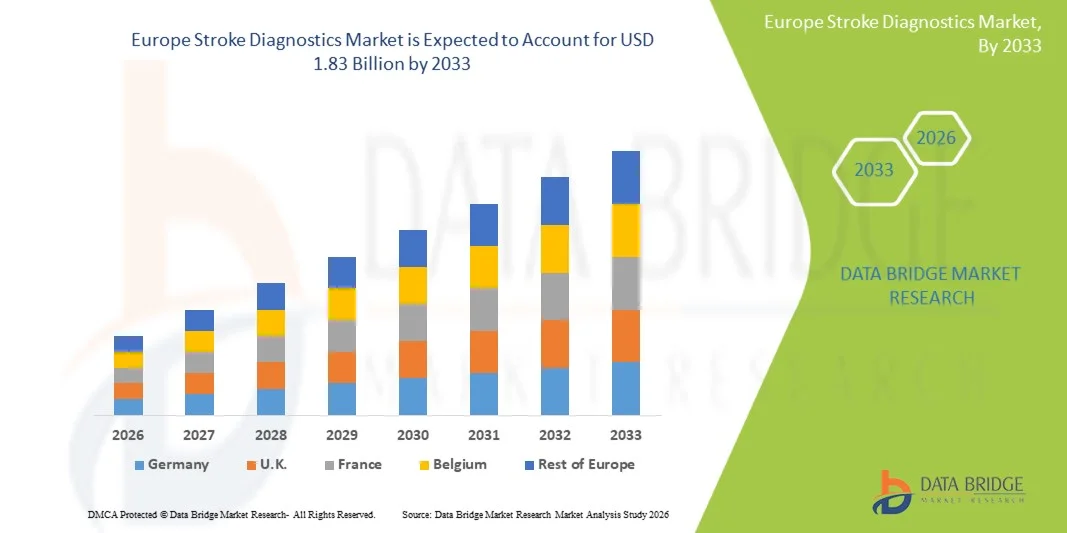
- 유럽 치기 진단 시장 크기는에 평가되었습니다2025년 USD 1.15 억견적 요청2033년 USD 1.83억, 에 의해6.0%의 CAGR예측 기간
- 시장 성장은 유럽 인구, 노후화 인구, 노후화 인구, 고급 진단 이미징 기술의 급속한 채택과 뇌 혈관 사건의 조기 및 정확한 탐지를 가능하게 하는 진보된 진단 이미징 기술의 발전에 의해 크게 연료를 공급됩니다
- 또한, 의료 투자, 초기 뇌졸중 개입에 대한 지원 정부 이니셔티브 및 적시에 대한 수요 증가, 정확하고, 병원 및 이미징 센터의 통합 진단 솔루션은 현대 뇌졸중 치료 경로의 중요한 구성 요소로 뇌졸중 진단을 포지셔닝하고 있습니다. 이러한 융합 요인은 혁신의 uptake를 가속화합니다.진단 도구, 산업의 성장을 크게 밀어
시장 크기 & Forecast
- 유럽 시장 가치 (2025):100억
- 예상 시장 가치 (2033):100억
- 캐스트 CAGR (2026–2033):6.0%
Europe Stroke Diagnostics 시장 분석
- 뇌졸중 진단, 뇌혈관 사건을 검출하기위한 고급 이미징 및 바이오 마커 기반 도구를 우회하는 것은 초기 개입, 사망률 감소 및 유럽의 병원 및 진단 센터의 환자 결과를 개선하기 위해 현대 의료 분야에서 점점 더 중요합니다.
- 뇌졸중 진단을 위한 escalating 수요는 주로 노후화 인구에서 뇌졸중의 상승에 의해 연료를 공급하고, 적시 진단에 대한 인식을 증가시키고, CT, MRI 및 AI 보조 검출 시스템과 같은 화상 변조의 기술 발전
- 독일은 2025년에 28.5%의 가장 큰 매출 점유율을 가진 뇌졸중 진단 시장을, 잘 설치된 의료 인프라에 의해 몰아, 정부는 이른 치기 탐지를 지원하고, 진보된 화상 기술의 높은 채택을 지원했습니다
- 폴란드는 의료 인프라 개선, 의료 지출 증가, 현대 진단 도구에 대한 액세스 증가로 인해 예측 기간 동안 뇌졸중 진단 시장에서 가장 빠르게 성장하는 국가가 될 것으로 예상됩니다.
- Computed Tomography (CT Scan) 세그먼트는 2025 년에 60.4%의 점유율을 가진 뇌졸중 진단 시장을 지배하고, 급성 뇌졸중을 검출하는 그것의 급속한 화상 진찰 기능, 고정확도에 의해 몰아지고, 병원 뇌졸중 관리 의정서에 광대하게 통합을 확대했습니다
보고 범위와 유럽 치기 진단 시장 Segmentation
|
관련 기사 |
유럽 치기 진단 열쇠 시장 통찰력 |
|
Segments 적용 |
|
|
국가 덮음 |
·
|
|
핵심 시장 선수 |
|
|
시장 기회 |
|
|
Value 추가 데이터 Infosets |
|
유럽 뇌졸중 진단 시장에서 중요한 추세는 무엇입니까
"AI-Assisted Imaging and Rapid Diagnostics의 장점"
- 유럽 뇌졸중 진단 시장의 중요한 추세는 CT 및 MRI와 같은 이미징 기술을 가진 인공 지능 (AI) 및 기계 학습 알고리즘의 통합, 급성 뇌졸중 사건을 위한 진단 속도 및 정확도 강화
- 예를 들어, AI-enabled CT 시스템은 ischemic 지역을 자동으로 감지 할 수 있으며, 중요한 사례를 우선 순위화하고 비상 설정에서 시간 치료 감소
- AI-assisted Imaging tools는 수동 해석에서 놓칠 수 있는 미묘한 anomalies를 식별할 수 있고 예측 알고리즘은 위험 평가를 제공하고 환자를 위한 개인화한 개입 계획을 건의합니다
- 완벽한 조합AI 진단병원 정보 시스템은 환자 이미징 데이터의 중앙화 관리, 뇌졸중 관리 팀 전반에 걸쳐 효율적인 의사결정 및 치료 계획 촉진
- 뇌졸중 진단을 가진 telemedicine 플랫폼의 통합은 원격 해석 및 전문가 상담을 가능하게 하고, 특히 underserved 지역에서, 적시 개입을 가속합니다
- 더 빠르고 정확한 데이터 중심의 뇌졸중 탐지를 향한 이 추세는 표준 CT 이미징 플랫폼과 통합된 Brainomix 개발 AI-powered Stroke assessment tools와 같은 기업과 함께 임상 워크플로를 재구성하는 것입니다.
- AI-enhanced 치기 진단을 위한 수요는 유럽 병원과 진단 센터의 맞은편에 급속하게 성장하고, clinicians로 치료 지연을 감소시키고 환자 결과를 개량합니다
유럽 스트로크 진단 시장 Dynamics
관련 기사
"감사 뇌의 활력과 초기 감지에 필요한 성장"
- 노후화 인구의 뇌졸중과 적시 개입을위한 고도화 된 필요성은 유럽의 고급 뇌졸중 진단 도구에 대한 주요 드라이버가 요구됩니다.
- 예를 들어, 3 월 2025에서 Siemens Healthineers는 병원에서 뇌졸중 검출을 가속화하기 위해 AI 기반 CT 솔루션을 출시했으며 조기 진단 및 환자 부족 개선
- 급속한 뇌졸중 진단의 중요성에 대한 인식으로, 의료 제공자는 점점 정확한 검출, 개량한 워크플로우 효율성을 제안하는 화상 기술을 채택하고, 통합된 환자 관리
- 또한, 정부 이니셔티브 및 의료 투자 지원 초기 뇌졸중 개입은 고급 CT, MRI 및 AI 보조 도구로 진단 인프라를 업그레이드하는 데 필요한 병원입니다.
- AI 보조 뇌졸중 탐지에 의학 전문가를 위한 확장 훈련 프로그램 및 인식 캠페인은 병원과 진단 센터의 맞은편에 더 몰기 채택합니다
- 영상 기술 공급자와 의료 시스템 간의 협업으로 확장 가능한 뇌졸중 진단 솔루션 구현은 더 넓은 시장 침투를 촉진하고 임상 워크플로우 효율성을 개선합니다.
- 병원 정보 시스템 및 전자 보건 기록에 통합과 결합 된 스트로크 유형과 severity를 신속하게 식별 할 수있는 능력은 공공 및 민간 의료 시설 전반에 걸쳐 채택을 추진하고 있습니다.
스트레인트/Challenge
“고장비 비용 및 규제 준수 장벽”
- 첨단 이미징 시스템 및 AI 보조 진단 도구에 필요한 높은 자본 투자는 특히 작은 병원 및 클리닉에 대한 시장 성장에 중요한 도전을 포즈
- 예를 들어, AI 기능을 갖춘 고급 CT 스캐너는 예산 제약 의료 시설에서 채택을 제한하는 몇 백 천 유로를 요할 수 있습니다.
- 또한, navigating 복잡한 유럽의료 기기AI 도구에 대한 CE 마킹 및 데이터 개인 정보 보호 준수를 포함한 규정은 배포 및 운영 비용을 줄일 수 있습니다.
- 이니셔티브는 간소화 된 승인과 금융 인센티브를 제공합니다, 규제 및 예산은 일부 국가에서 시장 진입을 제한하기 위해 계속
- AI 보조 진단을 위한 표준화한 의정서의 Lack는 결과의 가변성에서 결과를 초래할 수 있고 clinician 신뢰를 감소시키고, 채택 장벽을 선물하
- AI-integrated 시스템에 대한 정기적인 소프트웨어 업데이트를 위한 유지비와 필요는 비용 감지 의료 설정에서 채택할 수 있는 지속적인 운영비를 추가합니다.
- 비용 효율적인 이미징 솔루션, 확장 가능한 AI 소프트웨어를 통해 이러한 문제를 해결하고, 규제 지원은 유럽 뇌졸중 진단 시장에서의 성장을 지속하는 데 중요합니다.
유럽 치기 진단 시장 범위
시장은 severity, 유형, 신청, 최종 사용자, 배급 수로 및 단계의 기초에 분할됩니다.
- 으로 Severity
severity의 기초에, 시장은 온화한, 온건한, 및 가혹한 치기로 분류됩니다. 가혹한 치기 세그먼트는 2025년에 48.6%의 가장 큰 수익 몫을 가진 시장을, 급속한, 진보된 진단 개입을 위한 높은 수요에 의해 모는, 사망률 및 장기 장애를 극소화하기 위하여 평가했습니다. 병원은 촉감과 즉각적인 치료 결정에 필요한 심각한 경우의 고급 이미징 및 AI 보조 진단을 우선적으로합니다. 유럽 전역의 노후화 인구의 심한 뇌졸중은 특히 독일과 프랑스와 같은 국가에서는 세그먼트의 지배에 기여합니다. 또한, 정부 이니셔티브 및 병원 프로토콜은 심각한 뇌졸중 사례에 대한 포괄적 인 이미징, 더 추진 수요. CT, CTA 및 MRI의 지속적인 기술 발전은 급성 및 심한 뇌졸중 평가를 위해 특히이 부문의 시장 위치를 강화합니다. Clinicians는 치료 통로 및 환자 모니터링을 최적화하기 위해 정확한 severity 평가에 의존하고 시장 성장에 대한이 하위 세그먼트를 만듭니다.
온화한 치기 세그먼트는 2026년에서 2033년까지 7.8%의 CAGR에 가장 빠른 성장을 목격할 것으로 예상되고, 인식과 조기 탐지 프로그램에 의해 연료를 공급합니다. AI 보조 이미징 및 휴대용 진단 도구는 더 이상 미묘한 발표가 있을 수 있는 온화한 치기를 식별하기 위하여 이용됩니다. 미국과 스웨덴과 같은 주요 의료 시스템을 개발 한 국가는 일상적인 검열 및 모바일 진단 단위에 투자하고 있습니다. Telemedicine 및 착용할 수 있는 감시 장치는 더 온화한 치기 사건의 탐지 그리고 보고를 가속합니다. 초기 진단 기술의 채택은 장기 합병증과 의료비를 줄이고, 온화한 뇌졸중 진단을 급속하게 확장합니다. 일반 체크 업 및 초기 개입을 촉진하는 예방 치료 프로그램은이 부문의 성장을위한 주요 드라이버입니다.
- 이름 *
유형의 기초에, 시장은 Computed Tomography (CT 검사)로, Computed Tomography Angiography (CTA), 자석 공명 화상 (MRI), 자석 공명증기 (MRA), Transcranial 도풀러 초음파, 영상 머리 임펄스 시험 (VHIT) 및 다른 사람 분류됩니다. Computed Tomography (CT Scan) 세그먼트는 급속한 화상 진찰 기능, 높은 진단 정확도 및 넓은 병원 채택에 의해 구동되는 2025년에 60.4%의 매출 점유율을 가진 시장을 지배했습니다. CT 검사는 ischemic와 hemorrhagic 사건을 검출하는 그들의 속도와 신뢰성 때문에 의심되는 치기 환자를 위한 첫번째 선 진단 기구입니다. CT 기술을 가진 AI의 통합은 자동화된 병변 탐지 및 삼기, 시간 치료 감소를 허용합니다. 독일, 프랑스 및 이탈리아의 병원은 급성 뇌졸중 관리를위한 CT 이미징에 크게 의존합니다. 급속하게 치기 유형, 가이드 thrombolytic 치료를 확인하고, 처리 효능을 감시하기 위하여 그들의 능력 때문에 CT 검사를 전진하는 비상사태 부. Multi-slice CT 스캐너 및 연속 소프트웨어 업그레이드의 가용성을 증가시켜 세그먼트의 시장 위치를 강화합니다.
CTA 세그먼트는 정확한 진단 및 치료 계획을위한 상세한 혈관 이미징을 제공 할 수있는 능력에 의해 구동 2026에서 2033 %의 CAGR에서 가장 빠른 성장을 목격 할 것으로 예상됩니다. CTA는 cerebral arteries의 시각화를 가능하게 하며, clinicians는 occlusions와 aneurysms를 정확하게 식별합니다. CTA 시스템의 AI 통합은 자동화된 선박 분석 및 위험 관리, 임상 의사결정을 강화할 수 있습니다. 복잡한 뇌졸중 사례의 성장과 동유럽 연료 CTA 채택을 통해 병원 이미징 인프라 확장. 또한, 이미징 솔루션 공급자와 의료 센터 간의 협력은 더 접근 가능한 CTA 진단을 촉진하고 있습니다. 세그먼트의 성장은 또한 고해상도 혈관 이미징에 의해 안내된 최소 침습식 개입에 대한 수요 증가에 의해 지원됩니다.
- 회사연혁
신청의 기초에, 시장은 ischemic 치기, 치질 치기로 분할되고,transient ischemic 공격(티아). ischemic 치기 세그먼트는 2025년에 55.4%의 몫을 가진 시장을, 그것의 더 높은 prevalence에 의해 몰고 및 초기 정확한 진단을 위한 긴요한 필요 지명했습니다. CT 및 MRI와 같은 고급 이미징 modalities에 의존하는 병원은 AI 보조 분석과 결합되어 있으며, 이 화학 부상의 위치와 범위를 결정합니다. 임상 지침은 장기 신경 적층을 방지하기 위해 급속한 이미징과 치료를 강조하며, 화학 뇌졸중 진단에 대한 높은 수요를 지원합니다. 독일, 프랑스, 미국에 있는 뇌졸중 단위 및 정부에 의하여 지도되는 인식 프로그램에 있는 투자. 세그먼트의 성장을 가속하십시오. AI 기반 예측 도구 환자 부족 및 위험 평가에서 더 원조. 고혈압 및 당뇨병과 같은 라이프 스타일 관련 위험 요소의 우선 순위는 적시 ischemic 뇌졸중 탐지에 대한 필요성을 증가시킵니다.
TIA 세그먼트는 2026에서 2033까지 7.2%의 CAGR에서 가장 빠른 성장을 목격할 것으로 예상되며 인식 및 예방 관리 이니셔티브를 증가시켰습니다. TIAs의 조기 탐지는 그 후에 중요한 치기의 위험을 크게 감소시킬 수 있습니다. Telemedicine 및 Wearable Monitoring System은 일시적인 이벤트를 캡처하고, outpatient 및 home-based Care의 성장을 지원합니다. 스웨덴과 네덜란드와 같은 국가는 TIA 심사 프로그램 및 모바일 이미징 단위, 더 많은 운전 채택을 구현하고 있습니다. AI-assisted tools help clinicians는 잠재적 재전류 사건을 예측하고 환자 관리를 최적화합니다. 예방 진단을 통해 의료 부담을 줄이기위한 상승 초점은이 하위 세그먼트에서 성장을 지원하는 핵심 요소입니다.
- 최종 사용자
최종 사용자의 기초에, 시장은 병원, 진료소, 구급 외과 센터 및 가정 의료로 분류됩니다. 병원 세그먼트는 고급 이미징 기술의 높은 채택으로 인해 2025 년 68.7%의 점유율을 가진 시장을 지배하고, 전문 뇌졸중 단위의 가용성. 독일, 프랑스 및 미국에 있는 병원은 치기 환자를 위한 통합 진단 그리고 처리 통로, 포괄적인 치기 진단을 위한 모는 수요를 제안합니다. 높은 환자량, 급속한 개입을 위한 규제 위임, 그리고 잘 갖추어진 비상사태 부는 세그먼트의 시장 위치를 강화합니다. AI-powered CT 및 MRI 솔루션은 워크플로우 효율성을 향상시키고 처리 지연을 줄일 수 있도록 구현됩니다. 병원은 진단 정확도를 유지하기 위해 지속적인 직원 교육 및 소프트웨어 업그레이드에 투자합니다. 화상 진찰 기술 공급자를 가진 협력은 진보된 치기 진단의 더 지원 병원 채택합니다.
가정 건강 관리 세그먼트는 2026에서 2033에 8.0%의 CAGR에서 가장 빠른 성장을 목격할 것으로 예상되며, 고위험 환자의 원격 모니터링을위한 수요가 증가합니다. 휴대용 화상 진찰 장치, telemedicine 해결책 및 착용할 수 있는 감지기는 가정 조정에 있는 치기 증후의 이른 탐지를 허용합니다. 이탈리아, 스페인, 폴란드와 같은 국가의 노후화 인구는 주택 기반 관심에 대한 수요를 증가. AI 기반 예측 도구 alert Caregivers to potential event, 적시 중재 지원. 원격 관리 솔루션을 홍보하는 정부 및 보험 이니셔티브는이 부문의 급속한 성장에 기여합니다. Home 의료 통합은 환자의 편의성을 개선하면서 병원의 읽음 및 장기적인 비용을 줄일 수 있습니다.
- 유통 채널
유통 채널의 기초에, 시장은 직접 입찰, 제 3 자 유통 업체 및 기타로 구분됩니다. 직접적인 입찰 세그먼트는 더 나은 가격, 판매 후 지원 및 유럽 의학 기준을 가진 보장된 수락을 위한 제조자에서 직접 취득을 전진하는 병원 조달 정책에 의해 모는 2025년에 54.3%의 점유율을 가진 시장을 지배했습니다. 독일, 프랑스 및 미국에 있는 큰 병원. 진보된 CT, CTA 및 MRI 체계를 취득하기를 위한 직접적인 입찰을 선호합니다. 직접 조달은 사용자 정의, 적시 납품 및 서비스 계약, 운영 효율성을 강화한다. 제조업체는 직접 입찰을 통해 현장 설치, 교육 및 유지 보수 서비스를 제공합니다. 진보된 진단 체계를 위한 장기 계약 그리고 대량 순서는 이 세그먼트를 더 강화합니다. 병원은 직접 입찰에 의존하여 AI-integrated 솔루션을 임상 워크플로 요건에 맞게 구현합니다.
제3자 유통 부문은 2026년부터 2033년까지 7.5%의 CAGR에서 가장 빠른 성장을 목격할 것으로 예상되며, 신흥 유럽 시장에서 의료 기기 유통업체의 증가한 존재에 의해 연료를 공급합니다. 더 작은 진료소와 진단 센터는 다수 상표에 가동 가능한 구매 그리고 접근을 위한 분배자에 의존합니다. Distributor는 또한 임명, 정비 및 직원 훈련 서비스를 제공하고, 진보된 진단을 더 접근할 수 있는 제공합니다. 폴란드, 헝가리 및 루마니아와 같은 국가의 배급 네트워크를 확장하는 진보된 치기 진단 기구의 채택을 가속화합니다. 제3자 채널의 유연성과 비용 효과는 급속한 시장 침투를 지원합니다. 대리점과 제조업체 간의 파트너십은 원격 위치에 서비스 및 가용성을 향상시킵니다.
- 단계별
단계의 기초에, 시장은 사전 수술, 주변 수술 및 수술로 구분됩니다. 사전 수술 세그먼트는 초기 진단 및 평가와 같은 thrombolysis 또는 thrombectomy와 같은 개입을 계획하는 데 중요합니다. 고급 CT, CTA 및 MRI 이미징에 의존하여 AI 보조 예측 분석과 결합하여 치료 전략을 결정합니다. 임상 지침은 급성 뇌졸중 사례에서 결과를 최적화하기 위해 신속한 사전 수술 이미징을 위임합니다. 독일, 프랑스, 미국과 같은 국가. 뇌졸중 관리 통로에서 사전 수술 이미징 프로토콜을 강조합니다. severity 평가를 위한 AI 근거한 공구의 높은 채택은 이 세그먼트를 더 강화합니다. Pre-operative 이미징은 또한 처리 과실을 감소시키고 환자 부족 효율성을 개량합니다.
수술 후 세그먼트는 2026에서 2033까지 7.4%의 CAGR에서 가장 빠른 성장을 목격 할 것으로 예상되며, 후속 이미징 및 뇌졸중 환자의 모니터링에 대한 수요 증가로 구동됩니다. 수술 후 진단은 합병증을 감지하고 회복을 평가하고 재활을 안내합니다. AI-assisted Imaging의 통합은 cerebral 변화와 혈관 상태를 지속적으로 모니터링 할 수 있습니다. Home-based Imaging and telemedicine platform 원격 영역에서 환자를 위한 후속 지원. 정부 및 보험 제공자는 readmissions를 줄이기 위해 수술 후 모니터링을 권장합니다. 환자 안전, 회복 최적화 및 장기적인 결과물에 초점은 수술 후 뇌졸중 진단에서 성장합니다.
Europe Stroke Diagnostics 시장 지역 분석
- 독일은 2025년에 28.5%의 가장 큰 매출 점유율을 가진 뇌졸중 진단 시장을, 잘 설치된 의료 인프라에 의해 몰아, 정부는 이른 치기 탐지를 지원하고, 진보된 화상 기술의 높은 채택을 지원했습니다
- 독일의 병원 및 진단 센터는 급속하게, 정확한 치기 탐지, CT, CTA를 레버리지하고, AI와 통합된 MRI 체계는 시간 치료를 감소시키고 환자 결과를 개량합니다
- 이 강력한 채택은 초기 뇌졸중 개입, 높은 의료 지출 및 잘 설립 된 임상 가이드라인을 촉진하는 정부 이니셔티브에 의해 더 지원되며 유럽의 고급 뇌졸중을위한 주요 시장으로 독일을 위치
독일 스트로크 진단 시장 통찰력
독일 뇌졸중 진단 시장은 예측 기간 동안 상당한 CAGR에 확장 할 것으로 예상되며, 초기 뇌졸중 탐지 및 기술적으로 진보 된 진단 솔루션에 대한 수요를 증가시켜 연료를 공급합니다. 광대하게 급속하고 정확한 진단 및 치료 계획을 위한 AI 보조 CT, CTA 및 MRI 체계를 배치하는 병원. 뇌졸중 치료 프로그램에 대한 정부 지원, 뇌졸중 단위의 투자, 표준 병원 프로토콜에 진단의 통합 채택을 강화. 예방 치료 및 telemedicine-supported Imaging 솔루션에 대한 초점은 더 성장합니다. 베를린, 뮌헨, 프랑크푸르트 등 주요 도시에서 병원은 사망률을 줄이고 환자의 결과를 개선하기 위해 고급 뇌졸중 진단을 실시하고 있습니다. 독일은 혁신, 높은 의료 지출에 중점을두고 진단 기술 제공 업체와 협력하여 뇌졸중 진단을위한 유럽의 주요 국가 역할을합니다.
U.K. 치기 진단 시장 통찰력
미국 뇌졸중 진단 시장은 예측 기간 동안 실질적인 CAGR에서 성장할 것으로 예상되며, 뇌졸중 인식을 가속화하고 고급 이미징 기술에 투자를 증가시켰습니다. 병원에 있는 AI-enabled CT와 MRI 체계의 광대한 배치는 더 빠른 삼기 및 개량한 환자 결과를 허용합니다. 공중 보건 프로그램은 급속한 진단 및 초기 개입을 강조하고, 도시와 반 우레반 건강 관리 센터의 맞은편에 격려해. 통합된 병원 워크플로와 telemedicine-supported 진단을 위한 수요를 더 강화하는 것은 시장 확장을 강화합니다. U.K.의 강력한 의료 인프라 및 훈련 된 인력은 뇌졸중 진단의 효과적인 활용을 향상시킵니다. 고혈압 및 당뇨병과 같은 라이프 스타일 관련 위험 요소의 상승은 적시 뇌졸중 탐지에 대한 수요를 구동합니다.
France Stroke Diagnostics 시장 통찰력
프랑스 뇌졸중 진단 시장은 예측 기간 동안 주목할만한 CAGR에 확장 할 것으로 예상되며, 주로 뇌졸중 및 정부 주도 예방 관리 이니셔티브의 발병률을 늘리고 있습니다. 병원은 급속하게 치기 진단의 정확도 그리고 속도를 개량하기 위하여 AI 보조 화상 플래트홈을 채택하고 있습니다. 초기 뇌졸중 탐지 및 재활에 대한 공공 인식 캠페인은 더 고급 진단 도구에 대한 수요를 밀어. 국가는 공공 및 민간 의료 시설 전반에 걸쳐 성장하고 있으며, 이미지 솔루션은 표준 병원 프로토콜에 통합되어 있습니다. 도시 센터에 있는 치기 단위의 확장 및 CT와 MRI 체계에 개량한 접근은 시장 침투를 가속하고 있습니다. 기술 공급자와 병원 사이 더욱, 협력은 혁신적인 진단 해결책의 가용성을 강화합니다.
폴란드 스트로크 진단 시장 통찰력
폴란드 뇌졸중 진단 시장은 예측 기간 동안 가장 빠른 CAGR를 목격 할 것으로 예상되며, 의료 인프라 개선, 현대 이미징 기술에 대한 액세스 증가, 뇌졸중 예방 프로그램에 대한 정부 지원 상승. 병원 및 진료소는 조기 검출과 환자의 부족을 개선하는 AI-integrated CT 및 CTA 시스템으로 업그레이드됩니다. 진보된 치기 진단에 의학 전문가를 위한 공중 인식 캠페인 그리고 훈련은 채택을 가속합니다. 더 작은 도시와 시골 지역에 있는 치기 배려 센터의 확장은 성장에 공헌합니다. 시장은 국제 진단 솔루션 제공 업체와 협력에 의해 지원됩니다. 초기 개입에 대한 의료 지출 및 정책 인센티브를 증가하여 폴란드 전역의 스트로크 진단의 급속한 채택을 구동합니다.
유럽 뇌졸중 진단 시장에서 최고의 기업은 무엇입니까
유럽 뇌졸중 진단 산업은 주로 잘 설립 된 회사에 의해 주도됩니다 :
- Siemens Healthineers AG (독일)
- Koninklijke 필립스 N.V. (네덜란드)
- GE HealthCare (미국)
- CANON MEDICAL SYSTEMS (일본)
- 심천 Mindray 생물 의학 전자공학 Co., 주식 회사 (중국)
- FUJIFILM Holdings Corporation (일본)
- Analogic Corporation (미국)
- Aspect Imaging Ltd (이스라엘)
- Carestream 건강 (미국)
- Esaote S.p.A (이탈리아)
- (주)호로직
- IMRIS Inc. (캐나다)
- Fonar Corporation (미국)
- Medfield 진단 AB (스웨덴)
- MEDTRON AG (독일)
- SAMSUNG Medison (한국)
- 심천 Anke 하이테크 Co., 주식 회사 (중국)
- Shimadzu Corporation (일본)
- ALPINION MEDICAL SYSTEMS 주식회사
- BPL 의료 기술 (인도)
유럽 뇌졸중 진단 시장의 최근 개발은 무엇입니까
- 9 월 2025에서 Brainomix의 Brainomix 360 스트로크 AI 이미징 플랫폼은 실제 데이터가 크게 향상된 기능 복구 속도와 향상된 기계적 thrombectomy 사용으로 뇌졸중의 AI ‐enabled 진단의 성장 영향을 강조하는 것으로 나타났습니다.
- 6 월 2025에서 Royal Philips는 최신 SmartCT 이미지 재구성 솔루션의 CE 마크 승인 및 유럽 출시를 발표했습니다. angio 스위트의 지능형 3D 이미징을 가능하게하여 빠른 스트로크 결정 ‐ 제작을 지원하고 기계식 thrombectomy와 같은 타임 크리티컬 절차에서 지연을 줄일 수 있습니다.
- 2025년 3월, 유럽 전체 토론 및 파일럿은 모바일 뇌졸중 단위 및 급속한 진단 기술과 같은 혁신을 가진 빠르 prehospital 진단의 주위에 빠른 prehospital 이니셔티브는 전통적인 병원 조정 밖에 시간 ‐ 진단을 감소시키기 위하여 지속적인 노력을 강조했습니다, 뇌졸중 진단에 더 넓은 혁신 순간을 나타내는
- Hyperfine의 11월 2024일, Inc.는 최신의 AI-powered Swoop® 휴대용 MRI 뇌 이미징 소프트웨어의 CE 승인 및 유럽 출시를 발표했습니다. 다양한 의료 설정에서 빠르고 고품질의 MR 이미징을 가능하게하며, 유럽의 긴급 부서에서 신속한 MRI 스캔을 개선하고 유럽 전역의 고급 두뇌 이미징 기능을 확장하여 뇌에 민감한 상황에서 중요한 진단 결정을 지원합니다.
- 10월 2024일, Siemens Healthineers는 EU가 UMBRELLA 프로젝트 출시를 통해 뇌졸중 치료 통로 개선을 목표로하는 € 26.9 백만 팬 유럽 이니셔티브 인 UMBRELLA 프로젝트 출시를 공동으로 얻었으며, 여러 유럽 국가에서 병원에서 진단, 치료 및 결과를 향상시키는 실제 데이터
SKU-
세계 최초의 시장 정보 클라우드 보고서에 온라인으로 접속하세요

- 대화형 데이터 분석 대시보드
- 높은 성장 잠재력 기회를 위한 회사 분석 대시보드
- 사용자 정의 및 질의를 위한 리서치 분석가 액세스
- 대화형 대시보드를 통한 경쟁자 분석
- 최신 뉴스, 업데이트 및 추세 분석
- 포괄적인 경쟁자 추적을 위한 벤치마크 분석의 힘 활용
연구 방법론
데이터 수집 및 기준 연도 분석은 대규모 샘플 크기의 데이터 수집 모듈을 사용하여 수행됩니다. 이 단계에는 다양한 소스와 전략을 통해 시장 정보 또는 관련 데이터를 얻는 것이 포함됩니다. 여기에는 과거에 수집한 모든 데이터를 미리 검토하고 계획하는 것이 포함됩니다. 또한 다양한 정보 소스에서 발견되는 정보 불일치를 검토하는 것도 포함됩니다. 시장 데이터는 시장 통계 및 일관된 모델을 사용하여 분석하고 추정합니다. 또한 시장 점유율 분석 및 주요 추세 분석은 시장 보고서의 주요 성공 요인입니다. 자세한 내용은 분석가에게 전화를 요청하거나 문의 사항을 드롭하세요.
DBMR 연구팀에서 사용하는 주요 연구 방법론은 데이터 마이닝, 시장에 대한 데이터 변수의 영향 분석 및 주요(산업 전문가) 검증을 포함하는 데이터 삼각 측량입니다. 데이터 모델에는 공급업체 포지셔닝 그리드, 시장 타임라인 분석, 시장 개요 및 가이드, 회사 포지셔닝 그리드, 특허 분석, 가격 분석, 회사 시장 점유율 분석, 측정 기준, 글로벌 대 지역 및 공급업체 점유율 분석이 포함됩니다. 연구 방법론에 대해 자세히 알아보려면 문의를 통해 업계 전문가에게 문의하세요.
사용자 정의 가능
Data Bridge Market Research는 고급 형성 연구 분야의 선두 주자입니다. 저희는 기존 및 신규 고객에게 목표에 맞는 데이터와 분석을 제공하는 데 자부심을 느낍니다. 보고서는 추가 국가에 대한 시장 이해(국가 목록 요청), 임상 시험 결과 데이터, 문헌 검토, 재생 시장 및 제품 기반 분석을 포함하도록 사용자 정의할 수 있습니다. 기술 기반 분석에서 시장 포트폴리오 전략에 이르기까지 타겟 경쟁업체의 시장 분석을 분석할 수 있습니다. 귀하가 원하는 형식과 데이터 스타일로 필요한 만큼 많은 경쟁자를 추가할 수 있습니다. 저희 분석가 팀은 또한 원시 엑셀 파일 피벗 테이블(팩트북)로 데이터를 제공하거나 보고서에서 사용 가능한 데이터 세트에서 프레젠테이션을 만드는 데 도움을 줄 수 있습니다.











