



Europe High Content Screening Market, By Product Type (Instruments, Consumables, Softwares, Services and Accessories), Application (Primary and Secondary Screening, Target Identification & Validation, Toxicity Studies, Compound Profiling and Other Applications), Technology (Microscopy, Flow Cytometry, Immunohistochemistry, Extracellular Matrix Based Scaffold, ELISA, Western Blotting and Others), End User (Pharmaceutical and Biotechnology Companies, Contract Research Organizations, Laboratories, Academic and Government Institutes, Others), Distribution Channel(Direct Tenders, Retail Sales) - Industry Trends and Forecast to 2030.
Europe High Content Screening Market Analysis and Insights
The increasing adoption of HCS in research activities such as cell-based analysis and drug discovery has enhanced the demand for the market. The rising government initiatives and funding for drug discovery and related research programs also contribute to market growth. The major market players focus on various service launches and approvals during this crucial period. In addition, the increase in improved advancement of imaging techniques and artificial intelligence with HCS systems also contributes to the rising demand for HCS.
The market is expected to grow in the forecast year due to the rise in the number of market players and the availability of advanced technological HCS equipment. Along with this, manufacturers are engaged in the developmental activity for launching advanced, novel, and efficient HCS systems. The increasing development in the field of advanced techniques is further expected to boost market growth. However, difficulties such as the stringent regulations for the production and commercialization of HCS products are expected to restrain market growth.
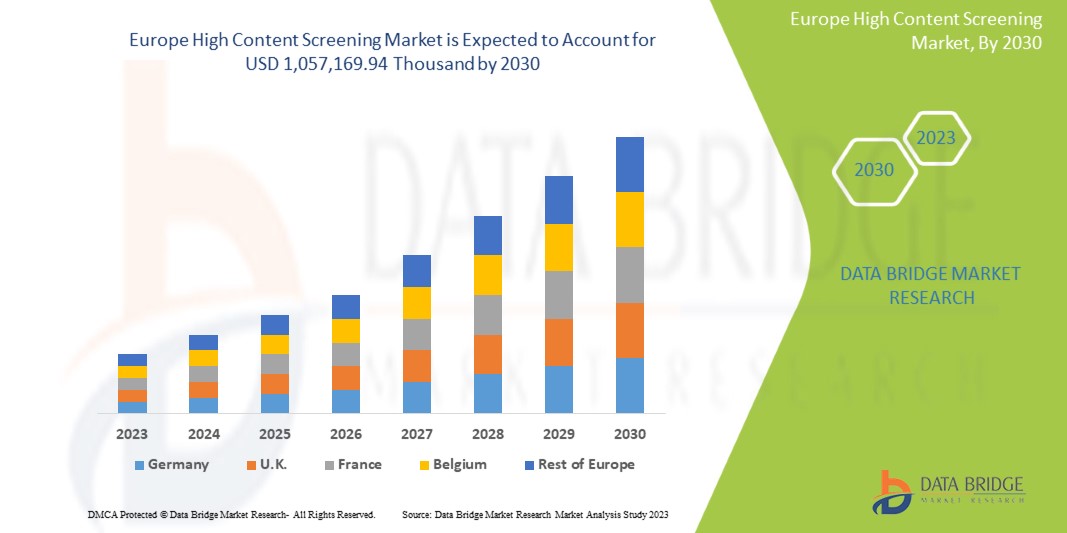
Data Bridge Market Research analyzes that the Europe high content screening market is expected to reach the value of USD 1,057,169.94 thousand by 2030, at a CAGR of 6.8% during the forecast period of 2023-2030.
|
Report Metric |
Details |
|
Forecast Period |
2023 to 2030 |
|
Base Year |
2022 |
|
Historic Years |
2021 (Customizable to 2015-2020) |
|
Quantitative Units |
Revenue in USD Thousand |
|
Segments Covered |
Product Type (Instruments, Consumables, Softwares, Services and Accessories), Application (Primary and Secondary Screening, Target Identification & Validation, Toxicity Studies, Compound Profiling and Other Applications), Technology (Microscopy, Flow Cytometry, Immunohistochemistry, Extracellular Matrix Based Scaffold, ELISA, Western Blotting and Others), End User (Pharmaceutical and Biotechnology Companies, Contract Research Organizations, Laboratories, Academic and Government Institutes, Others), Distribution Channel(Direct Tenders, Retail Sales) |
|
Countries Covered |
Germany, France, U.K., Italy, Spain, Russia, Turkey, Belgium, Denmark, Netherlands, Switzerland, Sweden, Poland, Norway, Finland, and Rest of Europe |
|
Market Players Covered |
BD, Merck KGaA, Corning Incorporated, Carl Zeiss AG, Sartorius AG, Zifo RnD Solutions, Axxam S.p.A., Molecular Devices, LLC. (Subsidiary of Danaher Corporation), Thermo Fisher Scientific Inc., PerkinElmer Inc., Bio-Rad Laboratories, Inc., Agilent Technologies, Inc., Yokogawa Electric Corporation, Sysmex Corporation, Genedata AG, Miltenyi Biotec, Aligned Genetics, Inc. and among others |
Europe High Content Screening Market Definition
High-Content Screening (HCS), also known as High-Content Analysis (HCA), is an approach to cell biology that combines automated imaging and quantitative data analysis in a high-throughput format suitable for large-scale applications such as drug discovery and systems biology.
This market refers to the sector of the life sciences industry that focuses on the use of advanced imaging and analysis techniques to study and analyze cellular processes and biological phenomena on a large scale. HCS involves the automated imaging and quantitative analysis of cells or organisms using technologies such as fluorescence microscopy, automated liquid handling, and sophisticated image analysis software.
Europe High Content Screening Market Dynamics
This section deals with understanding the market drivers, advantages, opportunities, restraints, and challenges. All of this is discussed in detail below:
Driver
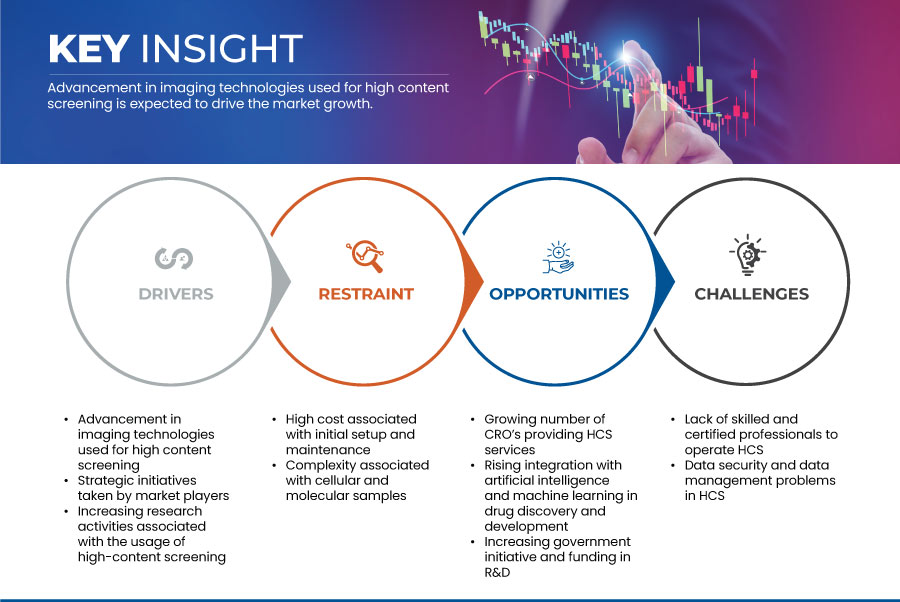
- Advancement in Imaging Technologies used for High Content Screening
Imaging technologies have been at the forefront of High-Content Screening (HCS), enabling researchers to visualize and analyze cellular processes with unprecedented detail and precision. In addition to high-resolution imaging, there have been significant improvements in imaging speed and throughput. HCS helps in the analysis of a large number of samples, often in high-throughput formats. Imaging technologies have evolved to provide faster acquisition times, enabling researchers to analyze large datasets in a shorter period. High-speed imaging techniques, such as spinning disk confocal microscopy and light-sheet microscopy, allow for rapid image acquisition without compromising image quality, facilitating efficient screening workflows and data analysis.
Over the years, significant advancements have been made in imaging modalities, microscopy techniques, and imaging analysis tools, transforming the landscape of HCS and driving its market expansion.
Opportunity
- Rising Integration with Artificial Intelligence and Machine Learning in Drug Discovery and Development
AI techniques, such as machine learning and deep learning, can analyze large volumes of data generated in drug discovery and development processes. By processing diverse datasets, including HTS data, chemical and biological databases, and clinical trial data, AI algorithms can identify patterns, relationships, and trends that may not be readily apparent to human researchers. This can help accelerate the identification of potential drug candidates and optimize the drug discovery process.
Data science and AI are becoming increasingly important in drug discovery and development. In addition to generating new therapeutics, AI speeds up the work of existing drug discovery and clinical teams, helping them to make informed and highly accurate research decisions.
Thus, the integration of AI in drug discovery and development has the potential to accelerate the process, improve success rates, and reduce costs, which is expected to create an opportunity for market growth.
Restraints/Challenges
- Complexity Associated with Cellular and Molecular Samples
Cellular and molecular samples are inherently complex, consisting of multiple cellular components, intricate signaling pathways, and dynamic molecular interactions. Analyzing such complexity requires advanced imaging techniques, specialized reagents, and sophisticated algorithms to accurately capture and interpret the data. The complexity associated with cellular and molecular samples presents a significant challenge, which is expected to restrain market growth.
- Lack of Skilled and Certified Professionals to Operate HCS
The lack of skilled professionals proficient in operating HCS systems can limit the adoption and utilization of these technologies. Organizations may hesitate to invest in HCS platforms if they do not have the necessary personnel to effectively operate and maintain the equipment.
HCS requires expertise in handling complex imaging systems, data analysis software, and assay optimization. Inexperienced operators may struggle to optimize protocols, leading to suboptimal performance and compromised results. Skilled professionals are crucial for obtaining reliable and high-quality data from HCS assays. Hence, the lack of skilled and certified professionals to operate HCS is expected to pose a challenge to market growth.
Recent Developments
- In January 2023, Axion BioSystems announced the addition of the Omni Pro 12 to the Omni live-cell imaging product family. The new platform, which features integrated robotics and multiple designs compatible with any standard incubator, offers enhanced flexibility and efficiency to scientists and drug developers conducting live-cell imaging experiments. This advancement in the imaging technique would help drug discovery be efficient by having live cell imaging experiments.
- In December 2019, Olympus announced the U.S. launch of the scanR HCS station, a cell imaging solution that utilizes Artificial Intelligence (AI) to enable next-generation biological research. It combines the modularity and flexibility of a microscope-based setup with the automation, speed, throughput, and reproducibility of an HCS station. Olympus’ self-learning microscopy technology reduces photo-bleaching and improves acquisition speed, measurement sensitivity, and accuracy, facilitating longer observations with reduced influence on cell viability.
Europe High Content Screening Market Scope
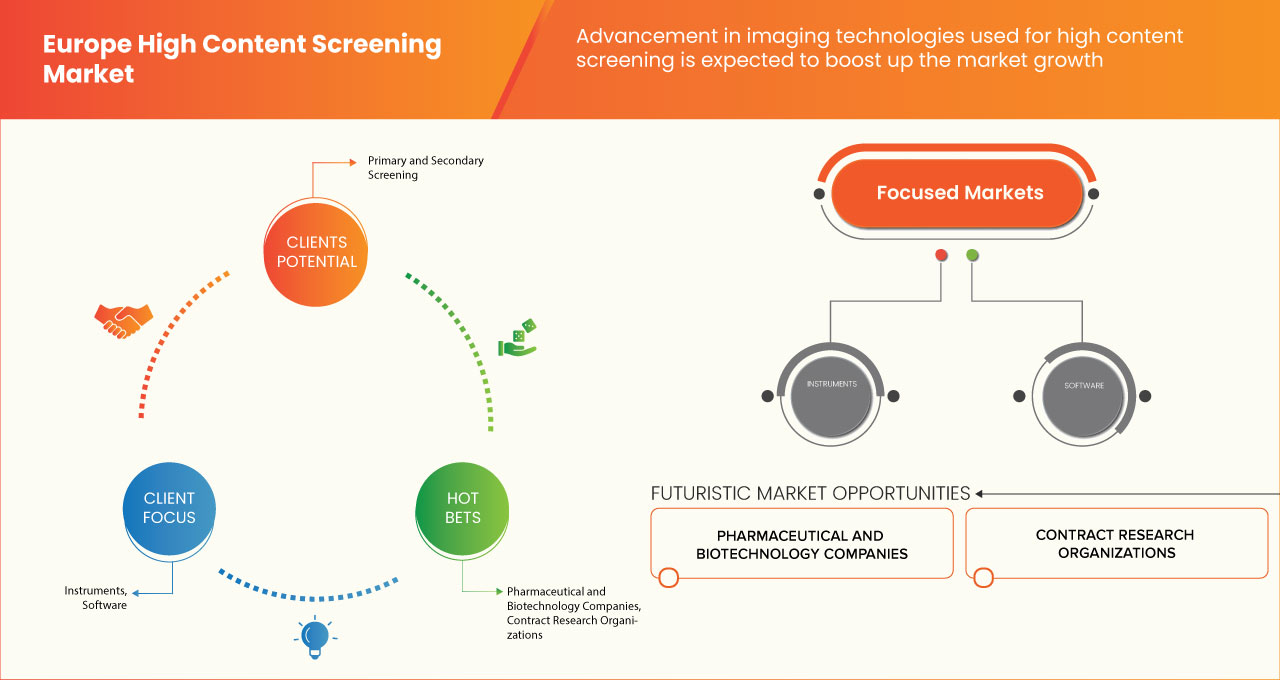
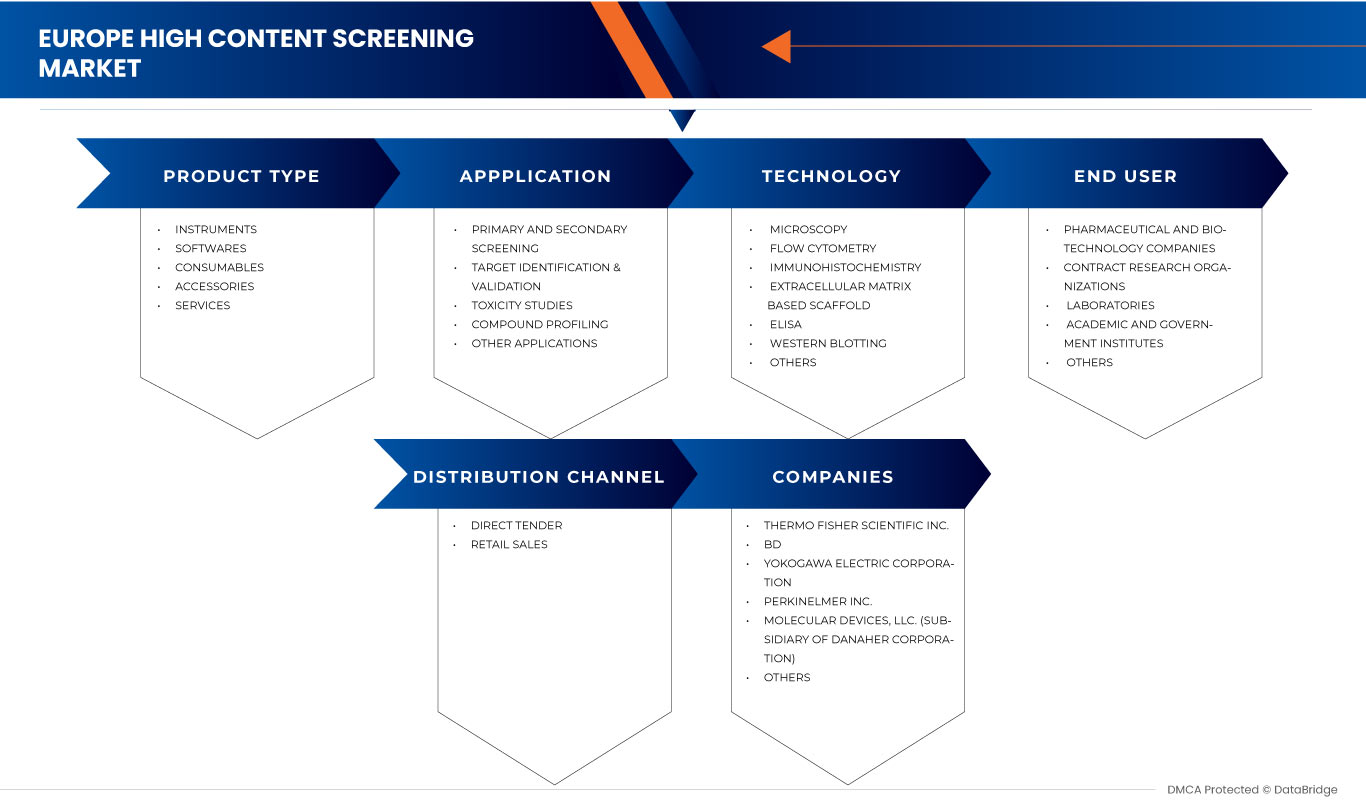
The Europe high content screening market is segmented into five notable segments based on product type, application, technology, end user and distribution channel. The growth among segments helps you analyze niche pockets of growth and strategies to approach the market and determine your core application areas and the differences in your target markets.
Product Type
- Instruments
- Consumables
- Software
- Services
- Accessories
On the basis of product type, the market is segmented into instruments, consumables, software, services, and accessories.
Application
- Primary and Secondary Screening
- Target Identification & Validation
- Toxicity Studies
- Compound Profiling
- Others
On the basis of application, the market is segmented into primary and secondary screening, target identification & validation, toxicity studies, compound profiling, and others.
Technology
- Microscopy
- Flow Cytometry
- Extracellular Matrix Based Scaffold
- Western Blotting
- ELISA
- Immunohistochemistry
- Others
On the basis of technology, the market is segmented into microscopy, flow cytometry, extracellular matrix based scaffold, western blotting, ELISA, immunohistochemistry, and others.
End User
- Pharmaceutical and Biotechnology Companies
- Academic and Government Institutes
- Contract Research Organizations
- Laboratories
- Others
On the basis of end user, the market is segmented into pharmaceutical and biotechnology companies, academic and government institutes, contract research organizations, laboratories and others.
Distribution Channel
- Direct Tenders
- Retail Sales
On the basis of distribution channel, the market is segmented into direct tenders and retail sales.
Europe High Content Screening Market Regional Analysis/Insights
The Europe high content screening market is categorized into five notable segments based on product type, application, technology, end user, and distribution channel.
The countries covered in this market report Germany, France, U.K., Italy, Spain, Russia, Turkey, Belgium, Denmark, Netherlands, Switzerland, Sweden, Poland, Norway, Finland and Rest of Europe.
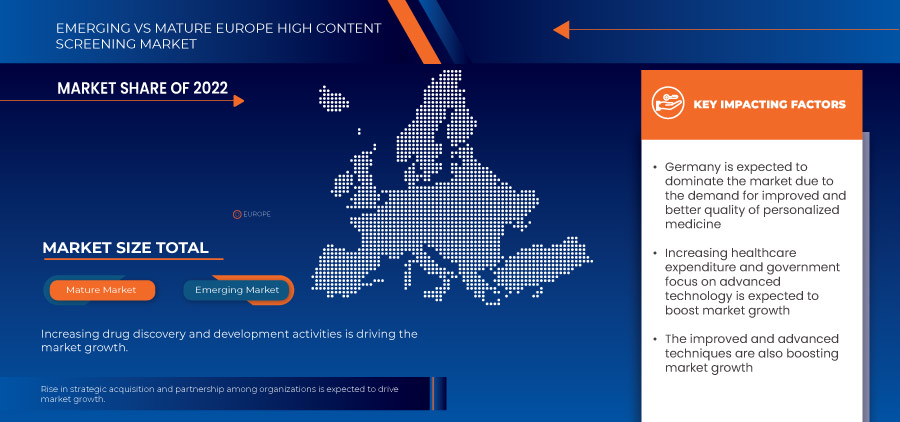
Germany is expected to dominate Europe region due to the increasing investment in high content screening and increasing demand from emerging markets and expansion, which is expected to boost market growth.
The country section of the report also provides individual market impacting factors and changes in regulation in the market domestically that impact the current and future trends of the market. Data points such as new sales, replacement sales, country demographics, regulatory acts, and import-export tariffs are some of the major pointers used to forecast the market scenario for individual countries. Also, presence and availability of Europe brands and their challenges faced due to large or scarce competition from local and domestic brands, and impact of sales channels are considered while providing forecast analysis of the country data.
Competitive Landscape and Europe High Content Screening Market Share Analysis
Europe high content screening market competitive landscape provides details by competitor. Details included are company overview, company financials, revenue generated, market potential, investment in R&D, new market initiatives, production sites and facilities, company strengths and weaknesses, product launch, product approvals, product width and breath, application dominance, product type lifeline curve. The above data points provided are only related to the company’s focus on the Europe high content screening market.
Some of the major market players operating in the Europe high content screening market are BD, Merck KGaA, Corning Incorporated, Carl Zeiss AG, Sartorius AG, Zifo RnD Solutions, Axxam S.p.A., Molecular Devices, LLC. (Subsidiary of Danaher Corporation), Thermo Fisher Scientific Inc., PerkinElmer Inc., Bio-Rad Laboratories, Inc., Agilent Technologies, Inc., Yokogawa Electric Corporation, Sysmex Corporation, Genedata AG, Miltenyi Biotec, Aligned Genetics, Inc. and among others.
SKU-
Obtenha acesso online ao relatório sobre a primeira nuvem de inteligência de mercado do mundo

- Painel interativo de análise de dados
- Painel de análise da empresa para oportunidades de elevado potencial de crescimento
- Acesso de analista de pesquisa para personalização e customização. consultas
- Análise da concorrência com painel interativo
- Últimas notícias, atualizações e atualizações Análise de tendências
- Aproveite o poder da análise de benchmark para um rastreio abrangente da concorrência
Metodologia de Investigação
A recolha de dados e a análise do ano base são feitas através de módulos de recolha de dados com amostras grandes. A etapa inclui a obtenção de informações de mercado ou dados relacionados através de diversas fontes e estratégias. Inclui examinar e planear antecipadamente todos os dados adquiridos no passado. Da mesma forma, envolve o exame de inconsistências de informação observadas em diferentes fontes de informação. Os dados de mercado são analisados e estimados utilizando modelos estatísticos e coerentes de mercado. Além disso, a análise da quota de mercado e a análise das principais tendências são os principais fatores de sucesso no relatório de mercado. Para saber mais, solicite uma chamada de analista ou abra a sua consulta.
A principal metodologia de investigação utilizada pela equipa de investigação do DBMR é a triangulação de dados que envolve a mineração de dados, a análise do impacto das variáveis de dados no mercado e a validação primária (especialista do setor). Os modelos de dados incluem grelha de posicionamento de fornecedores, análise da linha de tempo do mercado, visão geral e guia de mercado, grelha de posicionamento da empresa, análise de patentes, análise de preços, análise da quota de mercado da empresa, normas de medição, análise global versus regional e de participação dos fornecedores. Para saber mais sobre a metodologia de investigação, faça uma consulta para falar com os nossos especialistas do setor.
Personalização disponível
A Data Bridge Market Research é líder em investigação formativa avançada. Orgulhamo-nos de servir os nossos clientes novos e existentes com dados e análises que correspondem e atendem aos seus objetivos. O relatório pode ser personalizado para incluir análise de tendências de preços de marcas-alvo, compreensão do mercado para países adicionais (solicite a lista de países), dados de resultados de ensaios clínicos, revisão de literatura, mercado remodelado e análise de base de produtos . A análise de mercado dos concorrentes-alvo pode ser analisada desde análises baseadas em tecnologia até estratégias de carteira de mercado. Podemos adicionar quantos concorrentes necessitar de dados no formato e estilo de dados que procura. A nossa equipa de analistas também pode fornecer dados em tabelas dinâmicas de ficheiros Excel em bruto (livro de factos) ou pode ajudá-lo a criar apresentações a partir dos conjuntos de dados disponíveis no relatório.











