



Segmentação global do mercado de vinhos balsâmicos comerciais, por tipo de produto (Vinagres balsâmicos escuros e Vinagres balsâmicos brancos), grau (Vinagre balsâmicos de grau tradicional, Vinagre balsâmicos de grau comercial e Vinagre condimentar), categoria (Organic and Conventional), envelhecimento (Aged, semi-aged and matured), aplicações (Vendas de salada, sobremesas, legumes cozidos, queijo, sopas, marinas, frutas, limonada, produtos de carne e outros), canal de distribuição (Retailing Store-Based e Retailing não-Store) Tendências e Previsão da Indústria para 2033
Qual é o tamanho e a taxa de crescimento comercial do mercado de vinagre balsâmico
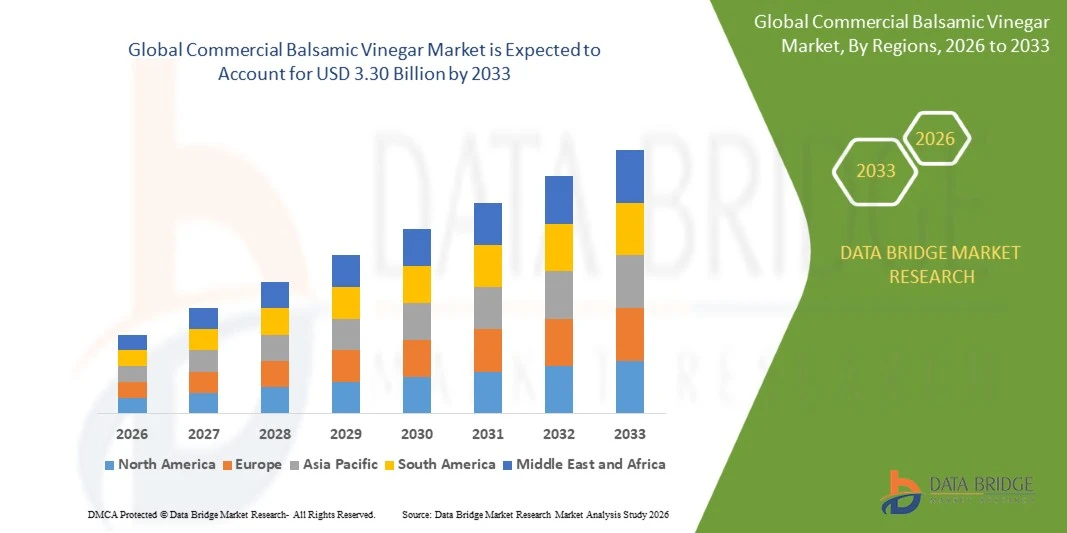
- Segundo a análise da Data Bridge Market Research, o mercado comercial de vinagre balsâmico foi avaliado emUSD 2,61 mil milhões em 2025e é projetado para alcançarUSD 3,30 mil milhões até 2033, crescendo emCAGR de 3,00% de 2026 a 2033.
- O mercado está experimentando um crescimento consistente impulsionado pela crescente demanda por ingredientes alimentares premium e gourmet, pela crescente popularidade da cozinha mediterrânea e pela expansão das aplicações nas indústrias de serviços alimentares, varejo e processamento de alimentos.
- A crescente preferência do consumidor por condimentos naturais e ingredientes de marca limpa, combinada com a expansão de restaurantes, hotéis e serviços de catering, está incentivando os compradores comerciais a adotar vinagre balsâmico em molhos de salada, marinadas, molhos e esmaltes. Aumentar a demanda por sabores italianos autênticos, produtos culinários premium, e ingredientes alimentares convenientes está apoiando ainda mais a expansão do mercado.
Tamanho e previsão do mercado
- Valor de mercado global (2025): USD 2,61 Bilhões
- Valor de mercado esperado (2033): USD 3,30 Bilhões
- Previsões CAGR (2026-2033): 3,00%
- Região líder em 2025: América do Norte
- Região de crescimento mais rápido: Ásia Pacífico
Quais são as principais takeaways do Mercado Comercial de Vinagre Balsâmico
- A América do Norte dominou o mercado comercial de vinagre balsâmico com a maior parcela de receita de 38,0% em 2025, apoiada pela crescente demanda por ingredientes alimentares premium, expansão das operações de serviço alimentar e crescente consumo de condimentos gourmet.
- Espera-se que a Ásia-Pacífico seja a região de crescimento mais rápido em um CAGR de 4,2% de 2026 a 2033, alimentado pelo aumento da renda disponível, aumento da exposição a cozinhas internacionais e crescente demanda por produtos alimentares especiais em toda a China, Índia e Japão.
- O segmento de vinagres balsâmicos escuros liderou o mercado com uma participação de 62% em 2025, impulsionado pelo seu uso generalizado em restaurantes, processamento de alimentos e aplicações culinárias gourmet.
- Os vinagres balsâmicos brancos são o tipo de produto de crescimento mais rápido, projetado para registrar um CAGR de 4,0%, refletindo o aumento da demanda por condimentos mais claros e ingredientes culinárias versáteis.
- O segmento de vinagre balsâmico de grau comercial dominou a categoria de tipo de grau com uma participação de 48% em 2025, liderada pela acessibilidade, ampla disponibilidade e uso extensivo no serviço alimentar e na produção de alimentos embalados.
- O convencional representou 78% da quota de mercado em 2025, preferencial pela infraestrutura de fabricação estabelecida, preços competitivos e ampla distribuição.
- O segmento de marinadas é a categoria de aplicação de crescimento mais rápido, com um CAGR de 4,3%, impulsionado pelo aumento do uso de ingredientes intensificadores de sabor em carne, aves, frutos do mar e preparações vegetais
Âmbito do relatório e Segmentação Comercial Balsâmica do Mercado de Vinagre
|
Atributos |
Comércio Balsâmico Vinagre Key Market Insights |
|
Segmentos Cobertos |
|
|
Países abrangidos |
América do Norte
Europa
Ásia- Pacífico
Médio Oriente e África
América do Sul
|
|
Jogadores do mercado chave |
|
|
Oportunidades de Mercado |
|
|
Informações sobre o Valor Adicionado |
Além dos insights sobre cenários de mercado, como valor de mercado, taxa de crescimento, segmentação, cobertura geográfica e principais atores, os relatórios de mercado curados pela Data Bridge Market Research também incluem análise de especialistas em profundidade, análise de preços, análise de compartilhamento de marca, inquérito ao consumidor, análise demografia, análise da cadeia de suprimentos, análise da cadeia de valor, visão geral da matéria-prima/consumíveis, critérios de seleção de fornecedores, Análise de PESTLE, Análise de Porter e marco regulatório. |
Qual é a tendência chave no mercado comercial de vinagre balsâmico
- Os fabricantes de vinagre balsâmico comercial estão cada vez mais focados em ofertas de produtos premium, origem italiana autêntica, e formulações diversificadas para atender às necessidades em evolução de restaurantes, empresas de restauração e varejistas de alimentos gourmet.
- Por exemplo, em setembro de 2024, FoodNavigator relatou que o produtor italiano de vinagre Ponti introduziu Chili Pepper Balsamic Glaze e explorou sabores transculturais, incluindo esmalte de soja com vinagre balsâmico de Modena, refletindo a tendência para sabores inovadores e aplicações culinárias diversificadas.
- A diversificação de produtos permite que os fornecedores sirvam diferentes aplicações culinárias, incluindo molhos de salada, marinadas, molhos, esmaltes e preparações alimentícias premium.
- Os fornecedores de serviços alimentares estão expandindo as gamas de produtos para acomodar cozinhas profissionais buscando sabor consistente, formatos convenientes e disponibilidade a granel confiável.
- Por exemplo, em junho de 2024, Giusti anunciou novos produtos balsâmicos, incluindo um condimento de trufas e 2 Medalhas de Ouro Orgânicas Vinagre Balsâmico de Modena, juntamente com condimentos à base de frutas doces e azedos projetados para saladas, marinadas, molhos e outros usos culinários, destacando premiação, ofertas orgânicas e diversificação de produtos
- Como a demanda por ingredientes premium e sabores italianos autênticos continua a expandir, os fabricantes são esperados para enfatizar a diferenciação de produtos, distribuição internacional, e embalagens comerciais especializadas para reforçar a competitividade do mercado.
Quais são os Principais Drivers do Mercado Comercial de Vinagre Balsâmico
- A crescente demanda internacional por alimentos especializados italianos e condimentos premium está aumentando significativamente o consumo comercial de vinagre balsâmico entre as indústrias de serviços alimentares, varejo e processamento de alimentos.
- Por exemplo, em maio de 2026, o Consórcio para a Proteção do Vinagre Balsâmico de Modena relatou produção anual de aproximadamente 93 a 95 milhões de litros, com mais de 93% da produção exportada para mais de 130 países. Isso demonstra como a demanda internacional por alimentos especializados italianos e condimentos premium suporta a produção e distribuição comercial de vinagre balsâmico.
- Restaurantes, empresas de catering e fabricantes de alimentos embalados estão incorporando vinagre balsâmico em curativos, marinadas, molhos e refeições prontas para comer para melhorar o sabor e diversificar as ofertas de produtos.
- Por exemplo, em fevereiro de 2024, Acetaia Giusti apresentou seus produtos bálsâmicos premium na Gulfood 2024, enfatizando a expansão em hotéis do Oriente Médio, restaurante e Catering (HoReCa). Isso demonstra como exposições internacionais de alimentos e parcerias de serviços alimentares ajudam os fabricantes a alcançar compradores comerciais e expandir a demanda de exportação.
- À medida que o comércio internacional de alimentos e a demanda por ingredientes culinárias versáteis continuam a se expandir, espera-se que os fabricantes comerciais se beneficiem de redes de distribuição mais amplas, aumento do uso de serviços alimentares e aplicações mais amplas em alimentos processados.
Que fatores estão desafiando o crescimento do mercado comercial de vinagre balsâmico
- Os produtores de vinagre balsâmico comercial enfrentam desafios decorrentes da flutuação dos custos de entrada de uva e vinagre de vinho, exigências rigorosas de autenticidade e da necessidade de manter a qualidade consistente do produto em toda a produção em larga escala.
- Por exemplo, em fevereiro de 2024, um estudo publicado em Foods examinou métodos para detectar a diluição do vinagre balsâmico de alta densidade de Modena. A pesquisa destacou o risco de adulteração por meio da adição de água externa e as limitações dos métodos de teste de autenticidade existentes, aumentando a necessidade de procedimentos especializados de controle de qualidade e aumentando os custos de conformidade para os produtores.
- Esses desafios podem aumentar as despesas de aquisição, controle de qualidade, embalagem e conformidade, especialmente para fabricantes que fornecem clientes de serviços alimentares sensíveis aos preços e grandes empresas de processamento de alimentos.
- Além disso, questões de segurança alimentar e controle de alérgenos envolvendo alimentos preparados contendo vinagrete balsâmico podem criar recalls de produtos, danos na reputação e custos adicionais para fornecedores comerciais.
- Por exemplo, em novembro de 2024, o Comité Europeu de Normalização publicou a EN 164666-1:2024, uma norma que especifica a análise isotópica para verificar a autenticidade do vinagre e identificar a adulteração envolvendo ácido acético sintético ou ácidos de fontes não autorizadas. Tais requisitos de ensaio e verificação podem aumentar as despesas de garantia da qualidade para os fabricantes e exportadores de vinagre comercial.
- O aumento dos custos de entrada, os requisitos de autenticidade e as obrigações de segurança alimentar continuam a desafiar os fornecedores comerciais, tornando essencial o abastecimento eficaz, a garantia de qualidade e a conformidade regulamentar para manter a rentabilidade e a confiança do cliente.
Como está o Mercado Comercial de Vinagre Balsâmico Segmentado
O mercado comercial de vinagre balsâmico é segmentado com base no tipo de produto, grau, categoria, envelhecimento, aplicações e canal de distribuição.
- Por tipo de produto
Com base no tipo de produto, o mercado comercial de vinagre balsâmico é segmentado em vinagres balsâmicos escuros e vinagres balsâmicos brancos. O segmento de vinagres balsâmicos escuros dominou o mercado com uma participação estimada em 62% em 2025, devido à sua ampla utilização em restaurantes, processamento de alimentos e aplicações culinárias gourmet. Sua cor rica, sabor concentrado, e doçura equilibrada e acidez torná-lo adequado para molhos, esmaltes, marinadas, e curativos. Cozinhas comerciais valorizam sua versatilidade em receitas tradicionais e contemporâneas. Forte reconhecimento dos consumidores e redes de distribuição estabelecidas apoiam ainda mais a procura. O aumento da utilização em alimentos embalados e condimentos premium continua a reforçar a sua posição no mercado.
O segmento de vinagres balsâmicos brancos é projetado para registrar o crescimento mais rápido em um CAGR estimado de 4,0% de 2026 a 2033, impulsionado pela crescente demanda de condimentos de cor mais leve e ingredientes culinária versátil. Seu sabor suave e aparência mais leve torná-lo adequado para frutos do mar, aves, legumes e pratos à base de frutas. Os restaurantes usam-no para preservar o apelo visual de preparações de cor clara. O crescente interesse pela culinária contemporânea está incentivando sua adoção em molhos e molhos especiais. Os fabricantes estão expandindo portfólios de produtos para atender às preferências culinárias em evolução. Prevê-se que o aumento da utilização em aplicações de serviços alimentares premium apoie um maior crescimento.
- Por Grau
Com base na qualidade, o mercado comercial de vinagre balsâmico é segmentado em vinagre balsâmico grau tradicional, vinagre balsâmico grau comercial, e vinagre balsâmico grau condimento. O segmento de vinagre balsâmico de qualidade comercial dominou o mercado com uma participação estimada em 48% em 2025, apoiada pela acessibilidade, ampla disponibilidade e uso extensivo no serviço alimentar e na produção de alimentos embalados. Restaurantes, hotéis e empresas de catering dependem deste grau para requisitos regulares de ingredientes de alto volume. Seu sabor consistente e custo-efetividade suportam receitas padronizadas. A disponibilidade através de fornecedores grossistas simplifica a aquisição. É amplamente utilizado em molhos, marinadas, molhos e alimentos preparados. Estas características reforçam a sua posição entre os compradores comerciais.
O tradicional segmento de vinagre balsâmico é projetado para registrar o crescimento mais rápido em um CAGR estimado de 4,2% de 2026 a 2033, impulsionado pela crescente demanda por produtos autênticos, premium e artesanais. O vinagre bálsamo tradicional é produzido através de métodos estabelecidos que envolvem mosto de uvas concentrado e envelhecimento prolongado de barra de madeira. Seu distinto perfil de sabor apela para restaurantes gourmet e varejistas de alimentos especiais. As indicações geográficas protegidas ajudam a comunicar a origem e a autenticidade. Aplicações culinárias Premium suportam posicionamento de maior valor. O interesse no artesanato alimentar tradicional é encorajador da diferenciação dos produtos. No entanto, preços mais elevados e ciclos de produção mais longos podem limitar a adopção em aplicações comerciais sensíveis aos custos.
- Por Categoria
Com base na categoria, o mercado comercial de vinagre balsâmico é segmentado em orgânico e convencional. O segmento convencional dominou o mercado com uma participação estimada de 78% em 2025, apoiada por infraestrutura de fabricação estabelecida, preços competitivos e ampla distribuição. Os produtos convencionais atendem às necessidades dos restaurantes, fornecedores e fabricantes de alimentos comprando vinagre em volumes substanciais. A sua disponibilidade através de grossistas e distribuidores de serviços alimentares facilita a aquisição. A produção padronizada suporta sabor e qualidade consistentes. O vinagre balsâmico convencional é amplamente utilizado em molhos, molhos, marinadas e refeições preparadas. A sua acessibilidade e as cadeias de abastecimento estabelecidas continuam a apoiar a procura.
O segmento orgânico é projetado para registrar o crescimento mais rápido em um CAGR estimado de 4,5% de 2026 para 2033, impulsionado pelo crescente interesse em ingredientes orgânicos certificados e produtos alimentícios premium. O vinagre balsâmico orgânico apela a restaurantes especializados, varejistas orgânicos e marcas de alimentos premium. Práticas de produção certificadas podem ajudar a diferenciar produtos em mercados de condimentos competitivos. O crescente interesse pela agricultura sustentável apoia a procura de ingredientes orgânicos. Os fabricantes estão expandindo gamas de produtos especiais para lidar com mudanças nas preferências de compra. Posicionamento Premium pode apoiar preços de venda mais elevados. No entanto, os custos de certificação e produção podem restringir a adoção entre compradores comerciais sensíveis aos preços.
- Por Envelhecimento
Com base no envelhecimento, o mercado comercial de vinagre balsâmico é segmentado em produtos de idade, semi-idade e maturação. Estima-se que o segmento maduro represente a maior parcela de 40% em 2025, apoiada pela demanda por perfis de sabor concentrado e características culinárias premium. A maturação pode melhorar o equilíbrio de doçura, acidez e complexidade aromática. Estes produtos são adequados para reduções, molhos gourmet, curativos e aplicações de acabamento. Restaurantes de luxo e distribuidores especiais de alimentos valorizam qualidades sensoriais distintas. O envelhecimento de barra de madeira pode contribuir com características aromáticas adicionais. Posicionamento premium suporta seu uso em ofertas culinárias diferenciadas, embora ciclos de produção mais longos possam aumentar os custos.
O segmento envelhecido é projetado para registrar o crescimento mais rápido em um CAGR estimado de 4,1% de 2026 para 2033, impulsionado pelo aumento do interesse em condimentos premium e produtos com características sabor mais profundas. O envelhecimento pode desenvolver um sabor mais suave e maior complexidade aromática. As cozinhas comerciais usam vinagre balsâmico envelhecido em pares de queijos, vegetais torrados, preparados de carne e molhos de salada. As tendências gastronômicas gourmet incentivam os chefs a explorar ingredientes diferenciados. Os retalhistas de géneros alimentícios especializados podem utilizar características de envelhecimento para distinguir os produtos premium. Os fabricantes podem beneficiar do crescente interesse na produção de alimentos artesanais. A adopção dependerá do equilíbrio entre benefícios de qualidade percebidos e preços e disponibilidade.
- Por Aplicações
Com base nas aplicações, o mercado comercial de vinagre balsâmico é segmentado em molhos de salada, sobremesas, legumes cozidos, queijo, sopas, marinadas, frutas, limonada, produtos à base de carne, entre outros. Estima-se que o segmento de molhos de salada domine o mercado com uma participação de 32% em 2025, impulsionado pelo uso generalizado em vinagretes, saladas preparadas e formulações comerciais de curativos. Restaurantes, hotéis e empresas de catering usam vinagre balsâmico para criar sabores distintos doce e azedo. Os fabricantes de alimentos embalados incorporam-no em curativos prontos para usar e produtos de salada. Sua compatibilidade com azeite, ervas e mostarda suporta a versatilidade da receita. Os compradores comerciais valorizam sua capacidade de melhorar o sabor sem preparação complexa. Aplicações culinárias estabelecidas continuam a suportar uma demanda consistente.
O segmento de marinadas é projetado para registrar o crescimento mais rápido em um CAGR estimado de 4,3% de 2026 a 2033, apoiado pelo aumento do uso de ingredientes intensificadores de sabor em carnes, aves, frutos do mar e preparações vegetais. O vinagre balsâmico contribui com acidez, doçura e complexidade aromática para marinadas. Os restaurantes usam-no para diversificar menus e desenvolver pratos de assinatura. Os fabricantes de alimentos podem incorporá-lo em produtos prontos para cozinhar e refeições preparadas. A demanda por sabores inspirados globalmente incentiva a experimentação com formulações doces e azedas. Sua compatibilidade com ervas, especiarias e óleos apoia a inovação do produto. Espera-se que maior utilização na preparação comercial de alimentos suporte a expansão do segmento.
- Por Canal de Distribuição
Com base no canal de distribuição, o mercado comercial de vinagre balsâmico é segmentado em lojas de varejo e não-loja de varejo. Estima-se que o segmento de varejo baseado em lojas domine o mercado com 65% de participação em 2025, apoiado por supermercados estabelecidos, hipermercados, lojas de alimentos especiais e lojas de atacado. Esses canais permitem que os compradores comparem marcas, notas e formatos de embalagem. Vendas por grosso apoiam aquisições regulares por restaurantes e empresas de restauração. A disponibilidade física facilita a inspeção do produto e a repetição da compra. As redes de retalho estabelecidas proporcionam uma ampla cobertura geográfica. Os acordos de compra familiares continuam a apoiar a adopção por parte dos compradores comerciais e de pequenos operadores de serviços alimentares.
O segmento de varejo não-loja é projetado para registrar o crescimento mais rápido em um CAGR estimado de 5,0% de 2026 para 2033, impulsionado pelo aumento da adoção de plataformas de compras on-line e mercados de negócios para negócios. A encomenda digital permite que os compradores comerciais comparem as especificações do produto e os preços dos fornecedores de forma eficiente. Compras em massa e pedidos recorrentes podem simplificar o gerenciamento de inventário. Os canais online também melhoram o acesso às variedades importadas, orgânicas, artesanais e especiais de vinagre. Os fabricantes podem alcançar clientes geograficamente dispersos sem depender exclusivamente de saídas físicas. Maior conveniência de compra digital suporta acesso mais amplo ao fornecedor. Os custos de envio, os requisitos de embalagem e a fiabilidade do fornecedor continuarão a ser considerações importantes.
Qual é a região que detém a maior parte do mercado comercial de vinagre balsâmico
- A América do Norte dominou o mercado comercial de vinagre balsâmico com a maior parcela de receita de 38,0% em 2025, apoiada pela crescente demanda por ingredientes alimentares premium, expansão das operações de serviço alimentar e crescente consumo de condimentos gourmet.
- A região também se beneficia de redes de distribuição de alimentos de supermercado e especialidades estabelecidas, crescente interesse pela cozinha mediterrânea e crescente utilização de vinagre balsâmico em molhos de salada, marinadas, molhos e alimentos embalados. A crescente demanda por produtos italianos autênticos, condimentos orgânicos e ingredientes culinários premium continua a apoiar o consumo regional em aplicações domésticas e comerciais
U.S. Comercial Balsamic Vinagre Market Insight
O mercado comercial de vinagre balsâmico dos EUA está assistindo a um crescimento constante devido à crescente demanda por condimentos premium, produtos alimentares gourmet e ingredientes versáteis em todos os canais de alimentação e varejo. A indústria de restaurantes estabelecida pelo país, a expansão do mercado de alimentos especializados e o crescente uso de vinagre balsâmico em molhos de salada, marinadas, molhos e refeições preparadas estão apoiando a demanda do mercado. Além disso, o crescente interesse do consumidor pela cozinha mediterrânea, produtos de marca limpa e perfis de sabor distintos está incentivando os fabricantes a expandir suas ofertas comerciais de vinagre balsâmico.
Asia-Pacific Comercial Balsamic Vinagre Market Insight
Espera-se que o mercado de vinagre balsâmico comercial Ásia-Pacífico testemunhe rápido crescimento, impulsionado pela urbanização, mudança de preferências alimentares, e pela expansão das indústrias de alimentos e alimentos embalados em países como China, Japão e Índia. O crescente interesse em cozinhas internacionais, molhos premium e soluções de refeições convenientes está apoiando a adoção de vinagre balsâmico em restaurantes, hotéis e aplicações de processamento de alimentos. Além disso, a expansão das modernas redes de retalho e dos canais de comércio electrónico está a melhorar a acessibilidade dos produtos e a apoiar o crescimento do mercado regional.
Japão Comercial Balsâmico Vinagre Mercado Insight
O mercado comercial de vinagre balsâmico do Japão está testemunhando um crescimento consistente devido ao crescente interesse em cozinhas internacionais, condimentos premium e produtos alimentícios inovadores. Restaurantes, hotéis e fabricantes de alimentos estão cada vez mais usando vinagre balsâmico em molhos de salada, marinadas, molhos e pratos de fusão para atender às preferências dos consumidores em evolução. Além disso, a expansão do varejo de alimentos especializados, a crescente disponibilidade de produtos importados e a crescente adoção de influências culinárias ocidentais estão apoiando ainda mais o crescimento do mercado no Japão.
China Comercial Balsâmico Vinagre Mercado Insight
O mercado comercial de vinagre balsâmico da China está crescendo rapidamente, impulsionado pelo aumento do rendimento disponível, urbanização e crescente demanda por produtos alimentares premium importados. A adoção crescente de restaurantes de estilo ocidental, os setores de restaurantes e hospitalidade em expansão e o crescente interesse em molhos gourmet estão apoiando o consumo de vinagre balsâmico em aplicações comerciais e de varejo. Além disso, a expansão das plataformas de e-commerce e canais modernos de mercearia está melhorando a acessibilidade do produto, posicionando a China como um mercado de crescimento chave para o vinagre balsâmico comercial.
U.K. Comercial Balsamic Vinagre Market Insight
O mercado comercial de vinagre balsâmico do Reino Unido vive um crescimento constante, apoiado pela procura de condimentos premium e pela utilização generalizada de ingredientes internacionais no serviço alimentar e na cozinha caseira. Restaurantes, cafés e fabricantes de alimentos estão incorporando vinagre balsâmico em curativos, marinadas, molhos e refeições preparadas para oferecer sabores distintos. Além disso, o crescente interesse pela cozinha mediterrânea, a expansão do varejo de alimentos especializados e o aumento da disponibilidade através dos canais de mercearia online estão contribuindo para o crescimento do mercado no Reino Unido.
Alemanha Comercial Balsâmico Vinagre Mercado Insight
O mercado comercial de vinagre balsâmico da Alemanha está em constante expansão devido à demanda de condimentos de alta qualidade, produtos culinários diversos e ingredientes alimentares convenientes. Operadores de serviços alimentares, varejistas e fabricantes de alimentos estão usando vinagre balsâmico em molhos de salada, molhos, marinadas e alimentos preparados para atender a diferentes gostos do consumidor. Além disso, a rede de distribuição de mercearia estabelecida pelo país, o interesse pela cozinha mediterrânea e a disponibilidade de produtos importados e especiais de vinagre apoiam o desenvolvimento contínuo do mercado na Alemanha.
Quais são as Principais Empresas do Mercado Comercial de Vinagre Balsâmico
A indústria comercial de vinagre balsâmico é liderada principalmente por empresas bem estabelecidas, incluindo:
- Acetum S.p.A. Benefit Company(Itália)
- De Nigris(Itália)
- ORTALLI S.R.L. a s.u. (Itália)
- Monari Federzoni SpA(Itália)
- Acetaia Giusti S.r.l. (Itália)
- Acetaia Malpighi (Itália)
- Mengazzoli (Itália)
- Acetaia Due Vittorie (Itália)
- Acetificio Carandini Emilio SPA (Itália)
- Acetaia Leonardi (Itália)
- Ponti S.p.A. (Itália)
- Mazzetti l’Originale (Itália)
- Fini (Itália)
- Antica Modena (Itália)
- Balsamico Village Srl (Itália)
- Acetaia Marchi (Itália)
- Acetaia Cavedoni (Itália)
- Acetaia Reale (Itália)
- Acetaia Valeri di Giacobazzi Valerio (Itália)
- Azienda Agricola Sereni Pier Luigi (Itália)
Quais são as últimas evoluções no Mercado Comercial de Vinagre Balsâmico
- Em novembro de 2025, Carandini expandiu a disponibilidade dos EUA de seus esmaltes gourmet, anunciando que sua gama completa de produtos estava disponível para os consumidores americanos. A gama inclui esmalte feito com Vinagre Balsâmico de Modena, oferecendo um condimento versátil doce e salgado para cozinhar diariamente. A expansão fortaleceu a presença comercial de Carandini nos EUA e refletiu a crescente diversificação do produto do vinagre balsâmico além do tradicional vinagre engarrafado.
- Em junho de 2024, Giusti anunciou três novas adições de condimento para apresentação no Summer Fancy Food Show 2024: uma variedade de condimentos de fruta doce e azedo, um condimento gourmet combinando vinagre balsâmico e trufa, e um orgânico Balsâmico Balsâmico de Modena. As novas ofertas expandiram o portfólio da marca através de produtos orgânicos, com sabor a trufas e infundidos em frutas, visando aplicações que vão desde saladas e marinadas até molhos e pratos especiais.
- Em setembro de 2023, Acetaia Giusti abriu sua primeira boutique internacional em Seul, Coreia do Sul, na Lotte Department Store. A nova localização ofereceu aos consumidores acesso à coleção balsâmica de vinagre e condimentos gourmet da empresa, introduzindo-os nas tradições de património e produção associadas à Modena. A expansão representou um passo no desenvolvimento comercial internacional de Giusti e reforçou seu engajamento direto com os consumidores no mercado asiático
- Em agosto de 2022, Carandini lançou seu Vinagre Balsâmico de Folha de Prata Orgânica da Modena PGI em todo o país. O produto combinava mosto de uva orgânico e vinagre de vinho orgânico e foi desenvolvido para uso versátil em saladas, legumes, carne, peixe e vinagretes. O lançamento ampliou a disponibilidade de vinagre balsâmico orgânico certificado através de varejistas nacionais, destacando a inovação do produto e a diferenciação crescente dentro da categoria de condimento comercial.
- Em agosto de 2021, o Consórcio Balsâmico de Modena anunciou as primeiras Semanas Balsâmicas Originais nos EUA, com eventos planejados em Nova York e São Francisco. A iniciativa envolveu parceiros de restaurantes servindo vinagre balsâmico em diferentes aplicações culinárias e educando os comensais sobre a história, características e autenticidade do produto. A campanha teve como objetivo aumentar a conscientização do consumidor e fortalecer o posicionamento do autêntico Vinagre Balsâmico de Modena no serviço de alimentos e especialidade dos EUA
SKU-
Obtenha acesso online ao relatório sobre a primeira nuvem de inteligência de mercado do mundo

- Painel interativo de análise de dados
- Painel de análise da empresa para oportunidades de elevado potencial de crescimento
- Acesso de analista de pesquisa para personalização e customização. consultas
- Análise da concorrência com painel interativo
- Últimas notícias, atualizações e atualizações Análise de tendências
- Aproveite o poder da análise de benchmark para um rastreio abrangente da concorrência
Metodologia de Investigação
A recolha de dados e a análise do ano base são feitas através de módulos de recolha de dados com amostras grandes. A etapa inclui a obtenção de informações de mercado ou dados relacionados através de diversas fontes e estratégias. Inclui examinar e planear antecipadamente todos os dados adquiridos no passado. Da mesma forma, envolve o exame de inconsistências de informação observadas em diferentes fontes de informação. Os dados de mercado são analisados e estimados utilizando modelos estatísticos e coerentes de mercado. Além disso, a análise da quota de mercado e a análise das principais tendências são os principais fatores de sucesso no relatório de mercado. Para saber mais, solicite uma chamada de analista ou abra a sua consulta.
A principal metodologia de investigação utilizada pela equipa de investigação do DBMR é a triangulação de dados que envolve a mineração de dados, a análise do impacto das variáveis de dados no mercado e a validação primária (especialista do setor). Os modelos de dados incluem grelha de posicionamento de fornecedores, análise da linha de tempo do mercado, visão geral e guia de mercado, grelha de posicionamento da empresa, análise de patentes, análise de preços, análise da quota de mercado da empresa, normas de medição, análise global versus regional e de participação dos fornecedores. Para saber mais sobre a metodologia de investigação, faça uma consulta para falar com os nossos especialistas do setor.
Personalização disponível
A Data Bridge Market Research é líder em investigação formativa avançada. Orgulhamo-nos de servir os nossos clientes novos e existentes com dados e análises que correspondem e atendem aos seus objetivos. O relatório pode ser personalizado para incluir análise de tendências de preços de marcas-alvo, compreensão do mercado para países adicionais (solicite a lista de países), dados de resultados de ensaios clínicos, revisão de literatura, mercado remodelado e análise de base de produtos . A análise de mercado dos concorrentes-alvo pode ser analisada desde análises baseadas em tecnologia até estratégias de carteira de mercado. Podemos adicionar quantos concorrentes necessitar de dados no formato e estilo de dados que procura. A nossa equipa de analistas também pode fornecer dados em tabelas dinâmicas de ficheiros Excel em bruto (livro de factos) ou pode ajudá-lo a criar apresentações a partir dos conjuntos de dados disponíveis no relatório.











