


Segmentação global do mercado de calçados de proteção industrial, por tipo (calçado de couro, calçado impermeável, calçado de borracha e calçado plástico), produto (sapatos de segurança e botas de segurança), tipo de proteção (dedo do pé do aço, pé composto, liga do pé e proteção Metatarsal), material (calça, borracha, cloreto de polivinilo (PVC), poliuretano (PU) e outros), aplicação (construção, fabricação, mineração, óleo e gás, químicos, farmacêuticos, processamento de alimentos, transporte e logística, e outros), canal de distribuição (Offline e on-line), usuário final (construção, fabricação, óleo e gás, mineração, químicos, alimentos e bebidas, farmacêuticos, transporte e logística, Utilities e energia, e outros) – tendências industriais e previsão para 2033
Qual é o tamanho e a taxa de crescimento do mercado de calçados de proteção industrial
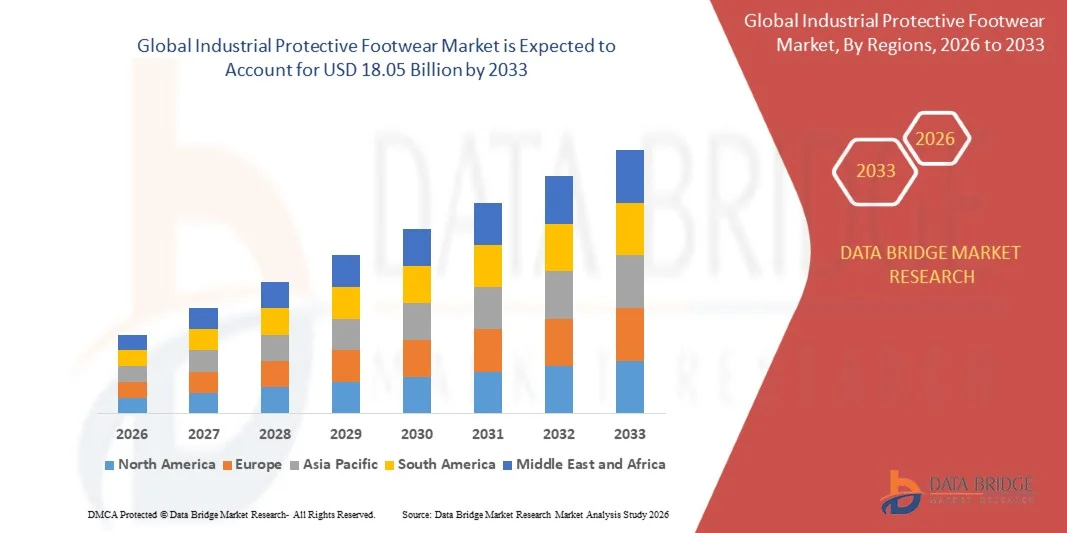
- Em conformidade com a análise da Data Bridge Market Research, o mercado do calçado de protecção industrial foi avaliado em11,20 mil milhões de USD em 2025e é projetado para alcançar18,05 mil milhões de USD até 2033, crescendo emCAGR de 6,11% de 2026 a 2033.
- O mercado está experimentando um crescimento consistente impulsionado pela crescente demanda de calçados de proteção que proporciona maior segurança, durabilidade, conforto e proteção em toda a construção, fabricação, mineração, petróleo e gás, produtos químicos, transporte, logística e outros ambientes industriais. Avanços em materiais de calçado de segurança, proteção do dedo do pé composto, solas resistentes ao deslizamento, tecnologias à prova d'água, polímeros leves, tecidos respiráveis e designs ergonômicos estão melhorando a capacidade do calçado de proteção industrial para fornecer proteção confiável, apoiando o conforto e mobilidade dos trabalhadores.
- A crescente necessidade de reduzir as lesões no local de trabalho, cumprir as normas de segurança no trabalho, melhorar a proteção dos trabalhadores e melhorar o conforto durante o horário de trabalho prolongado é um desafio para as organizações adotarem soluções de calçado de proteção industrial. O calçado protetor está sendo cada vez mais integrado na construção, fabricação, mineração, petróleo e gás, produtos químicos, alimentos e bebidas, produtos farmacêuticos, transporte e logística e serviços públicos, onde características como tampas de aço ou dedo do pé composto, resistência à punção, proteção contra riscos elétricos, resistência química e resistência ao deslizamento proporcionam vantagens sobre o calçado convencional.
Tamanho e previsão do mercado
- Valor de Mercado Global (2025): USD 11.20 Bilhões
- Valor de mercado esperado (2033): USD 18.05 Bilhões
- Previsões CAGR (2026-2033): 6,11%
- Região líder em 2025: Europa
- Região de crescimento mais rápido: Ásia Pacífico
Quais são as principais takeaways do mercado de calçados de proteção industrial
- A Europa dominou o mercado mundial de calçado de protecção industrial, com a maior quota de receitas de 31,9% em 2025, apoiada por regulamentações rigorosas em matéria de segurança do trabalho, indústrias de fabrico e construção estabelecidas e uma forte sensibilização para a prevenção de lesões no local de trabalho.
- Espera-se que a Ásia-pacífico seja o mercado regional de crescimento mais rápido, registrando um CAGR de 7,5% de 2026 a 2033, impulsionado pela rápida industrialização, desenvolvimento de infraestrutura, ampliação das atividades de construção e fabricação, aumento dos requisitos de segurança no local de trabalho e adoção crescente de calçados de proteção em indústrias de alto risco.
- O calçado de couro dominou a categoria de tipo do mercado global de calçados de proteção industrial 35,2% em 2025, apoiado pela sua durabilidade, resistência à abrasão, conforto e adequação para ambientes industriais exigentes. O couro permanece amplamente adotado na construção, fabricação, mineração e outras aplicações de alto risco.
- As botas de segurança dominaram a categoria de produtos para 66,92% do mercado em 2025, apoiadas pela sua capacidade de proporcionar cobertura estendida do tornozelo, resistência ao impacto, proteção contra punção, resistência ao deslizamento e proteção contra condições de trabalho duras.
- A fabricação representou o maior segmento de usuários finais com uma participação de mercado de 27,8% em 2025, apoiada pelo uso extensivo de calçados protetores em instalações de produção, operações de máquinas, manuseio de materiais e ambientes de processamento industrial.
Segmentação do Mercado de Calçados de Proteção Industrial
|
Atributos |
Visão do mercado chave do calçado protetor industrial |
|
Segmentos Cobertos |
|
|
Países abrangidos |
América do Norte
Europa
Ásia- Pacífico
Médio Oriente e África
América do Sul
|
|
Jogadores do mercado chave |
|
|
Oportunidades de Mercado |
|
|
Informações sobre o Valor Adicionado |
Além dos insights sobre cenários de mercado, como valor de mercado, taxa de crescimento, segmentação, cobertura geográfica e principais atores, os relatórios de mercado curados pela Data Bridge Market Research também incluem análise de importação, visão geral da capacidade de produção, análise do consumo de produção, análise de tendências de preços, cenário de mudança climática, análise da cadeia de suprimentos, análise da cadeia de valor, visão geral da matéria-prima/consumíveis, critérios de seleção de fornecedores, Análise de PESTLE, Análise de Porter e quadro regulatório. |
Qual é a tendência chave no mercado de calçados de proteção industrial
- O desenvolvimento de calçados de proteção leves, ergonómicos e de alto desempenho está se tornando uma tendência chave no mercado de calçados de proteção industrial, pois os fabricantes se concentram cada vez mais na redução do peso do calçado, mantendo o impacto, compressão, punção, deslizamento e proteção elétrica. O uso de materiais compósitos, solas leves, parte superior respirável e projetos ergonômicos está apoiando maior mobilidade e conforto para os trabalhadores que usam calçado protetor por longos períodos.
- Por exemplo, em setembro de 2024, Osha atualizou seus requisitos de equipamentos de proteção individual de construção para exigir explicitamente EPI para se adequar adequadamente aos funcionários afetados. O requisito reforça a importância do ajuste adequado e da ergonomia na seleção dos equipamentos de proteção, incluindo o calçado de proteção.
- A crescente integração de recursos de proteção especializados, incluindo resistência ao deslizamento, resistência à punção, proteção metatarsal, proteção elétrica e resistência química, está ganhando impulso, uma vez que as indústrias exigem calçado adaptado a riscos específicos no local de trabalho. Esta tendência é particularmente relevante na construção, fabricação, logística, produtos químicos, utilitários e outros ambientes de trabalho perigosos.
- Por exemplo, em 2024, a administração de segurança e saúde no trabalho (osha) continuou a especificar os requisitos de calçado de proteção para os locais de trabalho onde os trabalhadores enfrentam riscos de queda ou rolamento de objetos, objetos perfurando a sola e riscos elétricos. A orientação da Osha também identifica aplicações que requerem impacto, compressão, punção, calçado elétrico, químico e resistente ao deslizamento.
- O crescente foco no calçado protetor resistente a deslizamentos e à água também está influenciando o desenvolvimento do produto, especialmente em aplicações onde os trabalhadores operam em torno de líquidos, produtos químicos, superfícies úmidas ou outras condições que aumentam os riscos de deslizamento. Os fabricantes estão incorporando projetos especializados de sola e construções resistentes à água para melhorar a proteção dos trabalhadores em ambientes desafiadores.
Quais são os principais condutores do mercado de calçados de proteção industrial
- A crescente ênfase na segurança no trabalho e na prevenção de lesões nos pés no local de trabalho está a conduzir a procura de calçados de protecção industrial em ambientes de trabalho perigosos. Os empregadores são obrigados a fornecer proteção adequada dos pés quando os trabalhadores estão expostos a riscos como queda ou rolamento de objetos, riscos de perfuração e riscos elétricos.
- Por exemplo, em dezembro de 2024, a Administração de Segurança e Saúde Ocupacional (osha) dos EUA publicou no registro federal seus requisitos de construção de EPI, reforçando os requisitos de equipamentos de proteção e calçados de segurança em ambientes de construção. Os requisitos enfatizam a seleção e proteção adequada dos EPIs contra os perigos do trabalho.
- A expansão da construção, fabricação, logística, armazenagem, mineração e outras atividades industriais está apoiando a demanda por calçados protetores, pois os trabalhadores nesses ambientes podem ser expostos a riscos de impacto, compressão, punção, química, elétrica e deslizamento.
- Por exemplo, em 2024, a orientação de emprego do estaleiro de Osha identificou o manuseio de materiais, equipamentos pesados, empilhadeiras, tubos pesados, objetos afiados, produtos químicos e superfícies escorregadias como exemplos de condições de trabalho que exigem formas específicas de proteção dos pés. A orientação destaca a necessidade de calçados de proteção projetados de acordo com os perigos presentes em diferentes tarefas industriais.
- A crescente procura de calçados de protecção especializados para diferentes perigos industriais está a apoiar a adopção de produtos. Os sapatos e botas de segurança podem ser projetados com dedos resistentes ao impacto, proteção contra compressão, solas resistentes à punção, isolamento elétrico ou condutividade, resistência química e solas resistentes ao deslizamento de acordo com os requisitos de aplicação.
Que fatores estão desafiando o crescimento do mercado de calçados de proteção industrial
- O alto custo do calçado de proteção especializado pode permanecer um desafio, particularmente para produtos que incorporam materiais compósitos avançados, componentes de proteção especializados, materiais resistentes a produtos químicos, construção à prova d'água e tecnologias de sola de alto desempenho. Os custos de produtos mais elevados podem afectar a adopção entre empresas sensíveis aos custos e empregadores industriais mais pequenos.
- Flutuações de preços de matérias-primas também podem criar desafios para os fabricantes, pois o calçado de proteção industrial usa materiais como couro, borracha, poliuretano, PVC, materiais sintéticos, compósitos, adesivos e componentes de proteção especializados. Mudanças nos preços dos materiais podem aumentar os custos de fabricação e pressionar os preços dos produtos.
- A necessidade de cumprir as normas de segurança ocupacional e os requisitos de desempenho do produto pode aumentar os requisitos de teste, certificação e desenvolvimento dos fabricantes. O calçado de protecção deve proporcionar uma protecção adequada para os perigos específicos para os quais foi concebido.
- Por exemplo, em 2024, os requisitos gerais de protecção dos pés da indústria de Osha continuaram a exigir calçado de protecção para cumprir normas de consenso especificadas ou demonstrar eficácia equivalente. Estes requisitos criam considerações de desempenho e conformidade para os fabricantes que fornecem calçado de protecção aos locais de trabalho regulamentados.
- A protecção contra o equilíbrio, a durabilidade, o conforto e o peso continua a ser outro desafio, uma vez que o calçado altamente reforçado pode aumentar o peso e reduzir a flexibilidade, enquanto o calçado leve deve ainda proporcionar uma protecção adequada contra os riscos para o local de trabalho. Os fabricantes precisam, portanto, otimizar o desempenho protetor sem comprometer a mobilidade e o conforto do trabalhador.
Como é o mercado de calçados de proteção industrial segmentado
O mercado de calçados de proteção industrial é segmentado com base no tipo, produto, tipo de proteção, material, aplicação, canal de distribuição e usuário final.
- Por Tipo
Com base no tipo, o mercado industrial de calçado de proteção é segmentado em calçado de couro, calçado impermeável, calçado de borracha e calçado de plástico. O segmento de calçado de couro dominou o mercado com uma participação de 62,74% em 2025, apoiado pelo seu amplo uso na construção, fabricação, mineração, petróleo e gás, e outras aplicações industriais. O couro proporciona durabilidade, resistência à abrasão, flexibilidade e compatibilidade com características de proteção, como tampas reforçadas do dedo do pé, meias solas resistentes à punção e solas resistentes ao deslizamento. O aumento da procura de calçado de protecção durável e confortável para uso industrial prolongado está a apoiar o segmento.
O segmento de calçado impermeável é projetado para testemunhar um crescimento significativo durante o período de previsão, impulsionado pelo aumento da demanda por calçado de proteção na construção, mineração, petróleo e gás, serviços públicos, e outras indústrias onde os trabalhadores estão expostos à água, umidade, lama e condições de operação úmidas. Calçado impermeável fornece proteção, apoiando o conforto do trabalhador em ambientes exigentes ao ar livre e úmido.
- Por Produto
Com base no produto, o mercado de calçados de proteção industrial é segmentado em sapatos de segurança, botas de segurança, botas de goma, tamancos, entre outros. O segmento de botas de segurança dominou o mercado com uma participação de 66,92% em 2025, apoiada pela maior proteção do tornozelo e adequação para construção, mineração, fabricação, petróleo e gás, e outros ambientes industriais de alto risco. As botas de segurança geralmente incorporam proteção reforçada do dedo do pé, meias solas resistentes à punção, solas resistentes ao deslizamento e características impermeáveis ou químicas, dependendo da aplicação. O segmento também está se beneficiando do desenvolvimento de materiais leves e projetos ergonômicos que melhoram a mobilidade e o conforto durante longas jornadas de trabalho.
O segmento de calçados de segurança é projetado para crescer em um CAGR de 5,46% durante o período de previsão, impulsionado pelo aumento da adoção entre manufatura, logística, armazenamento e outros ambientes industriais internos onde os trabalhadores exigem proteção combinada com maior mobilidade e conforto
- Por tipo de proteção
Com base no tipo de proteção, o mercado de calçados de proteção industrial é segmentado em dedo do pé de aço, dedo do pé composto, dedo do pé de liga e proteção metatarsal. O segmento do pé de aço dominou a categoria do tipo proteção com uma quota de mercado de 45,3% em 2025, apoiada por seu alto impacto e resistência à compressão e uso extensivo na construção, fabricação, mineração, petróleo e gás e outros ambientes industriais perigosos.
Calçado de pé composto está ganhando adoção por causa de sua construção leve e não-metálico CAGR de 7,0% de 2026 a 2033, enquanto a proteção do dedo do pé liga fornece uma alternativa mais leve ao aço. A proteção metatarsal é cada vez mais usada em aplicações onde a parte superior do pé requer proteção adicional contra objetos pesados e máquinas.
- Por Material
Com base no material, o mercado de calçados de proteção industrial é segmentado em couro, borracha, cloreto de polivinilo (PVC), poliuretano (PU), entre outros. O segmento de couro dominou o mercado com uma participação de 62,74% em 2025, apoiada pela sua durabilidade, resistência à abrasão, flexibilidade e uso estabelecido na construção, fabricação, mineração e outras aplicações industriais. O calçado de couro também pode ser combinado com tampas de aço ou dedo do pé composto, meias solas resistentes à punção e solas resistentes ao deslizamento para proporcionar proteção específica da aplicação.
O segmento de borracha é projetado para crescer em um CAGR de 6,49% durante o período de previsão, impulsionado pela demanda por calçados de proteção impermeável, resistente a produtos químicos e resistentes a óleo em óleo e gás, processamento químico, processamento de alimentos e outros ambientes de trabalho úmidos ou perigosos
- Por Aplicação
Com base na aplicação, o mercado de calçados de proteção industrial é segmentado em construção, fabricação, mineração, petróleo e gás, produtos químicos, produtos farmacêuticos, alimentos e bebidas, transporte e logística, entre outros. O segmento de construção dominou o mercado com uma participação de 20,61% em 2025, apoiada pelo uso extensivo de calçados protetores contra quedas de objetos, riscos de punção, riscos elétricos, deslizamentos e outros riscos no local de trabalho. Os trabalhadores da construção exigem frequentemente calçados e botas de segurança com proteção reforçada do dedo do pé, solas resistentes ao deslizamento, resistência à punção e materiais duráveis adequados para ambientes de trabalho exigentes.
O segmento de petróleo e gás é projetado para crescer em um CAGR de 6,68% durante o período de previsão, apoiado pela exigência de calçado capaz de proporcionar proteção contra deslizamentos, produtos químicos, óleos, riscos elétricos e outros riscos associados às atividades de exploração, extração, processamento e manutenção.
- Por Canal de Distribuição
Com base no canal de distribuição, o mercado de calçados de proteção industrial é segmentado para offline e online. O segmento offline representou a maior parte da receita do mercado em 2025, apoiada pela importância da inspeção física do produto, adequação adequada, seleção de tamanho, demonstrações de produtos e orientação técnica na compra de calçados de proteção industrial. Distribuidores industriais, varejistas especiais de equipamentos de segurança e vendas diretas de fabricantes permanecem importantes canais de compras para grandes compradores industriais.
O segmento on-line é projetado para crescer em um CAGR de 6,11% durante o período de previsão, apoiado pela crescente digitalização de compras industriais, maior disponibilidade de produtos, encomenda conveniente, preços competitivos e melhoria da infraestrutura de comércio eletrônico B2B.
- Por Usuário Final
Com base no usuário final, o mercado de calçados de proteção industrial é segmentado em construção, fabricação, petróleo e gás, mineração, produtos químicos, alimentos e bebidas, produtos farmacêuticos, transporte e logística, utilidades e energia, entre outros. O segmento de construção representou uma participação de 20,61% em 2025, refletindo a extensa exigência de calçados de proteção certificados em locais de construção onde os trabalhadores enfrentam impacto, punção, elétrica, deslizamento e outros riscos ocupacionais.
O segmento de petróleo e gás é projetado para crescer em um CAGR de 6,68% durante o período de previsão, impulsionado pela contínua demanda de calçado especializado que fornece resistência ao petróleo, produtos químicos, água, deslizamentos, e outros perigos encontrados em operações a montante, a médio e a jusante.
Que região detém a maior parte do mercado de calçados de proteção industrial
- A Europa dominou o mercado mundial de calçado de protecção industrial, com a maior quota de receitas de 31,9% em 2025, apoiada por regulamentações rigorosas em matéria de segurança do trabalho, indústrias de fabrico e construção estabelecidas e uma forte sensibilização para a prevenção de lesões no local de trabalho.
- Espera-se que a Ásia-pacífico seja o mercado regional de crescimento mais rápido, registrando um CAGR de 7,5% de 2026 a 2033, impulsionado pela rápida industrialização, desenvolvimento de infraestrutura, ampliação das atividades de construção e fabricação, aumento dos requisitos de segurança no local de trabalho e adoção crescente de calçados de proteção em indústrias de alto risco.
Visão do mercado de calçados de proteção industrial dos EUA
O mercado de calçados de proteção industrial dos EUA está testemunhando um crescimento constante devido a rigorosas exigências de segurança ocupacional e forte demanda na construção, fabricação, petróleo e gás, mineração, transporte, logística e serviços públicos. A infraestrutura industrial estabelecida pelo país e a ênfase na proteção dos trabalhadores estão apoiando a adoção de sapatos de segurança, botas de segurança, calçado impermeável, calçado de borracha e produtos de proteção especializados. Além disso, a crescente demanda por calçados que ofereçam resistência ao impacto, proteção contra punção, resistência ao deslizamento, proteção elétrica e maior conforto do trabalhador está contribuindo para a expansão do mercado. Requisitos regulamentares para calçados de proteção em locais de trabalho com perigo de lesão no pé também estão apoiando a adoção de produtos em todos os EUA.
Visão do mercado de calçados de proteção industrial Ásia-Pacífico
O mercado de calçados de proteção industrial Ásia-Pacífico deverá testemunhar um rápido crescimento em um CAGR de 7,5% durante 2026-2033, impulsionado pela expansão das atividades de construção e fabricação, desenvolvimento de infraestrutura, operações de mineração, atividades de petróleo e gás, e aumento do emprego industrial em países como China, Japão, Coreia do Sul e Índia. A crescente sensibilização para a segurança no trabalho e a crescente adopção de equipamentos de protecção apoiam a expansão regional. Além disso, os investimentos crescentes em infraestrutura industrial, redes logísticas e instalações de fabricação estão acelerando a demanda por sapatos de segurança, botas de segurança, calçado impermeável, calçado de borracha e outros produtos de proteção específicos para aplicações em toda a região.
Japão Proteção Industrial Calçado Mercado Visão
O mercado japonês de calçados de proteção industrial está testemunhando um crescimento consistente devido ao setor de fabricação estabelecido pelo país, atividades de construção, infraestrutura de transporte e forte foco na segurança no trabalho. Fabricação, produção automotiva, logística, construção e outras operações industriais estão apoiando a demanda por sapatos de segurança e botas projetadas para fornecer proteção contra impacto, compressão, perfuração, deslizamento e outros riscos no local de trabalho. Além disso, uma preferência crescente por calçados de proteção leves, ergonómicos, duráveis e confortáveis está a apoiar o desenvolvimento e a adopção de produtos nos locais de trabalho industriais japoneses.
China Industrial Protective Footwear Market Insight
O mercado de calçados de proteção industrial da China está crescendo rapidamente, apoiado pela grande base de fabricação do país, ampliando as atividades de construção, desenvolvimento de infraestrutura, operações de mineração e crescente indústria logística. O aumento da adopção de equipamentos de segurança no trabalho e o aumento da sensibilização para os perigos no local de trabalho estão a criar novas oportunidades para os fabricantes de calçados de protecção. Além disso, a crescente força de trabalho industrial da China e a demanda por proteção específica para aplicações estão apoiando o uso de calçado de couro, calçado impermeável, calçado de borracha e calçado plástico na construção, fabricação, mineração, produtos químicos, petróleo e gás, e outras aplicações industriais.
Por Dentro do Mercado de Calçados de Proteção Industrial do Reino Unido
O mercado de calçados de proteção industrial do Reino Unido está experimentando crescimento constante, apoiado pela construção, fabricação, produtos químicos, transporte, logística, utilidades e outras atividades industriais. As empresas estão adotando cada vez mais calçados de proteção projetados para enfrentar riscos específicos no local de trabalho, incluindo impacto, punção, exposição química, riscos elétricos e deslizamento. Além disso, as práticas de segurança no local de trabalho estabelecidas pelo país e a ênfase nos equipamentos de proteção individual adequados apoiam a procura de calçados de segurança, botas de segurança e calçados de proteção especializados nos locais de trabalho industriais.
Alemanha Industrial Protective Footwear Market Insight
O mercado de calçados de proteção industrial da Alemanha está em constante expansão devido às fortes capacidades de fabricação do país, setor industrial avançado, atividades de construção, produção química, infraestrutura de transporte e práticas de segurança ocupacional estabelecidas. O aumento da demanda por calçados de proteção entre manufatura, construção, produtos químicos, logística, automotivo e outras aplicações industriais está apoiando o crescimento do mercado. O foco da Alemanha na segurança dos trabalhadores, qualidade do produto, design ergonômico e proteção específica da aplicação também está incentivando a adoção de calçados leves, duráveis, resistentes ao deslizamento, resistentes à punção e de proteção.
Quais são as principais empresas no mercado de calçados de proteção industrial
A indústria do calçado de protecção industrial é liderada principalmente por empresas bem estabelecidas, incluindo:
- Bata Corporation (Índia)
- Honeywell International Inc. (EUA)
- Wolverine World Wide, Inc. (EUA)
- Produtos Industriais de Proteção, Inc. (EUA)
- Calçado protector Dunlop (Portugal)
- VF Corporation (EUA)
- Grupo uvex (Alemanha)
- COFRA Holding AG (Suíça)
- ELTEN GmbH (Alemanha)
- Grupo Rahman (Índia)
- Rock Fall Ltd.
- Grupo U-Power S.p.A. (Itália)
- Grupo JAL (França)
- OFRICH Holdings Co., Ltd. (Taiwan)
- Saina Corporation Co., Ltd. (China)
- Giasco S.r.l. (Itália)
- Hillson Footwear Pvt. Ltd (Índia)
- Jallatte (França)
Quais são as últimas evoluções no mercado de calçados de proteção industrial
- Em fevereiro de 2025, o grupo de segurança UVEX introduziu novos desenvolvimentos em seu portfólio de calçados de segurança, com foco na construção leve, design ergonômico, melhor conforto do usuário e melhor desempenho protetor. O desenvolvimento reflecte o crescente enfoque da indústria na combinação da protecção profissional com o conforto e a mobilidade dos trabalhadores em ambientes industriais.
- Em janeiro de 2025, a Bata Industrials expandiu seu portfólio de calçados de segurança com produtos incorporando materiais leves, solas resistentes ao deslizamento e construção ergonômica para ambientes de trabalho exigentes. O desenvolvimento destaca a crescente ênfase na combinação de durabilidade, proteção e conforto diário em calçados de segurança industrial.
- Em março de 2024, a COFRA expandiu suas ofertas de calçados protetores com calçados de segurança projetados para aplicações industriais, incorporando características como construção leve, resistência ao deslizamento e maior conforto do usuário. O desenvolvimento demonstra o contínuo avanço do calçado específico para aplicação dos trabalhadores expostos a condições industriais exigentes.
- Em junho de 2024, a Dunlop Protective Footwear destacou os desenvolvimentos em seu portfólio de calçado profissional, incluindo botas impermeáveis e protetoras projetadas para ambientes de trabalho exigentes. O desenvolvimento reflete a crescente demanda por calçado impermeável, durável e protetor em toda a agricultura, processamento de alimentos, construção e outros locais de trabalho úmidos ou perigosos.
- Em dezembro de 2024, a Administração de Segurança e Saúde Ocupacional (OSHA) dos EUA reforçou os requisitos para a adequada instalação de equipamentos de proteção individual na construção civil, incluindo a proteção profissional dos pés. O desenvolvimento reforça a importância de um calçado de segurança adequado para reduzir a exposição no local de trabalho a riscos relacionados com os pés e apoiar a protecção dos trabalhadores.
SKU-
Obtenha acesso online ao relatório sobre a primeira nuvem de inteligência de mercado do mundo

- Painel interativo de análise de dados
- Painel de análise da empresa para oportunidades de elevado potencial de crescimento
- Acesso de analista de pesquisa para personalização e customização. consultas
- Análise da concorrência com painel interativo
- Últimas notícias, atualizações e atualizações Análise de tendências
- Aproveite o poder da análise de benchmark para um rastreio abrangente da concorrência
Metodologia de Investigação
A recolha de dados e a análise do ano base são feitas através de módulos de recolha de dados com amostras grandes. A etapa inclui a obtenção de informações de mercado ou dados relacionados através de diversas fontes e estratégias. Inclui examinar e planear antecipadamente todos os dados adquiridos no passado. Da mesma forma, envolve o exame de inconsistências de informação observadas em diferentes fontes de informação. Os dados de mercado são analisados e estimados utilizando modelos estatísticos e coerentes de mercado. Além disso, a análise da quota de mercado e a análise das principais tendências são os principais fatores de sucesso no relatório de mercado. Para saber mais, solicite uma chamada de analista ou abra a sua consulta.
A principal metodologia de investigação utilizada pela equipa de investigação do DBMR é a triangulação de dados que envolve a mineração de dados, a análise do impacto das variáveis de dados no mercado e a validação primária (especialista do setor). Os modelos de dados incluem grelha de posicionamento de fornecedores, análise da linha de tempo do mercado, visão geral e guia de mercado, grelha de posicionamento da empresa, análise de patentes, análise de preços, análise da quota de mercado da empresa, normas de medição, análise global versus regional e de participação dos fornecedores. Para saber mais sobre a metodologia de investigação, faça uma consulta para falar com os nossos especialistas do setor.
Personalização disponível
A Data Bridge Market Research é líder em investigação formativa avançada. Orgulhamo-nos de servir os nossos clientes novos e existentes com dados e análises que correspondem e atendem aos seus objetivos. O relatório pode ser personalizado para incluir análise de tendências de preços de marcas-alvo, compreensão do mercado para países adicionais (solicite a lista de países), dados de resultados de ensaios clínicos, revisão de literatura, mercado remodelado e análise de base de produtos . A análise de mercado dos concorrentes-alvo pode ser analisada desde análises baseadas em tecnologia até estratégias de carteira de mercado. Podemos adicionar quantos concorrentes necessitar de dados no formato e estilo de dados que procura. A nossa equipa de analistas também pode fornecer dados em tabelas dinâmicas de ficheiros Excel em bruto (livro de factos) ou pode ajudá-lo a criar apresentações a partir dos conjuntos de dados disponíveis no relatório.











