Global Rare Protein Misfolding Disease Drug Market Segmentation, By Drug Type (Small Moléculas, anticorpos monoclonais, terapias genéticas, terapias antissense oligonucleotídicas e estabilizadores de proteínas), Target Protein (Amiloid-beta (Aβ), Tau protein, Alpha-synuclein, Huntingtin protein, TDP-43 protein, and Others), Disease Indication (Alzheimer’s disease, Parkinson’s disease, Huntington’s disease, Amyotrophic Lateral Sclerose, Prion diseases, and Other protein misdoping disorders), End User (Hospitals, Specialty clinicas, Research & academic institutes, and Homecare settings)- Tendências e Previsão da Indústria para 2033
Qual é o tamanho e a taxa de crescimento da doença de missfolding da proteína rara do mercado do medicamento
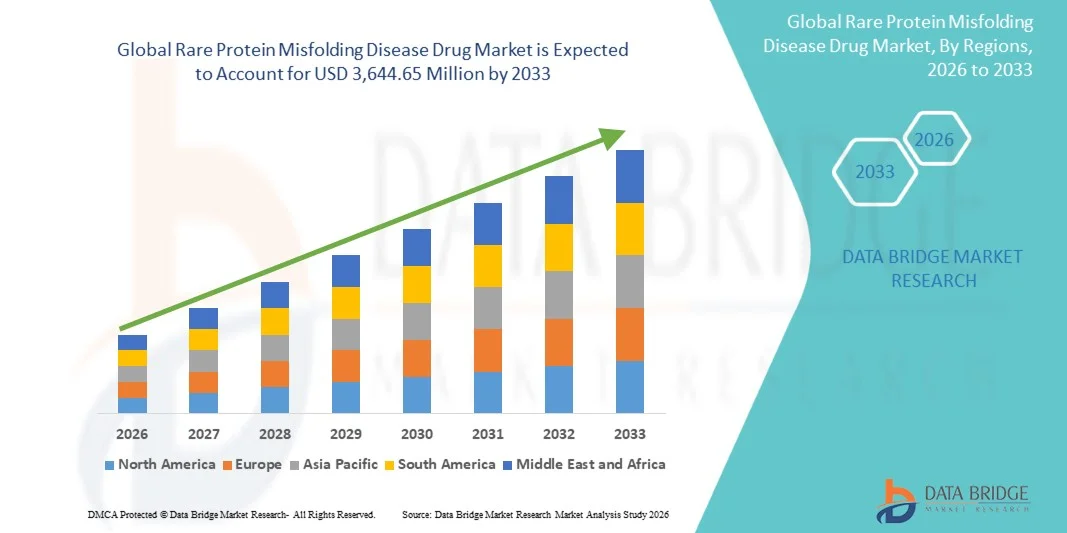
- De acordo com Data Bridge Market Research Analysis the A dimensão global do mercado de medicamentos foi avaliada emUSD 842,00 milhões em 2025e espera-se alcançar3.644,65 milhões de USD em 2033, emCAGR de 20,10%durante o período de previsão
- O crescimento do mercado é principalmente impulsionado pelo aumento da prevalência dedoenças neurodegenerativastais comoAlzheimer, Parkinson,ELA, eDoença de Huntington, que estão fortemente ligados a mecanismos anormais de dobramento e agregação de proteínas
- Além disso, avanços crescentes em biologias, terapias gênicas e terapias baseadas em RNA, juntamente com crescentes investimentos em I&D em pesquisa de doenças neurodegenerativas, estão acelerando os esforços de desenvolvimento de drogas.
Tamanho e previsão do mercado
- Valor de mercado global (2025): USD 842.00 Bilhões
- Valor de mercado previsto (2033): 3644,65 milhões de dólares
- Previsões CAGR (2026-2033): 20.10%
Quais são os principais resultados do mercado de drogas com doenças raras
- Raras terapias medicamentosas de mal dobramento de proteínas, visando a agregação anormal de proteínas em distúrbios neurodegenerativos, estão se tornando cada vez mais um componente crítico da medicina de precisão moderna devido ao seu potencial para modificar a progressão da doença em condições como Alzheimer, Parkinson, ALS, doença de Huntington, e outras proteinopatias raras
- A crescente demanda por essas terapias é impulsionada principalmente pela crescente prevalência global de doenças neurodegenerativas, melhor compreensão das vias de dobramento de proteínas e uma crescente mudança para biologias modificadoras da doença, terapias genéticas e abordagens de tratamento baseadas em RNA
- A América do Norte dominou o raro mercado de doenças raras, com a maior parcela de receita de 42,6% em 2025, caracterizada por forte infraestrutura de I&D biotecnológica, alto gasto em saúde e adoção precoce de terapias avançadas, com os EUA liderando em ensaios clínicos e aprovações regulatórias para novos biológicos voltados para transtornos relacionados a amiloides e sinucleínas.
- Espera-se que a Ásia-Pacífico seja a região de crescimento mais rápido no mercado raro de medicamentos para doenças deturpadas por proteínas durante o período de previsão, devido ao aumento da população em envelhecimento, à expansão das infra-estruturas de cuidados de saúde e ao aumento do investimento na investigação em biotecnologia centrada em neurociências e no desenvolvimento de medicamentos
- O segmento de anticorpos monoclonais dominou o mercado raro de medicamentos contra a doença com uma quota de mercado de 38,9% em 2025, impulsionado por uma forte atividade clínica do oleoduto e pelo aumento da utilização no alvo de proteínas mal dobradas, como a amilóide-beta e alfa-sinucleína no tratamento da doença de Alzheimer e Parkinson
Denunciar o Escopo e a Segmentação do Mercado de Medicamentos com Proteínas Raras
|
Atributos |
Perspectivas sobre o Mercado de Drogas Raras sobre a Doença de Desvio de Proteínas |
|
Segmentos Cobertos |
|
|
Países abrangidos |
América do Norte
Europa
Ásia- Pacífico
Médio Oriente e África
América do Sul
|
|
Jogadores do mercado chave |
|
|
Oportunidades de Mercado |
|
|
Informações sobre o Valor Adicionado |
Além dos insights sobre cenários de mercado, como valor de mercado, taxa de crescimento, segmentação, cobertura geográfica e principais atores, os relatórios de mercado curados pela Data Bridge Market Research também incluem análise de especialistas em profundidade, epidemiologia do paciente, análise de pipelines, análise de preços e marco regulatório |
Qual é a tendência chave no mercado de drogas com doenças raras
“Advancements in Targeted Biologics and Precision Neuroology”
- Uma tendência significativa e acelerada no mercado global de doenças com doenças raras por dobramento de proteínas é a crescente mudança para abordagens biológicas e de medicina de precisão direcionadas para abordar seletivamente a agregação anormal de proteínas em doenças neurodegenerativas, como Alzheimer, Parkinson, ELA e doença de Huntington.
- Por exemplo, terapias com anticorpos monoclonais, como lecanemab e donanemab, têm demonstrado a capacidade de atingir placas amiloides-beta, destacando o crescente foco em estratégias de tratamento modificadoras da doença e não sintomáticas.
- Avanços em terapias baseadas em RNA e oligonucleotídeos anti-sensíveis estão permitindo a intervenção em nível gênico para reduzir a produção de proteínas tóxicas, melhorar o controle da doença e progressão lenta da neurodegeneração em raras condições de mal dobramento de proteínas
- A integração de diagnósticos conduzidos por biomarcadores, incluindo o LCR e ensaios baseados no sangue, está permitindo a detecção mais precoce e precisa de distúrbios da agregação proteica, melhorando assim a estratificação do paciente para ensaios clínicos e predição da resposta ao tratamento.
- Aumentar o foco de pesquisa em estratégias de restauração da homeostase proteica, como chaperonas moleculares e reguladores de proteostase, está abrindo novas vias terapêuticas para estabilizar proteínas mal dobradas e prevenir a agregação
- Essa tendência para terapias de precisão, baseadas em mecanismos, está fundamentalmente reformulando as expectativas de tratamento de doenças neurodegenerativas, com empresas investindo cada vez mais em biológicas e plataformas de modulação genética altamente específicas para melhorar os resultados terapêuticos.
- A demanda por medicamentos avançados para doenças que dobram mal as proteínas está crescendo rapidamente nos mercados globais, pois os sistemas de saúde priorizam cada vez mais a intervenção precoce, a modificação da doença e estratégias de proteção neurológica a longo prazo.
Dinâmicas do Mercado de Drogas Raras
Controlador
“Crescer os Investimentos em Doenças Neurodegenerativas e Fortes em I&D”
- A crescente carga global de doenças neurodegenerativas ligadas ao mal-dobramento de proteínas, juntamente com as populações de envelhecimento, é um dos principais fatores que aceleram a demanda por terapias medicamentosas avançadas modificadoras da doença.
- Por exemplo, em abril de 2025, as principais empresas biofarmacêuticos expandiram ensaios clínicos tardios visando proteínas amilóides e tau, refletindo esforços intensificados para desenvolver tratamentos eficazes para a doença de Alzheimer
- A crescente compreensão dos mecanismos de dobramento de proteínas e das vias da doença está incentivando as empresas farmacêuticas a investirem fortemente em biologias, terapias genéticas e programas de desenvolvimento de drogas baseados em RNA.
- Além disso, o aumento do financiamento dos governos e organizações de pesquisa está apoiando iniciativas de descoberta acelerada de drogas focadas em distúrbios raros de agregação neurodegenerativa e proteica
- Aumentar a colaboração entre empresas de biotecnologia e institutos de investigação académicos está a acelerar ainda mais a inovação e a permitir uma tradução mais rápida das descobertas laboratoriais para aplicações clínicas
- Expandir a aplicação de inteligência artificial e ferramentas computacionais de descoberta de drogas está melhorando a identificação de alvos e reduzindo os prazos iniciais de pesquisa no desenvolvimento de drogas neurodegenerativas
- O crescimento das parcerias farmacêuticas e os acordos de licenciamento estão reforçando o desenvolvimento de gasodutos e ampliando o acesso global a terapias inovadoras
- As iniciativas de sensibilização e diagnóstico precoce estão aumentando as taxas de identificação dos pacientes, ampliando assim a população de tratamento endereçável para essas terapias.
Restrição/Desafio
“Complexidade de Alto Desenvolvimento e Falhas em Ensaios Clínicos”
- A alta complexidade de direcionar vias de dobramento de proteínas e a compreensão limitada dos mecanismos de progressão da doença representam desafios significativos para o sucesso do desenvolvimento de drogas neste mercado.
- Por exemplo, múltiplas falhas clínicas tardias em candidatos a medicamentos para doença de Alzheimer e Parkinson têm destacado a dificuldade em alcançar eficácia terapêutica consistente em distúrbios de agregação proteica
- Limitações da penetração da barreira hematoencefálica restringem significativamente a eficiência de liberação de drogas, reduzindo a eficácia de muitos biológicos e pequenas moléculas visando proteínas do sistema nervoso central
- Além disso, custos extremamente elevados de I&D e longos prazos de desenvolvimento criam pressão financeira sobre as empresas, especialmente para indicações de doenças raras com populações de pacientes menores
- A falta de objetivos clínicos confiáveis em fase inicial dificulta a mensuração do sucesso do tratamento, retardando as aprovações regulatórias e aumentando a incerteza nos processos de validação clínica.
- Requisitos regulamentares rigorosos para demonstrar um claro benefício clínico nas doenças neurodegenerativas
- A disponibilidade limitada de grupos de doentes para condições raras dificulta o recrutamento de ensaios clínicos e prolonga a duração do estudo
- Altos custos de tratamento e desafios de reembolso podem restringir o acesso dos pacientes, especialmente em regiões de baixa e média renda
Escopo do mercado de medicamentos para doenças raras
O mercado é segmentado com base no tipo de medicamento, proteína alvo, indicação de doença e usuário final.
- Por tipo de droga
Com base no tipo de droga, o mercado é segmentado em pequenas moléculas, anticorpos monoclonais, terapias genéticas, terapias anti-sense oligonucleotídeos e estabilizadores proteicos. O segmento de anticorpos monoclonais dominou o mercado com a maior parcela de receita de 38,9% em 2025, impulsionada por seu forte foco clínico em direcionar proteínas mal dobradas, como amiloide-beta e alfa-sinucleína. Essas terapias estão sendo cada vez mais adotadas devido ao seu potencial modificador da doença, particularmente na doença de Alzheimer e Parkinson. As empresas farmacêuticas investem fortemente em gasodutos baseados em anticorpos devido à sua especificidade e capacidade de limpar agregados de proteínas tóxicas. Além disso, as aprovações regulatórias e os sucessos clínicos tardios têm reforçado a confiança em biológicos. Sua integração com diagnósticos baseados em biomarcadores aumenta ainda mais a precisão do tratamento e os resultados do paciente.
O segmento de terapias genéticas é esperado para testemunhar a taxa de crescimento mais rápida de 2026 a 2033, alimentado por avanços na engenharia genética e tecnologias de entrega de vetores virais. Terapias genéticas oferecem soluções de longo prazo ou potencialmente curativas, modificando ou silenciando diretamente genes responsáveis pela produção de proteínas mal dobradas. O aumento do investimento em pesquisas sobre doenças raras e vias regulatórias favoráveis estão acelerando o desenvolvimento clínico neste segmento. Além disso, o sucesso crescente em ensaios em fase inicial para doenças neurodegenerativas está a aumentar a confiança do mercado. A capacidade de fornecer um tratamento único com benefícios sustentados é um fator fundamental para a adoção da condução. O alargamento das colaborações entre empresas de biotecnologia e institutos de investigação apoia ainda mais a inovação rápida neste espaço.
- Pela proteína alvo
Com base na proteína-alvo, o mercado é segmentado em amiloide-beta (Aβ), proteína tau, alfa-sinucleína, proteína caçatina, proteína TDP-43, entre outros. O segmento amilóide-beta (Aβ) dominou o mercado em 2025 devido ao seu papel central na patologia da doença de Alzheimer e ao elevado volume de pesquisa e desenvolvimento de drogas visando esta proteína. Terapêuticas alvo de Aβ, particularmente anticorpos monoclonais, ganharam atenção significativa com múltiplos ensaios clínicos tardios e aprovações. A alta prevalência da doença de Alzheimer em todo o mundo contribui ainda mais para o domínio deste segmento. As empresas farmacêuticas continuam priorizando a Aβ devido ao seu bem estabelecido biomarker framework. Além disso, os avanços nas ferramentas de imagem e diagnóstico melhoraram a identificação do paciente para terapias direcionadas a Aβ.
Espera-se que o segmento proteico tau seja o que mais cresce durante o período de previsão, impulsionado pelo crescente reconhecimento da patologia tau como fator crítico na progressão da doença. Ao contrário do amilóide-beta, o acúmulo de tau correlaciona-se mais diretamente com o declínio cognitivo, tornando-o um alvo terapêutico atraente. A crescente pesquisa sobre anticorpos tau-alvo e pequenas moléculas está expandindo o gasoduto de desenvolvimento. Além disso, terapias combinadas visando tanto amiloide quanto tau estão ganhando tração. Prevê-se que o aumento das evidências clínicas que apoiam intervenções centradas no tau acelere o crescimento do mercado.
- Por indicação de doença
Com base na indicação da doença, o mercado é segmentado em doença de Alzheimer, doença de Parkinson, doença de Huntington, esclerose lateral amiotrófica (ALS), doenças do prião, e outros distúrbios de dobramento de proteínas. O segmento de doença de Alzheimer dominou o mercado com a maior participação em 2025, impulsionado por sua alta prevalência global e significativa necessidade médica não satisfeita. Extensos esforços de pesquisa e financiamento resultaram em um robusto pipeline de terapias visando proteínas amiloide-beta e tau. A crescente população em envelhecimento está contribuindo ainda mais para o aumento do pool de pacientes. As aprovações regulatórias de novos biológicos têm reforçado a adoção do tratamento neste segmento. Além disso, melhores técnicas diagnósticas estão possibilitando uma intervenção mais precoce.
O segmento ALS é projetado para testemunhar a taxa de crescimento mais rápida de 2026 a 2033, impulsionado por avanços na pesquisa genética e molecular. O foco crescente nas doenças neurodegenerativas raras e a disponibilidade de incentivos a medicamentos órfãos estão acelerando o desenvolvimento de medicamentos para ELA. As inovações em terapias antissenso oligonucleotídicas visando mutações genéticas específicas estão mostrando resultados promissores. Aumentar a conscientização e melhorar as taxas de diagnóstico estão ampliando a população de pacientes. Além disso, espera-se que uma forte atividade de pipeline e investimentos em ensaios clínicos aumentem o crescimento neste segmento.
- Por Usuário Final
Com base no usuário final, o mercado é segmentado em hospitais, clínicas de especialidade, institutos de pesquisa e acadêmicos e ambientes de cuidado domiciliar. O segmento hospitalar dominou o mercado em 2025 devido à disponibilidade de instalações diagnósticas avançadas e infraestrutura de tratamento especializado necessária para o manejo de doenças neurodegenerativas complexas. Os hospitais são os principais centros de administração biológica e realização de ensaios clínicos. A presença de profissionais de saúde qualificados e equipes multidisciplinares apoia o manejo efetivo da doença. Além disso, o maior suporte de entrada e reembolso de pacientes contribui para a dominância do segmento. O aumento da adoção de terapias à base de infusão reforça ainda mais a demanda hospitalar.
Espera-se que o segmento de pesquisa e institutos acadêmicos seja o que mais cresce durante o período de previsão, impulsionado pelo aumento do investimento em pesquisas de neurociências e programas de descoberta de drogas. Estes institutos desempenham um papel crucial na investigação em fase inicial, desenvolvimento de biomarcadores e ensaios clínicos. A crescente colaboração com empresas farmacêuticas e de biotecnologia está acelerando a inovação. O financiamento público e as subvenções à investigação sobre as doenças raras apoiam ainda mais o crescimento. Além disso, os avanços em biologia molecular e genômica estão aumentando as capacidades de pesquisa. Espera-se que o foco crescente na pesquisa translacional expanda significativamente esse segmento.
Análise regional do mercado de drogas para a doença da disfunção das proteínas raras
- A América do Norte dominou o mercado raro de medicamentos contra a doença com a maior parcela de receita de 42,6% em 2025, caracterizada por forte infraestrutura de I&D de biotecnologia, alto gasto em saúde e adoção precoce de terapias avançadas
- Os profissionais de saúde e pacientes da região valorizam muito a disponibilidade de biologia avançada, terapias de precisão e tecnologias diagnósticas precoces que permitam o tratamento direcionado de distúrbios de agregação proteica
- Essa adoção generalizada é ainda apoiada por altos gastos com saúde, forte presença de empresas biofarmacêuticos líderes, atividade robusta de ensaios clínicos e marcos regulatórios favoráveis, estabelecendo terapias avançadas de má dobra de proteínas como uma abordagem de tratamento preferencial em ambientes especializados de saúde.
U.S. Rare Protein Missolding Disease Drug Market Persight
O mercado norte-americano de doenças raras por má dobragem de proteínas captou a maior parcela de receita de 82% em 2025 na América do Norte, alimentada por forte inovação biofarmacêutica e extensa pesquisa clínica em doenças neurodegenerativas. Os profissionais de saúde estão cada vez mais priorizando biológicos avançados e terapias baseadas em genes para lidar com condições como Alzheimer, Parkinson e ELA. O crescente foco no diagnóstico precoce e medicina de precisão, combinado com alta adoção de tratamentos modificadores da doença, impulsiona ainda mais o mercado. Além disso, a presença de empresas líderes em biotecnologia, suporte regulatório robusto e gasodutos de ensaios clínicos em expansão estão contribuindo significativamente para a expansão do mercado.
Perspectiva sobre o mercado de drogas
Prevê-se que o mercado europeu de medicamentos contra a proliferação de proteínas raras se expanda num CAGR substancial ao longo do período de previsão, impulsionado principalmente pelo aumento do financiamento da investigação e pelo aumento da carga das doenças neurodegenerativas. O forte quadro regulamentar da região e a ênfase no tratamento das doenças raras estão a promover a adopção de terapêutica avançada. Os sistemas de saúde europeus estão cada vez mais centrados no diagnóstico precoce e nas estratégias de gestão de doenças a longo prazo. A região está testemunhando notável crescimento em hospitais e centros especializados de neurologia, com terapias inovadoras sendo incorporadas em protocolos de tratamento e iniciativas de pesquisa clínica.
U.K. Rare Protein Missolding Disease Drug Market Persight
Prevê-se que o mercado de doenças raras que dobram mal as proteínas do Reino Unido cresça num CAGR notável durante o período de previsão, impulsionado pelo aumento da sensibilização para as doenças neurodegenerativas e pela procura de opções de tratamento inovadoras. Além disso, um forte apoio do governo à pesquisa e financiamento de ciências da vida está incentivando o desenvolvimento de terapias biológicas e genéticas avançadas. Espera-se que o foco do país na medicina de precisão e nas capacidades de diagnóstico precoce estimule o crescimento do mercado. A expansão da rede de instituições de pesquisa e centros de ensaios clínicos apoia ainda mais a inovação neste setor.
Germany Rare Protein Missolding Disease Drug Market Persight
Espera-se que o mercado alemão de drogas com proteínas raras que dobram mal a doença expanda-se num considerável CAGR durante o período de previsão, alimentado pelo aumento do investimento em biotecnologia e pesquisa em neurociências. As infra-estruturas de saúde avançadas da Alemanha e a forte ênfase na inovação promovem a adopção de novas abordagens terapêuticas. A integração de diagnósticos baseados em biomarcadores com tratamentos direcionados está se tornando cada vez mais prevalente. Além disso, o foco do país na prestação de cuidados de saúde de alta qualidade e na eficiência regulatória está apoiando a adoção de terapias avançadas de doenças neurodegenerativas.
Perspectiva do Mercado de Drogas Raras da Ásia-Pacífico
O mercado de medicamentos para doenças raras da Ásia-Pacífico está preparado para crescer no CAGR mais rápido de 25% durante o período de previsão de 2026 a 2033, impulsionado pelo envelhecimento rápido das populações e aumento da prevalência de distúrbios neurodegenerativos em países como China, Japão e Índia. Os crescentes investimentos em saúde da região e a melhoria das capacidades diagnósticas estão impulsionando a adoção de terapias avançadas. Além disso, as iniciativas governamentais que promovem a inovação em biotecnologia e o tratamento das doenças raras estão a acelerar o crescimento do mercado. À medida que a Ásia-Pacífico emerge como um centro chave para ensaios clínicos e fabricação farmacêutica, a acessibilidade a essas terapias está se expandindo significativamente.
Visão do Mercado de Drogas de Proteínas Raras
O mercado de drogas contra doenças raras no Japão está ganhando ímpeto devido ao envelhecimento da população do país, sistema avançado de saúde e forte foco no manejo de doenças neurológicas. O mercado japonês coloca significativa ênfase no diagnóstico precoce e no tratamento eficaz das condições neurodegenerativas. A adoção de terapias biológicas e genéticas avançadas está aumentando, apoiadas pela pesquisa e inovação em andamento. Além disso, a integração de abordagens de medicina de precisão e o apoio governamental ao tratamento das doenças raras estão a alimentar o crescimento, tanto em termos clínicos como de investigação.
Índia Perspicácia sobre o mercado de drogas
O mercado indiano de doenças raras que dobram mal as proteínas representou a maior parte de receita de mercado na Ásia Pacífico em 2025, atribuída à grande população de pacientes do país, aumentando a conscientização sobre distúrbios neurológicos e melhorando a infraestrutura de saúde. A Índia está emergindo como um mercado significativo para terapias avançadas, com adoção crescente em hospitais e clínicas especializadas. O impulso para o desenvolvimento da biotecnologia, juntamente com a crescente participação em ensaios clínicos globais, está impulsionando a expansão do mercado. Além disso, a disponibilidade de opções de tratamento rentáveis e o aumento do investimento em investigação são factores fundamentais que impulsionam o mercado na Índia.
Rara participação no mercado de medicamentos contra a doença da proteína
A indústria de medicamentos contra a doença das proteínas raras é liderada principalmente por empresas bem estabelecidas, incluindo:
- Biogen Inc. (EUA)
- Eisai Co., Ltd. (Japão)
- F. Hoffmann-La Roche Ltd. (Suíça)
- Novartis AG (Suíça)
- Pfizer Inc. (EUA)
- Eli Lilly and Company (EUA)
- AbbVie Inc. (EUA)
- Bristol- Myers Squibb Company (EUA)
- AstraZeneca PLC (U.K.)
- GSK plc (UK)
- Sanofi (França)
- Amgen Inc. (EUA)
- Takeda Pharmaceutical Company Limited (Japão)
- UCB S.A. (Bélgica)
- Ionis Pharmaceuticals, Inc. (EUA)
- Denali Therapeutics Inc. (EUA)
- Alnylam Pharmaceuticals, Inc. (EUA)
- Wave Life Sciences Ltd. (Singapura)
- Prothena Corporation plc (Irlanda)
Quais são os recentes desenvolvimentos no mercado global de drogas contra a doença
- Em dezembro de 2025, Eisai Co., Ltd. e Biogen Inc. anunciaram que o medicamento de Alzheimer LEQEMBI (lecanemab) foi incluído na Lista de Medicamentos Inovadores de Seguro Comercial da China, melhorando o acesso dos pacientes e as vias de reembolso para o tratamento precoce de Alzheimer. Este desenvolvimento destaca os crescentes esforços globais para expandir a acessibilidade de terapias modificadoras da doença visando a agregação de proteínas amiloide-beta
- Em dezembro de 2025, a ADEL, baseada na Coreia do Sul, entrou em uma parceria de US$ 1,04 bilhões com a Sanofi para co-desenvolvimento da ADEL-Y01, uma droga experimental de Alzheimer visando a acetilação anormal da proteína tau. Esta colaboração reflete o aumento do investimento em terapias de má dobra de proteínas de próxima geração com novos mecanismos para além das metas tradicionais de amilóides
- Em abril de 2025, o progresso regulatório continuou para o lecanemab em vários países, incluindo aprovações e iniciativas de acesso expandido em mercados globais, reforçando sua posição como uma terapia de anticorpos monoclonais líder visando amiloide-beta na doença de Alzheimer. Isso marca um passo significativo para uma comercialização mais ampla dos biológicos modificadores de doenças em todo o mundo.
- Em julho de 2023, a Food and Drug Administration dos EUA concedeu total aprovação tradicional a Leqembi (lecanemab) para a doença de Alzheimer após confirmar o benefício clínico, tornando-se uma das primeiras terapias para demonstrar potencial modificador da doença, visando placas amilóide-beta no cérebro
- Em maio de 2023, Eli Lilly relatou resultados positivos de ensaios clínicos de Fase 3 para donanemab, mostrando um decréscimo significativo do declínio cognitivo nos doentes com Alzheimer precoce, visando a acumulação de proteínas amilóides. Este marco reforçou a confiança em abordagens baseadas em anticorpos monoclonais para doenças de dobramento incorreto de proteínas
SKU-
Obtenha acesso online ao relatório sobre a primeira nuvem de inteligência de mercado do mundo
- Painel interativo de análise de dados
- Painel de análise da empresa para oportunidades de elevado potencial de crescimento
- Acesso de analista de pesquisa para personalização e customização. consultas
- Análise da concorrência com painel interativo
- Últimas notícias, atualizações e atualizações Análise de tendências
- Aproveite o poder da análise de benchmark para um rastreio abrangente da concorrência
Metodologia de Investigação
A recolha de dados e a análise do ano base são feitas através de módulos de recolha de dados com amostras grandes. A etapa inclui a obtenção de informações de mercado ou dados relacionados através de diversas fontes e estratégias. Inclui examinar e planear antecipadamente todos os dados adquiridos no passado. Da mesma forma, envolve o exame de inconsistências de informação observadas em diferentes fontes de informação. Os dados de mercado são analisados e estimados utilizando modelos estatísticos e coerentes de mercado. Além disso, a análise da quota de mercado e a análise das principais tendências são os principais fatores de sucesso no relatório de mercado. Para saber mais, solicite uma chamada de analista ou abra a sua consulta.
A principal metodologia de investigação utilizada pela equipa de investigação do DBMR é a triangulação de dados que envolve a mineração de dados, a análise do impacto das variáveis de dados no mercado e a validação primária (especialista do setor). Os modelos de dados incluem grelha de posicionamento de fornecedores, análise da linha de tempo do mercado, visão geral e guia de mercado, grelha de posicionamento da empresa, análise de patentes, análise de preços, análise da quota de mercado da empresa, normas de medição, análise global versus regional e de participação dos fornecedores. Para saber mais sobre a metodologia de investigação, faça uma consulta para falar com os nossos especialistas do setor.
Personalização disponível
A Data Bridge Market Research é líder em investigação formativa avançada. Orgulhamo-nos de servir os nossos clientes novos e existentes com dados e análises que correspondem e atendem aos seus objetivos. O relatório pode ser personalizado para incluir análise de tendências de preços de marcas-alvo, compreensão do mercado para países adicionais (solicite a lista de países), dados de resultados de ensaios clínicos, revisão de literatura, mercado remodelado e análise de base de produtos . A análise de mercado dos concorrentes-alvo pode ser analisada desde análises baseadas em tecnologia até estratégias de carteira de mercado. Podemos adicionar quantos concorrentes necessitar de dados no formato e estilo de dados que procura. A nossa equipa de analistas também pode fornecer dados em tabelas dinâmicas de ficheiros Excel em bruto (livro de factos) ou pode ajudá-lo a criar apresentações a partir dos conjuntos de dados disponíveis no relatório.