



Segmentação do Mercado Global de Cuidados de Saúde Domiciliares Inteligentes por Tecnologia (Com Fio e Sem Fio), Produto (Produtos para Testes, Triagem e Monitoramento, Produtos Terapêuticos e Produtos para Cuidados Móveis), Serviço (Serviços de Enfermagem Especializada, Serviços de Terapia de Reabilitação, Serviços de Cuidados Paliativos e de Hospice, Serviços de Cuidados Não Especializados, Serviços de Terapia Respiratória, Serviços de Terapia de Infusão e Serviços de Cuidados na Gravidez), Indicação (Distúrbios Cardiovasculares e Hipertensão, Diabetes, Doenças Respiratórias, Gravidez, Distúrbios de Mobilidade, Distúrbios Auditivos, Câncer, Tratamento de Feridas e Outras Indicações) - Tendências e Previsões do Setor até 2033
Qual é o Smart Home Healthcare Market Tamanho e taxa de crescimento
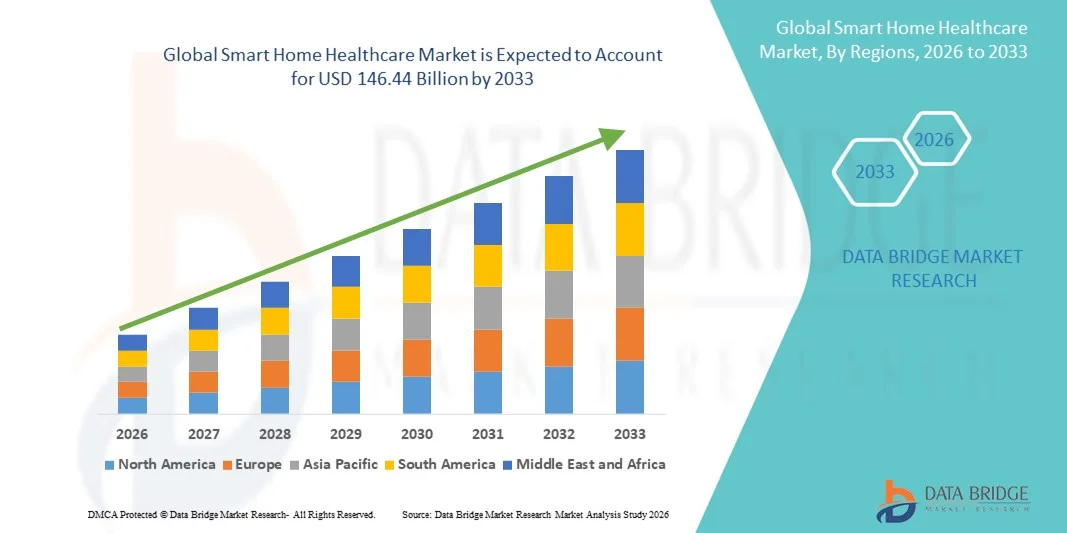
- De acordo com a Data Bridge Market Research Analysis, o tamanho global do mercado de saúde domiciliar inteligente foi avaliado emUSD 27,13 mil milhões em 2025e espera-se alcançarUSD 146,44 mil milhões até 2033, em umaCAGR de 23,46%durante o período de previsão
- O crescimento do mercado é, em grande medida, impulsionado por rápidos avanços tecnológicos e pela adopção generalizada de soluções de saúde ligadas, incluindo dispositivos de monitorização habilitados pela IoT,Sensores de saúde utilizáveis, e integradotelessaúdeplataformas que conduzem a prestação digital de cuidados de saúde directamente para as casas dos consumidores
- Além disso, o aumento da prevalência de doenças crónicas, o envelhecimento da população que exige cuidados remotos e o aumento da preferência dos consumidores por soluções personalizadas, rentáveis e de gestão da saúde em tempo real estão a posicionar a saúde doméstica inteligente como um componente essencial dos ecossistemas de saúde modernos
Tamanho e previsão do mercado
- Valor de mercado global (2025):USD 27,13 mil milhões em 2025
- Valor de mercado previsto (2033):USD 146,44 mil milhões até 2033
- Previsões CAGR (2026-2033):23.46%
Análise Smart Home do Mercado de Saúde
- Soluções de saúde domiciliária inteligentes, incluindo conectadasdispositivos de monitorização da saúde, produtos terapêuticos, dispositivos de cuidados móveis e plataformas de serviços integradas, são cada vez mais vitais para a prestação moderna de cuidados de saúde, permitindo o monitoramento em tempo real, detecção precoce e atendimento personalizado para pacientes em ambientes residenciais
- A adoção crescente de cuidados de saúde domiciliares inteligentes é impulsionada pelo aumento da prevalência de doenças crônicas e relacionadas ao estilo de vida, uma população envelhecida, o aumento da preferência do consumidor pela assistência domiciliar e os avanços tecnológicos na conectividade sem fio e no monitoramento remoto da saúde
- A América do Norte dominou o mercado de saúde domiciliar inteligente com a maior parcela de receita de 37,9% em 2025, apoiada por altos gastos em saúde, infraestrutura avançada, adoção precoce de tecnologias de saúde sem fio, e a presença de principais atores do setor que fornecem testes, triagem, monitoramento e soluções terapêuticas
- Espera-se que a Ásia-Pacífico seja a região de crescimento mais rápido durante o período de previsão impulsionada pelo aumento da urbanização, aumento dos rendimentos disponíveis, ampliação da sensibilização para a saúde e rápida adoção de produtos de cuidados móveis, dispositivos terapêuticos e serviços de monitoramento remoto em países como China, Japão e Índia
- Testes, triagem e monitoramento de produtos dominaram o mercado de saúde domiciliar inteligente com uma parcela de 47,3% em 2025, impulsionada pela sua eficácia na gestão de condições crônicas e relacionadas com o estilo de vida e que permite o monitoramento contínuo do paciente em casa
Relatar Escopo e Segmentação do Mercado de Saúde em Casa Inteligente
|
Atributos |
Visão inteligente do mercado chave da saúde em casa |
|
Segmentos Cobertos |
|
|
Países abrangidos |
América do Norte
Europa
Ásia- Pacífico
Médio Oriente e África
América do Sul
|
|
Jogadores do mercado chave |
|
|
Oportunidades de Mercado |
|
|
Informações sobre o Valor Adicionado |
Além dos insights sobre cenários de mercado, como valor de mercado, taxa de crescimento, segmentação, cobertura geográfica e principais atores, os relatórios de mercado curados pela Data Bridge Market Research também incluem análise de especialistas em profundidade, epidemiologia do paciente, análise de pipelines, análise de preços e marco regulatório |
Qual é a tendência chave no Smart Home Healthcare Market
Monitoramento Remoto e Cuidado Preditivo Dirigido por IA
- Uma tendência significativa e acelerada no mercado global de saúde domiciliar inteligente é a integração de IA e aprendizagem de máquina com dispositivos de saúde wearable e conectados, melhorando o monitoramento em tempo real e a gestão preditiva da saúde
- Por exemplo, sistemas de monitoramento de saúde habilitados por IA, como HealthMate Smart Hub, podem analisar os sinais vitais dos pacientes continuamente e alertar os cuidadores de possíveis anomalias de saúde antes que ocorram eventos críticos
- O aprendizado de máquina em dispositivos de saúde inteligentes permite insights preditivos, como sugerir ajustes no estilo de vida, rastrear a adesão de medicamentos e fornecer alertas inteligentes para atividade anormal, melhorar os resultados dos pacientes
- A integração com assistentes digitais e aplicativos móveis permite que pacientes e cuidadores gerenciem múltiplos aspectos da assistência domiciliar, incluindo monitoramento vital, horários de medicação e teleconsultas, através de uma única plataforma
- Essa tendência para sistemas de saúde baseados em IA, personalizados e interligados está reformulando as expectativas dos pacientes, com empresas como a BioIntelliSense desenvolvendo dispositivos wearable que rastreiam múltiplas métricas de saúde e oferecem alertas preditivos
- A demanda por soluções de saúde domiciliar inteligentes com cuidados preditivos habilitados por IA e monitoramento em tempo real está crescendo rapidamente, pois os consumidores priorizam cada vez mais conveniência, atendimento personalizado e gerenciamento contínuo da saúde
- O aumento da adopção de tecnologias sem fios nos dispositivos de monitorização está a aumentar a acessibilidade remota e a integração perfeita com as plataformas de telessaúde, permitindo a prestação de cuidados, mesmo nas regiões rurais e desfavorecidas
- Parcerias entre empresas de tecnologia e provedores de saúde estão criando soluções mais sofisticadas e interoperáveis que combinam análises de dados, monitoramento remoto e ferramentas de engajamento de pacientes para cuidados holísticos em casa
Dinâmica Smart Home Healthcare Market
Controlador
Prevalência e envelhecimento da doença crônica em ascensão
- A crescente prevalência de doenças crônicas, tais como distúrbios cardiovasculares, diabetes e doenças respiratórias, juntamente com uma população em envelhecimento crescente, é um motor fundamental para o aumento da demanda por soluções de saúde domiciliar inteligentes
- Por exemplo, em março de 2025, Philips introduziu um avançadomonitorização remota do doenteplataforma para pacientes cardíacos e respiratórios, projetada para rastrear parâmetros vitais e fornecer intervenções oportunas em casa
- Como pacientes e cuidadores buscam monitoramento contínuo e melhor acesso à saúde, dispositivos de saúde domiciliar inteligentes oferecem recursos como rastreamento de sinais vitais em tempo real, notificações de alerta e integração de teleconsultas
- Além disso, o aumento da sensibilização para os cuidados de saúde preventivos e a adoção de soluções de saúde conectadas estão tornando a saúde domiciliar inteligente uma parte crítica dos cuidados modernos dos pacientes, apoiando o manejo e reabilitação de doenças crônicas
- A conveniência de monitoramento domiciliar, detecção precoce de doenças e consultas remotas por meio de dispositivos móveis e vestíveis está impulsionando a adoção em domicílios, unidades de moradia assistidas e serviços de cuidados domiciliares
- Iniciativas governamentais e políticas de reembolso que apoiam o monitoramento remoto de pacientes e cuidados domiciliares estão aumentando ainda mais a demanda em mercados de saúde maduros
- Avanços em sensores wearable e conectividade de IoT estão permitindo o rastreamento em tempo real de múltiplos parâmetros de saúde, tornando o atendimento domiciliar inteligente mais eficaz e confiável para gerenciamento de pacientes de longo prazo
- Aumento das parcerias entre fabricantes de dispositivos e prestadores de cuidados de saúde estão a expandir o ecossistema de soluções interoperáveis, melhorando o envolvimento dos doentes e a coordenação dos cuidados no domicílio
Restrição/Desafio
Preocupações de privacidade de dados e alto custo de soluções avançadas
- As preocupações em torno da privacidade dos dados e da segurança dos dispositivos de saúde conectados constituem um desafio significativo para a adoção mais ampla de soluções de saúde domiciliar inteligentes, uma vez que os dados dos pacientes são altamente sensíveis
- Por exemplo, os relatos de vulnerabilidades em dispositivos de saúde IoT fizeram alguns consumidores hesitarem em adotar soluções inteligentes de monitoramento e telessaúde em casa
- Resolver essas preocupações através de criptografia, autenticação segura e atualizações de software regulares é essencial para construir confiança no consumidor, com empresas como a ResMed enfatizando a segurança cibernética e conformidade em suas soluções
- Além disso, o elevado custo dos sistemas de saúde domésticos inteligentes avançados em comparação com os serviços de saúde tradicionais pode constituir uma barreira para os consumidores sensíveis aos preços, em especial nas regiões em desenvolvimento
- Enquanto soluções mais acessíveis estão surgindo, o prêmio percebido para dispositivos de saúde conectados e habilitados para IA ainda pode dificultar a adoção; superar isso através da redução de custos, segurança robusta e educação ao consumidor é crucial para o crescimento do mercado
- A alfabetização tecnológica limitada entre usuários idosos pode reduzir as taxas de adoção, pois alguns pacientes podem lutar para operar dispositivos complexos sem assistência.
- Fragmentação de normas e questões de interoperabilidade entre dispositivos e plataformas de cuidados de saúde podem impedir uma integração perfeita, limitando a eficácia das soluções de cuidados de saúde domiciliares conectadas
- Diferenças de conformidade regulatória entre regiões aumentam a complexidade para as empresas que buscam expansão global, acrescentando custos e custos para certificação de produtos e entrada no mercado
Escopo Smart Home Healthcare Market
O mercado é segmentado com base em tecnologia, produto, serviço e indicação.
- Por Tecnologia
Com base na tecnologia, o mercado global de saúde domiciliar inteligente é segmentado em tecnologias com fio e sem fio. O segmento sem fio dominou o mercado com a maior parcela de receita de 61,2% em 2025, impulsionada pela conveniência de monitoramento remoto, facilidade de instalação e flexibilidade na integração de múltiplos dispositivos sem modificações extensas de infraestrutura. As soluções de saúde domiciliar inteligentes sem fio permitem aos pacientes monitorar sinais vitais de qualquer lugar do lar, apoiando o cuidado contínuo para as condições crônicas. O segmento também se beneficia da crescente adoção de smartphones e tablets como interfaces de controle, permitindo uma interação perfeita com dispositivos, sensores e aplicações de telessaúde wearable. Além disso, a tecnologia sem fio suporta análises preditivas habilitadas por IA, permitindo alertas em tempo real e intervenções proativas. Os profissionais de saúde preferem soluções sem fio para sua escalabilidade, pois podem ser ampliadas ou atualizadas sem ruptura significativa. No geral, a combinação de mobilidade, interoperabilidade e facilidade de utilização torna o sem fios a escolha preferida para aplicações de habitação e de habitação assistida.
Espera-se que o segmento com fio testemunhe o CAGR mais rápido de 20,3% de 2026 a 2033, impulsionado pela sua confiabilidade, conectividade estável e susceptibilidade reduzida à interferência, tornando-o ideal para cuidados intensivos e configurações domiciliares clínicas. As soluções de cuidados de saúde domiciliares inteligentes são particularmente relevantes em áreas onde a transmissão de dados consistente e ininterrupta é fundamental, como o monitoramento cardíaco remoto ou a terapia de infusão. Eles também são preferidos em alojamentos de alta densidade ou instalações onde o congestionamento do espectro sem fio pode afetar o desempenho do dispositivo. À medida que as atualizações de infraestrutura continuam em mercados desenvolvidos e emergentes, tecnologias com fio estão sendo cada vez mais integradas ao lado de soluções sem fio para fornecer sistemas híbridos que maximizam a confiabilidade e a cobertura. A adoção do segmento é impulsionada pela integração de sensores e dispositivos avançados que requerem conectividade contínua e de alta velocidade para a coleta de dados de saúde precisa.
- Por Produto
Com base no produto, o mercado é segmentado em produtos de teste, triagem e monitoramento, produtos terapêuticos e produtos de cuidados móveis. O segmento de testes, rastreamento e monitoramento de produtos dominou o mercado com uma parcela de 47,3% em 2025, devido ao seu papel essencial no manejo de doenças crônicas e cuidados preventivos. Os dispositivos deste segmento incluem sensores vestíveis, monitores de pressão arterial, medidores de glicose e monitores respiratórios, que permitem o rastreamento contínuo dos sinais vitais do paciente. Os prestadores de cuidados de saúde domiciliares e os pacientes preferem estas soluções pela sua capacidade de entregar dados precisos em tempo real a cuidadores e clínicos. Estes produtos também se integram com plataformas de telessaúde para facilitar consultas remotas, diagnóstico precoce e intervenções oportunas. A conveniência e a natureza não invasiva desses dispositivos os tornam amplamente aceitos por pacientes idosos e indivíduos que gerenciam múltiplas condições. Além disso, sua compatibilidade com aplicativos móveis e plataformas baseadas em nuvem aumenta o engajamento do paciente e a adesão aos planos de cuidados.
Espera-se que o segmento de produtos móveis testemunhe o CAGR mais rápido de 22,5% de 2026 a 2033, impulsionado pelo aumento do uso de kits portáteis de monitoramento, dispositivos de telemedicina e auxiliares de saúde habilitados para IA. Os produtos de cuidados móveis permitem aos doentes gerir a sua saúde fora dos ambientes clínicos convencionais, apoiando a monitorização remota durante a viagem ou estadias temporárias fora de casa. A flexibilidade, a facilidade de uso e a capacidade de transmitir dados em tempo real tornam esses dispositivos cada vez mais populares entre profissionais e cuidadores que gerenciam múltiplos pacientes. A penetração crescente de smartphones, a tecnologia wearable acessível e a integração com análises preditivas baseadas em IA contribuem ainda mais para o crescimento deste segmento. Os produtos de cuidados móveis também suportam cuidados personalizados e podem ser adaptados a condições crônicas específicas, melhorando os resultados dos pacientes.
- Por Serviço
Com base no serviço, o mercado de saúde domiciliar inteligente é segmentado em serviços de enfermagem qualificados, serviços de terapia de reabilitação, serviços de cuidados paliativos, serviços de cuidados não qualificados, serviços de fisioterapia respiratória, serviços de terapia de infusão e serviços de cuidados de gravidez. O segmento de serviços de enfermagem qualificados dominou o mercado em 2025 com uma participação de 32,8%, devido à crescente demanda por cuidados médicos profissionais prestados no domicílio, especialmente para idosos e pacientes pós-operatórios. Os enfermeiros hábeis fornecem tratamento medicamentoso, cuidados com feridas, monitoramento de doenças crônicas e suporte à telessaúde, que são fundamentais para reduzir as reinternações hospitalares e melhorar os resultados dos pacientes. Os profissionais de saúde integram cada vez mais dispositivos de monitoramento digital com os serviços de enfermagem para acompanhar o progresso do paciente remotamente. O segmento também se beneficia de incentivos governamentais e políticas de reembolso de promoção de cuidados qualificados domiciliares. A combinação de supervisão profissional e monitoramento digital garante segurança e continuidade do cuidado, tornando-o altamente valorizado tanto pelos pacientes quanto pelos cuidadores.
Espera-se que o segmento de serviços de reabilitação testemunhe o CAGR mais rápido de 23,1% de 2026 a 2033, impulsionado pelo aumento da demanda por fisioterapia, suporte à mobilidade e reabilitação pós-AVC em casa. Ferramentas digitais, sensores de movimento e dispositivos de reabilitação habilitados para IA permitem aos terapeutas monitorar remotamente o progresso do paciente e ajustar os programas de terapia em tempo real. Os pacientes se beneficiam de planos de terapia personalizados sem necessidade de visitas hospitalares frequentes, melhorando a adesão e os resultados de recuperação. O crescimento desse segmento também é alimentado pelo envelhecimento populacional, aumento da incidência de distúrbios musculoesqueléticos e preferência pela terapia domiciliar em relação aos centros de reabilitação institucional.
- Por Indicação
Com base na indicação, o mercado é segmentado em doenças cardiovasculares e hipertensão arterial, diabetes, doenças respiratórias, gravidez, distúrbios de mobilidade, distúrbios auditivos, câncer, cuidados com feridas e outras indicações. Doenças cardiovasculares ehipertensãoo segmento dominou o mercado com uma participação de 28,7% em 2025, impulsionado pela alta prevalência de cardiopatias, pela necessidade de pressão arterial contínua e monitoramento cardíaco, e pela disponibilidade de monitores cardíacos wearable. Pacientes e cuidadores dependem desses dispositivos para detecção precoce de anomalias, manejo de risco e integração com plataformas de telessaúde para consultas em tempo real. As análises preditivas habilitadas por IA neste segmento aumentam ainda mais a segurança do paciente, detectando padrões irregulares e gerando alertas para intervenção. Os profissionais de saúde preferem essas soluções para reduzir as internações e melhorar o manejo da doença no domicílio. O segmento também se beneficia com a crescente conscientização dos cuidados preventivos e iniciativas governamentais incentivando o monitoramento cardíaco remoto.
Espera-se que o segmento de doenças respiratórias testemunhe o CAGR mais rápido de 24,6% de 2026 a 2033, alimentado pelo aumento da prevalência de doenças respiratórias crônicas como DPOC, asma e apneia do sono, juntamente com o aumento da adoção de inaladores conectados, monitores de oxigênio e dispositivos de terapia respiratória inteligente. Os pacientes estão cada vez mais utilizando dispositivos domiciliares para gerenciar as condições, reduzir a dependência hospitalar e possibilitar planos de cuidados personalizados. A integração de IoT e IA em dispositivos respiratórios permite o rastreamento contínuo, detecção precoce de exacerbações e consulta remota com clínicos. O aumento da poluição atmosférica e o aumento das populações geriátricas também contribuem para as fortes perspectivas de crescimento deste segmento.
Análise Regional Smart Home Healthcare Market
- A América do Norte dominou o mercado de saúde domiciliar inteligente com a maior parcela de receita de 37,9% em 2025, apoiada por altos gastos em saúde, infraestrutura avançada, adoção precoce de tecnologias de saúde sem fio, e a presença de principais atores do setor que fornecem testes, triagem, monitoramento e soluções terapêuticas
- Consumidores e prestadores de cuidados de saúde na região valorizam muito a conveniência, as capacidades de monitoramento em tempo real e a integração perfeita de dispositivos de saúde domiciliar inteligentes com plataformas de telessaúde, aplicativos móveis e sensores wearable para cuidados contínuos aos pacientes
- Esta adopção generalizada é ainda apoiada por despesas de saúde elevadas, infra-estruturas tecnológicas avançadas, políticas de reembolso de apoio e forte presença dos principais intervenientes do sector, estabelecendo soluções de cuidados de saúde em casa inteligentes como uma escolha preferencial tanto para cuidados residenciais como para instalações de habitação assistida
U.S. Smart Home Healthcare Market Insight
O mercado de saúde domiciliar inteligente dos EUA captou a maior parcela de receita de 82% em 2025 na América do Norte, alimentada pela rápida adoção de dispositivos de saúde conectados e crescente ênfase no monitoramento remoto dos pacientes. Consumidores e cuidadores estão priorizando a gestão da saúde em casa através de sensores wearable, plataformas de telessaúde e sistemas de monitoramento baseados em IA. A crescente preferência por configurações de cuidados de saúde DIY, combinada com alta adoção de aplicativos móveis e monitoramento baseado em nuvem, impulsiona ainda mais o mercado. Além disso, a integração de dispositivos de saúde domiciliar inteligentes com assistentes virtuais e plataformas de telemedicina contribui significativamente para a expansão do mercado.
Europa Smart Home Healthcare Market Insight
Prevê-se que o mercado europeu de cuidados de saúde domésticos inteligentes cresça num CAGR substancial durante o período de previsão, impulsionado principalmente pelo aumento da prevalência de doenças crónicas e pela crescente necessidade de soluções de cuidados de saúde domiciliares. A urbanização, juntamente com a conscientização da atenção preventiva à saúde e a adoção de dispositivos conectados, está promovendo a expansão do mercado. Os consumidores europeus valorizam muito a conveniência, o acompanhamento da saúde em tempo real e a integração com os serviços de telessaúde. O mercado está testemunhando crescimento em aplicações residenciais, de assistência e de serviços de cuidados domiciliares, com soluções de saúde inteligentes incorporadas em novas casas e projetos de renovação para um melhor atendimento ao paciente.
U.K. Smart Home Healthcare Market Insight
O mercado de saúde domiciliar inteligente do Reino Unido está previsto para crescer em um CAGR notável durante o período de previsão, impulsionado pela adoção crescente de sistemas remotos de monitoramento de pacientes e plataformas de telessaúde. As preocupações com o manejo de doenças crônicas e o aumento da população idosa estão incentivando os domicílios e cuidadores a adotar soluções de saúde inteligentes. Espera-se que a robusta infra-estrutura de saúde do Reino Unido, juntamente com o seu ecossistema avançado de saúde electrónica, continue a estimular o crescimento do mercado. A integração com aplicativos móveis e dispositivos de saúde vestíveis está tornando o cuidado domiciliar mais eficiente e acessível.
Alemanha Smart Home Healthcare Market Insight
Espera-se que o mercado de saúde domiciliar inteligente da Alemanha se expanda em um CAGR considerável durante o período de previsão, alimentado pela crescente conscientização da saúde digital, infraestrutura avançada e a demanda por soluções de saúde ecoconscientes e capacitadas para tecnologias. O foco da Alemanha na inovação e no cuidado centrado no paciente promove a adoção de dispositivos de saúde inteligentes e plataformas de monitoramento remoto, especialmente em ambientes de vida residenciais e assistidos. A integração com serviços de telesaúde domiciliares e sistemas de monitoramento habilitados para IA é cada vez mais prevalente, atendendo às expectativas dos consumidores locais de soluções de saúde seguras e confiáveis.
Asia-Pacific Smart Home Healthcare Market Insight
O mercado de saúde domiciliar inteligente Ásia-Pacífico está preparado para crescer no CAGR mais rápido de 26% durante o período de previsão de 2026 a 2033, impulsionado pela urbanização rápida, aumento de renda disponível, e aumento da consciência de saúde em países como China, Japão e Índia. As iniciativas governamentais que promovem a telemedicina, a infraestrutura de saúde digital e as tecnologias caseiras inteligentes estão impulsionando a adoção. Além disso, como a APAC emerge como um centro para a fabricação de dispositivos de saúde conectados, a acessibilidade e a acessibilidade de soluções de saúde domiciliar inteligentes estão se expandindo para uma base de consumidores mais ampla.
Japão Smart Home Healthcare Market Insight
O mercado de saúde domiciliar do Japão está ganhando ímpeto devido ao ecossistema tecnológico avançado do país, ao crescente envelhecimento da população e ao forte foco nos cuidados preventivos. O mercado é alimentado pela demanda de dispositivos de monitoramento de saúde e soluções de telessaúde para idosos, compatíveis com o usuário. A integração de dispositivos de saúde inteligentes com plataformas IoT, sensores wearable e aplicativos móveis está impulsionando o crescimento. Além disso, a ênfase do Japão no monitoramento remoto e no manejo de doenças crônicas domiciliares apoia a adoção de soluções preditivas de saúde compatíveis com IA em instalações residenciais e assistidas.
Índia Smart Home Healthcare Market Insight
O mercado de saúde domiciliar inteligente da Índia representou a maior parte da receita da Ásia-Pacífico em 2025, atribuída à expansão da classe média do país, urbanização rápida e crescente penetração de smartphones. A Índia está se tornando um mercado chave para dispositivos inteligentes de monitoramento da saúde, serviços de telessaúde e soluções terapêuticas wearable. O impulso para iniciativas de saúde digital, programas de cidades inteligentes e a disponibilidade de dispositivos econômicos de fabricantes nacionais e internacionais estão impulsionando o crescimento. A adoção de cuidados de saúde domiciliares inteligentes está aumentando em propriedades residenciais, comerciais e de aluguel, apoiando cuidados preventivos e gerenciamento de doenças crônicas em casa.
Quais são as principais empresas no mercado de saúde Smart Home
A indústria Smart Home Healthcare é liderada principalmente por empresas bem estabelecidas, incluindo:
- Koninklijke Philips N.V. (Países Baixos)
- Medtronic (Irlanda)
- Honeywell International Inc. (EUA)
- Siemens Healthineers AG (Alemanha)
- GE HealthCare (EUA)
- Samsung Electronics Co., Ltd (Coreia do Sul)
- Abbott (EUA)
- Boston Scientific Corporation (EUA)
- ResMed Inc. (EUA)
- Dexcom, Inc. (EUA)
- Compensações (França)
- Omron Corporation (Japão)
- iHealth Labs Inc. (EUA)
- Medical Guardian LLC (EUA)
- CarePredict, Inc. (EUA)
- VitalConnect, Inc. (EUA)
- Qure4u Inc. (EUA)
- Agatsa Software Pvt. Ltd. (Índia)
- Centro Médico de Alarme de Baía (EUA)
- Vayyar Imaging Ltd. (Israel)
Quais são os recentes desenvolvimentos no mercado global de saúde inteligente
- Em novembro de 2025, Withings revelou o “termômetro do futuro” do BeamO, um dispositivo de saúde portátil aprovado pela FDA que combina varredura de temperatura sem contato com estetoscópio e funcionalidade do ECG para monitoramento avançado em casa de sinais vitais, melhorando diagnósticos de saúde remotos para famílias e idosos
- Em agosto de 2025, VitalConnect, uma empresa líder em monitoramento cardíaco remoto, garantiu US$ 100 milhões em financiamento e apresentou soluções de “experiência em qualquer lugar, a qualquer hora” de monitoramento cardíaco remoto na HRS 2025, ressaltando investimento rápido e adoção de tecnologias de saúde cardíaca conectadas
- Em abril de 2024, a FDA dos EUA lançou a iniciativa “Home as a Health Care Hub” para expandir a prestação de cuidados de saúde para o ambiente doméstico, incentivando a inovação de dispositivos médicos e integração que apoia o bem-estar, prevenção e gerenciamento de doenças crônicas fora dos ambientes clínicos tradicionais
- Em julho de 2023, a FDA concedeu autorização para a plataforma de estetoscópio inteligente wearable da AeviceMD, permitindo monitoramento respiratório domiciliar em tempo real e marcando um passo significativo para sistemas contínuos de monitoramento de pacientes em casa
- Em janeiro de 2023, Philips e Masimo expandiram sua colaboração para incluir aplicações de telessaúde domiciliar para monitoramento de pacientes, integrando tecnologias avançadas de saúde wearable e remotas para apoiar cuidados contínuos de pacientes fora dos hospitais
SKU-
Obtenha acesso online ao relatório sobre a primeira nuvem de inteligência de mercado do mundo

- Painel interativo de análise de dados
- Painel de análise da empresa para oportunidades de elevado potencial de crescimento
- Acesso de analista de pesquisa para personalização e customização. consultas
- Análise da concorrência com painel interativo
- Últimas notícias, atualizações e atualizações Análise de tendências
- Aproveite o poder da análise de benchmark para um rastreio abrangente da concorrência
Metodologia de Investigação
A recolha de dados e a análise do ano base são feitas através de módulos de recolha de dados com amostras grandes. A etapa inclui a obtenção de informações de mercado ou dados relacionados através de diversas fontes e estratégias. Inclui examinar e planear antecipadamente todos os dados adquiridos no passado. Da mesma forma, envolve o exame de inconsistências de informação observadas em diferentes fontes de informação. Os dados de mercado são analisados e estimados utilizando modelos estatísticos e coerentes de mercado. Além disso, a análise da quota de mercado e a análise das principais tendências são os principais fatores de sucesso no relatório de mercado. Para saber mais, solicite uma chamada de analista ou abra a sua consulta.
A principal metodologia de investigação utilizada pela equipa de investigação do DBMR é a triangulação de dados que envolve a mineração de dados, a análise do impacto das variáveis de dados no mercado e a validação primária (especialista do setor). Os modelos de dados incluem grelha de posicionamento de fornecedores, análise da linha de tempo do mercado, visão geral e guia de mercado, grelha de posicionamento da empresa, análise de patentes, análise de preços, análise da quota de mercado da empresa, normas de medição, análise global versus regional e de participação dos fornecedores. Para saber mais sobre a metodologia de investigação, faça uma consulta para falar com os nossos especialistas do setor.
Personalização disponível
A Data Bridge Market Research é líder em investigação formativa avançada. Orgulhamo-nos de servir os nossos clientes novos e existentes com dados e análises que correspondem e atendem aos seus objetivos. O relatório pode ser personalizado para incluir análise de tendências de preços de marcas-alvo, compreensão do mercado para países adicionais (solicite a lista de países), dados de resultados de ensaios clínicos, revisão de literatura, mercado remodelado e análise de base de produtos . A análise de mercado dos concorrentes-alvo pode ser analisada desde análises baseadas em tecnologia até estratégias de carteira de mercado. Podemos adicionar quantos concorrentes necessitar de dados no formato e estilo de dados que procura. A nossa equipa de analistas também pode fornecer dados em tabelas dinâmicas de ficheiros Excel em bruto (livro de factos) ou pode ajudá-lo a criar apresentações a partir dos conjuntos de dados disponíveis no relatório.











