


What is the Smart Home Healthcare Market Size and Growth Rate?
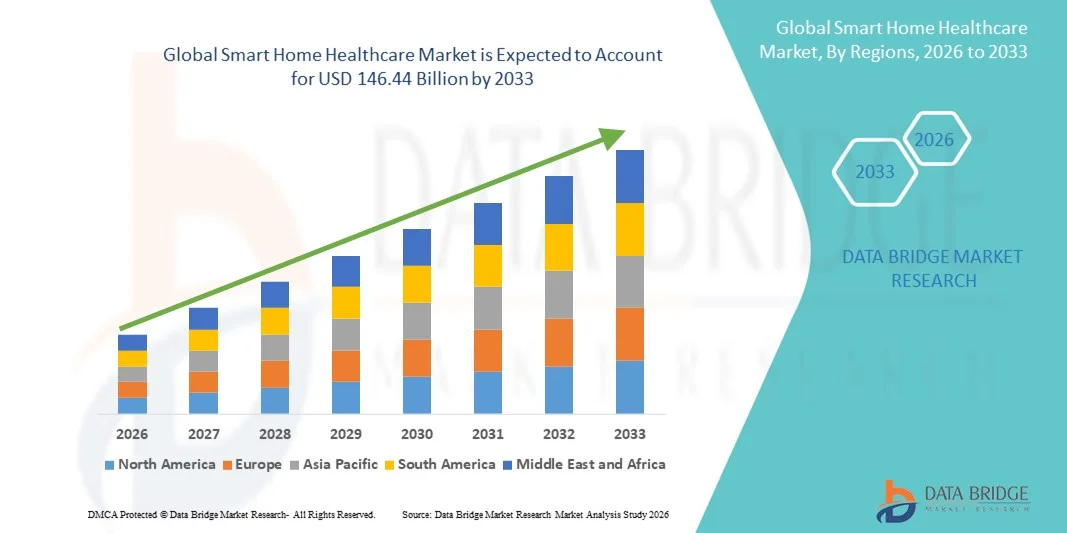
- As per Data Bridge Market Research Analysis the global smart home healthcare market size was valued at USD 27.13 billion in 2025 and is expected to reach USD 146.44 billion by 2033, at a CAGR of 23.46% during the forecast period
- The market growth is largely fueled by rapid technological advancements and widespread adoption of connected health solutions, including IoT‑enabled monitoring devices, wearable health sensors, and integrated telehealth platforms, which are driving digital healthcare delivery directly into consumers’ homes
- Furthermore, increasing prevalence of chronic diseases, a growing aging population demanding remote care, and rising consumer preference for personalized, cost‑effective, and real‑time health management solutions are positioning smart home healthcare as a key component of modern health ecosystems
Market Size & Forecast
- Global Market Value (2025): USD 27.13 billion in 2025
- Expected Market Value (2033): USD 146.44 billion by 2033
- Forecast CAGR (2026–2033): 23.46%
Smart Home Healthcare Market Analysis
- Smart home healthcare solutions, including connected health monitoring devices, therapeutic products, mobile care devices, and integrated service platforms, are increasingly vital for modern healthcare delivery, enabling real-time monitoring, early detection, and personalized care for patients in residential settings
- The growing adoption of smart home healthcare is driven by rising prevalence of chronic and lifestyle-related diseases, an aging population, increasing consumer preference for at-home care, and the technological advancements in wireless connectivity and remote health monitoring
- North America dominated the smart home healthcare market with the largest revenue share of 37.9% in 2025, supported by high healthcare spending, advanced infrastructure, early adoption of wireless health technologies, and the presence of key industry players providing testing, screening, monitoring, and therapeutic solutions
- Asia-Pacific is expected to be the fastest-growing region during the forecast period driven by increasing urbanization, rising disposable incomes, expanding healthcare awareness, and rapid adoption of mobile care products, therapeutic devices, and remote monitoring services in countries such as China, Japan, and India
- Testing, screening, and monitoring products dominated the smart home healthcare market with a share of 47.3% in 2025, driven by their effectiveness in managing chronic and lifestyle-related conditions and enabling continuous patient monitoring at home
Report Scope and Smart Home Healthcare Market Segmentation
|
Attributes |
Smart Home Healthcare Key Market Insights |
|
Segments Covered |
|
|
Countries Covered |
North America
Europe
Asia-Pacific
Middle East and Africa
South America
|
|
Key Market Players |
|
|
Market Opportunities |
|
|
Value Added Data Infosets |
In addition to the insights on market scenarios such as market value, growth rate, segmentation, geographical coverage, and major players, the market reports curated by the Data Bridge Market Research also include in-depth expert analysis, patient epidemiology, pipeline analysis, pricing analysis, and regulatory framework |
What is the Key Trend in the Smart Home Healthcare Market?
AI-Driven Remote Monitoring and Predictive Care
- A significant and accelerating trend in the global smart home healthcare market is the integration of AI and machine learning with wearable and connected health devices, enhancing real-time monitoring and predictive healthcare management
- For instance, AI-enabled health monitoring systems such as HealthMate Smart Hub can analyze patient vitals continuously and alert caregivers of potential health anomalies before critical events occur
- Machine learning in smart healthcare devices enables predictive insights, such as suggesting lifestyle adjustments, tracking medication adherence, and providing intelligent alerts for abnormal activity, improving patient outcomes
- Integration with digital assistants and mobile applications allows patients and caregivers to manage multiple aspects of home healthcare, including vital monitoring, medication schedules, and teleconsultations, through a single platform
- This trend toward AI-driven, personalized, and interconnected healthcare systems is reshaping patient expectations, with companies such as BioIntelliSense developing wearable devices that track multiple health metrics and offer predictive alerts
- The demand for smart home healthcare solutions with AI-enabled predictive care and real-time monitoring is growing rapidly, as consumers increasingly prioritize convenience, personalized care, and continuous health management
- Increased adoption of wireless technologies in monitoring devices is enhancing remote accessibility and seamless integration with telehealth platforms, enabling care delivery even in rural and underserved regions
- Partnerships between tech companies and healthcare providers are creating more sophisticated, interoperable solutions that combine data analytics, remote monitoring, and patient engagement tools for holistic at-home care
Smart Home Healthcare Market Dynamics
Driver
Rising Chronic Disease Prevalence and Aging Population
- The increasing prevalence of chronic diseases such as cardiovascular disorders, diabetes, and respiratory illnesses, coupled with a growing aging population, is a key driver for the heightened demand for smart home healthcare solutions
- For instance, in March 2025, Philips introduced an advanced remote patient monitoring platform for cardiac and respiratory patients, designed to track vital parameters and provide timely interventions at home
- As patients and caregivers seek continuous monitoring and improved healthcare access, smart home healthcare devices offer features such as real-time vitals tracking, alert notifications, and teleconsultation integration
- Furthermore, rising awareness of preventive healthcare and the adoption of connected health solutions are making smart home healthcare a critical part of modern patient care, supporting chronic disease management and rehabilitation
- The convenience of at-home monitoring, early disease detection, and remote consultations through mobile and wearable devices is propelling adoption across households, assisted living facilities, and homecare services
- Government initiatives and reimbursement policies supporting remote patient monitoring and home-based care are further boosting demand in mature healthcare markets
- Advancements in wearable sensors and IoT connectivity are enabling real-time tracking of multiple health parameters, making smart home healthcare more effective and reliable for long-term patient management
- Increasing partnerships between device manufacturers and healthcare providers are expanding the ecosystem of interoperable solutions, improving patient engagement and care coordination at home
Restraint/Challenge
Data Privacy Concerns and High Cost of Advanced Solutions
- Concerns surrounding data privacy and security of connected healthcare devices pose a significant challenge to wider adoption of smart home healthcare solutions, as patient data is highly sensitive
- For instance, reports of vulnerabilities in IoT health devices have made some consumers hesitant to adopt smart home healthcare monitoring and telehealth solutions
- Addressing these concerns through encryption, secure authentication, and regular software updates is essential to build consumer trust, with companies such as ResMed emphasizing cybersecurity and compliance in their solutions
- In addition, the high cost of advanced smart home healthcare systems compared to traditional healthcare services can be a barrier for price-sensitive consumers, particularly in developing regions
- While more affordable solutions are emerging, the perceived premium for connected and AI-enabled healthcare devices can still hinder adoption; overcoming this through cost reduction, robust security, and consumer education is crucial for market growth
- Limited technological literacy among elderly users can reduce adoption rates, as some patients may struggle to operate complex devices without assistance
- Fragmentation of standards and interoperability issues between devices and healthcare platforms can hinder seamless integration, limiting the effectiveness of connected home healthcare solutions
- Regulatory compliance differences across regions increase the complexity for companies seeking global expansion, adding time and cost burdens for product certification and market entry
Smart Home Healthcare Market Scope
The market is segmented on the basis of technology, product, service, and indication.
- By Technology
On the basis of technology, the global smart home healthcare market is segmented into wired and wireless technologies. The wireless segment dominated the market with the largest revenue share of 61.2% in 2025, driven by the convenience of remote monitoring, ease of installation, and flexibility in integrating multiple devices without extensive infrastructure modifications. Wireless smart home healthcare solutions allow patients to monitor vital signs from anywhere in the home, supporting continuous care for chronic conditions. The segment also benefits from the growing adoption of smartphones and tablets as control interfaces, enabling seamless interaction with wearable devices, sensors, and telehealth applications. In addition, wireless technology supports AI-enabled predictive analytics, allowing for real-time alerts and proactive interventions. Healthcare providers prefer wireless solutions for their scalability, as they can be expanded or upgraded without significant disruption. Overall, the combination of mobility, interoperability, and ease of use makes wireless the preferred choice for both residential and assisted living applications.
The wired segment is expected to witness the fastest CAGR of 20.3% from 2026 to 2033, driven by its reliability, stable connectivity, and reduced susceptibility to interference, making it ideal for intensive care and clinical home setups. Wired smart home healthcare solutions are particularly relevant in areas where consistent, uninterrupted data transmission is critical, such as remote cardiac monitoring or infusion therapy. They are also preferred in high-density housing or facilities where wireless spectrum congestion may impact device performance. As infrastructure upgrades continue in developed and emerging markets, wired technologies are increasingly being integrated alongside wireless solutions to provide hybrid systems that maximize reliability and coverage. The segment’s adoption is further propelled by the integration of advanced sensors and devices that require high-speed, continuous connectivity for accurate health data collection.
- By Product
On the basis of product, the market is segmented into testing, screening, and monitoring products, therapeutic products, and mobile care products. The testing, screening, and monitoring products segment dominated the market with a share of 47.3% in 2025, owing to their essential role in chronic disease management and preventive care. Devices in this segment include wearable sensors, blood pressure monitors, glucose meters, and respiratory monitors, which enable continuous tracking of patient vitals. Home healthcare providers and patients prefer these solutions for their ability to deliver accurate, real-time data to caregivers and clinicians. These products also integrate with telehealth platforms to facilitate remote consultations, early diagnosis, and timely interventions. The convenience and non-invasive nature of these devices make them widely accepted by elderly patients and individuals managing multiple conditions. In addition, their compatibility with mobile apps and cloud-based platforms enhances patient engagement and adherence to care plans.
The mobile care products segment is expected to witness the fastest CAGR of 22.5% from 2026 to 2033, driven by the rising use of portable monitoring kits, telemedicine devices, and AI-enabled health assistants. Mobile care products allow patients to manage their health outside of conventional clinical settings, supporting remote monitoring during travel or temporary stays away from home. The flexibility, ease of use, and ability to transmit data in real time make these devices increasingly popular among working professionals and caregivers managing multiple patients. Rising smartphone penetration, affordable wearable technology, and integration with AI-based predictive analytics further contribute to the growth of this segment. Mobile care products also support personalized care and can be tailored to specific chronic conditions, enhancing patient outcomes.
- By Service
On the basis of service, the smart home healthcare market is segmented into skilled nursing services, rehabilitation therapy services, hospice and palliative care services, unskilled care services, respiratory therapy services, infusion therapy services, and pregnancy care services. The skilled nursing services segment dominated the market in 2025 with a share of 32.8%, owing to the growing demand for professional medical care delivered at home, especially for elderly and post-operative patients. Skilled nurses provide medication management, wound care, chronic disease monitoring, and telehealth support, which are critical for reducing hospital readmissions and enhancing patient outcomes. Healthcare providers increasingly integrate digital monitoring devices with nursing services to track patient progress remotely. The segment also benefits from government incentives and reimbursement policies promoting home-based skilled care. The combination of professional oversight and digital monitoring ensures both safety and continuity of care, making it highly valued by patients and caregivers alike.
The rehabilitation therapy services segment is expected to witness the fastest CAGR of 23.1% from 2026 to 2033, driven by increasing demand for physical therapy, mobility support, and post-stroke rehabilitation at home. Digital tools, motion sensors, and AI-enabled rehabilitation devices allow therapists to remotely monitor patient progress and adjust therapy programs in real time. Patients benefit from personalized therapy plans without needing frequent hospital visits, improving adherence and recovery outcomes. The growth of this segment is also fueled by aging populations, rising incidence of musculoskeletal disorders, and the preference for home-based therapy over institutional rehabilitation centers.
- By Indication
On the basis of indication, the market is segmented into cardiovascular disorders and hypertension, diabetes, respiratory diseases, pregnancy, mobility disorders, hearing disorders, cancer, wound care, and other indications. The cardiovascular disorders and hypertension segment dominated the market with a share of 28.7% in 2025, driven by the high prevalence of heart disease, the need for continuous blood pressure and cardiac monitoring, and the availability of wearable cardiac monitors. Patients and caregivers rely on these devices for early detection of anomalies, risk management, and integration with telehealth platforms for real-time consultations. AI-enabled predictive analytics in this segment further enhance patient safety by detecting irregular patterns and generating alerts for intervention. Healthcare providers prefer these solutions to reduce hospitalizations and improve disease management at home. The segment also benefits from growing awareness of preventive care and government initiatives encouraging remote cardiac monitoring.
The respiratory diseases segment is expected to witness the fastest CAGR of 24.6% from 2026 to 2033, fueled by increasing prevalence of chronic respiratory conditions such as COPD, asthma, and sleep apnea, along with the rising adoption of connected inhalers, oxygen monitors, and smart respiratory therapy devices. Patients are increasingly using home-based devices to manage conditions, reducing hospital dependency and enabling personalized care plans. The integration of IoT and AI in respiratory devices allows continuous tracking, early detection of exacerbations, and remote consultation with clinicians. Rising air pollution and increasing geriatric populations also contribute to the strong growth prospects of this segment.
Smart Home Healthcare Market Regional Analysis
- North America dominated the smart home healthcare market with the largest revenue share of 37.9% in 2025, supported by high healthcare spending, advanced infrastructure, early adoption of wireless health technologies, and the presence of key industry players providing testing, screening, monitoring, and therapeutic solutions
- Consumers and healthcare providers in the region highly value the convenience, real-time monitoring capabilities, and seamless integration of smart home healthcare devices with telehealth platforms, mobile apps, and wearable sensors for continuous patient care
- This widespread adoption is further supported by high healthcare expenditure, advanced technological infrastructure, supportive reimbursement policies, and strong presence of key industry players, establishing smart home healthcare solutions as a preferred choice for both residential care and assisted living facilities
U.S. Smart Home Healthcare Market Insight
The U.S. smart home healthcare market captured the largest revenue share of 82% in 2025 within North America, fueled by the rapid adoption of connected health devices and increasing emphasis on remote patient monitoring. Consumers and caregivers are prioritizing at-home health management through wearable sensors, telehealth platforms, and AI-driven monitoring systems. The growing preference for DIY healthcare setups, combined with high adoption of mobile applications and cloud-based monitoring, further drives the market. Moreover, integration of smart home healthcare devices with virtual assistants and telemedicine platforms is significantly contributing to market expansion.
Europe Smart Home Healthcare Market Insight
The Europe smart home healthcare market is projected to grow at a substantial CAGR during the forecast period, primarily driven by rising prevalence of chronic diseases and the increasing need for home-based healthcare solutions. Urbanization, along with awareness of preventive healthcare and adoption of connected devices, is fostering market expansion. European consumers highly value convenience, real-time health tracking, and integration with telehealth services. The market is witnessing growth across residential, assisted living, and homecare service applications, with smart healthcare solutions incorporated into both new homes and renovation projects for enhanced patient care.
U.K. Smart Home Healthcare Market Insight
The U.K. smart home healthcare market is anticipated to grow at a noteworthy CAGR during the forecast period, driven by the rising adoption of remote patient monitoring systems and telehealth platforms. Concerns regarding chronic disease management and the increasing elderly population are encouraging households and caregivers to adopt smart healthcare solutions. The U.K.’s robust healthcare infrastructure, along with its advanced e-health ecosystem, is expected to continue stimulating market growth. Integration with mobile apps and wearable health devices is making at-home care more efficient and accessible.
Germany Smart Home Healthcare Market Insight
The Germany smart home healthcare market is expected to expand at a considerable CAGR during the forecast period, fueled by growing awareness of digital health, advanced infrastructure, and the demand for eco-conscious, technology-enabled healthcare solutions. Germany’s focus on innovation and patient-centered care promotes the adoption of smart healthcare devices and remote monitoring platforms, particularly in residential and assisted living settings. Integration with home-based telehealth services and AI-enabled monitoring systems is increasingly prevalent, meeting local consumer expectations for secure and reliable healthcare solutions.
Asia-Pacific Smart Home Healthcare Market Insight
The Asia-Pacific smart home healthcare market is poised to grow at the fastest CAGR of 26% during the forecast period of 2026 to 2033, driven by rapid urbanization, rising disposable incomes, and increased healthcare awareness in countries such as China, Japan, and India. Government initiatives promoting telemedicine, digital health infrastructure, and smart home technologies are driving adoption. In addition, as APAC emerges as a hub for manufacturing connected health devices, affordability and accessibility of smart home healthcare solutions are expanding to a wider consumer base.
Japan Smart Home Healthcare Market Insight
The Japan smart home healthcare market is gaining momentum due to the country’s advanced technological ecosystem, growing aging population, and strong focus on preventive care. The market is fueled by demand for user-friendly, connected health monitoring devices and telehealth solutions for elderly care. Integration of smart healthcare devices with IoT platforms, wearable sensors, and mobile applications is driving growth. Furthermore, Japan’s emphasis on remote monitoring and home-based chronic disease management supports the adoption of AI-enabled predictive health solutions across residential and assisted living facilities.
India Smart Home Healthcare Market Insight
The India smart home healthcare market accounted for the largest revenue share in Asia-Pacific in 2025, attributed to the country’s expanding middle class, rapid urbanization, and rising smartphone penetration. India is becoming a key market for smart health monitoring devices, telehealth services, and wearable therapeutic solutions. The push towards digital health initiatives, smart city programs, and the availability of cost-effective devices from domestic and international manufacturers are driving growth. Smart home healthcare adoption is increasing across residential, commercial, and rental properties, supporting preventive care and chronic disease management at home.
Which are the Top Companies in Smart Home Healthcare Market?
The Smart Home Healthcare industry is primarily led by well-established companies, including:
- Koninklijke Philips N.V. (Netherlands)
- Medtronic (Ireland)
- Honeywell International Inc. (U.S.)
- Siemens Healthineers AG (Germany)
- GE HealthCare (U.S.)
- Samsung Electronics Co., Ltd. (South Korea)
- Abbott (U.S.)
- Boston Scientific Corporation (U.S.)
- ResMed Inc. (U.S.)
- Dexcom, Inc. (U.S.)
- Withings (France)
- Omron Corporation (Japan)
- iHealth Labs Inc. (U.S.)
- Medical Guardian LLC (U.S.)
- CarePredict, Inc. (U.S.)
- VitalConnect, Inc. (U.S.)
- Qure4u Inc. (U.S.)
- Agatsa Software Pvt. Ltd. (India)
- Bay Alarm Medical (U.S.)
- Vayyar Imaging Ltd. (Israel)
What are the Recent Developments in Global Smart Home Healthcare Market?
- In November 2025, Withings unveiled the BeamO “thermometer of the future,” an FDA-approved handheld health device that combines no-contact temperature scanning with stethoscope and ECG functionality for advanced at-home monitoring of vital signs, enhancing remote health diagnostics for families and older adults
- In August 2025, VitalConnect, a leading remote cardiac monitoring company, secured USD 100 million in financing and showcased “experience anywhere, anytime” remote cardiac monitoring solutions at HRS 2025, underscoring rapid investment and adoption of connected cardiac health technologies
- In April 2024, the U.S. FDA launched the “Home as a Health Care Hub” initiative to expand healthcare delivery into the home environment, encouraging medical device innovation and integration that supports wellness, prevention, and chronic disease management outside traditional clinical settings
- In July 2023, the FDA granted clearance to AeviceMD’s wearable smart stethoscope platform, enabling real-time home respiratory monitoring and marking a significant step forward for continuous at-home patient monitoring systems
- In January 2023, Philips and Masimo expanded their collaboration to include home telehealth applications for patient monitoring, integrating advanced wearable and remote health technologies to support continuous patient care outside hospitals

- Interactive Data Analysis Dashboard
- Company Analysis Dashboard for high growth potential opportunities
- Research Analyst Access for customization & queries
- Competitor Analysis with Interactive dashboard
- Latest News, Updates & Trend analysis
- Harness the Power of Benchmark Analysis for Comprehensive Competitor Tracking
Data collection and base year analysis are done using data collection modules with large sample sizes. The stage includes obtaining market information or related data through various sources and strategies. It includes examining and planning all the data acquired from the past in advance. It likewise envelops the examination of information inconsistencies seen across different information sources. The market data is analysed and estimated using market statistical and coherent models. Also, market share analysis and key trend analysis are the major success factors in the market report. To know more, please request an analyst call or drop down your inquiry.
The key research methodology used by DBMR research team is data triangulation which involves data mining, analysis of the impact of data variables on the market and primary (industry expert) validation. Data models include Vendor Positioning Grid, Market Time Line Analysis, Market Overview and Guide, Company Positioning Grid, Patent Analysis, Pricing Analysis, Company Market Share Analysis, Standards of Measurement, Global versus Regional and Vendor Share Analysis. To know more about the research methodology, drop in an inquiry to speak to our industry experts.
Data Bridge Market Research is a leader in advanced formative research. We take pride in servicing our existing and new customers with data and analysis that match and suits their goal. The report can be customized to include price trend analysis of target brands understanding the market for additional countries (ask for the list of countries), clinical trial results data, literature review, refurbished market and product base analysis. Market analysis of target competitors can be analyzed from technology-based analysis to market portfolio strategies. We can add as many competitors that you require data about in the format and data style you are looking for. Our team of analysts can also provide you data in crude raw excel files pivot tables (Fact book) or can assist you in creating presentations from the data sets available in the report.













