




Asia Pacific Alcoholic Beverages Market
Market Size in USD Billion
CAGR :
% 
 USD
132.25 Billion
USD
185.21 Billion
2025
2033
USD
132.25 Billion
USD
185.21 Billion
2025
2033
 Forecast Period Forecast Period |
2026 –2033 |
 Market Size (Base Year) Market Size (Base Year) |
USD 132.25 Billion |
 Market Size (Forecast Year) Market Size (Forecast Year) |
USD 185.21 Billion |
 CAGR CAGR |
% |
| Major Markets Players |
|
Asia-Pacific Alcoholic Beverages Market Size
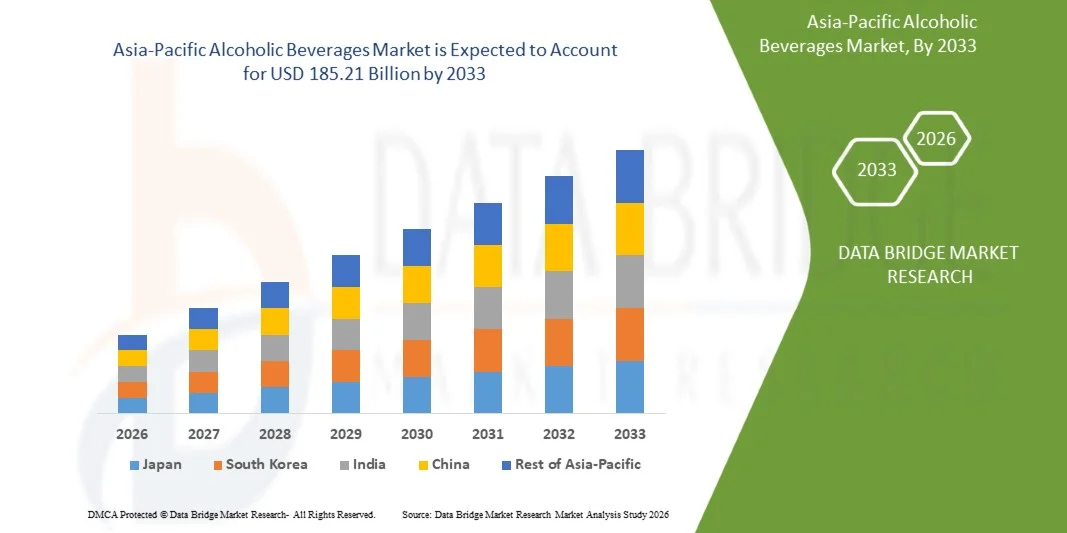
- The Asia-Pacific Alcoholic Beverages Market size was valued at USD 132.25 billion in 2025 and is expected to reach USD 185.21 billion by 2033, at a CAGR of 4.3% during the forecast period
- The market growth is largely fueled by rising disposable incomes, rapid urbanization, and evolving social acceptance of alcoholic beverage consumption, particularly among younger demographics, leading to increased consumption across both developed and emerging economies
- Furthermore, growing demand for premium and flavored alcoholic beverages, along with expanding distribution channels including e-commerce and modern retail, is strengthening product accessibility and consumer engagement. These converging factors are accelerating market expansion and significantly boosting overall industry growth
Asia-Pacific Alcoholic Beverages Market Analysis
- Alcoholic beverages are drinks containing ethanol produced through fermentation or distillation processes, including beer, wine, and spirits, widely consumed for social, cultural, and recreational purposes across global markets
- The escalating demand for alcoholic beverages is primarily driven by changing consumer lifestyles, increasing preference for premium and craft products, and continuous product innovation focused on flavor, packaging, and branding to enhance consumer appeal
- China dominated the Asia-Pacific Alcoholic Beverages Market in 2025, due to its vast consumer base, expanding middle-class population, and strong domestic production of beer and spirits
- India is expected to be the fastest growing country in the Asia-Pacific Alcoholic Beverages Market during the forecast period due to rising disposable incomes, a growing young population, and increasing urbanization
- Beer segment dominated the market with a market share of 61.12% in 2025, due to its widespread global consumption, affordability, and strong presence across both developed and emerging markets. Consumers across diverse demographics prefer beer due to its lower alcohol content and wide flavor variety, which enhances its appeal for casual and social drinking occasions. The strong distribution network and extensive brand portfolios further support the dominance of beer in both on-trade and off-trade channels
Report Scope and Asia-Pacific Alcoholic Beverages Market Segmentation
|
Attributes |
Alcoholic Beverages Key Market Insights |
|
Segments Covered |
|
|
Countries Covered |
Asia-Pacific
|
|
Key Market Players |
|
|
Market Opportunities |
|
|
Value Added Data Infosets |
In addition to the insights on market scenarios such as market value, growth rate, segmentation, geographical coverage, and major players, the market reports curated by the Data Bridge Market Research also include in-depth expert analysis, pricing analysis, brand share analysis, consumer survey, demography analysis, supply chain analysis, value chain analysis, raw material/consumables overview, vendor selection criteria, PESTLE Analysis, Porter Analysis, and regulatory framework. |
Asia-Pacific Alcoholic Beverages Market Trends
“Rising Premiumization and Craft Beverage Consumption”
- A significant trend in the Asia-Pacific Alcoholic Beverages Market is the growing shift toward premium and craft products, driven by consumers seeking higher quality, authenticity, and unique flavor experiences across beer, wine, and spirits categories. This trend is elevating the positioning of alcoholic beverages from mass consumption products to lifestyle-oriented offerings with strong brand identity and heritage appeal
- For instance, Diageo has expanded its premium portfolio with brands such as Johnnie Walker Blue Label and craft-inspired innovations to cater to high-end consumers seeking differentiated experiences. Such initiatives strengthen brand value and drive higher margins while reinforcing consumer loyalty toward premium offerings
- The increasing popularity of craft breweries and artisanal distilleries is reshaping market dynamics as consumers explore locally produced and small-batch beverages. This is encouraging established players to invest in craft segments or acquire niche brands to maintain competitiveness
- The demand for premium wines and aged spirits is rising due to increasing disposable incomes and a growing culture of social drinking and gifting. This trend is further supported by evolving consumer preferences toward quality over quantity in beverage consumption
- Manufacturers are focusing on innovative packaging, storytelling, and experiential marketing to enhance product appeal and differentiate premium offerings. These strategies are strengthening consumer engagement and reinforcing brand perception in competitive markets
- The market is witnessing continuous expansion in premium and craft segments across both developed and emerging economies, which is reinforcing long-term growth potential. The sustained consumer inclination toward high-quality, distinctive alcoholic beverages is shaping the future trajectory of the industry
Asia-Pacific Alcoholic Beverages Market Dynamics
Driver
“Increasing Disposable Income and Changing Consumer Lifestyles”
- The increasing disposable income across emerging and developed economies is driving higher expenditure on alcoholic beverages, particularly in premium and super-premium categories. Consumers are increasingly willing to spend on quality products that align with their lifestyle preferences and social experiences
- For instance, Pernod Ricard has reported strong growth in premium spirits demand in markets such as India and China, supported by rising middle-class populations and urbanization trends. This growth highlights the direct impact of improved purchasing power on alcoholic beverage consumption patterns
- Changing lifestyles, particularly among younger demographics, are promoting social drinking and experimentation with new beverage formats such as cocktails and ready-to-drink products. This shift is expanding the consumer base and driving volume growth across multiple product segments
- Urbanization and exposure to global drinking cultures are influencing consumer behavior, leading to increased acceptance and adoption of diverse alcoholic beverages. This is strengthening demand across both on-premise and off-premise consumption channels
- The continuous evolution of consumer preferences toward premiumization, convenience, and variety is reinforcing this driver. The sustained increase in purchasing power and lifestyle changes is expected to remain a key factor accelerating market expansion
Restraint/Challenge
“Stringent Government Regulations and High Taxation”
- The Asia-Pacific Alcoholic Beverages Market faces significant challenges due to strict government regulations and high taxation policies, which vary widely across regions and directly impact pricing, distribution, and consumption patterns. These regulatory frameworks often limit market expansion and create barriers for new entrants
- For instance, World Health Organization has consistently advocated for higher taxes and stricter controls on alcohol consumption to reduce health risks, influencing policy decisions in multiple countries. Such measures increase product costs and restrict marketing activities, thereby affecting overall demand
- Complex licensing requirements and restrictions on advertising and promotion further limit brand visibility and consumer engagement. These constraints make it challenging for companies to effectively differentiate their products in competitive markets
- High excise duties and varying tax structures across states and countries lead to price disparities and reduced affordability, particularly in price-sensitive regions. This impacts consumption levels and slows down market penetration
- The cumulative impact of stringent regulations and taxation continues to pose a major constraint on market growth. These challenges necessitate strategic planning and regulatory alignment to sustain long-term industry expansion
Asia-Pacific Alcoholic Beverages Market Scope
The market is segmented on the basis of type, packaging, product type, and distribution channel.
• By Type
On the basis of type, the Asia-Pacific Alcoholic Beverages Market is segmented into beer, distilled spirits, wine, champagne, brandy, ciders, and others. The beer segment dominated the largest market revenue share of 61.12% in 2025, driven by its widespread global consumption, affordability, and strong presence across both developed and emerging markets. Consumers across diverse demographics prefer beer due to its lower alcohol content and wide flavor variety, which enhances its appeal for casual and social drinking occasions. The strong distribution network and extensive brand portfolios further support the dominance of beer in both on-trade and off-trade channels. Continuous product innovation in craft beer and premium variants has also contributed to sustained demand across urban markets. The accessibility and cultural acceptance of beer in multiple regions continue to reinforce its leading position in the market.
The distilled spirits segment is anticipated to witness the fastest growth rate from 2026 to 2033, fueled by rising premiumization trends and increasing consumer preference for high-quality alcoholic beverages. Spirits such as whiskey, vodka, and rum are gaining traction among younger consumers due to evolving taste preferences and growing cocktail culture. The expansion of premium and super-premium product lines, along with increasing disposable incomes, is further supporting segment growth. Distilled spirits also benefit from strong branding and higher profit margins, encouraging manufacturers to invest in product differentiation and innovation. The growing influence of western drinking habits in emerging economies is accelerating demand for spirits.
• By Packaging
On the basis of packaging, the Asia-Pacific Alcoholic Beverages Market is segmented into bottles, cans, and tetra packs. The bottles segment dominated the largest market revenue share in 2025, driven by its traditional usage, premium appeal, and ability to preserve the quality and taste of alcoholic beverages. Glass bottles are widely preferred for products such as wine, spirits, and premium beer due to their superior barrier properties and recyclability. The aesthetic value and branding opportunities offered by glass packaging further enhance consumer perception, especially in high-end product categories. Bottles also support long-term storage and aging, which is essential for certain alcoholic beverages. The widespread availability and established infrastructure for bottled products contribute to their continued dominance.
The cans segment is expected to witness the fastest CAGR from 2026 to 2033, driven by increasing demand for convenient, lightweight, and portable packaging solutions. Cans are gaining popularity among younger consumers and outdoor enthusiasts due to their ease of handling and rapid cooling capabilities. The growing focus on sustainability and recyclability is further boosting the adoption of aluminum cans across the industry. Beverage manufacturers are increasingly launching new products in cans to cater to on-the-go consumption trends. The expansion of ready-to-drink alcoholic beverages is also significantly supporting the growth of this segment.
• By Product Type
On the basis of product type, the Asia-Pacific Alcoholic Beverages Market is segmented into flavoured and unflavoured. The unflavoured segment dominated the largest market revenue share in 2025, driven by strong consumer preference for traditional and classic alcoholic beverages such as standard beer, whiskey, and wine. These products have a long-standing presence in the market and are widely accepted across different cultures and regions. The consistent demand for authentic taste profiles and established brand loyalty further support the dominance of unflavoured variants. Manufacturers continue to focus on maintaining quality and heritage, which resonates strongly with mature consumer groups. The broad availability of unflavoured products across all price ranges also contributes to their leading position.
The flavoured segment is anticipated to witness the fastest growth rate from 2026 to 2033, fueled by changing consumer preferences toward innovative and diverse taste experiences. Younger consumers are increasingly drawn to flavoured alcoholic beverages due to their novelty, sweetness, and lower perceived alcohol intensity. The rising popularity of ready-to-drink cocktails and infused spirits is significantly driving demand in this segment. Beverage companies are continuously introducing new flavor combinations to capture evolving consumer interest. The influence of social media and lifestyle trends is also encouraging experimentation with flavoured drinks.
• By Distribution Channel
On the basis of distribution channel, the Asia-Pacific Alcoholic Beverages Market is segmented into convenience stores, specialty stores, online retailers, hotels/restaurants/bars, and others. The hotels/restaurants/bars segment dominated the largest market revenue share in 2025, driven by strong on-premise consumption and the social nature of alcoholic beverage consumption. Consumers often prefer dining and entertainment venues for experiencing premium drinks, cocktails, and curated beverage menus. The hospitality sector plays a key role in promoting new products and premium brands through direct consumer engagement. The growth of tourism and urban nightlife culture further supports demand through this channel. The presence of skilled bartenders and mixologists enhances the overall consumption experience, reinforcing segment dominance.
The online retailers segment is expected to witness the fastest CAGR from 2026 to 2033, driven by increasing digitalization and the growing preference for convenient home delivery services. E-commerce platforms are expanding their alcoholic beverage offerings, providing consumers with a wide range of products and competitive pricing. The integration of secure payment systems and age verification technologies is further supporting online sales growth. Consumers benefit from easy access to product information, reviews, and personalized recommendations. The shift in purchasing behavior, particularly after pandemic-driven changes, continues to accelerate the adoption of online retail channels.
Asia-Pacific Alcoholic Beverages Market Regional Analysis
- China dominated the Asia-Pacific Alcoholic Beverages Market with the largest revenue share in 2025, driven by its vast consumer base, expanding middle-class population, and strong domestic production of beer and spirits
- Rising disposable incomes, evolving consumption patterns, and increasing demand for premium and imported alcoholic beverages continue to strengthen China’s leadership in the regional market
- The presence of major domestic producers, growing investments by global beverage companies, and rapid expansion of retail and e-commerce channels further consolidate China’s dominant position during the forecast period. Increasing urbanization and changing social drinking habits are also supporting sustained market growth across the country
Japan Asia-Pacific Alcoholic Beverages Market Insight
The Japan market is anticipated to grow steadily from 2026 to 2033, supported by its mature beverage industry and strong cultural inclination toward alcoholic consumption. Consumers in Japan increasingly prefer premium and craft alcoholic beverages, reflecting a shift toward quality and unique flavor profiles. The demand for low-alcohol and functional beverages is also rising due to health-conscious trends. Continuous product innovation and strong brand heritage among domestic companies contribute to stable market expansion. Japan’s well-established distribution network and focus on product quality ensure its steady regional presence.
India Asia-Pacific Alcoholic Beverages Market Insight
India is projected to register the fastest CAGR in the Asia-Pacific Alcoholic Beverages Market during 2026–2033, fueled by rising disposable incomes, a growing young population, and increasing urbanization. Changing social norms and greater acceptance of alcoholic consumption are significantly driving demand across both urban and semi-urban areas. The expansion of organized retail and online platforms is improving product accessibility for consumers. Demand for premium and flavored alcoholic beverages is rising among younger demographics seeking new experiences. Government regulations and evolving taxation policies continue to shape the market while supporting its rapid growth trajectory.
Asia-Pacific Alcoholic Beverages Market Share
The alcoholic beverages industry is primarily led by well-established companies, including:
- Halewood Sales (U.K.)
- Diageo (U.K.)
- ASAHI GROUP HOLDINGS, LTD. (Japan)
- Bacardi (Bermuda)
- Mike's Hard Lemonade Co. (U.S.)
- CASTEL BROTHERS. (France)
- SUNTORY HOLDINGS LIMITED (Japan)
- Anheuser-Busch Companies LLC (U.S.)
- Brown Forman (U.S.)
- Pernod Ricard (France)
- Constellation Brands, Inc. (U.S.)
- Heineken Holding N.V. (Netherlands)
- Molson Coors Beverage Company (U.S.)
Latest Developments in Asia-Pacific Alcoholic Beverages Market
- In September 2025, Carabao Pattaya Beach Beer introduced a new light beer with 3.9% ABV featuring a refreshing lime aroma and an industry-first fully openable can, significantly enhancing user convenience and creating a distinctive consumption experience. This innovation strengthens the brand’s positioning among younger consumers who prefer lighter, easy-to-drink beverages while also responding to demand for portability and novelty in packaging. The development encourages broader industry focus on low-ABV products and functional packaging formats, thereby intensifying competition and driving product differentiation in the beer segment
- In July 2025, Ochre Spirits launched Mango Citron Rum infused with raw green mango and citrus, further expanding its flavored spirits portfolio and aligning with the rising demand for innovative taste profiles. This introduction supports the growing trend of premium flavored spirits by attracting younger and experimental consumers seeking unique drinking experiences. It also enhances brand visibility and competitive positioning within the rum category, while encouraging other players to invest in flavor diversification and product innovation to capture evolving consumer preferences
- In June 2025, Diageo India introduced a new Godawan Triple Cask single malt exclusively for travel retail, utilizing a multi-cask maturation process to create a complex and refined flavor profile. This launch strengthens the premiumization trend in the Asia-Pacific Alcoholic Beverages Market by targeting affluent consumers and international travelers seeking exclusive and high-quality offerings. It also reinforces brand differentiation through limited availability and craftsmanship, supporting growth in the luxury spirits segment and increasing competition among premium whiskey producers
- In May 2025, Cashmir Vodka launched its first small-batch luxury vodka crafted from organic winter wheat and glacial water, supported by a meticulous 7x distillation process to ensure superior purity and smoothness. This development enhances the premium vodka segment by emphasizing authenticity, regional identity, and artisanal production techniques. It appeals to high-end consumers seeking differentiated and high-quality spirits, while also encouraging market players to focus on origin-based branding and craftsmanship to strengthen their premium product portfolios
- In November 2022, Bacardi introduced Legacy whiskey in India targeting the discount segment, aiming to capture a larger share of price-sensitive consumers while maintaining brand quality standards. This strategic move strengthens Bacardi’s penetration in emerging markets by bridging the gap between affordability and branded offerings. It also intensifies competition within the value segment, prompting other companies to expand their affordable product lines and thereby supporting volume growth and wider accessibility in the Asia-Pacific Alcoholic Beverages Market
SKU-
Get online access to the report on the World's First Market Intelligence Cloud

- Interactive Data Analysis Dashboard
- Company Analysis Dashboard for high growth potential opportunities
- Research Analyst Access for customization & queries
- Competitor Analysis with Interactive dashboard
- Latest News, Updates & Trend analysis
- Harness the Power of Benchmark Analysis for Comprehensive Competitor Tracking
Asia Pacific Alcoholic Beverages Market, Supply Chain Analysis and Ecosystem Framework
To support market growth and help clients navigate the impact of geopolitical shifts, DBMR has integrated in-depth supply chain analysis into its Asia Pacific Alcoholic Beverages Market research reports. This addition empowers clients to respond effectively to global changes affecting their industries. The supply chain analysis section includes detailed insights such as Asia Pacific Alcoholic Beverages Market consumption and production by country, price trend analysis, the impact of tariffs and geopolitical developments, and import and export trends by country and HSN code. It also highlights major suppliers with data on production capacity and company profiles, as well as key importers and exporters. In addition to research, DBMR offers specialized supply chain consulting services backed by over a decade of experience, providing solutions like supplier discovery, supplier risk assessment, price trend analysis, impact evaluation of inflation and trade route changes, and comprehensive market trend analysis.
Research Methodology
Data collection and base year analysis are done using data collection modules with large sample sizes. The stage includes obtaining market information or related data through various sources and strategies. It includes examining and planning all the data acquired from the past in advance. It likewise envelops the examination of information inconsistencies seen across different information sources. The market data is analysed and estimated using market statistical and coherent models. Also, market share analysis and key trend analysis are the major success factors in the market report. To know more, please request an analyst call or drop down your inquiry.
The key research methodology used by DBMR research team is data triangulation which involves data mining, analysis of the impact of data variables on the market and primary (industry expert) validation. Data models include Vendor Positioning Grid, Market Time Line Analysis, Market Overview and Guide, Company Positioning Grid, Patent Analysis, Pricing Analysis, Company Market Share Analysis, Standards of Measurement, Global versus Regional and Vendor Share Analysis. To know more about the research methodology, drop in an inquiry to speak to our industry experts.
Customization Available
Data Bridge Market Research is a leader in advanced formative research. We take pride in servicing our existing and new customers with data and analysis that match and suits their goal. The report can be customized to include price trend analysis of target brands understanding the market for additional countries (ask for the list of countries), clinical trial results data, literature review, refurbished market and product base analysis. Market analysis of target competitors can be analyzed from technology-based analysis to market portfolio strategies. We can add as many competitors that you require data about in the format and data style you are looking for. Our team of analysts can also provide you data in crude raw excel files pivot tables (Fact book) or can assist you in creating presentations from the data sets available in the report.












