




Asia Pacific Dairy Free Yogurt Market
Market Size in USD Million
CAGR :
% 
 USD
706.23 Million
USD
1,213.43 Million
2025
2033
USD
706.23 Million
USD
1,213.43 Million
2025
2033
 Forecast Period Forecast Period |
2026 –2033 |
 Market Size (Base Year) Market Size (Base Year) |
USD 706.23 Million |
 Market Size (Forecast Year) Market Size (Forecast Year) |
USD 1,213.43 Million |
 CAGR CAGR |
% |
| Major Markets Players |
|
Asia-Pacific Dairy-Free Yogurt Market Size
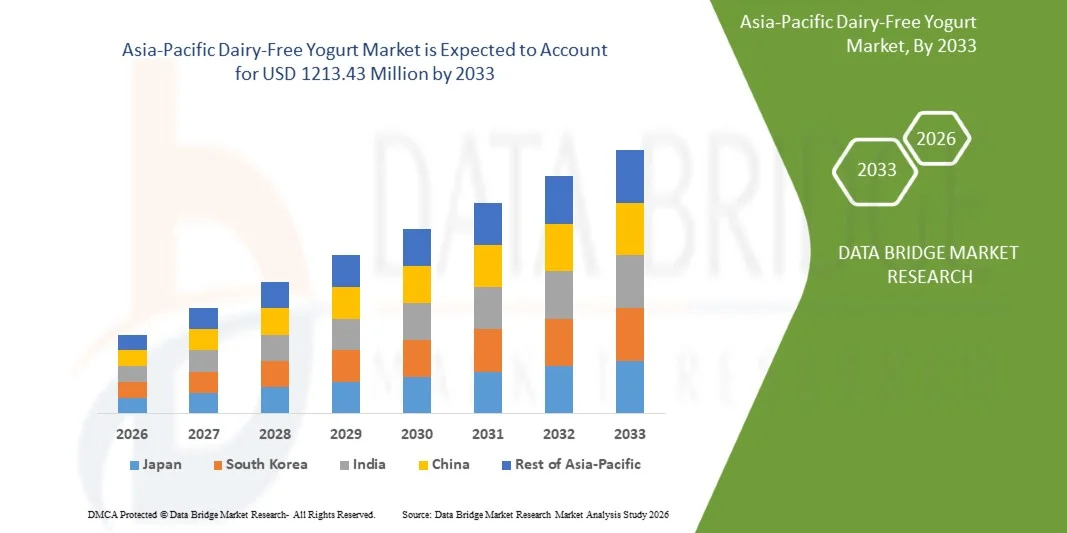
- The Asia-Pacific Dairy-Free Yogurt Market size was valued at USD 706.23 million in 2025 and is expected to reach USD 1213.43 million by 2033, at a CAGR of 7.00% during the forecast period
- The market growth is largely fueled by the increasing adoption of plant-based diets and rising consumer awareness regarding lactose intolerance, dairy allergies, and health-conscious lifestyles, driving the demand for dairy-free alternatives across global markets
- Furthermore, the growing preference for nutrient-dense, protein-rich, and functional foods is establishing dairy-free yogurt as a popular choice among health-conscious consumers, athletes, and vegan populations. These converging factors are accelerating product adoption, thereby significantly boosting the industry’s growth
Asia-Pacific Dairy-Free Yogurt Market Analysis
- Dairy-free yogurt is a plant-based alternative to traditional dairy yogurt, typically made from soy, almond, oat, coconut, or other plant-based ingredients. These products offer similar taste, texture, and nutritional benefits while catering to consumers seeking lactose-free, vegan, or allergen-friendly options
- The escalating demand for dairy-free yogurt is primarily fueled by increasing consumer awareness about health and nutrition, growing plant-based lifestyle trends, and rising availability of diverse flavors and fortified products in retail and online channels
- China dominated the Asia-Pacific Dairy-Free Yogurt Market in 2025, due to its expanding plant-based food manufacturing industry, growing middle-class population, and increasing consumer focus on health, wellness, and functional nutrition
- India is expected to be the fastest growing country in the Asia-Pacific Dairy-Free Yogurt Market during the forecast period due to rising awareness of plant-based diets, increasing health consciousness, and growing adoption of allergen-friendly and functional food products
- Soy segment dominated the market with a market share of 39.51% in 2025, due to its high protein content, smooth and creamy texture, and versatility in various recipes. Consumers often prefer soy-based yogurt as a nutritious alternative to dairy, particularly among lactose-intolerant, vegan, and health-conscious populations. Its widespread availability across retail stores and online channels increases accessibility, while its compatibility with probiotic fortification and flavor innovations enhances its appeal
Report Scope and Asia-Pacific Dairy-Free Yogurt Market Segmentation
|
Attributes |
Dairy-Free Yogurt Key Market Insights |
|
Segments Covered |
|
|
Countries Covered |
Asia-Pacific
|
|
Key Market Players |
|
|
Market Opportunities |
|
|
Value Added Data Infosets |
In addition to the insights on market scenarios such as market value, growth rate, segmentation, geographical coverage, and major players, the market reports curated by the Data Bridge Market Research also include in-depth expert analysis, pricing analysis, brand share analysis, consumer survey, demography analysis, supply chain analysis, value chain analysis, raw material/consumables overview, vendor selection criteria, PESTLE Analysis, Porter Analysis, and regulatory framework. |
Asia-Pacific Dairy-Free Yogurt Market Trends
“Rising Adoption of Plant-Based and Functional Foods”
- A significant trend in the Asia-Pacific Dairy-Free Yogurt Market is the increasing consumer shift toward plant-based and functional food options, driven by growing health consciousness and the preference for sustainable dietary choices. This trend is positioning dairy-free yogurt as a staple in modern diets, offering alternatives to traditional dairy products without compromising on taste or nutritional value
- For instance, companies such as Danone (Alpro) and Chobani have expanded their dairy-free yogurt portfolios, introducing almond, coconut, and oat-based yogurt variants enriched with probiotics and vitamins. These products cater to consumers seeking functional benefits such as digestive health and immune support while maintaining plant-based formulations
- The rising interest in lactose-free and allergen-friendly diets is contributing to the broader adoption of dairy-free yogurts. Consumers with lactose intolerance or milk protein sensitivities are increasingly turning to these products as reliable substitutes for conventional yogurts
- The integration of functional ingredients such as live cultures, prebiotics, and vitamin fortification is accelerating innovation within the dairy-free yogurt segment. This trend enhances product appeal among health-conscious individuals seeking nutritional benefits beyond basic sustenance
- Retailers and foodservice providers are increasingly dedicating shelf space and menu options to plant-based yogurt alternatives. This is expanding market accessibility and enabling wider consumption across different consumer demographics
- The market is witnessing growth in premium and flavored dairy-free yogurt offerings, where products focus on taste, texture, and ingredient transparency. This rising product diversification strengthens the segment’s competitiveness and aligns with evolving consumer expectations
Asia-Pacific Dairy-Free Yogurt Market Dynamics
Driver
“Growing Health and Nutrition Awareness Among Consumers”
- The growing awareness of health, nutrition, and wellness is driving demand for dairy-free yogurt products that support digestive health, immunity, and plant-based nutrition. Consumers are increasingly scrutinizing ingredient labels and opting for products with minimal additives, natural sweeteners, and functional benefits
- For instance, Danone’s Alpro and Silk offer probiotic-enriched plant-based yogurts targeting digestive wellness, highlighting the role of fortified dairy-free alternatives in meeting health-conscious consumer preferences
- Rising concerns about lactose intolerance, milk allergies, and animal welfare are contributing to increased adoption of plant-based yogurts. These factors influence purchasing decisions and expand the potential consumer base for dairy-free products
- Social media and health influencer campaigns are promoting plant-based diets and functional foods, enhancing consumer knowledge and motivating dietary shifts. This trend amplifies awareness and drives trial and repeat purchases
- The sustained focus on preventive health and personalized nutrition is encouraging manufacturers to innovate with nutrient-rich and functional dairy-free yogurts. This focus is expected to continue shaping market growth by addressing diverse health and wellness needs
Restraint/Challenge
“High Production Costs and Price Sensitivity”
- The Asia-Pacific Dairy-Free Yogurt Market faces challenges from higher production costs due to sourcing plant-based ingredients such as almonds, coconuts, and oats, along with maintaining texture and taste comparable to traditional dairy products. These factors elevate retail prices, creating sensitivity among price-conscious consumers
- For instance, companies such as Kite Hill and Forager Project rely on almond and cashew-based formulations that incur higher raw material and processing costs, which can limit market penetration in cost-sensitive regions
- Manufacturers encounter challenges in scaling production while maintaining consistent quality and nutritional profiles. Processing plant-based proteins to achieve desired mouthfeel and stability requires advanced techniques and careful formulation
- Price competitiveness with conventional dairy yogurt remains a constraint, as consumers may hesitate to switch if plant-based alternatives are significantly more expensive. This limits adoption in certain demographics and markets
- The market must navigate fluctuations in raw material availability and costs due to climate variability and supply chain disruptions. These uncertainties further contribute to production cost pressures and pricing challenges, impacting overall market expansion
Asia-Pacific Dairy-Free Yogurt Market Scope
The market is segmented on the basis of type, flavour, end-user, category, packaging type, distribution channel, and application.
• By Type
On the basis of type, the Asia-Pacific Dairy-Free Yogurt Market is segmented into almond, coconut, cashew, soy, oat, hemp, rice, and others. The soy segment dominated the largest market revenue share of 39.51% in 2025, driven by its high protein content, smooth and creamy texture, and versatility in various recipes. Consumers often prefer soy-based yogurt as a nutritious alternative to dairy, particularly among lactose-intolerant, vegan, and health-conscious populations. Its widespread availability across retail stores and online channels increases accessibility, while its compatibility with probiotic fortification and flavor innovations enhances its appeal.
The oat segment is anticipated to witness the fastest growth rate from 2026 to 2033, fueled by rising awareness of sustainable and plant-based ingredients. Oat-based yogurt offers excellent digestibility and a neutral flavor profile, making it adaptable for both sweet and savory applications. Its environmental benefits, including low water and carbon footprint, drive adoption among eco-conscious consumers. Increasing product launches by brands in oat variants further accelerate market expansion.
• By Flavour
On the basis of flavor, the Asia-Pacific Dairy-Free Yogurt Market is segmented into original/plain, vanilla, strawberry, blueberry, mango, raspberry, and peach. The original/plain segment dominated the largest market revenue share in 2025 due to its versatility and compatibility with multiple recipes and dietary preferences. Consumers often choose plain yogurt as a base for smoothies, desserts, and cooking, making it a staple in households and food service establishments. Its neutral taste and clean label perception further support sustained demand.
The blueberry segment is expected to witness the fastest growth rate from 2026 to 2033, driven by increasing consumer preference for antioxidant-rich and fruit-infused options. For instance, companies such as Danone have launched blueberry dairy-free yogurt variants with added probiotics, attracting health-conscious consumers. The visually appealing color and natural sweetness of blueberry yogurt enhance its popularity among younger demographics. Rising trend of functional foods and fruit-flavored innovations further support growth.
• By End-User
On the basis of end-user, the Asia-Pacific Dairy-Free Yogurt Market is segmented into household and food service industry. The household segment dominated the largest market revenue share in 2025, driven by increasing adoption of plant-based diets among families and individuals. Consumers prefer convenient ready-to-eat dairy-free yogurt for daily consumption, breakfast, and snacking purposes. The segment also benefits from home delivery services and subscription models, enhancing accessibility and adoption.
The food service industry segment is anticipated to witness the fastest growth rate from 2026 to 2033, fueled by the rising inclusion of dairy-free yogurt in cafés, restaurants, and hotels. For instance, Nestlé’s plant-based menu innovations encourage chefs and businesses to integrate dairy-free options. Growing vegan tourism and demand for allergen-friendly menus further accelerate adoption in commercial food establishments.
• By Category
On the basis of category, the Asia-Pacific Dairy-Free Yogurt Market is segmented into conventional and organic. The conventional segment dominated the largest market revenue share in 2025 due to widespread availability and affordability for mass-market consumers. Conventional dairy-free yogurt benefits from consistent taste, texture, and long shelf-life, making it preferred among regular consumers and retailers.
The organic segment is expected to witness the fastest growth rate from 2026 to 2033, driven by increasing health awareness and preference for chemical-free plant-based products. For instance, Califia Farms has expanded its organic yogurt offerings, appealing to premium and eco-conscious consumers. The demand for organic certification and perceived nutritional benefits contribute to rapid adoption globally.
• By Packaging Type
On the basis of packaging type, the Asia-Pacific Dairy-Free Yogurt Market is segmented into tubs, pouches, and others. The tubs segment dominated the largest market revenue share in 2025 due to convenience, resealability, and suitability for household consumption. Tubs support portion control and longer shelf-life, making them attractive for family purchases and bulk buying. Retailers also prefer tubs for easier stacking and display in chilled sections.
The pouches segment is anticipated to witness the fastest growth rate from 2026 to 2033, fueled by convenience for on-the-go consumption and suitability for single-serve portions. For instance, Danone has introduced pouches targeting children and mobile consumers. Lightweight and spill-resistant packaging drives adoption among travelers and students. Innovative designs and squeezable formats further enhance consumer preference.
• By Distribution Channel
On the basis of distribution channel, the Asia-Pacific Dairy-Free Yogurt Market is segmented into store-based and non-store-based. The store-based segment dominated the largest market revenue share in 2025 due to strong presence in supermarkets, hypermarkets, and health food stores. Consumers often prefer in-store purchases for product comparison, freshness verification, and availability of multiple brands.
The non-store-based segment is expected to witness the fastest growth rate from 2026 to 2033, driven by rising e-commerce penetration and direct-to-consumer subscription services. For instance, companies such as Miyoko’s Creamery have expanded online delivery for dairy-free yogurt. Ease of ordering, doorstep delivery, and customized subscription plans encourage adoption, particularly among tech-savvy and urban consumers.
• By Application
On the basis of application, the Asia-Pacific Dairy-Free Yogurt Market is segmented into animal and aquaculture feed, pet food, dietary supplements, food and beverages, pharmaceutical, personal care and cosmetics, and others. The food and beverages segment dominated the largest market revenue share in 2025 due to high consumer consumption as a breakfast item, snack, or smoothie base. Functional food trends, including probiotic fortification and nutrient enrichment, further boost demand in this segment.
The dietary supplements segment is anticipated to witness the fastest growth rate from 2026 to 2033, fueled by increasing awareness of plant-based protein and probiotic supplementation. For instance, companies such as Silk have incorporated dairy-free yogurt in protein-focused and gut-health product lines. Growing health consciousness and interest in preventive nutrition contribute to rapid adoption of dairy-free yogurt in supplements.
Asia-Pacific Dairy-Free Yogurt Market Regional Analysis
- China dominated the Asia-Pacific Dairy-Free Yogurt Market with the largest revenue share in 2025, driven by its expanding plant-based food manufacturing industry, growing middle-class population, and increasing consumer focus on health, wellness, and functional nutrition
- Rising awareness of lactose intolerance, dietary allergies, and environmentally sustainable diets, combined with increasing urbanization and disposable income, reinforce China’s leadership in the regional Asia-Pacific Dairy-Free Yogurt Market
- The presence of leading domestic manufacturers, collaborations with global plant-based brands such as Danone (Alpro) and Vitasoy, and the introduction of affordable yet high-quality dairy-free yogurt variants continue to consolidate China’s dominant position during the forecast period
Japan Asia-Pacific Dairy-Free Yogurt Market Insight
The Japan market is anticipated to grow steadily from 2026 to 2033, supported by its advanced food processing industry and strong consumer preference for health-oriented and functional foods. Japanese consumers are increasingly adopting premium and innovative dairy-free yogurt options, reflecting the country’s focus on nutritional quality, convenience, and taste. The demand for compact, travel-friendly, and fortified yogurt variants is rising due to urban lifestyles and health-conscious diets. Continuous R&D investments and collaborations between Japanese manufacturers and global plant-based brands reinforce the market’s steady growth outlook. Japan’s commitment to quality, innovation, and functional nutrition underpins its strong regional positioning.
India Asia-Pacific Dairy-Free Yogurt Market Insight
India is projected to register the fastest CAGR in the Asia-Pacific Dairy-Free Yogurt Market during 2026–2033, fueled by rising awareness of plant-based diets, increasing health consciousness, and growing adoption of allergen-friendly and functional food products. Urbanization, rising disposable income, and expansion of middle-class households are accelerating market adoption. The demand for affordable, convenient, and protein-rich dairy-free yogurt is particularly strong among younger consumers and first-time buyers. Expanding retail distribution, rapid growth of e-commerce, and partnerships with global brands such as Epigamia and Goodmylk are enhancing product accessibility. Government initiatives promoting nutrition and health awareness ensure India’s emergence as the fastest-growing market in the region.
Asia-Pacific Dairy-Free Yogurt Market Share
The dairy-free yogurt industry is primarily led by well-established companies, including:
- Oatly AB (Sweden)
- Kite Hill (U.S.)
- The Hain Celestial Group (U.S.)
- Nush Foods (U.K.)
- Yoso (Australia)
- Yoplait USA (U.S.)
- Granarolo Group (Italy)
- Vitasoy (Hong Kong)
- Daiya Foods Inc. (Canada)
- Green Valley Organics (U.S.)
- Chobani LLC (U.S.)
- Forager Project (U.S.)
- Califia Farms (U.S.)
- Ripple Foods (U.S.)
- Alpro UK Ltd (Germany)
Latest Developments in Asia-Pacific Dairy-Free Yogurt Market
- In July 2025, So Delicious unveiled a new sustainability initiative aimed at reducing packaging waste by 50% over the next five years. This initiative reflects a strong commitment to environmental stewardship and positions the brand as a leader in sustainable practices within the U.S. Asia-Pacific Dairy-Free Yogurt Market. Consumers increasingly prioritize eco-friendly products, and this move directly caters to that growing demand, enhancing brand perception. By reducing packaging waste, So Delicious can appeal to environmentally conscious shoppers, potentially increasing repeat purchases and fostering long-term loyalty. This initiative also differentiates the brand in a crowded market, strengthening competitive positioning and supporting alignment with global sustainability trends
- In February 2025, Oikos introduced its Oikos PRO range in Canada, offering yogurt products with 18 to 24 grams of protein per serving, made from 100% Canadian dairy milk and containing no added sugar. This product line caters to the rising demand for nutrient-dense and high-protein options among fitness enthusiasts and health-conscious consumers. By emphasizing protein content and sugar-free formulation, Oikos addresses consumers’ interest in functional foods that support muscle building and recovery. The national marketing campaign, “Feed Your Strength,” reinforces brand messaging and encourages active lifestyle adoption. This launch strengthens Oikos’ competitive positioning in the Canadian market and highlights its ability to innovate in performance-focused dairy products
- In September 2024, Silk announced a strategic partnership with a leading health food retailer to expand its distribution network across North America. This collaboration enhances Silk’s visibility and accessibility, allowing the brand to reach a broader audience and increase shelf presence in high-traffic locations. Strategic partnerships are crucial in the competitive plant-based yogurt market, where accessibility and availability directly influence market share. By leveraging the retailer’s network, Silk can tap into new consumer segments, including health-focused and vegan shoppers, accelerating market penetration. The partnership also strengthens brand credibility and reinforces Silk’s position as a trusted plant-based yogurt leader
- In August 2024, Alpro launched a new line of dairy-free yogurts featuring innovative fermentation techniques to enhance probiotic content. This development addresses the growing consumer demand for functional foods that support gut health, a rapidly expanding segment in Europe. By offering probiotic-enriched yogurt, Alpro differentiates itself from traditional plant-based products and positions itself as a pioneer in functional dairy-free options. The launch is likely to attract health-conscious consumers seeking digestive wellness benefits, while also increasing brand engagement and market penetration. This strategic move enables Alpro to capture emerging health trends and reinforce its leadership in the Asia-Pacific Dairy-Free Yogurt Market
- In February 2024, Danone Canada’s Silk advanced the plant-based segment by launching its protein-enriched plant-based yogurt made with Canadian pea protein, offering 12 grams of protein per 175-gram serving. With a Greek-style thick texture and flavors such as Key Lime and Vanilla, the product delivers both taste and nutritional benefits, appealing to health-conscious and plant-based consumers. The launch responds to the increasing demand for protein-rich, plant-based alternatives in the Canadian market. By introducing improved recipes, new flavors, and additional sizes for its existing coconut yogurt line, Silk strengthens its portfolio, enhances consumer choice, and reinforces its market leadership. The expansion also positions Silk as a brand capable of combining indulgence, nutrition, and innovation
SKU-
Get online access to the report on the World's First Market Intelligence Cloud

- Interactive Data Analysis Dashboard
- Company Analysis Dashboard for high growth potential opportunities
- Research Analyst Access for customization & queries
- Competitor Analysis with Interactive dashboard
- Latest News, Updates & Trend analysis
- Harness the Power of Benchmark Analysis for Comprehensive Competitor Tracking
Asia Pacific Dairy Free Yogurt Market, Supply Chain Analysis and Ecosystem Framework
To support market growth and help clients navigate the impact of geopolitical shifts, DBMR has integrated in-depth supply chain analysis into its Asia Pacific Dairy Free Yogurt Market research reports. This addition empowers clients to respond effectively to global changes affecting their industries. The supply chain analysis section includes detailed insights such as Asia Pacific Dairy Free Yogurt Market consumption and production by country, price trend analysis, the impact of tariffs and geopolitical developments, and import and export trends by country and HSN code. It also highlights major suppliers with data on production capacity and company profiles, as well as key importers and exporters. In addition to research, DBMR offers specialized supply chain consulting services backed by over a decade of experience, providing solutions like supplier discovery, supplier risk assessment, price trend analysis, impact evaluation of inflation and trade route changes, and comprehensive market trend analysis.
Research Methodology
Data collection and base year analysis are done using data collection modules with large sample sizes. The stage includes obtaining market information or related data through various sources and strategies. It includes examining and planning all the data acquired from the past in advance. It likewise envelops the examination of information inconsistencies seen across different information sources. The market data is analysed and estimated using market statistical and coherent models. Also, market share analysis and key trend analysis are the major success factors in the market report. To know more, please request an analyst call or drop down your inquiry.
The key research methodology used by DBMR research team is data triangulation which involves data mining, analysis of the impact of data variables on the market and primary (industry expert) validation. Data models include Vendor Positioning Grid, Market Time Line Analysis, Market Overview and Guide, Company Positioning Grid, Patent Analysis, Pricing Analysis, Company Market Share Analysis, Standards of Measurement, Global versus Regional and Vendor Share Analysis. To know more about the research methodology, drop in an inquiry to speak to our industry experts.
Customization Available
Data Bridge Market Research is a leader in advanced formative research. We take pride in servicing our existing and new customers with data and analysis that match and suits their goal. The report can be customized to include price trend analysis of target brands understanding the market for additional countries (ask for the list of countries), clinical trial results data, literature review, refurbished market and product base analysis. Market analysis of target competitors can be analyzed from technology-based analysis to market portfolio strategies. We can add as many competitors that you require data about in the format and data style you are looking for. Our team of analysts can also provide you data in crude raw excel files pivot tables (Fact book) or can assist you in creating presentations from the data sets available in the report.












