


Asia Pacific Dermal Fillers Market
Market Size in USD Billion
CAGR :
% 
 USD
1.18 Billion
USD
3.04 Billion
2025
2033
USD
1.18 Billion
USD
3.04 Billion
2025
2033
 Forecast Period Forecast Period |
2026 –2033 |
 Market Size (Base Year) Market Size (Base Year) |
USD 1.18 Billion |
 Market Size (Forecast Year) Market Size (Forecast Year) |
USD 3.04 Billion |
 CAGR CAGR |
% |
| Major Markets Players |
|
Asia-Pacific Dermal Fillers Market Size
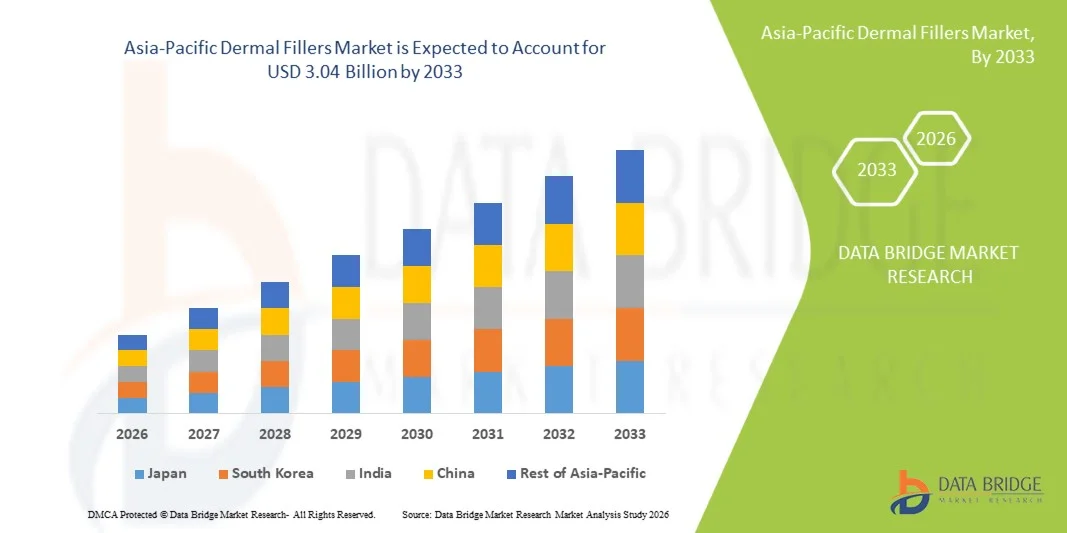
- The Asia-Pacific Dermal Fillers Market size was valued at USD 1.18 billion in 2025 and is expected to reach USD 3.04 billion by 2033, at a CAGR of 12.60% during the forecast period
- The market growth is largely fueled by the increasing demand for aesthetic and cosmetic procedures, along with growing awareness of non-surgical facial rejuvenation treatments across dermatology clinics and medical aesthetic centers. This trend is leading to greater adoption of dermal fillers in both developed and emerging healthcare markets
- Furthermore, rising consumer preference for minimally invasive cosmetic treatments, increasing disposable incomes, and the expanding presence of medical aesthetic clinics are establishing dermal fillers as one of the most widely used solutions for facial contouring and wrinkle reduction. These converging factors are accelerating the uptake of Dermal Fillers solutions, thereby significantly boosting the industry's growth
Asia-Pacific Dermal Fillers Market Analysis
- Dermal fillers, injectable aesthetic products used to restore facial volume, reduce wrinkles, and enhance facial contours, are increasingly vital components of modern cosmetic and dermatological procedures across aesthetic clinics, dermatology centers, and medical spas due to their ability to provide minimally invasive facial rejuvenation treatments with quick recovery times
- The escalating demand for dermal fillers is primarily fueled by the rising popularity of non-surgical cosmetic procedures, increasing beauty consciousness among consumers, and growing preference for minimally invasive aesthetic treatments for facial enhancement and anti-aging solutions
- China dominated the Asia-Pacific Dermal Fillers Market with the largest revenue share of 36.7% in 2025, supported by the rapidly expanding medical aesthetics industry, increasing disposable incomes, and growing demand for cosmetic enhancement procedures. The country is experiencing substantial growth in dermal filler procedures across dermatology clinics, aesthetic centers, and cosmetic surgery facilities due to increasing awareness of aesthetic treatments and the strong presence of domestic and international aesthetic product manufacturers
- India is expected to be the fastest-growing region in the Asia-Pacific Dermal Fillers Market during the forecast period, registering a CAGR of 10.1%, driven by increasing disposable incomes, growing beauty and wellness awareness, expanding medical aesthetics clinics, and rising demand for minimally invasive cosmetic procedures among younger populations
- The Branded segment dominated the largest market revenue share of approximately 72.3% in 2025, driven by strong brand recognition, proven clinical efficacy, and regulatory approvals from global health authorities
Report Scope and Asia-Pacific Dermal Fillers Market Segmentation
|
Attributes |
Dermal Fillers Key Market Insights |
|
Segments Covered |
|
|
Countries Covered |
Asia-Pacific
|
|
Key Market Players |
• Galderma S.A. (Switzerland) |
|
Market Opportunities |
|
|
Value Added Data Infosets |
In addition to the insights on market scenarios such as market value, growth rate, segmentation, geographical coverage, and major players, the market reports curated by the Data Bridge Market Research also include in-depth expert analysis, patient epidemiology, pipeline analysis, pricing analysis, and regulatory framework. |
Asia-Pacific Dermal Fillers Market Trends
“Rising Demand for Minimally Invasive Aesthetic Procedures”
- A significant and accelerating trend in the global Asia-Pacific Dermal Fillers Market is the growing demand for minimally invasive cosmetic procedures that enhance facial aesthetics with minimal downtime and lower procedural risk. Consumers increasingly prefer non-surgical aesthetic treatments that provide natural-looking results while avoiding the complexity and recovery period associated with traditional cosmetic surgeries
- For instance, products developed by Allergan Aesthetics such as the Juvéderm dermal filler range and solutions from Galderma such as Restylane are widely used by dermatologists and aesthetic practitioners for facial contouring, wrinkle reduction, and lip enhancement procedures across clinics worldwide
- The increasing popularity of aesthetic enhancements among both younger and aging populations is contributing to the growing adoption of dermal fillers for facial rejuvenation. These treatments are widely used to reduce fine lines, restore facial volume, and improve skin structure without the need for surgical intervention
- In addition, technological advancements in filler formulations, including hyaluronic acid-based fillers and longer-lasting biodegradable materials, are improving treatment safety, longevity, and patient satisfaction. These innovations allow practitioners to achieve more precise aesthetic outcomes while minimizing complications
- The growing influence of social media platforms and beauty trends is also encouraging individuals to seek aesthetic procedures that enhance appearance and boost confidence. Increasing awareness regarding non-invasive cosmetic solutions has significantly expanded the consumer base for dermal filler treatments
- As aesthetic medicine continues to evolve, clinics and medical spas worldwide are expanding their service offerings, further increasing accessibility to dermal filler procedures and supporting sustained market growth
Asia-Pacific Dermal Fillers Market Dynamics
Driver
“Increasing Demand for Aesthetic Enhancements and Aging Population”
- The rising global demand for cosmetic enhancement procedures, combined with the growing aging population seeking anti-aging solutions, is a major driver for the expansion of the Asia-Pacific Dermal Fillers Market. Individuals are increasingly pursuing treatments that help maintain youthful skin and improve facial aesthetics without undergoing invasive surgery
- For instance, companies such as Merz Pharma and Revance Therapeutics are actively expanding their aesthetic product portfolios and launching advanced dermal filler solutions to meet the growing global demand for non-surgical facial rejuvenation treatments
- Increasing disposable incomes and rising consumer spending on aesthetic treatments are also supporting market expansion, particularly in emerging economies where access to cosmetic procedures is becoming more widespread
- Furthermore, the growing presence of specialized dermatology clinics, aesthetic medical centers, and cosmetic surgery facilities is improving access to dermal filler procedures for a larger population
- Continuous advancements in filler materials, injection techniques, and treatment protocols are enhancing safety and effectiveness, encouraging more individuals to consider dermal filler procedures. The expanding acceptance of aesthetic treatments among both men and women is further contributing to the market’s growth trajectory
Restraint/Challenge
“Risk of Side Effects and Regulatory Challenges”
- Despite the growing popularity of dermal fillers, concerns regarding potential side effects and complications remain a significant challenge for the market. Improper injection techniques or the use of low-quality products can result in adverse effects such as swelling, bruising, allergic reactions, and vascular complications
- For instance, regulatory authorities such as the U.S. Food and Drug Administration have issued safety warnings regarding the misuse of dermal fillers and emphasize that these procedures should only be performed by qualified healthcare professionals
- In addition, the presence of counterfeit or unapproved filler products in certain markets can pose serious safety risks and undermine consumer trust in aesthetic procedures. Strict regulatory oversight and quality control measures are therefore essential for ensuring product safety and efficacy
- The relatively high cost of dermal filler treatments may also limit adoption among price-sensitive consumers, particularly in developing regions where cosmetic procedures are considered discretionary expenses
- Moreover, differences in regulatory approval processes across countries can delay product launches and limit the global expansion of certain dermal filler brands. Addressing these challenges through improved practitioner training, stronger regulatory enforcement, and continued product innovation will be essential for sustaining long-term market growth
Asia-Pacific Dermal Fillers Market Scope
The Asia-Pacific Dermal Fillers Market is segmented on the basis of product type, material type, application, drug type, end user, and distribution channel.
• By Product Type
On the basis of product type, the Asia-Pacific Dermal Fillers Market is segmented into Biodegradable Dermal Fillers and Non-Biodegradable Dermal Fillers. The Biodegradable Dermal Fillers segment dominated the largest market revenue share of approximately 68.4% in 2025, driven by their safety profile, temporary nature, and high patient preference for minimally invasive aesthetic treatments. These fillers, primarily composed of hyaluronic acid, collagen, and calcium hydroxylapatite, gradually dissolve in the body, reducing long-term complications. Dermatology clinics and aesthetic centers widely adopt biodegradable fillers for facial contouring, wrinkle reduction, and lip enhancement procedures. The growing demand for non-surgical cosmetic treatments among aging populations significantly supports the segment’s dominance. Technological advancements in filler formulations have improved longevity, smoothness, and injection precision, enhancing patient satisfaction. In addition, biodegradable fillers allow practitioners to adjust treatments over time, making them highly suitable for personalized aesthetic procedures. Increasing awareness regarding aesthetic procedures and rising disposable income in emerging markets also contribute to segment growth. Regulatory approvals and strong product pipelines from leading cosmetic companies further strengthen market penetration. The expansion of medical aesthetic clinics and the rising influence of social media beauty trends are also driving demand for biodegradable dermal fillers globally.
The Non-Biodegradable Dermal Fillers segment is expected to witness the fastest CAGR of 9.8% from 2026 to 2033, fueled by the growing demand for long-lasting aesthetic results and fewer repeat procedures. Non-biodegradable fillers are designed to provide permanent or semi-permanent facial volume restoration, making them suitable for deep tissue augmentation and structural corrections. These fillers are increasingly used in reconstructive procedures and complex aesthetic treatments requiring durable outcomes. Technological improvements in polymer-based filler materials have enhanced safety and stability, encouraging adoption among aesthetic practitioners. Patients seeking cost-effective long-term results are increasingly opting for non-biodegradable solutions. The segment also benefits from rising demand for facial contouring procedures and advanced cosmetic treatments in developed markets. In addition, increasing research and development activities focused on improving filler biocompatibility and injection techniques support growth. Expanding medical tourism for cosmetic procedures in regions such as Asia-Pacific and Latin America further accelerates adoption. The availability of skilled aesthetic professionals and advanced clinical infrastructure is expected to drive continued growth in this segment.
• By Material Type
On the basis of material type, the Asia-Pacific Dermal Fillers Market is segmented into Natural Dermal Fillers and Synthetic Dermal Fillers. The Natural Dermal Fillers segment dominated the largest market revenue share of approximately 61.5% in 2025, driven by the strong consumer preference for biologically derived and biocompatible materials. Natural fillers such as hyaluronic acid, collagen, and autologous fat are widely used due to their compatibility with human tissue and minimal risk of allergic reactions. These fillers provide natural-looking results and are commonly used in facial wrinkle reduction, lip augmentation, and skin rejuvenation procedures. Dermatologists and cosmetic surgeons frequently recommend natural fillers because of their safety profile and reversible nature. The segment also benefits from increasing demand for minimally invasive aesthetic treatments that deliver subtle yet effective cosmetic improvements. Technological innovations in hyaluronic acid fillers have improved durability and hydration effects, further boosting demand. Growing awareness of aesthetic procedures and increasing acceptance of cosmetic enhancements among younger populations support the segment’s expansion. In addition, strong marketing campaigns by aesthetic product manufacturers and the influence of social media beauty trends contribute to higher adoption.
The Synthetic Dermal Fillers segment is expected to witness the fastest CAGR of 10.2% from 2026 to 2033, driven by advancements in polymer science and the development of durable filler materials. Synthetic fillers such as polymethyl methacrylate (PMMA) and poly-L-lactic acid provide longer-lasting structural support and volume restoration. These fillers are increasingly used for deep tissue augmentation and facial contouring procedures requiring more permanent results. The growing demand for advanced anti-aging treatments among aging populations further supports the segment’s growth. Technological innovations have improved the safety and biocompatibility of synthetic fillers, encouraging their use in specialized cosmetic and reconstructive procedures. Increasing adoption in facial reconstruction, trauma repair, and aesthetic restoration procedures also contributes to rising demand. In addition, growing investments in research and development of next-generation filler materials are expected to accelerate segment expansion globally.
• By Application
On the basis of application, the Asia-Pacific Dermal Fillers Market is segmented into Face Lift, Rhinoplasty, Reconstructive Surgery, Facial Line Correction, Lip Enhancement, Sagging Skin, Cheek Depression, Skin Smoothing, Dentistry, Aesthetic Restoration, Lip Plump, Scar Treatment, Chin Augmentation, Lipoatrophy Treatment, Earlobe Rejuvenation, and Others. The Facial Line Correction segment dominated the largest market revenue share of approximately 34.7% in 2025, driven by the increasing demand for wrinkle reduction and anti-aging treatments. Dermal fillers are widely used to reduce fine lines and deep wrinkles around the eyes, forehead, and mouth. Rising aesthetic consciousness among consumers and the growing aging population are major factors contributing to segment dominance. Dermatology clinics and cosmetic centers frequently offer facial line correction procedures as minimally invasive alternatives to surgical facelifts. Technological improvements in filler formulations have enhanced treatment precision and long-lasting cosmetic outcomes. The increasing influence of social media beauty standards and celebrity endorsements also contributes to higher demand for facial rejuvenation treatments. Furthermore, the growing popularity of lunchtime cosmetic procedures that require minimal recovery time further boosts segment growth. Expanding aesthetic clinics and improved accessibility of cosmetic procedures worldwide reinforce the dominance of this segment.
The Lip Enhancement segment is expected to witness the fastest CAGR of 11.1% from 2026 to 2033, fueled by the increasing popularity of lip augmentation procedures among younger consumers. Social media influence and celebrity beauty trends have significantly increased awareness and demand for fuller lips and facial contouring. Hyaluronic acid fillers are widely used in lip enhancement due to their ability to provide natural-looking volume and reversible results. Dermatology clinics and aesthetic centers are experiencing growing patient demand for minimally invasive lip augmentation treatments. Technological innovations in filler formulations allow precise volume control and improved aesthetic outcomes. In addition, increasing medical tourism for cosmetic procedures and expanding availability of trained aesthetic professionals support segment growth. Rising disposable income and increasing acceptance of cosmetic enhancements among millennials and Generation Z further accelerate the adoption of lip enhancement procedures globally.
• By Drug Type
On the basis of drug type, the Asia-Pacific Dermal Fillers Market is segmented into Branded and Generic. The Branded segment dominated the largest market revenue share of approximately 72.3% in 2025, driven by strong brand recognition, proven clinical efficacy, and regulatory approvals from global health authorities. Leading pharmaceutical and aesthetic companies invest heavily in research and development to introduce innovative filler formulations with improved safety and performance. Dermatology clinics and aesthetic practitioners prefer branded products due to their consistent quality and established clinical evidence. The availability of diverse branded dermal filler products tailored for specific aesthetic procedures further supports segment dominance. Increasing marketing campaigns, physician training programs, and partnerships with cosmetic clinics also contribute to higher adoption. In addition, consumer trust in established brands and the perceived safety of branded products play a critical role in maintaining market leadership.
The Generic segment is expected to witness the fastest CAGR of 9.6% from 2026 to 2033, driven by the increasing demand for cost-effective aesthetic treatment options. Generic dermal fillers provide similar functional benefits at lower prices, making them accessible to a broader patient population. Growing competition among manufacturers and the expiration of patents for several branded filler products have facilitated the entry of generic alternatives into the market. Emerging economies are witnessing higher adoption of generic fillers due to price sensitivity and expanding medical aesthetic markets. Increasing availability of affordable cosmetic treatments is encouraging first-time consumers to undergo aesthetic procedures.
• By End User
On the basis of end user, the Asia-Pacific Dermal Fillers Market is segmented into Dermatology Clinics, Ambulatory Surgical Centers, Hospitals, Academic Research Institutes, and Others. The Dermatology Clinics segment dominated the largest market revenue share of approximately 49.2% in 2025, due to the high volume of cosmetic procedures performed in specialized aesthetic clinics. These clinics offer a wide range of minimally invasive aesthetic treatments, including dermal fillers, botulinum toxin injections, and skin rejuvenation procedures. Dermatologists and cosmetic specialists are highly trained in facial anatomy and injection techniques, ensuring safe and effective treatment outcomes. Increasing patient preference for specialized aesthetic clinics over hospitals further supports segment dominance. The expansion of private dermatology and cosmetic clinics globally also contributes to higher procedure volumes.
The Ambulatory Surgical Centers segment is expected to witness the fastest CAGR of 10.7% from 2026 to 2033, driven by the growing demand for outpatient cosmetic procedures. ASCs offer advanced aesthetic treatments with shorter procedure times and lower operational costs compared to traditional hospital settings. Patients prefer ambulatory centers due to faster recovery times and convenient scheduling of procedures. The increasing number of minimally invasive cosmetic treatments performed in outpatient settings further accelerates segment growth.
• By Distribution Channel
On the basis of distribution channel, the Asia-Pacific Dermal Fillers Market is segmented into Direct Tender, Drug Stores, Retail Pharmacy, Online Pharmacy, and Others. The Direct Tender segment dominated the largest market revenue share of approximately 44.8% in 2025, driven by bulk procurement agreements between manufacturers and hospitals or dermatology clinics. Healthcare institutions often purchase dermal fillers directly from manufacturers to ensure product authenticity and cost efficiency. The direct supply model also enables better inventory management and reliable product availability. Increasing partnerships between cosmetic product manufacturers and aesthetic clinics further support this segment’s dominance.
The Online Pharmacy segment is expected to witness the fastest CAGR of 11.3% from 2026 to 2033, fueled by the rapid expansion of digital healthcare platforms and e-commerce distribution channels. Online platforms offer convenient purchasing options, competitive pricing, and wider product availability for clinics and licensed practitioners. Increasing adoption of digital procurement systems in healthcare institutions further accelerates segment growth. In addition, the rising penetration of e-commerce and telemedicine platforms globally is expected to support the expansion of online distribution channels in the Asia-Pacific Dermal Fillers Market.
Asia-Pacific Dermal Fillers Market Regional Analysis
- The Asia-Pacific Dermal Fillers Market is expected to witness significant growth during the forecast period, driven by the expanding medical aesthetics industry, increasing disposable incomes, and rising consumer awareness regarding cosmetic enhancement procedures across countries such as China, Japan, India, and South Korea
- Rapid urbanization, evolving beauty standards, and the growing influence of social media and celebrity culture are encouraging individuals to pursue aesthetic treatments that enhance facial appearance and boost self-confidence. In addition, the increasing presence of dermatology clinics, cosmetic surgery centers, and specialized aesthetic medical facilities across the region is improving access to dermal filler treatments
- Governments and private healthcare providers are also investing in advanced healthcare infrastructure, further supporting the growth of aesthetic medicine. As a result, the adoption of minimally invasive procedures such as dermal fillers for facial contouring, wrinkle reduction, and skin rejuvenation is expanding rapidly across the Asia-Pacific region
China Asia-Pacific Dermal Fillers Market Insight
The China Asia-Pacific Dermal Fillers Market accounted for the largest revenue share of approximately 36.7% in the Asia-Pacific region in 2025, supported by the rapidly expanding medical aesthetics industry, increasing disposable incomes, and the growing demand for cosmetic enhancement procedures among urban populations. The country is experiencing substantial growth in dermal filler procedures across dermatology clinics, aesthetic centers, and cosmetic surgery facilities due to increasing awareness regarding aesthetic treatments and the strong presence of domestic and international aesthetic product manufacturers. In addition, the rising influence of social media platforms and beauty trends is encouraging younger consumers to pursue non-surgical cosmetic procedures. The expansion of private aesthetic clinics, growing investments in the medical aesthetics sector, and increasing availability of advanced dermal filler products are further driving market growth in China.
India Asia-Pacific Dermal Fillers Market Insight
The India Asia-Pacific Dermal Fillers Market is expected to be the fastest-growing in the Asia-Pacific region during the forecast period, registering a CAGR of approximately 10.1%. This growth is primarily driven by increasing disposable incomes, rising beauty and wellness awareness, and the expanding network of dermatology clinics and aesthetic treatment centers across major cities. The growing influence of digital media, celebrity culture, and beauty trends is also encouraging younger populations to seek cosmetic treatments that improve facial aesthetics. Additionally, the increasing preference for minimally invasive cosmetic procedures that offer quick results and minimal downtime is boosting the adoption of dermal filler treatments in the country. The presence of skilled dermatologists, the expansion of private cosmetic clinics, and increasing consumer spending on personal care and aesthetic procedures are further contributing to the rapid growth of the Asia-Pacific Dermal Fillers Market in India.
Asia-Pacific Dermal Fillers Market Share
The Dermal Fillers industry is primarily led by well-established companies, including:
• Galderma S.A. (Switzerland)
• Merz Pharma GmbH & Co. KGaA (Germany)
• Revance Therapeutics, Inc. (U.S.)
• Sinclair Pharma plc (U.K.)
• Teoxane Laboratories (Switzerland)
• Hugel, Inc. (South Korea)
• LG Chem Ltd. (South Korea)
• BioPlus Co., Ltd. (South Korea)
• Anika Therapeutics, Inc. (U.S.)
• Suneva Medical, Inc. (U.S.)
• Prollenium Medical Technologies Inc. (Canada)
• Bioxis Pharmaceuticals (France)
• Croma-Pharma GmbH (Austria)
• Contura International Ltd. (U.K.)
• Medytox Inc. (South Korea)
• Bloomage Biotechnology Corporation Limited (China)
• Huons Global Co., Ltd. (South Korea)
• Jetema Co., Ltd. (South Korea)
• SciVision Biotech Inc. (Taiwan)
Latest Developments in Asia-Pacific Dermal Fillers Market
- In February 2025, Evolus, Inc., a global aesthetic medicine company, received U.S. FDA approval for its Evolysse Form and Evolysse Smooth hyaluronic acid dermal fillers designed to treat moderate to severe nasolabial folds. The fillers utilize Cold-X technology to improve product longevity and natural aesthetic outcomes. The approval marked Evolus’ entry into the U.S. dermal filler market and supported its transition toward a diversified aesthetics portfolio
- In March 2025, Laboratoires VIVACY announced a strategic partnership with Burgeon Biotechnology to integrate its STYLAGE dermal fillers with the NOVUMA biostimulator technology. This collaboration combines hyaluronic acid and calcium hydroxyapatite technologies to enhance skin quality and provide advanced injectable aesthetic solutions
- In May 2025, Medytox introduced Neuramis Heart and Neuramis Skin Enhancer, two premium hyaluronic-acid-based dermal fillers in its Neuramis product line. The launch expanded the company’s portfolio of injectable aesthetic solutions designed to improve skin hydration, elasticity, and facial volume restoration
- In August 2025, Revance Therapeutics introduced the Teoxane RHA Collection with mepivacaine in the United States, representing the first major innovation in filler anesthetic formulation in nearly two decades. The new formulation replaces lidocaine with mepivacaine, aiming to provide comparable pain control while reducing bruising during dermal filler procedures
- In October 2024, Evolus, Inc. announced that its Estyme injectable hyaluronic acid gels received certification under the European Union Medical Device Regulation (MDR) for four dermal filler products. This certification enabled the company to expand its dermal filler presence across European markets and strengthen its international aesthetics portfolio
- In May 2024, Galderma S.A. launched an enhanced Restylane dermal filler portfolio featuring advanced NASHA gel technology and precision injection systems across Europe and North America, improving treatment versatility and patient comfort in aesthetic procedures
- In April 2023, Allergan Aesthetics (an AbbVie company) launched HArmonyCa, a dual-action dermal filler combining calcium hydroxyapatite (CaHA) and hyaluronic acid (HA) to deliver both immediate lifting effects and long-term collagen stimulation for facial rejuvenation treatments
- In June 2023, Croma-Pharma initiated a Phase III clinical trial in China for its Princess Volume Plus Lidocaine hyaluronic acid dermal filler, targeting mid-facial volume deficiency. The multi-center clinical study was conducted across several hospitals to support regulatory approval and expand the company’s presence in the Asia-Pacific aesthetics market
- In February 2021, Merz Aesthetics introduced BELOTERO BALANCE (+) with Lidocaine in the United States. The product was designed to improve patient comfort during injections and provide smoother integration into facial tissues for wrinkle and fold correction procedures
SKU-
Get online access to the report on the World's First Market Intelligence Cloud

- Interactive Data Analysis Dashboard
- Company Analysis Dashboard for high growth potential opportunities
- Research Analyst Access for customization & queries
- Competitor Analysis with Interactive dashboard
- Latest News, Updates & Trend analysis
- Harness the Power of Benchmark Analysis for Comprehensive Competitor Tracking
Research Methodology
Data collection and base year analysis are done using data collection modules with large sample sizes. The stage includes obtaining market information or related data through various sources and strategies. It includes examining and planning all the data acquired from the past in advance. It likewise envelops the examination of information inconsistencies seen across different information sources. The market data is analysed and estimated using market statistical and coherent models. Also, market share analysis and key trend analysis are the major success factors in the market report. To know more, please request an analyst call or drop down your inquiry.
The key research methodology used by DBMR research team is data triangulation which involves data mining, analysis of the impact of data variables on the market and primary (industry expert) validation. Data models include Vendor Positioning Grid, Market Time Line Analysis, Market Overview and Guide, Company Positioning Grid, Patent Analysis, Pricing Analysis, Company Market Share Analysis, Standards of Measurement, Global versus Regional and Vendor Share Analysis. To know more about the research methodology, drop in an inquiry to speak to our industry experts.
Customization Available
Data Bridge Market Research is a leader in advanced formative research. We take pride in servicing our existing and new customers with data and analysis that match and suits their goal. The report can be customized to include price trend analysis of target brands understanding the market for additional countries (ask for the list of countries), clinical trial results data, literature review, refurbished market and product base analysis. Market analysis of target competitors can be analyzed from technology-based analysis to market portfolio strategies. We can add as many competitors that you require data about in the format and data style you are looking for. Our team of analysts can also provide you data in crude raw excel files pivot tables (Fact book) or can assist you in creating presentations from the data sets available in the report.












