




Asia Pacific Vagus Nerve Stimulation Market
Market Size in USD Million
CAGR :
% 
 USD
245.79 Million
USD
701.13 Million
2025
2033
USD
245.79 Million
USD
701.13 Million
2025
2033
 Forecast Period Forecast Period |
2026 - 2033 |
 Market Size (Base Year) Market Size (Base Year) |
USD 245.79 Million |
 Market Size (Forecast Year) Market Size (Forecast Year) |
USD 701.13 Million |
 CAGR CAGR |
% |
| Major Markets Players |
|
Asia-Pacific Vagus Nerve Stimulation Market Overview
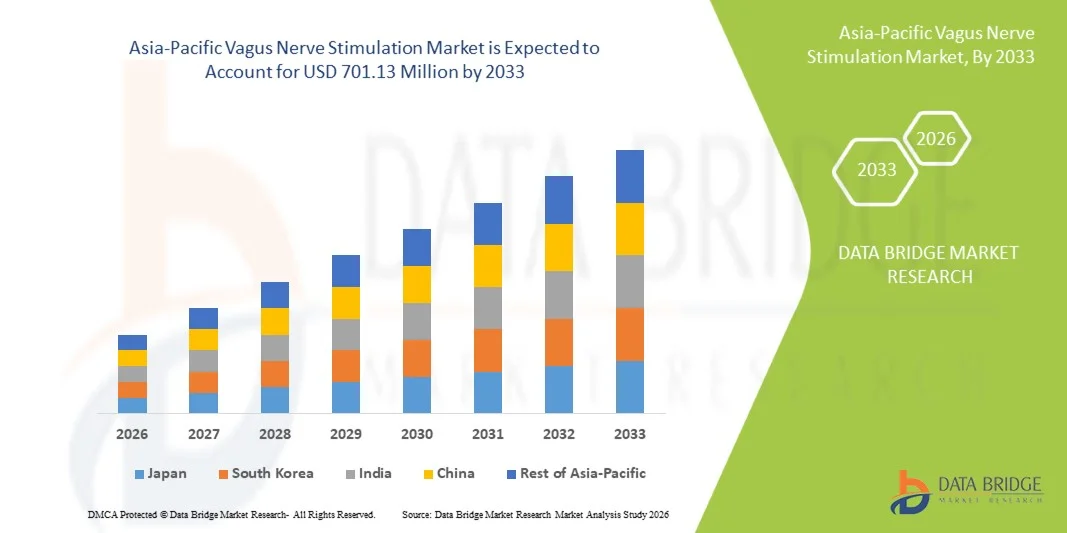
The Asia-Pacific vagus nerve stimulation market was valued at USD 245.79 million in 2025 and is projected to reach USD 701.13 million by 2033, growing at a CAGR of 14.00% from 2026 to 2033. The market is witnessing steady expansion driven by the rising prevalence of neurological disorders such as epilepsy and treatment-resistant depression, growing awareness of neuromodulation therapies, and increasing healthcare investments across emerging economies in the region. Expanding access to advanced neurostimulation devices in countries such as China, Japan, India, and South Korea is further supporting market adoption.
The increasing burden of chronic neurological and psychiatric conditions, combined with limitations of conventional drug therapies, is encouraging healthcare providers to adopt vagus nerve stimulation as an effective adjunct or alternative treatment option. Continuous advancements in implantable and non-invasive VNS devices, along with growing clinical research activity and regulatory approvals in Asia-Pacific markets, are further accelerating adoption. Additionally, rising healthcare infrastructure development and expanding specialist neurology care centers are strengthening the regional market outlook.
Key Market Trends & Insights
- China dominated the Asia-Pacific vagus nerve stimulation market with the largest revenue share of 34.62% in 2025, supported by a high burden of neurological disorders, rapid expansion of advanced hospital infrastructure, and increasing adoption of neuromodulation therapies in tier-1 medical centers.
- The Implantable VNS Devices segment led the market with a 63.27% share in 2025, driven by the strong clinical efficacy in treating drug-resistant epilepsy and long-term neurological disorders.
- India is expected to be the fastest-growing country from 2026 to 2033, with a projected CAGR of 8.1%, fueled by rising neurological disease prevalence, improving access to specialty neurology care, and increasing awareness of advanced non-pharmacological treatment options.
- External VNS Devices are the fastest-growing product type, projected to register a CAGR of 8.4%, reflecting the surge in demand for non-invasive and patient-friendly neuromodulation therapies.
- The Metallic segment dominated the biomaterial category with a 52.18% revenue share in 2025, led by their high durability, biocompatibility, and ability to support long-term implant stability.
- Epileptic Seizures accounted for 46.85% of the market, preferred by the high prevalence of drug-resistant epilepsy across major countries such as China, Japan, and India.
- The Depression and Anxiety segment is the fastest-growing application category, with a CAGR of 8.3%, driven by rising mental health burden and increasing adoption of neuromodulation-based therapies.
Market Size & Forecast
- Global Market Value (2025): USD 245.79 Million
- Expected Market Value (2033): USD 701.13 Million
- Forecast CAGR (2026–2033): 14.00%
- Leading Country in 2025: China
- Fastest Growing Country: India
Report Scope and Asia-Pacific Vagus Nerve Stimulation Market Segmentation
|
Attributes |
Asia-Pacific Vagus Nerve Stimulation Key Market Insights |
|
Segments Covered |
|
|
Countries Covered |
Asia-Pacific · China · Japan · India · South Korea · Singapore · Malaysia · Australia · Thailand · Indonesia · Philippines · Rest of Asia-Pacific |
|
Key Market Players |
· LivaNova PLC (U.K.) · electroCore, Inc. (U.S.) · MicroTransponder Inc. (U.S.) · Medtronic (Ireland) · Abbott (U.S.) · Boston Scientific Corporation (U.S.) · NeuroPace, Inc. (U.S.) · tVNS Technologies GmbH (Germany) · Parasym Ltd. (U.K.) · SetPoint Medical Corporation (U.S.) · NeuroSigma, Inc. (U.S.) · Synapse Biomedical Inc. (U.S.) · Neurosoft (Russia) · NeuroMetrix, Inc. (U.S.) · Cala Health (U.S.) · NeuroOne Medical Technologies Corporation (U.S.) · NIHON KOHDEN CORPORATION (Japan) · Omron Healthcare Co., Ltd. (Japan) · Cyberonics (U.S.) · Advanced Neuromodulation Systems (U.S.) |
|
Market Opportunities |
· Rising adoption of non-invasive VNS devices in outpatient and home-care settings · Expansion of clinical indications beyond epilepsy and depression · Increasing integration of AI-driven stimulation parameter optimization to enable personalized neurotherapy |
|
Value Added Data Infosets |
In addition to the insights on market scenarios such as market value, growth rate, segmentation, geographical coverage, and major players, the market reports curated by the Data Bridge Market Research also include in-depth expert analysis, patient epidemiology, pipeline analysis, pricing analysis, and regulatory framework. |
Asia-Pacific Vagus Nerve Stimulation Market Trends
Trend: Expansion of Neuromodulation in Treatment-Resistant Neurological Disorders
Healthcare providers across Asia-Pacific are increasingly adopting vagus nerve stimulation for patients with drug-resistant epilepsy and depression, as conventional pharmacological therapies often show limited long-term efficacy. The integration of advanced implantable and non-invasive stimulation systems is improving clinical outcomes through targeted nerve modulation and personalized therapy settings. Neurology centers and specialty hospitals are also leveraging digital monitoring tools to track patient response and optimize stimulation parameters over time, while growing clinical research activity is expanding therapeutic understanding. For instance, hospitals in Japan and China are conducting long-term VNS outcome studies in epilepsy patients to refine treatment protocols.
Asia-Pacific Vagus Nerve Stimulation Market Dynamics
Key Market Driver: Rising Demand for Advanced Neurological Treatment Alternatives
The increasing prevalence of epilepsy, depression, and other neurological disorders is driving demand for vagus nerve stimulation as an effective alternative when conventional drug therapies fail to deliver sustained results. Expanding healthcare infrastructure and growing access to specialized neurology care in countries such as China, Japan, and India are accelerating adoption of both implantable and non-invasive devices. Medical device manufacturers are also focusing on improving device safety, battery life, and stimulation precision to enhance clinical acceptance. For instance, India is witnessing increased adoption of VNS therapy in tertiary hospitals for drug-resistant epilepsy cases.
Key Restraint/Challenge: High Treatment and Device Cost Constraints
A major challenge in the Asia-Pacific vagus nerve stimulation market is the high cost associated with implantable devices, surgical procedures, and long-term therapy management, limiting accessibility in price-sensitive healthcare systems. Limited reimbursement coverage in several countries further restricts patient adoption, particularly in developing economies where out-of-pocket healthcare spending remains high. Additionally, the requirement for specialized surgical expertise and post-implantation monitoring increases overall treatment burden. For instance, patients in Southeast Asia often face delayed access to VNS therapy due to limited insurance coverage and high procedural costs.
Key Market Opportunity: Growth of Non-Invasive and Personalized Neurostimulation Solutions
The increasing development of non-invasive vagus nerve stimulation devices presents a strong opportunity for market expansion, particularly in outpatient and home-care settings where demand for low-risk therapies is rising. Advances in digital health integration and AI-driven stimulation control are enabling personalized treatment approaches that adjust therapy based on patient response data. This shift is expected to improve accessibility and reduce dependence on surgical procedures, especially in emerging healthcare markets. For instance, South Korea and China are exploring wearable VNS devices integrated with mobile health platforms for personalized therapy management.
Asia-Pacific Vagus Nerve Stimulation Market Scope
The Asia-Pacific vagus nerve stimulation market is segmented on the basis of product type, biomaterial, application, patient type, end user, and distribution channel.
- By Product Type
On the basis of product type, the Asia-Pacific vagus nerve stimulation market is segmented into implantable VNS devices and external VNS devices. The Implantable VNS Devices segment dominated the market with a 63.27% share in 2025, owing to strong clinical efficacy in treating drug-resistant epilepsy and long-term neurological disorders. These devices are widely adopted in hospitals and specialty neurology centers due to their sustained therapeutic outcomes and established regulatory approvals. Increasing surgical expertise and expanding neuromodulation infrastructure in countries such as China and Japan are further supporting adoption. They offer continuous stimulation, which improves patient response rates in chronic conditions. However, high procedural costs and surgical requirements limit accessibility in price-sensitive markets. Despite challenges, implantable systems remain the clinical gold standard in severe cases.
The External VNS Devices segment is projected to register the fastest growth at a CAGR of 8.4% from 2026 to 2033, driven by rising demand for non-invasive and patient-friendly neuromodulation therapies. These devices eliminate the need for surgical implantation, making them suitable for outpatient and home-care settings. Increasing awareness of early-stage neurological disorder management is further supporting adoption. Technological advancements in wearable stimulation systems are improving comfort, portability, and treatment precision. Expanding use in depression, anxiety, and migraine management is also accelerating growth. Growing preference for cost-effective treatment alternatives is strengthening penetration across emerging economies.
- By Biomaterial
On the basis of biomaterial, the Asia-Pacific vagus nerve stimulation market is segmented into ceramics, metallic, and polymeric materials. The Metallic Biomaterials segment dominated the market with a 52.18% share in 2025, driven by their high durability, biocompatibility, and ability to support long-term implant stability. Metals such as titanium are widely used in implantable pulse generators and electrode components due to their strength and resistance to corrosion. These materials ensure reliable signal transmission and device longevity in neurological applications. Strong adoption in hospital-based implant procedures across Japan and China further reinforces dominance. Continuous advancements in miniaturization are enhancing device efficiency. However, concerns related to cost and surgical complexity remain limiting factors.
The Polymeric Biomaterials segment is expected to witness the fastest growth at a CAGR of 8.0% from 2026 to 2033, driven by increasing use in flexible, lightweight, and minimally invasive device designs. Polymers enable improved patient comfort and adaptability in wearable and external VNS systems. Their versatility supports innovation in next-generation neurostimulation devices. Rising focus on non-invasive therapies is significantly boosting demand for polymer-based components. Expanding R&D in biocompatible and bioresorbable materials is further accelerating adoption. The segment is also benefiting from cost-effective manufacturing and scalability advantages.
- By Application
On the basis of application, the Asia-Pacific vagus nerve stimulation market is segmented into pain management, epileptic seizures, obesity management, depression and anxiety, and others. The Epileptic Seizures segment dominated the market with a 46.85% share in 2025, driven by high prevalence of drug-resistant epilepsy across major countries such as China, Japan, and India. VNS therapy is widely used as an adjunct treatment when anti-epileptic drugs fail to control seizures effectively. Strong clinical evidence supporting long-term seizure reduction is reinforcing adoption in neurology centers. Increasing diagnosis rates and improved access to advanced treatment are further supporting growth. Hospitals continue to prefer VNS for severe and chronic epilepsy cases. The segment benefits from strong reimbursement support in developed healthcare systems.
The Depression and Anxiety segment is projected to register the fastest growth at a CAGR of 8.3% from 2026 to 2033, driven by rising mental health burden and increasing adoption of neuromodulation-based therapies. VNS is gaining traction as a non-pharmacological treatment option for treatment-resistant depression. Growing awareness of mental health conditions and reduced stigma in Asia-Pacific countries are boosting patient uptake. Expanding clinical trials are validating its efficacy in psychiatric applications. Increasing integration with digital mental health platforms is further accelerating adoption. The segment is also supported by rising demand for personalized neurotherapies.
- By Patient Type
On the basis of patient type, the Asia-Pacific vagus nerve stimulation market is segmented into adults, pediatric, and geriatric. The Adult Patient segment dominated the market with a 71.34% share in 2025, primarily due to the high prevalence of epilepsy, depression, and chronic neurological disorders in the working-age population. Adults are the primary candidates for implantable VNS procedures due to better surgical suitability and long-term therapy compliance. Increasing stress-related mental health disorders are further driving demand in this group. Strong access to hospital-based neurology care supports higher treatment adoption. Continuous clinical monitoring also enhances therapy effectiveness in adults. The segment benefits from broader insurance coverage in developed markets.
The Pediatric Patient segment is expected to witness the fastest growth at a CAGR of 7.9% from 2026 to 2033, driven by increasing diagnosis of childhood epilepsy and rising acceptance of neuromodulation therapies in children. VNS is being increasingly used in refractory epilepsy cases where medications fail. Advancements in device miniaturization are improving safety and suitability for younger patients. Growing awareness among parents and pediatric neurologists is supporting early intervention. Expanding clinical guidelines for pediatric use are further accelerating adoption. The segment is also benefiting from specialized pediatric neurology programs in major hospitals.
- By End User
On the basis of end user, the Asia-Pacific vagus nerve stimulation market is segmented into hospitals, ambulatory surgery centers, specialty centers, and others. The Hospitals segment dominated the market with a 58.39% share in 2025, driven by the availability of advanced neurology departments and skilled surgical professionals. Hospitals remain the primary setting for implantable VNS procedures due to the need for surgical implantation and post-operative monitoring. Increasing investments in neurocare infrastructure across China, Japan, and India are strengthening dominance. Hospitals also benefit from integrated diagnostic and treatment capabilities. Strong patient inflow for epilepsy and depression management further supports growth. The segment is reinforced by government healthcare expansion initiatives.
The Specialty Centers segment is projected to register the fastest growth at a CAGR of 8.2% from 2026 to 2033, driven by increasing focus on dedicated neurology and mental health care facilities. These centers offer advanced neurostimulation therapies with specialized expertise and personalized treatment plans. Growing demand for outpatient-based and long-term neuromodulation care is boosting adoption. Rising mental health awareness is also supporting expansion of psychiatric specialty clinics. Increasing collaboration with device manufacturers for clinical research is further accelerating growth. The segment is benefiting from faster treatment access and reduced hospital burden.
- By Distribution Channel
On the basis of distribution channel, the Asia-Pacific vagus nerve stimulation market is segmented into direct tender, retail sales, and others. The Direct Tender segment dominated the market with a 66.21% share in 2025, driven by large-scale procurement by hospitals, government healthcare systems, and specialty neurology centers. Implantable VNS devices are typically purchased through institutional contracts due to their high cost and surgical nature. Strong involvement of public healthcare programs in countries such as China and India supports this channel. Manufacturers prefer direct sales for long-term service agreements and maintenance contracts. Bulk purchasing ensures cost efficiency for healthcare providers. The segment benefits from structured procurement systems in hospital networks.
The Retail Sales segment is expected to witness the fastest growth at a CAGR of 8.1% from 2026 to 2033, driven by rising availability of external VNS devices and wearable neuromodulation products. Increasing consumer awareness of non-invasive therapies is supporting direct patient purchases. Expansion of digital healthcare platforms and e-pharmacy channels is further accelerating adoption. Growing preference for home-based treatment solutions is strengthening demand. Technological advancements in portable devices are improving accessibility. The segment is also benefiting from rising mental health self-care trends across urban populations.
Asia-Pacific Vagus Nerve Stimulation Market Regional Analysis
China dominated the Asia-Pacific vagus nerve stimulation market with the largest revenue share of 34.62% in 2025, supported by a high burden of neurological disorders, rapid expansion of advanced hospital infrastructure, and increasing adoption of neuromodulation therapies in tier-1 medical centers. The country benefits from strong investments in medical technology, growing clinical research activity, and rising availability of implantable VNS devices for treatment-resistant epilepsy and depression. Expanding access to specialized neurology care and increasing awareness of non-pharmacological treatment options are further driving market growth. Additionally, government focus on healthcare modernization and growing integration of advanced neurostimulation technologies in hospital systems continue to reinforce China’s leading position in the regional market.
The India Vagus Nerve Stimulation Market Insight
The India vagus nerve stimulation market is witnessing rapid growth due to increasing prevalence of epilepsy, depression, and other neurological disorders, along with improving access to specialty neurology care. Expanding hospital infrastructure and rising adoption of advanced neurostimulation therapies in tier-1 and tier-2 cities are supporting market penetration. Growing awareness of treatment-resistant epilepsy management and gradual introduction of non-invasive VNS devices are further driving demand. Additionally, increasing healthcare expenditure and rising clinical neurology expertise are strengthening long-term market growth prospects.
Japan Vagus Nerve Stimulation Market Insight
The Japan vagus nerve stimulation market is experiencing steady growth due to strong adoption of advanced neuromodulation technologies and a highly developed neurology healthcare system. Increasing use of VNS therapy for epilepsy and depression is supported by robust clinical research and early technology adoption in hospitals and specialty centers. The country’s focus on precision medicine and integration of digital health monitoring systems is enhancing treatment efficiency. Additionally, growing preference for minimally invasive neurological therapies continues to support market expansion.
China Vagus Nerve Stimulation Market Insight
The China vagus nerve stimulation market is growing rapidly, driven by a high burden of neurological disorders and expanding healthcare infrastructure across urban and semi-urban regions. Increasing adoption of implantable and non-invasive VNS devices in tertiary hospitals is supporting strong market penetration. Government focus on healthcare modernization and rising investment in neurology research are further accelerating growth. Additionally, growing awareness of advanced treatment options for epilepsy and depression is reinforcing China’s leadership in the Asia-Pacific market.
South Korea Vagus Nerve Stimulation Market Insight
The South Korea vagus nerve stimulation market is witnessing steady growth due to strong medical device innovation capabilities and increasing adoption of advanced neuromodulation therapies. Rising focus on mental health disorders such as depression and anxiety is driving demand for VNS-based treatments. Hospitals and specialty clinics are increasingly integrating neurostimulation technologies into treatment pathways. Additionally, advancements in wearable and non-invasive VNS systems are supporting market expansion.
Asia-Pacific Vagus Nerve Stimulation Market Share
The Asia-Pacific vagus nerve stimulation industry is primarily led by well-established companies, including:
- LivaNova PLC (U.K.)
- electroCore, Inc. (U.S.)
- MicroTransponder Inc. (U.S.)
- Medtronic (Ireland)
- Abbott (U.S.)
- Boston Scientific Corporation (U.S.)
- NeuroPace, Inc. (U.S.)
- tVNS Technologies GmbH (Germany)
- Parasym Ltd. (U.K.)
- SetPoint Medical Corporation (U.S.)
- NeuroSigma, Inc. (U.S.)
- Synapse Biomedical Inc. (U.S.)
- Neurosoft (Russia)
- NeuroMetrix, Inc. (U.S.)
- Cala Health (U.S.)
- NeuroOne Medical Technologies Corporation (U.S.)
- NIHON KOHDEN CORPORATION (Japan)
- Omron Healthcare Co., Ltd. (Japan)
- Cyberonics (U.S.)
- Advanced Neuromodulation Systems (U.S.)
Latest Developments in Asia-Pacific Vagus Nerve Stimulation Market
- In February 2025, Taiwan’s National Health Insurance expanded reimbursement coverage for LivaNova’s Vagus Nerve Stimulation (VNS) Therapy System, improving access to advanced neuromodulation treatment for patients with drug-resistant epilepsy. This policy update is expected to significantly enhance adoption of implantable VNS devices in hospitals by reducing financial barriers and strengthening clinical uptake across neurology centers. The decision reflects increasing recognition of VNS therapy as a standard adjunct treatment in epilepsy management within Asia-Pacific healthcare systems
- In February 2025, LivaNova released updated safety and effectiveness information for its VNS Therapy system, reinforcing its long-term clinical reliability in treating epilepsy patients who do not respond to medication. The update emphasized sustained therapeutic performance, device durability, and consistent safety outcomes over extended implantation periods. These developments are contributing to increased adoption in Asia-Pacific hospitals, particularly in advanced neurology care centers across Japan and China
- In December 2024, LivaNova presented updated clinical data on VNS Therapy at the American Epilepsy Society Annual Meeting, highlighting sustained long-term reductions in seizure frequency among patients with drug-resistant epilepsy. Although presented globally, the findings are highly relevant to Asia-Pacific markets such as Japan, China, and India, where epilepsy burden is high and adoption of neuromodulation therapies is increasing. The results further reinforce physician confidence in VNS therapy and support its expanding clinical integration in neurology practice
- In June 2024, a peer-reviewed study published in Epilepsia Open reported improved long-term seizure control outcomes in Japanese patients treated with Vagus Nerve Stimulation therapy, demonstrating significant clinical benefits in drug-resistant epilepsy cases. The study highlighted strong adoption and structured follow-up systems within Japanese neurology centers, reflecting the country’s advanced neuromodulation ecosystem. These findings further support Japan’s leadership in clinical research and real-world application of VNS therapy in Asia-Pacific
- In March 2023, neuromodulation research activity in Asia-Pacific increased significantly, with growing focus on understanding the mechanisms of Vagus Nerve Stimulation in epilepsy and psychiatric disorders using advanced neural modeling techniques. Academic and clinical research institutions in countries such as Japan contributed to improving understanding of how VNS modulates brain networks and reduces seizure activity. These insights are supporting optimization of stimulation parameters and accelerating development of next-generation personalized neuromodulation therapies in the region
SKU-
Get online access to the report on the World's First Market Intelligence Cloud

- Interactive Data Analysis Dashboard
- Company Analysis Dashboard for high growth potential opportunities
- Research Analyst Access for customization & queries
- Competitor Analysis with Interactive dashboard
- Latest News, Updates & Trend analysis
- Harness the Power of Benchmark Analysis for Comprehensive Competitor Tracking
Research Methodology
Data collection and base year analysis are done using data collection modules with large sample sizes. The stage includes obtaining market information or related data through various sources and strategies. It includes examining and planning all the data acquired from the past in advance. It likewise envelops the examination of information inconsistencies seen across different information sources. The market data is analysed and estimated using market statistical and coherent models. Also, market share analysis and key trend analysis are the major success factors in the market report. To know more, please request an analyst call or drop down your inquiry.
The key research methodology used by DBMR research team is data triangulation which involves data mining, analysis of the impact of data variables on the market and primary (industry expert) validation. Data models include Vendor Positioning Grid, Market Time Line Analysis, Market Overview and Guide, Company Positioning Grid, Patent Analysis, Pricing Analysis, Company Market Share Analysis, Standards of Measurement, Global versus Regional and Vendor Share Analysis. To know more about the research methodology, drop in an inquiry to speak to our industry experts.
Customization Available
Data Bridge Market Research is a leader in advanced formative research. We take pride in servicing our existing and new customers with data and analysis that match and suits their goal. The report can be customized to include price trend analysis of target brands understanding the market for additional countries (ask for the list of countries), clinical trial results data, literature review, refurbished market and product base analysis. Market analysis of target competitors can be analyzed from technology-based analysis to market portfolio strategies. We can add as many competitors that you require data about in the format and data style you are looking for. Our team of analysts can also provide you data in crude raw excel files pivot tables (Fact book) or can assist you in creating presentations from the data sets available in the report.












