Egypt Uninterruptible Power Supply Ups Market
Market Size in USD Billion
CAGR :
% 
 USD
95.24 Billion
USD
154.15 Billion
2025
2033
USD
95.24 Billion
USD
154.15 Billion
2025
2033
 Forecast Period Forecast Period |
2026 –2033 |
 Market Size (Base Year) Market Size (Base Year) |
USD 95.24 Billion |
 Market Size (Forecast Year) Market Size (Forecast Year) |
USD 154.15 Billion |
 CAGR CAGR |
% |
| Major Markets Players |
|
Egypt Uninterruptible Power Supply (UPS) Market Size
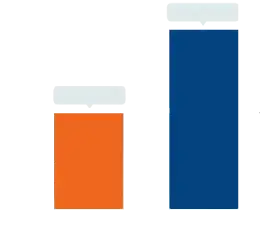
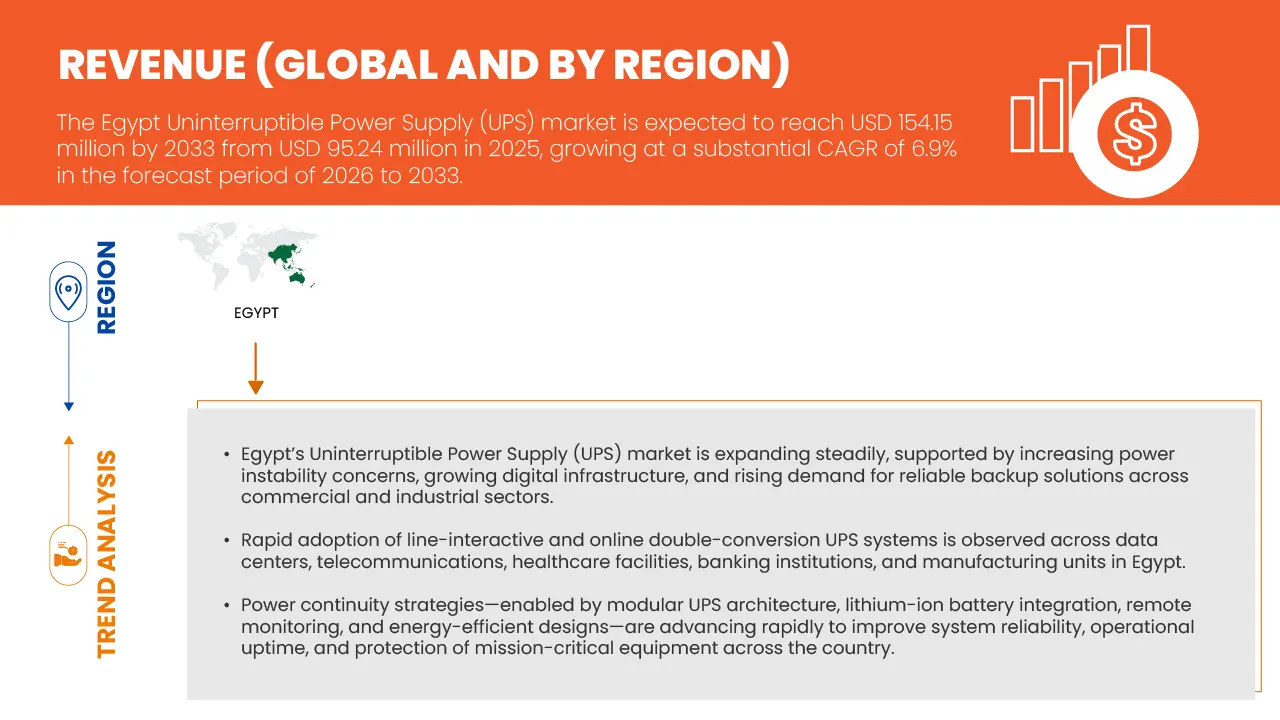
- The Egypt Uninterruptible Power Supply (UPS) Market is expected to reach USD 154.15 Billion by 2033 from USD 95.24 Billion in 2025, growing with a substantial CAGR of 6.9% in the forecast period of 2026 to 2033
- The Egypt Uninterruptible Power Supply (UPS) Market represents the national industry engaged in the design, manufacturing, assembly, importation, distribution, integration, and servicing of UPS systems that provide immediate backup power and power conditioning solutions. These systems are engineered to protect electrical and electronic equipment from power outages, voltage fluctuations, frequency instability, surges, and other grid disturbances. UPS systems operate using battery storage and power conversion technologies—including online (double-conversion), line-interactive, and offline/standby architectures—to ensure uninterrupted power delivery and maintain operational continuity during disruptions.
- The market serves a diverse range of end-use sectors across Egypt, including data centers, telecommunications infrastructure, healthcare facilities, banking and financial institutions, industrial and manufacturing plants, oil and gas operations, commercial establishments, and government entities. As Egypt continues to expand its digital infrastructure, telecom networks, and industrial base, demand for reliable power protection systems has increased, particularly in mission-critical environments where downtime results in financial losses or operational risk.
Egypt Uninterruptible Power Supply (UPS) Market Analysis
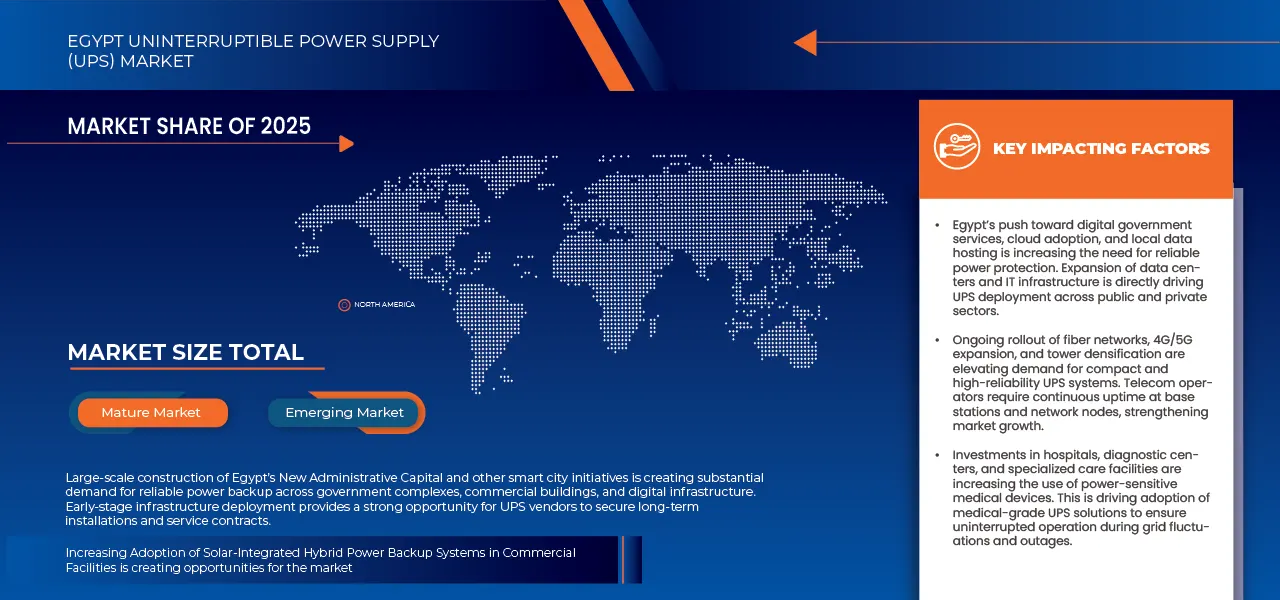
- The Egypt Uninterruptible Power Supply (UPS) Market is a critical segment of the country’s power infrastructure industry, focused on ensuring uninterrupted power delivery and protecting sensitive equipment from voltage fluctuations, frequency instability, and grid outages. UPS systems are widely deployed to maintain operational continuity in environments where even short power interruptions can result in financial losses, operational disruption, or equipment damage. As Egypt continues to modernize its infrastructure and accelerate digital transformation, demand for reliable power protection solutions has steadily increased.
- Market growth is primarily driven by the expansion of data centers, telecommunications networks, industrial automation, and commercial infrastructure. The rapid growth of digital services, cloud computing adoption, and telecom network upgrades has significantly increased the need for high-performance, scalable UPS systems. Additionally, manufacturing and industrial facilities rely on stable power to support automated processes and sensitive control systems, further strengthening demand. Healthcare institutions, financial services, government facilities, and oil and gas operations also represent important end-user segments due to their requirement for continuous power availability.
- The market includes a wide range of UPS technologies such as online double-conversion systems, line-interactive systems, and standby units, offered in both single-phase and three-phase configurations. Modular and energy-efficient systems are increasingly gaining traction, particularly in data center and enterprise environments where scalability and lifecycle cost optimization are key considerations. Battery technologies, including valve-regulated lead-acid (VRLA) and lithium-ion systems, form an integral component of UPS installations, influencing performance, maintenance requirements, and long-term operational efficiency.
- Overall, the Egypt UPS market is supported by ongoing infrastructure development, rising digitalization, and increasing awareness of power quality management. Continued investments in ICT infrastructure, smart industrial operations, and commercial expansion are expected to sustain steady demand for UPS systems in the medium to long term.
- In 2025, hardware dominated the Egypt Uninterruptible Power Supply (UPS) Market, accounting for 69.74% of the market share. This indicates a strong preference for physical UPS systems over software or service-based solutions in the region.
Report Scope and Egypt Uninterruptible Power Supply (UPS) Market Segmentation
|
Attributes |
Egypt Uninterruptible Power Supply (UPS) Market Key Market Insights |
|
Segments Covered |
|
|
Key Market Players |
|
|
Market Opportunities |
|
|
Value Added Data Infosets |
In addition to the insights on market scenarios such as market value, growth rate, segmentation, geographical coverage, and major players, the market reports curated by the Data Bridge Market Research also include in-depth expert analysis, geographically represented company-wise production and capacity, network layouts of distributors and partners, detailed and updated price trend analysis and deficit analysis of supply chain and demand. |
Egypt Uninterruptible Power Supply (UPS) Market Trends
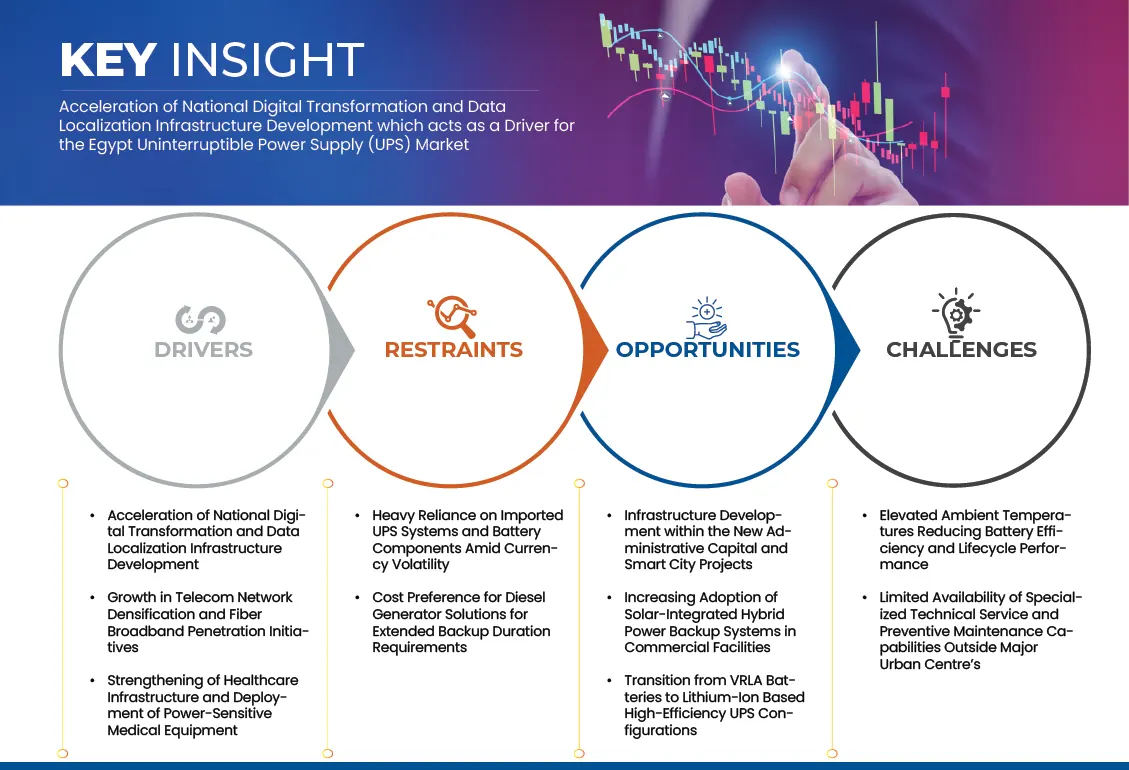
“Acceleration Of National Digital Transformation and Data Localization Infrastructure Development.”
- Acceleration of national digital transformation initiatives in Egypt has reshaped infrastructure priorities across public and private sector institutions. Government platforms, financial services, telecom networks, and enterprise systems are increasingly being digitized to improve efficiency, accessibility, and service delivery. As operational processes migrate to online environments, continuous system availability has become critical. Interruptions in power supply are no longer viewed as isolated technical issues but as direct risks to service continuity, customer trust, and institutional credibility.
- Greater emphasis is also being placed on data localization and domestic hosting of sensitive workloads. Critical information is increasingly being retained within national infrastructure to strengthen cybersecurity control, reduce latency, and align with evolving regulatory expectations. As server rooms and data centers are expanded within Egypt, infrastructure reliability is being integrated into project planning at an early stage. Stable and conditioned power supply is therefore treated as a foundational requirement to safeguard digital assets and maintain consistent operational performance.
- Within this evolving digital landscape, uninterrupted power solutions are being incorporated into broader infrastructure investment strategies. Higher uptime standards are being expected across banking systems, government portals, enterprise platforms, and telecom networks. As digital ecosystems expand into smart developments and integrated service platforms, dependable power protection systems are being recognized as essential components of long-term operational resilience and sustainable digital growth in Egypt.
For instance,
- As reported by Ahram Online in October 2025, the Egyptian government announced plans to establish three state-owned national data centres aimed at strengthening domestic cloud computing capacity, enhancing cybersecurity resilience, and localizing critical government data hosting infrastructure as part of its broader digital transformation strategy.
- In April 2024, President Abdel Fattah El-Sisi inaugurated the Government Data and Cloud Computing Center on Ain El-Sokhna Road, Egypt’s first national facility dedicated to big data processing, cloud services, and AI-enabled digital platforms, emphasizing the country’s commitment to localize data storage and reduce dependence on external hosting.
- According to the official website of NEOIX in November 2024, its hyperscale data centre project in the New Administrative Capital received government endorsement as a strategic digital infrastructure initiative, reinforcing Egypt’s ambition to expand domestic hosting capacity and strengthen its regional digital connectivity position.
- In July 2022, the U.S. International Trade Administration’s Egypt Country Commercial Guide highlighted ongoing development of Knowledge City and ICT parks within the New Administrative Capital, designed to host cloud infrastructure, data innovation hubs, and advanced digital service platforms under Egypt’s national digital economy roadmap
- The acceleration of digital transformation and data localization initiatives in Egypt is strengthening the country’s domestic IT and cloud infrastructure foundation. As national data centers, smart government platforms, and enterprise hosting facilities expand, infrastructure reliability is being prioritized to ensure operational continuity. This structural shift is expected to reinforce sustained demand for high-performance UPS systems supporting mission-critical digital environments.
Egypt Uninterruptible Power Supply (UPS) Market Dynamics
Driver
“Growth In Telecom Network Densification and Fiber Broadband Penetration Initiatives”
- Growth in telecom network densification and fiber broadband penetration initiatives across Egypt has been steadily reshaping the country’s digital connectivity landscape. Mobile network expansion, tower upgrades, and fiber-to-the-home deployments are being accelerated to meet rising demand for high-speed data services, enterprise connectivity, and digital applications. As data consumption increases across urban centers and secondary cities, network infrastructure is being strengthened to ensure wider coverage, improved bandwidth capacity, and enhanced service reliability.
- Significant investments are being directed toward upgrading switching centers, expanding transmission networks, and modernizing core telecom infrastructure. Fiber backbone expansion is being prioritized to support growing traffic from cloud applications, video streaming, digital payments, and enterprise platforms. Telecom facilities, including base transceiver stations and data switching hubs, are increasingly required to operate with minimal interruption. Power continuity and voltage stability have therefore become essential components in maintaining network uptime and service quality.
- As telecom operators extend connectivity into rural and newly developed urban areas, infrastructure resilience is being incorporated into deployment strategies. Network nodes and remote tower sites are often exposed to grid fluctuations and localized outages, making reliable backup power systems a critical requirement. In this evolving environment, uninterrupted power solutions are being integrated into telecom expansion projects to safeguard equipment performance, reduce service disruptions, and support Egypt’s broader digital inclusion and broadband development objectives.
For instance,
- In January 2025, Telecom Egypt and Orange Egypt signed infrastructure and transmission service agreements worth approximately EGP 15 billion to jointly enhance fiber-backhaul connectivity and support broader network capacity expansion, reflecting accelerated densification of telecom infrastructure across key urban and suburban areas in Egypt.
- In February 2024, under the auspices of the National Telecommunications Regulatory Authority (NTRA), Telecom Egypt and the Greater Cairo Water Company signed a Memorandum of Understanding to extend fiber-optic networks alongside water utilities infrastructure, aimed at accelerating broadband access and improving service rollout efficiency in both urban and rural locations.
- In July 2024, Telecom Egypt entered into a joint venture partnership with the 4iG Group to invest USD 600 million in building and operating modern fiber-to-the-home (FTTH) and fiber-to-the-site (FTTS) networks, targeting expanded high-speed broadband coverage for millions of households and businesses under Egypt’s Digital Egypt initiative.
- In July 2024, Nokia and Telecom Egypt announced a partnership to introduce 5G-ready services and upgrade radio access networks with advanced Massive MIMO and AirScale technology across major cities such as Cairo, Alexandria, Giza, and Luxor, marking a significant step in enhancing network performance and preparing for next-generation connectivity demand.
- Telecom network densification and fiber broadband expansion in Egypt have been steadily advanced through nationwide infrastructure upgrades and increased fiber-to-the-home deployments. These initiatives have strengthened connectivity, improved service quality, and created a stronger foundation for digital services and data-driven applications across the country.
Restraint/Challenge
“Heavy Reliance on Imported Ups Systems and Battery Components Amid Currency Volatility”
- A significant share of Uninterruptible Power Supply (UPS) systems and battery components deployed across Egypt continues to be sourced from international manufacturers. Core elements such as valve-regulated lead-acid (VRLA) batteries, lithium-ion battery modules, insulated gate bipolar transistor (IGBT) components, control boards, and precision power electronics are largely imported due to limited domestic manufacturing depth in advanced power equipment. As demand expands across data centers, healthcare facilities, telecom infrastructure, and commercial buildings, dependency on foreign supply chains has remained pronounced.
- This reliance has been further complicated by ongoing currency volatility and fluctuations in the value of the Egyptian Pound (EGP). When exchange rate pressures intensify, procurement costs for imported UPS systems, spare parts, and replacement batteries are directly affected. Pricing adjustments are often passed through the supply chain, resulting in extended budgeting cycles, delayed capital expenditure decisions, and increased total cost of ownership for end users. In several cases, project timelines are influenced by import clearance processes, foreign currency availability, and revised supplier quotations.
- Operational planning has therefore required greater flexibility, with emphasis placed on inventory buffering, phased procurement strategies, and supplier diversification. Maintenance contracts and battery replacement cycles have also been impacted, as imported components are subject to variable landed costs. While the long-term outlook for power continuity infrastructure remains strong, the current structure of import dependence introduces cost sensitivity and financial uncertainty within Egypt’s UPS and critical power ecosystem.
For instance,
- In March 2025, Egypt’s import trade statistics showed continued high volumes of imported Uninterruptible Power Supply (UPS) units and related power protection systems being brought in from countries such as India, China, and Vietnam, underlining that critical UPS equipment is still primarily supplied from overseas due to limited domestic manufacturing capacity.
- In May 2025, shipment records indicated that Egypt received multiple consignments of UPS systems, including high-capacity models and associated rectifiers and inverters, which were cleared through Egyptian ports, reflecting sustained dependence on imported backup power solutions for infrastructure and industrial requirements.
- In August 2024, Egypt’s foreign trade data revealed significant imports of primary cells and electric storage batteries components essential for UPS battery assemblies from major battery-producing countries such as China, India, and Malaysia, highlighting that key UPS subcomponent are sourced internationally rather than locally.
- In September 2024, official trade classification figures showed that electrical apparatus for protecting electrical circuits, converters, and electric storage batteries were among the top imported electrical machinery product categories, indicating ongoing reliance on foreign-made electronic components critical to assembling and maintaining UPS systems across sectors.
- Egypt’s continued dependence on imported UPS systems and battery components exposes the market to foreign exchange volatility and external supply chain disruptions. Fluctuations in the value of the Egyptian Pound directly influence procurement costs, project budgeting, and replacement cycles for critical power equipment. This structural reliance on overseas sourcing remains a key restraint, creating pricing uncertainty and operational risk across sectors dependent on uninterrupted power infrastructure.
Egypt Uninterruptible Power Supply (UPS) Market Scope
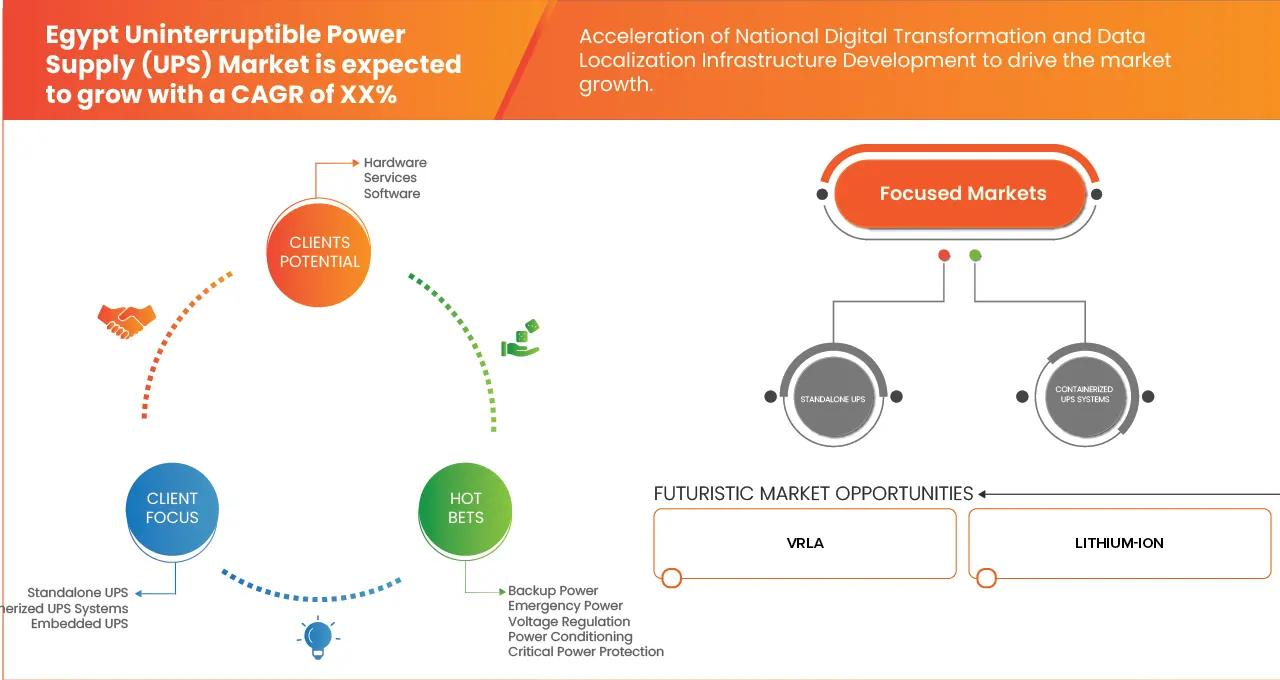
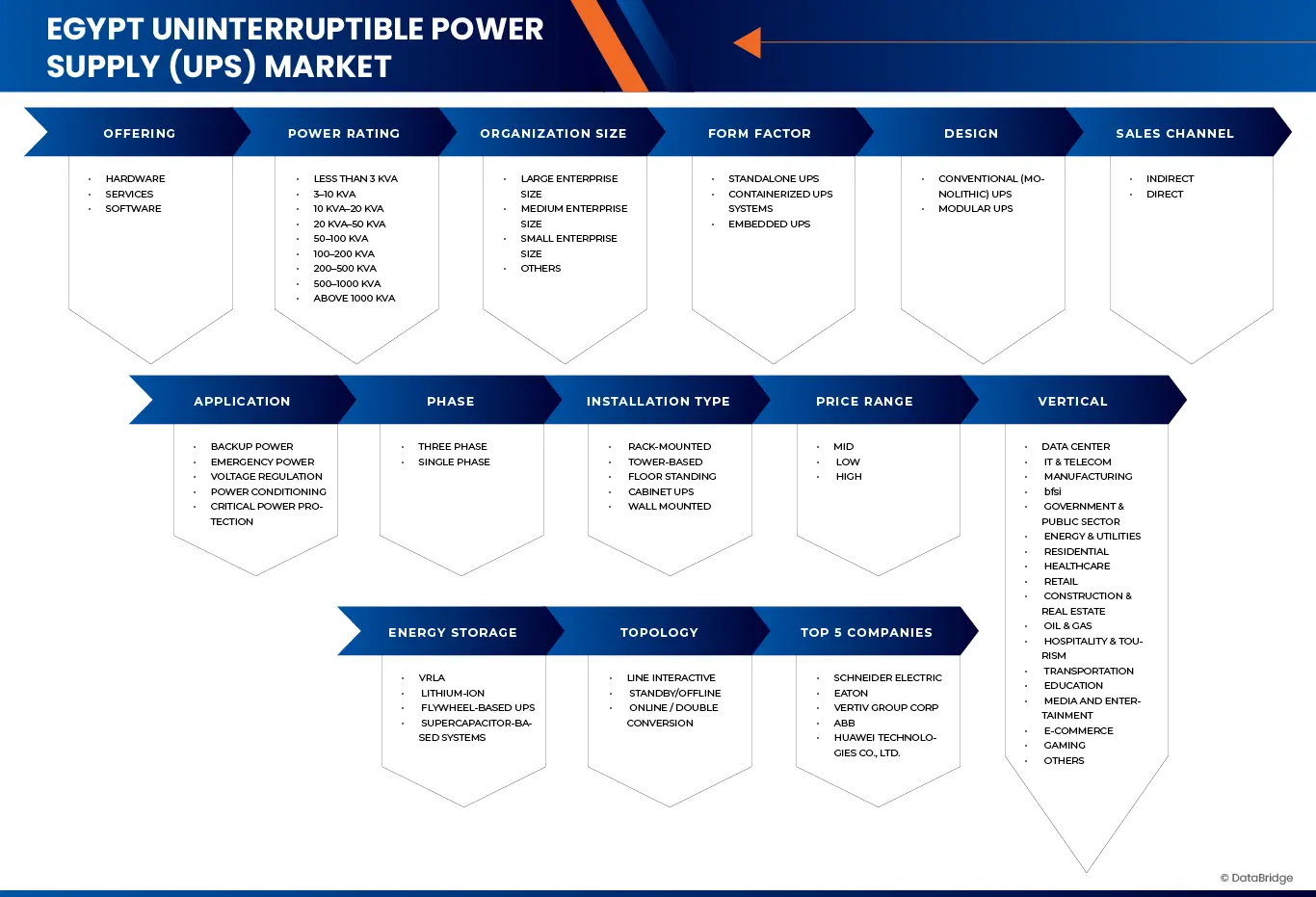
Egypt Uninterruptible Power Supply (UPS) Market is categorized into thirteen notable segments which are based on offering, power rating, organization, form factor, application, price range, phase, installation, energy storage, topology, design, vertical, sales channel.
- By Offering
On the basis of offering, Egypt Uninterruptible Power Supply (UPS) Market is segmented into Hardware, Software, Service. In 2026, hardware is expected to dominate the market with a 69.72% share, driven by rising investments in data centers, telecommunications infrastructure, healthcare facilities, industrial manufacturing, and commercial real estate projects. Frequent voltage fluctuations and grid instability in certain regions are further accelerating demand for reliable backup and critical power systems. Additionally, ongoing digital transformation initiatives, the expansion of hyperscale and edge data centers, and infrastructure modernization programs are driving large-scale procurement of UPS hardware components, particularly batteries and inverters.
The Hardware segment is expected to be the fastest-growing in the Egypt Uninterruptible Power Supply (UPS) Market, with a CAGR of 6.9%, driven by increasing adoption of high-efficiency UPS systems, rising demand for advanced batteries and inverters, and the growing need for reliable backup and critical power solutions across commercial, industrial, and healthcare sectors.
- By Power Rating
On the basis of power rating, the Egypt Uninterruptible Power Supply (UPS) Market is segmented into Less than 3 kVA, 3–10 kVA, 10–20 kVA, 20–50 kVA, 50–100 kVA, 100–200 kVA, 200–500 kVA, 500–1000 kVA, and Above 1000 kVA. In 2026, the Less Than 3 kVA segment is expected to dominate the market with a 12.59% share, driven by strong demand from residential users, small offices/home offices (SOHO), retail outlets, and small commercial establishments. The growing adoption of personal computers, networking equipment, surveillance systems, and point-of-sale (POS) terminals is fueling consistent demand for low-capacity backup solutions. Additionally, frequent short-duration power outages and voltage fluctuations are prompting households and SMEs to invest in compact, cost-effective UPS systems.
The 100–200 kVA segment is projected to be the fastest-growing in the Egypt Uninterruptible Power Supply (UPS) Market, with a CAGR of 7.4%, driven by increasing demand from medium to large commercial enterprises, data centers, and industrial facilities. The need for higher-capacity, reliable backup power to support critical operations, along with infrastructure modernization and expansion of telecommunications and IT networks, is fueling the adoption of UPS systems in this power range.
- By Organization
On the basis of organization, the Egypt Uninterruptible Power Supply (UPS) Market is segmented into Small Enterprise Size, Medium Enterprise Size, and Large Enterprise Size. In 2026, the Large Enterprise Size segment is expected to dominate the market with a 73.42% share, driven by substantial investments in mission-critical infrastructure, including data centers, telecommunications networks, banking institutions, oil & gas facilities, large manufacturing plants, and healthcare institutions. Large enterprises typically require high-capacity, redundant, and scalable UPS systems to ensure uninterrupted operations, protect sensitive equipment, and comply with stringent uptime and data protection standards.
The Medium Enterprise Size segment is projected to be the fastest-growing in the Egypt Uninterruptible Power Supply (UPS) Market, with a CAGR of 7.3%, driven by increasing adoption of IT infrastructure, commercial automation, and mid-sized industrial facilities. Growing investments in data centers, office networks, and business-critical equipment, along with the need for reliable backup power and protection against voltage fluctuations, are fueling demand for scalable and efficient UPS solutions within medium-sized enterprises.
- By Form Factor
On the basis of form factor, the Egypt Uninterruptible Power Supply (UPS) Market is segmented into Standalone UPS, Embedded UPS, and Containerized UPS Systems. In 2026, the Standalone UPS segment is expected to dominate the market with a 74.19% share, driven by its wide applicability across residential, commercial, and industrial sectors. Its ease of installation, cost-effectiveness, and flexibility in supporting varying load capacities make it a preferred choice among SMEs, offices, retail establishments, healthcare facilities, and telecom sites. Additionally, growing demand for decentralized and retrofit-friendly power backup solutions further reinforces the segment’s leading position in the market.
The Containerized UPS Systems segment is projected to be the fastest-growing in the Egypt Uninterruptible Power Supply (UPS) Market, with a CAGR of 7.3%, driven by increasing demand from large-scale data centers, industrial facilities, and mission-critical infrastructure requiring scalable, modular, and easily deployable power backup solutions. The need for rapid installation, high-capacity support, and flexibility in expanding power infrastructure is fueling the adoption of containerized UPS systems across commercial and industrial sectors.
- By Application
On the basis of application, the Egypt Uninterruptible Power Supply (UPS) Market is segmented into Backup Power, Emergency Power, Voltage Regulation, Power Conditioning, and Critical Power Protection. In 2026, the Backup Power segment is expected to dominate the market with a 44.09% share, driven by the increasing frequency of power outages and voltage fluctuations across residential, commercial, and industrial sectors. Growing reliance on digital infrastructure, data centers, telecommunications networks, healthcare facilities, and banking systems is fueling strong demand for uninterrupted operations. Additionally, expanding SME activity and rising awareness regarding equipment protection are further supporting the widespread adoption of UPS systems primarily for backup power applications.
The Critical Power Protection segment is projected to be the fastest-growing in the Egypt Uninterruptible Power Supply (UPS) Market, with a CAGR of 7.3%, driven by increasing demand from data centers, healthcare facilities, banking institutions, and industrial operations that require uninterrupted power for mission-critical systems. The rising need to safeguard sensitive equipment, ensure high availability, and comply with stringent uptime and regulatory standards is accelerating the adoption of advanced UPS solutions designed specifically for critical power protection.
- By Phase
On the basis of phase, the Egypt Uninterruptible Power Supply (UPS) Market is segmented into Three Phase and Single Phase. In 2026, the Three Phase segment is expected to dominate the market with a 63.91% share, driven by rising demand from data centers, industrial manufacturing facilities, oil & gas installations, large commercial complexes, and healthcare institutions that require high-capacity and stable power backup solutions. Three-phase UPS systems are preferred for supporting heavy loads, critical infrastructure, and scalable operations, offering higher efficiency and better load distribution compared to single-phase systems. Increasing infrastructure development and the expansion of enterprise-level operations across Egypt further reinforce the dominance of the three-phase segment.
The Three Phase segment is projected to be the fastest-growing in the Egypt Uninterruptible Power Supply (UPS) Market, with a CAGR of 7.1%, driven by increasing deployment of high-capacity UPS systems in data centers, industrial facilities, large commercial complexes, and critical infrastructure projects. The need for reliable, efficient, and scalable power backup to support heavy electrical loads, mission-critical operations, and expanding enterprise-level infrastructure is accelerating the adoption of three-phase UPS systems across Egypt.
- By Installation Type
On the basis of installation type, the Egypt Uninterruptible Power Supply (UPS) Market is segmented into Rack-Mounted, Tower-Based, Floor Standing, Cabinet UPS, and Wall Mounted. In 2026, the Rack-Mounted segment is expected to dominate the market with a 31.34% share, driven by increasing deployment of data centers, server rooms, telecom infrastructure, and IT networks across enterprises. Rack-mounted UPS systems provide space optimization, scalability, and seamless integration within standardized server racks, making them ideal for organized IT environments. Additionally, growing digital transformation initiatives, rising cloud adoption, and the expansion of colocation facilities in Egypt are further boosting demand for rack-based power backup solutions.
The Cabinet UPS segment is projected to be the fastest-growing in the Egypt Uninterruptible Power Supply (UPS) Market, with a CAGR of 7.4%, driven by increasing adoption in large-scale data centers, industrial facilities, and enterprise campuses that require high-capacity, centralized power backup solutions. The demand for modular, scalable, and easy-to-maintain UPS systems capable of supporting critical infrastructure and heavy electrical loads is accelerating the deployment of cabinet-based UPS installations across Egypt.
- By Price Range
On the basis of price range, the Egypt Uninterruptible Power Supply (UPS) Market is segmented into Low, Mid, and High. In 2026, the Mid segment is expected to dominate the market with a 60.18% share, driven by its balanced value proposition between cost and performance. Mid-priced UPS systems are widely adopted by small and medium enterprises, commercial establishments, healthcare facilities, and mid-sized industrial units that require reliable backup power without the higher capital expenditure of premium systems. Additionally, growing demand for feature-rich yet cost-efficient solutions—such as improved battery life, remote monitoring capabilities, and higher energy efficiency—is further supporting strong preference for mid-range UPS products across Egypt.
The High segment is projected to be the fastest-growing in the Egypt Uninterruptible Power Supply (UPS) Market, with a CAGR of 7.3%, driven by increasing demand from large enterprises, hyperscale data centers, industrial complexes, and mission-critical facilities requiring premium, high-performance UPS systems. The need for advanced features such as extended battery runtime, high energy efficiency, real-time monitoring, and robust reliability is accelerating the adoption of high-end UPS solutions across Egypt.
- By Energy Storage
On the basis of energy storage, the Egypt Uninterruptible Power Supply (UPS) Market is segmented into VRLA, Lithium-Ion, Flywheel-Based UPS, and Supercapacitor-Based Systems. In 2026, the VRLA segment is expected to dominate the market with a 61.66% share, driven by its cost-effectiveness, widespread availability, and proven reliability across residential, commercial, and industrial applications. VRLA batteries are preferred in small to mid-sized UPS systems due to their lower upfront investment, established supply chain, and ease of replacement. Additionally, strong adoption in SMEs, retail outlets, telecom sites, and institutional facilities continues to support sustained demand.
The Lithium-Ion segment is projected to be the fastest-growing in the Egypt Uninterruptible Power Supply (UPS) Market, with a CAGR of 7.2%, driven by increasing demand for high-efficiency, long-life, and compact energy storage solutions in data centers, industrial facilities, and large commercial enterprises. The advantages of faster charging, reduced maintenance, higher energy density, and longer lifecycle compared to traditional VRLA batteries are accelerating the adoption of lithium-ion UPS systems across Egypt.
- By Topology
On the basis of topology, the Egypt Uninterruptible Power Supply (UPS) Market is segmented into Line Interactive, Standby/Offline, and Online / Double Conversion. In 2026, the Line Interactive segment is expected to dominate the market with a 28.86% share, driven by its cost-effectiveness and ability to provide both voltage regulation and battery backup, making it highly suitable for small and medium enterprises, commercial establishments, and residential applications. Line interactive UPS systems offer better power conditioning compared to standby systems while remaining more affordable than online/double conversion models. Additionally, increasing demand for protection against voltage fluctuations, brownouts, and short-duration outages across offices, retail outlets, and IT setups is fueling strong adoption of line interactive systems in Egypt.
The Line Interactive segment is projected to be the fastest-growing in the Egypt Uninterruptible Power Supply (UPS) Market, with a CAGR of 7.7%, driven by rising demand for cost-effective, efficient, and compact UPS solutions in small to medium enterprises, commercial offices, and residential applications. The need for reliable voltage regulation, battery backup during short-duration outages, and improved power conditioning—without the higher costs of online/double conversion systems—is accelerating the adoption of line interactive UPS systems across Egypt.
- By Design
On the basis of design type, the Egypt Uninterruptible Power Supply (UPS) Market is segmented into Modular UPS and Conventional (Monolithic) UPS. In 2026, the Conventional (Monolithic) UPS segment is expected to dominate the market with a 82.32% share, driven by its widespread deployment across commercial buildings, industrial facilities, healthcare institutions, and mid-sized data centers. Conventional systems are preferred for their proven reliability, lower initial investment compared to modular systems, and suitability for fixed load requirements. Additionally, the presence of many existing monolithic installations in Egypt supports continued demand for replacements, upgrades, and capacity expansions within established infrastructure environments.
The Modular UPS segment is projected to be the fastest-growing in the Egypt Uninterruptible Power Supply (UPS) Market, with a CAGR of 7.2%, driven by increasing demand for scalable, flexible, and easily maintainable power backup solutions in data centers, large enterprises, and industrial facilities. The ability to expand capacity incrementally, reduce downtime during maintenance, and optimize energy efficiency is accelerating the adoption of modular UPS systems across Egypt.
- By Vertical
On the basis of vertical, the Egypt Uninterruptible Power Supply (UPS) Market is segmented into Government & Public Sector, IT & Telecom, Hospitality & Tourism, Construction & Real Estate, Healthcare, Energy & Utilities, Media and Entertainment, Manufacturing, Gaming, Data Center, Residential, Retail, BFSI, Education, Oil & Gas, E-Commerce, and Others. In 2026, the Data Center segment is expected to dominate the market with a 17.36% share, driven by increasing investments in digital infrastructure, cloud computing, colocation facilities, and hyperscale deployments across Egypt. Growing internet penetration, rising demand for data localization, expansion of fintech and e-commerce platforms, and government-led digital transformation initiatives are accelerating the development of new data centers. These facilities require high-capacity, redundant, and scalable UPS systems to ensure uninterrupted operations, minimize downtime risks, and maintain service-level agreements (SLAs). Additionally, the need for energy-efficient and highly reliable power backup solutions further reinforces the dominance of the data center segment in the overall UPS market.
The IT & Telecom segment is projected to be the fastest-growing in the Egypt Uninterruptible Power Supply (UPS) Market, with a CAGR of 8.0%, driven by increasing deployment of IT infrastructure, telecom networks, and cloud-based services across Egypt. Rising digital transformation initiatives, expanding data traffic, and growing demand for reliable, uninterrupted power to support servers, networking equipment, and communication systems are accelerating the adoption of UPS solutions in the IT and telecom sector.
- By Sales Channel
On the basis of sales channel, the Egypt Uninterruptible Power Supply (UPS) Market is segmented into Direct and Indirect. In 2026, the Indirect segment is expected to dominate the market with a 61.26% share, driven by the wide distribution network offered by resellers, distributors, and system integrators, which enables UPS manufacturers to reach a larger customer base across commercial, industrial, and residential sectors. Additionally, indirect channels provide value-added services such as installation, maintenance, and after-sales support, making them more attractive to end-users who prefer turnkey solutions over direct procurement. This trend is further reinforced by partnerships between global UPS brands and local dealers, enhancing market penetration and accessibility.
The Direct segment is projected to be the fastest-growing in the Egypt Uninterruptible Power Supply (UPS) Market, with a CAGR of 7.3%, driven by increasing preference among large enterprises, data centers, and industrial facilities for direct procurement from manufacturers to ensure customized solutions, bulk purchasing, and enhanced technical support. The need for tailored UPS configurations, direct engagement for service-level agreements, and streamlined communication for installation, maintenance, and upgrades is accelerating the adoption of direct sales channels across Egypt
Egypt Uninterruptible Power Supply (UPS) Market Share
The Egypt Uninterruptible Power Supply (UPS) Market industry is primarily led by well-established companies, including:
- Schneider Electric (France)
- EATON CORPORATION plc (Ireland)
- VERTIV HOLDINGS CO (U.S.)
- ABB LTD (Switzerland)
- HUAWEI TECHNOLOGIES (China)
- Legrand (France)
- El Fateh Est. (Egypt)
- EPS Electric Power Synergies LLC (U.A.E)
- Fox Power Electronics (Egypt)
- IPS Power Limited (U.K.)
- Phoenix Contact GmbH & Co. KG (Germany)
- Tescom Elektronik A.Ş. (Turkey)
- Mitsubishi Electric Corporation (Japan)
Latest Developments in Egypt Uninterruptible Power Supply (UPS) Market
- In May 2025, ABB has expanded its PowerValue UPS product range for enterprise data centers, offering modular, efficient, and reliable power backup solutions. The new UPS systems are designed to enhance critical IT infrastructure, improve safety, and reduce energy consumption. This UPS expansion strengthens ABB’s position in the global data center market and drives growth in critical power solutions.
- In November 2025, Schneider Electric and Digital Realty have entered a $373 million Supply Capacity Agreement to secure guaranteed capacity for Uninterruptible Power Supplies (UPS), low‑voltage switchgear, and prefabricated skids to meet rising demand for digital infrastructure. The pact aims to accelerate power deployment and supply‑chain resilience amid surging capacity needs driven by AI and cloud growth, this is expected to strengthen company portfolio.
- In September 2025, Huawei Digital Power showcased its strategy to accelerate high quality, innovative data center construction for the AI era at Huawei Connect 2025, emphasizing integration of digital and power technologies to build reliable, agile, and sustainable AI ready infrastructure. The company highlighted modular design, prefabricated solutions, and advanced power supply and thermal management innovations to meet the explosive growth in AI computing demands. This innovative approach strengthens Huawei’s role in the global data center ecosystem and enhances its credibility in delivering comprehensive, energy efficient infrastructure.
- In October 2025, Vertiv has launched a new Vertiv PowerIT rack power distribution unit (PDU) designed for AI and high-performance computing data centers, offering advanced power management, flexible configurations and high capacity three phase distribution. The solution supports up to 25 kW rack densities and robust environmental conditions, helping operators balance loads and enhance reliability in modern data center environments. This launch strengthens Vertiv’s position in the AI/HPC infrastructure market by expanding its critical power portfolio and meeting growing demand for high density power distribution solutions
SKU-
Get online access to the report on the World's First Market Intelligence Cloud

- Interactive Data Analysis Dashboard
- Company Analysis Dashboard for high growth potential opportunities
- Research Analyst Access for customization & queries
- Competitor Analysis with Interactive dashboard
- Latest News, Updates & Trend analysis
- Harness the Power of Benchmark Analysis for Comprehensive Competitor Tracking
Egypt Uninterruptible Power Supply Ups Market, Supply Chain Analysis and Ecosystem Framework
To support market growth and help clients navigate the impact of geopolitical shifts, DBMR has integrated in-depth supply chain analysis into its Egypt Uninterruptible Power Supply Ups Market research reports. This addition empowers clients to respond effectively to global changes affecting their industries. The supply chain analysis section includes detailed insights such as Egypt Uninterruptible Power Supply Ups Market consumption and production by country, price trend analysis, the impact of tariffs and geopolitical developments, and import and export trends by country and HSN code. It also highlights major suppliers with data on production capacity and company profiles, as well as key importers and exporters. In addition to research, DBMR offers specialized supply chain consulting services backed by over a decade of experience, providing solutions like supplier discovery, supplier risk assessment, price trend analysis, impact evaluation of inflation and trade route changes, and comprehensive market trend analysis.
Research Methodology
Data collection and base year analysis are done using data collection modules with large sample sizes. The stage includes obtaining market information or related data through various sources and strategies. It includes examining and planning all the data acquired from the past in advance. It likewise envelops the examination of information inconsistencies seen across different information sources. The market data is analysed and estimated using market statistical and coherent models. Also, market share analysis and key trend analysis are the major success factors in the market report. To know more, please request an analyst call or drop down your inquiry.
The key research methodology used by DBMR research team is data triangulation which involves data mining, analysis of the impact of data variables on the market and primary (industry expert) validation. Data models include Vendor Positioning Grid, Market Time Line Analysis, Market Overview and Guide, Company Positioning Grid, Patent Analysis, Pricing Analysis, Company Market Share Analysis, Standards of Measurement, Global versus Regional and Vendor Share Analysis. To know more about the research methodology, drop in an inquiry to speak to our industry experts.
Customization Available
Data Bridge Market Research is a leader in advanced formative research. We take pride in servicing our existing and new customers with data and analysis that match and suits their goal. The report can be customized to include price trend analysis of target brands understanding the market for additional countries (ask for the list of countries), clinical trial results data, literature review, refurbished market and product base analysis. Market analysis of target competitors can be analyzed from technology-based analysis to market portfolio strategies. We can add as many competitors that you require data about in the format and data style you are looking for. Our team of analysts can also provide you data in crude raw excel files pivot tables (Fact book) or can assist you in creating presentations from the data sets available in the report.