


What is the Europe Balsamic Vinegar Market Size and Overview?
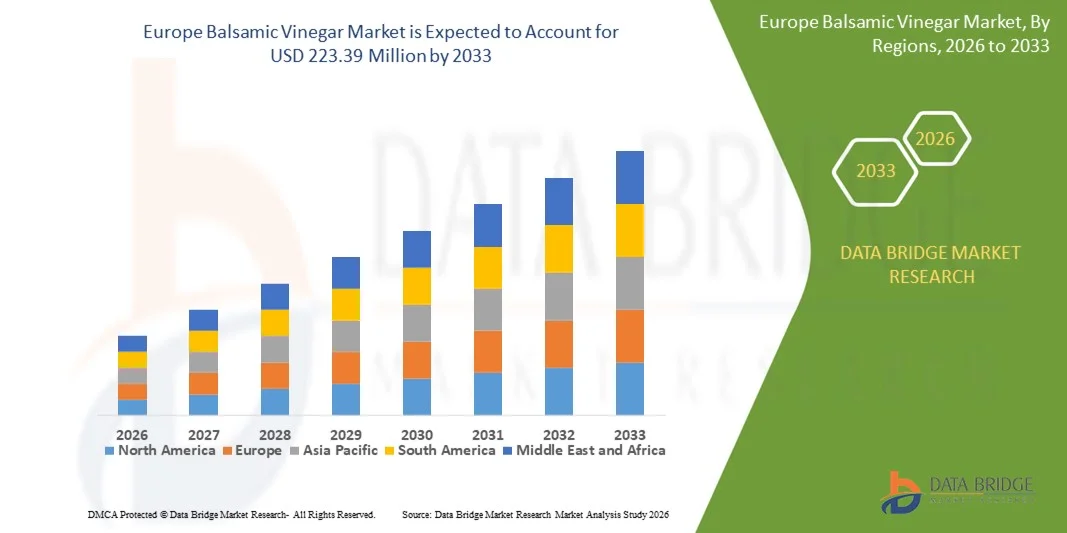
- As per Data Bridge Market Research Analysis the Global balsamic vinegar market size was valued at USD 180.51 million in 2025 and is expected to reach USD 223.39 million by 2033, at a CAGR of 2.7% during the forecast period
- The market growth is largely fueled by increasing consumer inclination toward natural, premium, and authentic food products, driven by rising health consciousness and culinary interest in traditional Mediterranean diets across global households and foodservice sectors
- Furthermore, growing demand for gourmet ingredients and clean-label condiments is positioning balsamic vinegar as a preferred flavor enhancer in both home and professional kitchens. These converging factors are accelerating product uptake, thereby significantly boosting the industry's growth.
Market Size & Forecast
- Global Market Value (2025): USD 180.51 million in 2025
- Expected Market Value (2033): USD 223.39 million
- Forecast CAGR (2026–2033): 2.7%
Europe Balsamic Vinegar Market Analysis
- Balsamic vinegar is a traditional Italian condiment made from concentrated grape must, aged in wooden barrels to develop a rich, complex flavor. It is widely used in salad dressings, marinades, and gourmet dishes, and is available in various grades ranging from commercial to traditional DOP-certified varieties
- The escalating demand for balsamic vinegar is primarily fueled by the global trend toward healthier eating, growing awareness of authentic regional ingredients, and the expanding use of vinegar-based condiments in culinary innovation and modern food applications
- Germany dominated the balsamic vinegar market in 2025, due to high consumption of premium food products, strong demand for Mediterranean and international cuisines, and widespread use of balsamic vinegar in household and foodservice applications
- France is expected to be the fastest growing country in the balsamic vinegar market during the forecast period due to evolving culinary preferences and growing experimentation with international and Mediterranean flavors
- Conventional segment dominated the market with a market share of 72.5% in 2025, due to its wide-scale production and cost-efficiency, which make it more accessible to a broader customer base. It is widely distributed across supermarkets and used in everyday cooking, contributing to its dominant shar
Report Scope and Balsamic Vinegar Market Segmentation
|
Attributes |
Balsamic Vinegar Key Market Insights |
|
Segments Covered |
|
|
Countries Covered |
Europe
|
|
Key Market Players |
|
|
Market Opportunities |
|
|
Value Added Data Infosets |
In addition to the insights on market scenarios such as market value, growth rate, segmentation, geographical coverage, and major players, the market reports curated by the Data Bridge Market Research also include in-depth expert analysis, pricing analysis, brand share analysis, consumer survey, demography analysis, supply chain analysis, value chain analysis, raw material/consumables overview, vendor selection criteria, PESTLE Analysis, Porter Analysis, and regulatory framework. |
What is the Key Trend in the Europe Balsamic Vinegar Market ?
Increasing Demand for Natural and Flavorful Ingredients
- A key trend in the balsamic vinegar market is the rising consumer preference for natural, authentic, and flavor-rich ingredients, driven by growing awareness around food quality and origin. Consumers are increasingly valuing products made from traditional grape must, minimal additives, and clear labeling, which is reinforcing the premium perception of balsamic vinegar
- For instance, Acetum S.p.A., a major producer of Balsamic Vinegar of Modena, has expanded its portfolio of organic and PGI-certified products to meet demand for clean-label and naturally fermented vinegars. This focus on authenticity and ingredient transparency is strengthening consumer trust and supporting premium product adoption
- The growing interest in gourmet cooking and home-based culinary experimentation is increasing the use of balsamic vinegar as a versatile flavor enhancer across salads, marinades, and cooked dishes. This is encouraging producers to highlight sensory attributes such as aroma, sweetness, and acidity balance
- Foodservice operators and specialty retailers are emphasizing natural and flavorful condiments to differentiate menu offerings and private-label assortments. This trend is supporting higher visibility of aged and specialty balsamic vinegars in both retail and hospitality channels
- The expansion of international cuisines and Mediterranean diets is reinforcing demand for traditional condiments that deliver depth of flavor without artificial enhancers. Balsamic vinegar is increasingly positioned as a staple ingredient supporting wholesome and flavorful meal preparation
- The continued shift toward natural taste solutions is strengthening long-term demand for authentic balsamic vinegar products. This trend is shaping product development strategies and reinforcing the market’s premiumization trajectory
Europe Balsamic Vinegar Market Dynamics
Driver
Growing Focus on Health and Wellness
- The increasing focus on health and wellness is driving demand for balsamic vinegar due to its perceived digestive benefits, low fat content, and role as a natural flavoring alternative to calorie-dense dressings. Consumers are incorporating balsamic vinegar into balanced diets as part of healthier eating habits
- For instance, De Nigris has promoted balsamic vinegar products emphasizing natural fermentation processes and the absence of artificial preservatives, aligning with wellness-driven purchasing behavior. Such positioning supports consumer confidence in balsamic vinegar as a healthier condiment choice
- The rise of plant-based and Mediterranean-style diets is supporting the use of balsamic vinegar as a seasoning that enhances flavor while maintaining nutritional balance. This is expanding its application across salads, vegetables, and lean protein dishes
- Retailers and food brands are leveraging health-oriented messaging to position balsamic vinegar as a functional pantry essential. This growing alignment with wellness trends continues to strengthen its role in everyday consumption
- The sustained emphasis on healthier lifestyles is reinforcing balsamic vinegar demand across both retail and foodservice segments. This driver is expected to support steady market growth over the forecast period
Restraint/Challenge
Fluctuating Raw Material Prices
- The balsamic vinegar market faces challenges from fluctuating raw material prices, particularly variations in grape harvest yields and costs associated with wine vinegar production. These fluctuations directly impact production expenses and pricing stability for manufacturers
- For instance, PONTI S.P.A. has experienced cost pressures linked to changes in grape supply and agricultural conditions affecting raw material availability in Italy. Such variability influences procurement planning and margin management
- Climate-related factors, including irregular weather patterns, are affecting grape quality and harvest volumes, creating uncertainty across the supply chain. This volatility increases operational risks for producers dependent on consistent raw material sourcing
- Rising costs of glass bottles, packaging materials, and transportation further compound pricing challenges for balsamic vinegar manufacturers. These factors can limit the ability to maintain competitive pricing, particularly in price-sensitive markets
- Ongoing fluctuations in agricultural input costs continue to challenge market stability and pricing strategies. These constraints require producers to balance cost management with quality preservation to sustain market competitiveness
Europe Balsamic Vinegar Market Scope
The market is segmented on the basis of product type, grade, category, type, type of wood for aging, ageing, application, distribution channel, and end use.
- By Product Type
On the basis of product type, the balsamic vinegar market is segmented into dark balsamic vinegar and white balsamic vinegars. The dark balsamic vinegar segment dominated the largest market revenue share in 2025, driven by its widespread culinary usage, rich flavor profile, and traditional heritage, making it a staple in Mediterranean and global cuisines. Its deep color, syrupy texture, and aging process appeal to both home cooks and gourmet chefs. The aged character of dark balsamic also makes it a preferred choice for use in sauces, glazes, and reductions.
The white balsamic vinegar segment is anticipated to witness the fastest growth rate from 2026 to 2033, fueled by its rising use in modern, health-conscious recipes and dishes where visual clarity is preferred. Its light color and subtle taste make it ideal for salad dressings and fruit-based dishes where aesthetics are important, and its growing inclusion in upscale restaurant offerings is further driving its demand.
- By Grade
On the basis of grade, the market is categorized into traditional grade balsamic vinegar, commercial grade balsamic vinegar, and condiment grade balsamic vinegar. The commercial grade segment held the largest revenue share in 2025, owing to its affordability, mass availability, and widespread use across households and casual dining establishments. Produced through shorter aging processes and often blended with wine vinegar, it provides a cost-effective solution for everyday culinary use.
The traditional grade segment is expected to register the fastest CAGR during the forecast period, driven by increasing consumer interest in premium, artisanal products. Traditional balsamic, aged for at least 12 years under strict regulations, is prized for its complex flavor and limited availability, appealing to connoisseurs and upscale culinary markets.
- By Category
On the basis of category, the market is segmented into organic and conventional. The conventional segment led the market with a share of 72.5% in 2025 due to its wide-scale production and cost-efficiency, which make it more accessible to a broader customer base. It is widely distributed across supermarkets and used in everyday cooking, contributing to its dominant share.
The organic segment is projected to experience the fastest growth from 2026 to 2033, supported by rising consumer preferences for clean-label and chemical-free products. With the organic food movement gaining momentum, organically produced balsamic vinegar is increasingly being adopted by health-conscious consumers and premium brands emphasizing natural ingredients.
- By Type
On the basis of type, the market includes Traditional Balsamic Vinegar of Modena DOP, Traditional Balsamico Vinegar of Reggio Emilia DOP, and Traditional Balsamic Vinegar of Modena IGP. The Traditional Balsamic Vinegar of Modena IGP dominated the market revenue in 2025, driven by its international recognition, broader availability, and versatility in both everyday and gourmet cooking. Protected by the European Union’s IGP label, it balances tradition with accessibility, making it a high-demand export product.
The Traditional Balsamico Vinegar of Reggio Emilia DOP is expected to grow at the highest CAGR, supported by increasing consumer awareness and demand for authentic, heritage-based products with stricter aging and production standards. Its rich, concentrated flavor and premium positioning appeal to culinary enthusiasts seeking distinction.
- By Type of Wood for Aging
On the basis of type of wood used for aging, the market is segmented into oak, chestnut, mulberry, and others. The oak wood segment held the largest share in 2025 due to its widespread use in traditional aging processes, which imparts deep flavors and a smooth finish to the vinegar. Oak barrels enhance the vinegar’s complexity, making it a favored choice for both traditional and commercial producers.
The chestnut wood segment is projected to witness the fastest growth rate, attributed to its higher tannin content and ability to intensify the flavor and color of the vinegar. Chestnut-aged balsamic vinegar is increasingly preferred for gourmet use, and its association with authentic Italian aging methods enhances its appeal in premium markets.
- By Ageing
On the basis of aging, the market is segmented into aged, semi-aged, and matured balsamic vinegar. The aged segment led the market in 2025, driven by consumer preference for deep, concentrated flavors typically developed over longer maturation periods, often exceeding 12 years. These products are highly valued in fine dining and gourmet retail.
The semi-aged segment is expected to grow the fastest, supported by its balance between affordability and complexity. Offering more nuanced flavor than young vinegar but at a lower price than extensively aged varieties, semi-aged balsamic is becoming increasingly popular in mainstream culinary applications.
- By Application
On the basis of application, the market includes salad dressings, desserts, boiled vegetables, cheese, soups, marinades, fruits, lemonade, meat products, and others. Salad dressings accounted for the largest market share in 2025 due to the long-standing association of balsamic vinegar with vinaigrettes and its ability to enhance the flavor of fresh greens and vegetables.
The meat products segment is expected to grow at the fastest rate, driven by the rising use of balsamic vinegar in marinades, glazes, and reductions for poultry, beef, and pork. Its ability to tenderize and add a sweet-acidic depth to meat dishes is increasingly recognized in both home kitchens and professional culinary settings.
- By Distribution Channel
On the basis of distribution channel, the market is segmented into store-based retailing and non-store retailing. Store-based retailing led the market in 2025, benefiting from traditional consumer habits, physical product inspection, and impulse buying in supermarkets and specialty food stores.
Non-store retailing (primarily e-commerce) is anticipated to experience the fastest CAGR, fueled by the growing trend of online grocery shopping and direct-to-consumer gourmet offerings. Digital platforms allow small and artisanal producers to reach wider audiences, especially those looking for premium or international balsamic vinegar varieties.
- By End Use
On the basis of end use, the balsamic vinegar market is segmented into household and commercial. The household segment captured the largest share in 2025, driven by growing consumer interest in home cooking, healthy eating, and use of vinegar as a flavor enhancer in daily meals.
The commercial segment is projected to grow at the fastest pace from 2026 to 2033, supported by increasing adoption in restaurants, hotels, and foodservice providers seeking to elevate flavor profiles and offer authentic Mediterranean-inspired dishes.
Europe Balsamic Vinegar Market Regional Analysis
- Germany dominated the balsamic vinegar market with the largest revenue share in 2025, driven by high consumption of premium food products, strong demand for Mediterranean and international cuisines, and widespread use of balsamic vinegar in household and foodservice applications
- The country’s well-established retail infrastructure, high penetration of organic and gourmet food products, and strong preference for quality-certified condiments continue to support consistent demand across supermarkets, specialty stores, and restaurants
- Increasing availability of authentic Balsamic Vinegar of Modena through leading retailers, along with strong presence of producers such as De Nigris and PONTI S.P.A., reinforces Germany’s leading position. Ongoing consumer focus on natural ingredients, product traceability, and premium culinary experiences ensures Germany’s dominance in the European market
France Balsamic Vinegar Market Insight
France is projected to register the fastest CAGR in the Europe balsamic vinegar market from 2026 to 2033, supported by evolving culinary preferences and growing experimentation with international and Mediterranean flavors. For instance, brands such as Maille continue to expand premium vinegar and condiment offerings through mainstream retail and gourmet food channels, increasing consumer exposure to balsamic vinegar applications. Rising interest in healthy, flavor-forward cooking and increasing use of balsamic vinegar in sauces, dressings, and modern French cuisine are accelerating adoption. Expansion of premium private-label products, strong influence of food trends, and growing demand for natural ingredients position France as the fastest-growing market in the region.
U.K. Balsamic Vinegar Market Insight
The U.K. is expected to witness steady growth during 2026–2033, driven by consistent demand for premium condiments and strong consumer interest in diverse global cuisines. Widespread availability of balsamic vinegar across supermarkets and specialty food retailers supports stable household consumption. Growth in home cooking, increasing focus on healthier meal preparation, and steady expansion of foodservice outlets are contributing to sustained demand. Continued presence of organic and specialty food brands and stable retail expansion reinforce the U.K.’s steady growth within the Europe balsamic vinegar market.
Which are the Top Companies in Europe Balsamic Vinegar Market ?
The balsamic vinegar industry is primarily led by well-established companies, including:
- Kraft-Heinz, Inc. (U.S.)
- Clearspring Ltd. (U.K.)
- PONTI S.P.A. (Italy)
- Mussini (Italy)
- Agr. MANICARDI srl (Italy)
- Terre Bormane S.r.l. (Italy)
- Sitak Food Production Group Co. (Turkey)
- Colavita (U.S.)
- BALSAMICO CASANOVA (Italy)
- Maille Mustard UK (France)
- De Nigris (Italy)
- Mizkan America Inc. (U.S.)
- Sticky Balsamic Pty Ltd (Australia)
- IL BORGO DEL BALSAMICO (Italy)
Latest Developments in Europe Balsamic Vinegar Market
- In March 2023, Acetum S.p.A. expanded its certified organic balsamic vinegar portfolio in response to growing demand for clean-label and sustainably produced condiments. The company emphasized organic grape sourcing, traceability, and compliance with Protected Geographical Indication standards to reinforce product authenticity. This development strengthened Acetum’s position in premium retail and foodservice segments across North America and Europe, contributing to overall market growth by building consumer trust in high-quality balsamic vinegar offerings
- In October 2022, the launch of The Original Balsamic Week in Los Angeles, featuring over 20 restaurant partners, enhanced consumer engagement and awareness of Balsamic Vinegar of Modena. The event provided diners with guided tasting sessions and educational experiences while encouraging chefs to develop original balsamic-based recipes promoted through social media channels. This initiative strengthened brand visibility and cultural relevance in the U.S. market, supporting higher demand for authentic and premium balsamic vinegar products
- In July 2021, Due Vittorie introduced its Dolceto white condiment with balsamic vinegar, targeting consumers seeking light, fresh, and mildly sweet flavor profiles. Produced using aromatic grape must combined with fine Italian wine vinegar, the product aligned with evolving culinary trends focused on versatility and balanced taste. This launch supported the expansion of the white balsamic vinegar segment, particularly within premium, gourmet, and health-oriented consumption categories
- In 2021, Kraft Heinz announced the acquisition of Assan Foods for approximately USD 100 million to strengthen its presence in the market. The acquisition enabled Kraft Heinz to diversify its product offerings and explore growth opportunities in specialty and value-added condiments. This strategic move indirectly enhanced the visibility and global reach of balsamic vinegar-based products by integrating them into broader international distribution and marketing networks
- In September 2020, Carandini expanded its operations into the U.S. market by launching products such as Balsamic Vinegar of Modena (Emilio), Sweet White Vinegar (Bianca), and Italian Cheese Dressing. This expansion increased the availability of authentic Italian balsamic vinegars in a key international market. The move supported market growth by improving consumer access to premium imported products and strengthening brand presence in retail and foodservice channels

- Interactive Data Analysis Dashboard
- Company Analysis Dashboard for high growth potential opportunities
- Research Analyst Access for customization & queries
- Competitor Analysis with Interactive dashboard
- Latest News, Updates & Trend analysis
- Harness the Power of Benchmark Analysis for Comprehensive Competitor Tracking
Europe Balsamic Vinegar Market, Supply Chain Analysis and Ecosystem Framework
To support market growth and help clients navigate the impact of geopolitical shifts, DBMR has integrated in-depth supply chain analysis into its Europe Balsamic Vinegar Market research reports. This addition empowers clients to respond effectively to global changes affecting their industries. The supply chain analysis section includes detailed insights such as Europe Balsamic Vinegar Market consumption and production by country, price trend analysis, the impact of tariffs and geopolitical developments, and import and export trends by country and HSN code. It also highlights major suppliers with data on production capacity and company profiles, as well as key importers and exporters. In addition to research, DBMR offers specialized supply chain consulting services backed by over a decade of experience, providing solutions like supplier discovery, supplier risk assessment, price trend analysis, impact evaluation of inflation and trade route changes, and comprehensive market trend analysis.
Data collection and base year analysis are done using data collection modules with large sample sizes. The stage includes obtaining market information or related data through various sources and strategies. It includes examining and planning all the data acquired from the past in advance. It likewise envelops the examination of information inconsistencies seen across different information sources. The market data is analysed and estimated using market statistical and coherent models. Also, market share analysis and key trend analysis are the major success factors in the market report. To know more, please request an analyst call or drop down your inquiry.
The key research methodology used by DBMR research team is data triangulation which involves data mining, analysis of the impact of data variables on the market and primary (industry expert) validation. Data models include Vendor Positioning Grid, Market Time Line Analysis, Market Overview and Guide, Company Positioning Grid, Patent Analysis, Pricing Analysis, Company Market Share Analysis, Standards of Measurement, Global versus Regional and Vendor Share Analysis. To know more about the research methodology, drop in an inquiry to speak to our industry experts.
Data Bridge Market Research is a leader in advanced formative research. We take pride in servicing our existing and new customers with data and analysis that match and suits their goal. The report can be customized to include price trend analysis of target brands understanding the market for additional countries (ask for the list of countries), clinical trial results data, literature review, refurbished market and product base analysis. Market analysis of target competitors can be analyzed from technology-based analysis to market portfolio strategies. We can add as many competitors that you require data about in the format and data style you are looking for. Our team of analysts can also provide you data in crude raw excel files pivot tables (Fact book) or can assist you in creating presentations from the data sets available in the report.













